Bvlgari Resale Value Guide: What Holds Its Value in 2026
The Short Answer on Bvlgari Resale Value
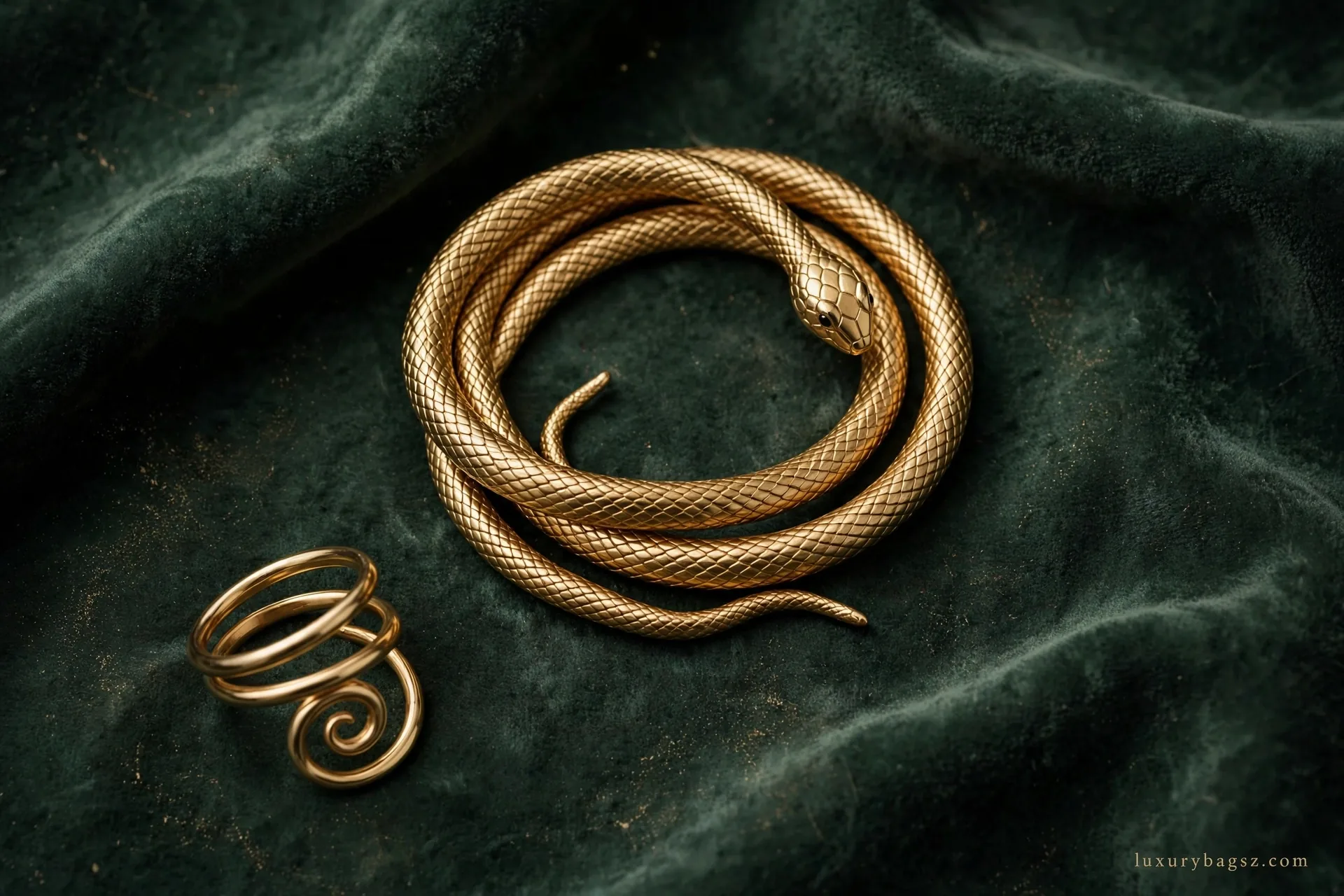
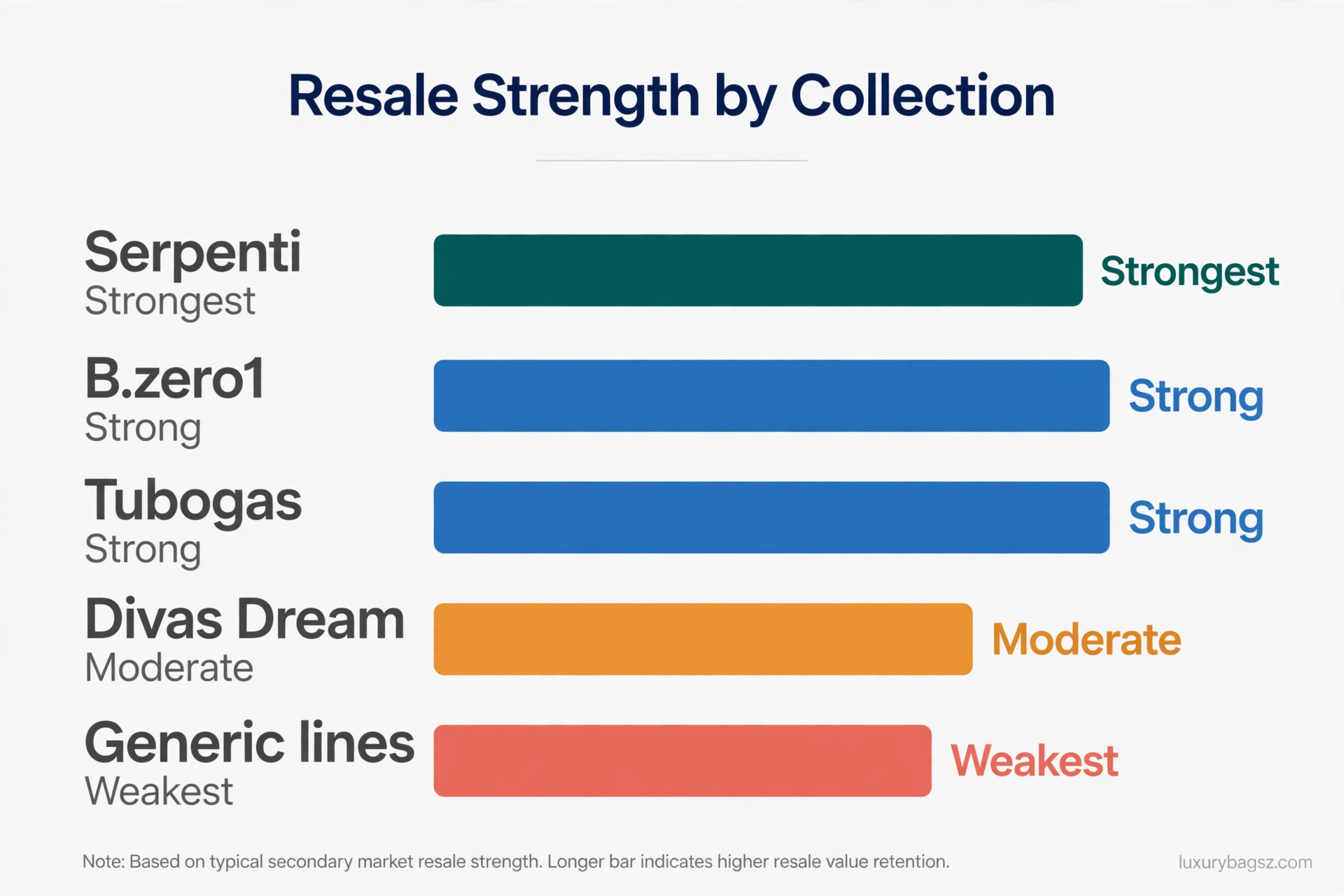
Bvlgari holds its value selectively, not across the board. The pieces that resell best are unmistakably Bvlgari: Serpenti coils, B.zero1 spirals, Tubogas bracelets and bold coloured-stone designs in 18-karat gold, in excellent condition, with documentation. Generic or fashion-led pieces, small production items and heavily worn examples fall much further.
Published resale bands disagree, and that disagreement is useful. One United Kingdom resale report put Bvlgari jewellery at 45 to 65 percent of retail, while a detailed pre-owned guide put iconic collections at 30 to 70 percent or more, with pristine, fully documented Serpenti and B.zero1 examples at 70 to 85 percent. Different samples, dates and selling routes explain the gap, so use the range as a guide, never as a promise.
Buy pre-owned in the right configuration and you start from a position of value on day one. Buy new, and you should expect an initial drop of roughly 30 percent on many pieces, with the strongest icons recovering best over time. Gold content helps, but design recognition is what separates Bvlgari's winners from its also-rans.
Key Takeaways
- Serpenti and B.zero1 in high-gold configurations are Bvlgari's strongest resale performers.
- Serpenti Tubogas watches in gold can retain far more than standard steel models.
- Condition, originality and documentation can add a meaningful premium or discount.
- Over-polishing or undisclosed repairs can cut value by 20 to 40 percent.
- Earrings are an overlooked category, often reaching resale in better condition.
- No Bvlgari piece should be bought purely as a financial investment.
Serpenti: The House's Strongest Resale Performer
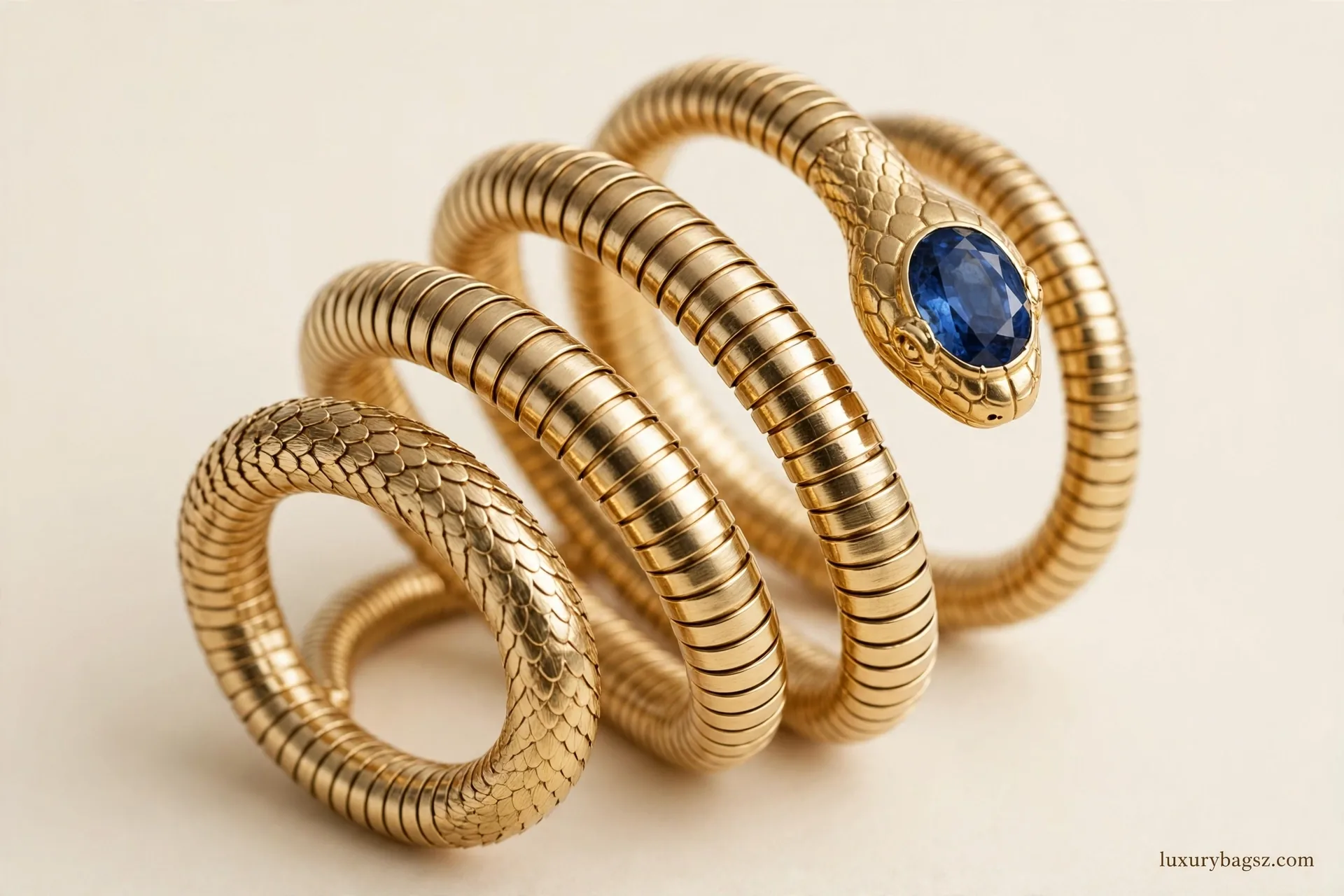
Serpenti first appeared at the house in 1948 and evolved in the 1960s into Tubogas construction, a flexible, continuous coil built without welds. That movement is the whole design: a Serpenti bracelet should feel fluid and alive in the hand, coiling and uncoiling like the animal it depicts. Stiffness or deformed links are not minor flaws, they undermine the piece itself.
Auction results show what provenance can do. Elizabeth Taylor's 1961 Serpenti bracelet-watch, estimated at 12,000 to 15,000 dollars, sold at Christie's for 974,500 dollars. Ordinary pieces do not achieve that, but the story explains why collectors chase vintage Serpenti, especially bracelet-watches from the 1960s and 1970s in enamel or coloured stone.
For everyday buying, focus on yellow or two-tone gold Tubogas bracelets and rings with coloured-stone heads in emerald, rubellite, turquoise or coral, in excellent condition. Modern pavé diamond double-wrap necklaces and high-gem configurations also perform well. A Serpenti ring is the most accessible entry point, wearable daily and easier to resell than a large lariat.
The Bvlgari brand guide gives the house history behind the motif, from its Rome founding in 1884 to its modern identity. Knowing that history helps you spot which Serpenti variations are core icons and which are short-lived fashion takes.
B.zero1, Tubogas and the Rest of the Icons
B.zero1 arrived in 1999, its name marking the new millennium, with a multi-band spiral inspired by the Colosseum. Press it gently from either end and an authentic ring compresses and expands, a kinetic test that convincing fakes struggle to replicate. Four-band rings in yellow, rose or three-tone gold have the broadest buyer base, while ceramic inlays and diamond pavé edges photograph exceptionally well.
Tubogas deserves its own mention, because it underpins both Serpenti and many bracelets. The technique gives a material floor tied to gold content, plus a distinctive look no other house owns. A well-maintained gold Tubogas bracelet in either Serpenti or B.zero1 form is among the safer bets in the category for a buyer who prizes liquidity.
Watches split into two markets. Serpenti Tubogas single-spiral models have been reported trading at 87 to 95 percent of retail, with the full Serpenti collection averaging around 84 percent in one 2025 dataset, while most Bvlgari watches overall sit around 25 percent below list. Limited-edition Octo Finissimo references and gold Tubogas models retain considerably more, while standard steel models depreciate normally.
Divas' Dream, Parentesi and Monete round out the collector picture. Divas' Dream pendants in floral form sell well when the gold weight and stone quality are strong, Parentesi appeals to buyers who love the Roman architectural code, and vintage Monete pieces attract collectors for their coin motifs. The Cartier bracelets investment guide is a useful contrast, showing how a quieter design language can mean faster liquidity, even where Bvlgari offers more upside on rare pieces.
Bags deserve a brief note too, since Bvlgari's Serpenti bags and clutches share the same iconography as its jewellery. A Serpenti bag in a classic colour, with its enamel head intact and its hardware unworn, follows the same logic as a bracelet: recognisability first, condition second, completeness third. Novelty bag formats and heavily embellished evening pieces are harder to resell, because their buyer pool is narrower and their wear shows more clearly. If you are buying a Bvlgari bag with resale in mind, choose the most classic Serpenti format you can find, and treat it with the same care you would give a piece of jewellery, storing it separately so the enamel head does not chip against other hardware.
What Drives the Price Up or Down
Five forces matter, and they pull in different directions. Bold design signature comes first: a buyer scrolling on a phone needs instant identification, and Serpenti and B.zero1 deliver it. Colour and gemstones come second, with cabochon cuts prizing saturated colour fields over faceted sparkle, a distinctly Bvlgari aesthetic.
Material weight comes third. Eighteen-karat gold construction, often using Tubogas, provides a floor tied to gold prices, so gold appreciation can soften a fall even when fashion demand cools. Condition and originality come fourth: over-polishing or undisclosed repairs can reduce value by 20 to 40 percent, because a piece must still look alive rather than scrubbed flat.
Documentation and provenance come fifth. Original boxes, certificates and receipts have been reported adding 15 to 30 percent in confirmed resale cases, and auction houses with catalog-verified provenance offer the strongest authentication available. The resale value factors guide explains the same logic for bags, and it applies just as well to jewellery.
Wear patterns matter by category. Bracelets see more daily wear than any other category, so clasp function, link flexibility and surface wear factor directly into price. Necklaces span the widest price range, from a modest B.zero1 pendant to museum-grade Serpenti lariats, so precision shopping matters more there than anywhere else.
Gold prices add a further, slower-moving influence. When gold rises, the material floor under a heavy gold piece rises with it, which can soften a fall in fashion demand, though it will not rescue a generic or heavily worn design. That is why weight matters: two rings that look similar in a photograph can have very different gold content, and the heavier, better-made piece usually holds up better at resale, provided its condition matches.

How to Authenticate Bvlgari Before You Buy
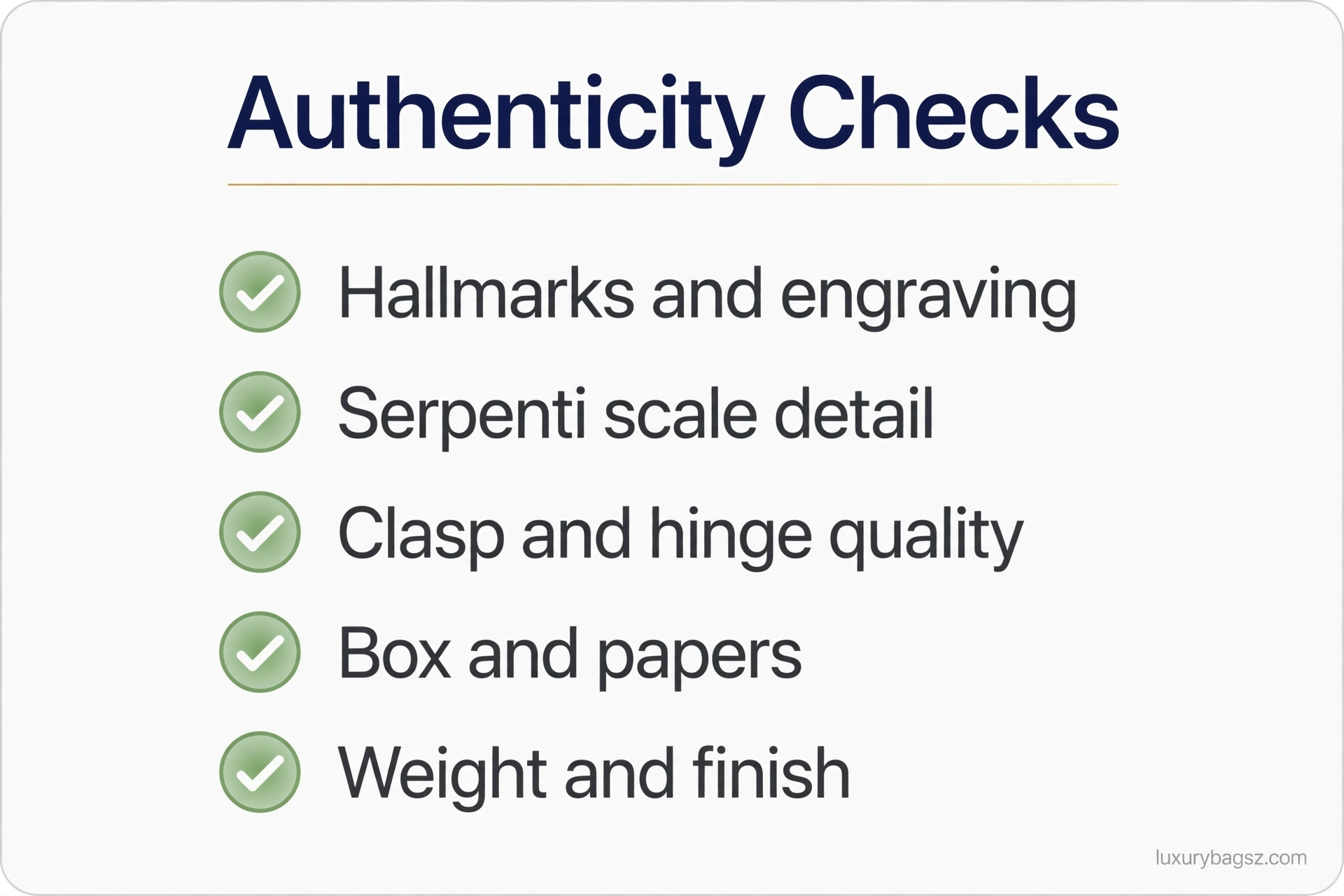
Start with movement. On an authentic Serpenti, each scale link moves independently, and the bracelet should feel fluid, weighted and alive. Fakes are often a single solid piece of stamped metal with etched grooves simulating scales, and the difference is immediately apparent when you handle both.
Check the hallmarks next. Authentic pieces carry BVLGARI, with a V rather than a U, engraved with clean, even, deeply incised lettering, plus 750 for 18-karat gold or 950 for platinum, and MADE IN ITALY on modern pieces. Serial numbers are laser-engraved rather than stamped and should match any accompanying certificate, since no two pieces share a number.
For B.zero1, use the compression test, check that the spiral moves evenly, and avoid heavily worn one-band white gold pieces that need re-plating. For Serpenti, check enamel for chips or cracks, since damaged enamel significantly affects both beauty and value, and check that the serpent head's hinge opens smoothly where fitted.
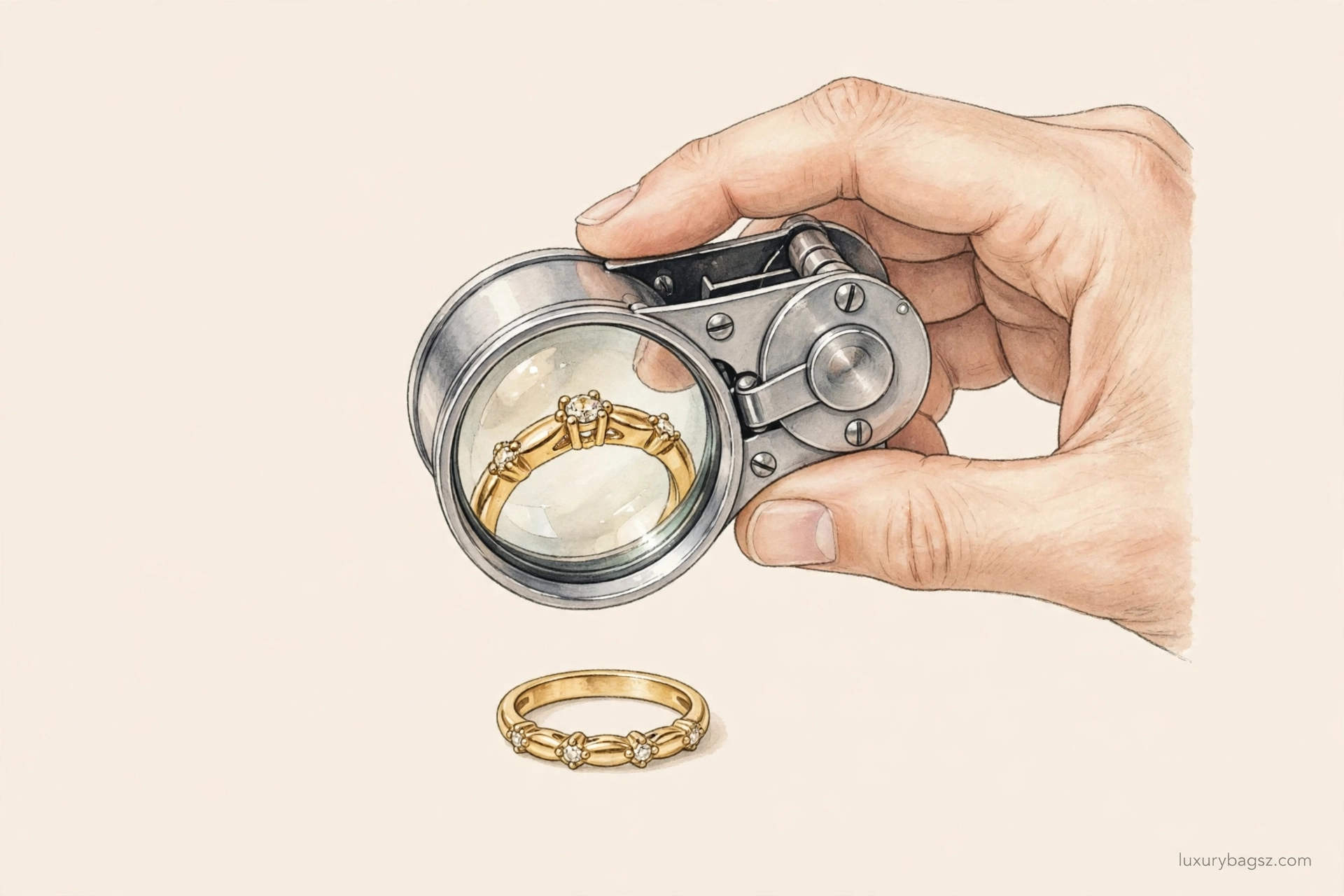
Buy from sellers who guarantee authenticity, photograph hallmarks and clasps, and accept returns. If a listing hides the clasp interior, refuses a photograph of the hallmark, or prices a supposedly pristine Serpenti far below comparable pieces, pause. The Perlée collection guide shows how another house's beaded gold designs are checked, and the same discipline, close photographs plus a trusted seller, applies here.
What to Pay for Each Category
Rings are the most liquid category, largely because B.zero1 and Serpenti Viper are sized, dated and condition-graded with relative ease. One United Kingdom buyer put used B.zero1 rings at 1,000 to 3,000 pounds and bracelets at 4,000 to 10,000 pounds, a useful entry-point range, though gold weight and stones move individual pieces far outside it.
Necklaces reward care. A generic pendant performs modestly, while an iconic silhouette in the right gold weight can be one of the strongest resale assets in the house. Chain condition and clasp integrity matter more than buyers first expect, since a stretched or repaired chain meaningfully reduces value even when the pendant itself is pristine.
Earrings are the overlooked secret. Because they see less daily wear than rings or bracelets, they tend to reach resale in better condition, with less clasp damage or setting wear. Serpenti diamond earrings in white or yellow gold are standouts, and vintage earrings from the 1960s to 1980s, particularly cabochon and clip-on styles, occupy a genuine collector niche.
The price designer jewellery guide covers how to compare like with like, rather than comparing a pavé diamond piece with a plain gold one. Always compare collection, gold colour, stone, size and condition together, and treat any single average as a starting point for negotiation, not a valuation.
Where and How to Sell
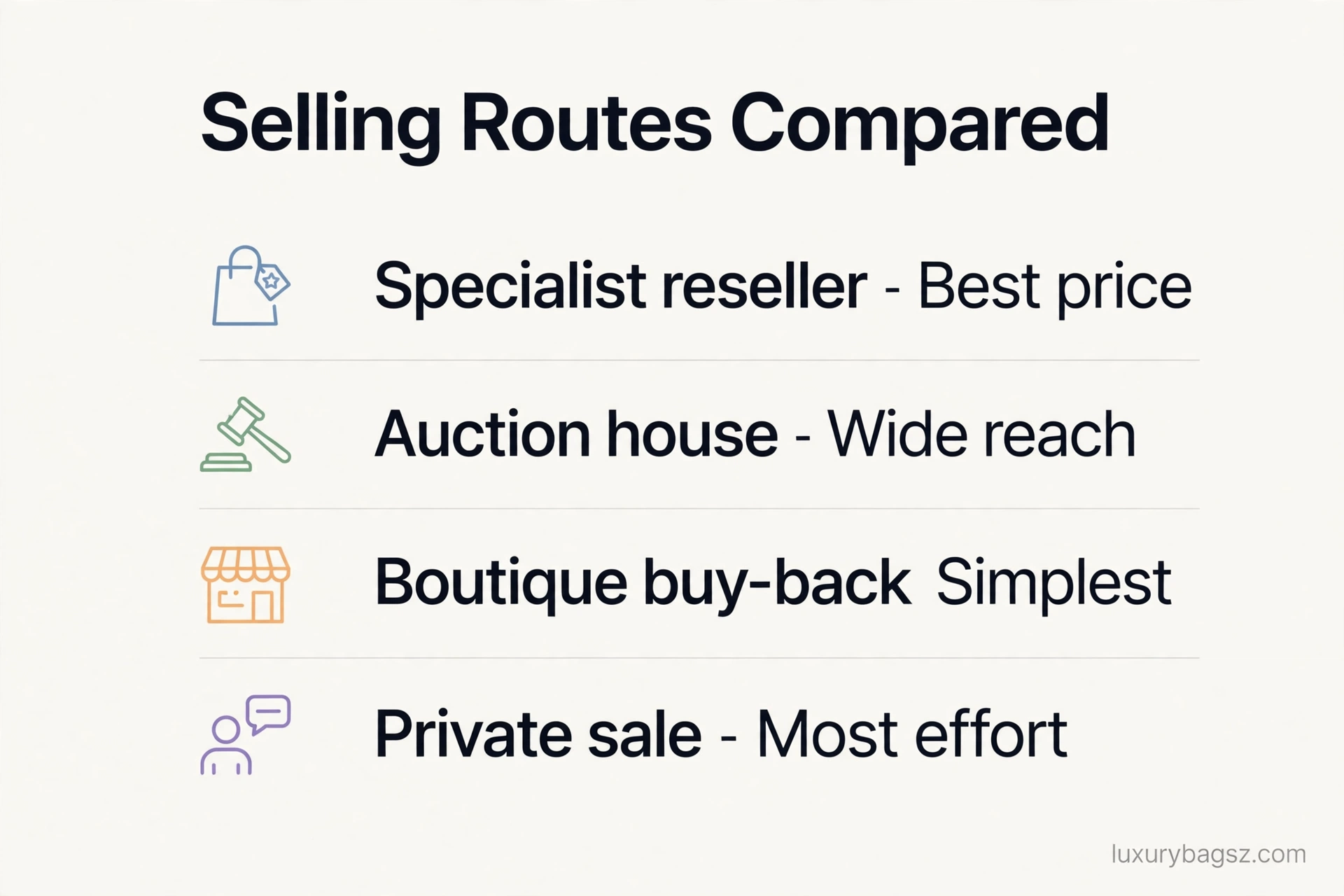
Choose the route by rarity. Specialist auctions suit rare, vintage or high-gem Serpenti pieces, where catalog-verified provenance and a collector audience can beat estimates, as seen in the Phillips and Sotheby's results above. A curated resale platform suits everyday icons like B.zero1 rings and Serpenti Viper pieces, where liquidity and buyer protection matter most.
A specialist buyer suits a fast sale, but expect a cash offer below the eventual resale value, since one United Kingdom report put cash offers at around 69 to 70 percent of resale value for Bvlgari. That is not a rip-off, it is the cost of speed and certainty, but it should be weighed against waiting for a platform sale.
The resell luxury jewellery guide covers preparation, photography and timing. Photograph the coil movement, the hallmark, the clasp and any wear, keep the box and papers together, and do not over-polish before sale. A light professional clean is fine, but aggressive polishing that softens engraving or thins gold will cost you more than it gains.
What to Buy, What to Avoid, and How to Care
Buy unmistakably Bvlgari pieces in high-gold configurations, in excellent condition, with documentation. That single rule, repeated across every credible guide, is the best summary of this article. Serpenti Tubogas in gold, B.zero1 four-band rings, and documented vintage pieces are the core shortlist for most buyers.
Avoid heavily worn coils with deformed links, missing serpent heads or poor flexibility, and avoid pieces where the spiral compression feels stiff or uneven. Avoid small, generic production pieces bought new at full retail if resale matters to you, since those are the pieces that hold value least well and typically sell in the low thousands secondhand.
Finally, keep a simple record for every piece you own: photographs on purchase, the seller's details, any service receipts, and the box and certificate stored together. That folder costs nothing to maintain, and it is exactly what a future buyer or auction specialist will ask for. A piece with a clear, documented story sells faster and for more than an identical piece with no history at all.
Care is simple and worth doing. Store pieces separately in their pouches so coils and chains do not scratch each other, keep them away from perfume and harsh chemicals, and have clasps and links checked periodically. For watches, movement condition and service history carry outsized weight, so keep service records with the box and papers, just as you would for any fine watch.
A final practical point concerns sizing and wearability. Rings that need resizing, bracelets that no longer close smoothly, and necklaces with stretched chains all lose value, not because buyers dislike the design, but because they must pay to fix the problem before they can wear the piece. When you buy, try the piece on, test every clasp and link, and factor any repair cost into your offer. When you sell, disclose any sizing or repair history honestly, since a buyer who discovers it after purchase is far more likely to return the piece than one who priced it in from the start.
Frequently Asked Questions
Does Bvlgari jewellery hold its value?
Selectively, yes. Iconic Serpenti and B.zero1 pieces in gold, in excellent condition, with documentation, hold value best. Generic or fashion-led pieces, and standard steel watches, depreciate more normally.
Which Bvlgari collection has the best resale value?
Serpenti leads for jewellery, followed closely by B.zero1, with vintage Serpenti consistently outperforming. For watches, Serpenti Tubogas and limited-edition Octo Finissimo references lead.
What percentage of retail does Bvlgari resell for?
Reports vary: one United Kingdom report put Bvlgari at 45 to 65 percent of retail, while a detailed guide put iconic collections at 30 to 70 percent or more, with pristine documented examples at 70 to 85 percent. Treat the range as a guide, not a promise.
Are Bvlgari watches a good investment?
Only specific references. Gold Serpenti Tubogas models have traded at 87 to 95 percent of retail in one dataset, while standard steel models depreciate in line with the broader jewellery-watch category. Buy steel for design, not for return.
How can I tell if Bvlgari jewellery is real?
Check coil or spiral movement, the BVLGARI hallmark with a V, the 750 gold mark, laser-engraved serial numbers, enamel quality and weight. Buy from a trusted seller who photographs hallmarks and accepts returns.
Do Bvlgari boxes and papers add value?
Yes. Original boxes, certificates and receipts have been reported adding 15 to 30 percent in confirmed resale cases, and auction provenance can add more for rare pieces. Keep the full set together.
Is it better to buy Bvlgari new or pre-owned?
Pre-owned is usually better for value, since buying new often means an initial drop of roughly 30 percent, and pre-owned icons start from a position of value on day one. Buy new only when you want a specific current configuration with full boutique assurance.
What Bvlgari pieces should I avoid for resale?
Heavily worn coils, pieces with deformed links or missing heads, over-polished examples, and generic fashion pieces with little gold content or weak design recognition. Those are the pieces buyers discount hardest.
Where is the best place to sell Bvlgari?
Auctions suit rare and vintage pieces, curated resale platforms suit everyday icons, and specialist buyers suit fast sales at a lower cash price. Compare fees and timing before choosing, rather than accepting the first offer.
Is Bvlgari worth buying?
For specific pieces, yes. Bvlgari's iconic collections combine 18-karat gold, globally recognised design and strong secondary demand. Bought pre-owned in the right configuration, they offer gold upside, preserved brand equity and a meaningful discount to retail.
Final Verdict: Buy the Icons in Gold, Keep the Papers, Sell Through the Right Route
Bvlgari rewards buyers who are specific rather than general. Serpenti and B.zero1 in gold, in excellent condition, with documentation, are the pieces that hold value, while generic pieces and tired examples do not. Buy pre-owned where you can, check movement and hallmarks before you pay, and choose the selling route that matches the rarity of what you own.