What Affects a Designer Bag’s Resale Value? Condition, Rarity, Demand and Completeness
Resale Value in Brief
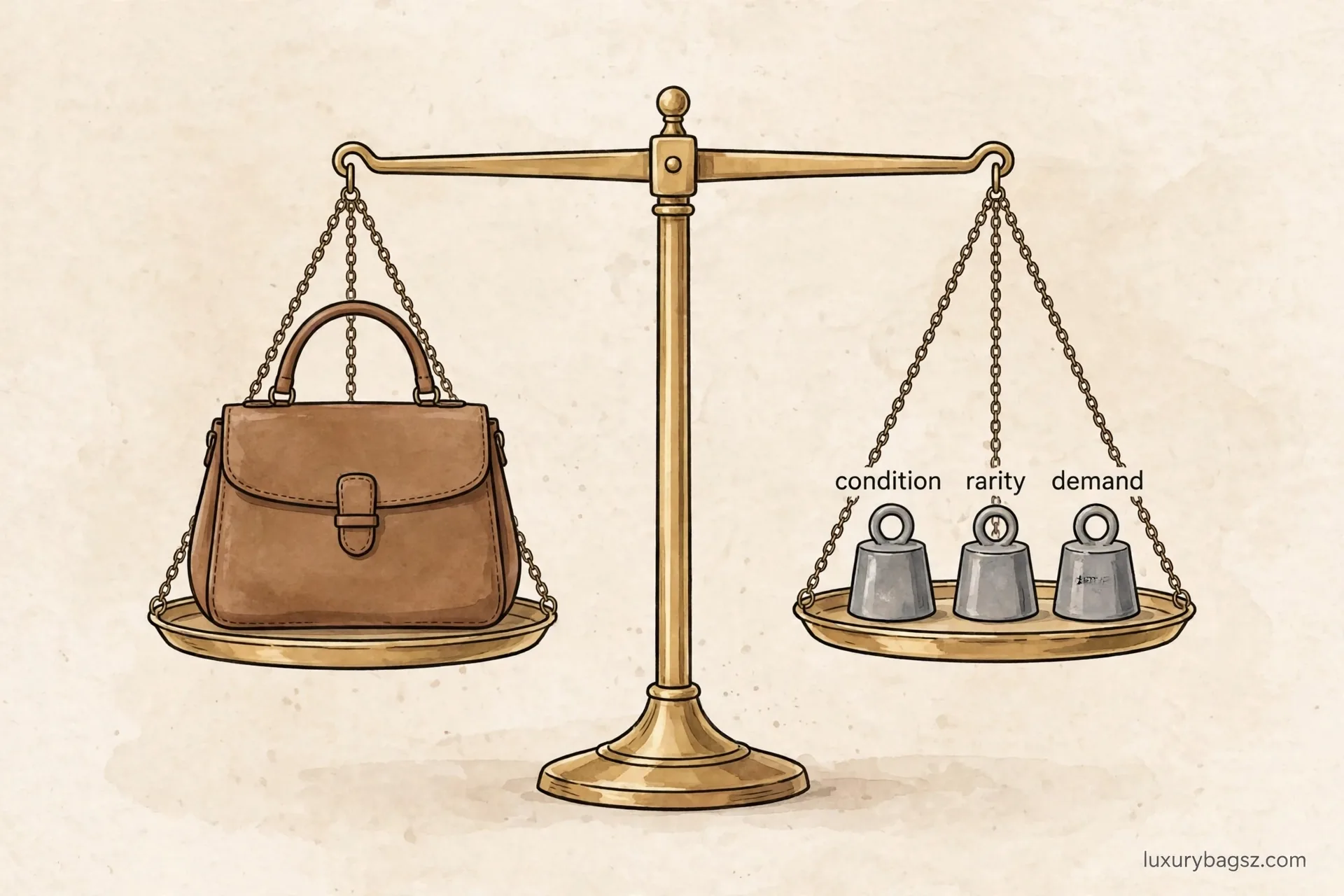
Four factors decide most of a bag’s resale value: condition, rarity, demand, and authenticity. Authenticity is a precondition, not a bonus: without it, the other three do not matter. Beyond those four, colour, material, size, hardware, completeness, and brand each move the price, sometimes by more than condition alone. No factor guarantees a result: resale value is a market outcome, not a promise.
Key Takeaways
- Condition is the only factor a seller truly controls; rarity is inherited, demand shifts, and authenticity must be proven.
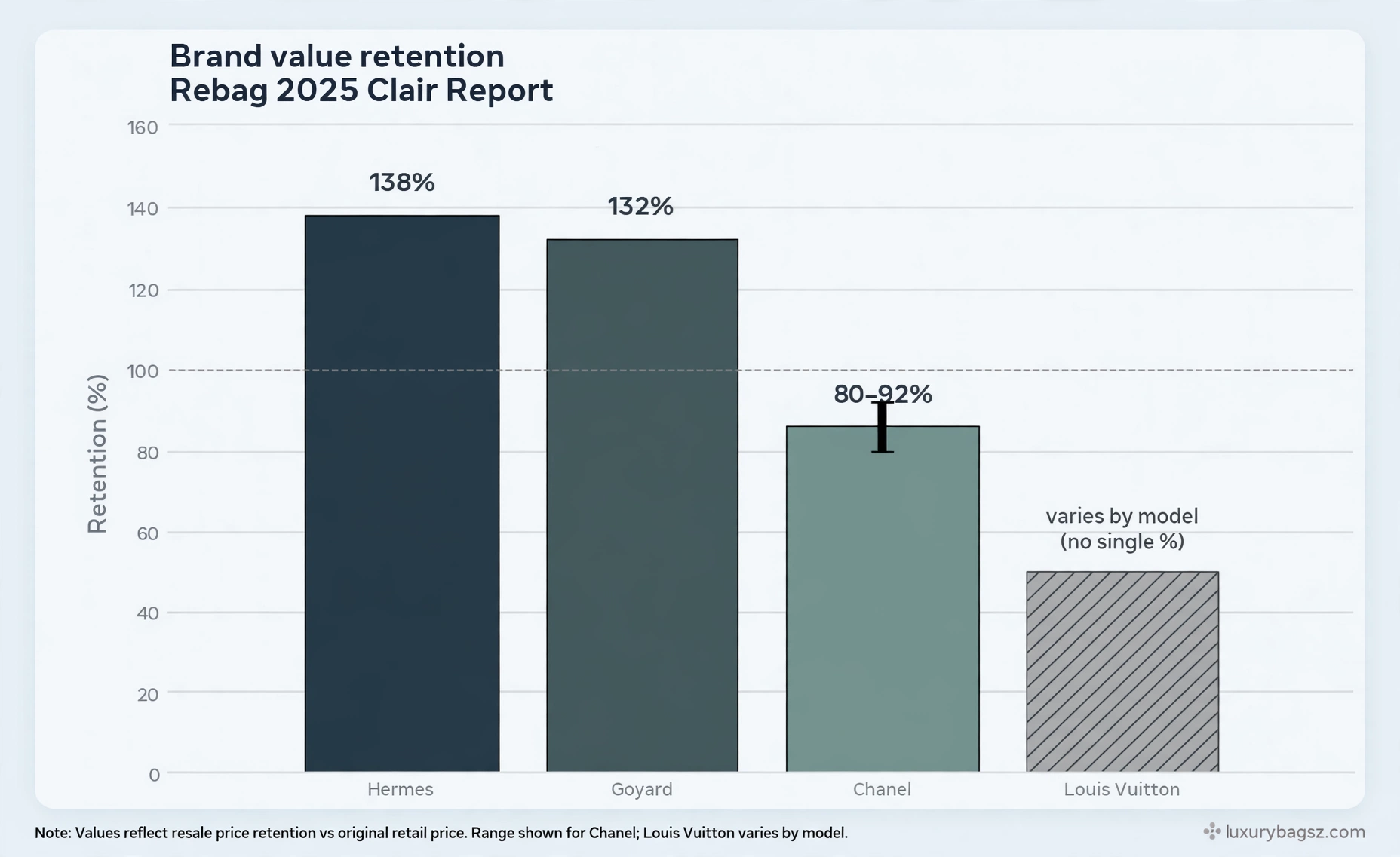
- Rebag’s 2025 Clair Report put Hermès at 138 percent average value retention and Goyard at 132 percent, with Chanel at 80 to 92 percent across models.
- Light, even wear reads as loved and cared for, while patchy wear reads as neglect, even at the same overall grade.
- Classic neutrals, popular sizes, and standard hardware sell easiest; seasonal colours and unusual finishes split buyers.
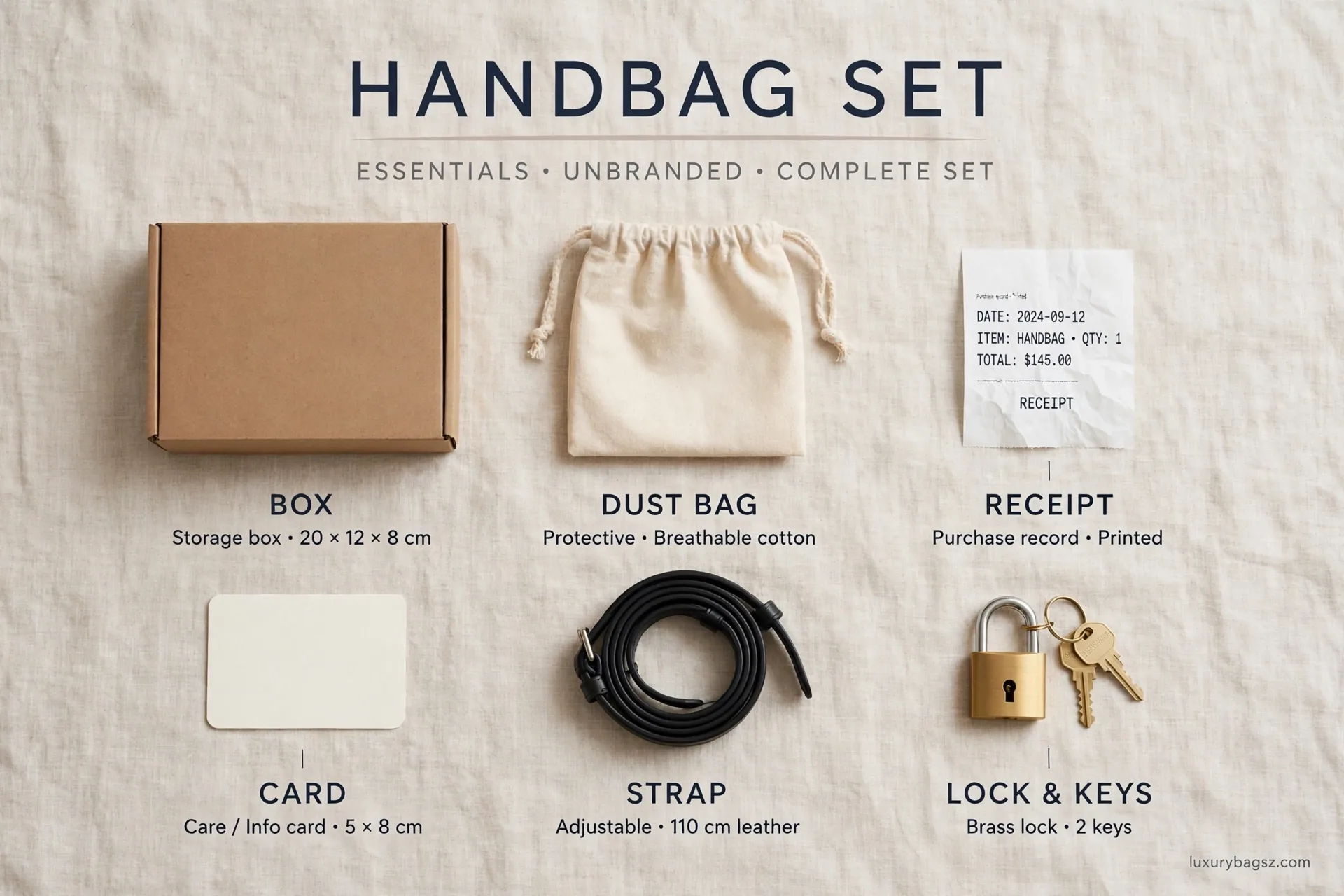
- A full set — box, dust bag, receipt, card, strap, lock, and keys — protects value, with guides putting the uplift at roughly 10 to 20 percent.
- The biggest value killers, ranked, are fakes or doubtful authenticity, heavy damage, odour, missing parts, and undisclosed restoration.
The Four-Factor Framework
Every resale guide in the competitor set agrees on the same four factors: condition, rarity, demand, and authenticity. Condition covers physical wear and how it presents. Rarity covers restricted production, discontinued styles, and culturally durable collaborations. Demand covers how many buyers want the bag now, which moves with fashion, retail prices, and media attention.
Condition: The Factor You Control
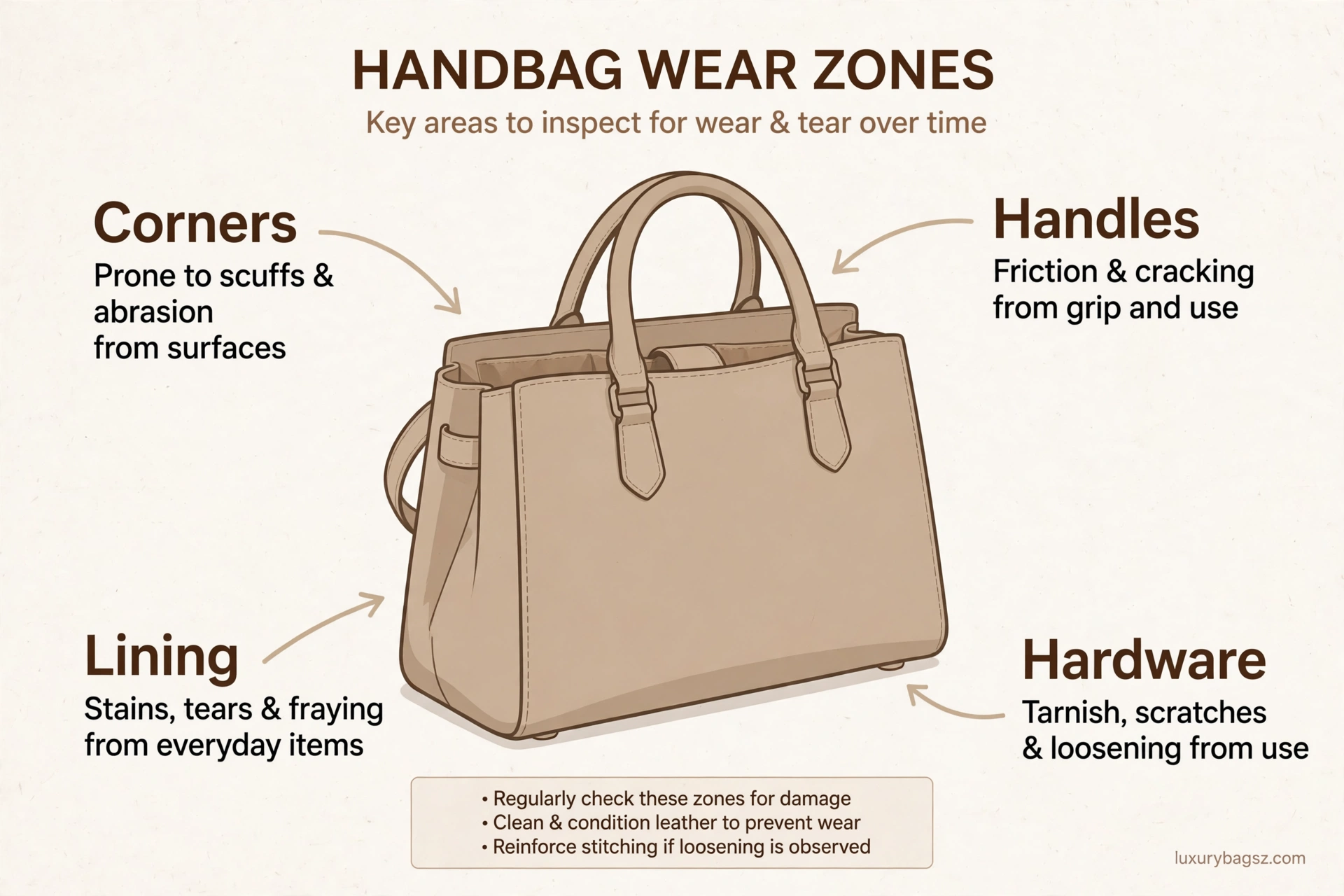
Condition is the only factor a seller can truly control, and it repays care more reliably than any other effort. Where wear sits matters more than how much wear exists: base corners, handle drop, interior lining, and hardware are the four zones buyers check first, and wear there costs more than wear elsewhere. Light, even wear reads as loved and cared for, while patchy wear reads as neglect.
For a concrete sense of how leather choice changes the story, our Classic Flap vs Boy comparison shows caviar and lambskin ageing differently.
Where Wear Hurts Most
Base corners take the brunt of every surface a bag touches, so scuffing or exposed piping there is the first value signal. Handle drop darkens where skin oils work into leather, and that darkening is very hard to reverse. Interior lining tells its own story: pen marks and makeup transfer pull value down more than many sellers expect, because they signal how the whole bag was treated.
Hardware is one of the fastest ways to lose value: scratched clasps and gold plating worn through to duller metal read as heavy use even when leather is clean.
Rarity: Scarcity Only Counts When Buyers Want It
Genuinely restricted production holds value: quota bags, limited runs, and pieces made in small numbers for a short window. Discontinued colourways and sizes also hold value, but only when the discontinued version is one buyers remember fondly.
Culturally durable collaborations hold value far better than seasonal prints tied to a faded trend: the competitor set cites Louis Vuitton’s Stephen Sprouse graffiti collaboration as lasting, while seasonal prints that belonged to one year often fade with it. Scarcity without demand is worthless, as several guides state plainly.
Brand: The Retention League Table
Rebag’s 2025 Clair Report, published in December 2025 from millions of primary and secondary transactions, gives the clearest dated picture. Value retention means secondary sale price as a percentage of original retail price, averaged across styles and grades. Hermès reclaimed the top position at 138 percent average retention, Goyard followed at 132 percent, and The Row entered the report’s “unicorn” category (85 percent or higher) at 97 percent.
Within Hermès, the Kelly Mini II sold for 282 percent of original value, the Birkin Sellier at 183 percent, the Constance at 137 percent, and the Kelly at 130 percent. Chanel retained 80 to 92 percent across models: many Chanel bags hold most of their value, while few exceed retail.
Louis Vuitton figures disagree across sources — Rebag coverage puts its recent peak near 88 percent, another source gives 70 to 85 percent for popular coated-canvas styles, and a third gives 60 to 75 percent for Neverfull and Speedy models — so do not quote one Louis Vuitton figure as settled.

Demand: Retail Prices, Trends, and Timing
Demand moves with retail prices. When a brand raises boutique prices, resale prices for popular models often rise too, because the pre-owned alternative becomes cheaper by comparison; Chanel’s repeated rises, with the Classic Flap as the case study, are the most cited example.
Celebrity and social-media moments lift demand fast and cool fast, while timeless silhouettes — Classic Flap, Speedy, Kelly — stay steadiest. Availability works the other way: a bag hard to buy new, such as a quota Hermès piece, carries pre-owned demand precisely because the boutique route is closed or slow.
Our guide to buying Hermès online vs in store explains how waiting lists and boutique access shape that demand.
Colour and Material: What Sells Easiest, What Splits Buyers
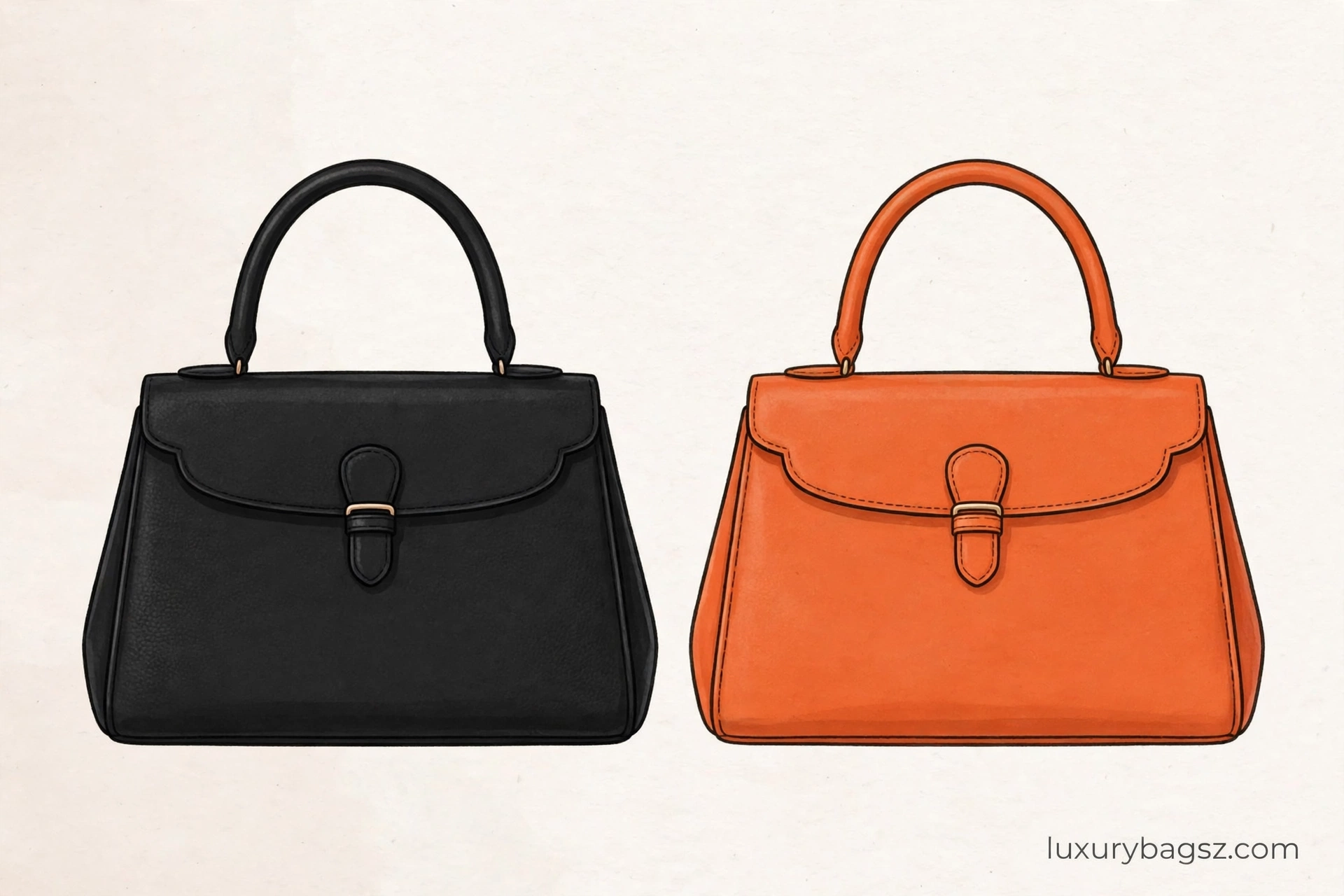
Classic neutrals sell easiest: black, tan, beige, and dark brown suit the most wardrobes and attract the widest buyer pool. Bold and seasonal colours split buyers: a vivid colour can command a premium when it is the colour of the moment or a beloved discontinued shade, but it can sit unsold when taste moves on.
Material changes the value curve: caviar leather hides wear better than lambskin, so a caviar bag often grades and prices higher at the same age and use, while lambskin feels softer but shows scratches faster. Coated canvas resists rain and scuffs yet cracks near folds with age, and exotic skins carry premiums when pristine and penalties when damaged, since repair is specialist work.
Size and Hardware: The Quieter Value Levers
Popular sizes change over time, and a popular size in a classic model holds value best, because it suits the most buyers and uses. A very small bag that fits almost nothing, or a very large bag that suits almost no occasion, narrows the buyer pool even when the model is famous. Vintage sizes add a twist: proportions and hardware changed across decades, so a vintage size may not match its modern namesake.
State exact dimensions in centimetres and inches, and check sold prices per size, not per model, since a model average hides size gaps that can reach hundreds.
Completeness: The Box, the Papers, and the Small Pieces
Completeness protects value across every brand. One selling guide puts the full-set uplift at 10 to 20 percent, while another says up to 15 percent, and both name the same items: box, dust bag, receipt, authenticity card, strap, lock, and keys. The receipt matters most for provenance, tying the bag to a place, date, and buyer.
Small pieces cost disproportionately when missing: a Speedy without its lock and keys carries a cited $50 to $100 penalty in one guide, and a missing or replaced strap costs far more, since it affects use and originality.
Care, Storage, and Repair Economics
See our guides on how to clean Chanel bags and how to clean a Hermès canvas bag for gentle first steps.
Care protects value only when it is material-correct: gentle cleaning, proper conditioning where leather allows, and careful storage preserve condition, while harsh cleaning creates the wear it was meant to prevent. Storage is the cheapest protection available: keep the bag stuffed, in its dust bag, away from sun, damp, and crushing weight.
Spa treatments and minor repairs need a cost-benefit check before commissioning: a professional clean that costs little and lifts the grade is worthwhile, while a handle replacement or re-lining costing more than the price lift it produces is a loss. My guide to how much your bag is worth works through that grade-versus-cost maths in full. No competitor value guide prices these trade-offs, so get a repair estimate and a realistic post-repair price before committing.
The Value Killers, Ranked, and Net Value
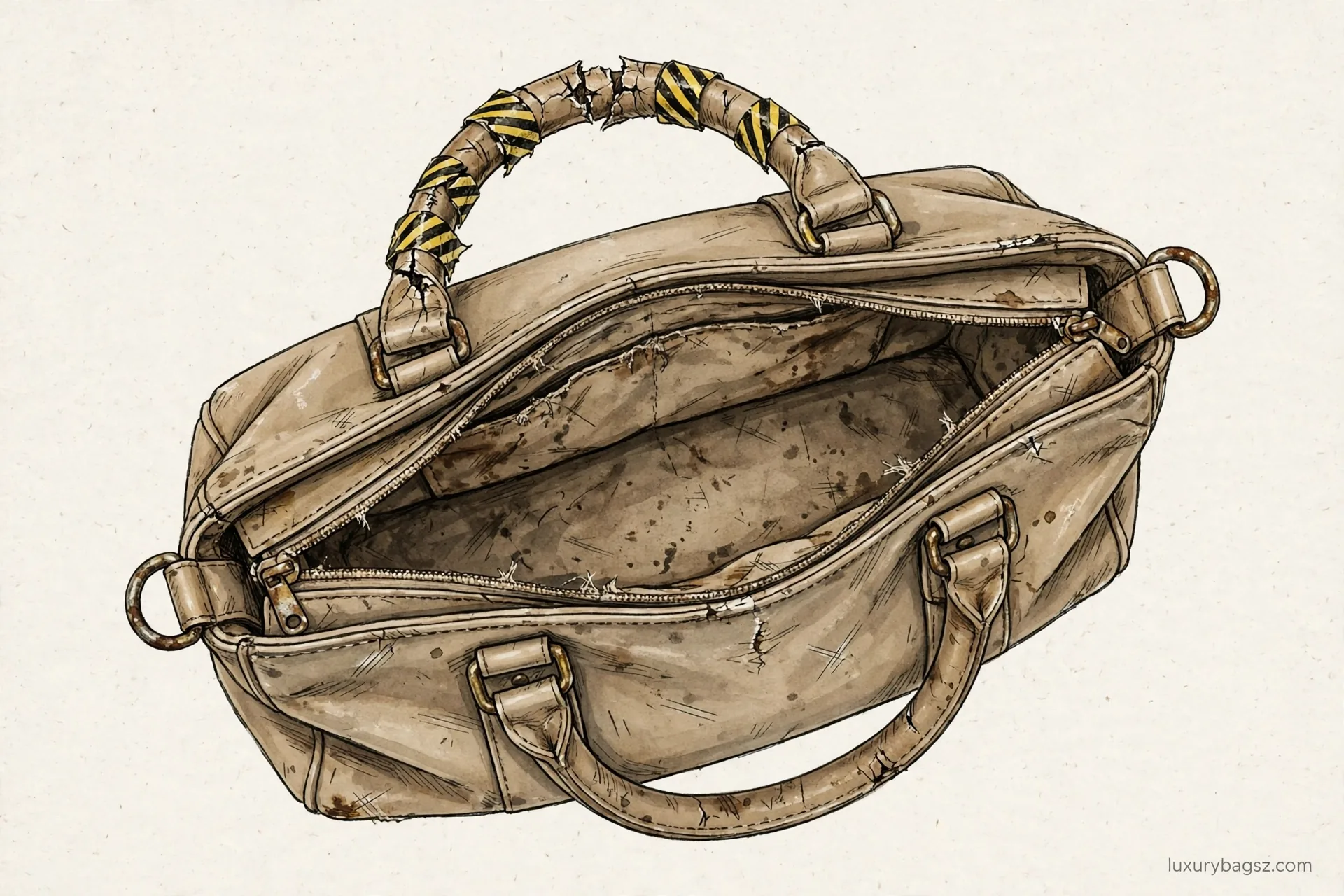
First, fake or doubtful authenticity: it removes the buyer pool itself rather than merely lowering the price. Second, heavy structural damage: cracked handles, broken zips, collapsed bodies, torn linings — repair bills, not wear. Third, odour: smoke, mould, mustiness, or heavy perfume, hard to remove and impossible to photograph away. Fourth, missing parts: strap, lock, keys, or clochette.
Fifth, undisclosed restoration: redyeing, repainting, re-lining, or replaced hardware discovered after purchase. Sixth, heavy cosmetic damage: deep stains, large scuffs, colour loss, cracked canvas folds.
Headline retention is not cash kept. Take an illustrative example, using fees checked on platform pages on 14 October 2026: a bag sold for $3,000 on eBay (15 percent to $2,000, 9 percent over, plus $0.40) keeps about $2,610 before shipping; on Poshmark at 20 percent, $2,400; on Vestiaire at 12 percent plus 3 percent, $2,550.
Subtract a $75 authentication certificate, $50 insured shipping, and a $100 spa clean from the eBay figure, and the net falls to about $2,385. Run net maths for your bag, route, and costs before you list, not after you sell.
Protecting Value From the Day You Buy
Buy with resale in mind, even if you never plan to sell. Choose classic colours, popular sizes, and standard hardware when the choice is free, because those choices keep the most options open later. Keep everything from day one: box, dust bag, receipt, card, strap, lock, and keys, stored together and in good condition.
Photograph the bag on arrival, and note its condition in writing with a date: that baseline protects you if a future buyer disputes wear, and helps you grade honestly when you eventually sell.
Frequently Asked Questions
What is the single biggest factor in a designer bag’s resale value?
Condition, because it is the factor a seller controls and the first thing buyers check. Rarity and demand set the range, but condition decides where inside that range a single bag lands, and authenticity gates the whole sale.
Do Hermès bags really sell for more than retail?
Some do, on average and at model level. Rebag’s 2025 Clair Report put Hermès at 138 percent average retention, with the Kelly Mini II at 282 percent and the Birkin Sellier at 183 percent. Those are past averages, not guarantees.
Why do Louis Vuitton resale figures disagree?
Because sources use different samples, years, and model mixes. Rebag coverage puts its recent peak near 88 percent, another source gives 70 to 85 percent for popular coated-canvas styles, and a third gives 60 to 75 percent for Neverfull and Speedy models.
Does colour really affect resale value?
Yes. Classic neutrals attract the widest buyer pool and sell fastest, while bold or seasonal colours split buyers and depend on timing. A beloved discontinued colour can command a premium; a faded seasonal colour can sit unsold. For Hermès specifically, our resale premium over retail analysis shows which specs hold the highest premiums once fees are counted.
Is a full set worth much at resale?
Yes, by a range rather than a fixed figure. One guide says 10 to 20 percent more, another says up to 15 percent, both naming box, dust bag, receipt, card, strap, lock, and keys.
Does size affect a bag’s resale value?
Yes, and popular sizes change over time. A popular size in a classic model holds value best. Check sold prices per size, not per model, before pricing.
What hurts resale value most?
Doubtful authenticity first, then heavy structural damage, odour, missing parts, and undisclosed restoration. Cosmetic wear, poor presentation, and wrong venue or timing follow, and all are more fixable than the top five.
Can restoration increase resale value?
Sometimes, when the work is professional, disclosed, and cheaper than the price lift it produces. Undisclosed or poor restoration destroys value instead, because buyers price the concealment as well as the work.
How do retail price rises affect resale value?
When boutique prices rise, resale prices for popular models often rise too, because the pre-owned alternative becomes cheaper by comparison. Chanel’s repeated rises, with the Classic Flap as the case study, are the most cited example.
Is resale value guaranteed for any bag?
No. Resale value is a market outcome that moves with condition, rarity, demand, brand, colour, size, and venue. Averages describe past sales, not future prices, and no bag’s resale result can be promised.
Summary
Resale value is not one thing. It is condition you control, rarity you inherit, demand that shifts, authenticity you must prove, and colour, material, size, hardware, and completeness layered on top.
Protect what you control: store well, clean gently, keep the full set, disclose repairs, and track sold prices. Those habits do more for value than chasing trends or hoping a brand name carries a worn bag.