

What to Know About Bvlgari: History, Bags, Prices and Buying Guide
Bvlgari at a Glance
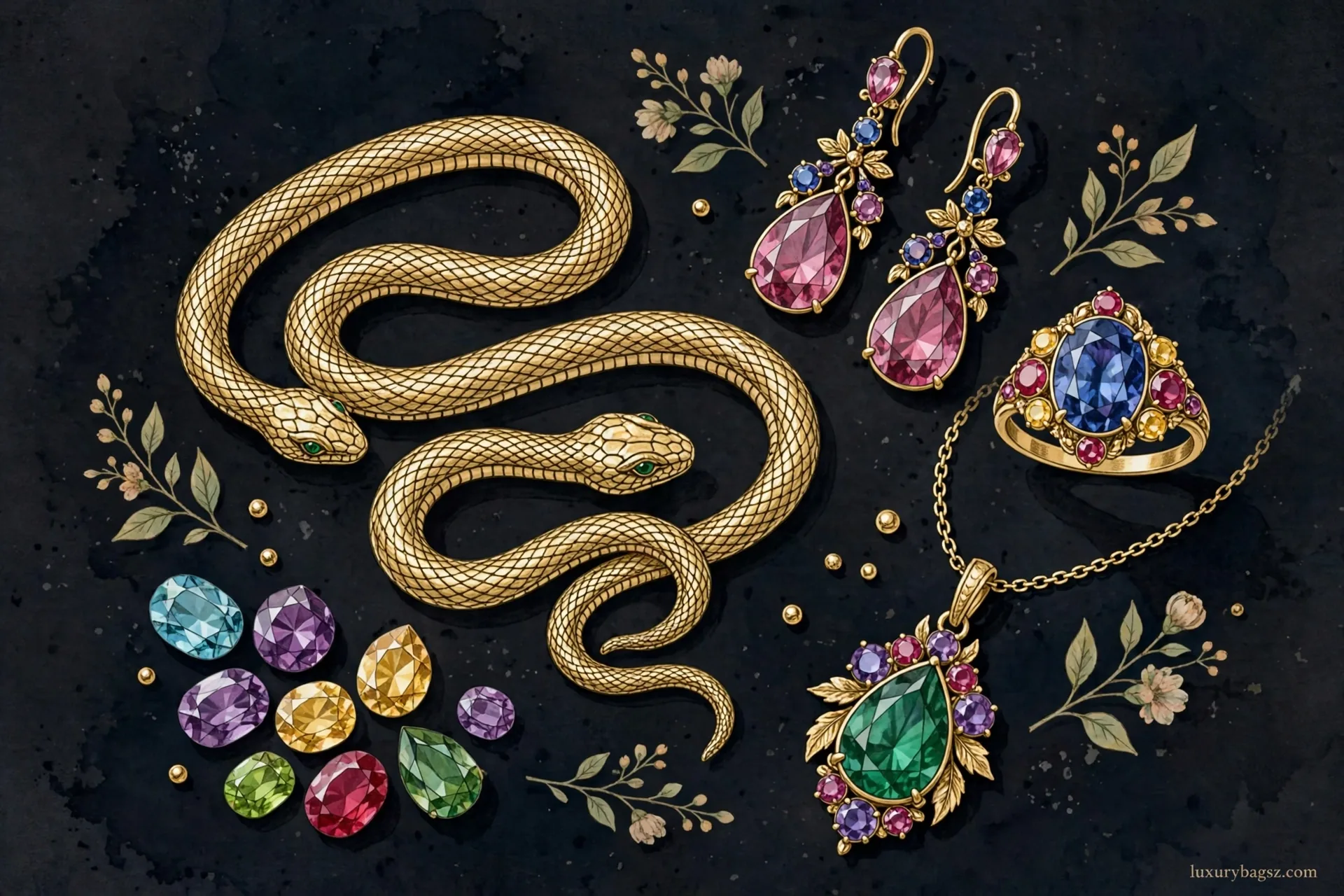
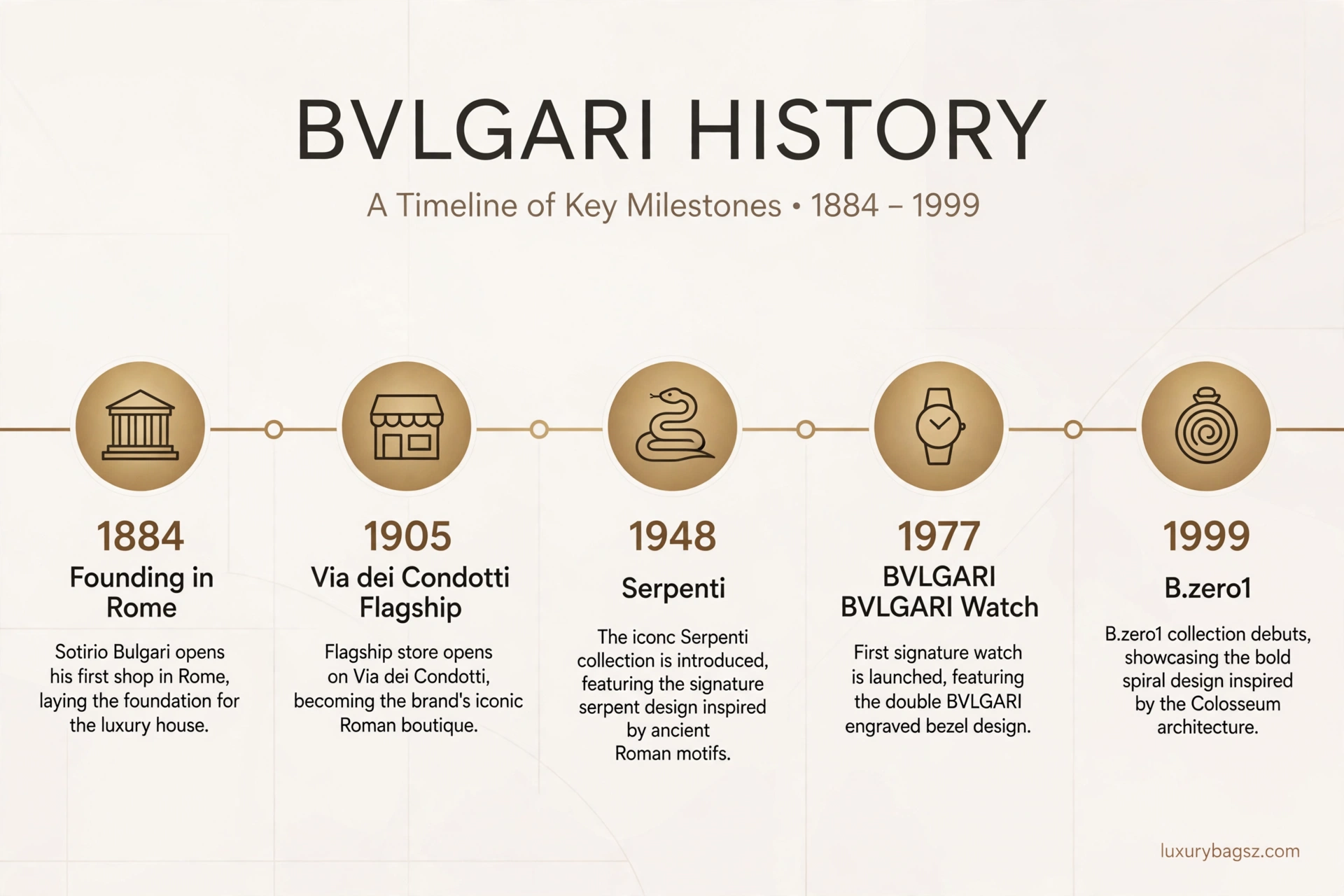
Bvlgari is Rome in jewellery form: bold colour, ancient motifs, and a confidence that Paris never taught it. A Greek silversmith named Sotirio Bvlgari opened shop in Rome in 1884, and his sons turned a silversmith's business into a house known for cabochon stones, serpent coils, and yellow gold worn loud.
The house's signature is Serpenti, the jewelled snake that first coiled around a wrist as a watch in 1948. Around it sit B.zero1's industrial rings, the coin-set Monete pieces, and the BVLGARI BVLGARI watch, whose bezel spells the name twice. Bags came later, led by the Serpenti Forever line with its enamel snake-head clasp.
For buyers, Bvlgari means colour first and quiet second. Pieces hold their identity instantly, which helps resale for icons like Serpenti and B.zero1, while fashion-led bags and seasonal colours trade softer. Buy the icon, check the hallmarks, and keep the papers.
Key Takeaways
- Bvlgari was founded in Rome in 1884 by Sotirio Bvlgari, a Greek silversmith.
- The Via dei Condotti flagship opened in 1905 and remains the house's spiritual home.
- Serpenti, the serpent bracelet watch, dates to 1948 and is the house's top icon.
- Cabochon stones, polished domes rather than faceted gems, define the Bvlgari look.
- Icons include Serpenti, B.zero1, Divas' Dream, Monete, Parentesi, and BVLGARI BVLGARI.
- The BVLGARI BVLGARI watch, with the name engraved around the bezel, dates to 1977.
- Bvlgari bags centre on Serpenti Forever, with leather bags priced below the jewellery icons.
- The house now runs about 300 stores worldwide and covers jewellery, watches, bags, fragrance, and hotels.
A Greek Silversmith Opens Shop in Rome
Sotirio Bvlgari, born Sotirios Voulgaris in Greece, arrived in Rome and opened his own shop in 1884. The brand name is an Italianised form of his surname, and the logo spells it BVLGARI, using the classical Latin alphabet in a nod to ancient Rome.
Early clients were English travellers passing through Rome on the Grand Tour, the traditional trip for wealthy young Britons after university. Silverwork was the early trade, and the shop built a reputation for fine craftsmanship before it ever sold a high-jewellery serpent.
In 1905, Sotirio opened the flagship boutique on Via dei Condotti, Rome's luxury shopping street. That address became the house's centre of gravity, and it still anchors Bvlgari's identity today, steps from the Spanish Steps.
Sotirio's sons Giorgio and Constantino joined the business and pushed it toward fine jewellery. They looked to French Art Deco lines at first, working in diamonds and platinum, before the house found its own Italian voice.
Finding the Roman Voice
After Sotirio died in 1932, his sons took over and steered Bvlgari away from copying Paris. They drew on Italian architecture, folklore, and ancient Roman art, and the house began to look like its home city rather than a French import.
One early Sotirio piece points to that turn: the Trombino, Italian for small trumpet, a trumpet-shaped ring he made for his wife in the early 1930s. It was playful, sculptural, and personal, a preview of the bold shapes to come.
The 1950s fixed the house style. Bvlgari became known for vibrant coloured stones inspired by the rounded domes on Rome's skyline, cut as cabochons: polished, domed stones, the opposite of the faceted gems that dominate fine jewellery.
That colour-first approach became the house rule. Where Paris houses prized white diamonds and restraint, Bvlgari mixed rubies, emeralds, sapphires, and turquoise in yellow gold, often in combinations other jewellers would never attempt.
Serpenti: The Snake That Built the House
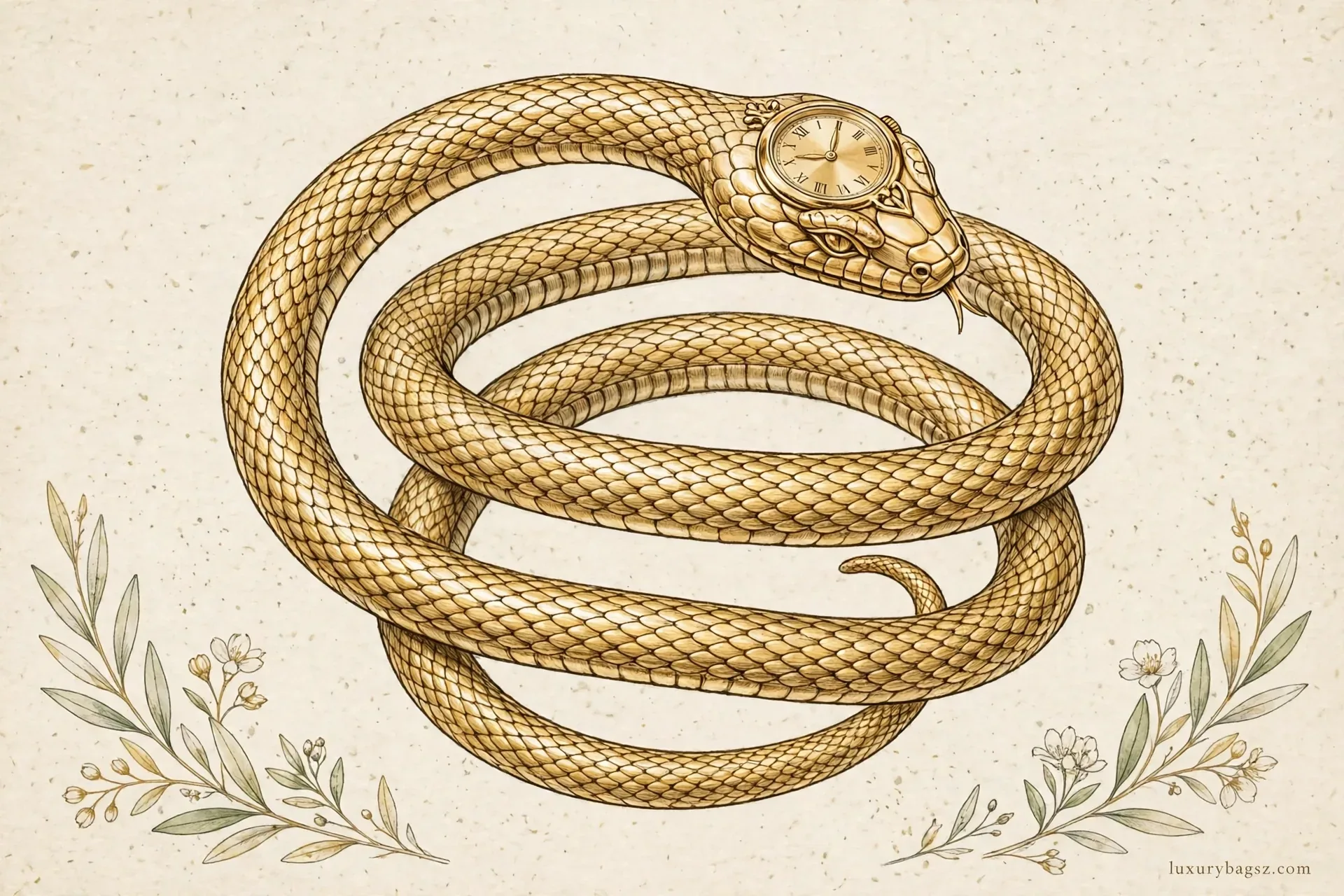
At the end of the 1940s, the brothers turned to the serpent, a symbol of renewal and creative force in ancient Roman and Greek myth. The first Serpenti bracelet watch appeared in 1948, coiling around the wrist with a dial set in the snake's head.
The early coils used Tubogas, a technique of linked horizontal bands that flexes without soldering, so the bracelet wraps the wrist like a real snake. Through the 1950s the serpent grew more realistic, and in the 1960s it became a canvas for coloured gems and enamel scales.
Serpenti now spans bracelet watches, rings, bangles, necklaces, and earrings. The modern lines split into Tubogas watches, Seduttori watches with scale-link bracelets and drop-shaped cases, and Viper jewellery, where the snake's scales become a pattern of gold modules, often set with pavé diamonds.
Serpenti celebrated 75 years in 2023, and it remains the first Bvlgari line most buyers name. When buying Serpenti, the coil's flexibility, the scale finish, and the head's detail are the checks that matter most, since fakes flatten all three.

B.zero1, Divas' Dream, Monete, and Parentesi
B.zero1 arrived in 1999, designed to mark the year 2000, and it took its shape from Rome's Colosseum. A spiral band of gold, sometimes with ceramic or diamonds, it reads industrial and modern next to Serpenti's curves, and it is one of the house's most recognised rings.
Divas' Dream plays a softer note. Fan-shaped motifs set with diamonds and coloured stones echo Roman mosaics and the glamour of the Dolce Vita era, and the line suits buyers who want Bvlgari colour without a snake on the wrist.
Monete sets ancient coins into jewellery, a direct link to Rome's past that no other major house copies so literally. Parentesi, with its interlocking modular links, dates to the house's inventive 1990s phase, when Bvlgari pushed jewellery that could be taken apart and restyled.
BVLGARI BVLGARI deserves its own mention. The watch, launched in 1977, engraves the brand name twice around the bezel, borrowing the look of ancient Roman coin inscriptions. It turned a logo into a design feature, and it still sells as an everyday Bvlgari watch.
Watches: Octo and Everyday Bvlgari Time
Beyond Serpenti and BVLGARI BVLGARI, Bvlgari's watchmaking grew serious after it absorbed the Gérald Genta and Daniel Roth workshops. The Octo line, with its octagonal case, carries the house's high-watchmaking ambition and its thinnest movements.
For most buyers, though, the watch choice is simpler: Serpenti for jewellery impact, BVLGARI BVLGARI for a logo-led daily watch, and Octo for a collector's piece. Quartz Serpenti models need batteries and gasket checks, while automatic models need a full service every few years.
Service history matters at resale. A recent service record, original box, and papers add confidence for any Bvlgari watch, and they matter more than a fresh battery alone. Keep service receipts with the watch, not in a separate drawer.
Bags: Serpenti Forever Leads a Smaller Leather Range
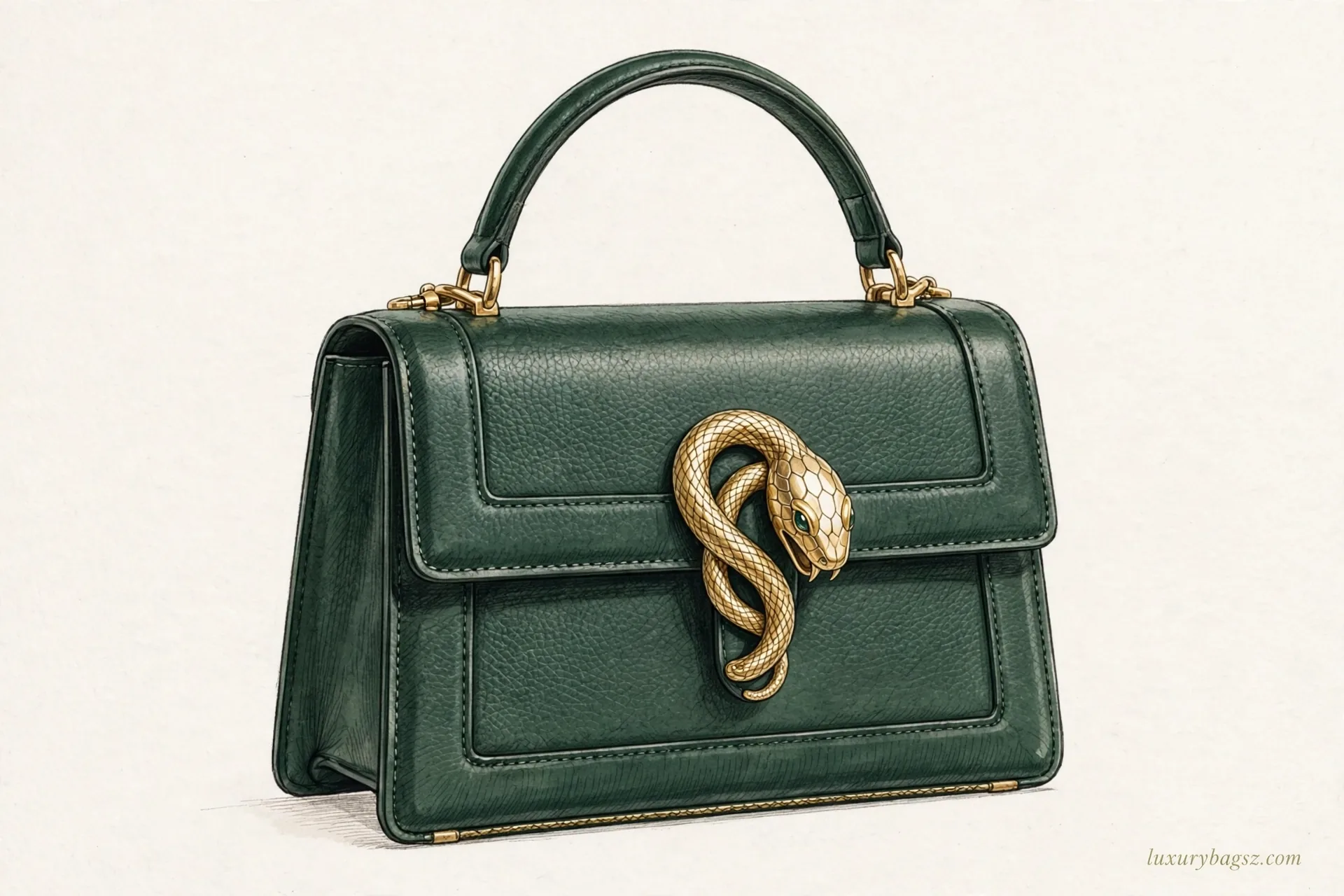
Bvlgari is a jewellery house first, and its bags reflect that. The Serpenti Forever line leads, with structured leather bags closed by an enamel serpent-head clasp, the same snake that defines the jewellery, shrunk to hardware.
Guides put most Serpenti bags between about $3,000 and $6,050 depending on style, while resale listings for Serpenti Forever bags commonly start near $1,280 and average around $1,663 on one major marketplace. Treat those marketplace figures as a snapshot, not a price promise, since condition and colour move them sharply.
Other Bvlgari bags include totes, crossbodies, and small leather goods, often in calf leather with the BVLGARI BVLGARI logo or Monete-style hardware. They are well made, but they do not carry the resale depth of the jewellery icons, so buy them to carry, not to flip.
Check bag hardware closely on pre-owned pieces. The serpent clasp should feel weighty and enamel-clean, stitching should be even, and the lining should carry the brand mark crisply. Light, plasticky hardware is the clearest warning sign.
Dolce Vita, Hollywood, and the Red Carpet
Rome's postwar boom made Bvlgari famous beyond jewellery circles. Federico Fellini's 1960 film La Dolce Vita defined the era, and the Via dei Condotti store became a gathering place for socialites and film stars passing through Cinecittà, Rome's "Hollywood on the Tiber."
Elizabeth Taylor became the house's most famous client. She wore a Serpenti bracelet while filming Cleopatra in Rome, and she accepted her 1966 Best Actress Oscar wearing a Bvlgari necklace of 60.5 carats set with 16 emeralds, a moment still quoted in every Bvlgari history.
The red-carpet link never faded. In recent years Zendaya wore about $6 million in Bvlgari jewels to the 2021 Oscars, and Charlize Theron and Keira Knightley are regular wearers. For Bvlgari, celebrity wear is not marketing gloss; it is part of the archive.
In the 1970s the house expanded across Europe and beyond, absorbing Pop Art and East Asian influences into new styles. The 1990s brought modular jewellery, and today the house counts about 300 stores worldwide, plus fragrance and hotels under the Bvlgari name.
What Bvlgari Costs
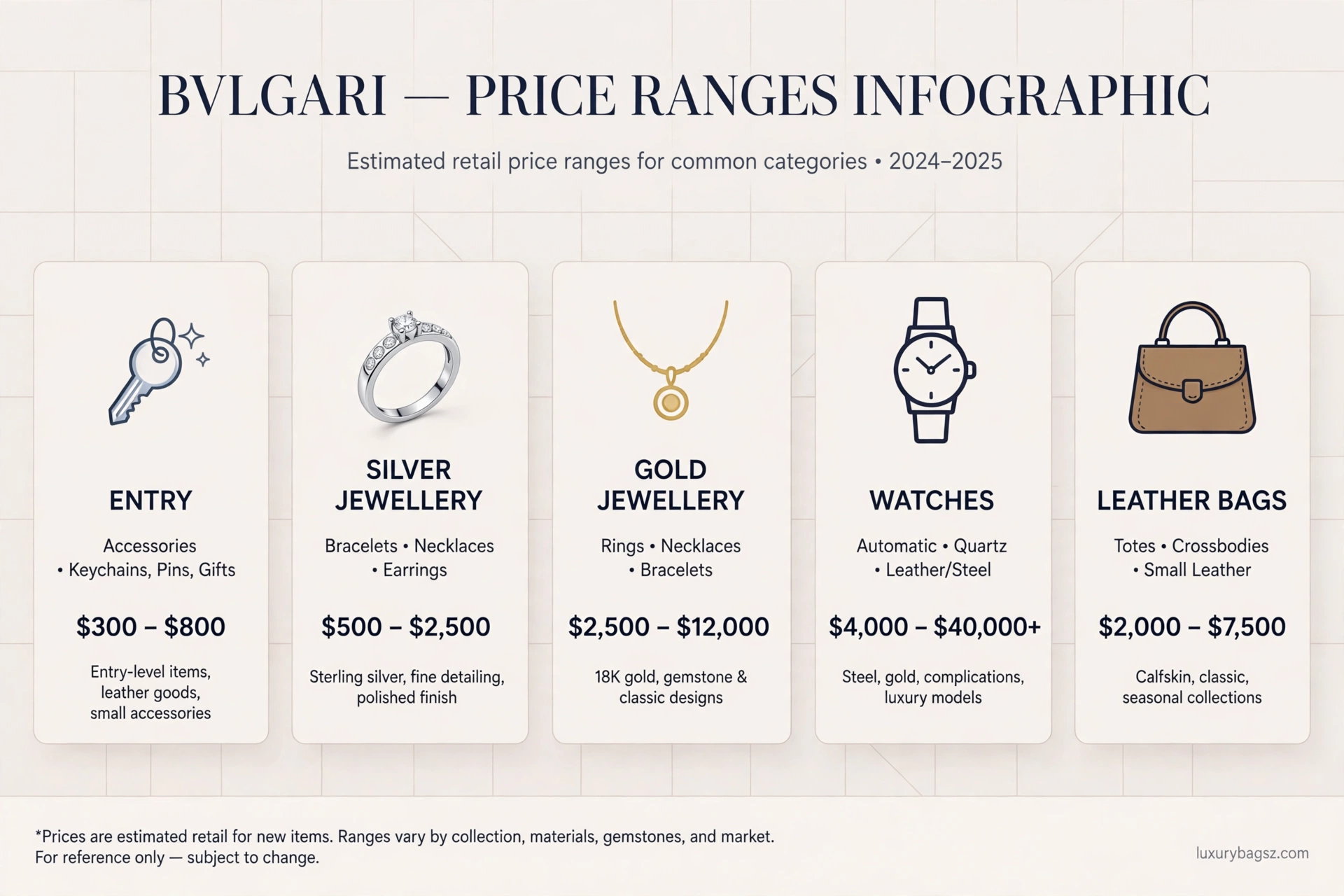
Bvlgari pricing splits sharply by category, so a single "Bvlgari price" tells you little. Small silver and entry jewellery pieces sit at the accessible end, gold icons sit in the middle thousands, and high jewellery with major coloured stones runs far higher.
Guides list B.zero1 rings starting in the low thousands, Serpenti Viper pieces higher depending on gold colour and pavé diamonds, and Serpenti Tubogas watches higher again. Octo watches and high-jewellery Serpenti pieces climb well beyond those entry points.
Bags, as noted above, generally fall in the low-to-mid thousands at retail, with Serpenti Forever the headline line. Leather goods and small accessories sit below the bags. Always confirm current retail on the house's own listings before budgeting, since prices rise regularly.
For resale, icons hold up best. Serpenti and B.zero1 in classic gold colours trade most easily, while seasonal colours and fashion bags soften. Our guide to how to price designer jewellery for resale explains how condition, completeness, and demand set the number.
Buying Bvlgari Pre-Owned: Checks That Matter
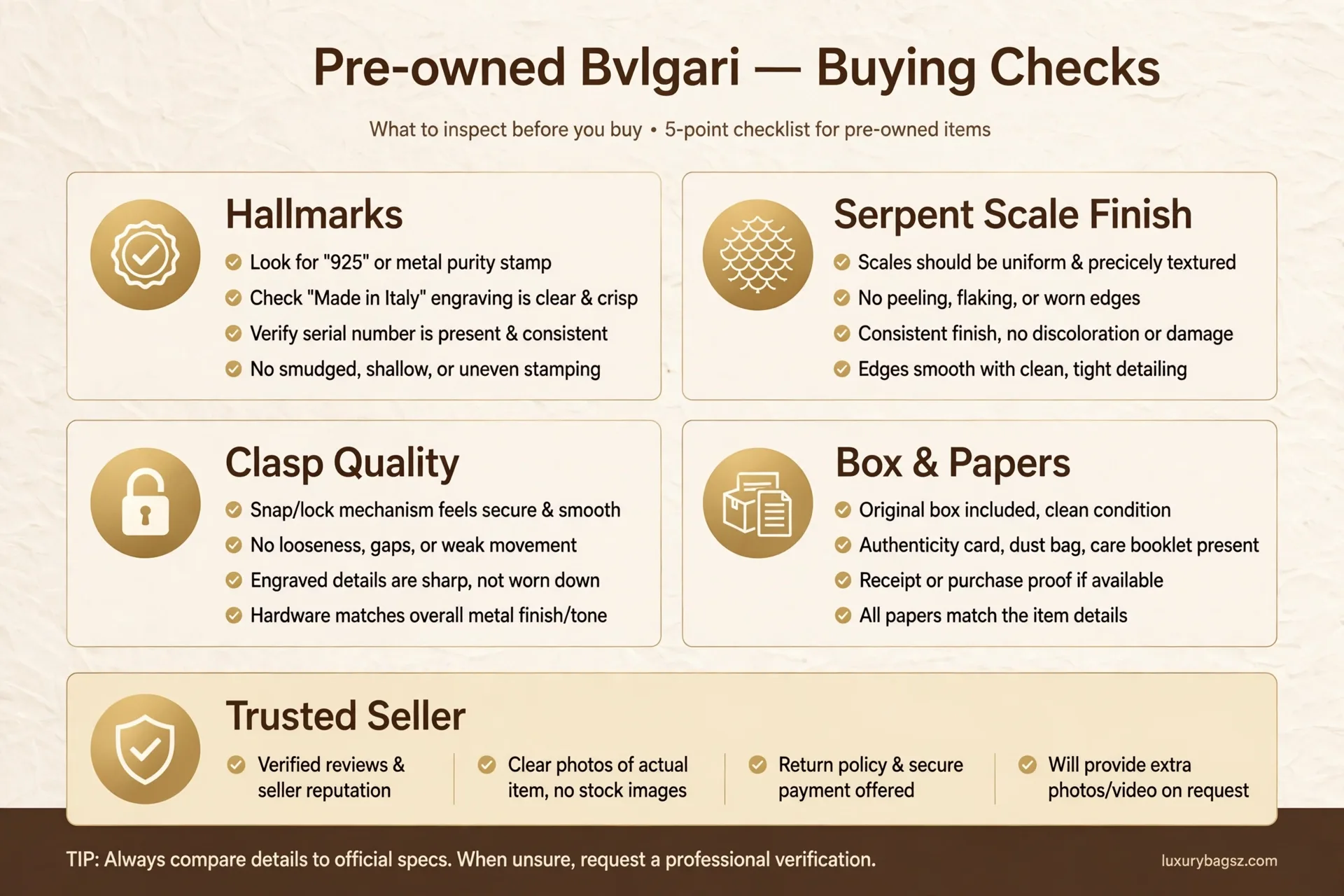
Start with the seller, not the piece. Buy from a house, dealer, or platform that authenticates in-house and offers returns, and be wary of street markets, unknown auction sellers, and deals far below market. If a Serpenti price looks too kind, it usually is.
Check hallmarks and engraving next. Real Bvlgari engraving is crisp and evenly spaced, including the BVLGARI BVLGARI bezel lettering on watches. Blurry, shallow, or uneven letters are a warning, as are hallmarks that do not match the claimed metal.
For Serpenti, flex the coil gently and study the scales. Tubogas should move smoothly without kinks, and Viper scales should line up cleanly. For bags, test the serpent clasp, weigh the hardware in your hand, and inspect stitching and lining print.
Ask for the full set: box, papers, certificate, and service records for watches. Missing papers do not prove a fake, but a complete set supports both authenticity and resale.
For bag buys, our guide to how to buy a pre-owned designer bag safely and how to authenticate a pre-owned designer bag cover the wider checks. If you later sell, read how to resell luxury jewellery first.
Caring for Bvlgari: Gold, Gems, and Leather
Gold jewellery needs little more than gentle cleaning and safe storage. Wipe pieces with a soft, dry cloth after wear, store them separately so harder gems do not scratch gold, and keep them away from harsh chemicals, pools, and perfumes sprayed directly on the piece.
Coloured stones need more care. Cabochons can scratch and chip, and enamel on Serpenti clasps and scales can crack if knocked. Take enamel pieces off before sport, gardening, or any task that risks a bang against a hard surface.
For diamond-set pieces, check settings once a year. A loose pavé stone is cheaper to reset early than to replace later. Our guide to how to clean gold and diamond rings covers safe home cleaning, and for watches, see how to clean a watch before touching a Serpenti case.
Bags need the usual leather care: wipe with a soft cloth, keep out of direct sun and rain where possible, and stuff the bag lightly for storage so it holds its shape. Never use harsh cleaners on enamel clasps or exotic trims.
How Bvlgari Compares With Its Rivals
Bvlgari, Cartier, and Tiffany are the three names most buyers weigh together, and they suit different tastes. Cartier leans Parisian and architectural, with pieces like the Love bracelet, whose history we cover in our Cartier Love bracelet history guide, while Tiffany leans American and romantic, built on the six-prong solitaire.
Bvlgari is the boldest of the three. It uses more colour, more yellow gold, and more overt Roman symbolism, and it suits buyers who want jewellery to be noticed. If you prefer quiet luxury, Cartier's plainer gold or Tiffany's silver may fit better.
On pre-owned checks, the houses differ too. Tiffany pieces carry their own hallmark and serial conventions, covered in our guide to how to authenticate Tiffany jewellery, while Bvlgari fakes most often fail on scale finish, coil flex, and engraving crispness. Learn one house's tells before you buy it.
Price-wise, Bvlgari icons and Cartier icons trade in a similar band, with Tiffany silver far more accessible. None of the three is a guaranteed investment; buy the piece you will wear, and treat resale strength as a bonus.
Is Bvlgari Worth It, and Who Should Buy
Bvlgari is worth it for buyers who love colour, Roman symbolism, and jewellery with presence. Serpenti and B.zero1 are genuine icons with decades of history, and they look unlike anything from Paris or New York, which is exactly the point.
It is a weaker fit for minimalists. If you want a plain gold band or a whisper-quiet watch, Bvlgari's colour and logo-led designs will feel loud. The house does make quieter gold pieces, but its heart is in bold combinations.
First-time buyers should start with B.zero1 or a small Serpenti Viper piece in yellow or rose gold. Both are wearable daily, recognisable without explanation, and easier to resell than a seasonal bag or a bright enamel colour.
Collectors should chase vintage Serpenti Tubogas watches and Monete pieces, where the Roman story is strongest. Whatever you buy, keep the box and papers, service watches on schedule, and wear the colour with confidence.
Monete: Coins You Can Wear
Monete is Bvlgari's most Roman idea: genuine ancient coins set into modern jewellery mounts. Where other houses borrow Roman motifs, Bvlgari mounts the history itself, framing coins from Greek and Roman eras in gold with cabochon stones or diamond accents.
The appeal is twofold. You get a wearable antiquity, a coin that passed through real hands two thousand years ago, and you get Bvlgari's bold colour sense framing it. No two Monete pieces are identical, since no two ancient coins are identical, which suits collectors who dislike mass-produced luxury.
Prices vary with the coin, not just the mount. A common bronze coin in a simple gold frame costs far less than a rare silver or gold coin in a diamond-set mount, and provenance paperwork matters more here than for any other Bvlgari line. Ask what the coin is, where it was sourced, and whether the mount can be reversed without damage.
For first-time Monete buyers, start with a pendant rather than a ring. Pendants show the coin best, take less daily wear, and are easier to resell to collectors who value the coin itself. Keep the coin's documentation with the piece, since it is half the value.
Bvlgari for Men
Bvlgari's men's range is stronger than its reputation suggests, led by watches and small leather goods rather than statement jewellery. The BVLGARI BVLGARI watch in steel, the Octo in its cleaner versions, and B.zero1 rings in darker metals suit men who want luxury without flash.
Men's bracelets and necklaces lean on the same icons: B.zero1 cuffs, Parentesi links, and Monete pendants, usually in yellow gold or steel rather than pavé diamonds. The look is Roman and confident, closer to a signet tradition than to fashion jewellery.
Leather goods for men include wallets, card holders, belts, and document cases, often in dark calf leather with subtle BVLGARI BVLGARI hardware. They are well made but priced at luxury levels, so compare them with dedicated leather houses before paying for the name alone.
Fragrance is the easiest men's entry point. Bvlgari's men's scents, led by the long-running Pour Homme lines, cost a fraction of jewellery and carry the house's Roman character. They make sense as a first purchase, though they hold no resale value.
Fragrance, Hotels, and the Lifestyle Side
Bvlgari is more than a jewellery brand today; it lends its name to fragrance, hotels, and about 300 stores worldwide. The lifestyle side matters because it shapes how buyers first meet the house, often through a scent or a hotel stay long before a jewellery purchase.
The fragrance range spans women's, men's, and unisex lines, with the Omnia and Pour Homme families as the long-running anchors. They are widely available, moderately priced for luxury scent, and a low-risk way to test whether the house's character suits you.
Bvlgari Hotels, in cities including Rome, Milan, London, and Dubai, extend the brand into hospitality with the same mix of Roman references and modern luxury. A stay is not a buying guide, but it explains the house's confidence: Bvlgari sells a world, not just an object.
For collectors, the lifestyle lines are a footnote, not a focus. Fragrance and hotel stays do not appreciate, and they should not distract from the jewellery and watch icons that carry the house's value. Enjoy them, but budget them as experiences.
Vintage Bvlgari: What Collectors Chase
Vintage Bvlgari rewards knowledge more than most houses, because the house changed so much across decades. Collectors chase 1960s and 1970s colour combinations, early Serpenti Tubogas watches, and Monete pieces with well-documented coins.
The Dolce Vita era is the sweet spot. Pieces from the 1950s through the 1970s carry the cabochon colour and yellow gold that define the house, and they often come with celebrity provenance, real or claimed. Treat provenance claims sceptically unless paperwork supports them.
Condition checks for vintage differ from new buys. Enamel may have hairline cracks, Tubogas coils may have lost flex, and older clasps may have been repaired. A sympathetic repair by the house is acceptable; a crude repair by an unknown hand is not, and it should cut the price.
Buy vintage from specialists who know the eras. A general dealer may miss a replaced clasp or a re-enamelled scale, while a Bvlgari specialist will spot both. Pay for expertise on vintage, since the saving against new prices disappears fast on a wrong piece.
A Buyer's Shortlist by Budget
At an entry budget, start with fragrance or a small silver piece, then move to a B.zero1 ring in the lowest gold weight you can find. Both give you the house's design language without the high-jewellery price, and both are easy to wear daily.
At a midrange budget, a Serpenti Viper bracelet or a B.zero1 ring with diamonds is the classic buy. Choose yellow or rose gold over white for the most Bvlgari look, and favour classic colours over seasonal enamel, which trades softer later.
At a higher budget, a Serpenti Tubogas watch or a Divas' Dream necklace in coloured stones is the statement purchase. Insist on box, papers, and service history for watches, and on a certificate for any major coloured stone, since both protect resale.
At any budget, the rule stays the same: buy the icon, not the novelty. Bvlgari's icons have survived decades of fashion change, while its seasonal experiments have not, and the resale market reflects that gap plainly.
Serpenti Through the Decades
Serpenti's story is a timeline of reinvention. In 1948 it was a bracelet watch with a geometric dial hidden in the snake's head, built on flexible Tubogas. In the 1950s the snake grew realistic, with enamel scales and gemstone eyes, and in the 1960s it became a jewelled canvas for coloured stones.
The 1970s and 1980s brought bolder, chunkier Serpenti, matching the era's taste for statement jewellery, while the 1990s refined the snake into sleeker, more modular forms. Each decade kept the coil and the head, changing only the skin, which is why Serpenti never looks dated.
The 2000s split Serpenti into its modern families: Tubogas watches for the classic coil, Seduttori for scale-link bracelets, and Viper for jewellery that abstracts the scales into gold modules. The 75th anniversary in 2023 added new colours and the Serpenti Infinito concept, celebrating transformation itself.
For buyers, the decade matters. Early Tubogas watches are collector pieces with fragile coils, while modern Viper jewellery is the most wearable daily entry. Match the decade to your wrist and your budget, not just to the name.
Bvlgari and the Art of Colour
Colour is Bvlgari's true signature, more than any single motif. The house mixes rubies, emeralds, sapphires, turquoise, coral, and onyx in combinations that break the old rule of matching stones, trusting yellow gold to hold clashing colours together.
The cabochon cut is central to that art. A domed, unfaceted stone glows rather than sparkles, giving Bvlgari pieces a soft, almost edible richness that faceted diamonds cannot match. It is a Roman look, drawn from domes and mosaics rather than Parisian brilliance.
Learning colour helps buyers choose well. Classic combinations, like emerald with diamond in yellow gold, hold value best, while unusual mixes suit personal taste but narrow resale. If you love an unusual mix, buy it to wear, not to flip.
For bags, colour follows the same rule. Black and neutral Serpenti Forever bags trade most easily, while bright enamel clasps and seasonal leather colours suit a second bag. Start neutral, then add colour once you know the house.
Shopping Bvlgari: Boutique, Department Store, or Pre-Owned
New Bvlgari is best bought in the boutique, where the full range, sizing, and service history are available, and where high-jewellery pieces can be viewed by appointment. Department stores carry a narrower range but offer the same authenticity and easier returns.
Pre-owned suits icons best. Serpenti and B.zero1 in classic gold trade actively, and a careful pre-owned buy saves meaningfully against retail while keeping the design intact. Fashion bags and seasonal colours are where pre-owned savings are deepest, for the same reason resale is softest.
Online marketplaces demand the most care. Insist on detailed photos of hallmarks, clasps, and scales, ask for box and papers, and favour sellers with in-house authentication and returns. A listing with one blurry photo is not a bargain; it is a risk.
Whatever the channel, keep every document. Box, papers, certificate, and service receipts protect both authenticity claims and resale value, and they cost nothing to file together from day one.
Bvlgari Care Calendar: A Yearly Routine
A simple yearly routine keeps Bvlgari pieces in good order. Every month, wipe gold and enamel pieces with a soft, dry cloth after wear, and check bag hardware and clasps for looseness. Monthly attention catches small problems before they grow.
Every six months, inspect settings and coils. Look for loose pavé stones, Tubogas kinks, and enamel hairlines, and take anything suspect to the house or a trusted jeweller before it worsens. Clean bags lightly and re-stuff them for storage.
Once a year, book a professional clean and inspection for pieces worn weekly, and a service for watches on the house's schedule. Quartz models need batteries and gaskets, automatics need full servicing, and both need their records kept with the piece.
Store everything separately, away from sun, humidity, and harsh chemicals. Gold scratches easily, enamel chips on impact, and leather fades in sun, so a little routine care preserves both beauty and value for years.
Bvlgari and Rome Today: The Flagship Experience
A visit to the Via dei Condotti flagship is the best way to understand Bvlgari, because the house's whole story sits in one address. The boutique, opened in 1905, stands steps from the Spanish Steps, and its rooms mix Roman references with modern luxury in a way no website can reproduce.
Flagship visits suit serious buyers best. High-jewellery pieces, rare Serpenti watches, and Monete coins are often shown by appointment, and staff can explain stone combinations, coil mechanics, and vintage eras with a depth that general counters cannot match.
For casual visitors, the flagship is still worth an hour. The window displays, the Serpenti range, and the B.zero1 collection give a fast education in the house's colour and scale, and trying pieces on teaches more about fit and weight than any photograph.
If Rome is out of reach, the house's other flagships in Milan, London, New York, and Tokyo offer a similar experience at smaller scale. Wherever you visit, go with a shortlist, a budget, and time to try pieces on properly, since Bvlgari's bold designs look very different on the wrist than in a catalogue.
Frequently Asked Questions
Who founded Bvlgari?
Sotirio Bvlgari, a Greek silversmith born Sotirios Voulgaris, founded the house in Rome in 1884. His sons Giorgio and Constantino later moved it into fine jewellery.
Why is the logo spelled BVLGARI?
The logo uses the classical Latin alphabet, in which V stands for U, as a nod to ancient Rome. The brand name itself is an Italianised form of the founder's surname.
What is Bvlgari best known for?
Serpenti, the serpent bracelet watch from 1948, is the house's top icon. B.zero1 rings, cabochon coloured stones, and the BVLGARI BVLGARI watch are close behind.
What is a cabochon stone?
A cabochon is a polished, domed stone without facets. Bvlgari made cabochons its signature in the 1950s, using them for bold coloured-stone combinations in yellow gold.
How much do Bvlgari Serpenti bags cost?
Guides put most Serpenti bags between about $3,000 and $6,050 at retail depending on style. Resale listings commonly run lower, with Serpenti Forever bags averaging around $1,663 on one major marketplace.
Are Bvlgari bags a good investment?
Bags are best bought to carry rather than to flip. Jewellery icons like Serpenti and B.zero1 hold value better than fashion-led bags and seasonal colours.
How can I tell if Bvlgari jewellery is real?
Check crisp, even engraving, correct hallmarks, smooth Tubogas flex, and cleanly aligned Viper scales. Buy from an authenticating seller and ask for box, papers, and service records.
Does Bvlgari use real ancient coins?
Monete pieces set genuine ancient coins into jewellery mounts. They are collector pieces, and coin condition and provenance affect their value.
Is Bvlgari part of LVMH?
Yes. Bvlgari joined the LVMH group in 2011, alongside houses like Louis Vuitton, Dior, and Tiffany, while keeping its Rome identity and Via dei Condotti flagship.
What should a first-time Bvlgari buyer choose?
A B.zero1 ring or a small Serpenti Viper piece in classic yellow or rose gold is the safest start. Both are daily-wearable, instantly recognisable, and easier to resell than seasonal colours.
Final Verdict
Bvlgari is Rome's answer to Paris jewellery: louder, more colourful, and proud of it. From a Greek silversmith's shop in 1884 to Serpenti's coils and B.zero1's rings, the house has never apologised for being noticed.
Buy the icon that fits your life, check the hallmarks and the coil, and keep the papers. Worn well, Bvlgari colour does not age; it simply becomes more itself.






