

Are Cartier Bracelets a Good Investment? Resale, Models, and What to Check Before You Buy
Cartier Bracelets: Strong Resale, But Not a Promise
Cartier bracelets are among the strongest value holders in luxury jewellery, but they are not a guaranteed profit. The classic gold designs — Love, Juste un Clou, and Trinity — regularly resell for a high share of retail, while fashion-led or heavily diamond-set pieces are far less predictable.
That distinction matters more than the brand name alone. A plain gold Love bracelet in excellent condition with its box and papers trades in a deep, liquid market. A niche design in an unusual size, or a piece with heavy wear and no papers, can sit unsold or sell well below the headline retention figures.
This guide is a buying decision guide, not financial advice. Past resale performance does not guarantee future value, and prices move with gold prices, retail price rises, fashion cycles, and how many similar pieces are listed at the same time. Buy a bracelet you will enjoy wearing; treat any resale strength as a bonus, not a return you can bank on.
Key Takeaways

- Classic gold Love, Juste un Clou, and Trinity bracelets hold value best; niche and heavily diamond-set designs are less predictable.
- Resale reports disagree on exact figures, so treat any single percentage as a range, not a fixed fact.
- Condition drives price more than anything else: scratches, worn screw heads, and missing papers all cut what buyers will pay.
- Buying pre-owned in excellent condition often gives the best value, since someone else has already absorbed the boutique premium.
- Keep servicing gentle: repeated heavy polishing removes metal and can soften screw detail.
- Never buy a Cartier bracelet as a pure financial investment; buy it to wear, with resale strength as a safety net.
What the Resale Numbers Actually Say
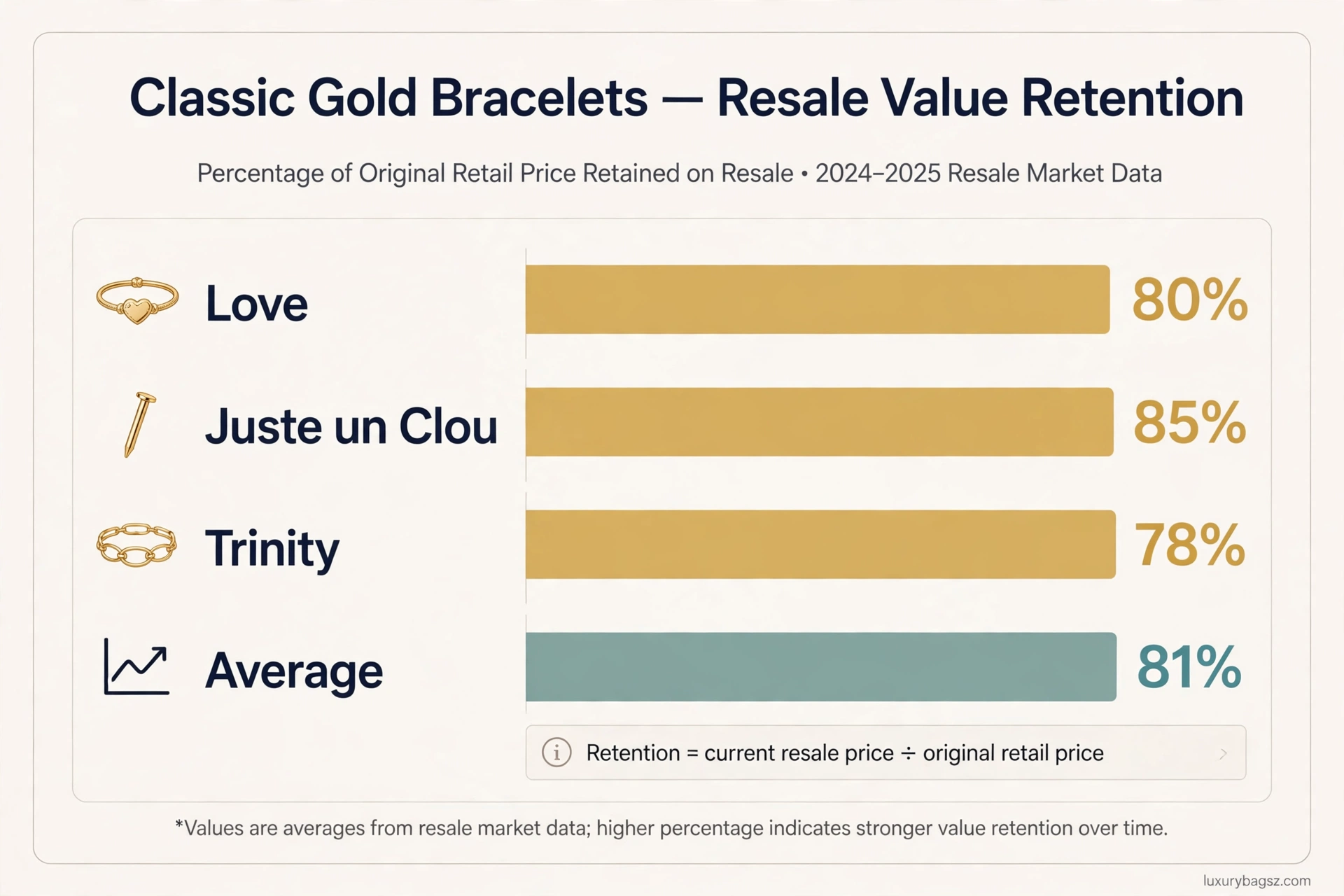
Rebag's 2022 Clair Report, built from millions of primary and secondary market data points, put average Cartier value retention at 79% of retail. In the same report, Cartier bracelets averaged 96% retention, with Trinity on Cord at 109%, Love at 99%, and Juste un Clou at 95%.
Later reports tell a slightly different story, and that gap is worth knowing. A 2025 Clair Report figure quoted for the Love bracelet is 92%, while a 2026 resale report based on over 2,000 jewellery transactions puts Cartier jewellery generally at 60% to 90% of retail. These are not contradictions to hide; they reflect different years, different mixes of pieces, and different ways of measuring.
The honest reading is a range, not a promise. Classic bracelets in excellent condition cluster near the top of those ranges. Average pieces, worn daily with visible scratches, land lower. Any article that quotes one exact percentage for every Cartier bracelet is oversimplifying a market that prices each piece on its own merits.
The Models That Hold Up Best
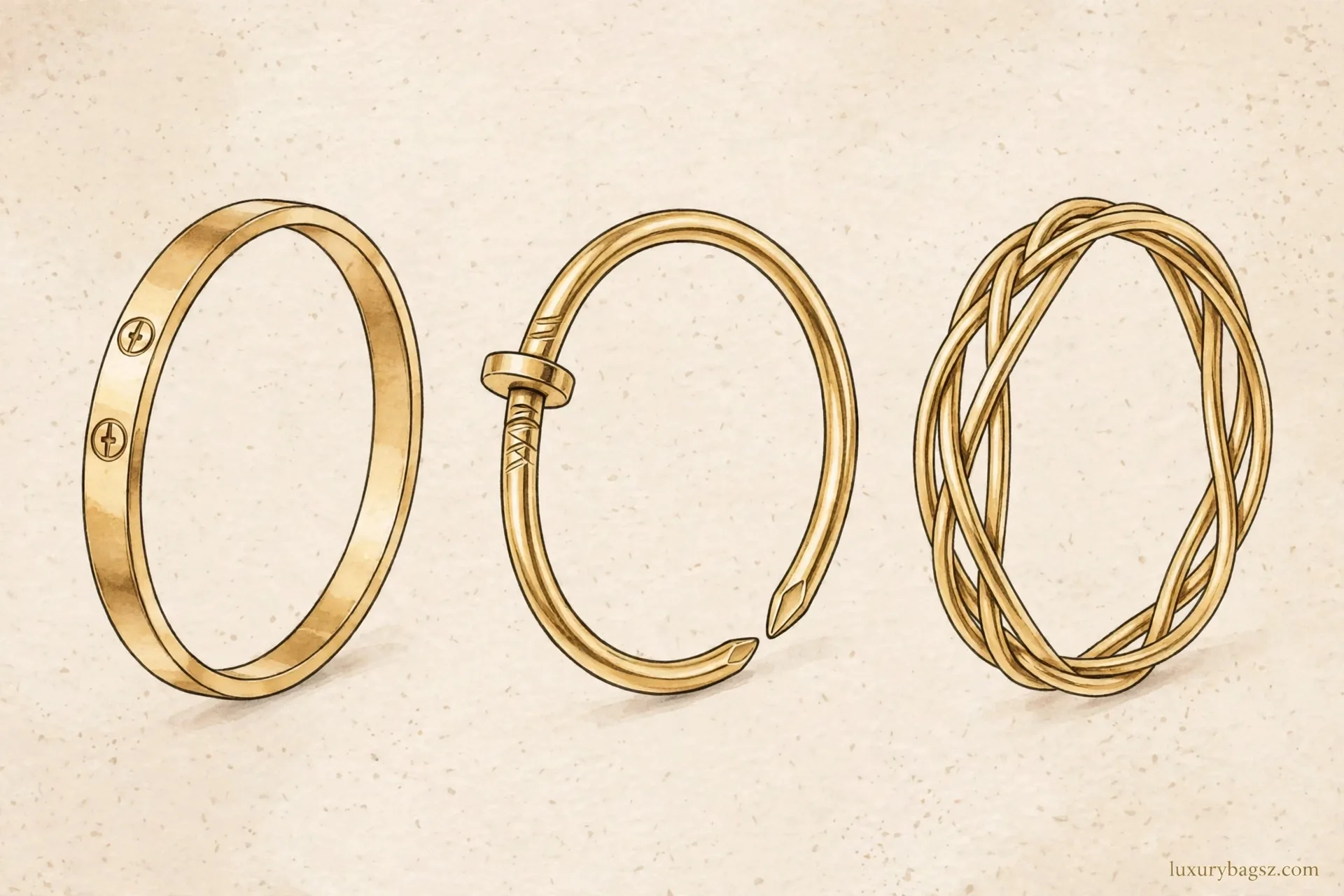
The Love bracelet, designed by Aldo Cipullo in New York in 1969, is the most recognised Cartier bracelet and the most traded. Its design has barely changed in over five decades, which keeps old and new pieces in the same market rather than splitting buyers into vintage and modern camps. For background, read our guide to the history of the Love bracelet.
Juste un Clou, the nail-shaped bangle that followed in the early 1970s, is the other headline performer, with some reports putting its retention above the Love's. Trinity, with its three interlinked bands in different gold colours, also holds up well, and the Trinity on Cord version has been singled out as the strongest single performer in Rebag's 2022 data.
Size and metal matter within each model. The most common women's sizes, 17, 18, and 19 for the Love, are the most liquid because more buyers wear them.
Yellow gold currently sees the strongest demand in several reports, with rose gold carrying a modest premium in some markets. If fit is your worry, check our Love bracelet sizes guide before you buy, since the wrong size is harder to resell.
New vs Pre-Owned: The Honest Math
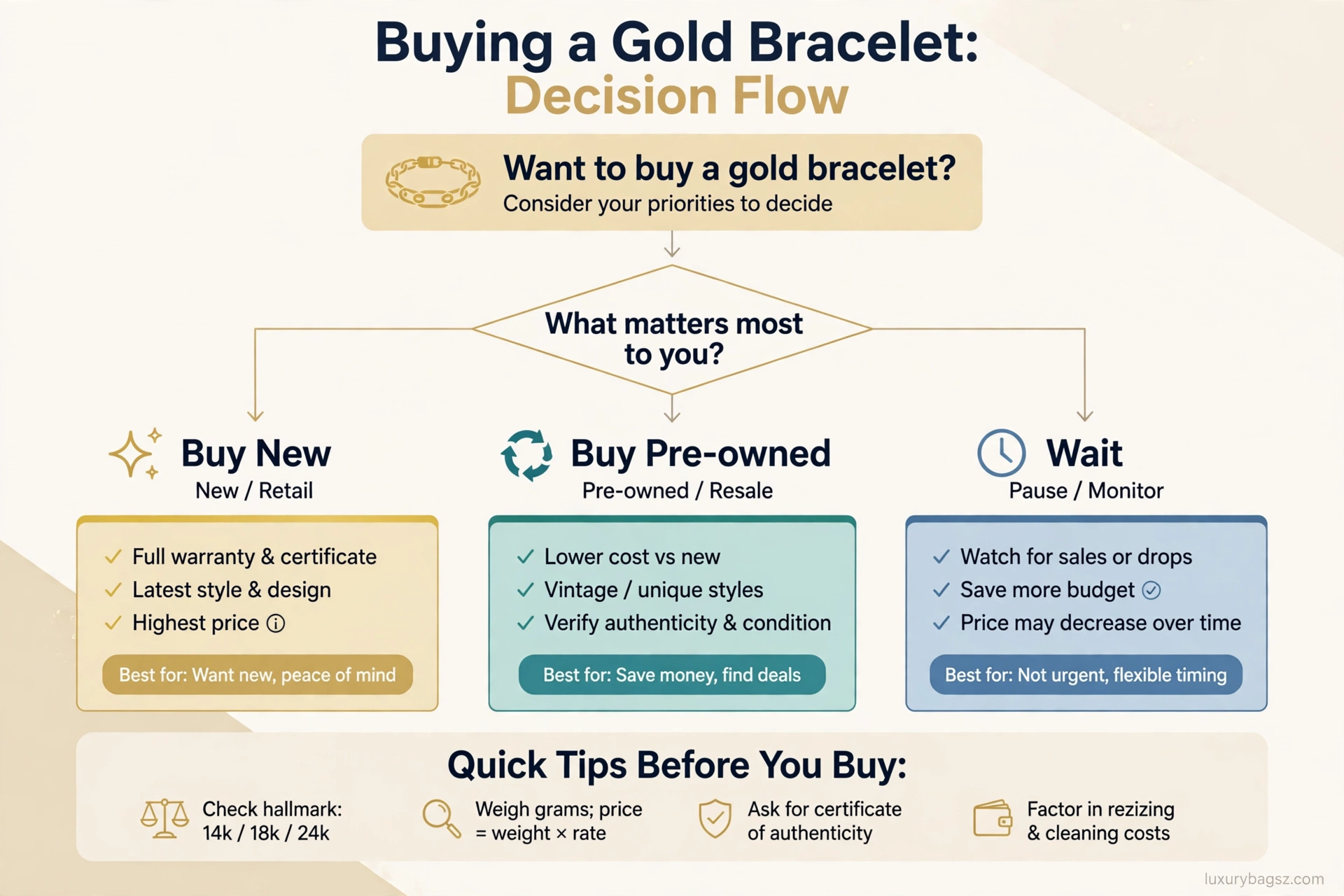
Buying new buys certainty: provenance, boutique service, and a warranty that can extend with registered ownership. It also buys the steepest entry price. One 2026 guide put the classic yellow gold Love bracelet at $7,950 retail, with the four-diamond version at $13,100 and the small model at $5,300.
Buying pre-owned flips that math. Listings for Love bracelets in excellent condition commonly run at roughly 85% to 92% of current retail, while older, scratched examples have been listed from around $4,000. On a $7,950 bracelet, that excellent-condition discount is roughly $635 to $1,193 saved for a piece that wears the same.
The catch is that pre-owned condition is a spectrum, not a label. Two listings both described as good condition can differ hugely in scratching, screw-head wear, and completeness of box and papers. Always compare recent sold listings for the exact model, metal, and size you want, and treat an asking price far below the pack as a warning, not a bargain.
What Moves the Price Up or Down
Condition is the single biggest price lever. Mirror-polished gold shows micro-scratches within days of real wear, so a bracelet worn daily for years without servicing will not fetch the top of any range. A careful owner who has the piece serviced at sensible intervals presents a very different listing.
Completeness comes next. Original box, papers, receipt, and the small screwdriver for a Love bracelet all reassure buyers and support a higher price. Missing papers do not make a genuine piece fake, but they narrow the buyer pool and invite tougher negotiation. Our guide to how to resell luxury jewellery covers presentation and timing in more detail.
Metal, stones, and size then set the band. Plain gold classics are the most liquid. Diamond-set versions cost more in absolute terms but do not always retain a higher share of retail, since the diamond uplift at retail is not always matched at resale.
Full pavé pieces are the most specialised of all and the most sensitive to market mood. When you are ready to value a piece, see how to price designer jewellery for resale before you list or offer.
Buying Checks That Protect Your Money
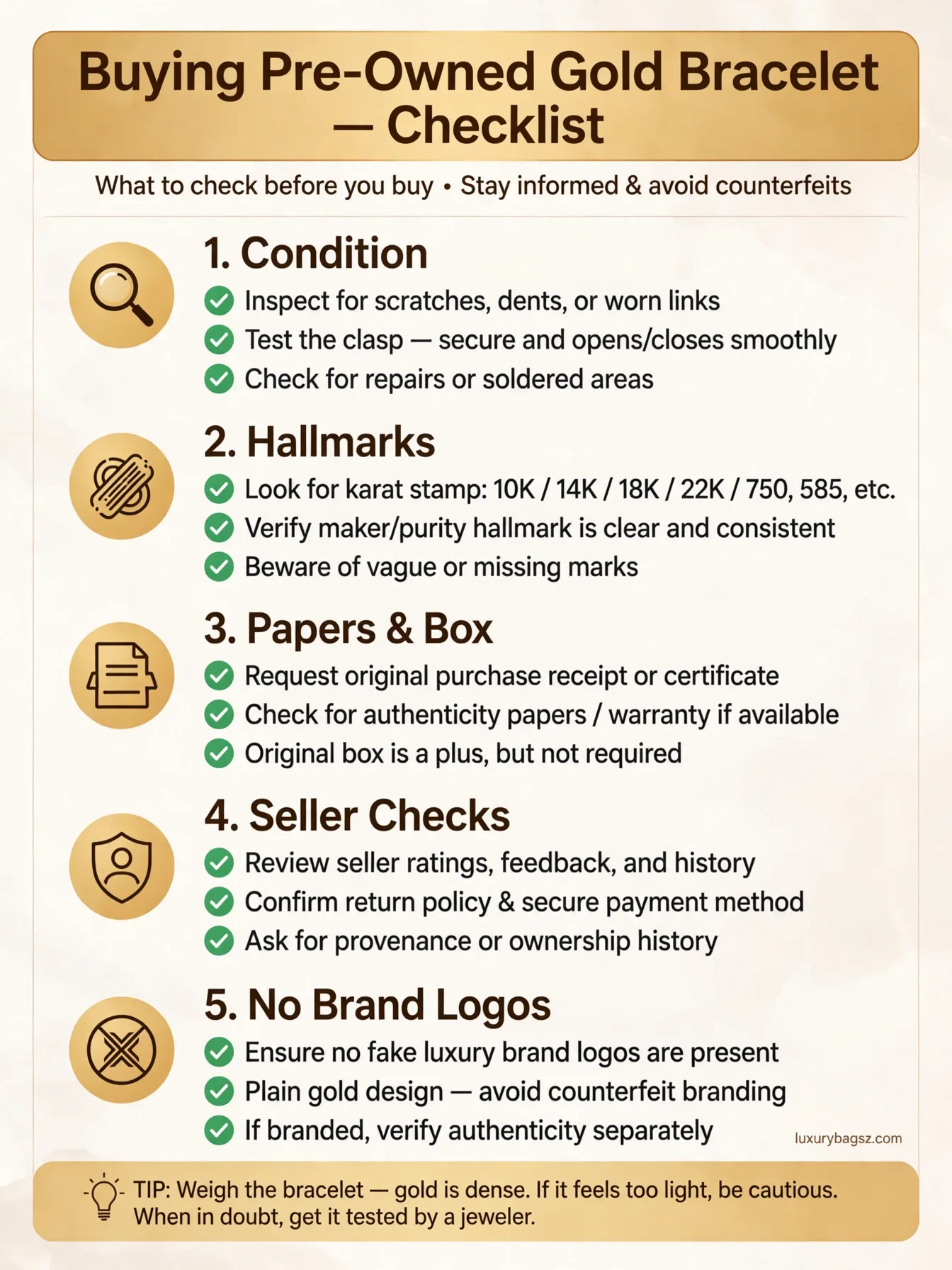
Authentication comes before price talk. Check that hallmarks, engraving, serial number, and size markings are crisp and consistent, and that screw heads on a Love bracelet sit flush and uniform. Weight should feel substantial for solid 18-karat gold; a suspiciously light piece deserves a professional opinion, not a hopeful guess.
Buy from sellers who welcome scrutiny. A reputable dealer or platform should show clear, close photos of engravings, clasps, and wear, and should accept returns if an independent check disagrees. Private sellers with one blurry photo and a story about urgency are the listings to walk away from. Our fake Love bracelet checks walk through the ten checks in full.
Ask for the full set, and ask what servicing has been done. Heavy or repeated polishing can remove small amounts of metal and soften the screw detail buyers look for, so a piece described as freshly polished many times over may actually be worth less than a lightly worn original. If anything feels off, pause and get an expert check; the cost of that check is small next to the price of the bracelet.
Wearing and Caring Without Eating Into Value
Daily wear is fine for these bracelets; they were made to be worn. What eats into value is careless wear: stacking against hard stone or metal bracelets that gouge the surface, wearing a bracelet for gym sessions or DIY, and leaving it uncleaned so grime builds up around screws and clasps.
Clean gently at home with a soft cloth and mild soapy water, then dry fully before storing. Keep the bracelet in its box or a soft pouch, away from other jewellery that can scratch it. For deeper cleaning or a refresh before resale, a boutique polish every 18 to 24 months is a sensible rhythm quoted by owners and guides, rather than frequent aggressive polishing.
Keep every part of the set together from day one. Box, papers, receipt, and screwdriver live in one place, not scattered across drawers. When resale day comes, a complete set photographs better, answers buyer questions faster, and usually sells faster too. For the nail design specifically, our Juste un Clou guide covers models, sizes, and pre-owned checks in one place.
When a Cartier Bracelet Is a Poor Buy
A Cartier bracelet is a poor buy when it is bought mainly as an investment. No bracelet guarantees a return, and even the strongest classics can fall if gold prices drop, retail prices stall, or buyer taste shifts. If you need the money back on a date, a bracelet is the wrong place to put it.
It is also a poor buy when the piece does not fit your life. A screw-fastened Love bracelet needs another person and its screwdriver to remove, which some owners love as symbolism and others find impractical. A pavé piece that you are afraid to wear gives you neither enjoyment nor the condition story that supports resale.
Finally, it is a poor buy at any price if authenticity is doubtful. A bargain that turns out to be fake is not a discount; it is a total loss. Walk away from listings that cannot be verified, however tempting the price looks. The right bracelet at a fair price, bought with checks done, beats a suspicious bargain every time.
Selling Later: Timing, Fees, and Realistic Expectations
Selling well starts with timing, not luck. Retail price rises help existing owners, because a higher new price lifts the ceiling for pre-owned asking prices. That is one reason classic bracelets bought years ago can resell near or above their original purchase price even without any special rarity.
Season and channel matter too. Gift seasons and bonus periods bring more buyers, while a flood of identical listings in one week forces price cuts. Before listing, check recently sold pieces — not just asking prices — for your exact model, metal, size, and condition band. Asking prices flatter; sold prices tell the truth.
Fees then take their share, and sellers often forget them. Marketplace commissions, authentication charges, payment processing, and shipping all come off the headline price.
A private sale may avoid some fees but adds risk and effort, while consignment hands the work to a dealer for a cut. Our guide to how luxury consignment works explains fees, intake, and payout timing so you can compare routes honestly.
Set a realistic floor before you list. Decide the lowest price you will accept, and the point at which you would rather keep and wear the bracelet than sell it cheap. Sellers who list without a floor often accept the first low offer out of impatience, then regret it when an identical piece sells higher a week later.
Photography and description do quiet work for value. Clear daylight photos of the full bracelet, close-ups of engravings and screw heads, honest notes on scratches, and a photo of the box and papers together all build buyer trust. Vague listings attract low offers because buyers price in the unknown; detailed listings attract buyers who pay for certainty.
Finally, keep expectations honest about speed. Common sizes in excellent condition can sell within days on busy platforms, but unusual sizes, pavé pieces, and pieces without papers can take weeks or months. A bracelet that has not sold in a week is not necessarily overpriced; it may simply be waiting for its buyer. Patience, a fair price, and a complete, honest listing beat repeated price drops.
Frequently Asked Questions
Are Cartier bracelets a good investment?
For classic gold Love, Juste un Clou, and Trinity bracelets, resale retention is among the strongest in luxury jewellery, but no piece guarantees a profit. Buy to wear, and treat resale strength as a bonus.
Which Cartier bracelet holds its value best?
Reports vary by year, but Love, Juste un Clou, and Trinity consistently lead. Rebag's 2022 data put Trinity on Cord at 109%, Love at 99%, and Juste un Clou at 95% of retail.
Do Cartier bracelets appreciate in value?
Some specific pieces have, especially where retail prices rose sharply after purchase or a design was discontinued. Most pieces retain a high share of retail rather than appreciating above it.
Is it better to buy a Cartier bracelet new or pre-owned?
New gives certainty and warranty; pre-owned in excellent condition usually gives better value, saving roughly 8% to 15% against current retail on classic models. Condition and papers decide which is better for you.
How much does a Cartier Love bracelet cost?
One 2026 guide put the classic yellow gold Love at $7,950 retail, the small model at $5,300, and the four-diamond version at $13,100. Prices vary by market and change with retail price rises.
Does condition really affect resale price that much?
Yes, more than any other single factor. Heavy scratching, damaged screw heads, and missing box and papers can move a bracelet from the top of its range to well below it.
Should I polish my Cartier bracelet before selling it?
A gentle boutique polish can help, but repeated heavy polishing removes metal and softens detail. A light refresh is sensible; aggressive repeated polishing is not.
Are diamond Cartier bracelets better investments?
Not necessarily. They cost more in absolute terms, but diamond versions do not always retain a higher share of retail than plain gold classics. Full pavé pieces are the most price-sensitive.
What size Cartier bracelet sells best?
For the Love bracelet, sizes 17, 18, and 19 are the most liquid because they fit the most buyers. Unusual sizes can still sell, but they usually take longer.
Is a Cartier bracelet better than gold bullion as an investment?
No, not as a pure investment. Bullion tracks the gold price directly, while a bracelet's value depends on design demand, condition, and brand pricing. A bracelet is jewellery first and a store of value second.
Final Verdict
Cartier bracelets earn their reputation: the classic gold designs hold value better than almost any other luxury jewellery, and they do it while being worn and enjoyed for decades. That is a rare combination, and it is why the Love and Juste un Clou stay in demand year after year.
Just do not mistake strong resale for a guaranteed return. Buy the model, metal, and size you love, check authenticity carefully, keep the full set together, and wear it with sensible care. If it holds most of its value when you eventually sell, that is a success — and you will have enjoyed it all along the way.






