

How to Clean a Hermès Canvas Bag: The Safe Guide to Toile H, Toile Officier, and Canvas-and-Leather Bags
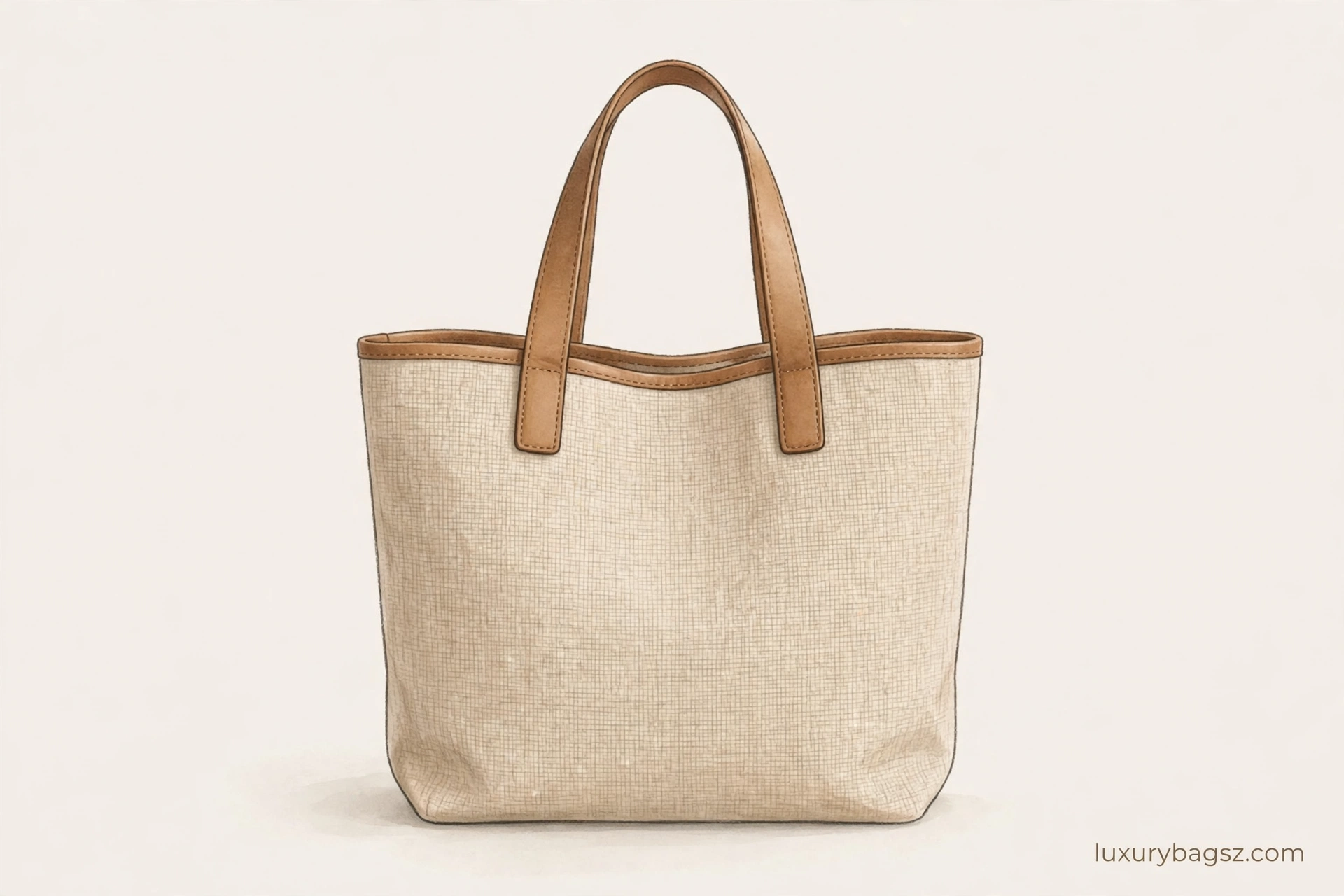
Cleaning Canvas the Gentle, Spot-Only Way
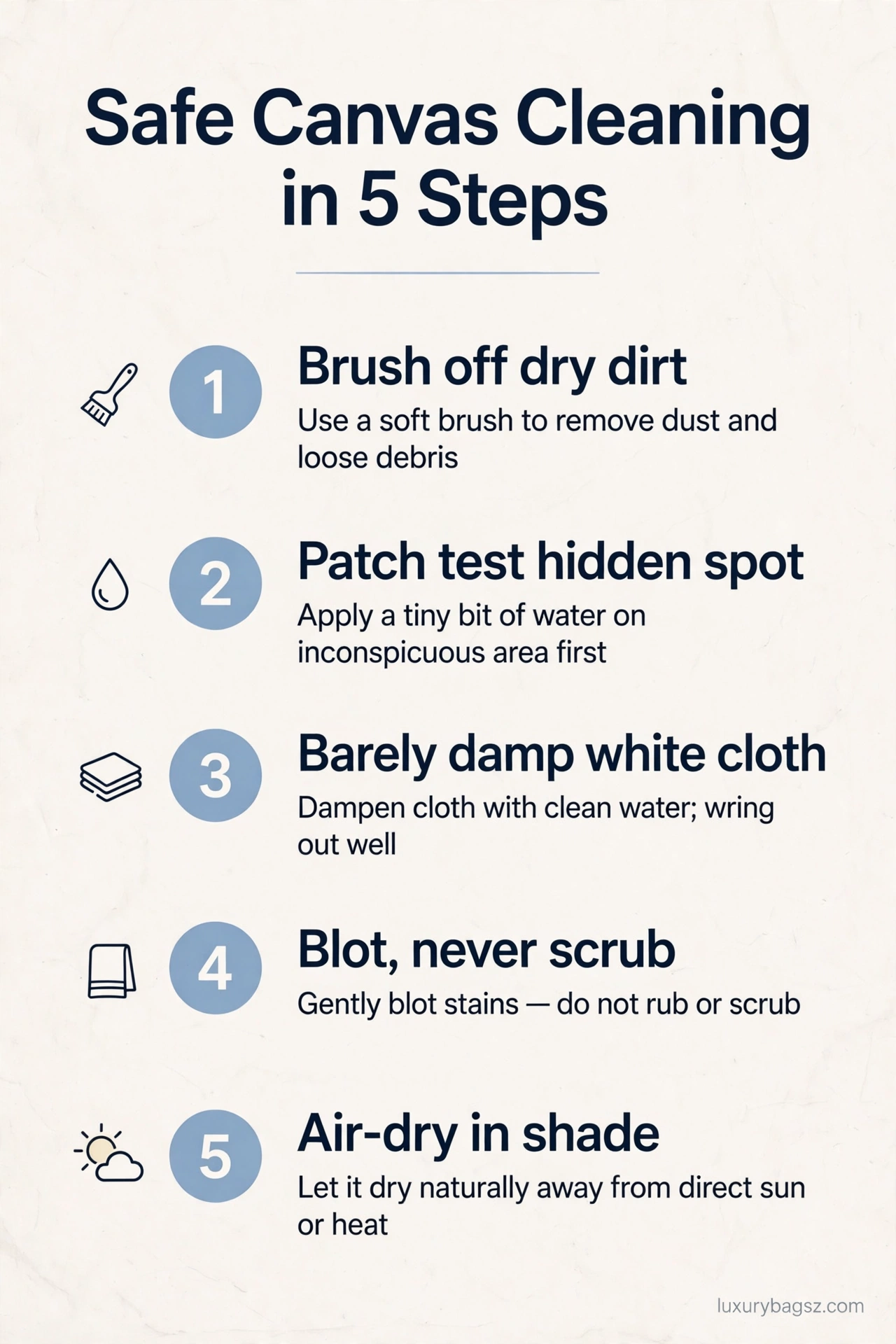
Clean Hermès canvas as rarely and as lightly as you can, and only where a mark actually sits. Begin dry: brush away loose dirt, then blot — never scrub — with a white cloth that is barely damp. Plain water comes before any soap.
Use soap only if water fails, and then just a tiny drop of a mild, fragrance-free kind, diluted, on the spot itself and after testing somewhere hidden. Keep moisture and products away from leather handles, trim and hardware. Never soak or machine wash the bag, and let it air-dry in shade, lightly stuffed to hold its shape.
A Hermès canvas bag looks like the easy, everyday member of the family. It is lighter than leather, it shrugs off a light brush against a coat, and it does not demand the same anxious handling as a smooth calfskin flap. That easy look is exactly why so many canvas bags get damaged at home. Owners treat them like an ordinary cotton tote, soak them, scrub them, or put them through a wash, and only learn afterwards that a woven luxury canvas, its dye, its stitching, and its leather trim do not forgive that kind of treatment.
This guide is written for the bags Hermès actually makes in canvas: the Herbag in its Toile H, Toile Officier, and related weaves, the Garden Party and Neo Garden in canvas and leather, and the smaller canvas bags and totes that pair a woven body with leather handles, corners, and trim.
It is not a guide to coated, printed, or leather-look materials, and it is not a promise that every mark will come out. Some marks will. Some will only fade. Some, especially set-in ink, dye transfer into pale canvas, and old water rings, are jobs for a professional cleaner, or marks to live with, and this guide says so plainly rather than selling you a stronger chemical.
Most competitor guides stop at that paragraph, or at an even shorter version of it: a damp cloth, a drop of mild soap, air-dry. That advice is not wrong, but it is incomplete in ways that matter. It rarely says which canvas your bag actually is, or that an uncoated cotton weave, a tighter H-pattern weave, and a heavier military-style weave do not all react the same way.
It rarely separates canvas care from leather-trim care, even though most Hermès canvas bags are two-material bags. It rarely explains the water-mark trap, which is that water itself can leave a ring on canvas, so a careless wipe can create the very mark you were trying to remove. It rarely gives honest limits on what home cleaning can fix, and it sometimes repeats risky shortcuts without challenge, such as rubbing with an eraser, spraying a fabric protector all over a finished bag, or reaching for a colourless fabric cleaner as if “colourless” meant “safe for every dye”. This guide challenges those shortcuts, states where sources disagree, and keeps the cautious version as the rule.
Cleaning Canvas Safely in Brief
Can you clean a Hermès canvas bag at home? Yes, for surface dirt and fresh, light marks: brush off dry dirt, blot with a barely damp white cloth, and air-dry in shade. That is the whole home routine for most days.
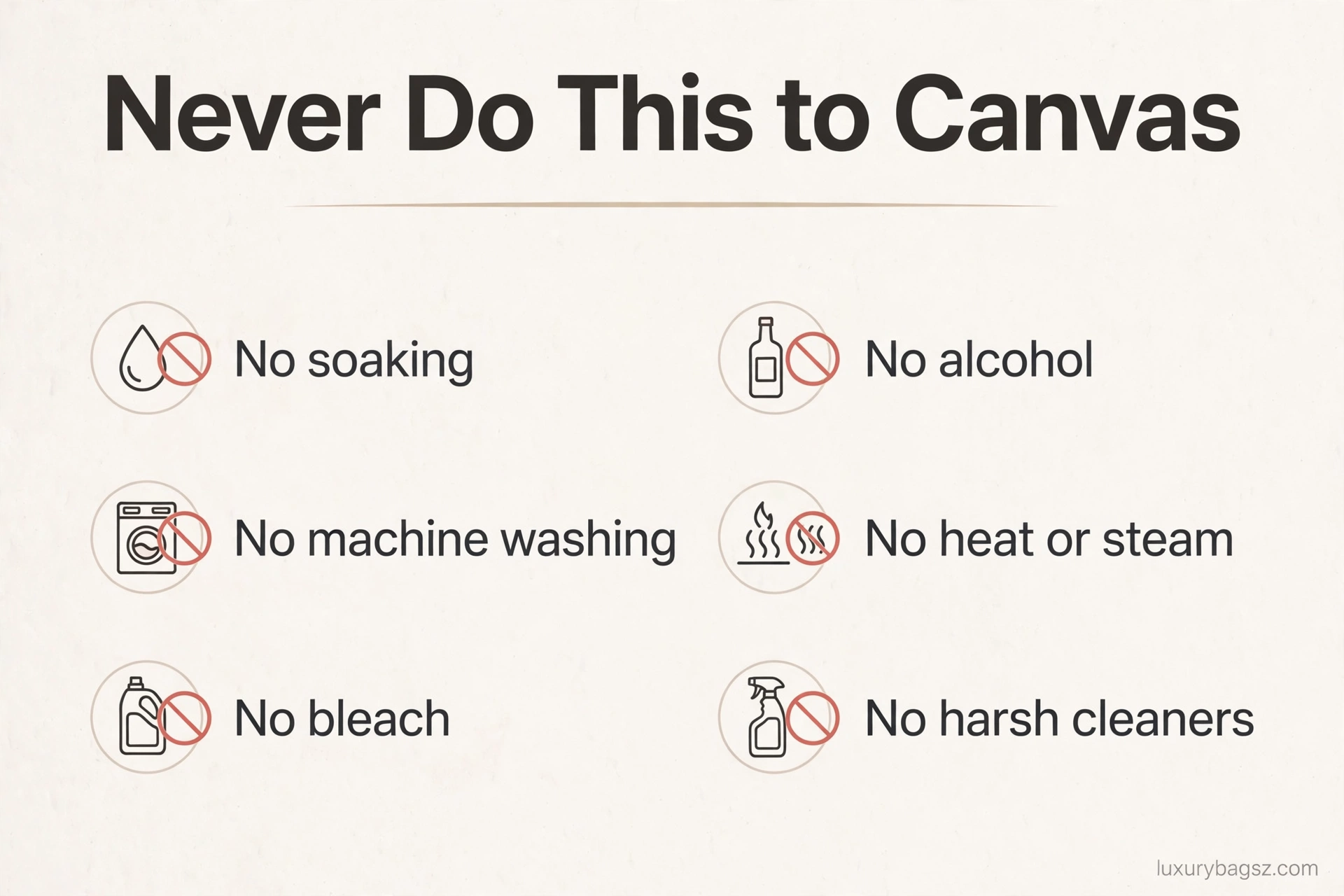
What should you never do? Never soak the bag, never machine wash it, never use bleach, alcohol, or a harsh household cleaner, and never use heat, steam, or an iron to dry it or press it. Never scrub. Scrubbing pushes dirt deeper into the weave, frays fibres, and can lighten or shift dye.
Should you use soap? Only if plain water does not lift the mark, only a tiny drop of mild, fragrance-free, bleach-free soap diluted in water, only on the marked spot, and only after a patch test on a hidden spot. One guide advises avoiding soap altogether on Herbag canvas, on the grounds that soap can spread a stain rather than remove it. That caution is worth hearing: soap is an optional second step, not the starting point, and if the mark is on pale canvas, near leather trim, or already spreading, skip soap and get professional advice instead.
How is canvas care different from leather care? Canvas is woven fibre. It absorbs water and stains into the weave, it can ring-mark from uneven wetting, and it cannot be conditioned back the way leather can. Leather trim, by contrast, is damaged by water and by fabric cleaners, and it needs its own dry-wipe care. Treat a canvas-and-leather bag as two bags joined together, and keep each product on its own material.
What can home cleaning not fix? Set-in ink, dye transfer from dark jeans or a new belt into pale canvas, old grease, mildew, yellowing, fraying, and a deep water ring that has already set. Home cleaning can sometimes fade these, but trying harder at home usually makes them worse. The final section lists the professional threshold in full.
Canvas bags come to me dirtier than leather ones, because owners treat them as the carefree option — and then scrub them like trainers. My own rule is the one this guide teaches: dry first, spot only, and never let water wander onto the leather trim, handles or hardware. I brush loose dirt away, blot with a barely damp white cloth, and stop the moment a mark lifts. After examining more than 500 bags, I can spot a scrubbed canvas panel instantly — the weave looks tired in a way honest wear never causes. Gentle and rare beats thorough and often, every time.
Which Hermès Bags Use Canvas, and Why That Matters
Hermès canvas is not one cloth. The name on a listing tells you something about weight, weave, and finish, and therefore about how much water and handling the bag will tolerate, even though no listing name is a licence to soak it.
Toile H is the classic Hermès cotton canvas, a woven cotton cloth used for the Herbag body and for canvas versions of other bags. In its standard form it is a plain, breathable weave: strong for its weight, but absorbent, and pale colours show dirt quickly. Guides describe it as durable, but durability in carrying is not the same as durability in washing. A cloth that survives years of daily carrying can still ring-mark from one careless wet wipe, because the risk is uneven wetting and dye movement, not the cloth falling apart at once.
H Viking canvas is a tighter, more textured weave used on bags such as the Neo Garden, where it appears with Negonda calfskin trim. Its closer weave and raised hand shed surface dust a little better than a looser plain weave, but it is still woven fibre, not a coated or waterproof cloth, and it still absorbs a spill if the spill sits. Do not read “tighter weave” as “washable”. The cleaning method in this guide is the same for H Viking as for Toile H; the only difference is that surface dirt may brush off more easily before you need any moisture at all.
Toile Officier, sometimes called military canvas, is the heavier, sturdier weave associated with the Herbag and with military-inspired totes. It feels tougher, and it is tougher against abrasion, but weight is not waterproofing. A heavier weave holds more water once it is wet, takes longer to dry, and is therefore more, not less, vulnerable to a long damp period, to mildew in a closed space, and to stiffness or warping if it dries in the wrong shape. Treat Toile Officier with the same minimal-moisture rule, and allow extra drying time.
Militaire canvas, named in official Neo Garden Voyage descriptions alongside Negonda calfskin, is in the same heavier, military-inspired family. The same warning applies: a rugged look invites rough treatment, and rough treatment is what damages the dye, the stitching at stress points, and the leather trim long before the canvas itself tears.
Plume and other lighter weaves, and printed or patterned canvases, need one extra caution: print and pattern can fade or shift from rubbing before the cloth shows damage. On any patterned canvas, patch-test in the least visible spot, blot rather than rub even more strictly than usual, and stop at the first sign of colour on your cloth. If colour transfers during a patch test, the dye or print is moving, and a professional should take over.
Two practical consequences follow. First, identify your canvas before you clean, from the listing, the care booklet, or the boutique, and do not borrow a method from a guide about a different weave without checking.
Second, never assume a bag is all canvas. Most Hermès canvas bags are mixed-material bags, and every cleaning decision has to pass two tests, one for the canvas and one for everything it touches. The trim and hardware section works through that split.
Canvas Is Not Leather: How Care Differs
It helps to see the difference as a difference in what each material does with water, dirt, and time. Leather is skin, tanned and finished. It can be wiped, and some leathers can be lightly conditioned, because the surface is a continuous, finished layer that can be fed and protected. Canvas is thread, woven and dyed. It has no continuous surface to condition. Dirt does not sit on top of canvas the way dust sits on a smooth leather; it works into the gaps between threads. Water does not bead and wipe away; it soaks in, carries dissolved dirt and dye with it, and dries unevenly, which is how a ring forms at the edge of a damp patch.
That is why the leather advice you may already know does not transfer. A leather guide may tell you to wipe with a damp cloth and then condition, or to use a leather balm sparingly between professional visits.
None of that belongs on canvas. Leather conditioner on canvas leaves a greasy, darkened patch that attracts dirt and cannot be washed out without soaking the very cloth you must not soak. A leather cleaner on canvas is likewise the wrong product: it is made for a finished skin surface, not for woven fibre, and it can leave residue in the weave that shows as a dull or dark patch once dry. Keep leather products on leather, and only on the leather they suit, as set out in the trim and hardware section.
The reverse mistake is just as common. A fabric method that is fine for an ordinary cotton tote, such as a good soak, a machine wash, or a steam refresh, is not fine for a Hermès canvas bag, because the bag is not just cloth. It has leather trim that water will spot and stiffen, stitching that can pucker when soaked and dried, a shaped base that can warp, hardware that can spot, and dye that can migrate. A method that cleans the cloth while damaging everything around it has failed.
The same logic explains why light canvas is harder to live with than dark canvas. On a dark Toile Officier tote, a faint water ring or a little dust may be invisible. On an ecru or natural Toile H body, the same ring, the same dust line along a handle base, and the same dye transfer from dark denim are all plain to see.
Light canvas is not more delicate in weave, but it is less forgiving in appearance, and it punishes a careless clean more visibly. Owners of pale canvas bags should be the most conservative cleaners of all: dry methods first, smallest damp patch possible, and professional help sooner.
For a fuller account of cautious leather care on its own terms, the same material-first approach used for clean Chanel bags is a useful parallel, even though that guide concerns a different brand. The lesson transfers even where the products do not: identify the material, use the least you can, and stop before you cause a second problem.
Your Safe Cleaning Kit
You do not need a specialist shopping list. In fact, a short kit is safer than a long one, because every extra product is another chance to use the wrong thing on the wrong material. Put these together, keep them in one place, and do not add to the kit on impulse in the middle of a clean.
- A soft, natural-bristle brush, such as a clean clothes brush or a soft shoe brush kept only for this bag. It is for dry dirt only, brushed lightly along the weave, never scrubbed back and forth with pressure.
- A lint roller, for surface dust and loose fibres, used lightly and never pressed hard into the weave or over leather trim.
- Two or three clean, white, lint-free cotton cloths. White matters: it shows dirt, dye transfer, and soap residue that a coloured cloth would hide. Wash the cloths without fabric softener, because softener residue can transfer to canvas.
- Clean, lukewarm water, ideally distilled or filtered water if your tap water is hard or leaves marks on glass. Tap water is not forbidden, but hard tap water can leave mineral marks on pale canvas as it dries, and distilled water removes that variable for the cost of a bottle.
- A mild, fragrance-free, bleach-free liquid soap, used only as described in the spot-cleaning section, in a tiny amount diluted in water, never applied neat to the bag.
- White tissue paper or clean white cotton for stuffing the bag while it dries, so it holds its shape.
- A breathable dust bag for storage, and a cool, dry, shaded place to dry and store the bag.
What is deliberately not in the kit: bleach, alcohol, hand sanitiser, makeup wipes, baby wipes, household sprays, vinegar, baking soda paste, washing-up liquid used neat, stain-remover sticks, colour removers, fabric protector sprays for routine use, erasers for routine use, a steam cleaner, an iron, a hair dryer, and any “leather cleaner” or “leather conditioner” for the canvas itself.
Each of these appears somewhere online as a tip for some bag or some cloth. None of them belongs in a first clean of a Hermès canvas bag, and several of them are treated as never-use items in the never-use section: soaking, machine washing, bleach, alcohol, heat, steam, ironing, and harsh cleaners are all out, without exception for “just this once” or “just a little”.
Two items deserve a plain explanation, because guides disagree about them. One guide suggests a white eraser can sometimes lift a surface mark from Toile H after a test, but an eraser can abrade the weave, lighten dye, and leave crumbs pressed into the cloth, so this guide does not recommend erasers as a routine step.
Another guide suggests fabric protector spray can be applied periodically after a hidden-spot test, but a spray can change the hand and colour of the canvas, trap dirt under the coating, and react with leather trim, so this guide does not recommend spraying a bag as routine protection. Prevention here means pouches, dust bags, clean hands, and keeping the bag away from dye-transfer risks, not a chemical coating.
Routine Care: The Dry Clean You Should Do Most Often
Most canvas care is not cleaning at all. It is dry care, done lightly and often, so that wet cleaning is rarely needed. After each use, or at least once a week for a bag in regular rotation, empty the bag, turn it so you can see the base and corners, and brush it gently with your soft brush, working in one direction along the weave and out of seams and corners where dust collects.
Follow with a light pass of a lint roller if needed, taking care not to press hard over stitching or printed areas. Wipe leather trim and handles with a separate, dry, soft cloth at the same time, and wipe hardware with a dry cloth only, never with a wet cloth that then touches canvas.
A few routine habits prevent more marks than any cleaning product. Carry pens, makeup, and liquids in pouches inside the bag, not loose, so a leak stains a pouch and not the lining or the canvas. Keep the bag away from new, dark, unwashed denim and from dark leather belts and jackets that can transfer dye to pale canvas on contact, especially in heat or damp.
Handle the bag with clean, dry hands, and keep hand cream, sunscreen, and food away from the cloth. Do not set the bag on the floor of a car, a restaurant, or a train, where the base picks up dirt and damp that then wicks upward into the body. None of this is glamorous advice, and none of it appears in most short competitor guides, but it is the advice that keeps a canvas bag out of the cleaning part of this guide in the first place.
Spot Cleaning, Step by Step
Spot cleaning is the only wet method this guide recommends at home, and it is deliberately narrow: one mark, one small patch, minimal moisture, and a full dry before you judge the result. Work in good light, on a clean, dry surface, with the bag empty and its shape supported, so you are not pressing a wet patch against a table or against the other side of the bag.
Step one is always dry first. Brush off loose dirt, and if the mark is a dry spill such as dust or crumbs, brush and lint-roll only. If the mark is a fresh liquid spill, blot at once with a dry white cloth, pressing gently and lifting, never rubbing, and working from the outside of the mark inward so you do not spread it.
Change to a clean part of the cloth as it picks up colour or liquid. Do not reach for water while the spill is still wet and spreading; water on a fresh spill can carry it deeper into the weave.
Step two is the patch test. Test on a hidden spot with your barely damp white cloth, wait until it is fully dry, and check for darkening, ringing, lightening, stiffness, or colour on the cloth. If any of those appear, stop. If the test is clean, you may proceed to the mark itself.
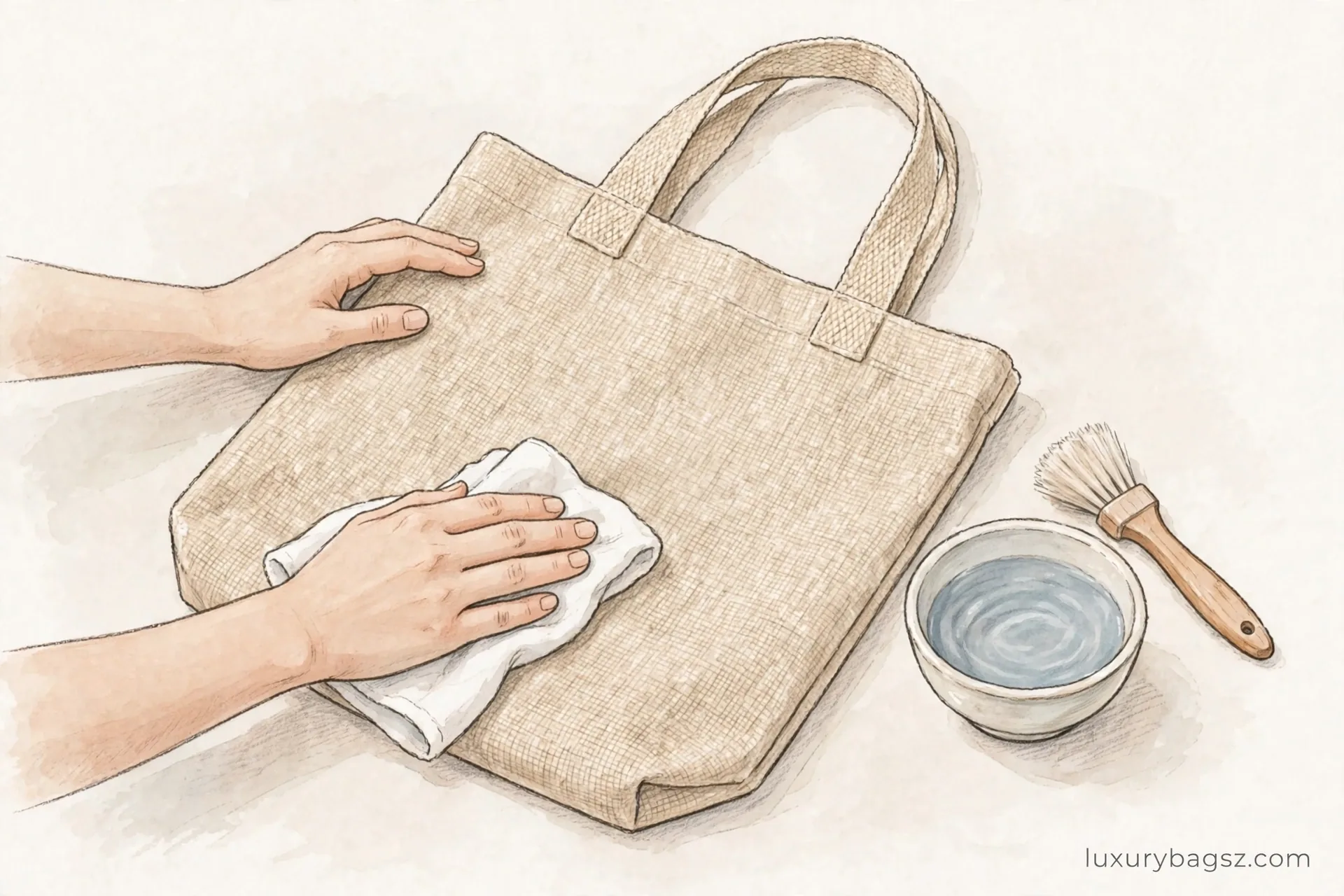
Step three is the damp blot. Dampen a white cloth with clean, lukewarm water, wring it out until it is barely damp, not dripping, and blot the mark gently, pressing and lifting, again from the outside inward. Do not rub, do not scrub, and do not hold a soaking cloth against the canvas.
After a few blots, press a dry white cloth against the same spot to lift moisture and loosened dirt. Repeat the damp blot and dry blot alternation a few times only, and then stop and let the spot dry fully before you decide whether it has improved. Judging a wet patch is misleading: wet canvas always looks darker, and a mark that looks gone when wet may reappear as a ring when dry.
Step four, only if plain water has not lifted the mark, is a tiny amount of soap. Dilute one small drop of mild, fragrance-free, bleach-free liquid soap in a bowl of clean lukewarm water, dampen your cloth in that dilution, wring it well, and blot the mark as before. Then, and this matters, blot again with a cloth dampened in plain water only, to remove soap residue, and then with a dry cloth. Soap left in canvas attracts dirt and can dry as a dull or dark patch, so the plain-water rinse blot is not optional. If the mark does not improve after two or three gentle soap rounds, stop. More rounds do not mean a cleaner bag; they mean more water, more soap residue, and a higher chance of a ring or a dye shift.
Two disagreements among guides belong here. One Herbag guide advises avoiding wet wipes or soap altogether for canvas, on the grounds that soap can spread a stain. This guide agrees about wet wipes, which are too wet and too fragranced to control, and agrees soap is risky, but keeps a tiny, diluted soap step for a mark plain water cannot lift. The difference is threshold, not principle: soap last, soap little, soap rinsed, never first. The other disagreement concerns “colourless fabric cleaner” for stubborn marks.
Colourless does not mean dye-safe or residue-free, and a cleaner made for household upholstery is not made for a bag with leather trim and hardware. This guide does not recommend a general fabric cleaner at home. If plain water and a tiny amount of mild soap have failed, stop and ask a professional, not escalate to a stronger product.

What NOT to Do
This part is short on purpose, because each item here is a firm rule, not a matter of taste, and each one has damaged a real bag somewhere.
Do not soak the bag, in a basin, a bath, or a sink, for any length of time. Soaking saturates the weave, the stitching, the leather trim, and any interior structure at once, and it gives dye, dirt, and soap nowhere to go but deeper into the cloth. A bag that has been soaked may look cleaner when wet and then dry stiff, warped, ringed, or with spotted leather trim.
Do not machine wash the bag, on any cycle, in any bag, at any temperature. A machine combines soaking, agitation, spinning, and heat, which is every risk in this guide at once. It will distort the shape, stress stitching and handles, damage leather trim and hardware, and it can fade or shift dye unevenly.
Do not use bleach, including “colour-safe” bleach, oxygen bleach, or a whitening product, on any Hermès canvas, including white or ecru canvas. Bleach attacks fibre and dye, it yellows cotton over time rather than whitening it safely, and it leaves a weakened, uneven cloth. A yellowed canvas bag is a bleach story more often than an age story.
Do not use alcohol, hand sanitiser, nail polish remover, or any alcohol-based wipe or spray. Alcohol strips finish from leather trim, can move dye in canvas, and dries fibre harshly. It is also a common accident: a hand-sanitiser spill onto a bag in a pocket or a handbag is a professional-cleaner problem, not a home wipe-and-forget problem.
Do not use heat, steam, or an iron to dry or refresh the bag. No hair dryer on hot, no radiator, no direct sun as a drying shortcut, no steamer, and no iron, even through a cloth. Heat sets some stains, stiffens wet canvas, warps shape, damages leather trim, and can make a water mark permanent. Room-temperature air in shade is slower and safer, and slowness is a feature here, not a flaw.
Do not use harsh household cleaners, washing-up liquid neat, all-purpose sprays, vinegar, or baking soda paste. Vinegar is an acid and can affect dye and leather finish; baking soda paste is abrasive and leaves residue in the weave; household sprays contain solvents and fragrances made for counters, not for woven luxury cloth next to leather. “Natural” on a label does not make a product safe for this bag.
Do not scrub, rub hard, or use an abrasive pad, a stiff brush, or a rough sponge on canvas. Scrubbing is the physical equivalent of a harsh chemical: it frays fibres, lightens dye, and pushes a mark deeper. If a mark needs scrubbing to move, it needs a professional, not more force.
Finally, do not clean the bag while it is still damp from rain or a spill, and do not put a damp bag into a dust bag, a box, or a closed cupboard to “dry later”. A damp bag in a closed space is a mildew risk, and mildew in canvas is a professional problem with an honest chance of a permanent mark or smell. Dry first, in air and shade, then store.
Leather Trim, Handles, Hardware, and Lining
Almost every Hermès canvas bag is a mixed-material bag, and the trim is where home cleaning most often goes wrong, because the cleaner treats the whole bag as canvas and lets water or soap touch leather that should have stayed dry.
Handles deserve the most care, because they carry the most handling dirt and the most risk. Negonda calfskin, the matte, large-grained leather used on many canvas-and-leather bags, and Vache Hunter, the smooth leather used on Herbag trim, both darken and spot with water, and both pick up dye and oils from hands. Wipe handles with a dry, soft cloth only, after use, to remove surface dust and hand residue.
Do not dampen handles to clean them, do not use a fabric cleaner on them, and do not use a canvas soap solution on them. If handles are grubby, darkened, or sticky, that is a leather-care question, not a canvas question, and the cautious route is a leather specialist or the boutique, not a stronger home product. For context on how a dedicated leather product is meant to be used, and how narrow its safe use is, see the guide to Saphir Renovateur: even a respected leather product is for leather only, applied sparingly, and it never belongs on canvas.
Leather trim, base corners, and edge piping follow the same rule: dry wipe only, keep canvas cleaning cloths away from them, and work with a small cloth so you control exactly where moisture goes.
When you blot a canvas mark near trim, shield the trim with a dry cloth, and blot away from the trim, not towards it. If a damp cloth has touched trim by accident, blot the trim dry at once with a dry cloth and let it air-dry; do not try to “even it out” by wetting the rest of the trim, because that spreads the water damage instead of fixing it.
Hardware, including palladium or gold-tone studs, turnlocks, zips, and feet, should be wiped dry only. Do not use metal polish, a wet cloth, or a cleaner on hardware while cleaning canvas, because polish and cleaner residue can stain canvas, and moisture can spot hardware. If a zip is stiff or gritty, brush grit away dry with a soft brush, and do not oil it at home without professional advice, because oil migrates to canvas and lining.
Lining needs a split decision too. A canvas lining can be brushed dry and, for a small spill, blotted in the same minimal way as the outer canvas, with the same patch test and the same air-dry. A suede or leather lining panel must not be damp-cleaned as if it were canvas; brush suede dry only, and leave a marked suede panel to a professional. Always empty the bag fully before any clean, check pockets and interior pouches, and never clean the outside while a damp or stained lining is pressed against it, because moisture and dye move between layers when a bag is closed up wet.
Stain by Stain: What to Do, and What Home Cleaning Cannot Fix
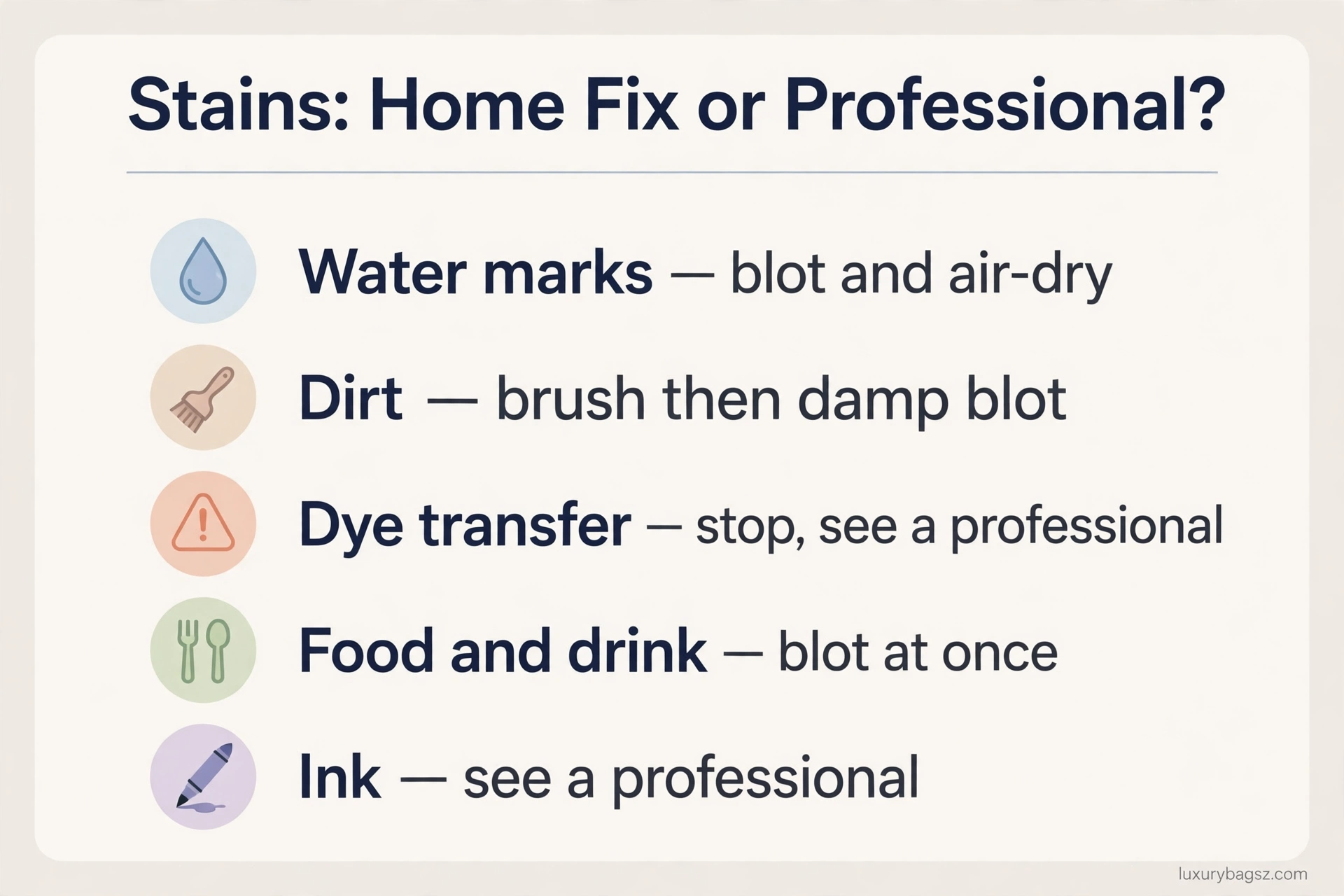
Stains are where generic advice fails hardest, because a method that helps one stain harms another, and because the age of the stain matters as much as its type. The table in words below gives, for each common stain, the home move, the limit, and the point to stop. In every case, the general rules still apply: dry blot first for a liquid, damp blot only after a patch test, never scrub, and let the bag dry fully before judging.
Water marks and rain spots are the most misunderstood canvas stain, because water is both the cleaner and the cause. A rain spot dries as a ring when water carrying dust or dissolved dye dries unevenly. For a fresh spot, blot dry at once, do not add more water to “even it out”, and air-dry in shade. For an old, set ring, home damp-blotting often makes it larger or darker. A set ring on pale canvas is a professional job, and even a professional may only fade it. Do not fight water with more water.
Surface dirt, dust, and mud are the home-cleaning success story. Let mud dry fully first, brush it off dry, then lint-roll, then, only if a mark remains, damp-blot the marked spot as in the spot-cleaning section. Wet mud smeared into canvas is far harder to remove than dry mud brushed off, so patience here is not laziness; it is the method.
Food and drink spills, including coffee, tea, juice, and sauces, need speed and restraint. Blot at once with a dry white cloth, lifting solids gently without pressing them into the weave. Then damp-blot as in the spot-cleaning section, plain water first and a tiny amount of diluted mild soap only if needed, followed by a plain-water rinse blot. Coffee and tea on pale canvas may leave a faint tint even after a careful clean; repeated soap rounds will not remove it without risking a ring. Red wine, tomato, and curry-type stains are in the same honest category: blot fast, clean gently, and accept that a faint shadow may remain.
Grease and oil, from food, hand cream, sunscreen, or a leather product used nearby, are the stains home cleaning handles worst. Do not add water first: water can spread grease and set a dark patch. Blot gently with a dry cloth, do not rub, and do not use washing-up liquid neat. A light, fresh grease mark may fade with professional cleaning; a set grease mark, especially on pale canvas, is often permanent, and home solvents or strong detergents usually darken or spread it. Stop early on grease.
Dye transfer, from dark jeans, a new dark belt, a dark jacket, or a coloured pouch carried against pale canvas, is a professional problem once colour has moved into the fibre. Do not scrub it, do not bleach it, and do not try a colour remover: those methods lighten the canvas around the transfer as well, leaving a pale patch more visible than the original mark. Prevention is the only reliable home move: keep pale canvas away from dark, unwashed, or new dyed materials, especially in heat, damp, or long contact.
Ink and pen marks are also a professional problem. Ink sets quickly in woven fibre, and home solvents, alcohol, and erasers spread ink, lighten dye, or abrade the weave while leaving a ghost of the mark. Blot a fresh ink spot gently with a dry cloth, do not add water or solvent, and take the bag to a cleaner who works on luxury bags, saying what the ink is and when it happened. The sooner a professional sees it, the better the chance, and even then full removal is not guaranteed.
Makeup, lipstick, and foundation sit between food and grease: blot dry, do not rub, and do not use makeup remover, which contains oils and solvents made for skin, not for canvas and leather trim. A fresh, light makeup mark may improve with the careful damp-blot method in the spot-cleaning section, but a set makeup mark, especially a waxy lipstick mark, is a professional job.
Mildew, mould spots, and a persistent musty smell mean the bag has stayed damp, and home wetting will not fix them. Do not scrub a mould spot, do not bleach it, and do not seal the bag away damp. Air the bag empty in shade and ventilation, keep it away from other bags, and ask a professional cleaner promptly, because mildew can weaken fibre and leave a permanent mark and smell if it spreads.
Fading, yellowing, and general dullness are not stains, and they are not cleaned away. Fading from sun is a loss of dye, not dirt on top of dye, and no wash restores it. Yellowing on pale canvas can come from age, light, heat, or a past bleach or harsh clean, and home whitening attempts usually make it worse. A dull, grey look from ingrained dust may improve with careful professional cleaning, but if the cloth itself has aged, the honest result is a cleaner, not a newer, bag.
A Fuller Clean, and Drying Without Warping, Fading, or Water Marks
Spot cleaning and full cleaning are not the same job, and confusing them is how a small mark becomes a whole-bag problem. A spot clean treats one mark on one small patch. A fuller clean treats a body that is grubby all over, and it is a bigger risk, because it wets a larger area, takes longer to dry, and gives dye and dirt more room to move.
A fuller clean is only justified when the whole canvas body is dull or grubby, not when there are one or two marks. If only the base is dirty, clean only the base. If only one panel is marked, clean only that panel. Do not turn a spot problem into a whole-bag wash for the sake of evenness, because “evenness” achieved by wetting clean canvas is how water rings and dye shifts spread to panels that were fine.
If a fuller clean is genuinely needed, work panel by panel, not by dunking or by wetting the whole bag at once. Brush the whole bag dry first. Then, for each grubby panel in turn, damp-blot with a barely damp white cloth as in the spot-cleaning section, using plain water first and a tiny amount of diluted mild soap only where a panel needs it, followed by a plain-water rinse blot and a dry blot for that panel. Keep the cloth away from trim, handles, and hardware throughout, shield trim with a dry cloth, and do not let a wet panel rest against another panel, a table, or the inside of the bag. Work in a ventilated, shaded room, and allow each panel to begin drying before you move on, so you are never handling a fully wet bag.
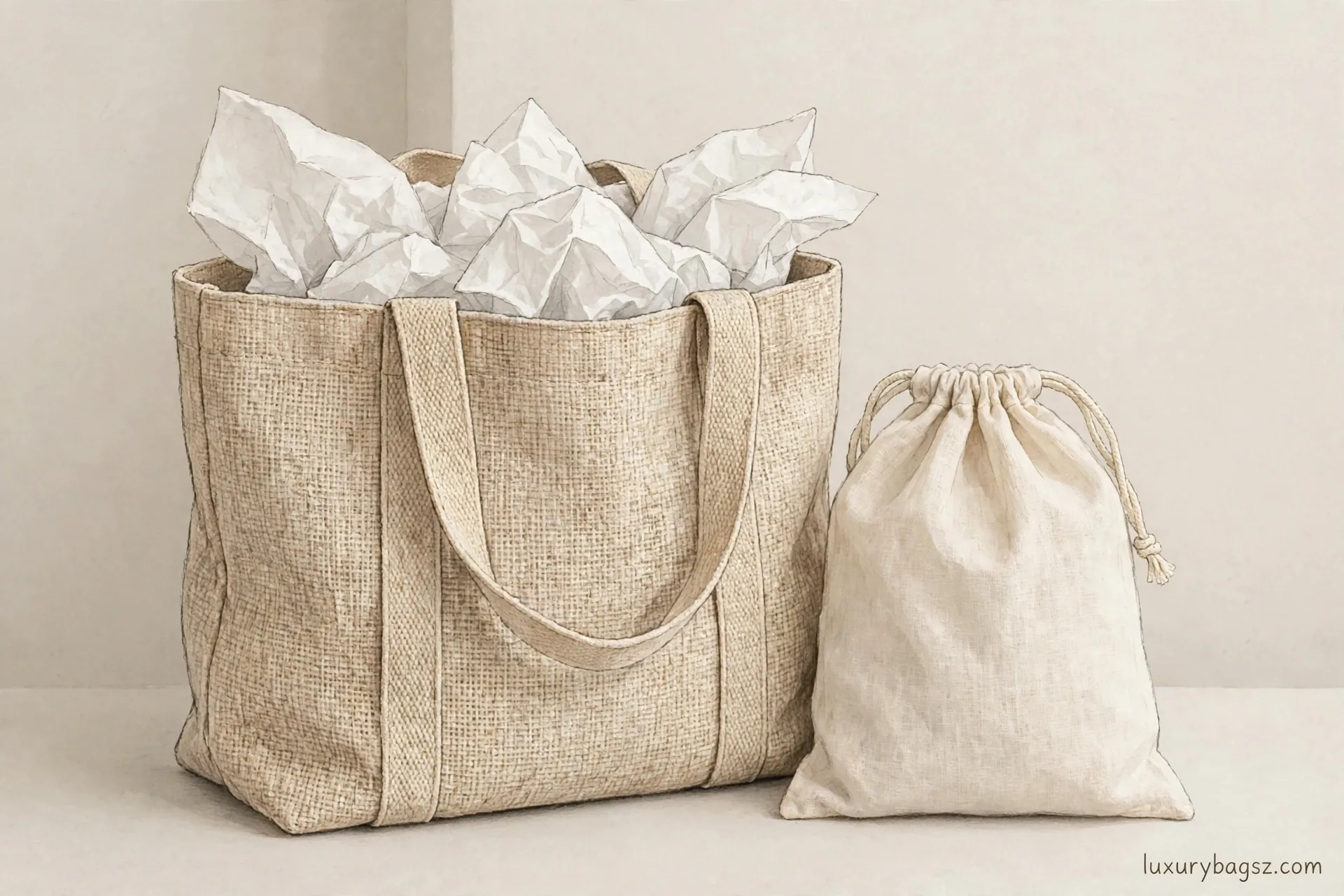
Drying is where a good clean is either saved or spoiled, and the rules are the same after a spot clean and after a fuller clean. Stuff the bag lightly with clean white tissue paper or clean white cotton, enough to hold its natural shape, not so much that it stretches seams or distorts the base. Do not overstuff: the drying illustration in this guide shows tissue piled high for clarity, but the draft rule is light stuffing. Stand the bag upright, not hung by its handles, which stretches handle attachments as wet canvas and leather dry under weight, and not flat under a weight, which flattens the base.
Dry in shade, at room temperature, with air moving around the bag, away from direct sun, radiators, hair dryers, and steam. Turn the bag occasionally so air reaches all sides, and replace damp tissue with dry tissue if the tissue becomes wet, because wet stuffing holds moisture against the inside.
Do not put the bag in a dust bag, a box, or a cupboard until it is completely dry to the touch inside and out, including seams, corners, and the base. Drying time varies with weave and dampness: a small spot may dry in a few hours, a fuller clean on a heavier weave may need a day or more, and a bag that still feels cool or damp in a seam is not dry yet.
Storage That Keeps Clean Canvas Clean
A clean bag stored badly will need cleaning again sooner, and a damp bag stored closed will need professional help. Storage is therefore part of cleaning, not an afterthought.
Store the bag empty, lightly stuffed with white tissue to hold its shape, upright, in its breathable dust bag, in a cool, dry, shaded place with air around it. The same upright, stuffed, dust-bag routine used to store Hermes Kelly bags applies here in principle, even though the materials differ, because the shape, dust, and light risks are the same.
Do not store the bag in plastic, which traps moisture, do not store it in direct sun, which fades dye, and do not store it pressed against other bags, dark leather, or new denim, which can transfer dye and crush the weave.
For totes in daily use, the carrying habits in the routine care section double as storage habits: a pouch for liquids and pens, a dust bag when the bag is not in use, and a clean, dry shelf rather than a floor.
And if a tote is starting to lose its shape from carrying, the carrying and stuffing advice in the guide to carry a Hermes tote without sagging is worth reading alongside this guide, because shape loss and dirt often arrive together when a bag is carried unstuffed, overloaded, and stored flat.
When to Stop and Use a Professional Cleaner
Knowing when to stop is the most valuable skill in this guide, and the skill competitor guides most often skip. A professional clean is not a failure of home care; it is the correct next step for a defined set of problems, and taking it early often saves a bag that a second or third home attempt would have spoiled.
Use a professional cleaner, ideally one who works on luxury handbags and can show examples of canvas work, or the Hermès boutique spa route where available, for any of these: ink or pen marks; dye transfer into canvas; set-in grease or oil; a set water ring; mildew or a persistent musty smell; yellowing you are tempted to bleach away; fading you are tempted to “restore” with a product; fraying, a torn seam, a loose handle, or any structural damage; a mark on a patterned, printed, vintage, or very pale bag; a mark that touches leather trim, suede lining, or hardware as well as canvas; and any mark that has not improved after one careful home attempt with plain water and, where suitable, a tiny amount of diluted mild soap.
Frequently Asked Questions
Can I wash a Hermès canvas bag in the washing machine?
No. Machine washing combines soaking, agitation, spinning, and heat, and it distorts shape, stresses stitching and handles, damages leather trim and hardware, and can fade or shift dye unevenly. The answer does not change for a gentle cycle, a laundry bag, or cold water.
Can I soak a canvas bag in soapy water?
No. Soaking saturates weave, stitching, trim, and structure at once, and gives dye, dirt, and soap nowhere to go but deeper into the cloth. Spot-blotting with a barely damp cloth is the home method; soaking is not a stronger version of it, it is a different and riskier method.
How do I clean the leather handles on a canvas bag?
Dry wipe only, with a soft, dry cloth. Keep canvas cleaning water and soap away from handles and trim, shield trim while you blot nearby canvas, and leave a grubby, darkened, or sticky handle to a leather specialist rather than treating it as a canvas problem. Hermès leather varies by type and origin, and that variation is one more reason not to use one product across a whole mixed-material bag.
My canvas bag got caught in rain. What do I do?
Blot dry at once with a dry white cloth, do not rub, do not add more water, and air-dry in shade, lightly stuffed, until fully dry inside and out. Do not put it away damp, and do not use heat to speed drying. If a ring remains once dry, that is a professional question, not a reason to re-wet the panel at home.
Can home cleaning remove dye transfer from jeans?
Once dye has moved into pale canvas fibre, home cleaning almost never removes it fully, and scrubbing, bleach, or colour removers usually leave a pale patch that is more visible than the transfer. Blot a fresh contact mark dry, stop, and ask a professional, and prevent future transfer by keeping pale canvas away from dark, new, or unwashed denim.
Canvas Care: The Least, Done Carefully
A Hermès canvas bag rewards the owner who does the least, most carefully. Brush it dry, blot a fresh mark at once, use barely damp water only where there is a mark, use a tiny amount of diluted mild soap only if water alone fails, keep every product away from leather trim and hardware, and air-dry in shade, lightly stuffed, until the bag is fully dry. That routine, done calmly and rarely, will keep most canvas bags looking clean for years, and it will never be the reason a bag is spoiled.
The bags that get spoiled at home are spoiled by the opposite routine: soaking, machine washing, scrubbing, bleach, alcohol, heat, steam, harsh cleaners, and a second, stronger attempt after the first gentle attempt has failed. Each of those methods promises a faster or fuller clean, and each of them risks the weave, the dye, the stitching, the trim, or the shape.
If you remember one sentence from this guide, make it this: if a mark has not moved after one careful home attempt, the next step is not a stronger product, it is a professional cleaner, or it is acceptance of a faint shadow on a bag that is otherwise clean, well shaped, and still beautiful.
That restraint is the whole skill. I have examined more than 500 bags, and the canvas ones that aged best were never the most washed — they were the ones whose owners blotted fast, brushed dry and left well alone in between.






