Hermès Investment Pieces and Best-Resale Bags: Is a Birkin Really an Investment?

Hermès as an Investment: Some Bags Hold Value, None Guaranteed
Some Hermès bags have held their value remarkably well, and a few, in the right combination of style, colour, leather and condition, have sold pre-owned for more than their boutique price. The Birkin leads that story, followed by the Kelly, with the Constance and a handful of smaller icons behind them.
But no handbag is a guaranteed investment, and recent reporting shows the other side of the story too: unworn Birkin resale prices have fallen by thousands from their pandemic-era peak as second-hand supply has grown.
That tension is the honest starting point for this guide. Hermès bags can be a good store of value for a careful buyer who chooses well, keeps the bag in excellent condition, and holds it for years. They are a poor investment for a buyer who overpays, buys the wrong combination, damages the bag, or needs to sell quickly.
This guide separates the two cases: which pieces have the best resale record, what actually drives a resale price, and which risks deserve more attention than the headlines give them.
A word on language. When dealers say a bag "holds value", they usually mean it sells pre-owned for a high proportion of its boutique price, not that it beats inflation, fees and taxes, or that it outperforms other assets. When they say a bag "appreciates", they usually mean asking prices have risen, not that every owner who sells actually banks a profit after consignment fees, authentication costs and shipping.
Keep those distinctions in mind throughout, and you will read every investment claim more clearly.
Key Takeaways
- The Birkin and Kelly have the strongest resale records, followed by the Constance and select smaller bags.
- Neutral colours, popular sizes, and classic leathers like Togo and Epsom generally resell best.
- Condition, rarity, colour, leather, hardware and completeness together drive a resale price — no single factor decides it.
- Recent reporting shows unworn Birkin prices falling from their 2022 peak as second-hand supply grows, so past gains do not guarantee future ones.
- Fees, taxes and the cost of selling can turn a paper gain into a real loss, especially on a quick resale.
- Buy a bag you love first; treat any resale strength as a bonus, not as the reason to buy.
Why Hermès Bags Became Investment Talk at All
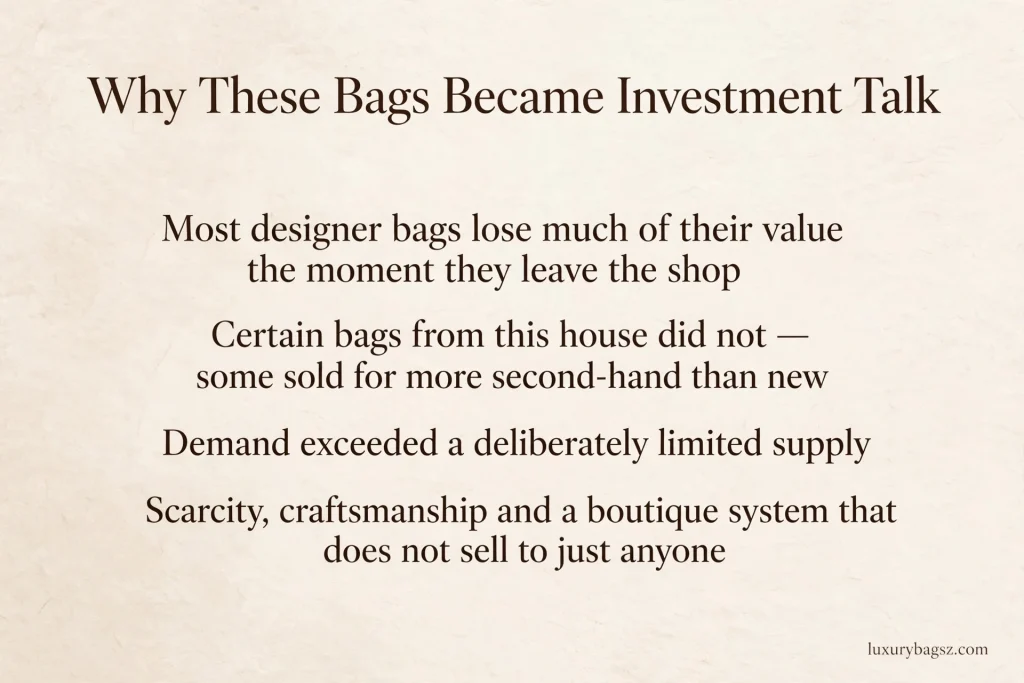
Hermès bags entered investment conversation because they broke the normal rule of luxury goods. Most designer bags lose a large share of their value the moment they leave the shop, like a new car leaving a forecourt. Certain Hermès bags did not, and some sold for more second-hand than new, because demand exceeded the house's deliberately limited supply.
Scarcity, craftsmanship, and a boutique system that does not simply sell to anyone who walks in created a secondary market where waiting, and paying a premium, became normal. Our breakdown of the Hermès resale premium over retail puts current percentages on that premium, spec by spec.
That scarcity is not an accident. Hermès limits production, makes each bag largely by hand with a single artisan, and distributes its most coveted models through boutiques rather than wholesale or online sale. Would-be buyers often need a purchase history and a relationship with a sales associate before being offered a quota bag, a system that frustrates newcomers but sustains the bag's aura.
Our guide to investing in vintage designer bags puts Hermès in that wider context, where the same scarcity logic applies, with different strength, to other houses.
Media coverage amplified the story, and a famous comparison — repeated so often it became a cliché — claimed Birkins had outperformed shares and gold over a particular period. Treat such claims with care. They typically track asking prices for a narrow set of bags over a chosen period, ignore fees and condition, and say nothing about the bags that did not perform.
The useful truth underneath the hype is narrower and still interesting: a well-chosen Hermès bag, bought well and kept well, has historically lost less value than almost any other luxury bag, and sometimes none at all.
The Birkin as an Investment: What the Record Actually Shows
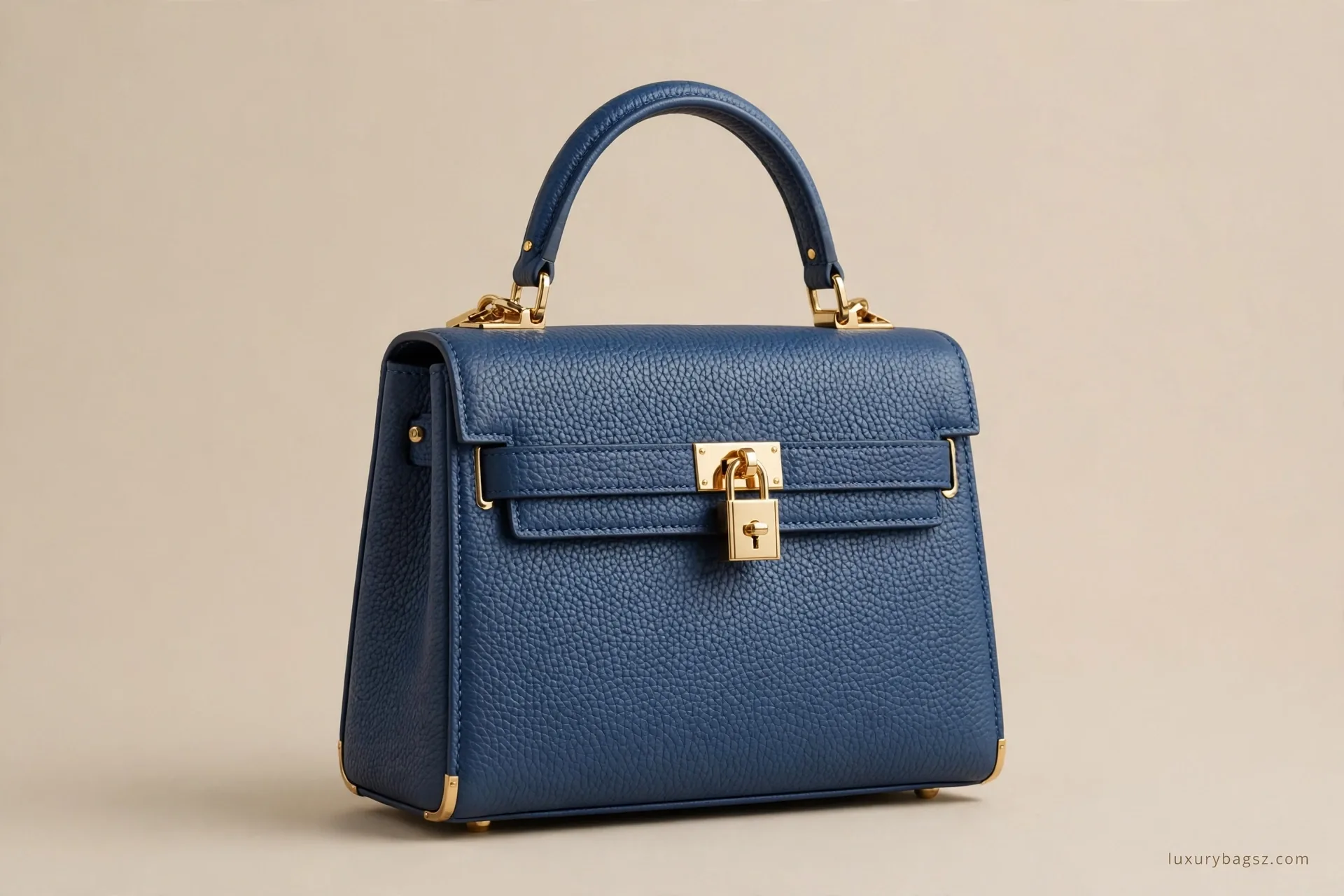
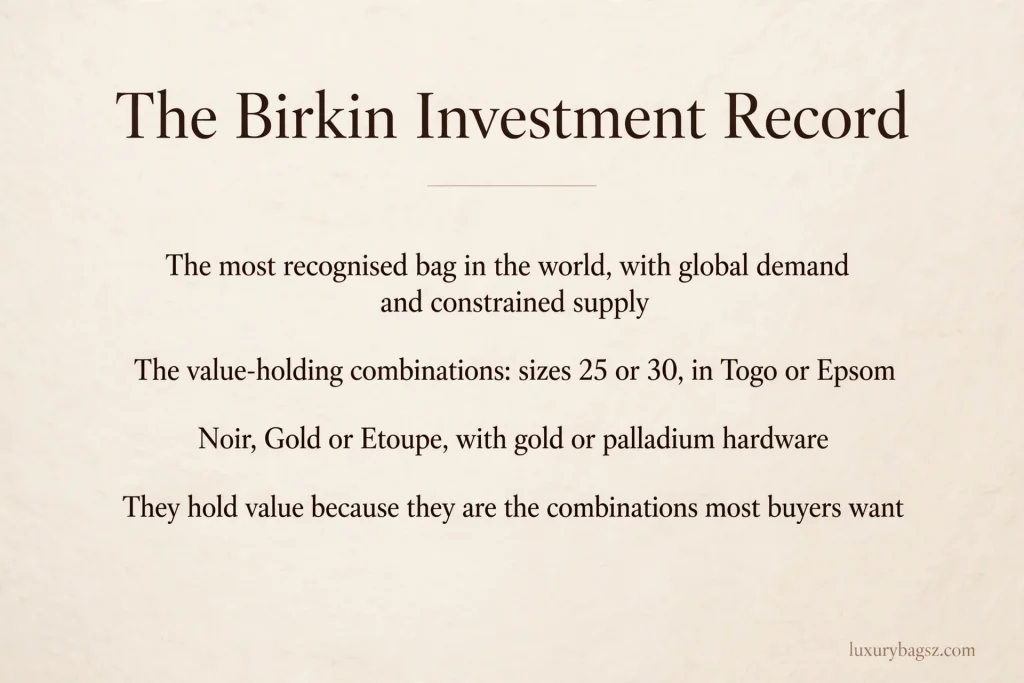
The Birkin is the investment conversation's main character, and its case is the strongest in the Hermès range. It is the most recognised bag in the world, demand for it is global, and its supply is constrained by hand production and boutique allocation.
Classic combinations — a Birkin 25 or 30, in Togo or Epsom, in Noir, Gold or Etoupe, with gold or palladium hardware — are the combinations most often cited as holding value, because they are the combinations most buyers want.
Our Birkin sizes guide explains why 25 and 30 dominate: they suit the widest range of owners and occasions, while larger sizes suit fewer buyers and smaller sizes suit a narrower, though passionate, market.
The boutique route matters to the investment maths. A buyer who is offered a Birkin at boutique price and later sells it pre-owned starts from a lower cost base than a buyer who pays a large premium on the secondary market. That difference is often the whole profit. A buyer who pays well above boutique price pre-owned needs the market to rise further just to break even after fees, which is a much harder bet.
Understanding the boutique system — including how to get a Hermès bag appointment and what the Hermès quota means — is therefore part of investment literacy, not a separate topic.
Then there is the recent correction, which honest guides must report. News reporting in 2026, based on reseller data, has described unworn Birkin resale prices falling by more than $6,000 from their 2022 pandemic-era peak, as rising second-hand supply eats into the scarcity premium. Some London resellers have said they stopped stockpiling Birkins as prices softened.
That does not mean Birkins have collapsed — they remain among the strongest luxury resale performers — but it does mean the pandemic-era peak was not a permanent floor. Anyone who bought at the peak on the assumption that prices only rise has learned an expensive lesson about treating a handbag as a one-way asset.
The Kelly, Constance and the Rest of the Investment Range
The Kelly is the Birkin's closest rival as an investment piece, and for some buyers it is the better one. Its structured, formal silhouette suits a different wardrobe, its smaller sizes — especially the Kelly 25 and the highly sought-after Mini Kelly — have passionate followings, and its history, from the Sac à dépêches of 1935 to Grace Kelly's famous bag, gives it a story to match the Birkin's.
In practice, Kelly resale strength follows the same rules as Birkin resale strength: classic colours, popular sizes, good condition, and complete sets do best, while unusual combinations are harder to move.
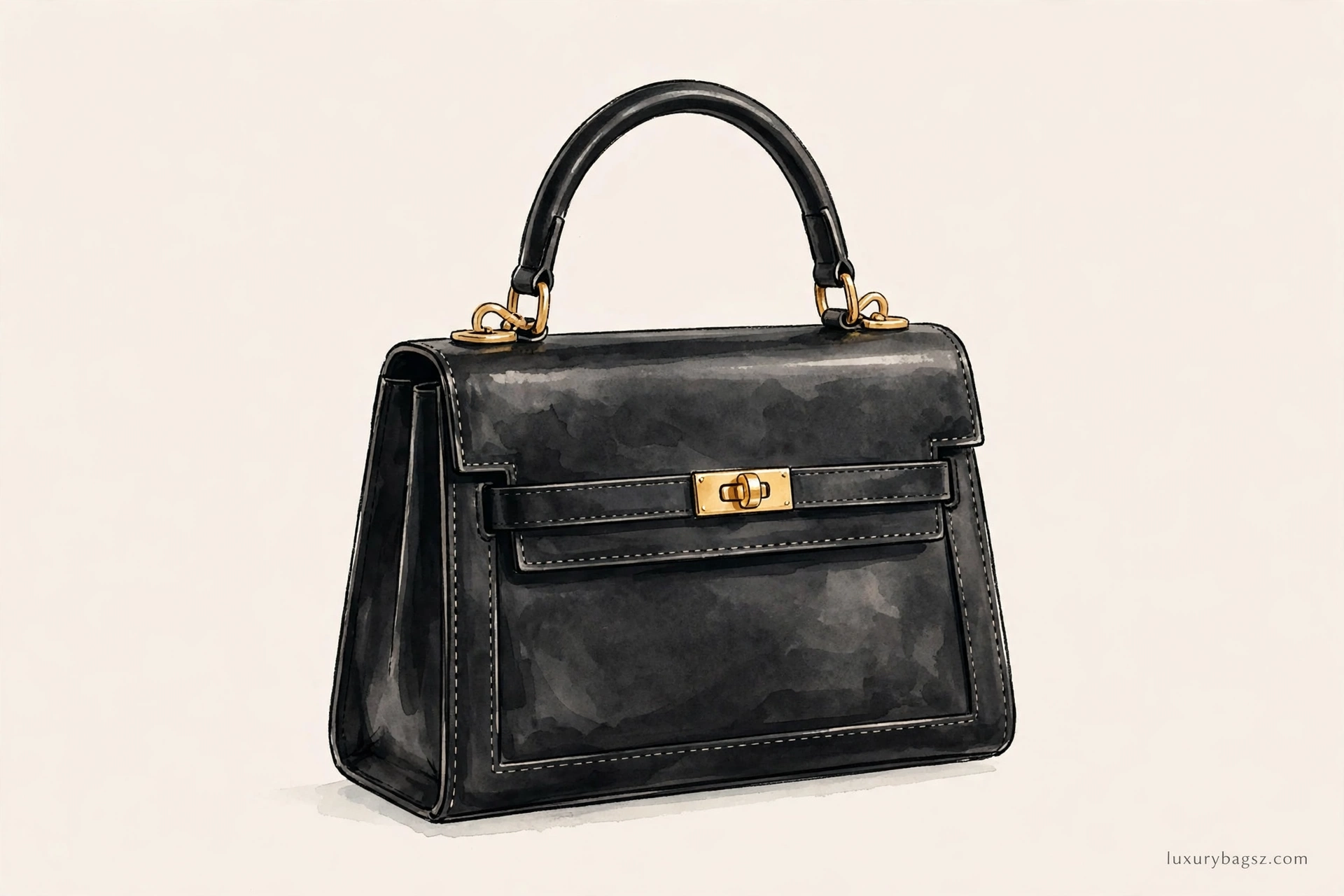
The Constance, with its H clasp and shoulder strap, is the next name most collectors mention. It is smaller, more everyday in some ways than a Kelly, and its 18 and 24 sizes have strong demand, particularly in classic colours and Epsom leather. Beyond the big three, the picture becomes more selective.
The Lindy, Evelyne and Picotin have loyal followings and can hold value well in popular colours, but they rarely command the premiums of a Birkin or Kelly. Limited editions, exotic leathers, and special finishes can outperform everything — or underperform badly if the edition does not find a following. Rarity alone is not value; rarity plus demand is.
Smaller leather goods and non-bag Hermès pieces are generally weaker as investments, with a few exceptions for rare or discontinued items. A scarf, belt or wallet may hold sentimental and style value, but it will not behave like a quota bag on resale. If your goal is value retention, concentrate your budget on one strong bag rather than spreading it across several weaker pieces.
One Birkin kept in excellent condition will almost always serve you better, financially and practically, than three middling purchases.
What Actually Drives a Resale Price
Resale price is not set by a single factor, and guides that claim otherwise are selling simplicity, not accuracy. Condition comes first for most buyers: corner wear, handle darkening, scratches, stains, and interior marks all reduce what a buyer will pay, and they reduce it faster than most owners expect. A bag described as excellent but photographed with worn corners will be priced as worn, whatever the listing says.
Keep a bag stuffed, upright, and away from dye transfer and sunlight, and you protect more value than any clever buying strategy can create.
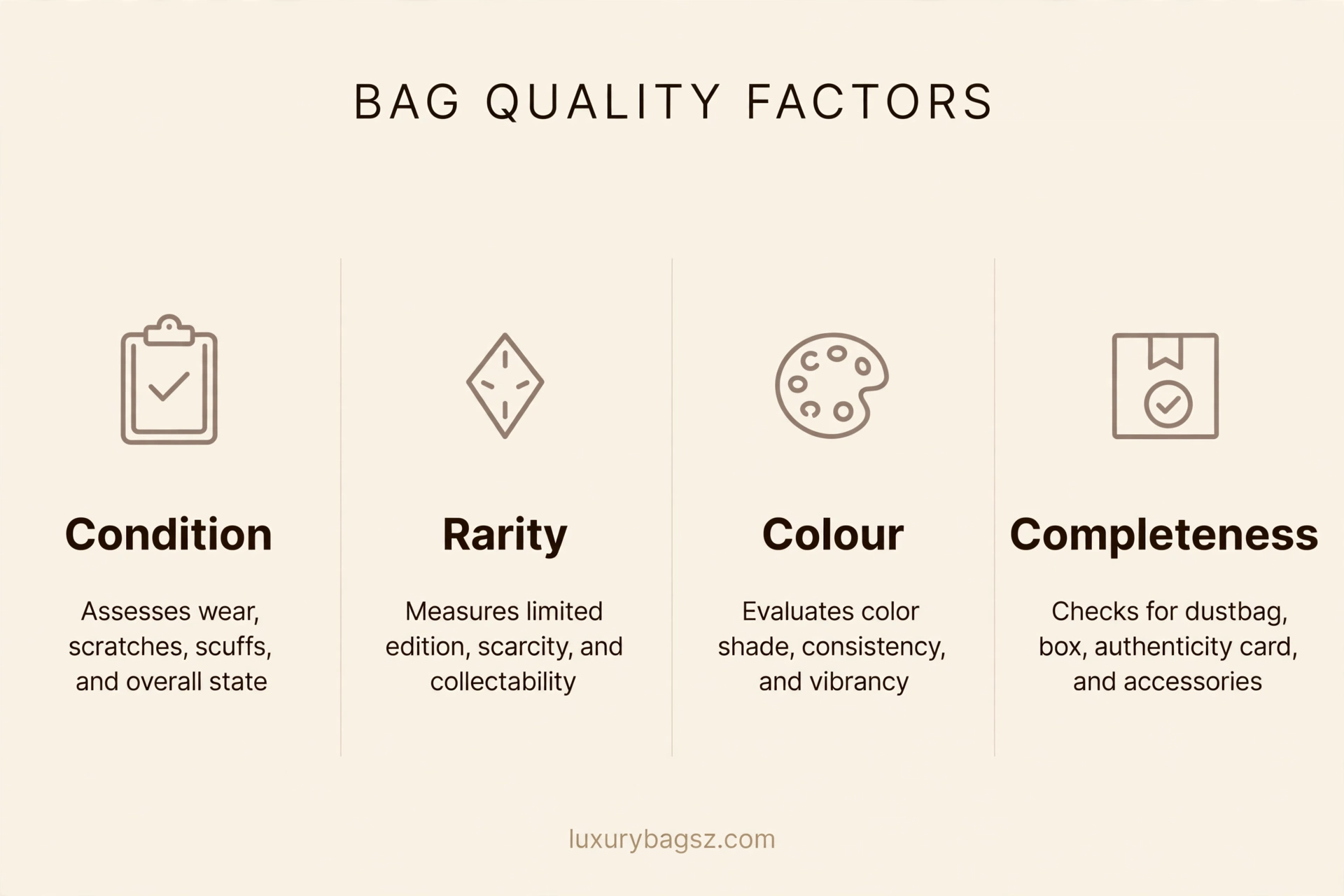
Rarity, colour, leather, size and hardware come next, and they interact. A rare colour in an unpopular size is not automatically valuable; a popular colour in a popular size is reliably saleable. Neutrals — Noir, Gold, Etoupe — and classic reds tend to move fastest, while seasonal brights vary with fashion. Togo and Epsom dominate many resale listings because they are the leathers most buyers trust for daily use.
Hardware matters too: gold and palladium are the safe choices, while rarer finishes narrow the buyer pool even when they are beautiful. Our guide to what affects a designer bag's resale value works through these factors for all brands, and every one of them applies with extra force to Hermès.
Completeness is the factor owners most often neglect. The full set — box, dust bag, lock, keys, clochette, raincoat where supplied, and receipt where available — helps a bag sell faster and for more, because it reassures buyers about provenance and care. Missing pieces do not make a bag unsaleable, but they invite lower offers and harder questions.
Provenance matters in the same way: a clear, honest history, with photographs of stamps and wear, sells better than a vague listing, however attractive the bag. And remember that Hermès issues no authenticity cards, so a card in the set adds nothing to value and should never be presented as proof.
The Risks Nobody Puts in the Headline
The first risk is price movement itself. Luxury resale markets move with fashion, with the economy, and with supply, and the recent Birkin softening from its peak is a reminder that even the strongest bags can fall. A bag bought as an investment at a peak price, on borrowed money, or with money needed soon, is a speculation, not a safe store of value.
If you cannot afford to hold a bag for years, or to see its resale value fall by a fifth without panic, you should not buy it as an investment at all.
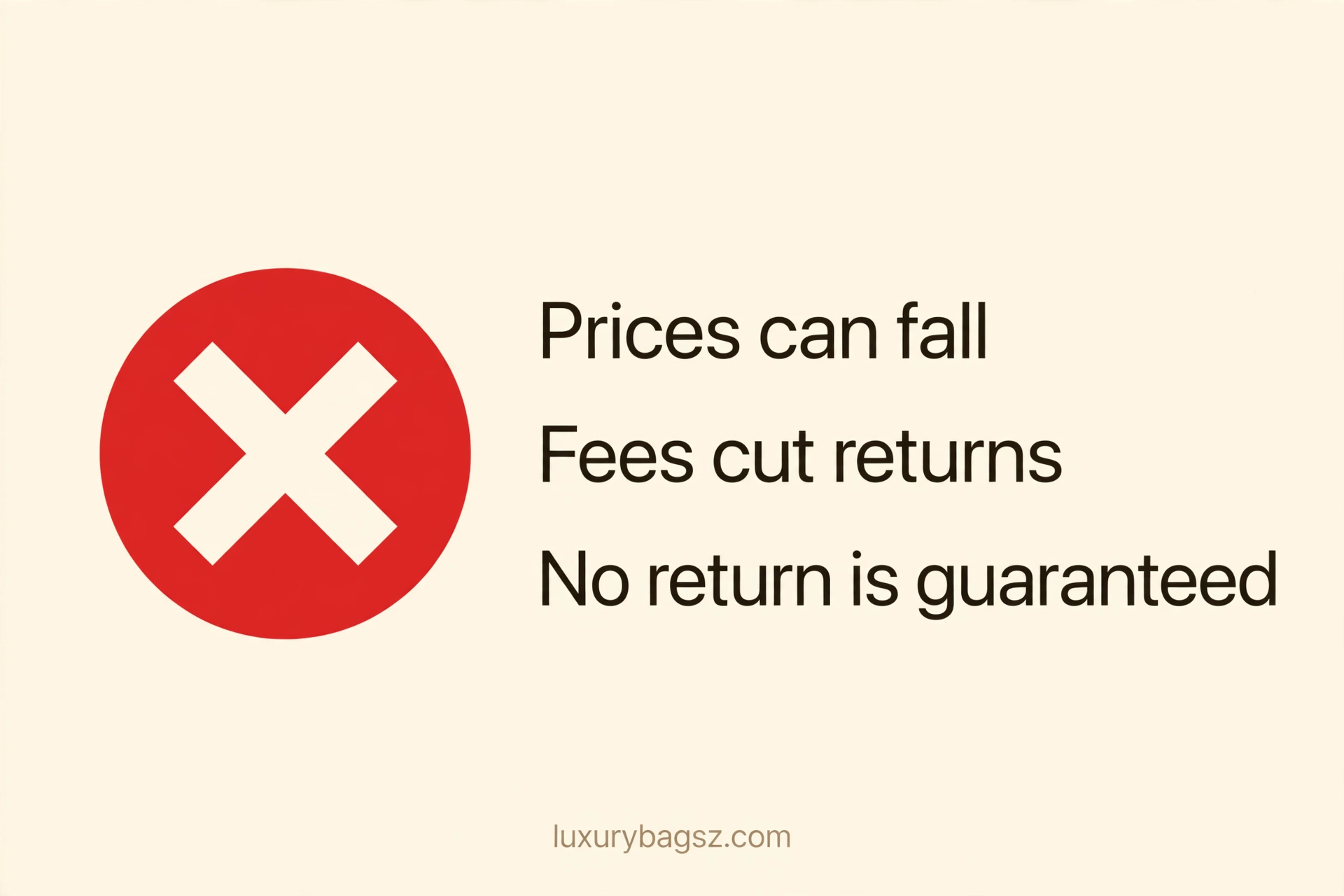
The second risk is cost. Consignment fees, marketplace commissions, authentication fees, shipping and insurance, and taxes where they apply, all come out of the sale price. A bag that sells for 10% above what you paid can still leave you with a loss once a 20% consignment fee is deducted. Private sales avoid some fees but bring their own risks, including fraud, returns disputes, and the time cost of finding a trustworthy buyer.
Always calculate the net figure, not the headline sale price, before calling any bag a profitable investment.
The third risk is authenticity and condition risk. A fake bought in good faith is a total loss, and a genuine bag damaged by poor storage, bad cleaning, or a botched repair can lose a large share of its value in a single incident. Exotic leathers add legal risk: trade in some species is regulated, paperwork matters, and a bag without correct documentation can be unsaleable in some markets.
Finally, there is concentration risk: putting a large sum into one bag, or several bags from one house, leaves you exposed to that house's fortunes in a way a diversified portfolio does not. Handbags can be part of a life well lived; they should not be a retirement plan.

Buying Well: A Checklist for Value-Conscious Buyers
Buy the classic first. A Birkin 25 or 30, or a Kelly 25 or 28, in Noir, Gold or Etoupe, in Togo or Epsom, with gold or palladium hardware, is the combination with the widest buyer pool and the most predictable resale. Unusual colours, sizes and leathers can be wonderful second bags, but they should be bought for love, with the understanding that they may be harder to sell.
If you are offered a quota bag in a colour you merely tolerate, remember that a tolerated colour often becomes a resold bag within a year, usually at a loss after fees.
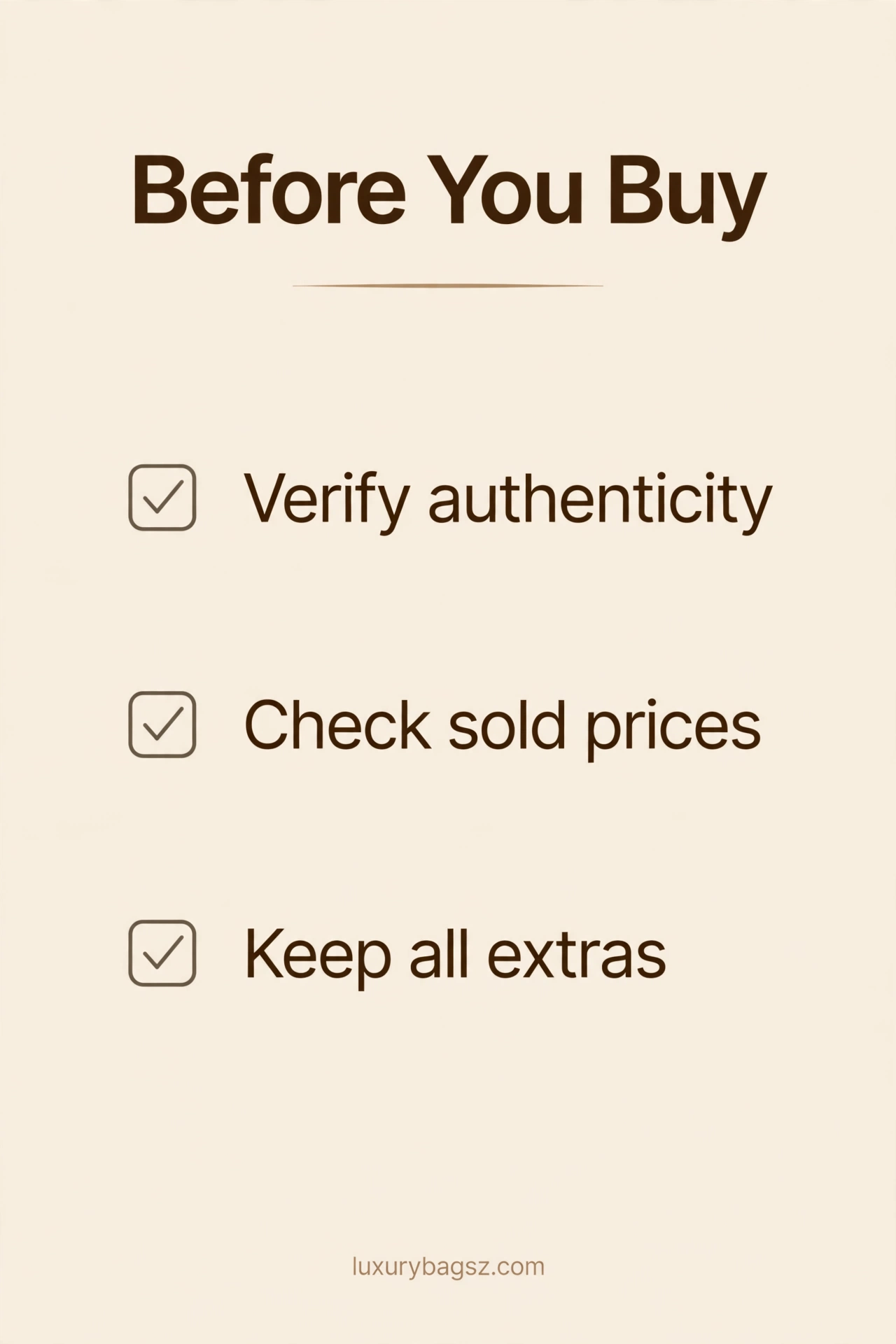
Buy from a source you can verify, and verify the bag itself, not only the listing. Check stamps, stitching, hardware, leather and construction together, get an independent authentication for high-value pieces, and be wary of any seller who relies on an authenticity card — Hermès issues none. Compare sold prices, not asking prices, because asking prices flatter every market.
Look at what the same combination actually sold for, in similar condition, on reputable platforms, over recent months, not at the pandemic peak.
Keep everything, and keep the bag well. Store it stuffed and upright, rotate it if you can, avoid dye transfer and heavy rain, and address marks promptly with leather-appropriate care or professional help. When you do sell, our guide to selling a designer bag for the best price covers timing, photography, pricing and platform choice in detail.
And keep your expectations honest: the best outcome for most owners is a bag loved for years that returns a large share of its cost when sold, not a bag that doubles your money. That is still an excellent result by luxury standards — it is just not a miracle.
Frequently Asked Questions
Is a Hermès Birkin a good investment?
It can be a good store of value, but it is not a guaranteed investment. Classic Birkins in popular sizes, colours and leathers, bought at boutique price and kept in excellent condition, have historically held value better than almost any other bag. Birkins bought at a large secondary premium, in unusual combinations, or sold quickly after fees, may not return their cost at all.
Which Hermès bags hold their value best?
The Birkin first, then the Kelly, then the Constance, in classic colours and popular sizes. The Lindy, Evelyne and Picotin can hold value well in popular combinations but rarely command Birkin or Kelly premiums. Limited editions and exotics can outperform or underperform sharply, depending on whether they find a following.
Are Hermès bags better than gold or shares as investments?
Claims of that kind usually track asking prices for a narrow set of bags over a chosen period, ignoring fees, condition and taxes. They should not be taken as general investment advice. Handbags are illiquid, indivisible, and exposed to fashion risk in ways that diversified financial assets are not, and they should not replace a proper investment portfolio.
Have Birkin resale prices fallen?
Recent reporting in 2026 describes unworn Birkin resale prices falling by more than $6,000 from their 2022 pandemic-era peak, as second-hand supply has grown. That is a correction from an exceptional peak, not a collapse, but it shows that even Birkins can fall, and that buying at a peak on the assumption of endless rises is risky.
What size Birkin holds value best?
Birkin 25 and 30 are generally the most saleable, because they suit the widest range of owners. Larger sizes suit fewer buyers, and very small sizes, while passionately collected, suit a narrower market. Size interacts with colour and leather, so a popular size in an unpopular colour is still harder to sell than a classic combination in a slightly less popular size.
Do Hermès bags come with authenticity cards?
No. Hermès issues no authenticity cards. Any card presented with a bag is not a house document and adds nothing to value or proof. Judge authenticity from the bag itself — leather, stitching, hardware, stamps and construction — and use independent specialist authentication for high-value purchases.
Should I buy Hermès pre-owned or from a boutique for investment?
A boutique purchase at retail price gives the lowest cost base and therefore the best chance of a paper gain, but it requires waiting, purchase history, and acceptance of the colour and combination offered. A pre-owned purchase gives immediate choice but usually at a premium, which raises the bar for any future profit. Both routes can work; overpaying on either route is what hurts most.
How much do selling fees affect Hermès resale profit?
A great deal. Consignment and marketplace fees, authentication, shipping, insurance and taxes can together take a fifth or more of a sale price. A bag that sells for slightly more than you paid can still leave you with a net loss after fees, so always calculate the net return, not the headline price, before judging an investment outcome.
Are exotic Hermès bags better investments?
They can be, but they carry higher risk. Exotic Birkins and Kellys, including Himalaya bags, command the highest prices, but they are also the most volatile, the most paperwork-dependent, and the most expensive to care for and authenticate. They suit experienced collectors with specialist advice, not first-time investment buyers.
What is the safest Hermès investment strategy?
Buy one classic bag you love, in a popular size, colour and leather, at the best price you can verify, keep it in excellent condition with its full set, and hold it for years. Treat any resale strength as a bonus on top of years of use, not as a guaranteed return, and never buy with money you need soon or cannot afford to see fall in value.
Final Verdict: A Good Store of Value, a Poor Get-Rich Plan
Hermès investment pieces earn their reputation honestly, up to a point. A classic Birkin or Kelly, bought well and kept well, has held value better than almost any other handbag, and that resilience is real, built on scarcity, craft, and global demand. For a buyer who loves the bag anyway, that resilience is a genuine benefit: it lowers the true cost of years of ownership, and it means a change of heart need not mean a catastrophic loss.
It is not, however, a guaranteed investment, and the recent softening from pandemic peaks is a useful corrective to years of one-way headlines. Fees, condition, timing, and the premium paid on entry can each erase a paper gain, and no bag, however iconic, should be bought with borrowed money or with money needed soon.
Buy the Birkin or Kelly you love, in the combination most people love too, look after it as if you will keep it forever, and let any resale strength be a pleasant surprise — not the plan itself.