Buying Vintage Designer Bags vs New: Which Is Better Value?
Vintage or New in Brief
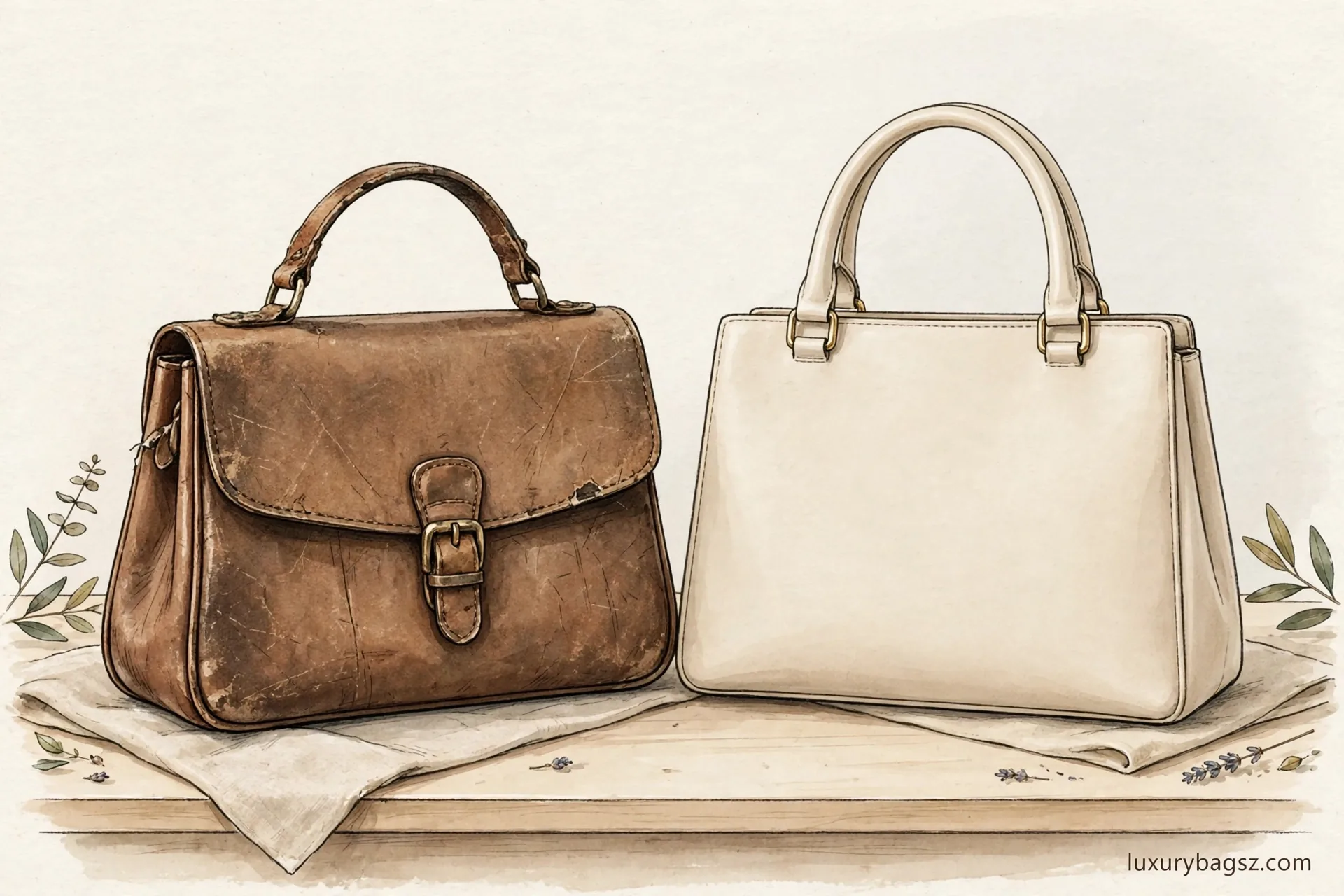
Neither vintage nor new wins outright. New wins on certainty: guaranteed authenticity, pristine condition, full packaging, and boutique support. Vintage wins on price, character, discontinued styles, and immediate availability without a waiting list. The right choice depends on five questions: does the brand ever go on sale, how popular is the bag, how much will you save, is it widely available, and have you done your research?
As a sanity check, many buyers use a 25 percent rule: the saving should be at least a quarter off retail to justify pre-owned risk and missing warranty. It is a rule of thumb from a 2017 blog, not a law, but it still works as a first filter.
Key Takeaways
- Vintage generally means at least 20 years old; pre-owned means previously owned at any age, so all vintage bags are pre-owned but not all pre-owned bags are vintage.
- New means guaranteed authenticity, pristine condition, full set, and boutique after-sales support, at full retail price.
- Vintage and pre-owned mean lower prices, discontinued styles, and immediate availability, with authenticity risk, wear, and limited warranty.
- A saving under about 25 percent off retail rarely justifies pre-owned risk, while iconic bags can cost more pre-owned than new.
- Worked arithmetic: a Chanel Classic Medium near $11,700 new, at 80 to 92 percent retention, implies roughly $9,360 to $10,764 pre-owned before fees and condition adjustments.
- Run the five-question flowchart in the decision section before you buy, and do not let a bargain override a failed answer.
Three Words That Are Not the Same
New means bought from a boutique or authorised retailer, never previously owned, with full packaging and the brand's current after-sales support. Pre-owned, also called second-hand or pre-loved, means previously owned at any age: a bag from last season, carried twice, is pre-owned, and so is a bag from 1995.
Vintage means, by the generally used definition, at least 20 years old, produced during a recognised design period, and still reflecting its original craftsmanship. A 20-year-old bag that is merely worn out is old, not vintage. Sellers blur these words constantly: a 2018 bag labelled vintage is not vintage by the 20-year definition. Ask for the production year or era, and apply the definitions yourself.
This guide uses the words strictly throughout.
The Side-by-Side Table: New vs Pre-Owned vs Vintage
| Factor | New | Pre-owned (recent) | Vintage (20+ years) |
|---|---|---|---|
| Price | Full retail, highest | Usually below retail, varies by model | Below retail for most, above retail for icons |
| Authenticity risk | None from authorised sellers | Low to moderate, needs checks | Higher, era knowledge needed |
| Condition | Pristine, unworn | Light to visible wear, varies | Wear plus age effects, varies widely |
| Packaging and set | Full set, tags, receipt | Often partial, sometimes full | Often partial or missing |
| Availability | Boutique stock or waiting list | Immediate, wide choice | Immediate, but each piece unique |
| Warranty and repairs | Brand warranty and support | Limited, brand-dependent | Limited, often paid repair only |
| Choice of styles | Current collection only | Current plus recent discontinued | Discontinued and era styles only |
| Resale value | Falls on first resale for most | Holds steadier from purchase price | Icons can appreciate, most do not |
| History | Known from day one | Partially known, ask seller | Often unknown, research needed |
Read the table as a map, not a verdict. Authenticity risk rises with age, because era markers change and wear obscures them, while availability moves the other way: new stock is limited to current styles, while vintage offers styles no boutique can sell you at any price. The rows that matter most to you — price, certainty, or character — decide the column you should shop in.
Price: The Worked Comparison
Start with a current anchor. Our Chanel comparison puts a Classic Medium near $11,700 in 2026 trackers, against older guide figures near $5,800 that no longer describe the market. Apply retention arithmetic, labelled as arithmetic rather than a quoted listing: Rebag's 2025 Clair Report puts Chanel at 80 to 92 percent average retention.
On $11,700, that implies roughly $9,360 to $10,764 before condition, colour, size, fees, and venue adjustments — a saving of about 8 to 20 percent, which falls short of the 25 percent sanity rule for many Chanel purchases.
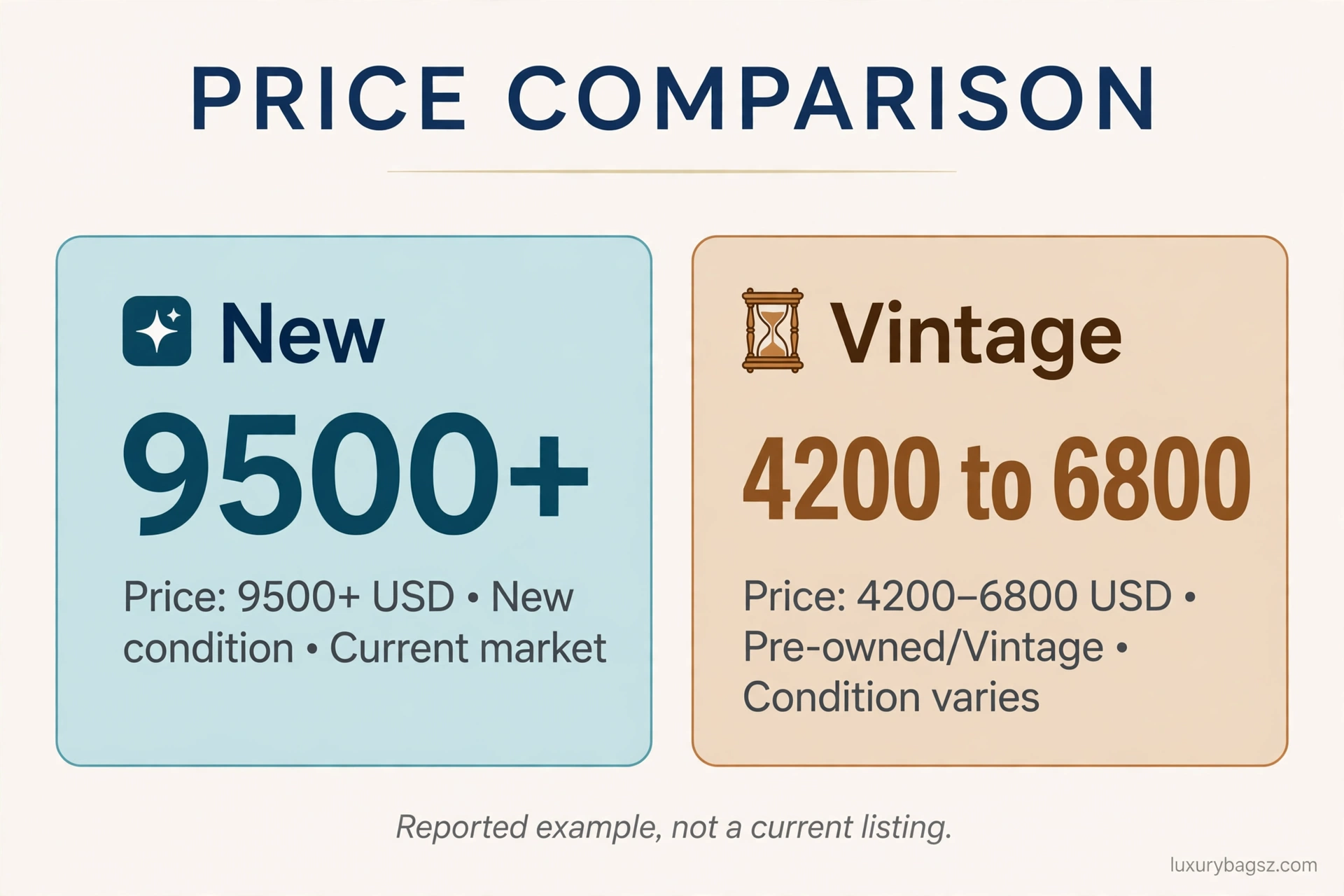
Other models differ: one thrifting comparison cited in the gaps research gives a vintage Chanel Classic Flap at $4,200 to $6,800 against $9,500-plus retail (roughly 28 to 55 percent saving) and a Gucci Dionysus at $900 to $1,400 against $2,490 (roughly 44 to 64 percent). Those come from a secondary comparison, not current listings checked for this guide, so treat them as reported examples, not today's prices.
One retailer post cites 20 to 70 percent below new — so wide it proves the point: check sold prices for your exact bag against current retail.
The Exceptions: When Pre-Owned Costs More Than New
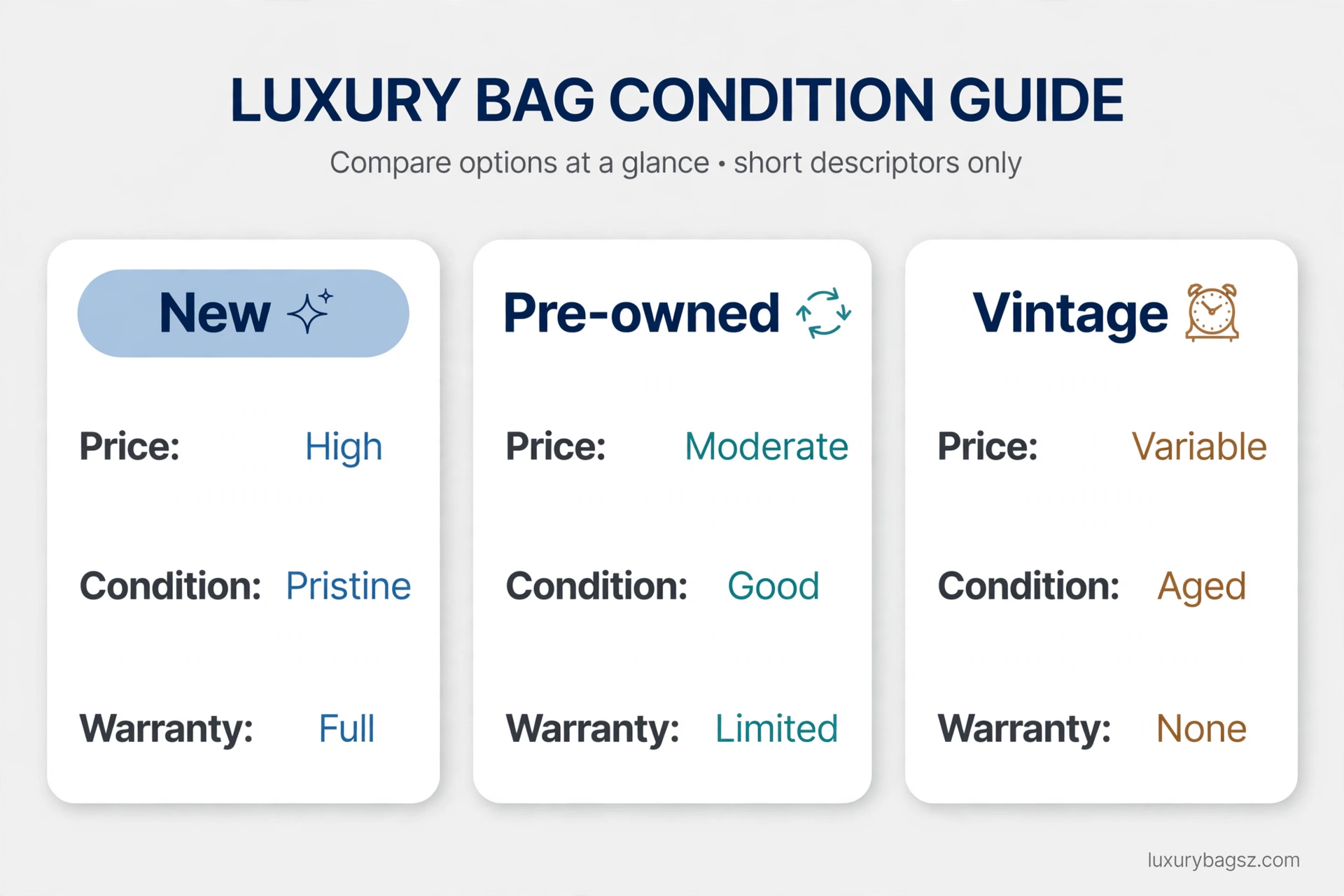
Pre-owned is not always cheaper. A 2017 personal blog gives two examples from its time: a Chloé Nano Drew at $446 new on sale against $925 pre-owned, and a Gucci Soho Disco at $895 used against $995 new, a saving of only $100. Those prices are obsolete as figures, but the pattern is permanent: brands that go on sale — Prada, Givenchy, Chloé, Valentino, and Fendi were named in that 2017 account — can be cheaper new on sale than pre-owned.
Hermès quota bags invert the pattern: Birkin and Kelly bags can cost more pre-owned than boutique, because boutique access is restricted while pre-owned stock is immediate. Rare vintage icons do the same: a Kelly Mini II at 282 percent of original value in Rebag's 2025 report, or a Birkin Sellier at 183 percent. Those are model-level results for exceptional pieces, not a reason to assume any old bag appreciates.
Model choice matters within a brand too: our Classic Flap vs Boy comparison shows how Chanel's two icons differ on price, wear, and resale. Compare actual prices in front of you, not category averages.
Authenticity, Condition, and Wear Across Eras
New from an authorised seller carries no authenticity risk: provenance is the boutique itself. Pre-owned carries low to moderate risk through a reputable reseller with authentication, and higher risk from private sellers. Vintage carries the highest risk: era markers changed over decades, wear obscures stamps and codes, and vintage fakes have had decades to circulate and acquire plausible wear.
Counterfeit prevalence figures must be handled carefully: one guide cites 20 to 30 percent of online luxury handbag listings (International AntiCounterfeiting Coalition), while a separate ranking piece claims over 90 percent of vintage bags sold on social media without third-party verification are counterfeits, unsourced in its snippet. Do not blend those scopes into a single statistic.
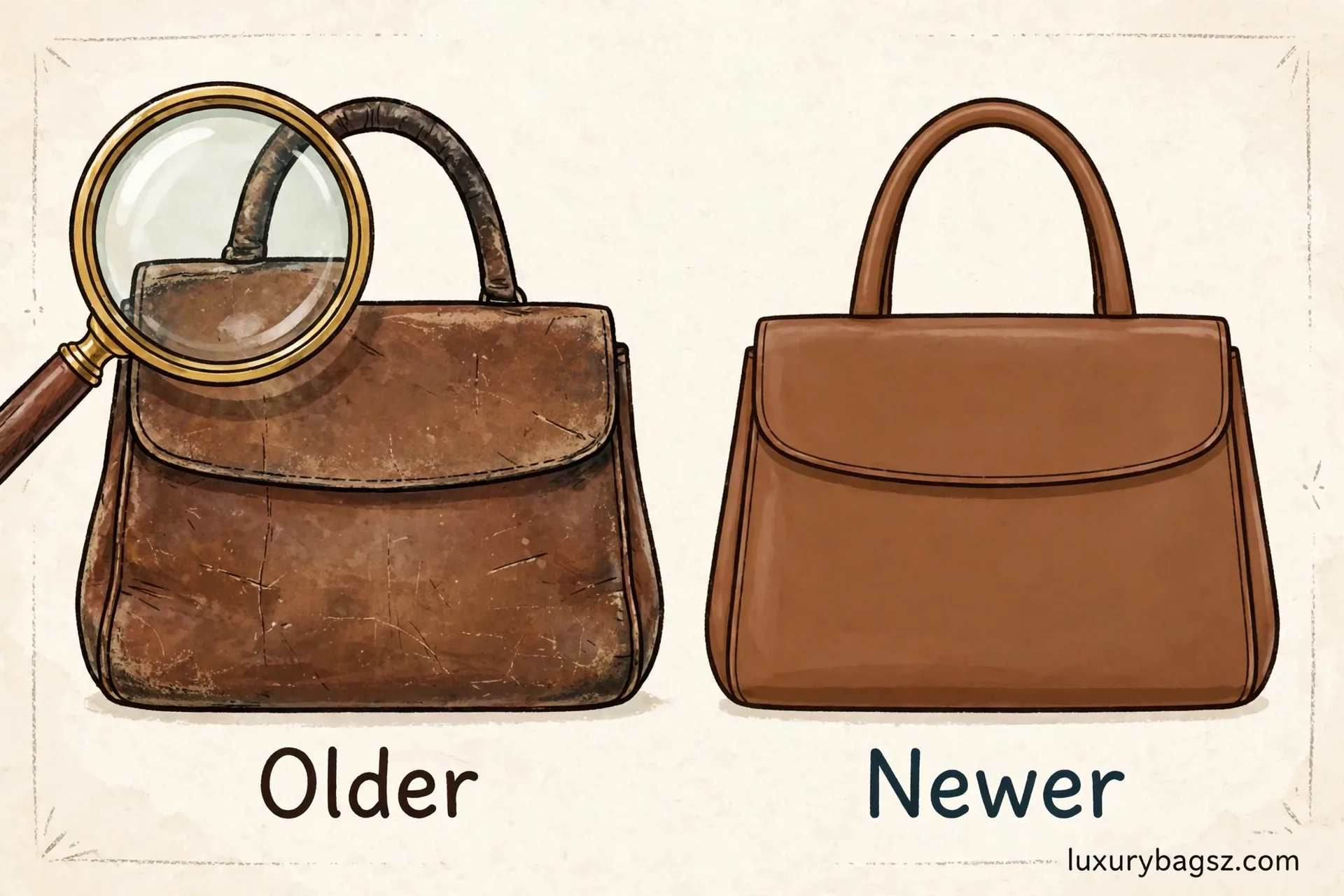
On condition: new is pristine; pre-owned varies by use, not age alone; vintage adds age effects — drying, cracking, fading, sticky linings, tarnished hardware — to use effects. Vintage sizing also varies, so measure the actual piece rather than trusting the size name.

Warranty, Repairs, and Availability
New bags carry the brand's warranty and after-sales support, though terms vary by brand. Pre-owned bags generally lose warranty coverage: one thrifting guide notes Chanel and Hermès generally do not warranty pre-owned items except via authorised dealers, with paid repairs sometimes available. That detail comes from a secondary guide, so confirm current policy before relying on it.
Vintage bags sit furthest from warranty support: paid repairs may exist, but parts for discontinued models may be unavailable. Ask about repair before you buy: do you repair this model and era, at what rough cost, and with original parts? On availability: new stock is the boutique's decision and may be waitlisted; pre-owned is immediate and wide; vintage is immediate but unique.
Our guide to buying Hermès online vs in store shows how waiting lists shape Hermès buying. If you can wait for boutique stock, waiting saves money and risk; if you cannot wait, or the bag is discontinued, pre-owned availability justifies a smaller saving or even a premium.
The Decision Flowchart in Prose
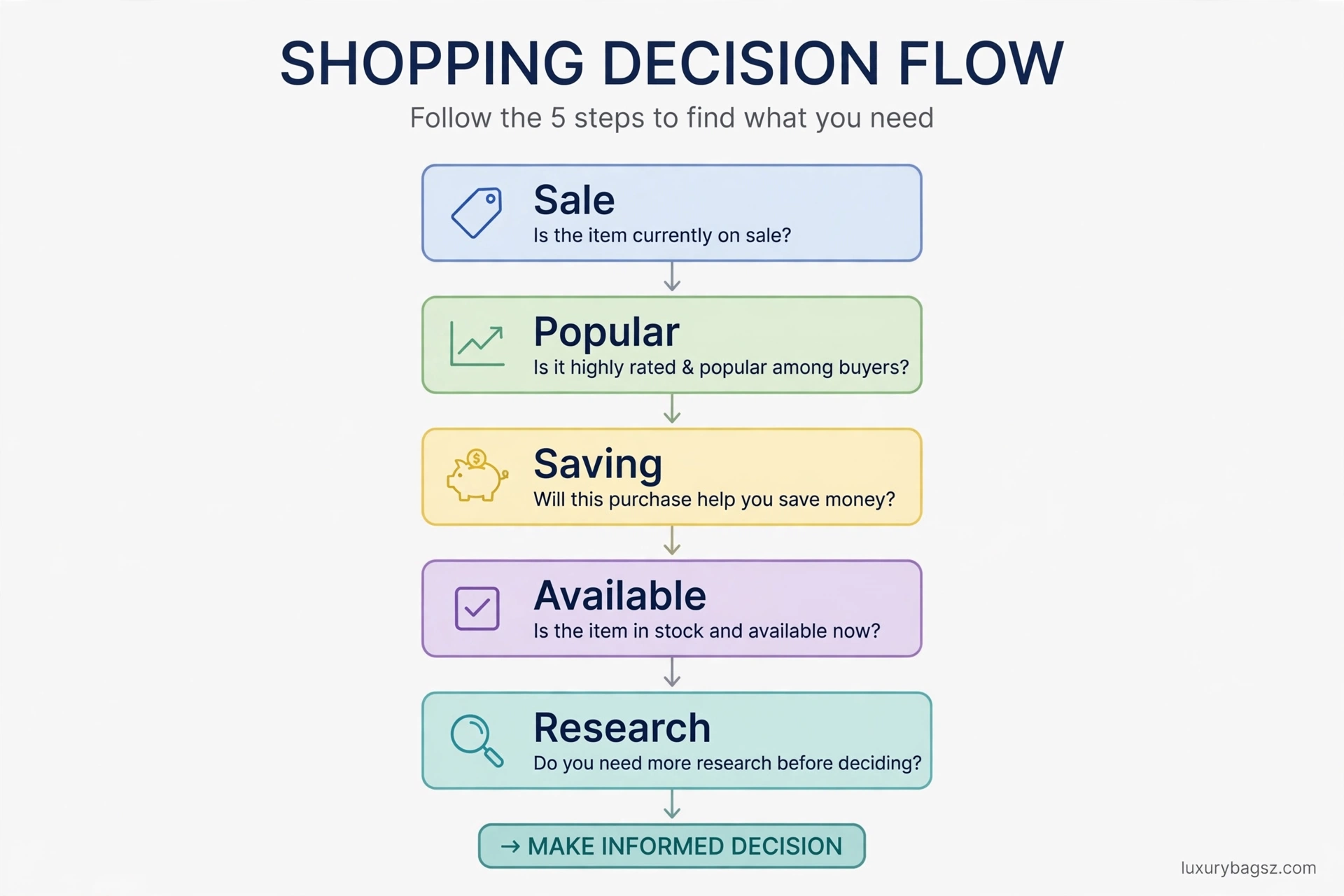
First: does the brand ever go on sale? If yes, check current sale prices before any pre-owned purchase, because a new bag on sale may beat every pre-owned listing on price, warranty, and certainty combined. Second: how popular is the bag? An iconic bag holds resale value and sells quickly, making pre-owned safer. Third: how much will you save, using sold prices and current retail, after fees, shipping, and likely cleaning?
At least 25 percent clears the sanity filter; below that, the case weakens, unless the bag is unavailable new. Fourth: is the bag widely available new? If on boutique shelves, new is the default unless the saving is large; if waitlisted, discontinued, or vintage-only, pre-owned or vintage becomes the only route. Fifth: have you done your research — model, size, era markers, sold prices, seller checks, authentication route?
If any answer is no, pause and complete it before paying.
Era Quality and Investment Claims: What the Data Actually Says
Era quality is claimed often and proven rarely. One Coach-specific comparison in the gaps research contrasts vintage 1970s to 2000s full-grain, vegetable-tanned, US-made production with modern chrome-tanned production, but no equivalent comparison exists in the competitor set for Chanel, Louis Vuitton, Hermès, or Gucci.
Treat era-quality claims as hypotheses to check against sold prices and physical inspection: leather grain, stitching, hardware weight, and lining quality all show in hand. 'They don't make them like they used to' is true for some models and false for others, and it is often used to justify a premium sold prices do not support.
On investment: one investment-framed source cites a 'Bag Hunter Index' average 14 percent annual return for top-tier vintage, while noting mass-produced seasonal pieces can lose around 40 percent on resale. Those come from a secondary source, not audited data checked for this guide, so treat them as reported claims, not forecasts.
Rebag's 2025 Clair Report gives firmer ground — Hermès 138 percent, Goyard 132 percent, Chanel 80 to 92 percent — but those are past averages, not promises. Never buy a bag you cannot afford to keep.
Size, Fit, and Era Variation
Vintage sizing deserves its own warning, because no competitor vintage guide covers it. Proportions, strap drops, and interior layouts changed across decades, and a vintage size name may not match the modern size of the same name. Measure the actual bag: width, height, depth, strap drop, and interior capacity, in centimetres and inches. Compare those figures with a bag you own and carry, rather than trusting the size name on the listing.
Try the bag on if possible, or ask the seller for a worn photo with a scale reference: a vintage bag that looks right in a flat photo can hang differently on the body, especially when strap lengths and body depths differ from modern versions. Hardware variation across eras also affects fit and use: older clasps, zips, and strap fittings may function differently, and replacement parts for vintage hardware may be unavailable.
Test every closure and fitting before committing, or ask the seller to demonstrate them on video. Finally, remember that vintage bags were designed for a different daily carry — smaller phones, fewer cards, no tablets. A vintage bag that cannot hold your daily essentials is a beautiful object, not a daily bag, and that distinction should shape both price and purchase.
Sustainability: An Honest, Unquantified Claim
Buying pre-owned and vintage is widely claimed to reduce waste and lower carbon footprint, and the direction of that claim is plausible: reuse avoids new production. One retailer post in the competitor set makes exactly that claim, but gives no figures, comparisons, or sources. This guide does not invent sustainability numbers.
No quantified comparison — such as kilograms of carbon saved per bag reused — was found in the competitor set, and a responsible guide should say so rather than dressing a plausible claim as measured fact. What can be said is qualitative: reuse extends a bag's life, delays disposal, and reduces demand for new production at the margin, especially when the alternative is a new bag of the same type.
Sustainability should not override authenticity, condition, or price: a fake bag bought for sustainability reasons is still a fake, and a vintage bag needing heavy restoration may carry its own footprint. Treat sustainability as a tiebreaker between otherwise equal options, not as a reason to accept a bad bag.
If sustainability matters deeply to you, the strongest action is to buy a bag you will carry for years, care for it well, and resell it honestly when you are done.
Care and Restoration Costs for Vintage Bags
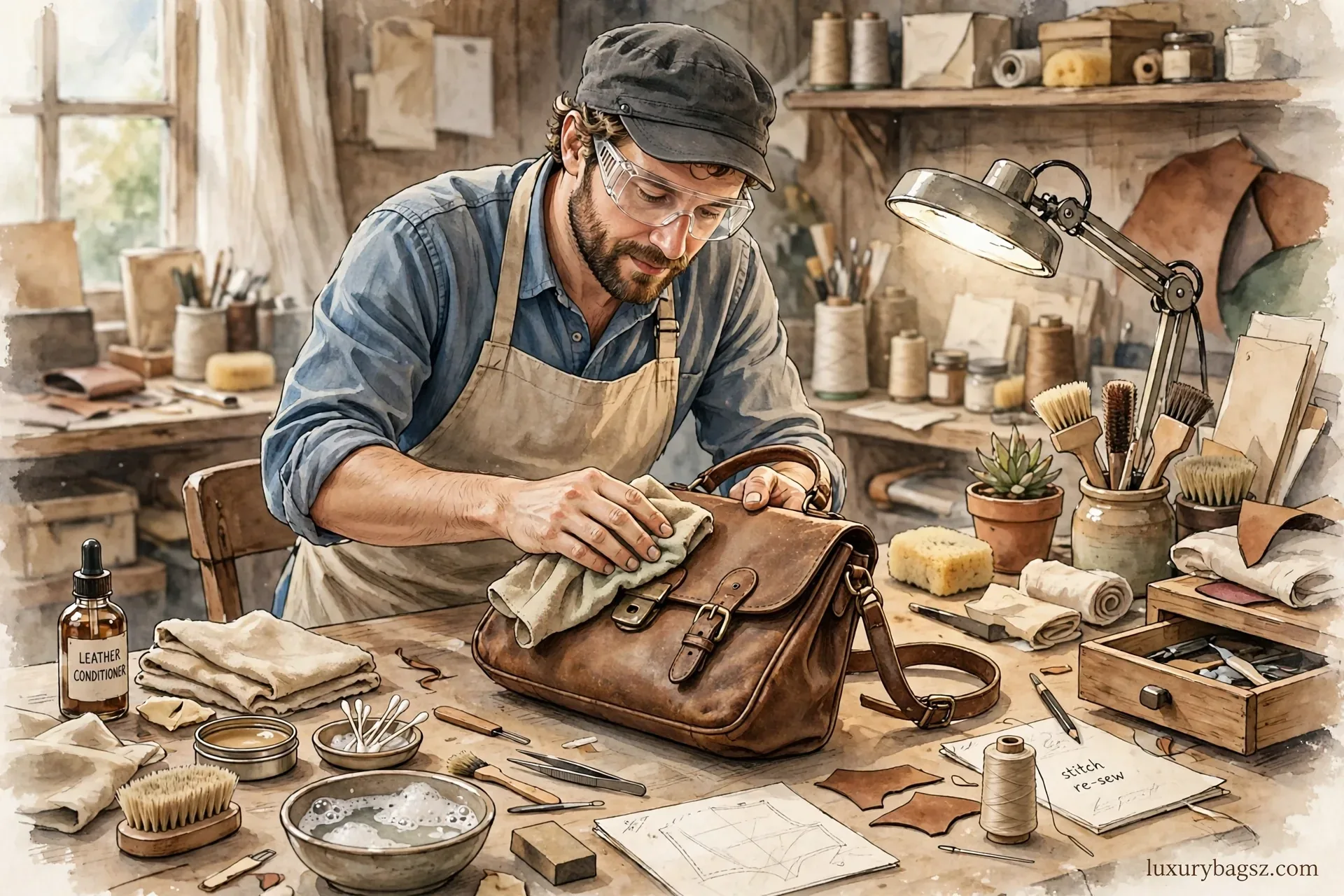
Vintage care starts with gentle handling: clean lightly, condition only where the material allows, and avoid harsh products that strip patina or damage aged leather. Our guides on how to clean Chanel bags and how to clean a Hermès canvas bag show how gentle the first clean should be, and vintage leather needs even lighter treatment.
Restoration costs are the gap no competitor vintage guide prices, so this guide states the gap plainly rather than inventing figures: cleaning, re-lining, re-stitching, handle replacement, and hardware repair each vary widely by bag, material, and specialist. Comparatively, cleaning is cheapest, re-stitching and edge work sit in the middle, and re-lining, handle replacement, and hardware replating are the expensive end.
Get a specialist estimate before buying a vintage piece that needs work, and compare it with the price gap to a better-condition example. Minor disclosed work may preserve usability without destroying character, while major work — new lining, replaced handles, redyed panels — can reduce collector value even as appearance improves. Buy the best condition you can afford, and walk away when restoration costs erase the vintage saving.
The Final Check Before You Choose
Revisit the five questions one last time, with the bag in front of you: sale brand, popularity, saving, availability, research. Each answer should be written down, not felt, because feelings favour the prettiest listing over the wisest purchase. Check the total cost, not the headline price: add tax, shipping, insurance, authentication, and likely cleaning or repair, and compare that all-in figure with the new price.
Check the exit as well as the entry: what would the bag resell for in its current grade and venue, using sold prices, not asking prices? Then decide, and decide once. If you are still torn, try the sleep test: set the decision aside for three days without browsing further listings.
If you return still wanting the same specific bag at the same price, the desire is durable; if you return wanting a different bag, or no bag, the original urge was the listing, not the bag.
Frequently Asked Questions
What counts as a vintage designer bag?
Vintage generally means at least 20 years old, from a recognised design period, still reflecting its original craftsmanship. Pre-owned means previously owned at any age, so a bag from last season is pre-owned but not vintage. A merely worn-out old bag is old, not vintage.
Is vintage always cheaper than new?
Usually, but not always. Most vintage bags sit below retail, while rare icons can cost more than boutique: Rebag's 2025 report puts a Kelly Mini II at 282 percent of original value and a Birkin Sellier at 183 percent. Brands that go on sale can also be cheaper new on sale than pre-owned, so compare actual prices, not categories.
How much should I save to justify buying pre-owned?
Many buyers use a 25 percent rule: the saving should be at least a quarter off retail to justify pre-owned risk and missing warranty. It comes from a 2017 blog, so treat it as a first filter, not a law. Chanel retention arithmetic shows why it bites: a Classic Medium near $11,700 at 80 to 92 percent retention implies only about 8 to 20 percent saved.
Is buying vintage risky for fakes?
Vintage carries the highest authenticity risk: era markers changed over decades, wear obscures stamps and codes, and vintage fakes have had decades to circulate. Treat prevalence figures carefully: one guide cites 20 to 30 percent of online listings, while an unsourced ranking piece claims over 90 percent for unverified social-media sales. Those scopes differ, so do not blend them.
Do vintage bags come with a warranty?
Generally no. One thrifting guide notes Chanel and Hermès generally do not warranty pre-owned items except via authorised dealers, with paid repairs sometimes available. That detail is secondary, so confirm the current policy before relying on it, and ask about repair for your exact model and era before buying.
Are older bags better made than new ones?
That claim is made often and proven rarely. The only era-craftsmanship comparison in the competitor set covers Coach, not Chanel, Louis Vuitton, Hermès, or Gucci. Treat era-quality claims as hypotheses: check leather grain, stitching, hardware weight, and lining in hand, and against sold prices, before paying a premium for age.
Can a vintage bag be an investment?
Top-tier icons are cited at an average 14 percent annual return by one investment-framed source, while mass-produced seasonal pieces can lose around 40 percent on resale. Those are reported claims from a secondary source, not audited data. Rebag's past averages are firmer ground but still past results, not promises. Never buy a bag you cannot afford to keep.
Do vintage sizes match modern sizes?
Not always. Proportions, strap drops, and interior layouts changed across decades, so a vintage size name may not match the modern size of the same name. Measure the actual bag and compare it with a bag you already carry. Test every closure and fitting, since vintage hardware may work differently and replacement parts may be unavailable.
Is buying vintage really more sustainable?
The direction is plausible — reuse extends a bag's life and delays disposal — but no quantified comparison was found in the competitor set, so this guide gives no carbon or waste figures. Treat sustainability as a tiebreaker between otherwise equal options, never as a reason to accept a fake, a damaged bag, or a bad price.
What restoration costs should I expect for a vintage bag?
No reliable universal price list was found, so this guide prices nothing exactly. Comparatively, cleaning is cheapest, re-stitching and edge work sit in the middle, and re-lining, handle replacement, and hardware replating are the expensive end. Get a specialist estimate before buying a piece that needs work, and walk away when restoration erases the vintage saving.
Conclusion
Neither vintage nor new wins outright, and that is the point. New buys certainty at full price; vintage buys character, discontinued styles, and immediate availability at the cost of risk, wear, and limited support. Your five answers — sale brand, popularity, saving, availability, research — pick the winner for your bag, not for bags in general.
Write those answers down, price the whole cost including tax, shipping, authentication, and likely repair, and give yourself three days before deciding. If the same bag at the same price still wins after that pause, buy it and enjoy it. If it does not, the listing wanted you more than you wanted the bag.