How Luxury Consignment Works

The Short Version: Someone Else Sells It, You Get a Share
Luxury consignment means you hand a designer item to a reseller, the reseller lists and sells it, and you receive an agreed share of the sale price. You keep ownership until the item sells, which is the key difference from selling outright to a shop that buys stock for itself.
That arrangement suits people who want a professional listing, a wider audience, and authentication handled for them, without photographing, answering buyer messages, packing, and posting the item themselves. It also means you give up control over timing and accept a commission, because the reseller does the work and carries the selling costs.
Most consignors are surprised by one thing above all: the price you hope for is not the price you will bank. Commission, payment fees, possible price drops, and tax treatment in some places all sit between the headline sale price and your payout. Reading the agreement before you send anything is therefore the most valuable step in the whole process.
This guide walks through every stage in order, explains the common fee models, and flags the questions that protect you if a sale stalls, a buyer returns an item, or an item never sells at all.
Key Takeaways
- Consignment is not a sale to the shop. You remain the owner until a buyer pays, and the reseller acts as your selling agent.
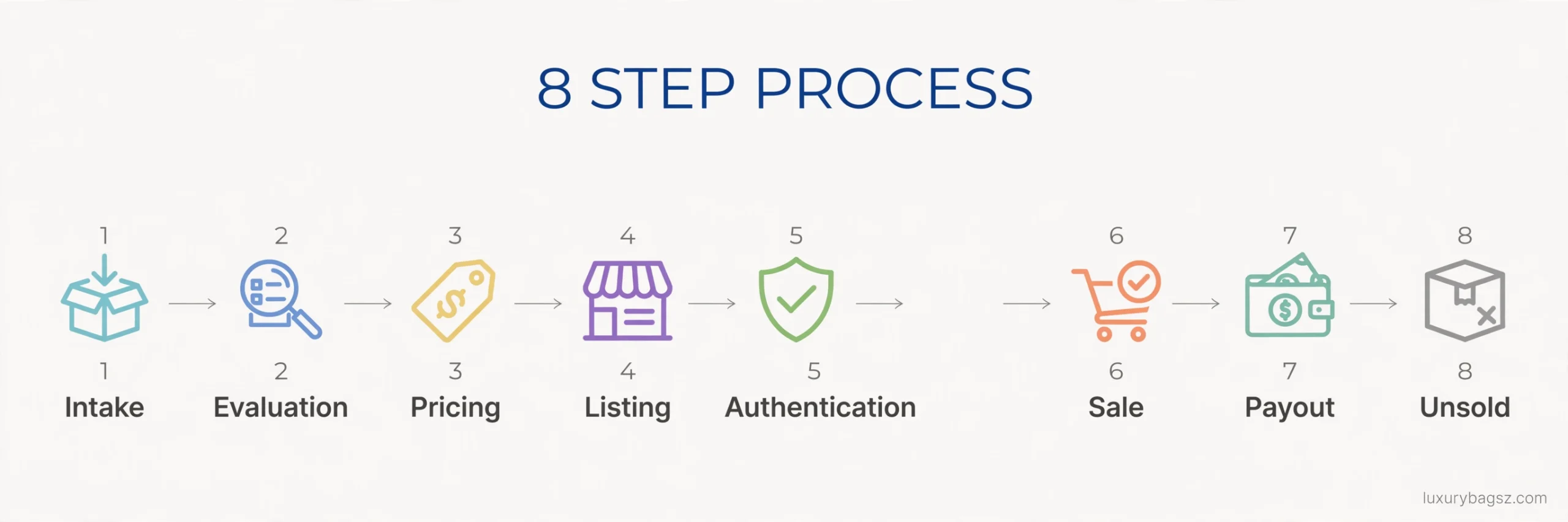
- The process usually runs: intake, evaluation, pricing agreement, listing, authentication, sale, payout, and a plan for unsold items.
- Commission is commonly a percentage of the sale price, and the split often improves as the price rises, though every platform sets its own tiers.
- A written agreement should cover price drops, listing length, return rules, insurance, storage, and what happens if the item does not sell.
- Authentication can happen before listing, after a buyer commits, or both, and the timing affects when you can be paid.
- Clean, complete items with proof of purchase, dust bags, and boxes generally sell faster and for more, though no platform can guarantee a sale date or price.
Part 1: What Luxury Consignment Actually Is
Consignment comes from an old retail idea: a shop displays goods it does not own, sells them on the owner's behalf, and keeps a cut. In luxury resale, that idea has grown into large online platforms, small boutiques, and auction-style services, but the core deal has stayed the same.
You supply the item. The platform supplies the audience, the listing, the payment system, and usually the authentication and customer service. When the item sells, the platform deducts its commission and any agreed fees, then pays you the remainder. If it does not sell, the item normally comes back to you, unless you agreed to a different outcome.
This is different from a direct buyout. In a buyout, a dealer pays you a fixed sum at once and then owns the item, including any upside if it later sells for more. Consignment usually pays more in total when an item sells well, because you share in the final price rather than accepting a wholesale figure. The trade-off is waiting, uncertainty, and a share of the risk if the market moves against you.
It is also different from selling the item yourself on a marketplace. Private selling keeps the full price minus marketplace and payment fees, but you do the photography, the listing copy, the buyer questions, the returns, and the fraud risk. Consignment buys back your time and, on a reputable platform, adds a layer of trust that many buyers will pay extra for.
Some services blur the lines. A platform may offer an upfront advance against a future sale, a guaranteed minimum price, or a choice between consignment and outright purchase. Those options can be useful, but they change the maths. An advance is not a bonus on top of your payout; it is usually deducted from it. A guaranteed price may come with a longer listing period or a lower share.
Read each offer as a separate deal, not as a variation of the same one.
Part 2: Intake — How an Item Enters Consignment
Intake is the first formal step, and it starts before you post anything. Most platforms ask for photos, a description, and basic facts: brand, model, colour, material, size, condition, and what comes with the item. Some ask for proof of purchase or a serial or date code at this stage, while others collect those details after the item arrives.
Be honest at intake, even about flaws. A scuffed corner, a faded handle, or a pen mark inside a bag will be found during evaluation, and discovering it late wastes time and can lower trust. Clear photos in daylight, taken from several angles, help the evaluator give a realistic price range rather than a hopeful one. Photograph the hardware, the stitching, the interior, the base, and any wear points, not just the prettiest angle.
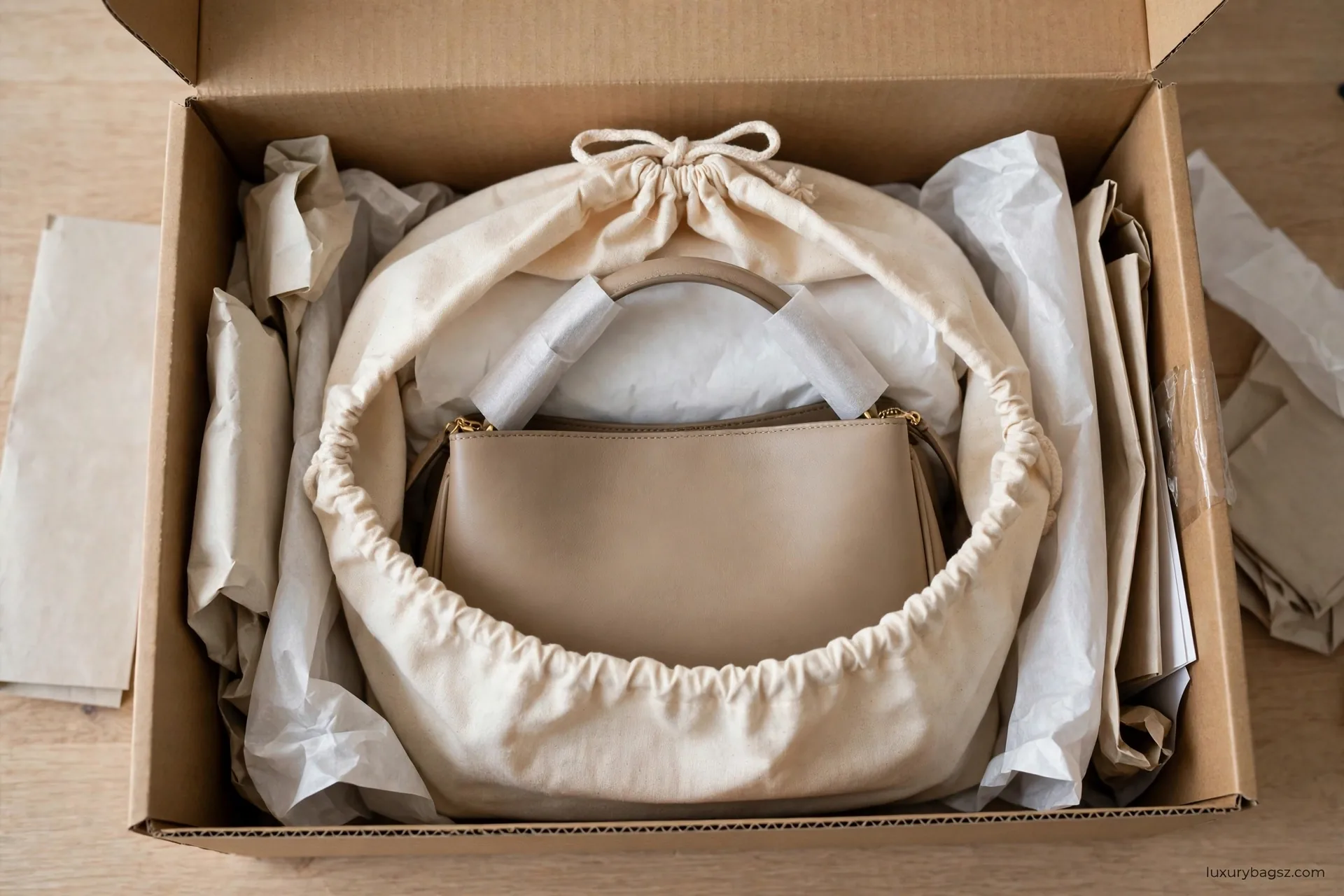
Once intake is approved in principle, you send the item or drop it off. Use the packaging advice the platform gives you, and keep your own photos and a note of the tracking number. Insured, tracked shipping protects both sides, and a platform that insists on it is showing good practice rather than creating hassle. If you are dropping an item off in person, ask for a written receipt that lists the item and its condition as received.
Some platforms reject items at intake for reasons that have nothing to do with authenticity. They may not take a brand, a category, or a condition level, or they may already hold too many of the same model. A rejection at this stage is not a verdict on your item. It is a stock decision, and another platform may welcome the same piece.
Part 3: Evaluation — Condition, Completeness, and Market Demand
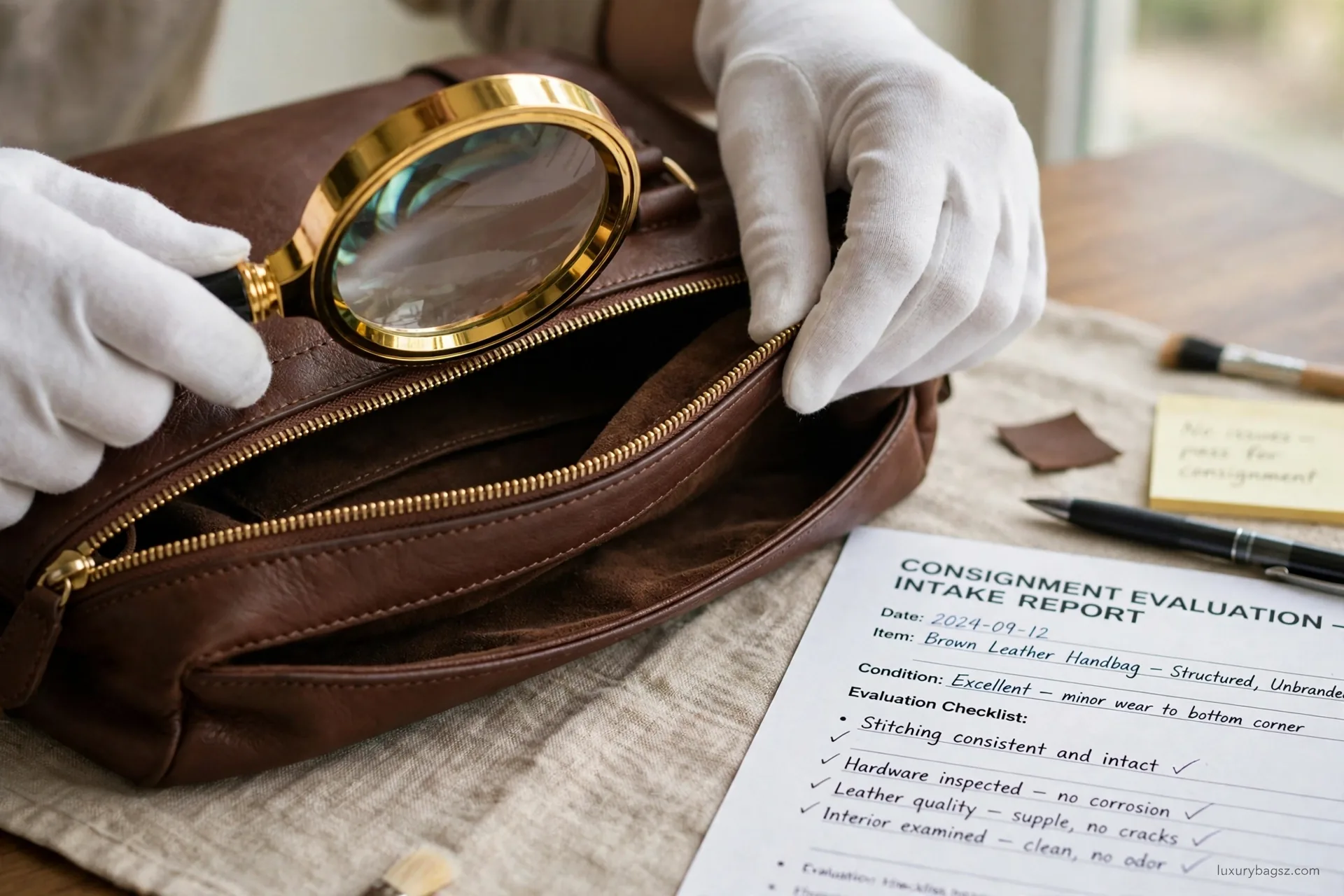
Evaluation is where a specialist looks at the item in hand and decides whether it can be listed, and at what level. If you want a number before you consign, my guide to how much your bag is worth shows how those valuations are built. Three things matter most: authenticity signals, condition, and demand. A genuine item in poor condition may still sell, but slowly and cheaply. A beautiful item from a brand with weak resale demand may also sit, however well it is presented.
Condition is judged in detail. For a handbag, that means leather or fabric wear, corner rubbing, handle darkening, hardware scratches, stitching, lining marks, odour, and whether the shape still holds. For jewellery, it means stones, settings, clasps, hallmarks, and signs of repair. For watches, it means the case, dial, bracelet, movement service history, and original parts. Each category has its own wear points, and a good evaluator knows them.
Completeness matters too. Original boxes, dust bags, cards, booklets, and receipts do not make an item genuine on their own, but they reassure buyers and often lift the price. Missing accessories are not fatal, yet they should be stated plainly in the listing, because a buyer who expected a full set will complain.
If you have a receipt, keep a copy for yourself before sending the original, and ask whether the platform needs the original or a photograph.
Demand is the part consignors control least. A classic model in a neutral colour usually has a deeper buyer pool than a loud seasonal piece, even if the seasonal piece cost more at retail. Recent sales of similar items, current retail prices, and waiting lists all feed into the evaluator's view. If the evaluator suggests a lower price than you hoped for, ask what comparable items actually sold for, rather than what they were listed for.
Listed prices that never sold tell you very little.
Evaluation ends with a decision: accept, accept with a repair or clean first, or decline. Some platforms offer cleaning or minor repair before listing, sometimes at your cost and sometimes included. Agree the cost and the scope in writing before any work starts, because a clean that changes the finish, or a repair that replaces original parts, can affect value as much as the wear it fixes.
Part 4: The Pricing Agreement — The Document That Matters Most
After evaluation, the platform proposes a listing price and your share. This proposal becomes the pricing agreement, and it deserves slow reading. It should state the asking price, the minimum price you will accept, how much the price can drop over time, and who authorises each drop.
Price drops are normal in consignment. A platform may reduce a price after a set number of days to keep stock moving, and a clear schedule avoids arguments later. What you want to know is simple: will the platform ask you first, or does it have permission to drop within agreed limits? Will you be told each time a drop happens? And is there a floor below which the item is withdrawn rather than sold cheaply?
Your share is usually expressed as a percentage of the final sale price, not the asking price. If an item is listed at 1,000 and sells at 800 after a drop, your percentage applies to 800. That distinction catches many first-time consignors out, so confirm it in writing. Also confirm whether the percentage is calculated before or after payment processing fees, shipping costs, or authentication fees, because each deduction changes your payout.
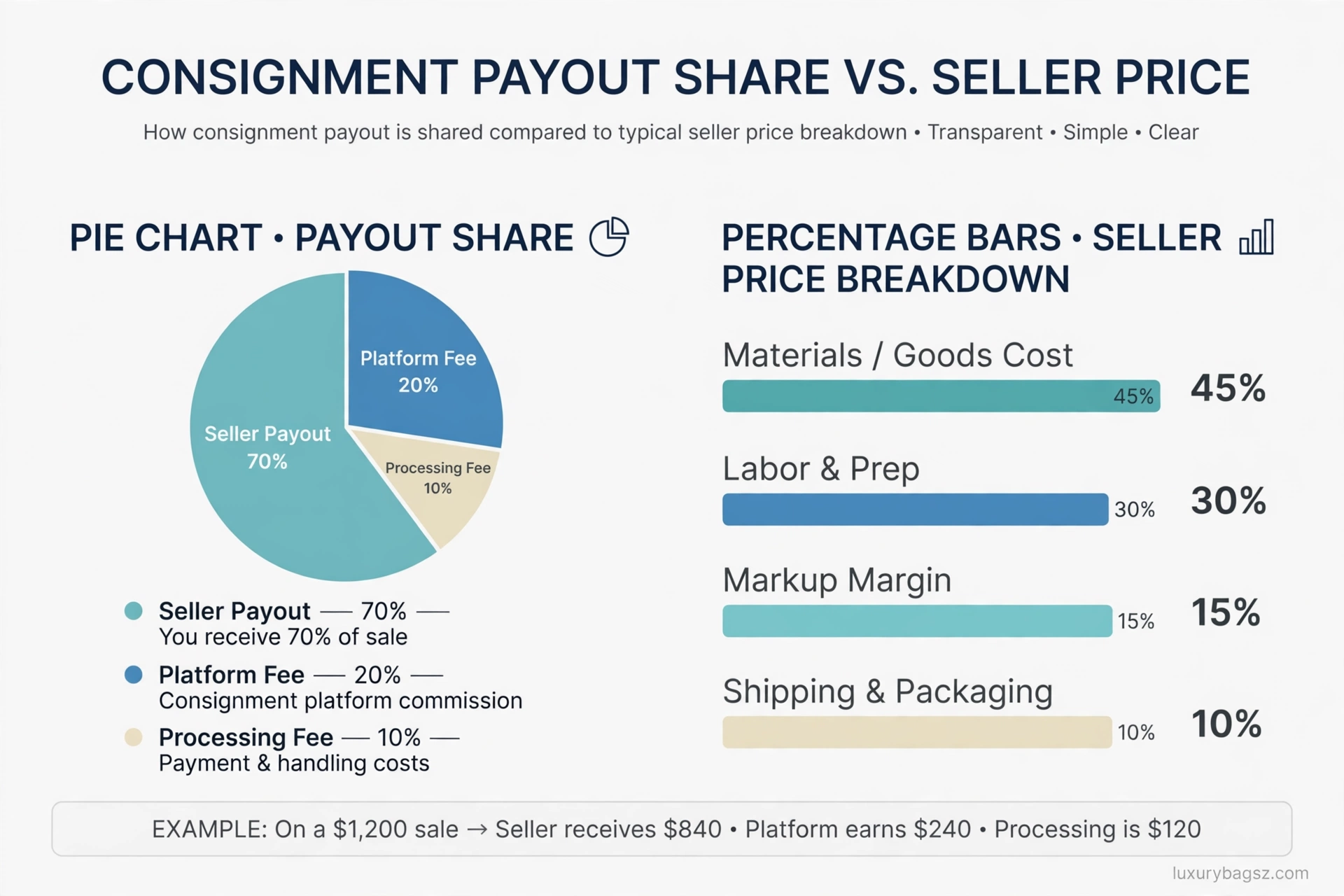
Some platforms use tiered commissions, where higher-priced items earn the consignor a larger share. Others use a flat rate, and some add a listing or handling fee on top. There is no single fair rate across the industry, so compare the net payout you would receive at the same sale price, not just the headline percentage. A platform charging 20 percent with no extra fees can beat a platform charging 15 percent plus several fixed charges.
Ask about the listing period as well. Thirty, sixty, and ninety days are all common, and some platforms renew automatically unless you object. An automatic renewal is not a problem if you want the item to keep selling, but it becomes a problem if you assumed the item would come home after a month. Put a calendar reminder on the day the listing period ends, and check the listing yourself rather than waiting for an update.
Part 5: Listing — Photos, Copy, and Buyer Trust
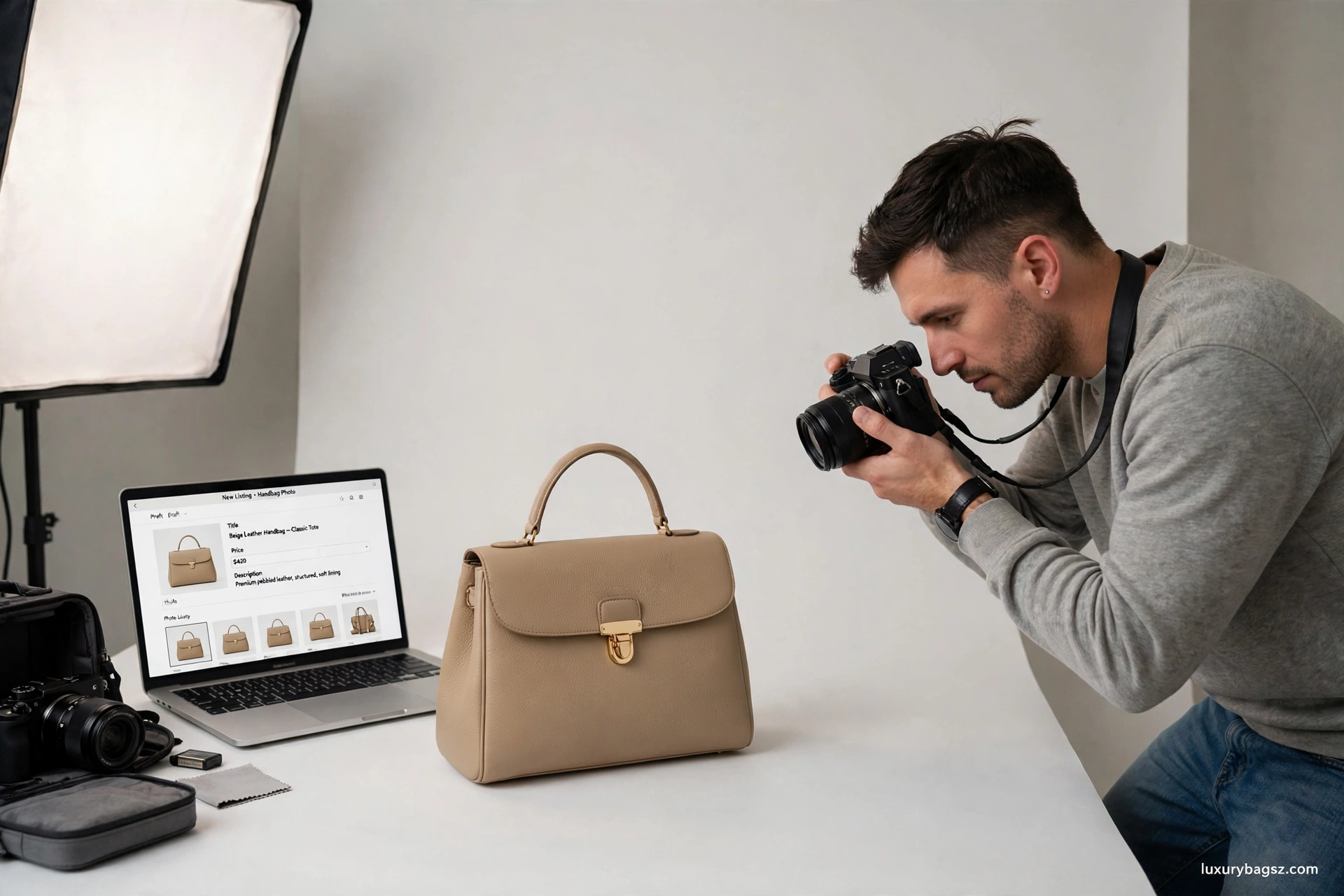
Listing is where the platform earns its commission in the buyer's eyes. Good listings use many clear photographs, including flaws, and copy that states brand, model, material, colour, measurements, condition, and included accessories. Vague copy such as "good condition" without detail helps nobody, because buyers fill gaps with suspicion and sellers face more returns.
Photography style varies. Some platforms shoot in a studio with a plain background, while boutiques may photograph items in store. Either approach works if the images are sharp, colour-accurate, and complete. If you spot an error in your listing, such as the wrong colour name or a missing accessory, tell the platform at once.
A buyer who receives something different from the listing has a strong case for a return, and that return can come out of your payout timetable.
Pricing visibility matters too. Some platforms show the original retail price alongside the resale price, which helps buyers judge value. Others show only the resale price. Neither is right or wrong, but a listing that quietly implies an item is rarer than it is, or newer than it is, creates trouble. If your item is vintage, say so. If it has been repaired, say so. Honesty at listing stage is cheaper than a dispute after delivery.
During the listing period, you will usually have limited control. You cannot normally edit the price yourself, answer buyer questions directly, or pull the item for a private sale without following the agreement. That loss of control is part of the deal, and it is why the agreement matters. If you think you might need the item back for an event, or you might accept a private offer, do not consign it until that need has passed.
Part 6: Authentication — When It Happens and Why It Can Happen Twice
Authentication is the process of judging whether an item is genuine, using materials, construction, hardware, markings, and era-specific details. No reputable platform can promise certainty in every case, and honest platforms say so. What they can promise is a trained process, and in many cases a second check by an independent specialist.
Timing varies. Some platforms authenticate before listing, so only items that pass reach buyers. Others list first and authenticate after a buyer commits, which speeds up listing but delays final payment. Some do both: an initial check at intake and a final check before dispatch. Each model has a logic, and none is automatically better, but you should know which one applies to your item.
A failed authentication does not always mean an item is fake. It can mean the evidence is inconclusive, parts have been replaced, or the item falls outside the authenticator's expertise. Ask what happens in that case: is the item returned at once, is a second opinion offered, and who pays for return shipping?
A platform that keeps a failed item in limbo, or charges heavily for its return, deserves a second thought before you consign anything else there.
Buyers also have their own authentication routes. A buyer may send an item to an independent service after delivery, and if that service disagrees with the platform, a return may follow. This is one reason payout is rarely instant. The platform needs time for the buyer's inspection window to close before it can safely release your money.
It is frustrating when you are waiting, but it protects the system that makes buyers willing to pay resale prices at all.
Keep your own evidence as well. Your purchase receipt, photos from intake, and any earlier authentication reports stay useful even after consignment, especially if a dispute arises. Do not rely on the platform to hold the only copy of everything about your item.
Part 7: The Sale — Payment, Returns, and Buyer Protection
When a buyer purchases a consigned item, the platform collects payment, confirms it, and arranges dispatch. Most platforms hold the payment during a short inspection or return window, then release your share. The exact hold period should be in the agreement, and it is often longer than new sellers expect, sometimes a week or two after delivery.
Returns are the most common source of disappointment in consignment. A buyer may return an item because it does not match the listing, because an independent check raised a doubt, or because they simply changed their mind, depending on the platform's policy. Some platforms allow returns only for authenticity or description issues, while others allow a broader cooling-off return.
Know which policy covers your item before it sells, not after a return notice arrives.
If an item is returned, it should come back to the platform, be checked again, and then either be relisted or returned to you, as the agreement states. Ask who pays for return shipping and whether a returned item can be relisted at the same price or must be repriced. A returned item is not damaged by definition, but its listing history can affect buyer confidence, so a fresh set of photographs sometimes helps.
Payment methods matter for safety. Reputable platforms pay by bank transfer or a traceable payment service, not by cash or informal transfer. If a platform offers to pay you through an unusual route, or asks you to accept payment directly from the buyer, step back. Direct buyer payment breaks the chain that protects you if the buyer later claims the item never arrived or was not as described.
Fraud protection is another reason platforms hold funds. Stolen payment methods, chargebacks, and false return claims all happen in resale, and a platform that releases money instantly would collapse under them. A short hold is therefore a sign of a working system, not a delaying tactic, provided the hold period is stated in advance and honoured in practice.
Part 8: Payout — Working Out What You Actually Receive
Payout is the moment the maths becomes real. Start with the final sale price, subtract the platform commission, then subtract any agreed fees, and what remains is your payout before any tax you may owe in your own country. Worked in round numbers, a sale at 1,000 with a 25 percent commission and no extra fees leaves 750. A sale at 1,000 with a 20 percent commission plus 50 in fixed fees leaves 750 as well.
Headline rates alone never tell the story.
Timing also matters. Some platforms pay on a fixed monthly cycle, others pay a set number of days after the return window closes, and some pay on request once funds clear. A monthly cycle can mean waiting several weeks after a sale, even when everything went smoothly. If you need money by a particular date, consignment is a poor way to plan for it, because neither the sale date nor the payout date is guaranteed.
Keep records of every payout. Note the item, the sale price, the commission, the fees, the payout date, and the payment reference. If you consign regularly, these records also help at tax time. Rules differ by country, and occasional sales of personal items are often treated differently from regular trading, but that is a question for a local tax adviser rather than a resale platform. Do not let a platform's payout statement be your only record.
If a payout is late, contact the platform with the sale details and the agreement's stated timetable. Most delays are administrative, especially around monthly cycles and bank processing. A delay becomes a concern when the platform stops answering, changes its stated timetable without notice, or cannot confirm that the buyer paid. At that point, keep every message, and seek advice rather than accepting repeated vague promises.

Part 9: Fees, Compared Honestly
Fee models in luxury consignment fall into a few patterns, and each suits a different consignor. A flat percentage is simplest to understand, and it aligns the platform's interest with yours, since both sides earn more when the price is higher. A tiered percentage rewards higher-value items with a larger consignor share, which can make a real difference on a valuable watch or bag.
Some platforms charge a listing fee, an authentication fee, a photography fee, or a storage fee after a certain period. Individually, these may be small, but together they can exceed the difference between two commission rates. Ask for a single worked example at your item's expected price, with every fee included, before you agree. A platform that cannot produce that example is not ready for your item.
A few platforms offer a lower commission in exchange for a longer exclusivity period, or a higher commission for faster promotion. Promotion itself is worth asking about. Does the platform advertise the item, feature it on a home page, or include it in emails, or does it simply wait for search traffic? Paid promotion does not guarantee a sale, but a platform that invests in visibility is doing more than hosting a photograph.
Watch for penalty-style charges as well. Some agreements charge for withdrawing an item early, for failing to collect a returned item, or for storage beyond the listing period. These charges are not automatically unfair, because a platform does spend time and space on your item, but they should be stated plainly and capped. An open-ended storage charge on an unsold item can quietly eat any future payout.
Part 10: When an Item Does Not Sell
Unsold items are a normal part of consignment, not a failure. Fashion moves, buyer pools are narrow for unusual pieces, and a price that looked fair at intake can look high three months later. The agreement should state what happens at the end of the listing period, and you should decide in advance which outcome you prefer.
The usual options are: renew the listing, reduce the price and renew, return the item to you, donate it, or, in rare cases, sell it through a clearance route at a much lower price. Renewal costs you nothing but time, while return costs shipping and, sometimes, a handling fee. Donation may suit an item you no longer want, but get it in writing and keep the donation record for your own files.
Before you accept a return, ask about the item's condition on return. It should come back in the state it was sent, allowing for handling and photography. Photograph it on arrival and compare it with your intake photos. If something has changed, raise it at once, while the platform can still check its own records. Waiting weeks weakens any claim, however genuine.
An unsold item is also information. If similar items sold while yours did not, the difference may be price, photographs, condition notes, or simply colour and size. Ask the platform what it would change on a relist, and decide whether that change is worth another listing period. Sometimes the honest answer is that the item suits a different platform, a private sale, or keeping it.
Consignment is a tool, not an obligation to keep trying the same route.
Part 11: Consignment, Buyout, and Private Sale — Choosing Between Them
Choosing a selling route is really choosing which risks you want to carry. Consignment offers the highest likely return on a desirable item, in exchange for waiting and for commission. A buyout offers speed and certainty, in exchange for a lower price. A private sale offers control and no commission, in exchange for your time, your buyer vetting, and your fraud risk.
A useful way to compare them is to write down three numbers for each route: the likely net amount, the likely timescale, and the worst case. For consignment, the worst case is an unsold item returned after months. For a buyout, the worst case is simply a low offer you decline. For a private sale, the worst case is a dispute, a return, or a payment problem.
The route with the best headline number is not always the route with the best worst case for you.
Consider the item itself as well. A classic, authenticated, complete item with strong demand suits consignment, because a wide audience will compete for it. A niche, damaged, or hard-to-authenticate item may suit a specialist dealer buyout better, because the dealer has the expertise and the buyer network to place it. A low-value item may not suit consignment at all, because commission and shipping can leave very little after fees.
Your own circumstances matter too. If you need money quickly, a buyout or a price reduction on consignment may be wiser than waiting for a top price. If you have no deadline, consignment lets the market do its work. If you enjoy selling and have time, a private sale may be satisfying. There is no universally best route, only a best fit for one item at one moment.
Part 12: Red Flags and Questions to Ask Before You Send Anything
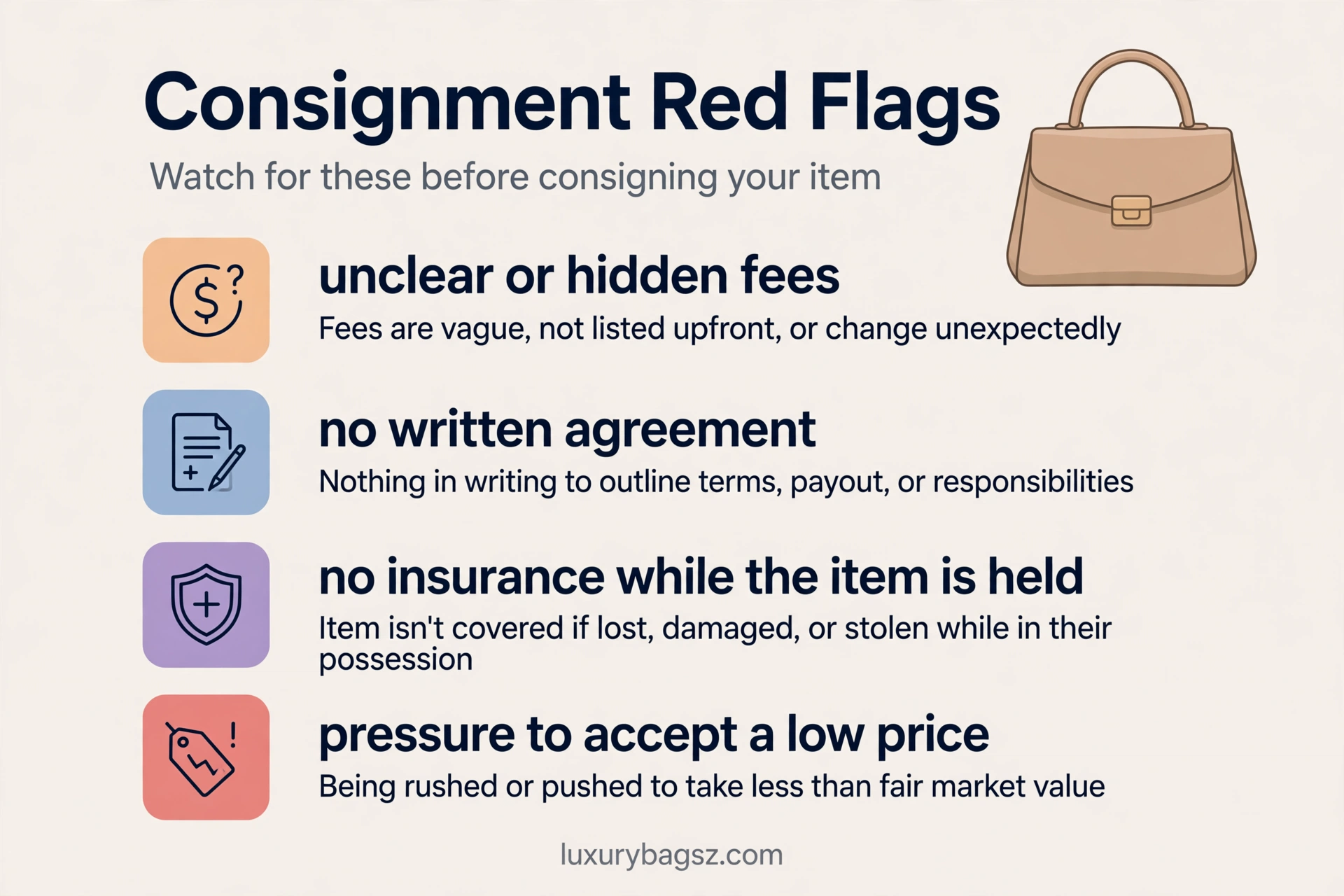
A reputable consignment service is easy to check. It has clear terms, a real address or registered business, a published commission structure, a stated authentication process, and reviews that mention both sales and problems. Be cautious of a service that promises a sale price far above every comparable listing, asks for an upfront fee before evaluation, or cannot explain its return and payout timetable.
Ask these questions before you send an item, and keep the answers in writing. What commission and fees apply at my item's likely price? Who authorises price drops, and what is the floor price? How long is the listing period, and does it renew automatically? When is authentication done, and what happens if it fails? How long after delivery is my payout released, and by what method? What happens if the buyer returns the item?
What happens if it does not sell? Who insures the item while it is with you, and for how much?
Insurance deserves special attention. An item in a platform's warehouse, in transit to a buyer, or on display in a boutique should be covered, and the cover should reflect the item's value, not a generic limit. Ask whether cover applies during shipping both ways, and what you must do to claim if something goes wrong. Your own home insurance may not cover an item once it leaves your possession for consignment, so do not assume it does.
Finally, start small if you are new to a platform. Consign one item first, watch how the listing, communication, and payout work, and only then send more. A platform that handles a single bag well has earned the chance to handle a collection. A platform that struggles with one item will not improve with ten.
Frequently Asked Questions
How does luxury consignment work in simple terms?
You send your item to a reseller, the reseller lists and sells it, and you receive an agreed share of the sale price. You keep ownership until the item sells, and the reseller keeps a commission for the selling work.
How long does luxury consignment usually take?
It varies widely, from days for a sought-after classic to several months for a niche piece. Listing periods of 30 to 90 days are common, and payout usually follows a short hold after delivery, so plan for weeks rather than days overall.
What percentage do consignment platforms take?
There is no single industry rate. Commission is often a percentage of the final sale price, sometimes tiered by price, and it may sit alongside fixed fees for authentication, photography, or handling. Compare the net payout at the same sale price, not just the headline percentage.
Do I get paid if my item does not sell?
No, you are not paid for an unsold item. The item is normally returned to you, relisted at a new price, or handled as the agreement states. You may still owe return shipping or a handling fee, so check those terms before consigning.
Who authenticates a consigned luxury item?
The platform usually authenticates it, sometimes with an independent specialist, before listing, after a buyer commits, or both. Ask when authentication happens, because it affects when you can be paid and what happens if the check fails.
Can I set the price for my consigned item?
You can usually propose a price and agree a minimum, but the platform advises on a realistic listing price based on condition and recent sales. Price drops during the listing period should be agreed in advance, with a floor below which the item is withdrawn.
What happens if a buyer returns my consigned item?
The item returns to the platform, is checked again, and is then relisted or returned to you under the agreement. Return rules differ, so confirm whether returns are allowed only for authenticity or description issues, or more broadly, before the item sells.
Is consignment better than selling a luxury item myself?
Consignment saves time and adds buyer trust, but it costs commission and control. Selling yourself can bank more, but you handle photography, questions, returns, and fraud risk. The better route depends on the item's value, your deadline, and how much work you want to do.
Should I clean or repair an item before consigning it?
Light, safe cleaning can help, but do not attempt repairs, redyeing, or polishing that could change the item or remove original parts. Ask the platform first, because professional cleaning or repair through the platform may be available and is safer for value.
What proof should I keep when consigning a luxury item?
Keep your intake photos, the written agreement, tracking numbers, the listing details, and every payout statement. Keep copies of receipts and any earlier authentication reports, because they remain useful if a dispute arises after the sale.
Summary
Luxury consignment works best when you treat it as a partnership with clear paperwork, not as a way to hand a problem to someone else and hope for the best. The steps are straightforward, the risks are manageable, and the rewards can be strong for a desirable, well-presented item.
Go in with honest photos, a realistic price, and an agreement you have actually read, and you give your item the best chance of selling well. Start with one item on a platform that answers questions plainly, and let a smooth first sale, not a promised price, decide whether you send the next one.