

How to Clean Gold and Diamond Rings
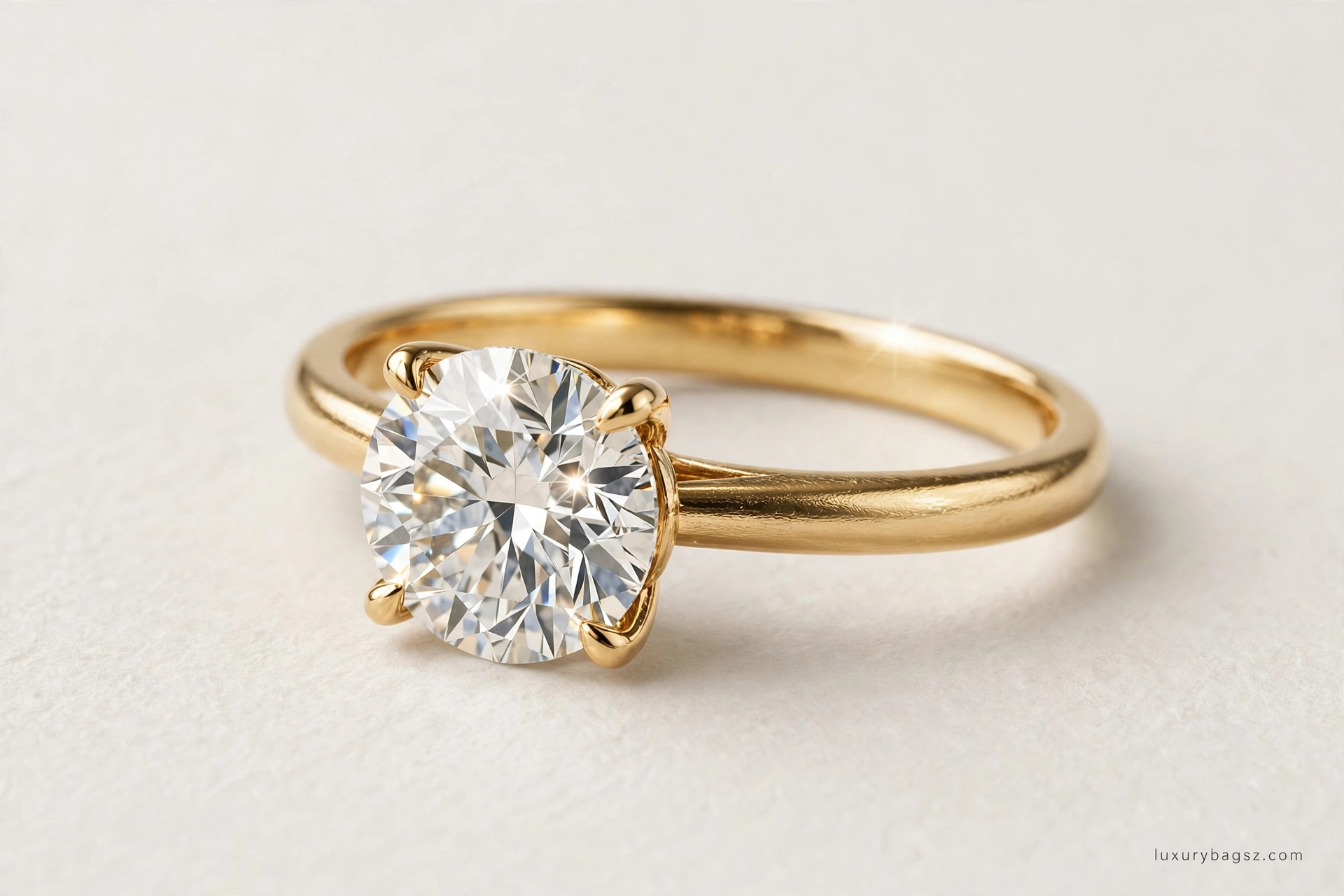
Warm Soapy Water and a Soft Brush Do It
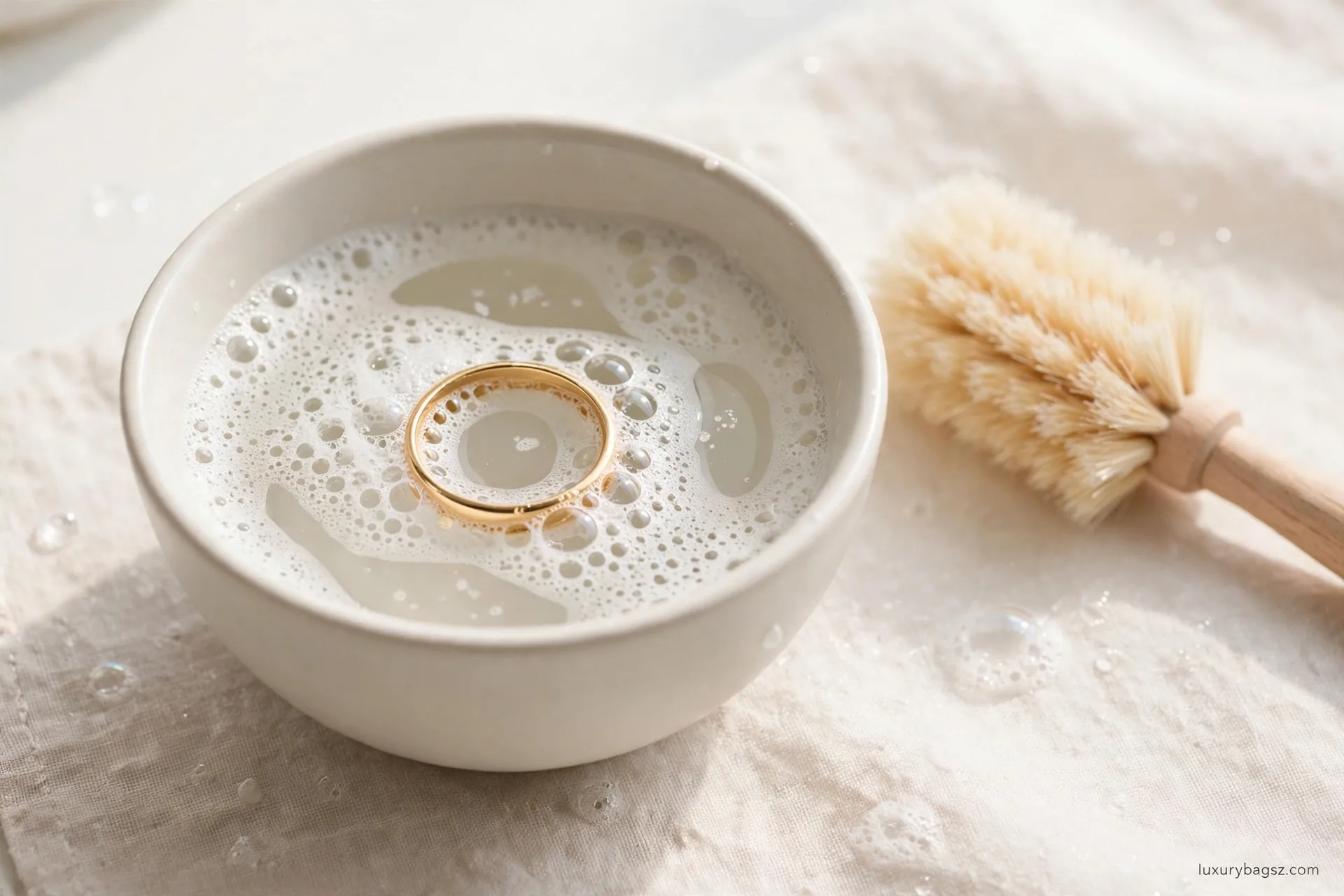
Clean a gold and diamond ring by soaking it for twenty to thirty minutes in a bowl of warm water with mild soap, then brushing gently with a soft brush. Rinse thoroughly, dry with a lint-free cloth, and work over a bowl so a slip cannot go down the drain.
Repeat every one to two weeks for a ring worn daily, and inspect prongs and stone security each time you clean. Never use toothpaste, bleach or abrasive pastes, and book a professional clean and inspection once or twice a year as a safety net.
Clean Rings at a Glance
A gold and diamond ring loses its sparkle for a simple reason: everyday life coats it. Hand cream, soap residue, skin oils, dust, and household grime build up on the gold and, more importantly, under and around the diamond, blocking light from entering and leaving the stone. The result is a ring that looks dull and grey, even though neither the gold nor the diamond has changed.
The good news is that most of that dullness is reversible with a gentle, regular routine, and that routine is the subject of this guide.
This guide covers diamond rings specifically: the cleaning routine for gold and diamond, the prong checks that keep stones safe, and the stone-safety rules that protect diamonds and any side stones.
It is not a repeat of the Hermès fashion jewellery guide, which covers fashion jewellery materials and care; fashion jewellery, with its plating, costume stones, and different construction, needs different handling, and this guide does not duplicate that advice. If your ring is fashion jewellery rather than solid gold with diamonds, use that guide instead.
The governing principle is gentleness. Diamonds are hard, but their settings are not invulnerable, gold scratches more easily than people expect, and many cleaning shortcuts, harsh chemicals, abrasive pastes, and aggressive machines, do more harm than the dirt they remove. Clean little and often, check the setting every time, and leave aggressive cleaning to a jeweller.
Key Takeaways
- Most ring dullness is surface buildup, hand cream, soap, oils, and dust, blocking light from the diamond, and it is reversible with gentle cleaning.
- The safe home routine is warm water, mild dish soap, a soft brush, and thorough rinsing and drying; nothing harsher is needed for regular cleaning.
- Check prongs, settings, and stone security every time you clean: a loose stone found at home is a jeweller's visit saved from becoming a lost stone.
- Never use abrasive pastes, harsh chemicals, chlorine bleach, or toothpaste on gold and diamond rings; they damage gold, settings, and some side stones.
- Ultrasonic and steam cleaners help some rings and harm others: never use them on a ring with loose stones, fragile settings, or stones other than diamond without jeweller advice.
- Professional cleaning and inspection, typically once or twice a year depending on wear, is the safety net that home cleaning cannot replace.
Why Gold and Diamond Rings Go Dull
Understanding dullness helps you clean correctly. A diamond sparkles because light enters the stone, reflects inside it, and returns to your eye. Anything that coats the stone, especially its underside, the pavilion, and the area around its girdle, interferes with that light path. Hand cream is the most common culprit: it coats the diamond with a thin, greasy film that dulls brilliance dramatically.
Soap residue, particularly from bar soap and some liquid soaps, leaves a similar film, and skin oils, dust, and everyday grime add to it.
Gold dullness has a different cause. Gold itself does not tarnish like silver, but it does accumulate the same films, and it scratches with everyday wear, developing fine surface marks that scatter light and reduce shine. White gold rings with rhodium plating add another layer: the rhodium coating wears over time, revealing the slightly warmer gold beneath, which some wearers mistake for dirt.
That wear is not cleaned away; it is restored by re-plating, which a jeweller performs.
The practical conclusion is that cleaning should target films and buildup, not the metal itself. Gentle washing removes films without abrading gold or loosening settings. Aggressive polishing removes metal along with dirt, thinning prongs and bands over time. Clean the film, protect the metal, and leave metal restoration to professionals.
The Safe Home Routine: Warm Water, Mild Soap, Soft Brush
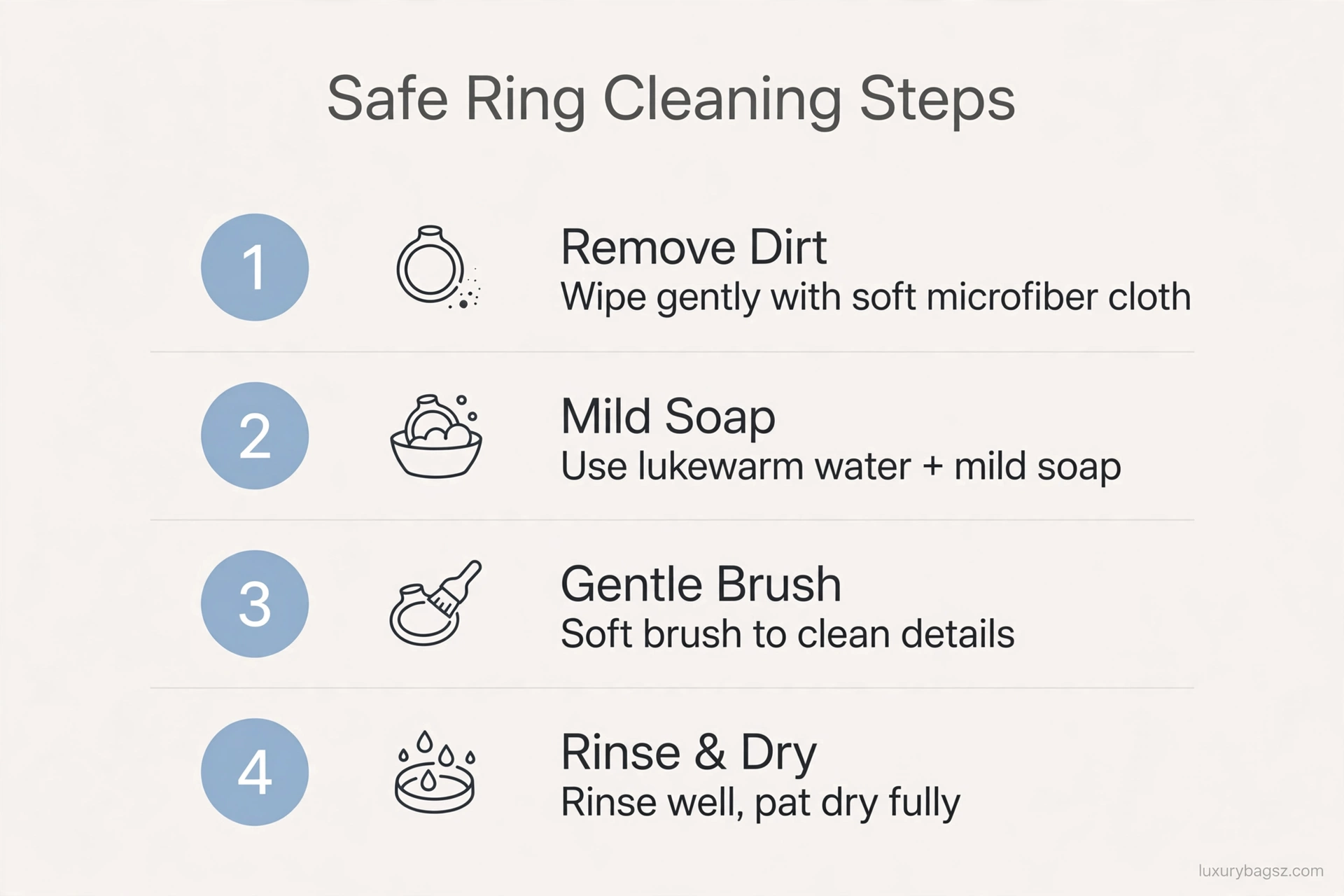
The safe home routine is simple, and its simplicity is its strength. You will need a small bowl, warm, not hot, water, a few drops of mild dish soap, a soft brush such as a soft toothbrush reserved for jewellery, a lint-free cloth, and a plug or strainer for the sink. Work over a bowl, never over an open drain, so that a slipped ring is caught, not lost.
Mix warm water with a few drops of mild dish soap, place the ring in the solution, and let it soak for about twenty to thirty minutes. Soaking loosens films and buildup, especially around the setting and under the stone, where brushing alone cannot reach. After soaking, brush gently with the soft brush, paying attention to the underside of the stone, the prongs, and the inside of the band, where buildup concentrates.
Use light pressure: the brush should clean, not scrub.
Rinse thoroughly under warm running water, again over a bowl or with the drain plugged, to remove all soap residue, which would otherwise leave its own film. Dry with a lint-free cloth, and let the ring air-dry fully before wearing or storing it, so that no moisture remains trapped in the setting. That routine, done regularly, keeps most gold and diamond rings sparkling without any risk to gold, diamonds, or settings.
How Often to Clean, and What Daily Care Looks Like
Frequency depends on wear. A ring worn daily, especially an engagement ring worn through hand cream, cooking, gardening, and household tasks, benefits from a gentle clean every one to two weeks. A ring worn occasionally, for evenings or special occasions, may need cleaning only every month or two. Judge by appearance: when the diamond looks less brilliant, or the gold looks filmed, it is time to clean, regardless of the calendar.
Daily care matters as much as periodic cleaning. Remove your ring before applying hand cream, before cooking with greasy ingredients, before gardening, before cleaning with household chemicals, and before swimming, where chlorine and cold water, which can shrink fingers slightly, both pose risks.
Put the ring on after hand cream has absorbed, not before, and store it safely when removed, rather than leaving it on a sink edge or in a pocket, where it can be scratched or lost.
Also develop the habit of a quick daily check: glance at the stone and prongs when you put the ring on and take it off. A stone that looks tilted, a prong that looks bent, or a ring that catches on fabric are all signals to stop wearing it and visit a jeweller. Daily attention catches problems when they are small and cheap to fix, rather than when a stone is already lost.

Prong Checks: The Check That Saves Stones
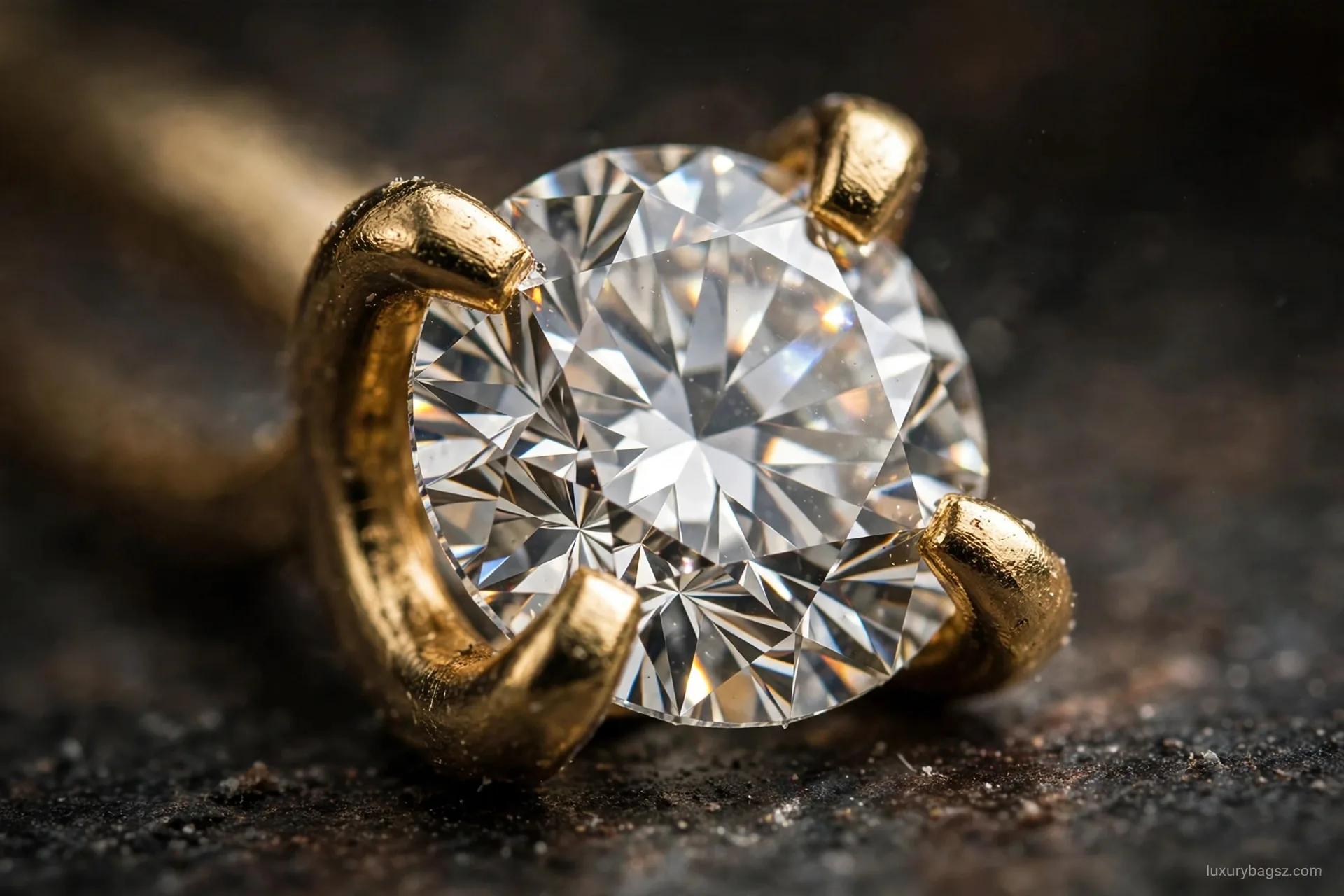
Prong checks are the most important safety habit in this guide, because a loose stone is a lost stone waiting to happen. Prongs are the small metal claws that hold a diamond in its setting, and they wear, bend, and thin over time, especially on rings worn daily. A prong that has worn thin, bent outward, or developed a groove where it meets the stone no longer holds the stone securely, however firmly the stone seems to sit.
Check prongs every time you clean, and ideally every week for a daily-worn ring. Look at each prong under good light, ideally with magnification: each prong should be present, evenly shaped, smoothly finished, and in contact with the stone. Run a fingertip gently over the prongs, if you can do so without snagging: a prong that catches on fabric, or that feels sharp, bent, or rough, needs attention.
Listen, too: a stone that rattles or clicks when the ring is gently shaken near your ear is loose, and the ring should not be worn until a jeweller has secured it.
Never try to bend a prong back yourself, and never wear a ring with a loose stone "just for one evening." Prongs require jeweller's tools and expertise to reshape and retighten safely, and a single evening's wear is often when a loose stone is lost. A prong check that finds a problem has done its job; the jeweller's visit that follows is the cheapest insurance a diamond ring can have.
Stone Safety: Diamonds, Side Stones, and What Is Not Diamond
Diamonds are the hardest natural gemstone, but hardness is not toughness: a diamond can chip if struck sharply on an edge or girdle, and its setting is far more vulnerable than the stone itself. Protect diamonds from sharp impacts, from knocking the ring against hard surfaces, and from wearing the ring during heavy manual work, sports, or gym sessions, where impacts are likely.
A chipped diamond is difficult and sometimes impossible to restore to its original appearance, and prevention is far better than repair.
Side stones and accent stones need separate attention, because they are often not diamonds. Many gold and diamond rings include coloured gemstones, such as sapphires, rubies, emeralds, or other stones, as side or halo stones, and those stones have different hardness, toughness, and chemical sensitivity from diamond.
Emeralds, in particular, are often treated with oils or fillers that harsh cleaning can damage, and softer stones such as opal, turquoise, or pearl, where present, are damaged by many cleaning methods that are safe for diamond.
The rule is simple: if your ring contains any stone other than diamond, check that stone's cleaning requirements before cleaning, and when in doubt, ask a jeweller. A routine that is safe for a solitaire diamond ring may harm a ring with emerald side stones, and the difference is not visible until the damage is done. When a ring mixes stones, clean to the most sensitive stone's requirements, not to the diamond's.
What Never to Use: Chemicals, Abrasives, and Shortcuts
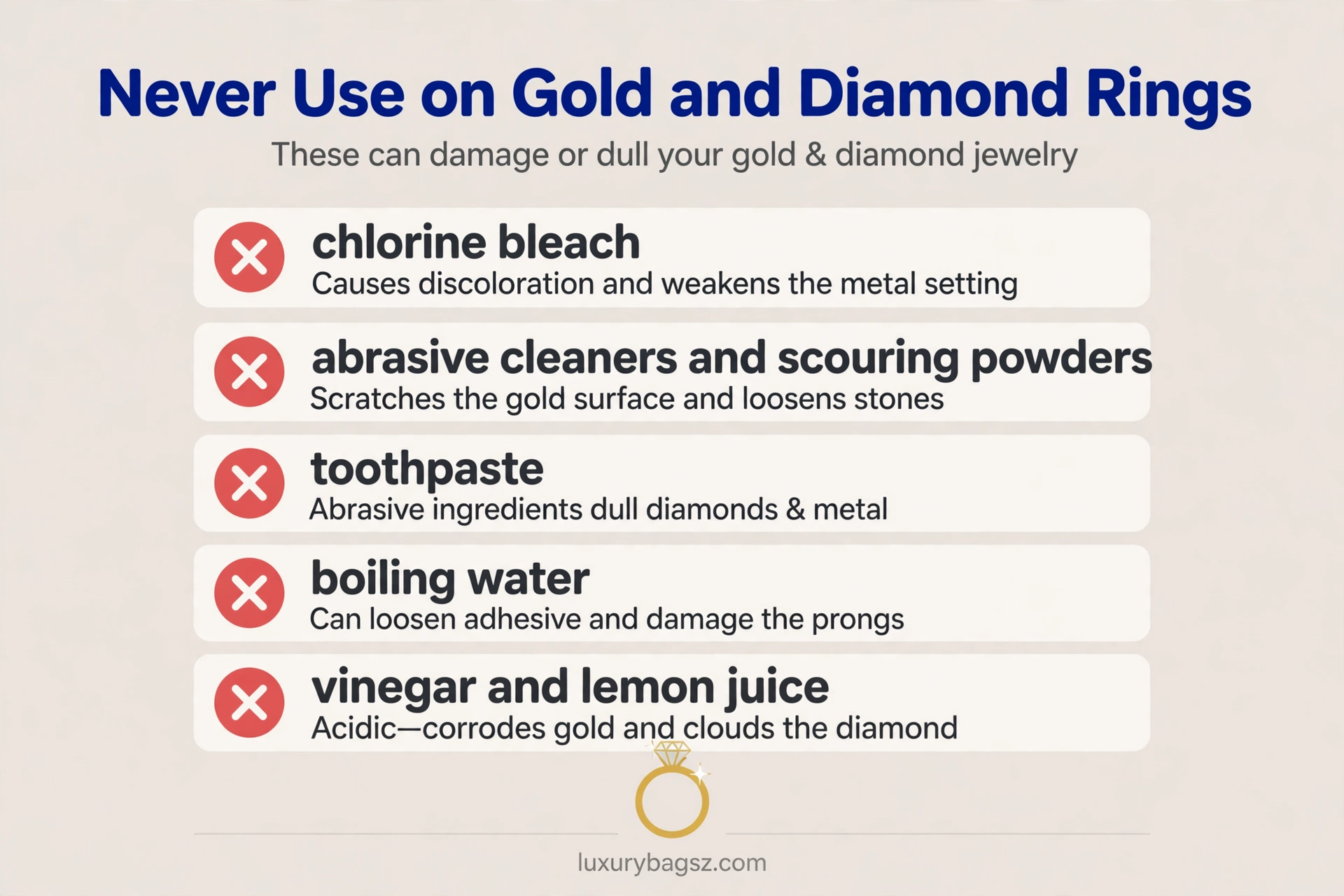
Several popular cleaning shortcuts should never be used on gold and diamond rings. Chlorine bleach and chlorinated cleaners can damage gold alloys, weakening settings and causing discolouration, and should never contact a gold ring. Harsh household cleaners, including oven cleaners, abrasive creams, and scouring powders, abrade gold and can loosen settings.
Toothpaste, often recommended online as a jewellery cleaner, is abrasive and can scratch gold and damage settings, despite its mild feel on teeth.
Boiling water is another shortcut to avoid. Pouring boiling water over a ring can cause thermal shock, particularly to stones with inclusions or treatments, and can loosen settings through rapid expansion. Warm water is sufficient for home cleaning; hot water adds risk without adding cleaning power.
Similarly, vinegar, lemon juice, and other acidic home remedies can damage some metals and stones, and should not be used on a ring whose full composition you do not know.
Commercial jewellery dips and foams deserve caution. Some are safe for plain gold and diamond, but many are unsuitable for rings with side stones, treated stones, or certain settings, and their instructions are often vague about those limits.
If you use a commercial product, check that it is explicitly safe for your ring's exact metals and stones, follow its instructions precisely, rinse thoroughly, and stop using it if the ring's appearance changes unexpectedly. When in doubt, mild dish soap and water remain the safest choice.
Ultrasonic and Steam Cleaners: Helpful Tools With Limits
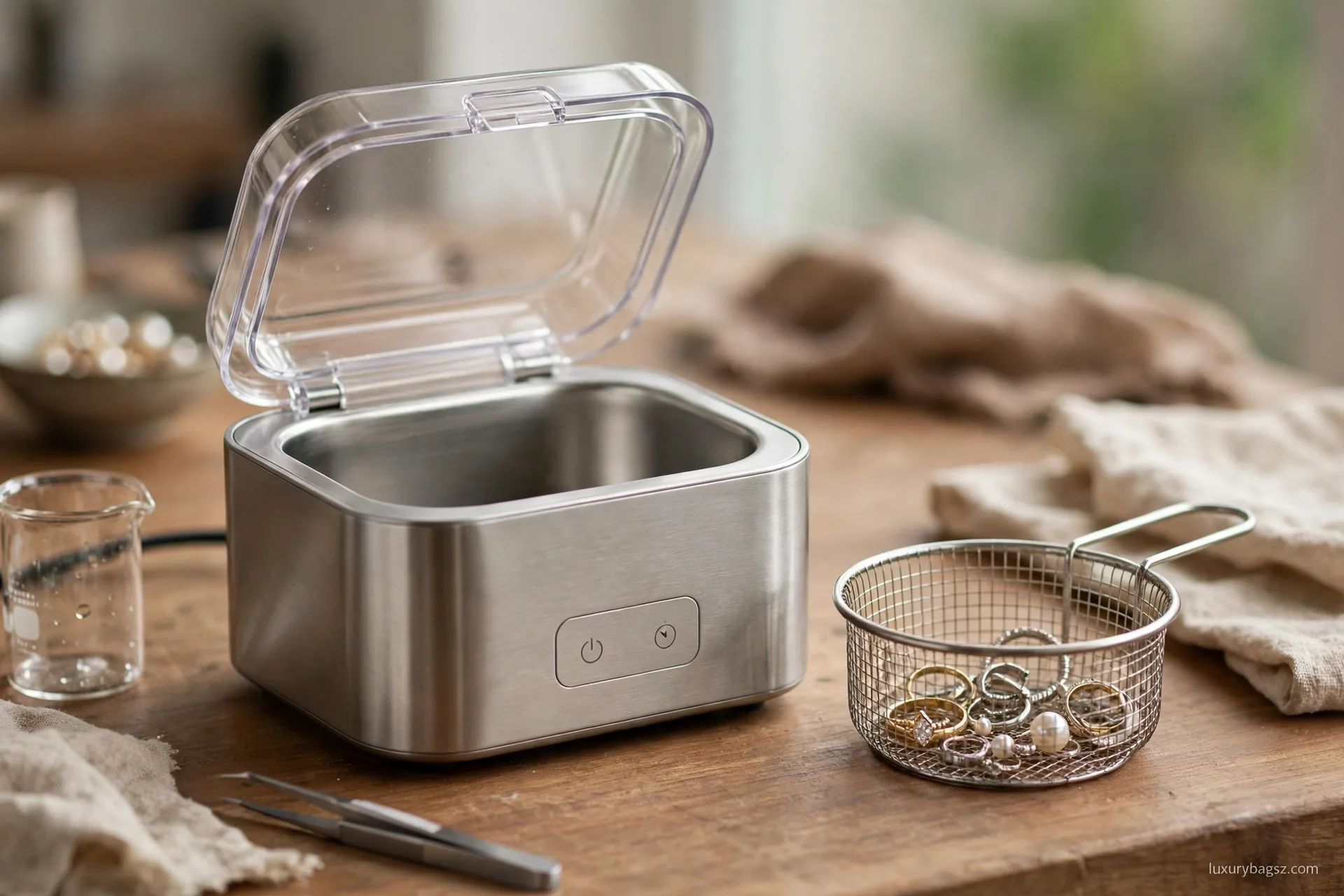
Ultrasonic cleaners, which use high-frequency sound waves in a cleaning solution to dislodge dirt, are effective for many plain gold and diamond rings, and jewellers use them routinely. Home ultrasonic cleaners can also help, but they carry risks that jewellers manage through inspection and settings knowledge.
An ultrasonic cleaner should never be used on a ring with loose stones, worn prongs, fragile settings, or stones other than diamond, unless a jeweller has specifically advised it for that ring.
Steam cleaners, which use pressurised steam to blast dirt from settings, are similarly effective and similarly risky. Steam is excellent at cleaning under stones, but it can dislodge loose stones, damage treated or fragile stones, and, if misdirected, damage settings.
Both ultrasonic and steam cleaning are best left to jewellers, who inspect the ring first, choose the appropriate method for its stones and settings, and check the ring afterward for loosened stones.
If you do use a home ultrasonic cleaner, follow strict precautions: inspect the ring first for loose stones or worn prongs, use only a solution recommended for gold and diamond, follow the manufacturer's time limits, never clean multiple rings together where they can knock against each other, and inspect the ring afterward for any change.
If anything looks different after cleaning, a stone that has shifted, a prong that looks bent, stop wearing the ring and visit a jeweller. Ultrasonic cleaning is a tool, not a substitute for inspection.
White Gold, Rhodium Plating, and Two-Tone Rings
White gold rings require special mention because most are rhodium-plated to achieve their bright white colour. Rhodium plating wears with everyday use, typically over months to a few years depending on wear, revealing the slightly warmer, greyish-white gold beneath. That wear is normal, not dirt, and it cannot be cleaned away. Attempting to polish it away will only remove more plating and more gold.
Care for white gold rings therefore means gentle cleaning, as described above, plus periodic re-plating by a jeweller when the colour change becomes noticeable. Re-plating restores the bright white finish and is a routine jeweller service, usually combined with cleaning and inspection. Avoid abrasive cleaning on white gold, which accelerates plating wear, and avoid harsh chemicals, which can damage plating unevenly.
Two-tone rings, combining yellow and white gold, or gold with other metals, need the same gentle approach, with attention to the joins between metals. Clean gently, dry thoroughly, and let a jeweller handle any colour restoration. Do not attempt to polish one metal more aggressively than the other, which can create uneven wear at the join and an inconsistent finish across the ring.
Tarnish, Scratches, and When Cleaning Is Not Enough
Gold does not tarnish like silver, but gold rings do develop fine scratches with everyday wear, and those scratches scatter light and reduce shine. Light scratches are normal and are largely unavoidable on a daily-worn ring; they are also largely invisible in normal wear, becoming noticeable only under close inspection or bright light.
Heavy scratches, dents, or bent bands are different: they indicate impacts or wear that cleaning cannot fix, and they need a jeweller's assessment for reshaping, re-polishing, or repair.
Re-polishing is a jeweller's job, not a home job. Professional re-polishing removes a tiny amount of metal to restore a smooth surface, and it must be done sparingly, because repeated polishing thins bands and prongs over time. A jeweller will advise whether re-polishing is appropriate, whether prongs need rebuilding first, and whether the ring's overall condition justifies the metal loss.
Home polishing compounds, by contrast, remove metal unevenly and can damage settings, and should not be used.
Discolouration that does not respond to gentle cleaning also needs professional assessment. It may indicate plating wear, as with white gold, a reaction to chemicals, or a change in the alloy's surface. A jeweller can identify the cause and recommend the correct restoration, whether re-plating, professional cleaning, or another treatment. Persistent discolouration after proper cleaning is information, not a reason to clean harder.
Storage, Travel, and Everyday Protection
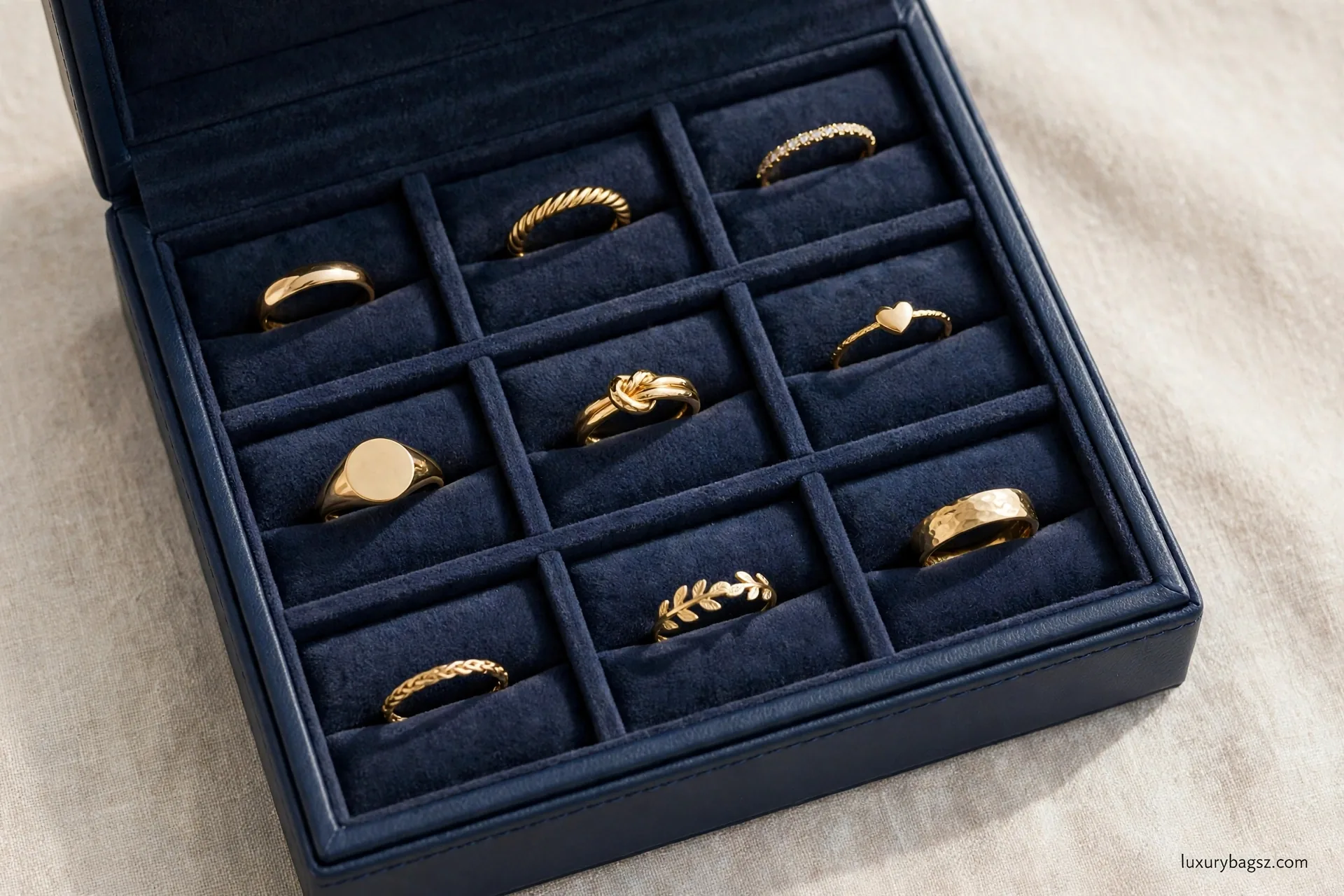
Storage protects a clean ring. Store gold and diamond rings separately from other jewellery, in a lined box, pouch, or compartment, so that harder stones, particularly diamonds, do not scratch softer metals or stones, and so that rings do not knock against each other. Diamonds scratch other diamonds and most other gemstones, so a diamond ring stored loose with other jewellery will damage its neighbours and be damaged by them.
Separate storage is a simple habit with a large payoff.
For travel, use a dedicated jewellery case with separate compartments, and keep the case in hand luggage, never in checked baggage. Remove rings before swimming, hot tubs, and saunas, where chlorine, heat, and cold water all pose risks, and before applying sunscreen, insect repellent, or other products that can film a diamond.
At home, designate a safe place for rings removed for cooking, cleaning, or hand cream, such as a small dish or box, rather than a sink edge, where a ring can slip down a drain or be knocked to the floor.
Insurance and documentation are part of protection too. Keep purchase receipts, certificates, appraisals, and photographs of your ring, including its hallmarks and stones, in a safe place separate from the ring itself. If a ring is lost, damaged, or stolen, those records are essential for insurance claims and for jeweller identification.
Review insurance coverage periodically, especially for engagement rings whose replacement value changes with market prices.
Professional Cleaning and Inspection: What to Expect
Professional cleaning and inspection, typically once or twice a year for a daily-worn ring, and less often for occasionally worn rings, is the safety net that home cleaning cannot replace.
A jeweller will inspect prongs, settings, and stones under magnification, check for wear, thinning, or damage, clean the ring with professional equipment appropriate to its stones and settings, and advise on any repairs needed, from prong rebuilding to re-plating to stone re-setting.
Ask the jeweller to explain what they find, in plain terms: which prongs are worn, whether any stones are loose, whether the band has thinned, and what work is recommended now versus what can wait. Get a written estimate before authorising repairs, and keep the jeweller's report with your ring's records.
A jeweller who finds no problems is giving you valuable reassurance; a jeweller who finds worn prongs is giving you the chance to fix them before a stone is lost.
Choose a reputable jeweller, ideally one with experience in diamond rings and, where applicable, in your ring's brand or style. Independent jewellers, brand service centres, and reputable high-street jewellers all offer cleaning and inspection, and the right choice depends on your ring, your location, and your comfort.
What matters is regularity: a ring that is inspected annually is a ring whose problems are found early, when they are small and affordable.
Building Your Routine: A Simple Plan That Lasts
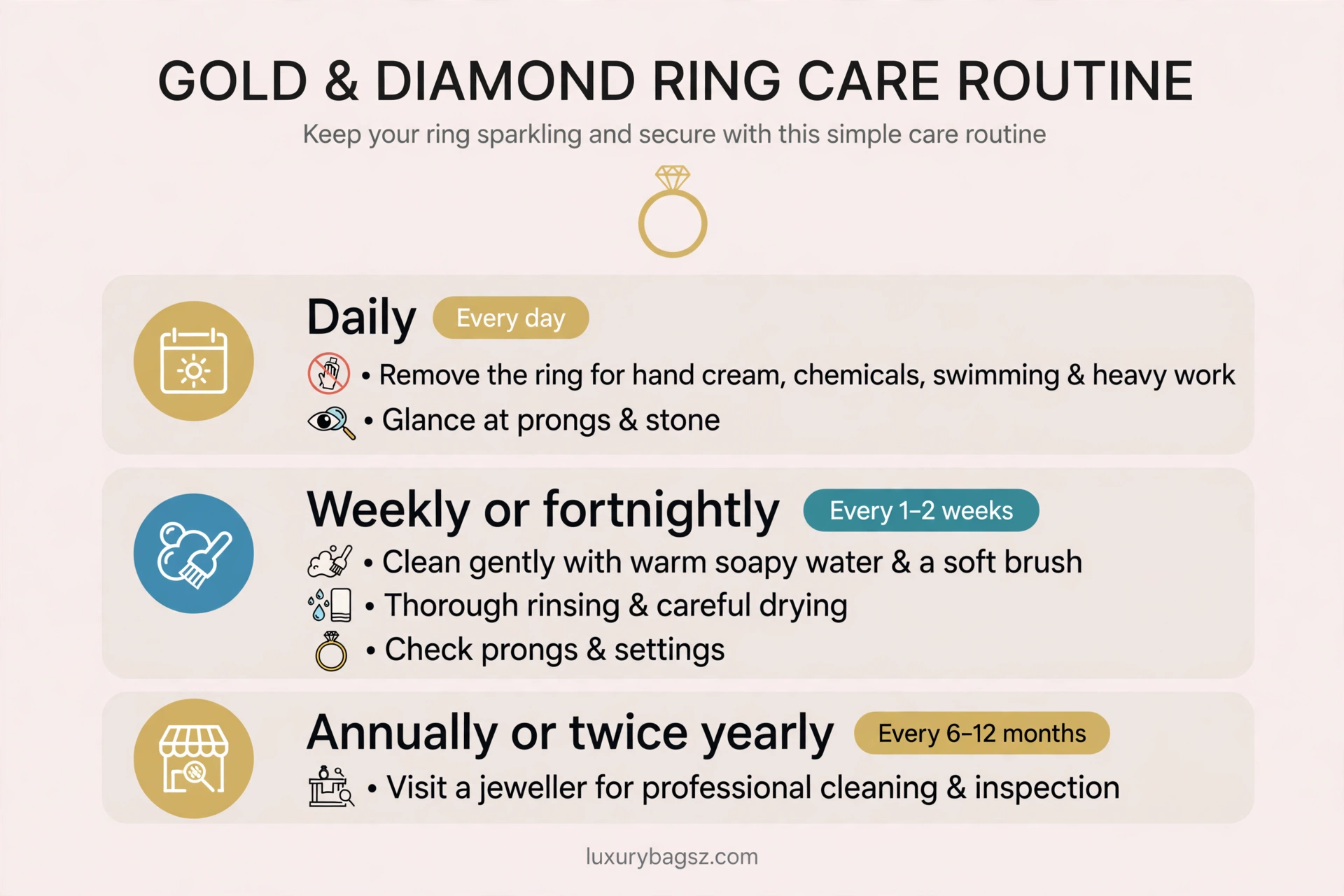
A lasting ring-care routine is simple enough to follow. Daily: remove the ring for hand cream, chemicals, swimming, and heavy work, and glance at its prongs and stone when putting it on and taking it off. Weekly or fortnightly for daily-worn rings: clean gently with warm soapy water, a soft brush, thorough rinsing, and careful drying, and check prongs and settings during cleaning.
Annually or twice yearly: visit a jeweller for professional cleaning and inspection, and act on their recommendations promptly.
That routine protects both beauty and value. A ring that is cleaned regularly sparkles as it should, a ring whose prongs are checked regularly keeps its stones, and a ring that is inspected regularly avoids the expensive repairs that neglected rings eventually need. The routine costs little time and, for home cleaning, almost no money, but it preserves a piece that may be worn daily for decades and passed on as an heirloom.
Start today, with the ring you are wearing now. Soak it gently, brush it softly, rinse it thoroughly, dry it carefully, and check its prongs under good light. If anything looks loose, bent, or different, visit a jeweller before wearing it again. That single act, cleaning with attention, is the whole philosophy of this guide in miniature: care that is gentle, regular, and observant keeps gold and diamond rings beautiful and safe for a lifetime.
For designer jewellery more broadly, the Cartier Love bracelet fake guide and the Van Cleef & Arpels Alhambra guide show how the same inspection habits, checking the whole piece rather than a single feature, apply beyond rings.
Troubleshooting: When Cleaning Does Not Restore Sparkle
Sometimes a ring stays dull after proper cleaning, and that persistence is information, not a reason to clean harder. First, re-examine your rinse: soap residue is the most common cause of post-cleaning dullness, and a second thorough rinse under warm water, followed by careful drying with a lint-free cloth, often resolves it.
If dullness persists, inspect the stone under good light and magnification: a diamond that looks cloudy, grey, or milky from all angles, rather than merely filmed, may have a surface coating, internal damage, or a setting problem that home cleaning cannot address, and it needs a jeweller's assessment.
Setting problems masquerade as dullness. A stone that has shifted slightly in its setting, a prong that casts a shadow across the stone, or buildup trapped under the stone where brushing cannot reach can all reduce brilliance without any change to the diamond itself. A jeweller can clean under the stone professionally, check the setting, and re-seat the stone if needed, restoring brilliance that home cleaning cannot reach.
Do not attempt to clean under a stone with sharp tools, pins, or picks, which can scratch the stone, damage prongs, or dislodge the stone entirely.
Coatings and treatments are a final consideration. Some diamonds and coloured stones carry coatings or treatments that affect appearance and cleaning, and some rings carry finishes that wear unevenly. If a jeweller identifies a coating, treatment, or finish issue, follow their advice on cleaning and care, which may differ from general diamond guidance.
Persistent dullness after correct cleaning, in short, is a prompt to seek professional diagnosis, not to escalate home cleaning to harsher methods, which risk turning a minor setting issue into a damaged stone or a thinned prong.
Halos, Pave, and Eternity Bands: Cleaning Complex Settings
Complex settings need cleaning habits adapted to their construction, because halos, pave, and eternity bands trap dirt differently from solitaires and hold their stones differently. Halo settings, where small diamonds surround a central stone, trap buildup in the narrow gaps between halo stones and under the central stone, where a brush cannot easily reach.
Soak halo rings longer, brush gently from multiple angles, and rinse thoroughly, checking afterward that no soap residue remains in the gaps. Inspect halo stones individually under magnification: a single loose or missing halo stone is easy to miss at a glance, but it changes the ring's appearance and value, and it should be repaired promptly before neighbouring stones loosen.
Pave settings, where many small diamonds are set closely together with tiny beads of metal holding them, are particularly vulnerable to aggressive cleaning and to wear. Pave stones are held by minimal metal, so ultrasonic cleaning, steam cleaning, and vigorous brushing can all dislodge them, especially when the pave is already worn.
Clean pave rings only with gentle soaking and the softest brushing, never with ultrasonic or steam cleaning unless a jeweller specifically advises it for that ring, and inspect pave regularly for stones that have shifted, darkened, or gone missing. A pave ring that loses stones repeatedly needs a jeweller's assessment of whether its setting is worn beyond economical repair or whether individual stones can be re-set securely.
Eternity bands, where stones run around the full band, need attention to sizing and to the stones on the underside, which contact surfaces constantly and wear faster than top stones. Eternity bands cannot be resized easily, because resizing disturbs stones around the band, so fit must be correct from the start, and any sizing need should be discussed with a jeweller before purchase or before attempting a resize.
Clean eternity bands gently, inspect underside stones as carefully as top stones, and remove the band for heavy manual work, where underside stones are most likely to chip or loosen. Complex settings reward the same philosophy as simple ones, gentleness, regularity, and observation, applied with extra care where stones are smallest and most numerous.
Frequently Asked Questions
How often should I clean a gold and diamond ring?
For a daily-worn ring, a gentle clean every one to two weeks is a good rhythm, with professional cleaning and inspection once or twice a year. Occasionally worn rings need cleaning less often; judge by appearance as well as by calendar.
Can I use toothpaste to clean a diamond ring?
No. Toothpaste is abrasive and can scratch gold and damage settings, despite feeling mild on teeth. Use warm water and mild dish soap instead, which cleans effectively without abrasion.
Is ultrasonic cleaning safe for diamond rings?
It is safe for many plain gold and diamond rings when the setting is sound, but it should never be used on a ring with loose stones, worn prongs, fragile settings, or stones other than diamond without jeweller advice. When in doubt, let a jeweller decide.
How do I know if a prong is loose?
Look for prongs that are bent, thinned, grooved, or not in contact with the stone, and listen for a stone that rattles or clicks when the ring is gently shaken near your ear. Any of those signs means the ring should not be worn until a jeweller has checked it.
Why does my white gold ring look yellowish?
White gold is usually rhodium-plated, and the plating wears over time, revealing warmer gold beneath. That wear is normal and is restored by re-plating, not by cleaning harder.
Can I clean a ring with emeralds or other side stones the same way?
Not necessarily. Side stones have different sensitivities from diamond, and some, such as emerald, are treated in ways that harsh cleaning can damage. Clean to the most sensitive stone's requirements, and ask a jeweller when in doubt.
Should I remove my ring before swimming?
Yes. Chlorine can damage gold alloys, cold water can shrink fingers slightly and loosen a ring's fit, and a ring lost in water is rarely recovered. Remove rings before swimming, hot tubs, and saunas.
What should I do if my diamond looks dull after cleaning?
First, check for soap residue, which can leave its own film, and rinse and dry again thoroughly. If dullness persists, or if the stone looks tilted, cloudy, or loose, visit a jeweller, as the cause may be setting damage, stone damage, or a coating that home cleaning cannot remove.
How should I store diamond rings?
Separately from other jewellery, in a lined box, pouch, or compartment, so that diamonds do not scratch other pieces. For travel, use a dedicated jewellery case kept in hand luggage.
Is professional cleaning worth the cost?
Yes. Professional cleaning includes inspection of prongs, settings, and stones, which catches problems before stones are lost. For a daily-worn diamond ring, that inspection is worth far more than the cleaning itself.
Summary
Cleaning a gold and diamond ring well is simple: warm soapy water, a soft brush, thorough rinsing, careful drying, and a prong check every time, supported by professional inspection once or twice a year. That routine removes the films that dull brilliance, protects the gold from abrasion and chemicals, and, most importantly, catches loose stones before they are lost.
Avoid the shortcuts, respect side stones, and let a jeweller handle anything aggressive. Cared for that way, a gold and diamond ring will sparkle as it should, not just today, but for every day it is worn.






