What to Know About Bottega Veneta: History, Bags, Prices and Buying Guide
Bottega Veneta at a Glance
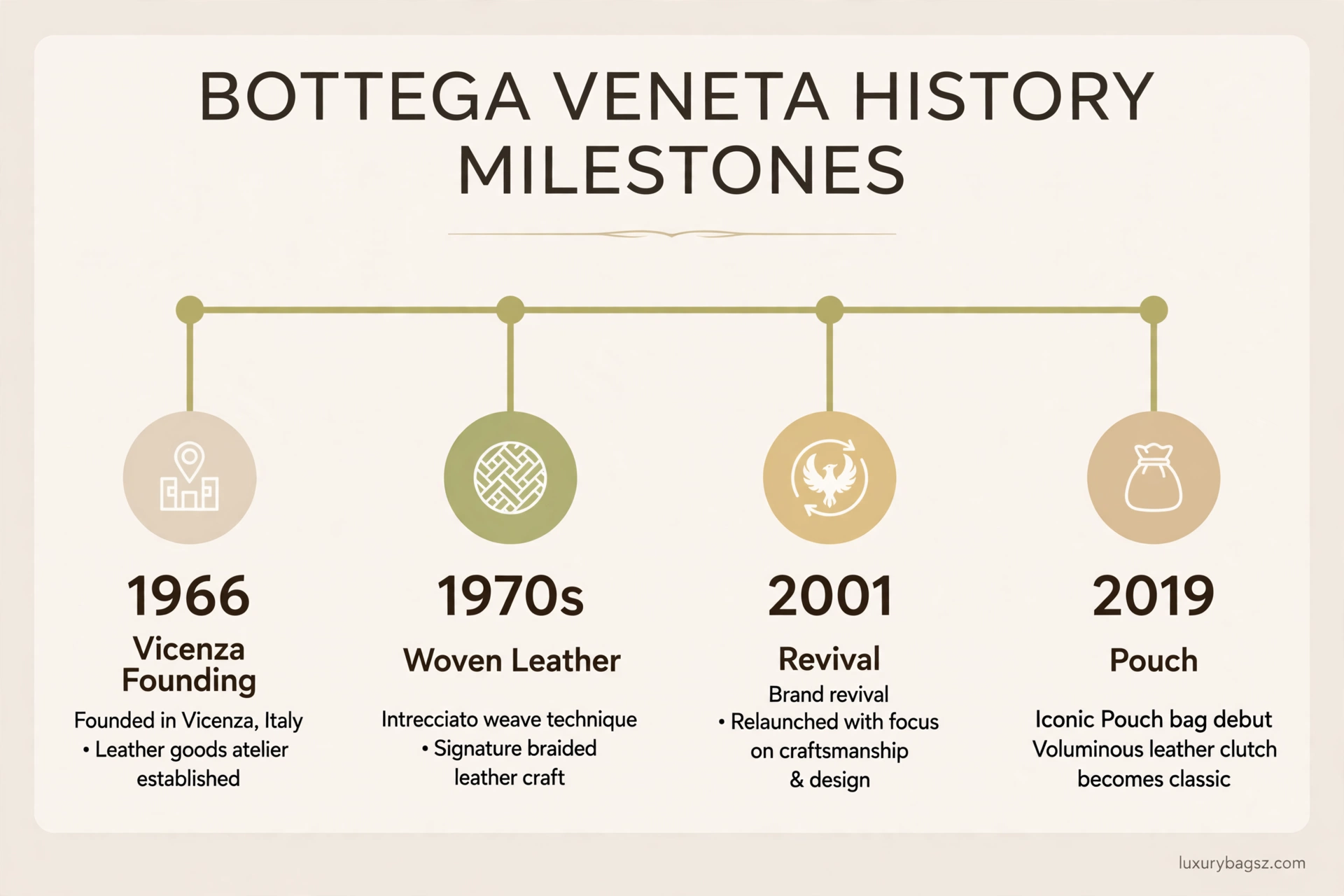
Bottega Veneta is quiet luxury made visible only to those who know what to look for: a Vicenza leather house founded in 1966 that built its identity on a woven leather technique, not a monogram. Its slogan said it plainly — "When your own initials are enough" — and its bags still carry no outside logo.
The house began with a practical problem. Its early sewing machines could not stitch thick leather without tearing it, so artisans cut leather into thin strips and wove them by hand. That workaround became Intrecciato, Italian for braided, and the weave became the brand itself. The Jodie, Cassette, Pouch and Sardine each have their own full guide in our complete Bottega Veneta guide collection.
For buyers, Bottega offers a clear ladder. Start with a small leather good or a woven pouch, move to a Jodie or a Cassette, and save a Cabat or an Andiamo for a milestone buy. Prices run from the low thousands for small bags to far higher for large woven totes, and the weave wears well when cared for properly.
Key Takeaways
- Bottega Veneta was founded in Vicenza, Italy, in 1966 by Michele Taddei and Renzo Zengiaro.
- Bottega Veneta means Venetian workshop, and the house began as a leather goods company.
- Intrecciato, the hand-woven leather technique, arose because early machines could not stitch thick leather.
- Tomas Maier revived the house from 2001, returning to the weave and away from logos.
- Daniel Lee led the house from 2018 to 2021, introducing the Pouch in 2019 and the Jodie in 2020.
- Matthieu Blazy was named creative director in November 2021, after Lee's departure.
- The house founded a school for leather artisans in 2006, preserving Intrecciato craft.
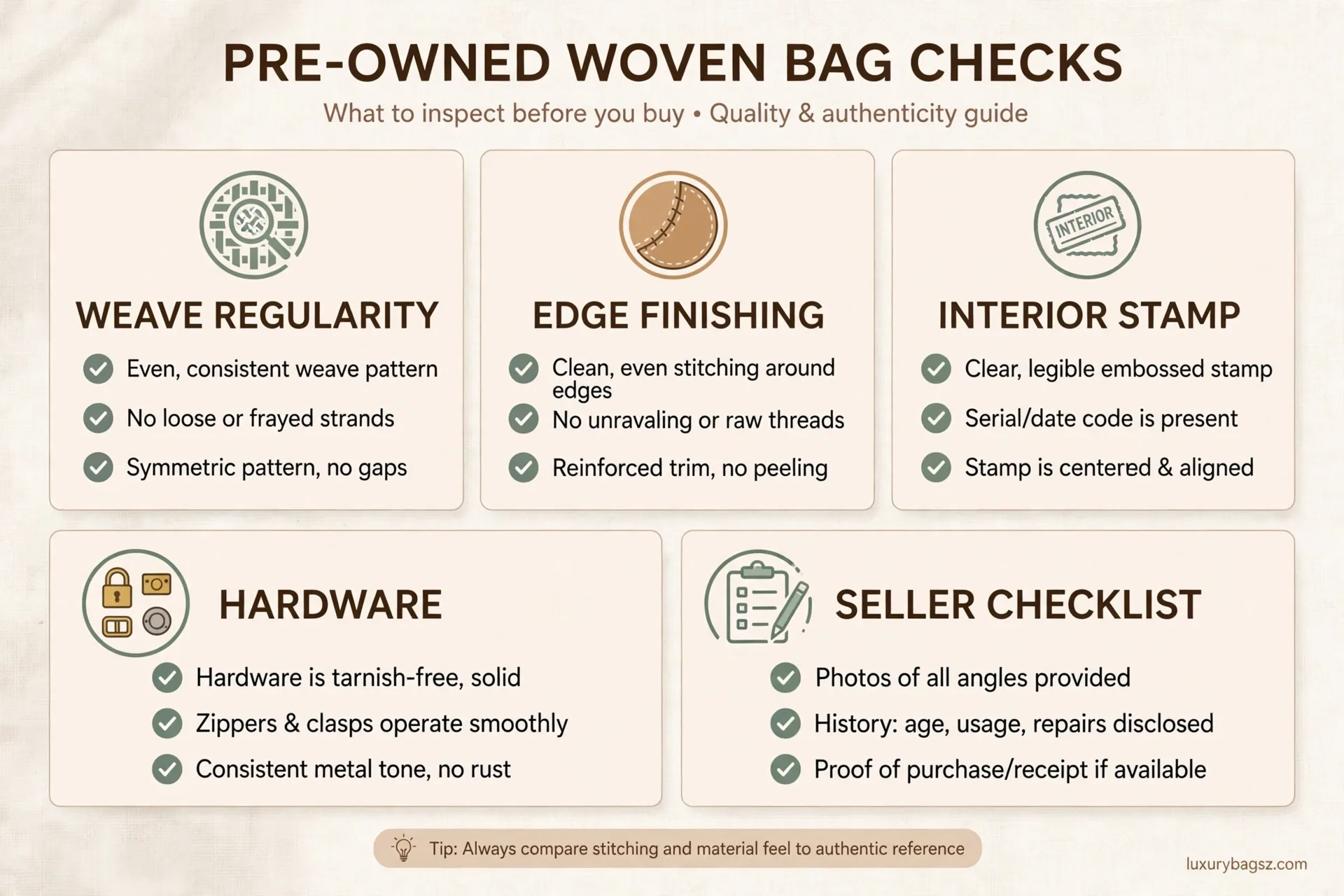
- Pre-owned, check weave regularity, edge finishing, the interior stamp, and the seller together.
Vicenza, 1966, and a Workshop Philosophy
Michele Taddei and Renzo Zengiaro founded Bottega Veneta in Vicenza, in Italy's Veneto region, in 1966. The Veneto had a long leatherworking tradition, but Bottega's workshops were better equipped for clothing than for thick leather goods. That limitation shaped everything that followed.
Rather than buy stronger machines, the young house wove. Artisans cut supple leather into thin strips and interlaced them by hand, creating a material that was both strong and flexible. The weave gave delicate leather the durability of a thicker hide, and it looked unlike anything else on the market.
The house's early advertising captured that confidence. With the line "When your own initials are enough," Bottega promised luxury without a billboard, a radical idea in a decade when rivals were enlarging their monograms. Buyers who knew craft recognised the weave at once; buyers who wanted a logo looked elsewhere.
In the late 1970s, Taddei and Zengiaro handed control to Taddei's former wife, Laura Moltedo. Through the 1970s and 1980s, Bottega built a loyal following among discreet, wealthy clients, including Andy Warhol, who visited the New York boutique and even made a short film for the brand.
The 1990s Dip and the 2001 Revival
In the 1990s, during the logo craze, Bottega adopted more trend-driven design and lost ground. Logomania rewarded visible branding, and a logo-free house struggled to shout in a market that wanted shouting. An attempt to reinvigorate the label with designer Giles Deacon did not reverse the slide.
The turning point came in 2001, when the Gucci Group acquired Bottega Veneta. New creative director Tomas Maier set out to restore the house's early ideals, stepping away from logos and highlighting the Intrecciato weave with cleaner, more clarified design. His era, from 2001 to 2018, gave Bottega its modern foundation.
Maier put craft first in a literal way. He said the Italian artisan was the starting point, and that collaboration between designer and artisan stood at the heart of everything the house did. In 2006, the company founded a school to train leather artisans, Scuola della Pelletteria, preserving weaving skills for the next generation.
Maier's signature bags included the Cabat, a fully hand-woven tote with no lining and no structure beyond the weave itself, and the Veneta hobo, a seamless woven curve. Both remain touchstones for collectors, and both show why Bottega bags cost what they do: the weave itself is the work.

Daniel Lee, Matthieu Blazy, and New Bottega
Daniel Lee took over as creative director in June 2018, a young British designer previously at Celine under Phoebe Philo, with earlier roles at Maison Margiela and Balenciaga. Within eighteen months, he had won Fashion Awards for Brand and Designer of the Year, and Bottega was suddenly the house everyone photographed.
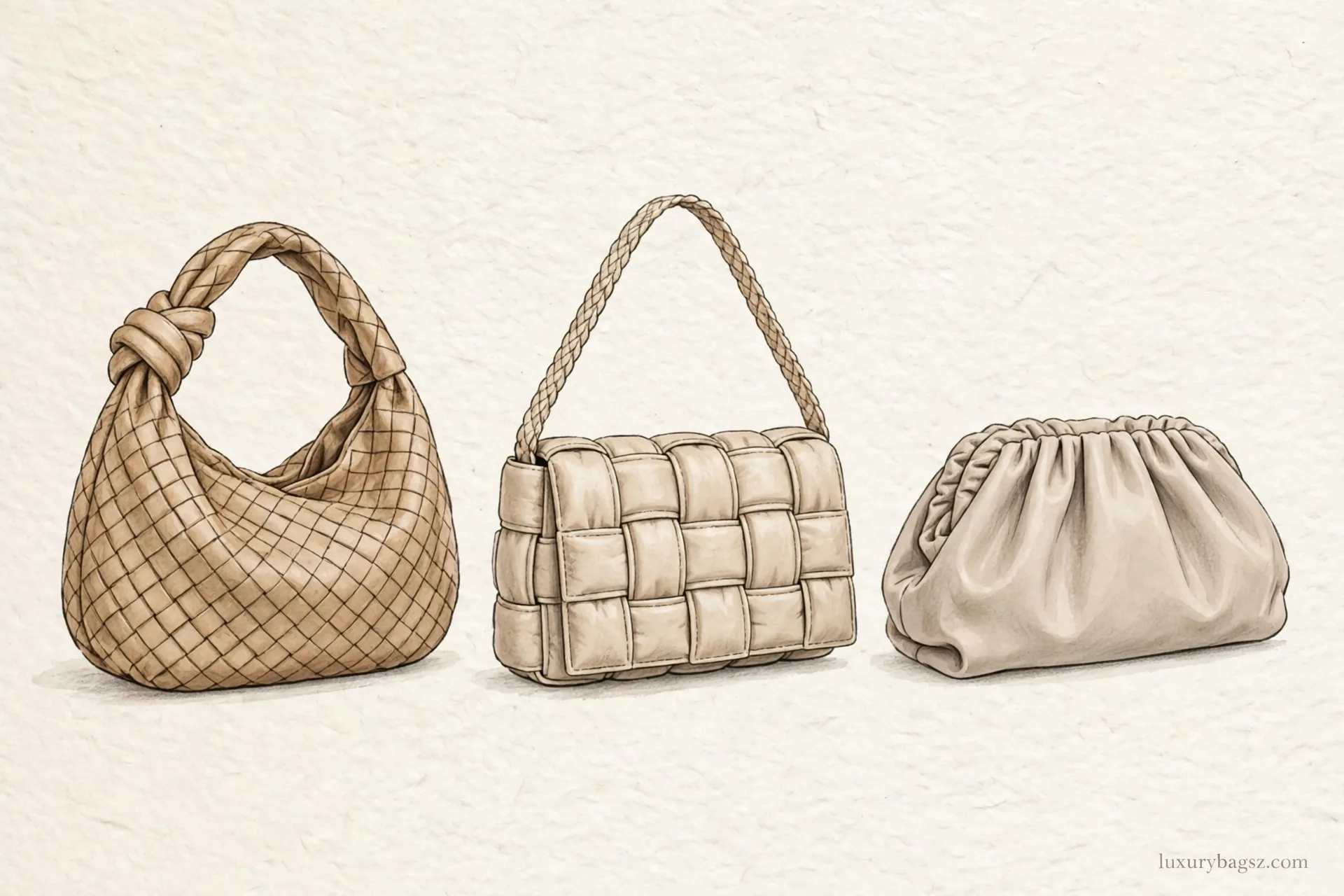
Lee's "New" Bottega was clean and back to the essential, with soft, modern shapes that appealed to former Celine fans. The Pouch, a soft gathered clutch with no front logo and no hardware to hide behind, arrived in 2019. The Jodie, a knotted hobo reviving a 1990s shape, followed in 2020, alongside the padded Cassette.
On 10 November 2021, Bottega and Lee announced his departure after three years. Lee thanked the team and Francois-Henri Pinault for the opportunity, while chief executive Leo Rongone credited him with a fresh perspective and remarkable growth, while respecting the brand's fifty-year heritage.
Five days later, on 15 November 2021, Bottega named Matthieu Blazy as creative director, effective immediately. Rongone praised Blazy's talent and said his appointment would enhance the brand's modern relevance while preserving its core values. Blazy's first collection followed in February 2022.
Materials: Intrecciato, Nappa, and Beyond
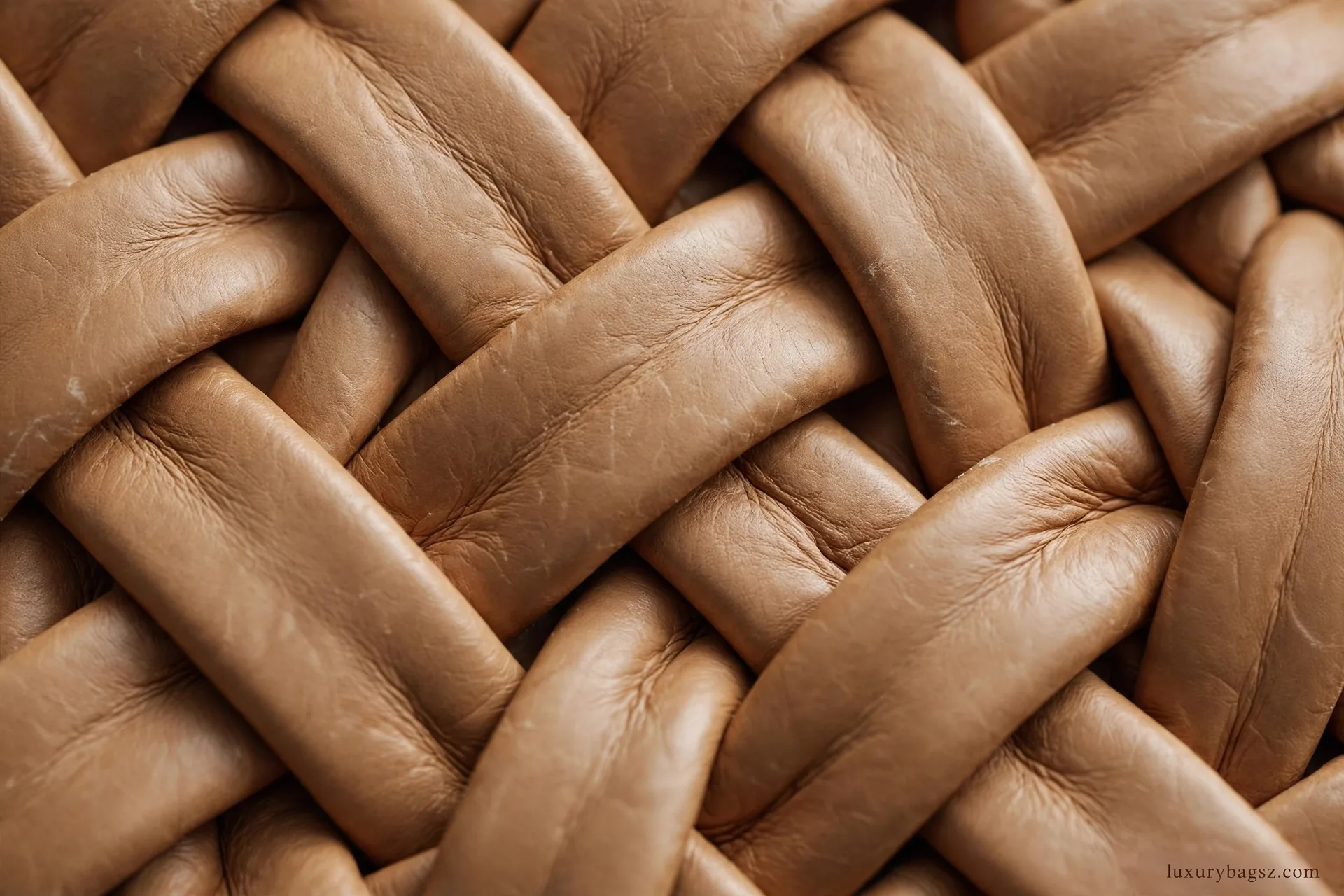
Intrecciato is not a print or an emboss; it is real weaving. Artisans interlace strips of double-faced leather by hand, creating a surface that is flexible, strong, and textured. Because the weave distributes stress across many strips, a woven bag often wears better than a single smooth panel.
Nappa leather is the usual weaving material: soft, supple, and smooth to touch. It gives Bottega bags their slouch and drape, especially in the Pouch and Jodie. Calfskin appears in firmer shapes, while exotic skins, including ostrich, appear in limited pieces at far higher prices.
Padded Intrecciato, seen on the Cassette, uses larger, puffed woven strips for a bolder, more graphic look. Maxi weave enlarges the pattern further, while fine weave keeps it subtle. Each variation changes the bag's weight, drape, and formality, so try them in person before choosing.
Our guide to leather types explains how nappa, calfskin, and exotic leathers age differently. For Bottega, the key point is simple: soft woven leather needs gentle handling, protection from dye transfer, and storage that holds its shape without crushing the weave.
How Bottega Bags Are Made
Bottega bags are handmade in Italy, often through many steps to produce the signature weave. Artisans are trained for years to weave evenly, and the house measures some work in days rather than hours, especially for the Cabat, where the entire tote is woven by hand.
Weaving demands consistency. Each strip must sit at the same tension, or the pattern drifts and the bag looks uneven. Genuine Bottega weave shows regular, even interlacing across panels, with clean edges and no loose ends. Irregular, loose, or uneven weaving deserves investigation pre-owned.
The house's atelier film, Craft in Motion, shows that labour directly: artisans cutting, weaving, and finishing bags in a 19th-century Italian villa, with senior artisan Ruggero Negretto narrating the process. Watching craft at that level helps buyers understand why a woven bag costs more than a stitched one.
Across the range, check edges, stitching, and the interior stamp. Edges should be smooth and evenly finished, stitching even and tight, and the interior should carry a clean BOTTEGA VENETA MADE IN ITALY stamp. These details separate genuine Bottega from copies more reliably than any single weave check.
The Iconic Bags, and Which One Suits You
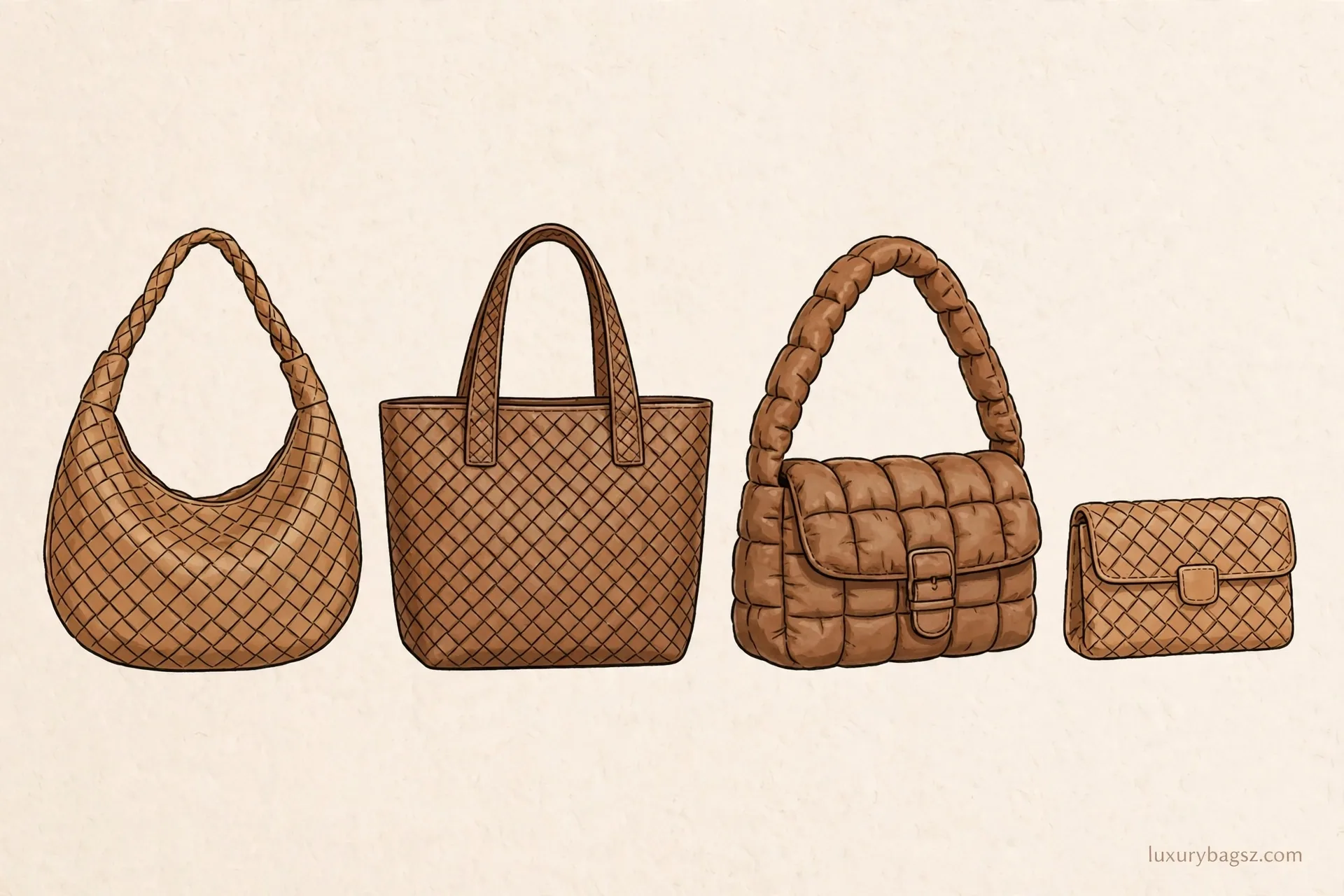
The Jodie is a knotted hobo with a soft, slouchy shape and a knot detail at the handle, revived by Lee in 2020 from a 1990s shape associated with Jodie Foster. It suits everyday use, shoulder carry, and buyers who want a relaxed woven bag. Our Jodie guide covers sizes and styling.
The Cassette uses oversized padded Intrecciato with a clean, boxy shape and a crossbody strap. It suits buyers who want a bold weave statement in a practical size. Our Cassette guide walks through sizes, colours, and what fits inside.
The Pouch is a soft, gathered clutch with no front logo and no hardware, introduced in 2019 as Lee's signature. It suits evenings and buyers who want minimalism with drama, though its open, gathered top suits light loads better than heavy daily carry.
Beyond those, look at the Cabat, the purest woven tote, the Veneta hobo, the seamless woven curve from the Maier era, the Andiamo, a top-handle with a knotted closure, and the Hop, a soft shoulder bag introduced under Blazy. Each suits a different life: tote for heavy loads, hobo for daily ease, top-handle for polish.
Sizing: Jodie, Cassette, Pouch, and Cabat
Jodie sizing runs from mini to large, and the slouchy shape means capacity surprises. Mini suits evenings and light days, small suits most days, and large suits work and travel. Try the bag loaded, because a slouchy hobo that looks roomy empty can feel heavy and shapeless when full.
Cassette sizing is more structured, with small and medium covering most needs. Small suits evenings and light days, medium suits everyday use, and both work crossbody. Check strap drop and capacity together, because a padded Cassette that is too small will not stretch to fit more.
Pouch sizing is the trickiest, since the gathered clutch has no rigid frame. Small suits evenings with phone, keys, and card holder, while larger versions suit buyers who carry more. Test the gathered opening in store, because a Pouch that feels secure empty can feel loose when loaded.
Cabat sizing runs from small to large, with the fully woven tote holding far more than its slim profile suggests. Small suits work and polished days, large suits travel and heavy loads. Remember that a Cabat has no lining and no internal structure beyond the weave, so use pouches for small items.
Shoes, Clothing, and the Wider World
Bottega shoes span woven leather loafers, boots, heels, and the chunky, sculpted styles that defined Lee's era. The house's footwear suits buyers who enjoy quiet luxury with a modern edge, and woven leather details echo the bag range. Sizing varies by style, so try in store where possible.
Ready-to-wear under Maier, Lee, and Blazy mixes clean tailoring with textured leather, knitwear, and relaxed separates. It suits buyers who enjoy understated, well-cut clothes, with texture doing the work that logos do elsewhere. A woven leather jacket or a clean coat carries Bottega's language without a visible brand mark.
Accessories include belts, scarves, sunglasses, and small leather goods, all in the house's restrained language. A woven card holder or wallet offers an accessible entry point, with the same Intrecciato texture in compact form, and these pieces make excellent gifts because sizing is simple.
Bottega's social media history is also notable: in 2021 the house deleted its social media accounts entirely, then returned quietly later. That move reflected its no-logo, no-noise philosophy, and it suits buyers who prefer craft over hype, though it makes online research harder than for louder houses.
Prices, and How Bottega Pricing Works
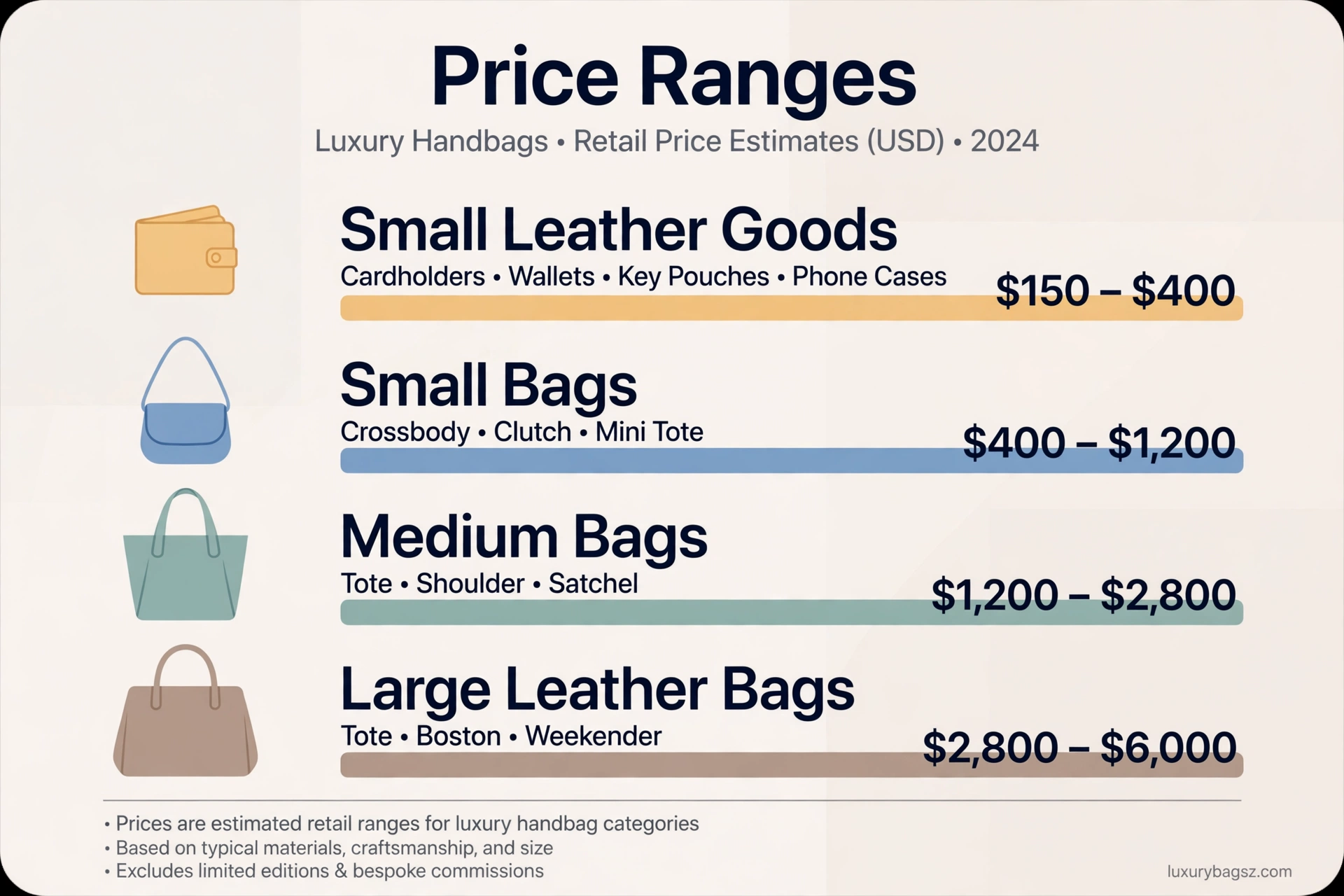
Small leather goods start around $500 and run to about $1,500 in recent guides, while bags start around $2,000 and run to about $7,500 for larger or special editions. Shoes run about $800 to $1,800, and ready-to-wear runs about $1,000 to $6,000, depending on fabric and embellishment.
Prices vary by market and rise over time, so check current boutique listings for the exact model. Pouch bags have been listed around $2,500 to $4,500 in guides, Arco bags around $3,000 to $6,000, and larger woven totes higher still. Treat any guide price as a snapshot, not a promise.
Pre-owned prices for Bottega bags vary widely. Recent secondhand guides put most Bottega bags between about 900 euros and 2,050 euros, with a wider range from about 170 euros to 4,820 euros depending on model, condition, and rarity. Clean Maier-era woven hobos are often underrated buys.
Cost per wear favours a woven bag in a neutral colour and a size you truly use. A bag carried weekly for years costs little per outing, while a rarely carried limited piece costs far more per wear, however beautiful it looks on a shelf. Woven leather's durability helps that maths.
Where to Buy, and the Boutique Experience
Bottega sells through its own boutiques, its official site, and selected luxury retailers. Boutiques offer the fullest range, including Jodie sizes and Cassette colours, and staff can explain fine versus padded weave and demonstrate strap options.
Boutique service is typically calm and knowledgeable, reflecting the house's quiet philosophy. Staff can compare sizes loaded, advise on weave care, and check stock across stores. Ask to see the bag in daylight, check weave regularity and edge finishing, and confirm what is included before paying.
Buying in person matters more for Bottega than for many houses, because the weave and the weight are things a photograph cannot convey. A woven bag that looks light online can feel substantial in hand, and a padded Cassette that looks bold online can feel softer in person.
For pre-owned, use reputable dealers, consignment stores, and auction houses with authentication. Avoid sellers who refuse detailed photos or pressure off-platform payment, and get an independent opinion for expensive woven pieces, especially older styles that are commonly copied.
Bottega for Work, Travel, and Evenings
For work, an Andiamo, a medium Cassette, or a Veneta hobo covers most professional days. The Andiamo looks formal and structured, the Cassette offers crossbody ease, and the Veneta hobo carries documents and a laptop sleeve with quiet polish. Choose based on how much you carry.
For travel, woven totes and hobos are the most practical choices. They are flexible, durable, and look less precious in airports than smooth leather, though they still need protection from rain and sharp objects. Pack with pouches for small items, and keep woven leather away from dark denim that transfers dye.
For evenings, a Pouch, a mini Jodie, or a Knot clutch adds polish without bulk. Choose a size for phone, keys, card holder, and lipstick, and leave the rest behind, because an overstuffed evening bag loses its clean lines and strains its gathered opening or knot closure.
For casual days, a Jodie with jeans and sneakers lets Bottega's quiet luxury add polish without formality. Keep the rest of the outfit plain, so the weave stays the focus rather than competing with other textures or logos.
Buying Pre-Owned Without Getting Caught Out
Pre-owned Bottega is trickier than monogram houses, because there is no logo to lean on. Start with weave regularity: the interlacing should be even across panels, with no loose, drifting, or uneven strips. Counterfeits tend to weave less evenly, especially at corners and edges.
Edge finishing comes next. Genuine Bottega edges are smooth and evenly finished, with no fraying, glue marks, or rough cuts. Check corners closely, since woven edges wear first with heavy use, and a bag described as barely used should not show frayed corners.
The interior stamp follows. Genuine bags carry a clean BOTTEGA VENETA MADE IN ITALY heat stamp, with crisp lettering and correct spacing for the era. Blurry, uneven, or misspelled stamps deserve investigation, as do serial numbers that do not match the expected format.
Seller discipline matters as much as the bag. Our general guides on buying pre-owned safely and on authenticating pre-owned designer pieces cover seller checks in detail, and they apply to Bottega just as they do to other houses, because the seller is often the biggest risk.
Caring for Intrecciato Leather
Woven leather care is gentle by necessity. Wipe with a soft, dry cloth, blot spills promptly, and keep the bag away from rain, dark denim, and sharp objects. Stuff the bag to hold its shape, store it in its dust bag, and never hang it by its handles for long periods.
Weave gaps trap dust, so brush gently with a soft brush from time to time, working along the weave rather than against it. Avoid harsh cleaners, which can dry nappa leather and sit in weave gaps, and never soak a woven bag, which swells leather and weakens the weave.
Our dedicated guide to caring for Intrecciato leather covers cleaning, conditioning, and storage in detail. In brief: condition sparingly, if at all, test any product on a hidden spot first, and take stubborn stains to a professional rather than scrubbing the weave yourself.
For all materials, boutique repair can address handles, edges, and weaving, subject to assessment and cost. The house offers a lifetime repair service on woven bags, and a woven bag can be re-woven where a stitched one would be retired, which is a large part of what you are paying for.
Bottega Against Gucci, Saint Laurent, and Loewe
Against Gucci, Bottega offers quiet, woven luxury, while Gucci offers warmer, more decorative glamour. Buyers who prefer texture over logos lean Bottega; buyers who enjoy visible codes and colour lean Gucci. Both sit under Kering, but they speak very different languages.
Against Saint Laurent, Bottega offers softer, woven shapes, while Saint Laurent offers sleeker, more Parisian-rock leather bags. Buyers who want slouch and texture lean Bottega; buyers who want sharp, structured leather lean Saint Laurent.
Against Loewe, Bottega offers Italian weaving heritage, while Loewe offers Spanish leather craft and playful, sculptural shapes. Buyers who want a weave signature lean Bottega; buyers who want puzzle shapes and bolder colour lean Loewe.
Choose Bottega if you value quiet luxury, woven craft, and understatement. Choose a rival if you want visible branding, sharper structure, or more decorative, embellished design as your first luxury buy.
Collecting Bottega: Cabat, Veneta, and Vintage
Vintage Maier-era woven hobos and totes are now collectible, especially in classic colours with even weave and clean edges. Condition is decisive: weave regularity, corner wear, and edge finishing decide value far more than age alone, and excellent examples command premiums.
Cabat bags collect steadily, particularly in classic colours and medium sizes. A fully hand-woven tote with no lining is the purest thing the house makes, and collectors value it as a demonstration of craft, not just as a bag. Complete sets with dust bag and cards sell faster.
Pouch, Jodie, and Cassette bags from Lee's era collect well, particularly in sought-after colours and mini sizes. Limited colours and chain versions attract attention, but they also vary more in value, so buy them for pleasure first and resale second.
Collecting advice stays simple: buy what you love, prioritise condition and completeness, and learn one line well before branching out. A focused collection of woven hobos and totes beats a scattered haul of impulse buys.
Common Mistakes, and How to Avoid Them
The first mistake is buying a Pouch that is too small for your daily load. The gathered clutch has no rigid frame, and a Pouch that will not close comfortably when full is a daily frustration. Measure your carry and choose based on your heaviest normal day.
The second mistake is trusting a bargain on a current Jodie or Cassette bag. Bottega's pricing and distribution make deep discounts on new core bags unlikely, and the cheapest listing is often the riskiest. Pay for a vetted seller, not just a low price.
The third mistake is carrying woven nappa daily without protection. Soft woven leather marks, absorbs dye from dark clothing, and traps dust in weave gaps, and a daily woven bag soon looks tired. Save softer weaves for careful days, and choose firmer calfskin weaves for hard daily use.
The fourth mistake is ignoring weave, edge, and stamp wear pre-owned. Weaving loosens, edges fray, and stamps fade with use, and repairs cost money. Ask for close photos of each area, and price the bag honestly.
The fifth mistake is buying a bold seasonal colour as a first bag. Bold colours date and resell unevenly, while black, brown, and neutral woven leather remain versatile. Start classic, add colour once the core is covered.
Colour, and How to Choose for Bottega
Bottega's colour palette centres on black, brown, and neutrals, with seasonal greens, blues, and pastels layered on top. That restraint helps buyers: a black or brown woven bag matches almost everything, hides wear, and resells well.
Black woven leather is the safest first choice, especially for work and evenings. It shows the weave to best effect, pairs with work and casual outfits, and hides scuffs better than pale colours. Its only drawback is that it shows dust in weave gaps, so brush it regularly.
Brown and tan offer softer alternatives to black, suiting buyers who want a warmer, more casual bag. They pair with denim, tan tailoring, and neutrals, and they hide wear almost as well as black, especially in firmer weaves.
Bold colours, including Bottega green, suit second bags and smaller sizes, where a vivid mini Jodie or a bright Pouch can lift a plain outfit. Check bold colours in daylight, because screen colours mislead, and consider how often you will actually carry a bright bag.
Bottega Gifts and Entry Pieces
Small leather goods offer a gentle entry into Bottega. A woven card holder, zip wallet, or coin purse lets you test materials, weave, and the house's aesthetic at a fraction of a bag's price, and these pieces make excellent gifts because sizing is simple.
Woven pouches and accessories offer another entry point, with the same Intrecciato texture in compact form. A pouch works as a bag organiser, a travel case, or a small evening bag, and it suits a wide range of buyers.
Belts, scarves, and sunglasses round out the entry range, each carrying Bottega's quiet language in compact form. A woven belt works with jeans and tailoring, while sunglasses offer the house's clean design in a giftable size.
Starting small is smart shopping. A well-chosen entry piece tells you whether Bottega's materials, colours, and feel suit your daily life, and it makes the later decision about a handbag far easier and less risky.
Bottega in 2026: Culture, Fashion, and What Comes Next
Bottega enters the current period as a house that is as much a craft institution as a fashion brand. Its artisan school, its atelier films, and its 50th anniversary of Intrecciato in 2025 reflect a belief that craft itself is the brand, and that depth gives the house a resonance few rivals match.
Fashion-wise, Bottega continues to balance its Jodie, Cassette, and Cabat core with runway collections that reinterpret the weave each season. Buyers should expect new weave sizes, colours, and shapes, alongside the classic black and brown pieces that anchor the range.
The house's quiet approach will keep shaping its range, from its restrained boutiques to its careful return to social media. For buyers, that means new interpretations of classic woven shapes, not the disappearance of those shapes, because Intrecciato itself is now the house icon.
For a first-time buyer, the message is reassuring: the classic Bottega bag you buy today, in black or brown woven leather, will still be recognisable, repairable, and resellable in years to come. Choose a classic shape, a practical weave, and a size that fits your life, and Bottega's long history will work in your favour.
A First-Time Buyer's Checklist for Bottega
Define your use first: work, travel, evening, or everyday quiet luxury. That decision narrows the range from many shapes to a handful, and it prevents buying a soft Pouch for a life that needs a structured Andiamo.
Visit a boutique if you can, feel fine and padded weave side by side, try Jodie and Cassette sizes loaded, and check colours in daylight. Handling the weave teaches more than hours of reading, especially for weight, drape, and softness.
Set a budget that includes care and possible repairs, especially pre-owned. A cheaper bag with loose weaving, frayed edges, or a faded stamp can cost more after repairs than a better example bought at a higher price.
Finally, verify before you pay pre-owned: weave regularity, edge finishing, interior stamp, hardware, and seller reputation. Use our general pre-owned guides, ask for extra photos when unsure, and walk away from listings that resist scrutiny. A genuine Bottega bag is worth waiting for.
Frequently Asked Questions
When was Bottega Veneta founded?
Bottega Veneta was founded in Vicenza, Italy, in 1966 by Michele Taddei and Renzo Zengiaro, as a leather goods company.
What is Intrecciato?
Intrecciato, Italian for braided, is Bottega's hand-woven leather technique, created by interlacing thin strips of leather. It arose because early machines could not stitch thick leather.
Why does Bottega Veneta have no logo?
The house built its identity on the weave, not a monogram, with the slogan "When your own initials are enough." Recognition comes from texture, not a printed logo.
What is the Bottega Veneta Pouch?
The Pouch is a soft, gathered clutch with no front logo and no hardware, introduced by Daniel Lee in 2019. It suits evenings and light loads.
What is the Bottega Veneta Jodie?
The Jodie is a knotted hobo revived by Lee in 2020 from a 1990s shape associated with Jodie Foster. It suits everyday shoulder carry.
What is the Bottega Veneta Cassette?
The Cassette is a boxy crossbody bag in oversized padded Intrecciato, introduced under Lee. It suits buyers who want a bold weave statement.
How much does a Bottega Veneta bag cost?
Prices vary by style, size, and material. Recent guides put bags from about $2,000 to about $7,500 for larger or special editions, with small leather goods lower.
Is Bottega Veneta worth the price?
For classic woven shapes in neutral colours, Bottega offers strong craft, good durability, and lasting style. The lifetime repair service on woven bags adds real value.
How can you tell if a Bottega Veneta bag is real?
Check weave regularity, edge finishing, the interior BOTTEGA VENETA MADE IN ITALY stamp, hardware quality, and seller reputation. No single check proves authenticity alone.
How do you clean a Bottega Veneta woven bag?
Wipe with a soft, dry cloth, brush gently along the weave, blot spills promptly, keep it away from rain and dark denim, and store it stuffed in its dust bag.
Final Verdict
Bottega Veneta suits buyers who want quiet luxury they can feel rather than read: a Vicenza house since 1966 that turned a weaving workaround into a signature, and texture into identity. Start with a black or brown Jodie or Cassette in a size that fits your real carry.
Visit a boutique to feel fine and padded weave, compare sizes loaded, and check colours in daylight before you commit. That hands-on step prevents most regrets, whether you buy new, pre-owned, or past-season, and it sharpens your eye for weave, edge, and stamp details that separate genuine Bottega from copies. If you want visible branding or sharper structure, look elsewhere.
If you want a bag that feels crafted, calm, and timeless, Bottega is hard to beat, and a well-chosen piece will earn its place in your wardrobe for many years. Store it in its dust bag, stuff it to hold its shape, and let its weave serve you daily, because quiet craft earns its price through constant, understated use.