

What Is Hermès Tableware? A Complete Guide to La Table Hermès
Hermès Tableware in Brief
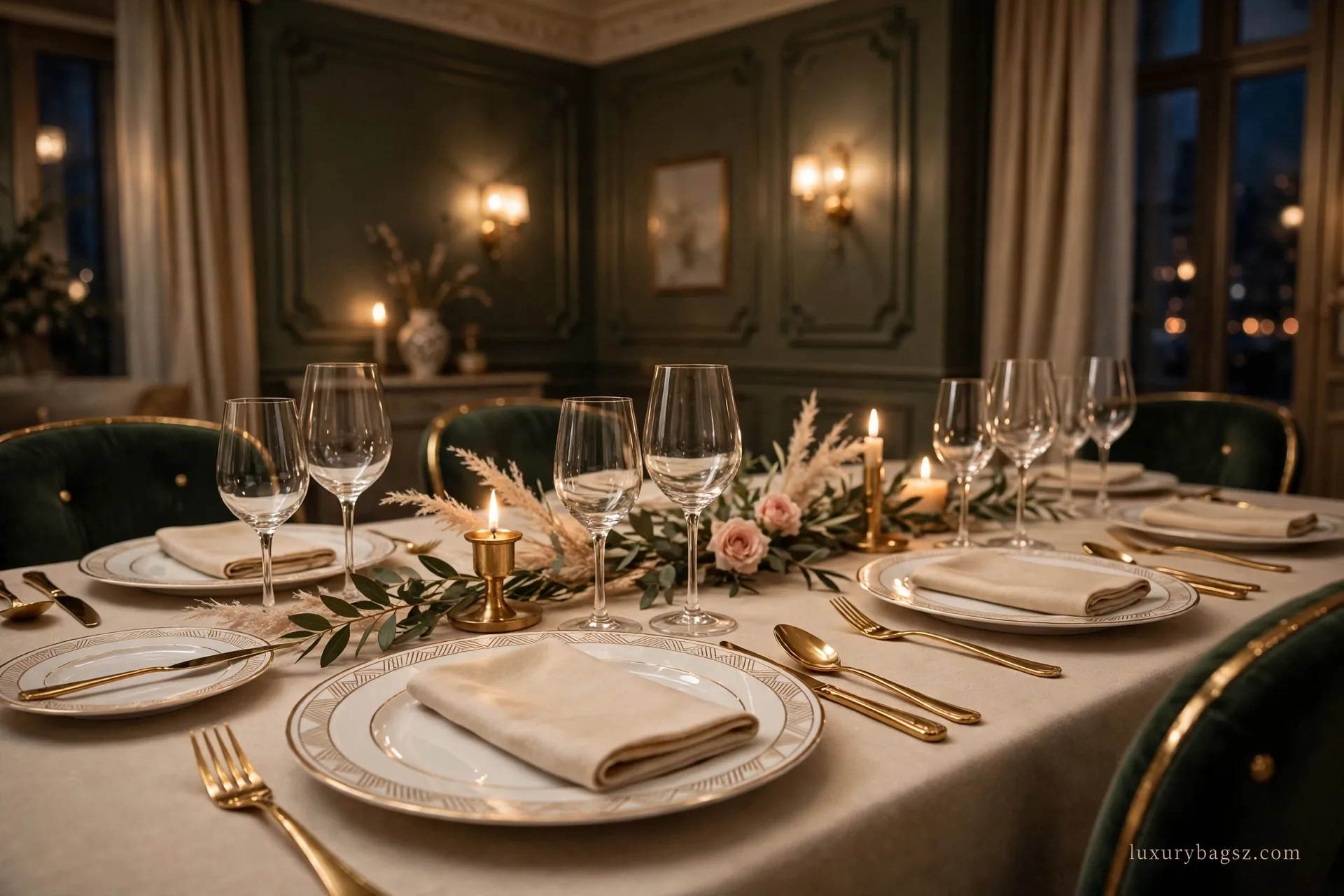
Hermès tableware is the house’s range of porcelain for the table, sold under the name La Table Hermès. It covers dinner plates, soup plates, bowls, platters, cups, mugs, teapots, coffee pots, creamers, and sugar bowls. Most pieces are fine French porcelain, decorated with patterns drawn by Hermès artists.
The simplest way to think of it is this: the same house that makes leather bags and silk scarves also makes the plates, cups, and serving dishes for a full table. Each collection has its own artwork, colour story, and mood, so a buyer collects a pattern rather than buying single random plates.
Prices vary widely by piece, size, and market, and they change over time. A single dinner plate can cost a few hundred pounds, dollars, or Australian dollars, while a large platter, tureen, or tea box can run into the thousands. This guide uses dated single listings only, never vague market averages.
Hermès tableware is made to be used, not only displayed, but its care depends on its decoration. Plain coloured porcelain and gold- or platinum-decorated porcelain do not follow the same rules. That distinction matters more than any other care detail in this guide.
If you are new to the house, start with the pattern, not the price tag. A pattern you love will get used daily, while a pattern bought only for status often stays in a cupboard. Visit a store, hold a plate, and see how its weight and colour feel in your hands first.
Key Takeaways
- Hermès tableware is fine French porcelain for the table, sold as La Table Hermès, in named collections with matching dinner, tea, coffee, and serving pieces.
- Porcelain has been part of Hermès since the mid-1980s, made in Limoges and decorated by Hermès artists, with the best-known patterns including Mosaïque au 24, Bleus d’Ailleurs, and Passifolia.
- Gold- and platinum-decorated porcelain needs hand washing and no microwave use, while plain coloured porcelain is more forgiving, though hand washing still protects it best.
- Prices vary by piece, market, and condition, so this guide quotes dated single listings only, and warns against treating one figure as a current retail price.
- Pre-owned buyers should check pattern names, backstamps, condition, and completeness, because a single missing piece can cost more than expected to replace.
- Tableware pairs with Hermès textiles and leather in styling, but it is bought and cared for as porcelain, not as a bag or a scarf.
Part 1: What Hermès Tableware Actually Is
Hermès tableware is porcelain made for eating, drinking, and serving, designed by the Paris house of Hermès. It is not a side line of mugs alone. A full collection can dress a table from bread plate to tureen, with matching cups for tea and coffee.
The house groups this work under La Table Hermès, its name for tableware and home objects for dining. When a retailer or the Hermès site lists tableware, it usually means this porcelain range, plus related pieces such as glassware and trays in some listings. This guide focuses on the porcelain itself.
A buyer should not confuse tableware with Hermès home décor in general. For presents rather than place settings, our Hermès home gifts guide starts with the small pieces people use every day. Throws, cushions, furniture, and lighting belong to the wider home world. Tableware is the narrower world of plates, bowls, cups, and serving dishes.
That narrow focus helps when shopping. If a listing calls a throw or a tray “tableware,” read the description closely. The piece may sit on a table, yet it may not belong to a porcelain dinner service at all.
The appeal is straightforward. Hermès brings its drawing, colour, and craft to an object used every day. A plate is handled, washed, stacked, and seen at close range, so its pattern and finish matter in a very direct way.
When you shop, read the collection name on every listing, not only the word Hermès. Two plates can share a brand and a colour yet belong to different collections, with different borders and motifs. Matching the collection name is what keeps a growing service looking coherent.
Part 2: A Short History of Hermès at the Table
Hermès began in Paris in 1837 as a harness and saddlery workshop. For much of its early life, the house served riders, then travellers, with leather goods made to last. Silk, ready-to-wear, jewellery, and home objects came later, as the house grew.
Porcelain entered the story much later than leather or silk. One reference source dates the start of Hermès porcelain production to 1984, while other accounts describe the push into porcelain more broadly as a 1980s development. The two accounts do not clash on the decade, but they do differ in precision.
That difference is worth stating plainly. A reader who sees “1984” in one place and “the 1980s” in another is not reading a contradiction so much as a precise date beside a general period. This guide treats 1984 as a single sourced claim, not as a settled house date.
French ceramic centres shaped the work. Sources name both Limoges, the historic porcelain region, and Nontron, in south-western France, in connection with Hermès porcelain decoration. The accounts do not agree on one workshop town, and buyers should not assume a single factory.
What is clear is the intent. Hermès did not treat porcelain as a printed souvenir. It treated it as a new surface for its artists, with the same attention to drawing and colour found in its scarves and home textiles.
Collectors also prize continuity. A collection that stays in production for years lets a buyer replace a broken plate or add a serving piece later. A short-lived pattern may look fresh today, yet it can leave gaps that only the pre-owned market can fill.
Part 3: How Tableware Connects to Hermès Scarves and Art
Many Hermès tableware patterns begin as drawings, not as abstract table decoration. Artists who draw for scarves, blankets, and home textiles also draw for porcelain. That shared drawing room explains why a plate can feel like a scarf laid flat.
Carnets d’Équateur is the clearest example. Artist and naturalist Robert Dallet spent his life drawing animals from every continent, from jaguars and toucans to rare monkeys. His meeting with Jean-Louis Dumas in 1984 led first to scarf designs, then to this porcelain tribute.
The link to scarves is not only artistic. The standard large Hermès silk square, the format collectors know as the Hermès Carré scarf 90, shows how the house treats a square of silk as a picture. Porcelain borrows that same picture-first habit, but on a plate.
Other collections lean on architecture, travel, or nature rather than animal drawing. Mosaïque au 24 leans on a floor. Bleus d’Ailleurs leans on ceramic traditions from distant places. Passifolia leans on leaves. Each one still starts with an artist’s eye.
For a buyer, this matters when choosing. If you love a particular Hermès artist or scarf, look for that artist’s porcelain too. The table can then echo a collection you already enjoy, rather than starting from nothing.
No single collection suits every home, and that is the point of the range. A graphic pattern suits a modern room, a leafy pattern suits a garden room, and an animal pattern suits a collector who loves drawing. Let the room and the food you cook guide the choice.
Pattern scale is easy to miss in photos, so study it closely. A bold border that looks striking on a single plate can feel busy across twelve settings, while a quiet motif can vanish at a full table. A photo of a set table, not a single plate, shows scale best.
Part 4: The Main Collections, Explained
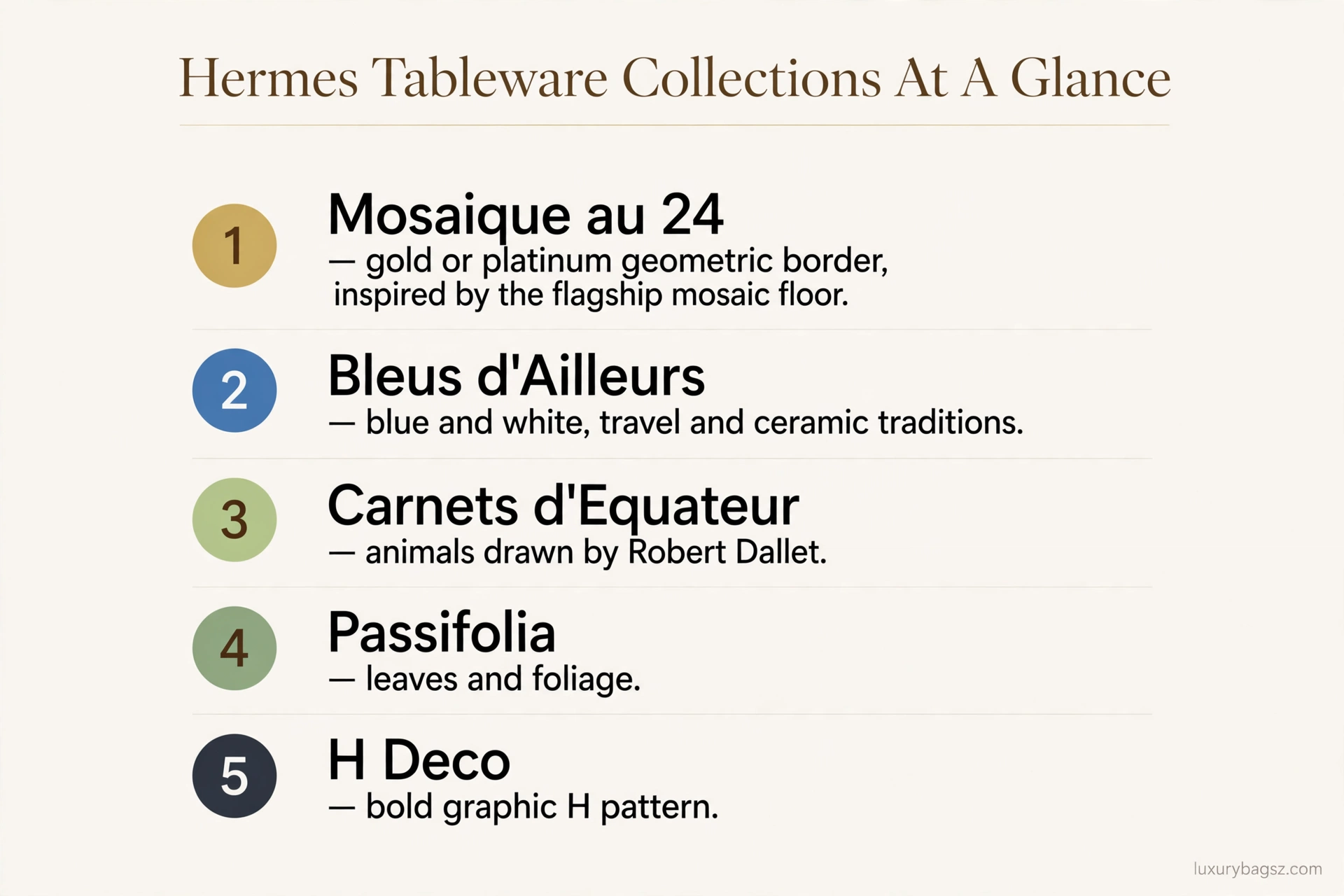
Mosaïque au 24 is the most architectural collection in the range. Its geometric border takes its cue from the mosaic floor of the Hermès flagship at 24 Faubourg Saint-Honoré in Paris. It comes in gold and platinum versions, which change the whole mood of a table.
Bleus d’Ailleurs works in blue and white, with patterns shaped by travel and by older ceramic traditions. Designer Arielle Brichambaud is linked to the collection in retail accounts, and its palette recalls blue-and-white porcelain made along historic trade routes. It feels structured, yet far from plain.
H Déco is bolder and more graphic. Its large H motif and strong geometry suit a modern table, and its cups, mugs, and platters read clearly even from across a room. Buyers who find Mosaïque au 24 too formal often land here.
Passifolia turns to foliage, with leaves and plant forms spread across plates, bowls, and serving pieces. It suits a softer, greener table, and it mixes well with plain white porcelain when a full set feels too much. Its charm lies in detail rather than in grand geometry.
Carnets d’Équateur is the most pictorial collection of the group. Each piece carries Dallet’s animals, drawn with the care of a naturalist’s sketchbook, in charcoal, pencil, wash, or gouache styles. It is a talking point at any meal, which is both its strength and its risk.
Each collection also carries its own colour temperature, from cool blues to warm golds. A cool pattern calms a bright room, while a warm pattern warms a dark one. Hold a sample plate against your table and linen before committing to a full service.
Part 5: More Collections Worth Knowing
Soleil d’Hermès brings warmth and golden light to the table, in contrast to the cool blues of Bleus d’Ailleurs. It suits sunlit rooms and summer meals, and its dinner plate appears across current retail listings. Think of it as atmosphere first, pattern second.
A Walk in the Garden, by Nigel Peake, takes a more graphic, drawn-garden route. Its lines feel like a sketchbook walk, with plants and paths reduced to clean marks. It appeals to buyers who like illustration but want a calmer table than Carnets d’Équateur.
Balcon du Guadalquivir, named in dealer listings alongside the main collections, draws on a Spanish balcony and river theme. It is less often discussed than Mosaïque au 24, yet it shows the same habit of turning a place into a pattern. Check current availability before planning a set around it.
Cheval d’Orient brings horses and eastern motifs to the table, with pieces from soy dishes to punch bowls and presentation plates. Its range is wide, and its small pieces make easy starting points. Horse lovers often begin here rather than with a full dinner service.
Newer work keeps arriving. Natures Marines, designed by British illustrator Katie Scott, launched in Singapore on 1 August 2026 with 34 pieces inspired by marine flora and nineteenth-century botanical drawing. It shows that Hermès tableware is still growing, not frozen in older patterns.
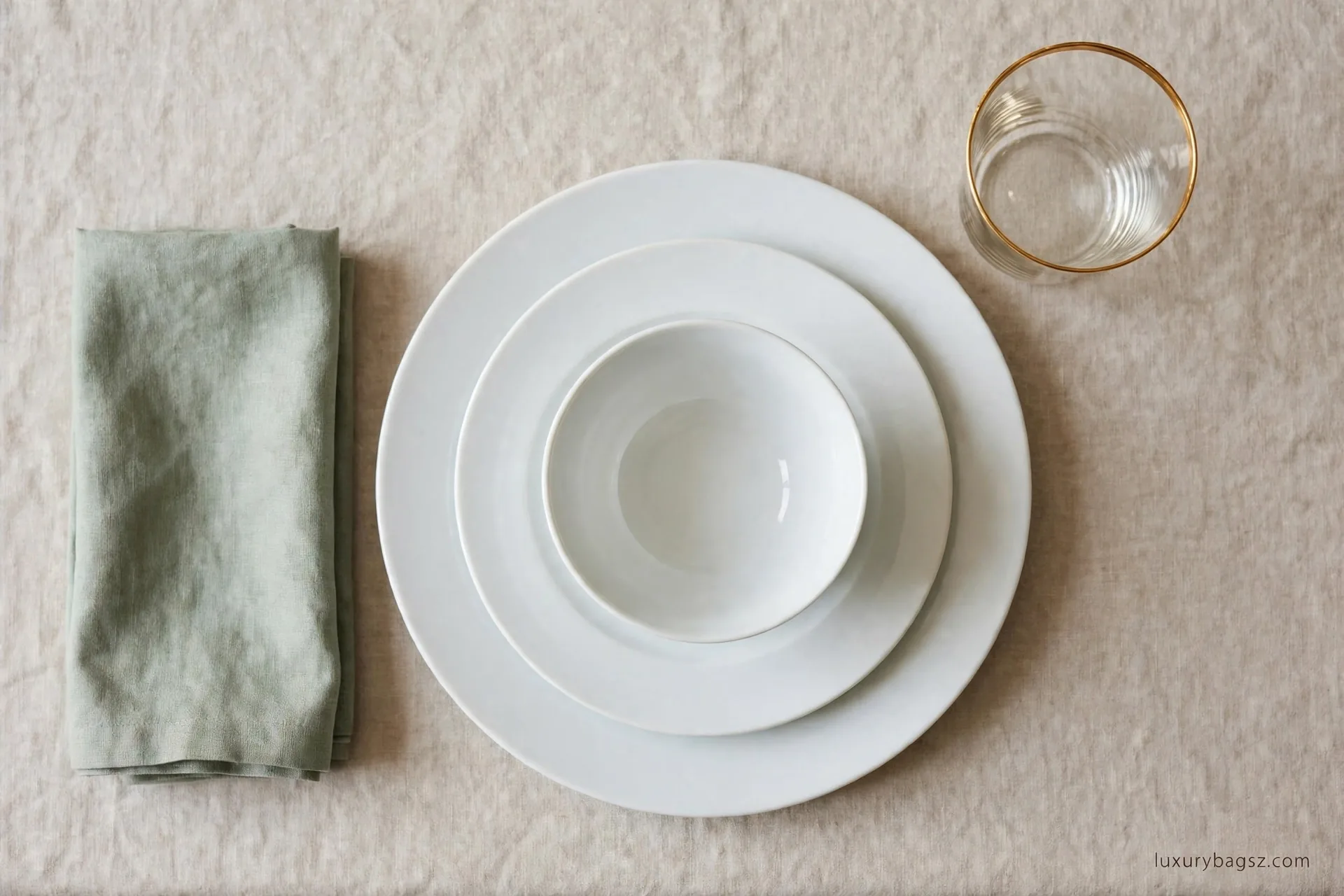
A buyer who mixes patterns should still keep one anchor collection for dinner plates. Mixed salad plates or bowls add interest, but mixed dinner plates can look accidental rather than curated. One anchor keeps the table calm, even when smaller pieces vary.
Part 6: Materials — What the Porcelain Really Is
Hermès tableware is described across dealer and retail sources as fine Limoges porcelain. Limoges is a place, not a single factory, and it has been a porcelain centre since kaolin clay was found nearby in the late eighteenth century. That clay gives a white, hard, fine body.
True Limoges porcelain feels smooth, looks bright in strong light, and often feels lighter than it looks. Its thin, hard body rings clear when tapped gently. Those traits help a buyer judge quality by hand, even before checking any mark.
Decoration is where the craft shows. Patterns are applied with care, and gold or platinum details are added as a separate decorative step. One sourced account describes the Mosaïque au 24 gold dinner plate as screen-printed with hand-applied gold details, which fits the mix of method and hand finish.
Sources disagree on where decoration happens. Some accounts stress Limoges porcelain as the material, while another account says pieces are hand-painted in Nontron, France. Both towns sit in the French ceramic story, but they are not the same place, so this guide does not merge them into one claim.
Buyers should also note that not every Hermès table object is porcelain. Glassware, silver, and leather-trimmed pieces appear in the wider home range. Puiforcat, the silversmith house acquired by Hermès in 1993, covers silver table pieces, which follow silver care rules, not porcelain rules.
Weight and balance matter as much as looks. A heavy platter needs two hands, a light cup suits a long meal, and a wide soup plate needs a steady table. Pick pieces up in store when possible, since a photo cannot show how a piece feels when full.
Glaze quality shows in raking light, so tilt a plate under a lamp before buying pre-owned. Fine crazing, a network of tiny glaze lines, often appears only at an angle. It may not affect use, but it should affect price, and a seller should have named it.
Part 7: Dinnerware Pieces, Piece by Piece
A dinner service starts with plates. The dinner plate is the anchor, the salad or dessert plate sits on or beside it, and the bread and butter plate holds bread at the side. Soup plates, with their wide rims, suit soups and saucy dishes.
Bowls come in several sizes, from small individual bowls to large serving bowls. A small salad bowl, such as the Bleus d’Ailleurs small model, suits one portion, while a large bowl serves a table. Always check height, diameter, and capacity, since names alone mislead.
Platters do the heavy work. Round, oval, and tart platters carry roasts, tarts, and large dishes to the table. Hollow dishes, with their raised sides, suit vegetables and sauced foods. A soup tureen, the largest single piece in many services, anchors a formal meal.
Cups and mugs deserve their own thought. A tea cup and saucer, a coffee cup and saucer, a breakfast cup and saucer, and a mug are four different forms, not four names for one cup. Breakfast cups run larger, coffee cups smaller, and mugs suit everyday drinking.
Boxes, trays, and small dishes finish a service. Tea boxes store tea, round boxes hold small items, and square plates work as side plates, snack plates, or display pieces. Buying these last keeps the core service usable while the collection grows.
Serving pieces deserve a budget of their own, since they cost more than single plates. A tureen or large platter can cost several times a dinner plate, yet it serves the whole table at once. Plan for one serving piece per year if a full set feels too much at once.
Part 8: Tea Sets, Coffee Sets, and How They Differ
A tea set centres on a teapot, tea cups and saucers, a creamer, and a sugar bowl. Some sets add a tea box or a cake platter, but the teapot remains the heart. Tea cups tend to be wider and more open than coffee cups, to let aroma rise.
A coffee set centres on a coffee pot or coffee cups and saucers, with creamer and sugar bowl alongside. Coffee cups run smaller and straighter, which suits a short, strong drink. A set of four coffee cups and saucers, listed in current ranges, suits a small household well.
Breakfast service sits between the two. A breakfast cup and saucer is larger than a tea cup, made for a longer morning drink with milk. Buyers who drink milky coffee or long teas at breakfast often prefer this form over a small coffee cup.
Mugs break the formal rules in a useful way. A mug needs no saucer, holds more, and suits daily use, desk work, and casual meals. Hermès mug sets, such as sets of two or three, make good gifts, since they do not demand a full service behind them.
Tumblers and highball glasses sit at the edge of porcelain tableware. Some ranges include porcelain tumblers, while glass tumblers belong to glassware. Check the material in each listing, since the same shape can appear in both porcelain and glass.
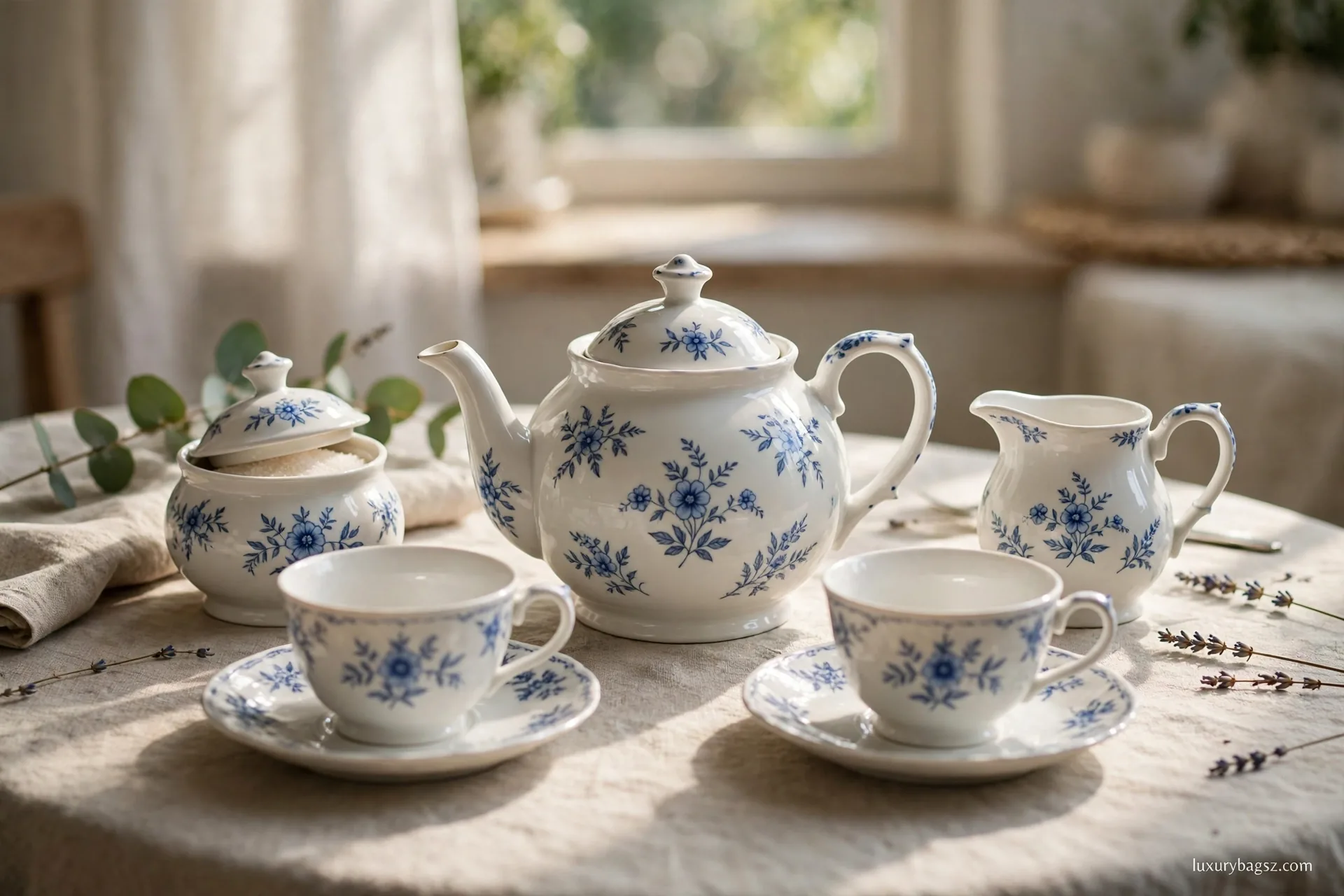
Coffee drinkers should test cup size against their usual drink. An espresso cup will frustrate a latte drinker, and a large breakfast cup will dwarf a short black coffee. Match the cup to the drink you actually make most mornings, not to the prettiest photo.
Part 9: Sizes, Dimensions, and Why They Matter
Porcelain sizes are not standard across brands, so a Hermès dinner plate cannot be judged by name alone. One sourced account gives the Mosaïque au 24 gold dinner plate as 10.8 inches in diameter. That single figure helps a buyer check cupboard, dishwasher, and table space.
Smaller pieces vary just as much. A Bleus d’Ailleurs small salad bowl is listed by one retailer at 19.5 cm in diameter, 7.2 cm high, with a 100 cl capacity. Those three figures together tell a buyer far more than the words “small model” ever could.
Models and numbers add another layer. Square plates carry numbers, bowls carry model sizes, and cups carry mini or large labels. A “n°1” plate and a “n°4” plate are different pieces, not the same plate at different prices, so always match the number.
Capacity matters for bowls, teapots, and creamers. A teapot that looks generous may serve fewer cups than expected, and a creamer that looks small may suit a table of two. Ask the seller for capacity when a listing gives only diameter.
Stacking and storage also depend on size. Deep bowls stack less neatly than flat plates, and lidded pieces need extra height. Measure the shelf before buying a tureen, a large platter, or a lidded bowl, not after it arrives.
Table space sets a hard limit that no pattern can fix. Measure your table before buying large platters, and count place settings against real guests, not ideal parties. A service that fits your table gets used, while an oversized one stays boxed.
Watch for price traps in sets. A set of six cups can cost less per cup than singles, yet include a form you never use. Divide the set price by the pieces you truly want, and compare that figure with single prices before calling a set a bargain.
Part 10: Prices — Dated Single Listings Only
Prices for Hermès tableware differ by country, currency, and date, so this guide gives single dated listings, not averages. A price seen in one market should never be quoted as a global price. Always check the market and the date behind any figure.
In the United States, one 2026 guide lists the Mosaïque au 24 gold dinner plate at $275 per plate. That figure is a single researched listing, not a promise that every retailer charges the same. It gives a useful anchor for American buyers.
In Australia, Hermès listings show the Mosaïque au 24 gold dinner plate at AU$460, with the gold soup plate at AU$425 and the gold dessert plate at AU$380. Those figures come from the same market at the same time, so they compare well with each other, but not directly with dollars or pounds.
In the United Kingdom, Hermès listings show the Mosaïque au 24 platinum dinner plate at £195, with the platinum soup plate at £180 and the platinum bread and butter plate at £120. Note the metal change too: platinum in the UK listing, gold in the US and Australian examples.
Large pieces cost far more than single plates. Australian listings show a Mosaïque au 24 gold soup tureen at AU$5,185 and a Bleus d’Ailleurs round deep platter, large model, at AU$5,895. A Bleus d’Ailleurs teapot appears at AU$1,415 in the same market.
Small pieces can still surprise. A Bleus d’Ailleurs small salad bowl is listed by one retailer at $3,145 USD, far above a single plate price, which shows why piece-by-piece checking matters. Limited runs, size, and retailer mark-up can all push one piece well above its neighbours.
Currency swings add another reason to shop locally first. A price that looks low abroad can rise with shipping, tax, and import duty, and returns across borders cost far more. A local dealer price, checked on the day, is the only figure worth budgeting from.
Part 11: Care — Washing, Microwaves, and Daily Use
Care rules for Hermès porcelain depend first on decoration, not on brand alone. Plain coloured porcelain and gold- or platinum-decorated porcelain behave differently in heat, water, and detergents. Treat the decoration as the deciding factor every time.
Sources disagree on dishwasher use, and the disagreement must be stated plainly. One retailer says Hermès tableware is dishwasher safe on a delicate cycle, with hand washing still recommended. General porcelain guidance, by contrast, says gold or platinum pieces should be hand washed only.
The safest reading is conservative. Hand wash any piece with gold or platinum trim, using warm water, mild detergent, and a soft sponge. Never use an abrasive pad, steel wool, or gritty cleaner, since these can dull glaze and wear metal decoration.
Microwave rules are clearer. Never microwave a piece with gold or platinum trim, since metal decoration and microwaves do not mix. Plain porcelain without metal trim is generally microwave safe, but check the care note for that exact piece first.
Material-specific care is a habit worth building across a collection. Porcelain needs a soft sponge and gentle detergent, just as other Hermès materials need their own routines, from cleaning a Hermès canvas bag to caring for Hermès leather boots. Borrowing a cleaner from one material for another is how damage happens.
The same warning applies to everyday cleaning products. A strong cleaner that suits sandals or outdoor shoes has no place near porcelain, and the gentle method used for cleaning Hermès Oran sandals still differs from porcelain care. Keep one soft sponge and one mild detergent aside for the table alone.
Leather care offers a useful contrast. The routine for cleaning a Hermès leather belt uses leather-appropriate products and methods that must never touch a plate. If a product label does not name porcelain, do not use it on porcelain.
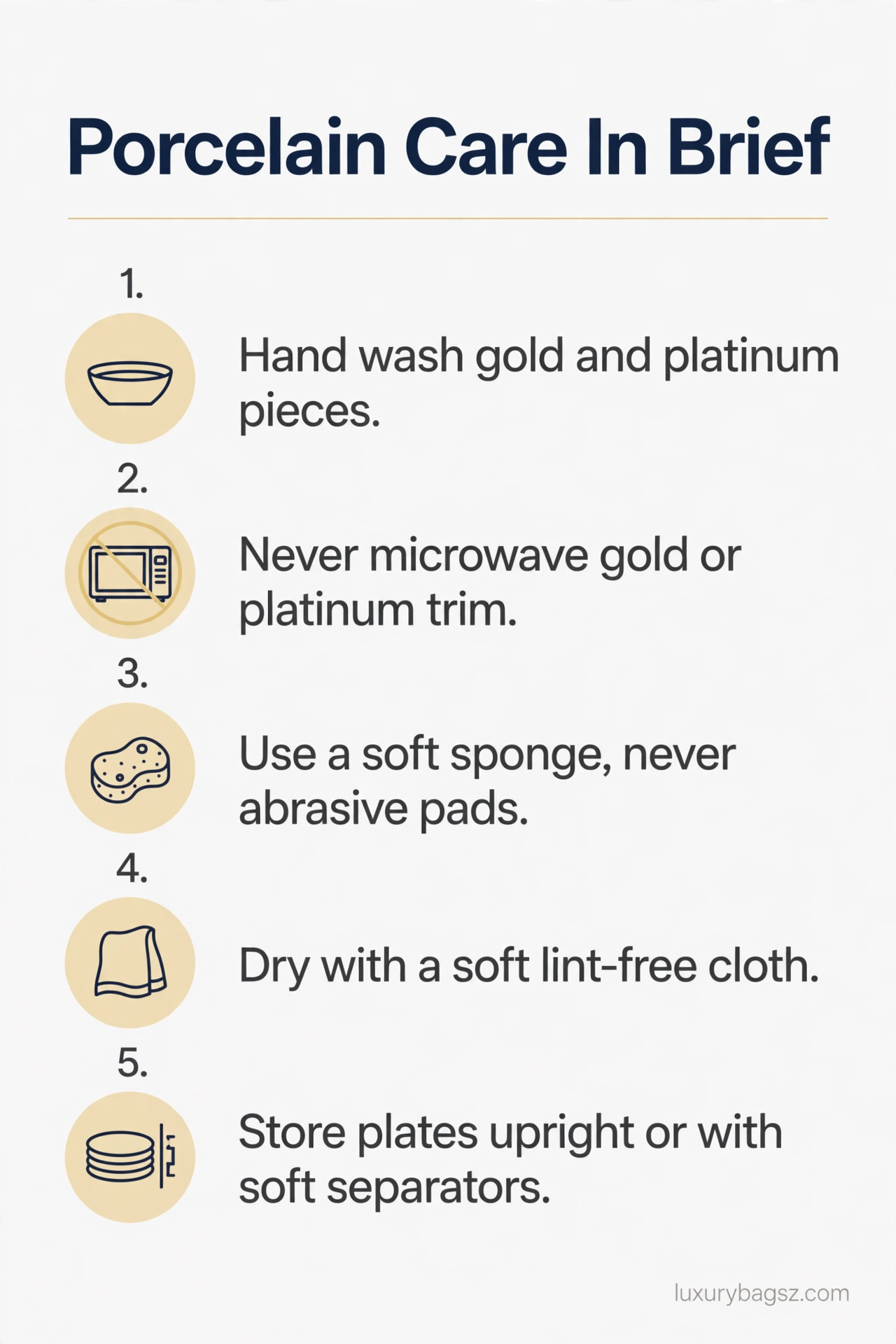
Drying matters as much as washing. Water left on gold trim can mark over time, and plates stacked while damp can trap moisture. Dry each piece with a soft cloth, let it air briefly, and only then return it to the cupboard or rack.
Part 12: Storing, Stacking, and Protecting a Service
Good storage protects pattern, rims, and gold trim better than any cleaning product. Plates stacked bare rub against each other, and that friction dulls decoration over time. Soft separators, felt rounds, or cloth between plates prevent most of that wear.
Upright plate racks suit many kitchens, since they keep plates apart and easy to reach. If plates must stack flat, keep stacks low and place a soft layer between each plate. Heavy stacks press hard on the lowest plate and raise the risk of chips.
Cups need their own care. Hanging cups by their handles can strain the handle join, while stacking cups rim to rim can chip rims. Store cups upright, apart from each other, with space around each handle. Mugs tolerate stacking better, but still chip when knocked.
Keep table linens in mind too. A tablecloth or napkin folded badly creases just as silk does, and the habit of crease-free storage carries across a home. The care used to store a Hermès silk scarf without creases is a good model for folding and storing fine table linen.
Light, heat, and damp also matter. Display pieces near a sunny window can fade over long years, and damp cupboards can mark boxes and packing. Store rarely used pieces in their boxes, in a dry room, away from direct sun and radiators.
Moving house is the highest-risk moment for porcelain. Wrap each piece alone in soft paper, pack plates upright like records, and mark the box fragile on every side. A service broken in transit is far harder to replace than a single plate bought new.
Label your storage so guests and helpers do not mix patterns. A small card inside each box, naming the collection and piece count, saves sorting later. It also helps when a piece breaks and you need to order one exact replacement.
Photograph your own service on arrival, piece by piece, in daylight. Those photos record condition, pattern, and backstamps for insurance and for any later sale. They also help you order an exact replacement if one piece breaks years later.
Part 13: Buying Pre-Owned — Checks That Protect You
Pre-owned Hermès tableware can fill gaps in a discontinued pattern, but it needs sharper checks than a new purchase. A single missing piece can take months to find, so a rushed buy often leads to regret. Slow down and inspect before paying.
Start with the backstamp. Genuine Limoges porcelain carries maker and origin marks, often with a green factory mark under the glaze and a decorator mark above it. Look for crisp, even lettering and a clear “France” or “Made in France” wording, and be wary of blurry or smeared marks.
Next, compare the pattern with a known example. Colour, line weight, and motif placement should match the collection, not merely resemble it. Fakes and lookalikes often get the general idea right while missing fine detail, spacing, or colour depth.
Inspect every rim, foot, and handle in bright light. Chips, cracks, crazing, and worn gold trim all cut value and use. Ask for close photos of rims and bases, not only a pretty table shot, and ask whether any piece has been repaired or restored.
Fakes exist across Hermès categories, not only in porcelain. The same careful eye that helps a buyer spot a fake Hermès silk scarf helps here too: compare, question, and walk away when details do not line up. No bargain justifies a doubtful piece.
Finally, check the seller. Buy from a reputable dealer or a seller with clear returns, full photos, and a record of selling porcelain. Keep the listing, photos, and messages, since they form your evidence if a piece arrives damaged or misdescribed.
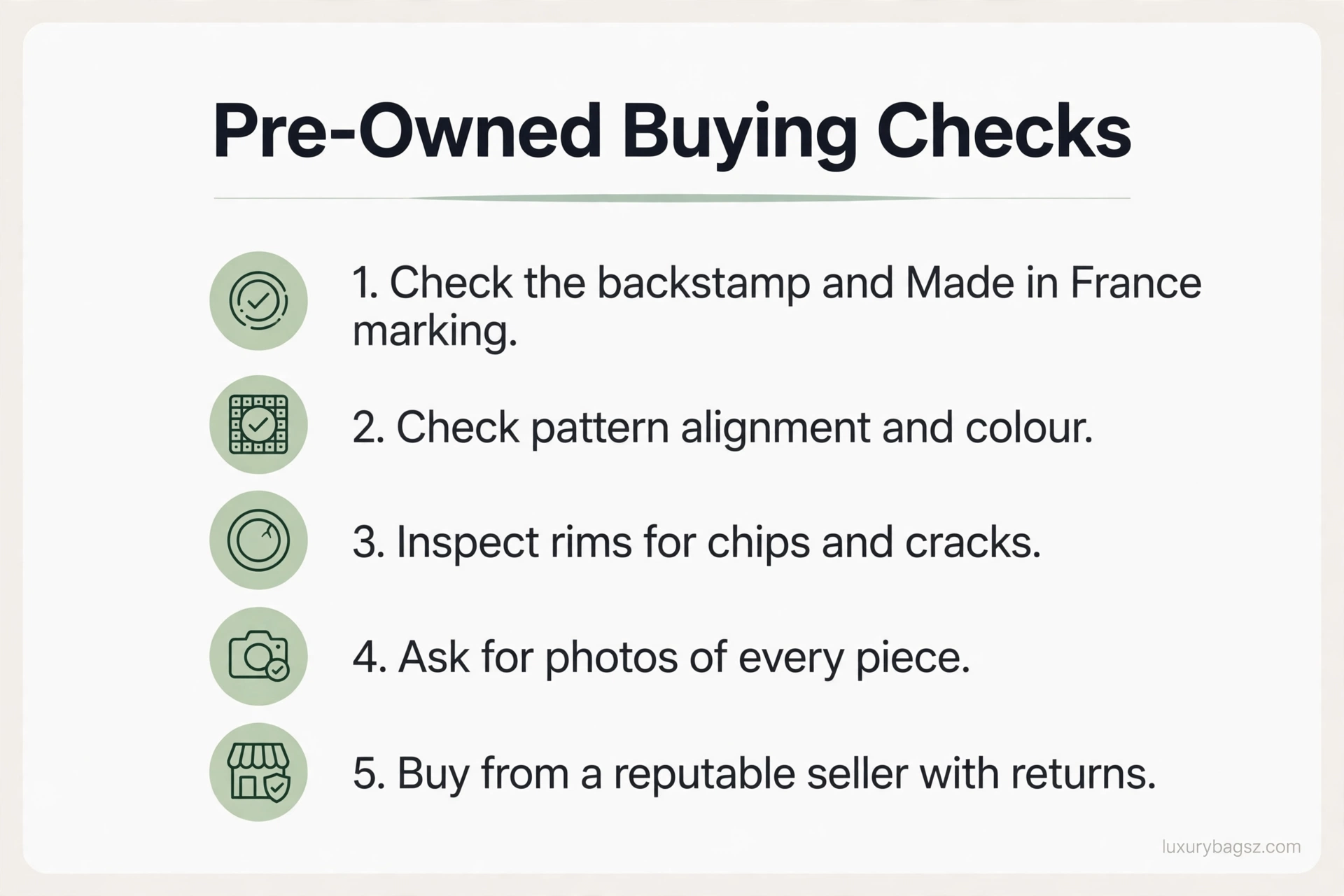
Condition grading needs plain language. Ask sellers to state chips, cracks, wear, and repairs in words, not only in photos, since light can hide rim wear. A seller who answers plainly is worth more than a seller with the lowest price and the fewest words.
Part 14: Where to Buy, and How to Start a Collection
The safest first stop is Hermès itself, in store or through the official site. Buying direct gives current pieces, full packaging, and a clear record. It also lets a buyer see colour and size in person, which photos rarely convey well.
Authorised dealers form the next tier. Dealers who stock La Table Hermès can advise on availability, lead times, and matching pieces. One dealer notes special orders can take around 12 to 24 weeks, so patience matters when a piece is not on the shelf.
Auction houses and reputable pre-owned dealers suit discontinued patterns and rare pieces. Christie’s has catalogued Mosaïque au 24 services, and other major houses handle Hermès home pieces. Set a firm ceiling price before bidding, since auction excitement pushes prices fast.
Start small and stay in one collection. Four dinner plates, four salad plates, and four bowls make a usable service for a small household. Add a platter and a teapot next, then cups, rather than buying one piece from five collections at once.
Gifts offer a low-risk entry point. A pair of mugs, a single bowl, or a small dish lets a buyer test a pattern at home. Smaller Hermès gifts follow the same logic, and a Hermès Calvi card holder shows how one small, well-made piece can introduce a house before a larger purchase.
Try before you commit by buying one dinner plate and living with it for a month. Eat from it, wash it, stack it, and see if you still love it. That single plate test costs little and prevents a costly service built on a first impression.
Part 15: Styling a Table With Hermès Porcelain
A Hermès table works best when one collection leads and everything else supports it. Choose the dinner plates first, then let salad plates, bowls, and serving pieces follow that lead. Too many patterns at once turn a table into a display shelf.
Mixing still has a place, if done with restraint. Plain white porcelain pairs well with a patterned Hermès service, giving the eye rest between bold plates. Use plain pieces for large serving bowls, and keep the pattern for plates and cups.
Colour in glassware, linen, and flowers should echo the porcelain, not fight it. Blue-and-white Bleus d’Ailleurs suits white linen and clear glass, while gold Mosaïque au 24 suits warm metals and cream linen. Let one colour lead and keep the rest quiet.
Centrepieces need height care. Tall flowers block faces across a table, while low bowls of fruit or short flowers keep conversation open. A Hermès platter or bowl can serve as the centrepiece itself, holding fruit or bread with quiet confidence.
Formal and casual tables need different pieces. A full gold service suits a formal dinner, while mugs, bowls, and a single patterned plate suit a weekday lunch. Owning both modes matters more than owning many formal pieces that rarely leave the cupboard.
Seasonal change keeps a service fresh. Leafy Passifolia suits spring and summer, warm Soleil d’Hermès suits bright rooms, and deep blue or gold patterns suit winter evenings. Rotating pieces by season also spreads wear evenly across a collection.
Evening light changes porcelain colour, so view a pattern in daylight and at dinner light before buying. A blue that looks calm at noon can look cold at night, and a gold that glows at dinner can glare at lunch. Two light checks prevent most colour regrets.
Children and porcelain can coexist with a few rules. Use mugs and bowls for young diners, keep gold-trimmed plates for adults, and teach two-hand carrying early. A service used with care lasts longer than one locked away from family life.
Tableware also makes a thoughtful wedding or housewarming gift, since it is used rather than stored. A pair of mugs or a serving bowl suits a new home better than a single dinner plate, which needs matching pieces to feel complete. Add a note naming the collection, so the recipient can add to it later.
If a pattern is retired, do not panic. Retired patterns often appear through dealers and auctions, and a patient search usually finds the missing piece. Set alerts with reputable sellers, keep your piece list handy, and wait for the right condition at the right price.

Frequently Asked Questions
What is Hermès tableware?
Hermès tableware is the house’s porcelain range for dining, sold as La Table Hermès. It includes dinner plates, bowls, platters, cups, mugs, teapots, and serving pieces, each decorated with artwork from Hermès artists. Most pieces are fine French porcelain made for real daily use.
Price also depends on where you live, since Hermès prices differ by market and currency. Check your local store or site on the day you plan to buy, rather than trusting a price quoted for another country.
Which Hermès tableware collection should a beginner choose?
Mosaïque au 24 suits buyers who want a classic, formal service, while H Déco suits a bolder modern table. Bleus d’Ailleurs suits blue-and-white lovers, and Passifolia suits a softer leafy table. Choose the pattern you enjoy seeing every day, since a service stays with you for years.
Is Hermès tableware made of Limoges porcelain?
Dealer and retail sources describe Hermès tableware as fine Limoges porcelain. Limoges names a French porcelain region, not one factory, and its kaolin clay gives a white, hard, fine body. Some accounts also link decoration to Nontron, so the workshop picture is less settled than the material claim.
If a piece has no metal trim and its care note allows machine washing, use a gentle cycle with space between pieces. Pieces knocked together in a machine chip faster than pieces washed by hand in a lined sink.
Can Hermès tableware go in the dishwasher?
Sources disagree, so caution is wise. One retailer calls the range dishwasher safe on a delicate cycle, while general porcelain guidance says gold or platinum pieces must be hand washed only. Hand washing protects gold and platinum trim best, and it costs little extra time for a small service.
Can Hermès tableware go in the microwave?
Never microwave a piece with gold or platinum trim, since metal decoration and microwaves do not mix. Plain porcelain without metal trim is generally microwave safe, but always check the care note for that exact piece. When in doubt, warm food in another dish and transfer it to the porcelain plate.
Set a ceiling for each piece before you shop, and keep a list of what you own. A written list stops duplicate buys and keeps a growing service balanced between plates, bowls, cups, and serving pieces.
How much does Hermès tableware cost?
Prices vary by piece, size, and market, and they change over time. A single dinner plate can cost a few hundred in local currency, while a large platter or tureen can run into the thousands. Always check a dated listing in your own market before budgeting for a full service.
Where can I buy Hermès tableware?
Buy current pieces from Hermès stores or the official site, or from authorised dealers who stock La Table Hermès. Discontinued patterns suit auction houses and reputable pre-owned dealers. Avoid unknown sellers with few photos, vague descriptions, or no returns policy.
Completeness lifts value most. A full service with matching cups and serving pieces appeals to more buyers than a random group of plates. Keep boxes and receipts where possible, since they support any later sale.
Is Hermès tableware a good investment?
Hermès porcelain holds collector interest, and some patterns trade well pre-owned, but it is not a guaranteed investment. Condition, completeness, and pattern popularity drive resale value far more than brand name alone. Buy first for use and pleasure, and treat any resale value as a bonus.
How do I check pre-owned Hermès tableware?
Check the backstamp for crisp maker and origin marks, compare the pattern with a known example, and inspect rims, feet, and handles in bright light. Ask for close photos of every piece and check the seller’s returns policy. Walk away when marks look blurry, colours look wrong, or details do not match.
A shared creamer and sugar bowl can serve both tea and coffee, which saves money for a small home. Buy the pots and cups for each drink, and share the small pieces until the collection grows.
What is the difference between a tea set and a coffee set?
A tea set centres on a teapot with wider tea cups, a creamer, and a sugar bowl. A coffee set centres on a coffee pot with smaller, straighter coffee cups, plus creamer and sugar bowl. Breakfast cups run larger than both, suiting a longer morning drink with milk.
Final Verdict
Hermès tableware earns its place by treating a plate as a picture, not as an afterthought. The porcelain is fine, the drawing is serious, and the collections give a buyer real choice, from architectural gold to animal sketchbooks. That combination is rare in modern dinnerware, and it explains the loyal following.
The smart way in is slow and narrow. Pick one collection, buy the plates first, and add serving pieces only when the core set works at your table. Check sizes, check care rules for gold and platinum trim, and keep dated prices in your own market in front of you before paying.
Care will decide how long the pleasure lasts. Hand wash decorated pieces, keep metal trim out of the microwave, store plates with soft separators, and inspect pre-owned pieces with a cool eye. A service treated this way can serve daily meals and formal dinners for many years.
If you want porcelain that is beautiful, usable, and deeply personal, Hermès tableware is worth the price and the patience. Start with one pattern you love, use it often, and let the collection grow piece by piece, meal by meal.
A final practical note: buy the pieces you will use this month, not the pieces you hope to use one day. A service in daily use brings far more pleasure than a perfect service kept in boxes for a special occasion that rarely arrives.
When the table is set and the food is ready, the porcelain should fade into the meal, not demand attention. If your guests notice the food, the talk, and only then the plates, the collection has done its job well.






