

Rolex Datejust Guide: History, Sizes, References and Prices Explained
The Datejust in Brief
The Rolex Datejust is the original date watch. Introduced in 1945, it was the first self-winding watch to show the date in a window at 3 o'clock, changing automatically at midnight. That simple idea became the template for nearly every date watch since.
Buy a 36 mm Datejust if you want the classic proportions. Buy the 41 mm if you want a bolder, modern presence. Both share the same design language, but they wear very differently, so try both before deciding.
Current steel models start near $8,150 at retail for the 36 mm smooth-bezel version. Fluted bezels, Jubilee bracelets, and two-tone metals push prices higher, and popular versions often trade above retail pre-owned.
Key Takeaways

- Launched in 1945 for Rolex's 40th anniversary, as the first self-winding date watch.
- The Cyclops magnifying lens arrived in the 1950s and became a Rolex signature.
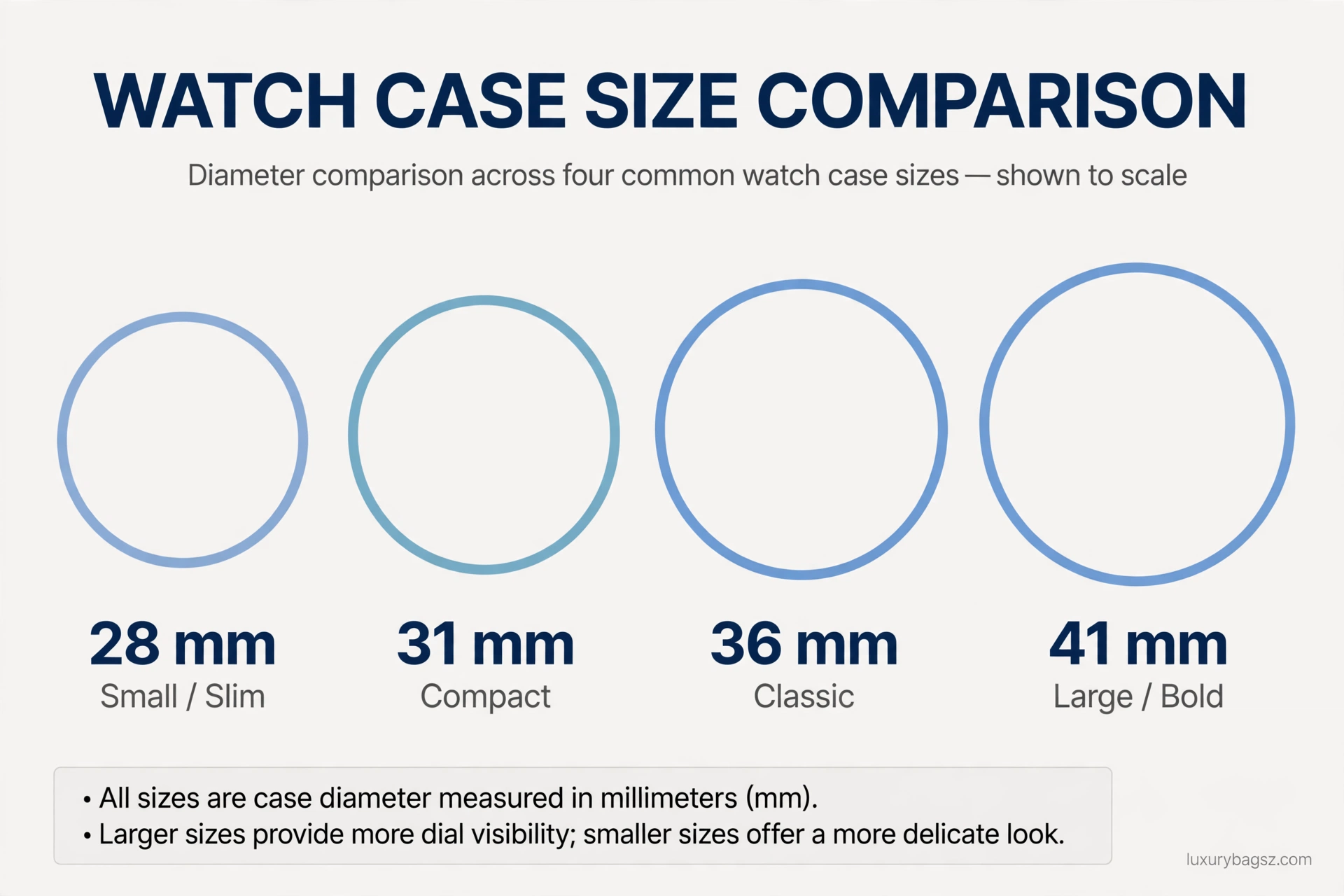
- Current sizes: Lady-Datejust 28 mm, Datejust 31 mm, Datejust 36 mm, Datejust 41 mm.
- Current movements: calibre 3235 in 36 and 41 mm models, with about 70 hours of reserve.
- Key current references: 126200 and 126234 at 36 mm, 126300 and 126334 at 41 mm.
- Fluted bezels are white gold; smooth bezels are steel. That metal difference affects price.
- Vintage entry points start near $4,500 for clean steel references such as the 1601.
Why 1945 Matters
Rolex launched the Datejust in 1945 to mark its 40th anniversary. Founder Hans Wilsdorf called it the pinnacle of watchmaking science at the time. The claim sounds grand today, but the function was genuinely new.
Before the Datejust, a self-winding watch with an automatic date display did not exist in this form. Owners of other watches wound daily and set dates by hand. The Datejust wound itself from wrist motion and flipped its date at midnight.
That convenience is easy to miss now, because date windows are everywhere. In 1945, it changed how people used a watch. The Datejust was not a complication for collectors; it was a daily tool that removed a small chore forever.
The design has barely changed since. That continuity is the Datejust's strength and its criticism. Buyers who want novelty should look elsewhere, while buyers who want a settled design will find it here.
The Three Design Signatures
Three details define the Datejust at a glance. The fluted bezel, with its ridged edge, catches light and signals the classic model. The Jubilee bracelet, with five links, drapes softly and reads dressier than a sports bracelet.
The Cyclops lens magnifies the date by about two and a half times. It sits over the crystal at 3 o'clock and is the fastest way to spot a Datejust across a room. Some buyers love it, while others find it fussy, and that split is personal.
Each signature can be swapped away. Smooth bezels replace fluted ones, and Oyster bracelets replace Jubilee ones. Those swaps change the watch's character completely, which is why configuration matters more than the Datejust name alone.
Learn the three signatures before shopping. They let you read any listing in seconds and spot when a seller describes a watch loosely. A Datejust without all three is still a Datejust, but it is a quieter one.
Sizes: 28, 31, 36, and 41 mm
Rebag lists four current sizes. The Lady-Datejust is 28 mm, originally 26 mm, and is generally worn by women. The Datejust 31 is the second smallest and also typically worn by women, though it suits smaller wrists of any gender.
The Datejust 36 is the classic and most popular size. It balances presence and discretion, and it carries the strongest collector appeal. If you buy one Datejust blind, the 36 mm is the safest size to choose.
The Datejust 41 arrived in 2009 as the largest model. It suits larger wrists and modern tastes, with better legibility at a glance. On smaller wrists, however, it can look oversized, especially with a fluted bezel and Jubilee bracelet.
Try sizes with your usual cuff, not a bare wrist in a shop mirror. A 41 mm under a tight cuff fights for room, while a 36 mm slips under easily. Wrist size, cuff, and bracelet choice decide together.
A Short History in Generations
The Datejust began in gold only, showcasing the new date complication. Steel and two-tone versions followed by the late 1950s, when the fluted bezel, Jubilee bracelet, and Cyclops lens all came together. That late-1950s look is the one collectors mean by classic Datejust.
The ref. 1601, from the late 1950s onward, anchors vintage collecting. It pairs a 36 mm case with a pie-pan dial and, in many examples, calibre 1570. Clean steel 1601 examples remain the most accessible vintage entry point.
Later generations brought sapphire crystal in the 1970s, replacing acrylic, plus quickset dates and improved movements. Five-digit references such as the 16233 and 16234 carried the design through the 1980s and 1990s into the modern era.
Current six-digit references arrived in 2018 for 36 and 41 mm models, with calibre 3235. The design language stayed, while the movement, bracelet, and case finishing all improved. That is the Datejust pattern: refine quietly, never reinvent loudly.
Bezels: Fluted or Smooth
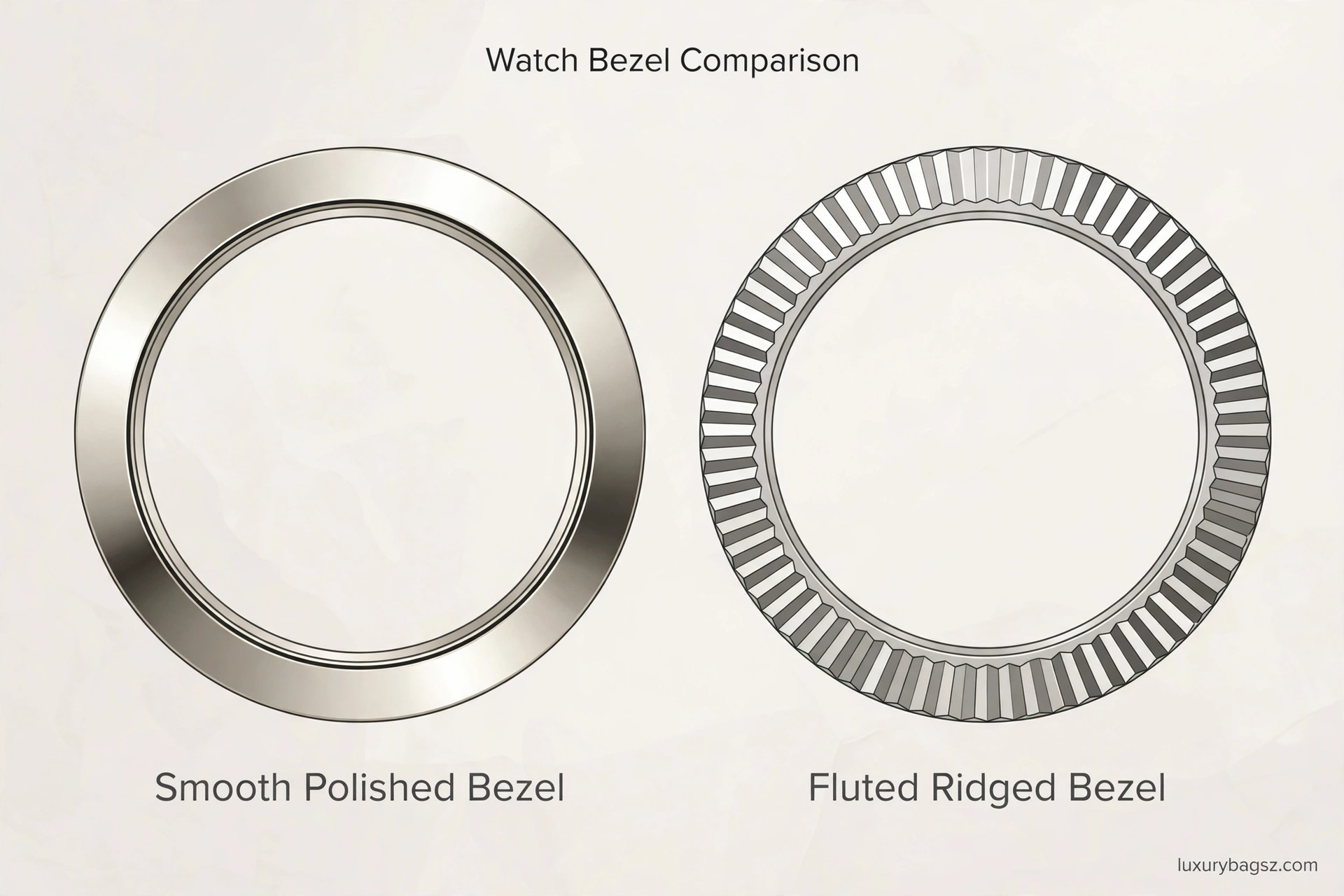
The fluted bezel is 18k white gold, even on steel-and-gold Rolesor models. Its ridges catch light and give the watch its dressy sparkle. From across a room, a fluted bezel reads as luxury in a way a smooth bezel never will.
The smooth bezel is steel and far more understated. It suits buyers who want the Datejust shape without the flash. It also costs less at retail, since it contains no gold, and it wears more casually with jeans and a T-shirt.
Bezel choice affects price twice. First at retail, where fluted versions cost more. Then pre-owned, where fluted Jubilee combinations often trade above retail, while smooth-bezel steel versions stay closer to it.
Choose by lifestyle, not by resale alone. A fluted bezel you find too flashy will sit unworn, whatever it trades for. A smooth bezel you wear daily beats a fluted one you keep in a box.
Bracelets: Jubilee or Oyster
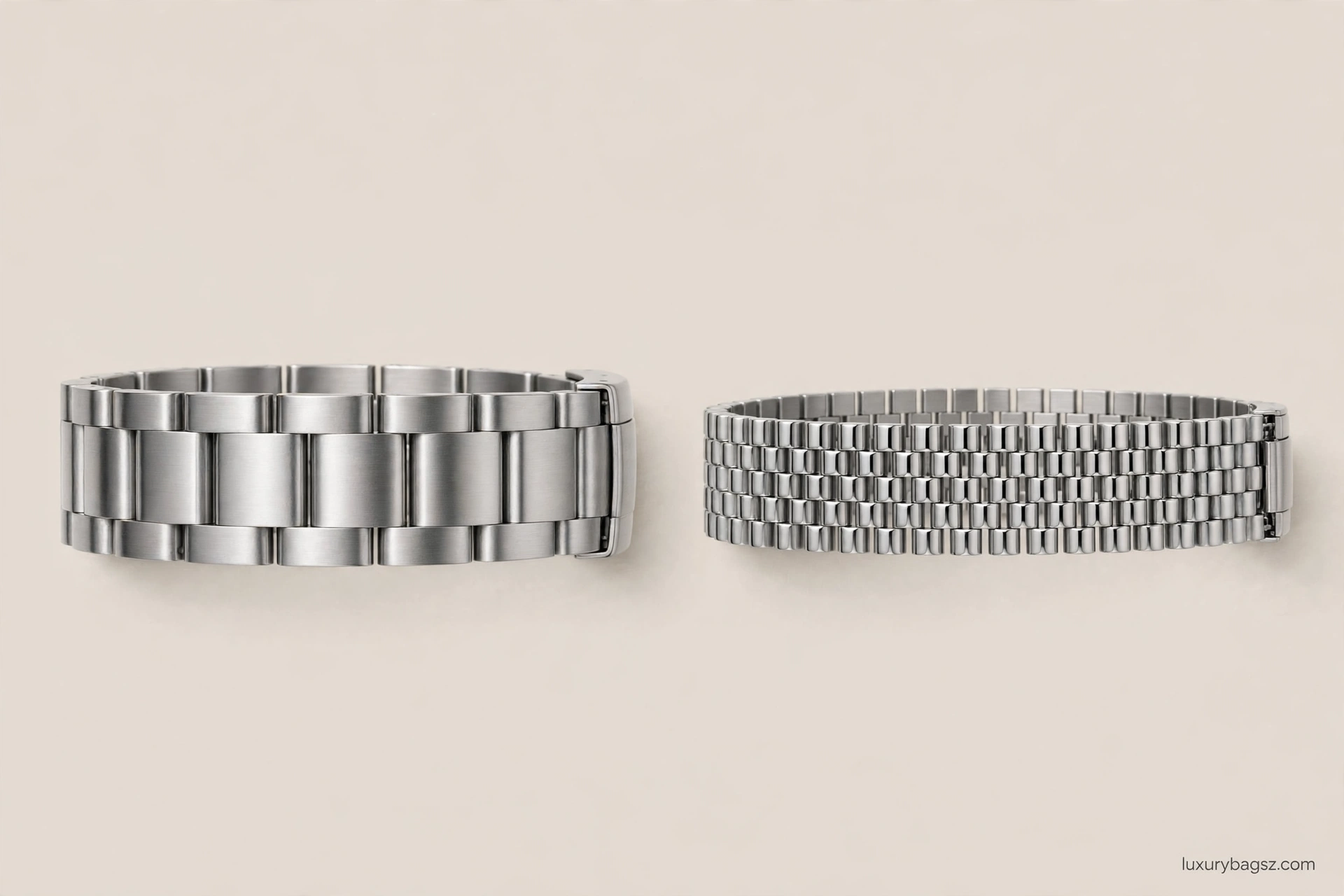
The Jubilee bracelet has five links and a softer, more fluid feel. It was designed for the Datejust in 1945 and remains its signature bracelet. On the wrist, it drapes and moves, which many buyers find more comfortable than a stiffer bracelet.
The Oyster bracelet has three broader links and a sportier, more solid feel. It suits buyers who want the Datejust to behave like an everyday tool watch. It also pairs better with a smooth bezel for a quiet, modern look.
Bracelet stretch is the main wear issue on older Jubilee bracelets. Links loosen over decades, and a stretched bracelet feels sloppy and costs money to rebuild. Check any vintage Jubilee for sag before paying a premium price.
Modern bracelets use solid links and better clasps, so stretch is less of a worry. Still, try both bracelets before buying. The same watch head feels like two different watches on Jubilee versus Oyster.
Dials: The Endless Choice
No Rolex line offers more dial choice than the Datejust. Colours range from silver, black, and white to champagne, blue, green, and mother-of-pearl. Finishes include sunray, matte, and diamond-set markers, each changing the watch's mood.
The Wimbledon dial pairs a slate-grey dial with green Roman numerals and a fluted bezel. Rebag notes a 36 mm Wimbledon from 2020 and a 41 mm Datejust II Wimbledon from 2011. Wimbledon dials command attention because the colour pairing is distinctive.
Rebag also lists several limited dials, including coral, rhodium, dark rhodium, and sundust diamond dials. Some were limited editions, while others were regular catalogue options with short runs. Verify any limited claim against the reference and year, not the seller's wording.
Dial choice is where personal taste should win. A rare dial you dislike is still a dial you dislike. Pick the dial you enjoy reading every morning, since you will see it far more than any resale chart.
Current References, Decoded
At 36 mm, ref. 126200 is steel with a smooth bezel, and ref. 126234 is white Rolesor with a fluted white gold bezel. Both run calibre 3235 with about 70 hours of reserve. The 126200 is the entry point to the modern Datejust.
At 41 mm, ref. 126300 is steel with a smooth bezel, and ref. 126334 is white Rolesor with a fluted bezel. Two-tone options include ref. 126233 at 36 mm and ref. 126331 at 41 mm in Everose Rolesor. Lady-Datejust 28 mm references start with 2791 in current production.
The 31 mm range suits buyers between the Lady-Datejust and the classic 36 mm. Rebag lists 31 mm models in steel, Rolesor, and gold, with dials from champagne to mother-of-pearl. Pearlmaster models add diamond-set cases and bezels in 29, 34, and 39 mm sizes.
Reference numbers tell you size, metal, and bezel in one code. Learn the first digits before shopping, and you will never confuse a 36 mm with a 41 mm listing again. Sellers who omit the reference deserve a direct question.
Prices in 2026
Retail for the steel Datejust 36 ref. 126200 is about $8,150, verified in October 2026. The white Rolesor 126234 retails near $9,900, with a used median near $12,501 in November 2026. That gap shows how strongly fluted Jubilee versions trade.
WatchGuys reports steel Datejust models starting near $4,500 pre-owned for clean vintage references such as the 1601. Current-production 41 mm models with fluted bezels and Jubilee bracelets climb past $16,000. Sotheby's gives a broader range, from about $5,000 for early steel to over $40,000 for modern gold or diamond-set versions.
Rolex raised retail prices about 7 percent in January 2026. Several popular configurations now trade at or above retail pre-owned. That pattern differs from gold Daytonas, where secondary prices often sit below retail.
Vintage prices depend on condition and originality more than age alone. A clean 1601 with original dial beats a later reference with a refinished dial. Price every vintage example against comparable sales, not against its birth year.
Styling: One Watch, Many Rooms
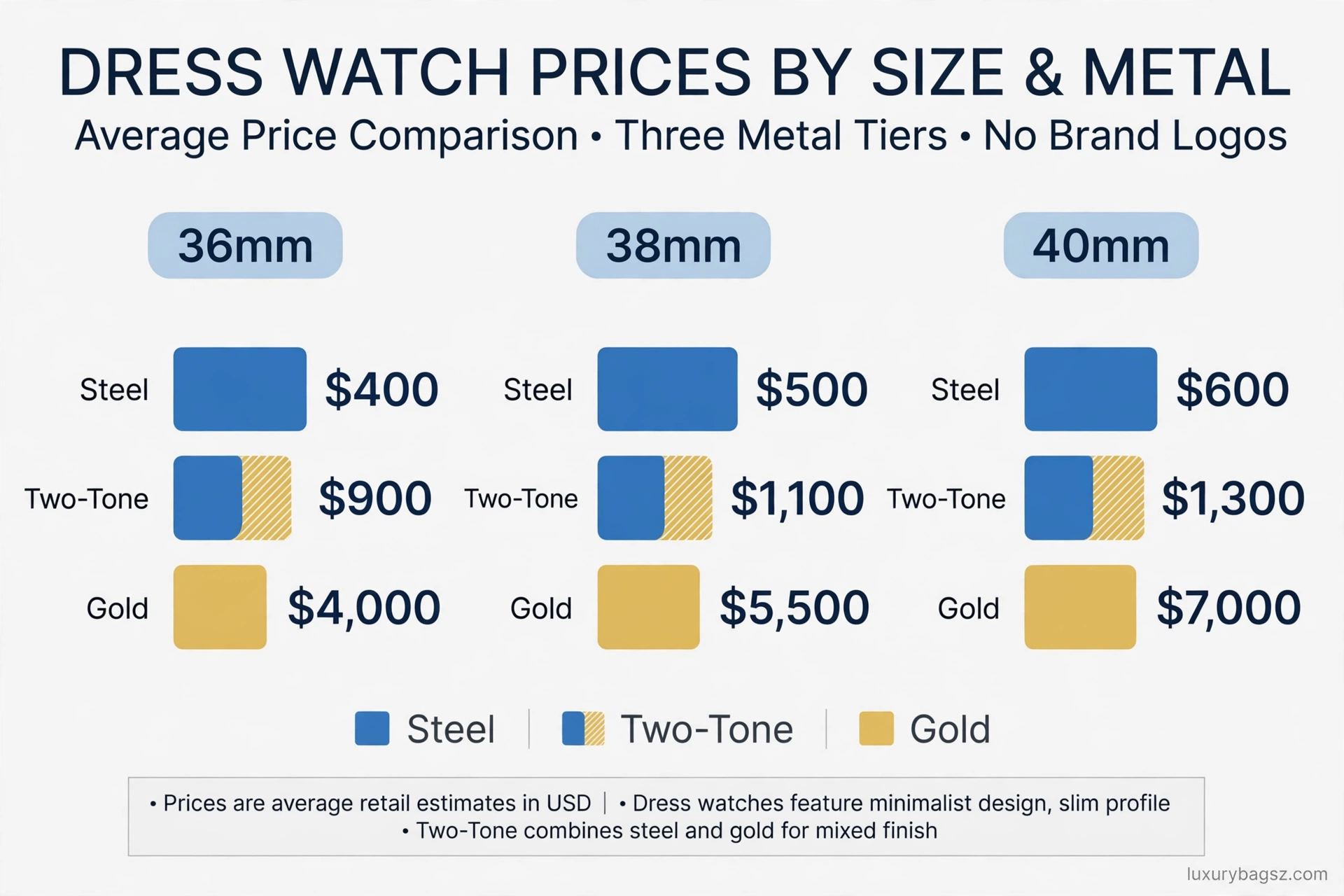
For men, a Datejust pairs naturally with a tailored suit and with jeans and a button-down shirt. The 36 mm fluted Jubilee leans dressy, while the 41 mm smooth Oyster leans casual. Match the configuration to the room, not only to the outfit.
For women, a Datejust complements a little black dress or a formal gown, and it dresses down with jeans and a T-shirt. Smaller sizes suit delicate jewellery, while larger sizes suit a bolder wrist stack. Metal matching is a choice, not a rule, and mixed metals work well.
Rebag notes the Turn-O-Graph, or Thunderbird, as a pilot-style Datejust with a rotating bezel. It was discontinued in the 1970s and revived in the early 2000s. It suits buyers who want Datejust proportions with a tool-watch edge.
The Datejust's strength is that it never looks out of place. It will not match a dive watch underwater or a chronograph at a racetrack, but it will handle every room between. That versatility is why it remains a first-Rolex favourite.
Pre-Owned Checks Before You Pay
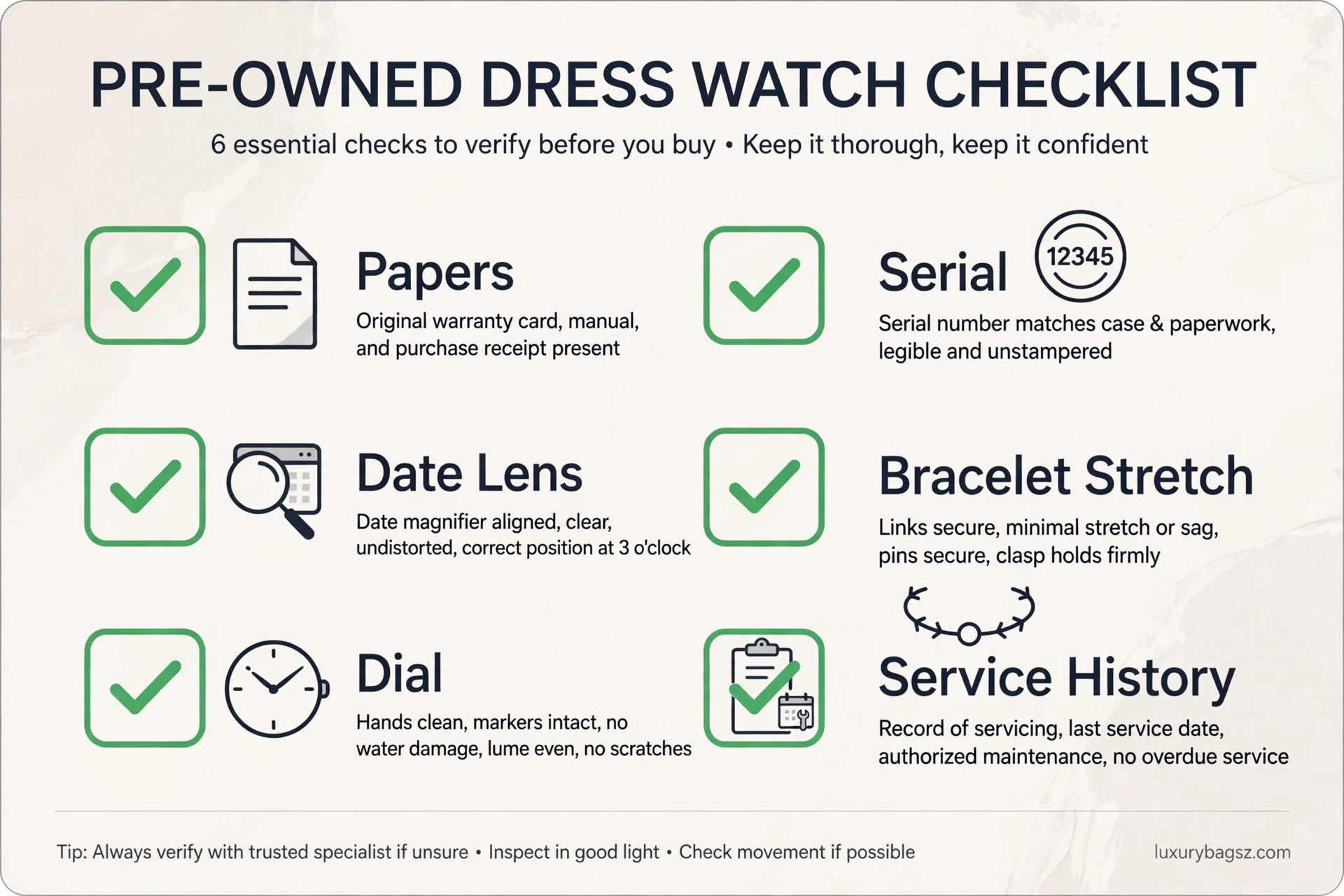
Start with the serial and reference, and date the watch before trusting the listing. Our guide to a serial number check shows where the numbers sit and how to read them. A serial that does not match the papers is a reason to walk away.
Study the Cyclops lens closely. It should magnify the date evenly, with no bubbles, haze, or misalignment. A flat-looking date often means a replaced crystal or a fake lens. Compare the date font against known examples for that reference year.
Check the bracelet for stretch, especially on Jubilee models. Hold the bracelet horizontally and watch for sag between links. Also check the clasp code and the end links, which should match the case reference family.
Use our fake Datejust checks for model-specific tells, and our general fake Rolex checks for weight, printing, and movement signs. Buy from a dealer with a written return policy, and get the watch authenticated independently when the price is high.
Care, Service, and Running Costs
Clean the case and bracelet with a soft cloth, lukewarm water, and mild soap, then dry fully. Our guide to how to clean a watch covers steel, gold, and bracelet care by material. Avoid harsh chemicals, which can dull gold and damage dials.
Service a modern Datejust roughly every ten years, or sooner if accuracy drifts. Calibre 3235 is robust, but gaskets age and lubricants dry. Keep service receipts with the papers, since a documented service history supports resale value.
Datejust water resistance is 100 metres on modern models. That covers swimming in principle, but do not rely on an old watch's rating without a pressure test. Vintage acrylic crystals and worn gaskets need checking before any water exposure.
Store the watch away from magnets and damp rooms. If you rotate watches, a winder keeps the date set, but it is optional. Hand-winding and resetting the date take under a minute and cause no harm.
Who Should Buy Which Datejust
First-time Rolex buyers should start with a 36 mm steel or white Rolesor Datejust. It is the classic size, the easiest to resell, and the most versatile across outfits. The 126234 fluted Jubilee is the textbook first Datejust for many collectors.
Smaller wrists suit the 31 mm or Lady-Datejust 28 mm, especially with diamond markers for evening wear. Larger wrists suit the 41 mm, particularly with an Oyster bracelet for a modern look. Try both sizes with your usual cuff before deciding.
Vintage buyers should target a clean 1601 or a five-digit 16234. Both offer classic proportions at lower prices than current models. Prioritise original dials and tight bracelets over box and papers alone.
Buyers who want one watch for everything should pick the configuration they will wear daily, not the one that photographs best. A Datejust only earns its price when it leaves the box, so comfort and legibility should decide.
Dials Collectors Chase
Beyond the standard silver, black, and white dials, collectors chase champagne, blue, and mother-of-pearl versions. Champagne dials suit two-tone models especially well, warming the gold bezel and bracelet. Blue dials read bolder and suit steel models with a fluted bezel.
The Wimbledon dial remains the most talked-about modern Datejust dial. Its slate-grey base with green Roman numerals pairs only with a fluted bezel, which keeps the look coherent. Because Wimbledon dials appear on both 36 and 41 mm models, always confirm the case size before comparing prices.
Pie-pan dials define vintage Datejust collecting. Their raised outer edge and sunken centre create depth that flat modern dials lack. A crisp pie-pan dial with even patina commands a premium, while a refinished one loses much of that appeal.
Diamond-marker dials divide buyers. Some love the sparkle, while others find diamonds too dressy for daily wear. Diamond dials also complicate servicing, since stone settings need checking. Price them against plain-dial equivalents, not against jewellery watches.
Rare dial colours from limited runs, such as coral and rhodium, attract attention when they surface. Verify any rarity claim against the reference and production year. A dial described as limited may simply be an uncommon catalogue option with a short run.
Dial condition should outrank dial rarity for most buyers. Even, original lume and clean printing matter more than a famous colour name. A common dial in superb condition will give more daily pleasure than a rare dial with damage.
A Week With a Datejust
Day one with a Datejust is quiet compared with a chronograph or a GMT watch. There is no complication to play with, only time and date. That quiet is the point, and many buyers only appreciate it after wearing louder watches.
By midweek, the Jubilee bracelet usually wins converts. Its five links drape and flex, and the watch seems to disappear on the wrist. Oyster bracelet wearers report a firmer, more planted feel, which suits buyers who prefer a solid presence.
Legibility is excellent across the range. The Cyclops lens makes the date readable at a glance, even in dim light. Fluted bezels catch light and draw the eye, while smooth bezels stay discreet. Both read well; the difference is how much attention they invite.
Weekend wear shows the Datejust's range. A fluted Jubilee model dresses up a jacket, while a smooth Oyster model suits a T-shirt. Few watches cross that gap so easily, which explains why the Datejust often becomes a one-watch collection.
By week's end, notice how often you checked the date. If you relied on it daily, the Datejust earned its place. If you never looked, a no-date watch might suit you better, though few buyers regret the date window once it becomes habit.
Buying Mistakes to Avoid
The first mistake is choosing size from a photograph. A 41 mm Datejust looks modest in a product shot and large on a smaller wrist. Try both 36 and 41 mm with your usual cuff, since cuff fit decides more than wrist circumference alone.
The second mistake is paying a fluted premium for a watch you find too flashy. Fluted bezels and Jubilee bracelets trade higher, but a watch that feels too bright will stay boxed. Smooth steel is cheaper and often worn more, which is the better deal.
The third mistake is ignoring bracelet stretch on vintage pieces. A stretched Jubilee bracelet feels sloppy and costs money to rebuild. Check sag before paying, and budget for bracelet work when the price assumes a tight bracelet.
The fourth mistake is trusting a limited-edition label without verification. Sellers use limited loosely for uncommon dials and short catalogue runs. Confirm the claim against reference, year, and known production before paying any premium.
The fifth mistake is buying the cheapest example of a reference. A low price often hides a refinished dial, a stretched bracelet, or missing papers. A slightly dearer, complete, original example usually costs less over years of ownership.
Datejust Servicing Explained
A modern Datejust service starts with accuracy testing across several positions. The watchmaker checks daily rate, date change at midnight, and Cyclops alignment before opening the case. Any fault found here guides the work inside.
The case and bracelet are cleaned separately from the movement. Modern bracelets tolerate ultrasonic cleaning, while vintage Jubilee bracelets need gentler handling to protect stretched links. Polishing should be agreed in advance, since it removes metal.
Gaskets are replaced at every full service, followed by a pressure test. That test matters for any Datejust you plan to swim with, since an old gasket can look fine and still leak. Ask for the pressure-test result alongside the service receipt.
Turnaround usually runs several weeks at a Rolex service centre, depending on queue length. Vintage models can take longer when parts must be sourced. Plan servicing around travel, not just before a holiday when you need the watch daily.
Costs depend on what the watch needs beyond routine work. A standard service differs from one that rebuilds a stretched bracelet or replaces a damaged crystal. Get an estimate first, and approve extra parts separately rather than by surprise.
Keep service receipts with the original papers. Documented servicing supports resale and reassures buyers about the movement and gaskets. A serviced Datejust with paperwork outsells an unserviced one with only a seller's assurance.
After service, check the date change yourself over two midnights. Watch it flip cleanly at midnight and sit centred under the Cyclops. Report any misalignment quickly, while the service warranty still covers the work.
Datejust Collecting Strategy
A sensible Datejust collection starts with one classic 36 mm model. It teaches you size, bezel, and bracelet preferences before you spend on variants. Many collectors find that single watch covers every occasion and stop there happily.
The second step is usually a contrasting configuration. A fluted Jubilee pairs with a smooth Oyster, or a 41 mm joins a 36 mm for different moods. Contrast gives each watch a job, while duplication leaves one watch unworn.
Vintage collecting rewards patience with dials. Study pie-pan dials, marker styles, and bracelet codes before buying. Handle as many vintage examples as possible, since photographs hide bracelet stretch and dial patina that hands reveal instantly.
Set a buying rule: no Datejust without a verified serial, a return policy, and a bracelet check. That rule removes most bad deals without any expertise in market timing. Sellers who resist those checks are giving you useful information.
Track prices by configuration, not by the Datejust name alone. A fluted Jubilee 41 mm and a smooth Oyster 36 mm move differently, and averaging them misleads. Note size, bezel, bracelet, and dial for every price you record.
Trade up deliberately, not impulsively. Selling a good Datejust for a marginally rarer dial rarely improves a collection. Wait until the upgrade changes size, metal, or bracelet in a way that genuinely expands what you can wear.
Above all, wear the Datejust you collect. It was designed as a daily watch, and daily wear keeps bracelets supple and movements running. A Datejust kept boxed is a missed pleasure, whatever its resale chart says.
Datejust Myths, Corrected
One myth says the Datejust is a boring watch. In truth, its restraint is the design: a date window, a fluted bezel, and a Jubilee bracelet that have survived eighty years without reinvention. Boring is a matter of taste, not a fact about the watch.
Another myth says bigger is always more modern. The 41 mm suits larger wrists, but the 36 mm remains the classic proportion and the collector favourite. Modernity comes from condition and configuration, not from millimetres alone.
A third myth says fluted bezels are fragile. White gold fluting is durable in daily wear, though it shows scratches more readily than a smooth steel bezel. Normal wear marks are expected, and a full service can refresh the finish when needed.
A fourth myth says the Cyclops lens is a flaw. It is a deliberate design choice that magnifies the date for readability. Buyers who dislike it can choose other Rolex models, but the lens is a signature, not a defect.
A fifth myth says vintage Datejusts are cheap because they are common. Clean, original vintage examples with tight bracelets command real prices, while cheap examples usually hide refinished dials or stretched bracelets. Common does not mean worthless.
A sixth myth says two-tone Datejusts are dated. Two-tone has cycled in and out of fashion for decades, and current demand for Rolesor models is strong. Fashion cycles should not decide a purchase you plan to wear for years.
A seventh myth says a Datejust cannot be a sports watch. With 100 metres of water resistance and a robust calibre 3235, it handles swimming and active weekends. It is not a dive watch, but it is far tougher than its dressy reputation suggests.
An eighth myth says diamond dials always add value. Diamond markers appeal to some buyers and deter others, so they narrow the resale pool. Price diamond dials against plain equivalents, and buy them for sparkle you enjoy, not for assumed profit.
Datejust Ownership Checklist
Before paying, run through a short ownership checklist. Confirm the reference, size, and serial match the papers. Check the Cyclops lens, the bracelet for stretch, and the date change at midnight. Each check takes minutes and prevents months of regret.
After buying, photograph the watch, the serial, and the papers, and store copies separately from the originals. That record helps with insurance claims and future resale. Update the photos after any service that changes parts.
Set a service reminder for ten years, or sooner if accuracy drifts. Note the date in your calendar now, while the purchase is fresh. A reminder costs nothing and protects a movement that costs far more to repair neglected.
Review your insurance annually against current secondary prices. Popular fluted Jubilee models move with the market, and a valuation from purchase day soon lags reality. An annual update keeps your cover matched to replacement cost.
Wear the watch regularly, but rotate it with rest days. Daily wear keeps the movement running, while rest prevents bracelet wear from becoming the only story. Balance is the simplest care routine there is.
Clean the watch gently after wearing it in heat or dust. A soft cloth and lukewarm water remove most grime without chemicals. Dry it fully before storage, since trapped moisture dulls gold finishes over time.
Keep the box, papers, and spare links together in one safe place. A complete set sells for more and reassures buyers, while scattered papers invite doubt. Completeness is a habit, not a last-minute search.
Finally, enjoy the Datejust for what it is: eighty years of quiet design that still works everywhere. Wear it to work, to dinner, and on weekends, and let it become the watch other watches get compared with.
Frequently Asked Questions
When was the Rolex Datejust introduced?
In 1945, for Rolex's 40th anniversary. It was the first self-winding watch to display the date automatically in a window at 3 o'clock.
What sizes does the Datejust come in?
Currently 28 mm Lady-Datejust, 31 mm, 36 mm, and 41 mm. The 36 mm is the classic size, while the 41 mm is the largest and most modern.
What is the Cyclops lens?
A magnifying lens over the date window, introduced in the 1950s. It enlarges the date for easier reading and is a signature Rolex detail.
What is the difference between Jubilee and Oyster bracelets?
Jubilee has five links and a softer, dressier drape. Oyster has three broader links and a sportier, more solid feel. Both fit the Datejust.
What movement does the modern Datejust use?
Calibre 3235 in the 36 and 41 mm models, with about 70 hours of power reserve. It uses Rolex's Chronergy escapement for improved efficiency.
How much does a Datejust cost in 2026?
Steel 36 mm retail is about $8,150, while white Rolesor fluted versions retail near $9,900 and trade higher pre-owned. Vintage steel starts near $4,500.
Is the Datejust a good first Rolex?
Yes, for most buyers. It is versatile, easy to wear daily, widely available pre-owned, and holds value better than many dress watches.
What is a Wimbledon Datejust?
A Datejust with a slate-grey dial, green Roman numerals, and a fluted bezel. Rebag lists 36 mm and 41 mm Wimbledon versions from 2020 and 2011.
How do I spot a fake Datejust?
Check the serial against the papers, the Cyclops magnification, bracelet stretch, date font, and overall finishing. Use model-specific authentication guides before paying.
Should I buy a 36 mm or 41 mm Datejust?
Try both with your usual cuff. The 36 mm suits most wrists and classic tastes, while the 41 mm suits larger wrists and buyers who want a bolder presence.
Conclusion
The Datejust has survived eighty years by refusing to chase fashion. It added a date window, a lens, a bracelet, and a fluted bezel, then stopped changing. That restraint is the whole appeal, and it still works.
Pick your size first, your bezel second, and your dial last. Verify the serial, check the bracelet, and buy from a seller who stands behind the watch. Done well, a Datejust is not a starter watch you outgrow; it is the watch everything else gets compared with.
Return to this guide whenever a listing tempts you to skip a check, especially on bracelet stretch or Cyclops alignment, since those two details reveal more about a watch's history than any seller description.
The right Datejust will feel quiet on the wrist within a week: comfortable, legible, and easy to pair with everything you own. That quiet confidence is the real test, and it matters more than any single price figure or limited-dial claim you meet along the way.
If a deal feels rushed, walk away and revisit it tomorrow; genuine Datejusts are plentiful, and another clean example always appears. Haste is the most expensive mistake in this market, while patience is free and usually rewarded with a better watch at a fairer price.






