Yachting Watches Guide: Regatta Timers, Yacht-Master Style and What Sailors Actually Need
Yachting Watches in Brief: Countdown First, Looks Second
A true yachting watch is built around one job: counting down the minutes before a race start, so a boat crosses the line at speed the moment the gun fires. Everything else, the blue dial, the rope motifs, the polished case, is decoration. The short answer is this: if you sail, buy for the countdown function, legibility and water resistance. If you do not sail, buy the nautical look honestly, in a watch you will enjoy daily, rather than paying a premium for a timer you will never start.
Key Takeaways
- The defining yachting feature is a regatta countdown timer, usually counting the final minutes before a start.
- Nautical styling alone does not make a sailing watch; many yacht-styled pieces have no countdown at all.
- Strong water resistance, a secure strap and big, legible markings matter more at sea than precious metal.
- Luminous hands and markers are essential, since starts and finishes often happen in poor light.
- Salt water demands rinsing and regular seal checks, or even a fine watch suffers.
- Pre-owned regatta watches need the countdown tested through a full cycle before you pay.
Where Yachting Watches Come From
Watch brands have supplied sailors since the age of marine chronometers, when accurate timekeeping decided navigation. Deck watches gave way to wristwatches, but the link between fine watchmaking and the sea never broke. Some houses built their identity on it. Our Ulysse Nardin brand history traces a brand founded on marine chronometers that still makes regatta chronographs today. Racing created the modern category. Because a sailing start is a countdown rather than a standing start, sailors needed a timer that showed minutes remaining at a glance, and watchmakers built mechanisms and displays around that need.
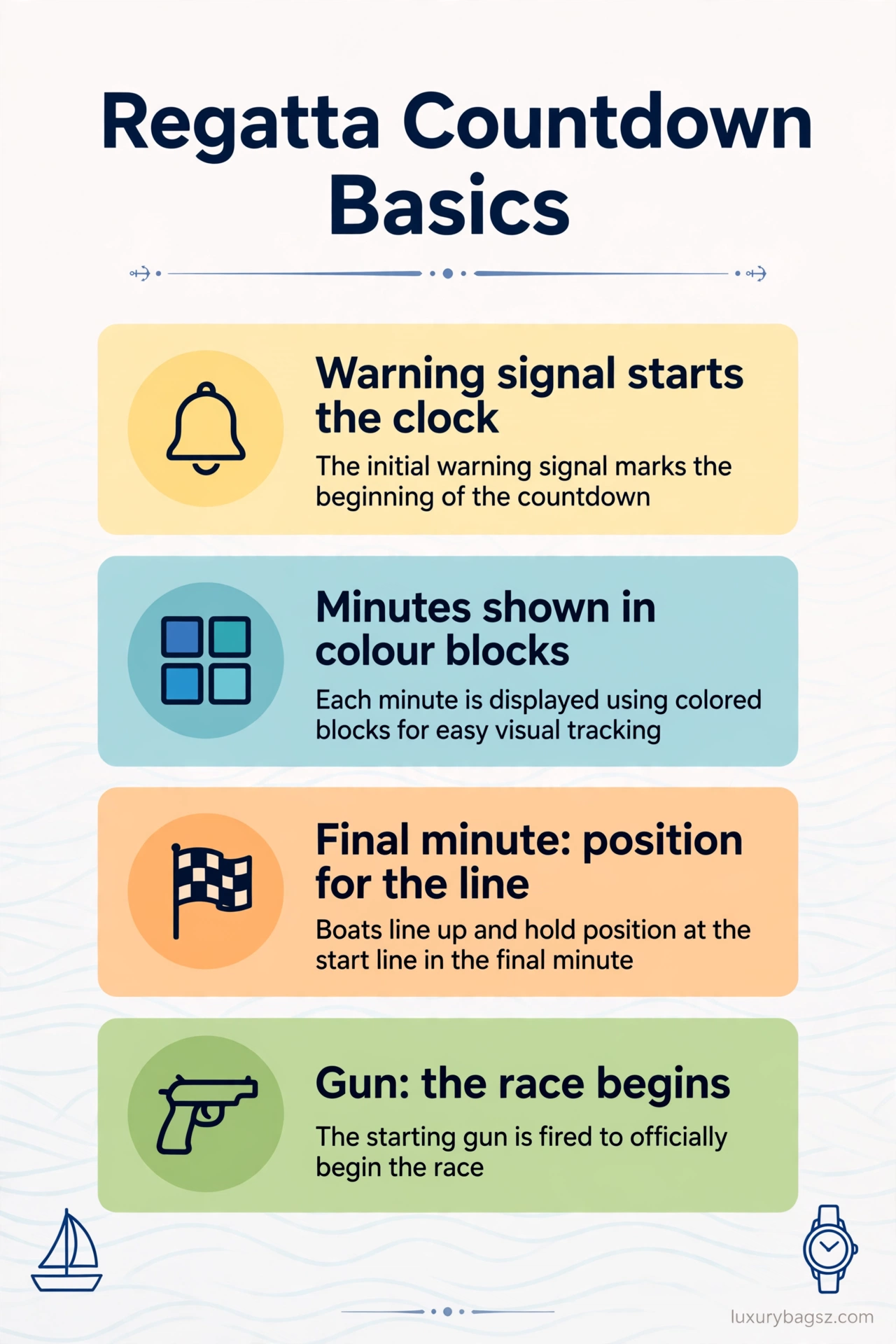
How a Regatta Countdown Works
Different racing rules use different sequences, which is why better regatta watches let the countdown be set or synchronised. If the committee changes the sequence, a sailor can resync to the next signal rather than restarting the whole timing from nothing. A race committee signals a countdown, commonly in the final ten or five minutes before the start. Crews manoeuvre for position, and crossing early is penalised, so knowing the remaining time precisely is a competitive tool. Regatta watches answer with a dedicated countdown display. Some use a series of dots or windows that change colour as minutes pass; others use a central hand sweeping a marked scale, sometimes moving backwards during the countdown. Better designs then switch to timing the race itself once the countdown ends. Test that changeover on any watch you consider: it should be obvious, quick to set and impossible to misread at arm's length on a moving boat.
The Hardware That Matters at Sea
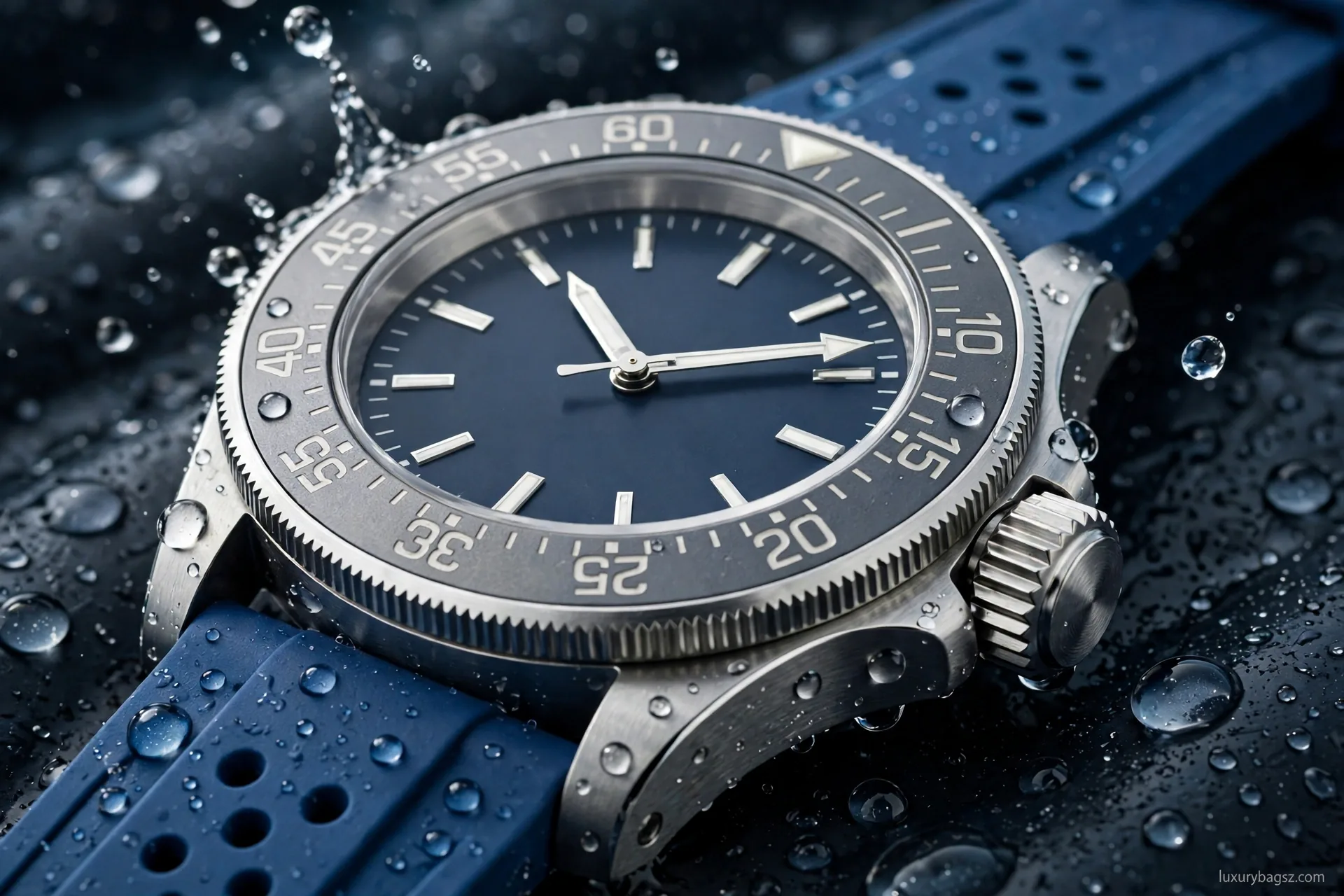
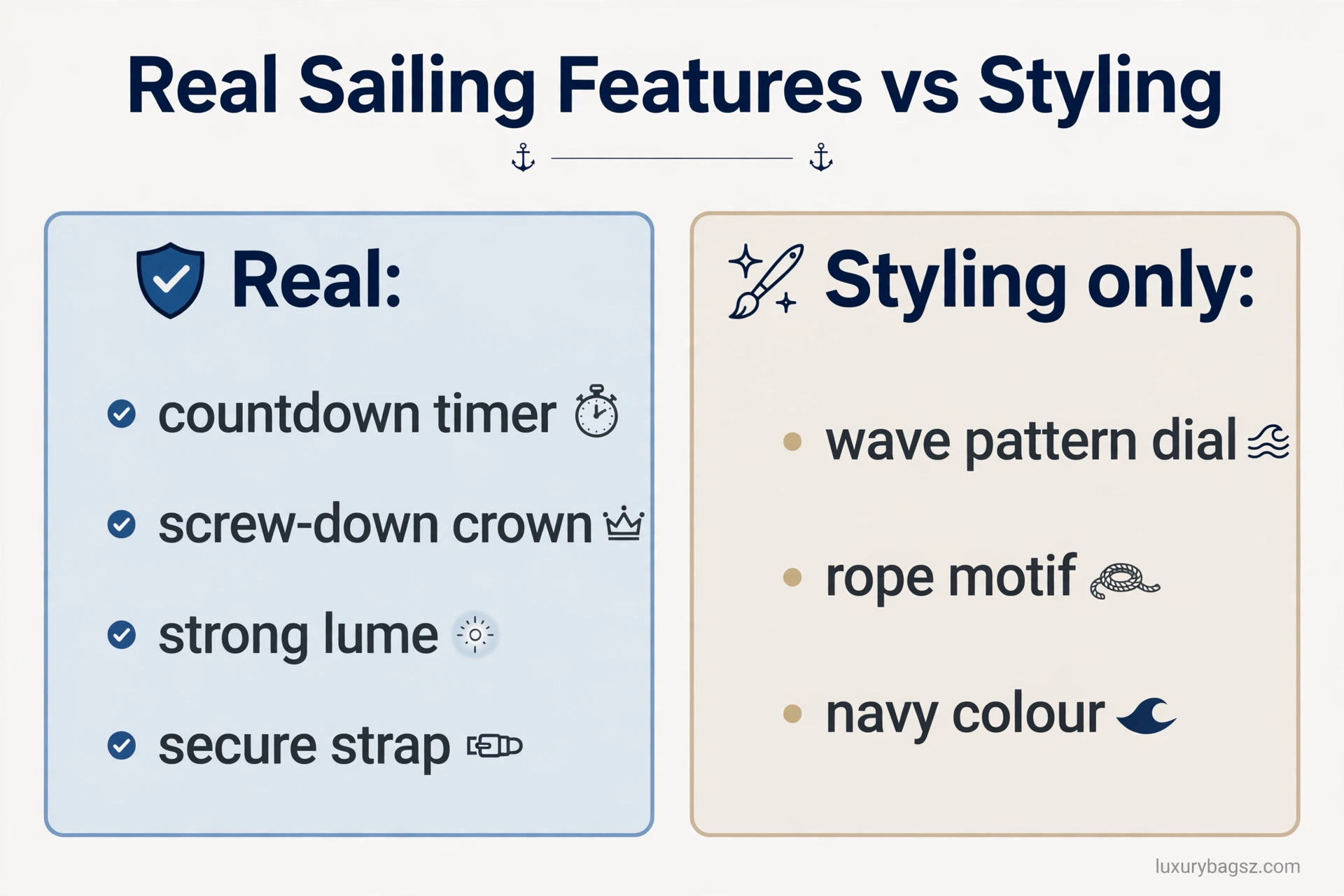
Pushers deserve a mention of their own. On a working sailing watch they should be large enough for gloved or wet hands and guarded against accidental presses, because a knocked pusher mid-countdown can quietly ruin a start you cannot restart. Water resistance must be real, not decorative. Look for a screw-down crown, solid case construction and a rating suited to spray and immersion, and have seals checked regularly, because ratings assume maintained gaskets. Legibility comes next. Large hands, bold markers and strong luminous material beat fine dress detailing on the water, where you read the watch in glare, rain or dusk with cold hands. Straps should be rubber, textile or a secure bracelet, never fine leather. A clasp that can open accidentally overboard is a lost watch, so deployment clasps and keepers matter more than elegance here.
Yacht-Styled Versus Truly for Sailing
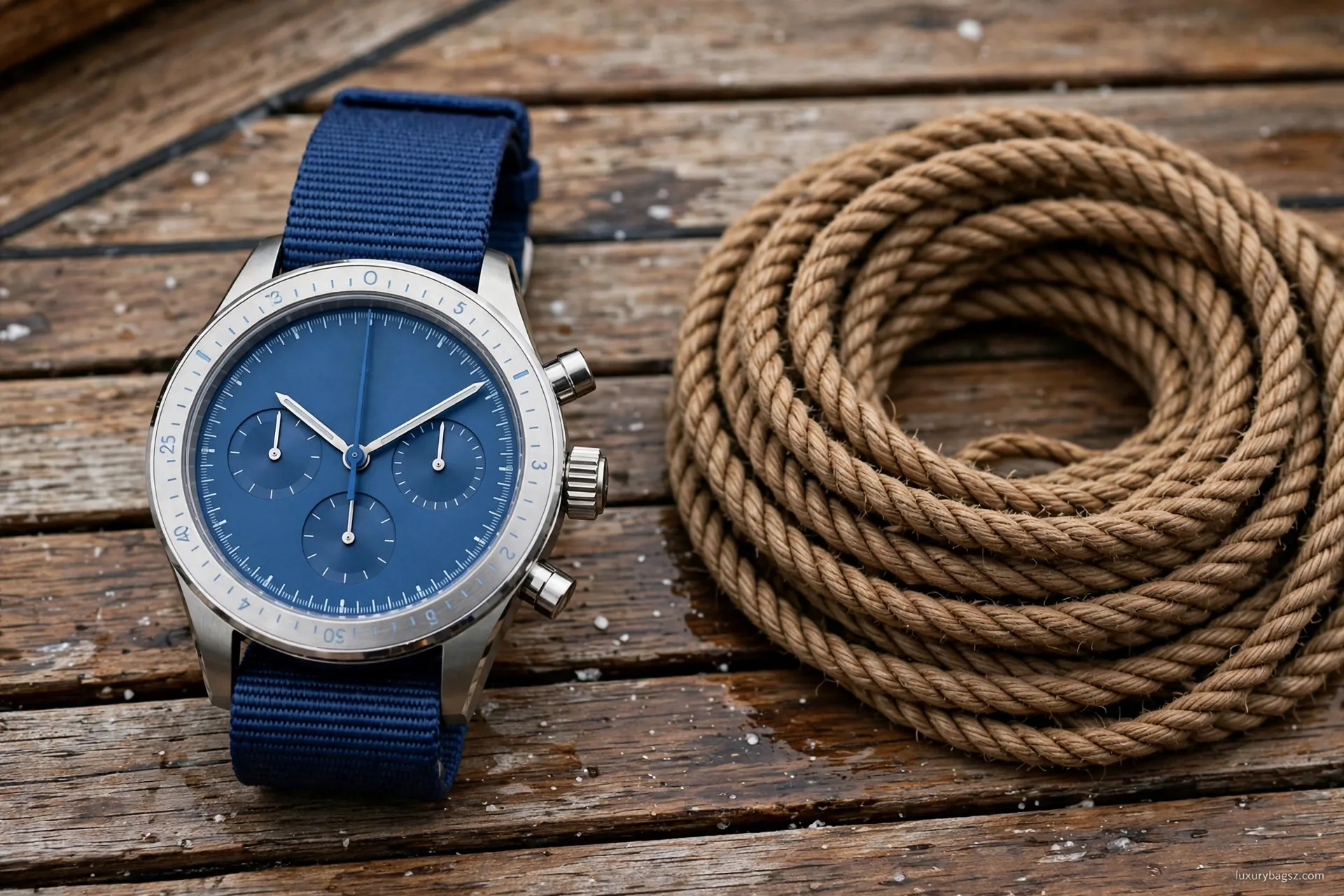
Many watches borrow the yacht look: navy dials, wave textures, polished cases and red accents. They are lifestyle watches, and there is nothing wrong with that, provided the price matches the reality. A true sailing watch adds the countdown, stronger resistance and a strap and clasp built for water. If a watch has a regatta scale printed on the dial but no way to run a countdown, it is styling, not equipment. Decide which you are buying before comparing prices. Paying sailing-equipment money for a styled watch is the commonest mistake in this category, and it is easy to avoid by testing the timer function in person.

Sizes, Weight and Wearing One Daily
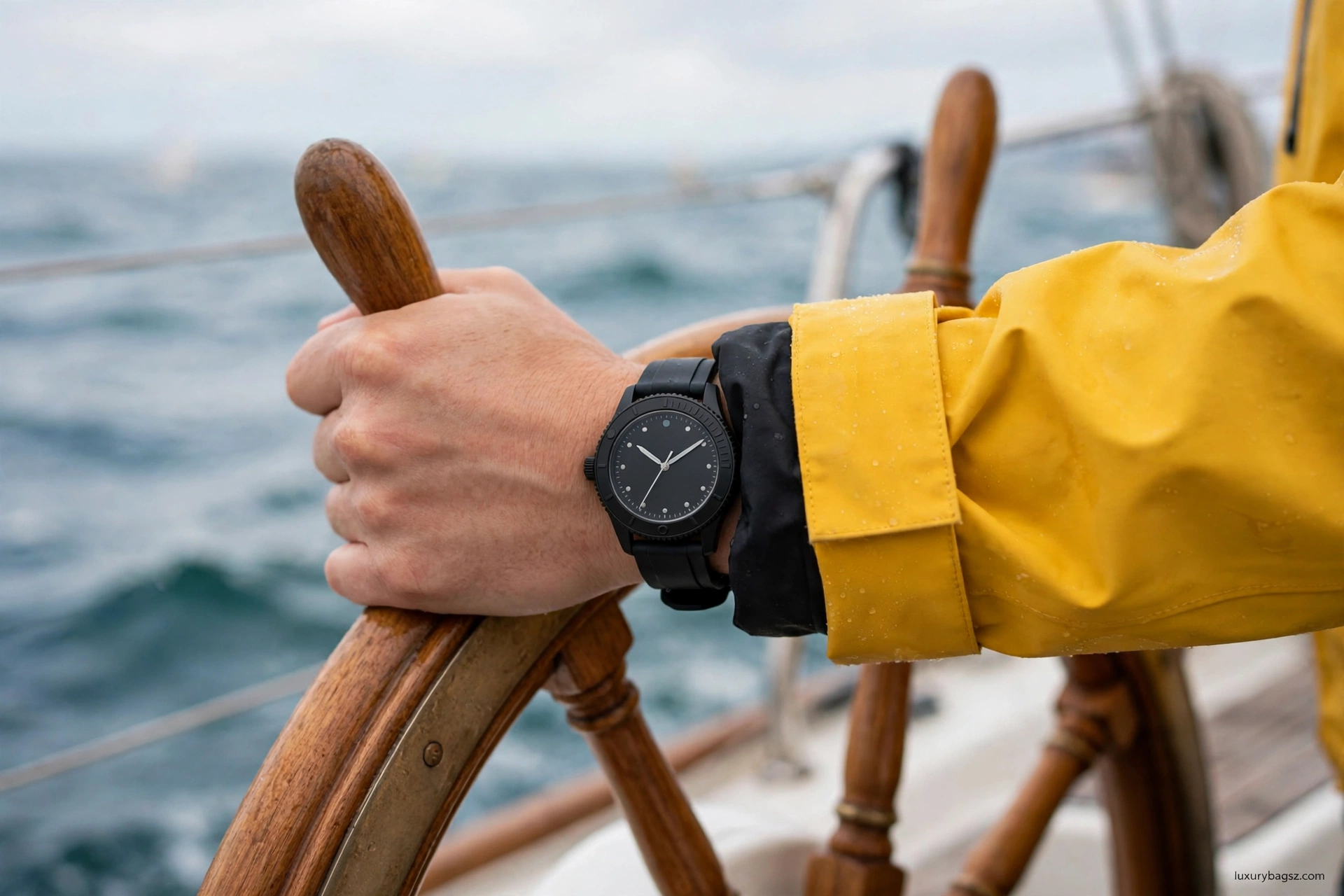
Dial layout matters as much as case size for daily pleasure. Countdown displays add colour blocks, extra hands or windows, and some owners love that busy, technical look on land just as much as they rely on its clarity offshore. Yachting watches tend to be larger, typically around 42–44 mm, because the countdown display needs room and sailors read them over sleeves. On smaller wrists that size can feel top-heavy, so try before buying. Titanium and rubber-strap models wear lighter than their dimensions suggest. Precious-metal yacht watches exist and look superb ashore, but they add weight and worry in exactly the places this category should remove them. For daily wear ashore, a regatta watch reads as a bold sports watch. If that suits your style, it is a characterful everyday piece; if you wear tailoring daily, it may stay a weekend watch, which is fine if priced accordingly.
Yachting Watches Versus Dive Watches
There is also a middle path many sailors actually take: a good dive watch for general water use, paired with a cheap dedicated race timer for regatta days. It is less romantic than a fine regatta chronograph, but it is honest equipment budgeting. The overlap is real: both need water resistance, lume and secure straps. Our Rolex Submariner guide covers the classic dive template, built around elapsed-time bezels and depth ratings. The difference is the timing job. A diver times how long has passed; a sailor counts down to a moment that has not happened yet. That is why regatta displays run backwards, in colours or in windows. If you only swim and dive, a dive watch serves you better and usually costs less. If you race, the countdown is not a gimmick, and a dive bezel is no substitute for it.
Buying Pre-Owned: Test the Timer
Regatta mechanisms are more complex than a basic chronograph, so condition checks matter. Run the countdown through a full cycle, check the chronograph starts, stops and resets cleanly, and listen for anything rough. Ask about service history, especially any water entry. Salt corrosion can hide inside a case that looks clean outside, and repairs to a specialised regatta movement cost more than a standard service. General fake-spotting discipline transfers across brands. Our guide on how to spot a fake Panerai watch shows the dial, case and seller checks that also protect a pre-owned regatta purchase.
Care After Salt Water
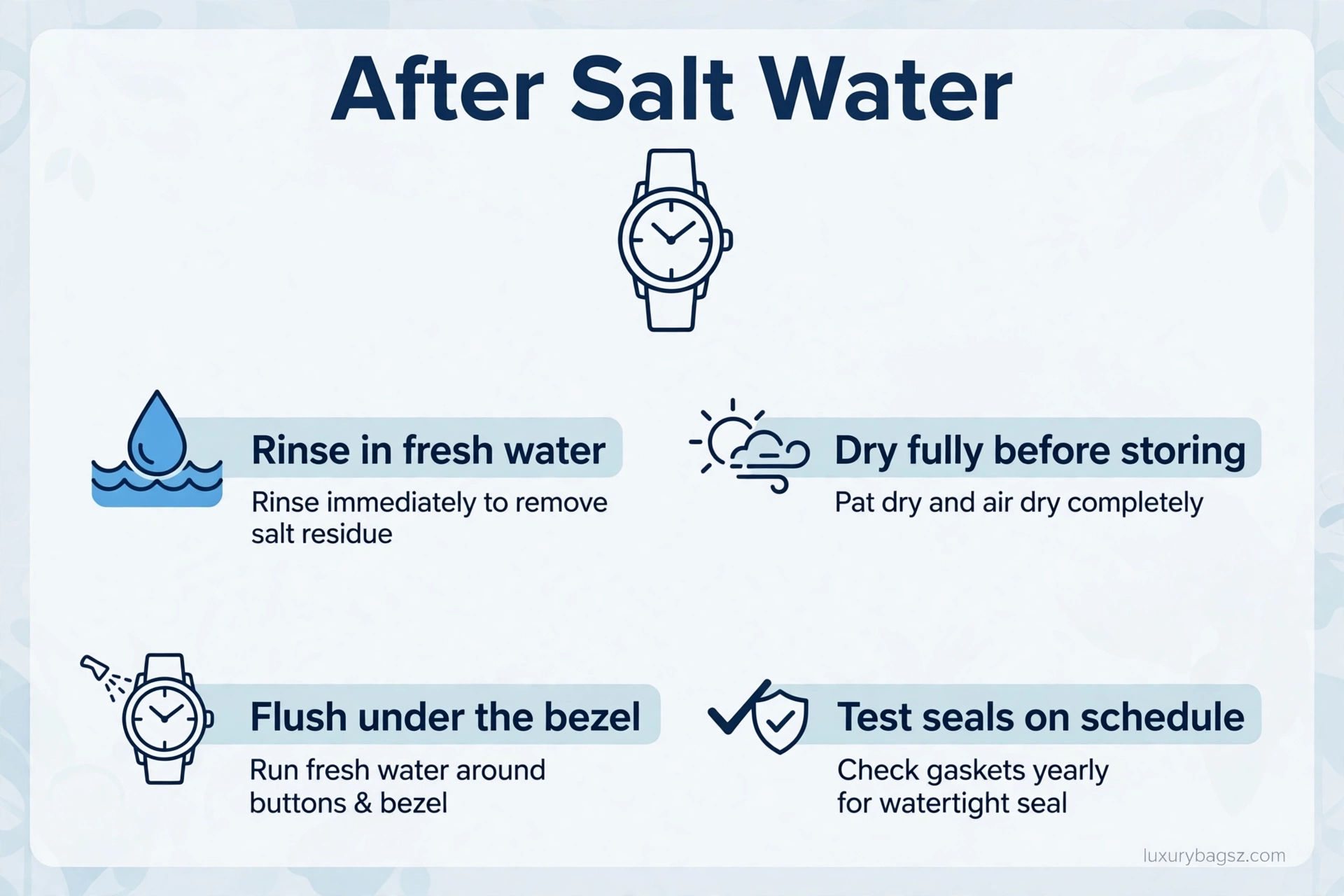
Bezels need attention too. Sand and salt crystals work under a rotating bezel and make it gritty, so flush beneath it while turning it during the rinse, and have it cleaned properly if the action stays rough afterwards. Rinse the watch in fresh water after sailing, with the crown screwed down, and dry it fully before storing. Salt left in bezel tracks and bracelet links corrodes quietly and stiffens rotating parts. Have seals tested on schedule, and sooner after any knock to the crown. A yachting watch that loses its resistance has lost the core of its purpose, however good it still looks. Our how to clean a watch guide covers safe rinsing, drying and strap care in detail. Follow it after every wet outing and a sailing watch will stay crisp for seasons, not just summers.
Frequently Asked Questions
What makes a watch a yachting watch?
A regatta countdown timer is the defining feature, supported by strong water resistance, legible luminous markings and a secure water-friendly strap. Nautical styling alone is not enough.
How long is a regatta countdown?
It commonly covers the final ten or five minutes before a race start, depending on the event. Watches display the remaining minutes with a hand, windows or changing colour markers.
Can I swim in a yachting watch?
Usually yes, if its water resistance is genuine and its seals are maintained. Check the rating, keep the crown screwed down and rinse in fresh water afterwards.
Are yachting watches good everyday watches?
They work well as bold sports watches, though larger cases around 42–44 mm may not suit slim wrists or formal dress. Many owners keep them as weekend and holiday pieces.
What is the difference between a yachting and a dive watch?
A dive watch times elapsed time with a rotating bezel. A yachting watch counts down to a race start. Both resist water, but their timing functions solve opposite problems.
Do I need a regatta timer if I cruise rather than race?
No. Cruising sailors are usually served better by water resistance, legibility and perhaps a tide or second time display. The countdown earns its cost only in racing.
What strap is best for a sailing watch?
Rubber or textile straps with secure clasps are best at sea. Metal bracelets can work if the clasp locks well. Fine leather has no place on a boat.
Are precious-metal yachting watches practical?
They are lifestyle pieces more than tools. They look excellent ashore but add weight, cost and worry on the water, where steel or titanium makes more sense.
What should I test on a pre-owned regatta watch?
Run the full countdown, test chronograph start, stop and reset, check bezel action and crown threads, and ask for service history and any record of water entry.
How do I care for a watch used in salt water?
Rinse in fresh water with the crown down, dry it thoroughly, keep seals tested and clean straps regularly. Salt is the enemy, and rinsing is cheap insurance.
Final Verdict: Buy the Countdown Only If You Will Use It
A yachting watch is one of the few watch categories defined by a genuine job. If you race, a good regatta timer is equipment, and legibility, resistance and strap security should lead your choice. If you do not race, admit the look is the appeal and buy it at a lifestyle price. Either way, rinse after salt, test seals often, and the watch will serve on water and land alike.