How to Spot a Fake Dior Bag: 10 Checks

Spotting a Fake Dior in Brief
Hardware weight used to catch Dior fakes. It no longer does: superfakes now pass the easy checks, weight included, and fail instead on the details a first impression never reaches.
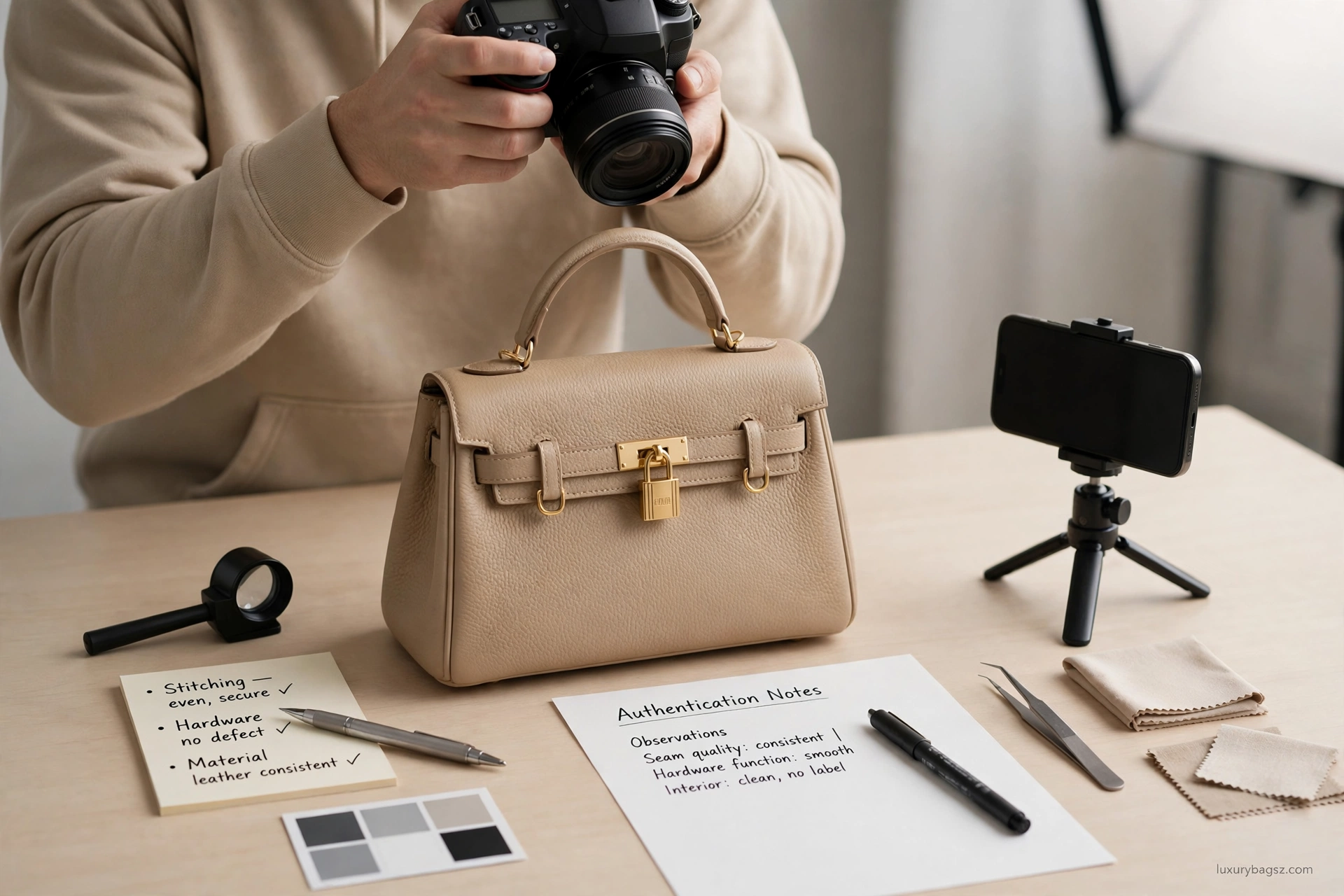
Work in this order: heat stamp, stitching, hardware, the Cannage or Oblique pattern, leather or canvas feel, then the date code and serial tag. Judge the bag itself first, and treat dust bags, boxes and cards as supporting evidence only.
If two or more checks fail, walk away. If doubt remains after the full run, pay for professional authentication before you pay the seller.
Key Takeaways
- Check order: heat stamp, stitching, hardware, pattern, material, date code, then extras.
- Genuine heat stamps read clean, evenly spaced "Christian Dior" lettering, with "PARIS" and the country of manufacture beneath.
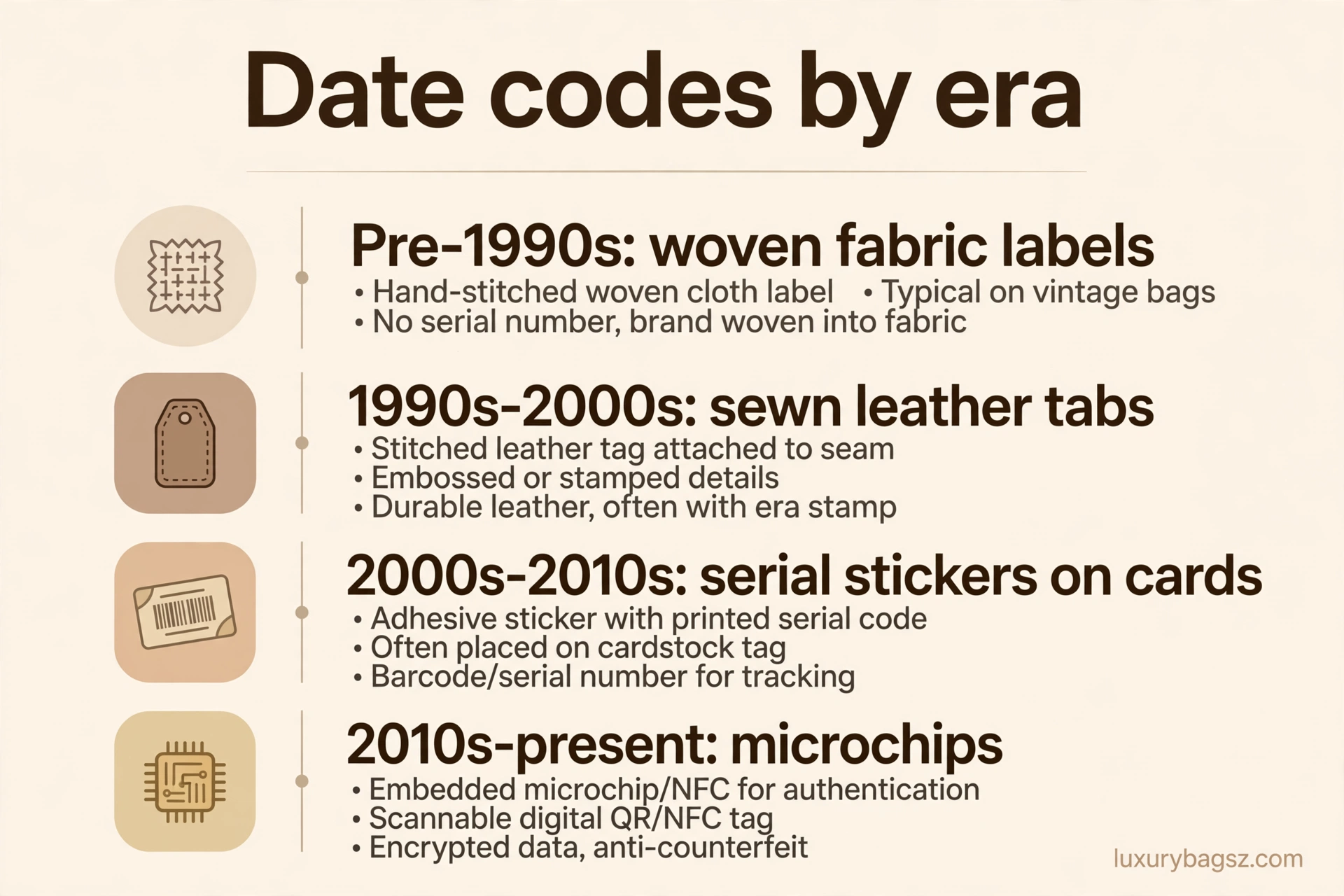
- Date codes changed by era: woven labels, then leather tabs, then stickers, then microchips.
- Saddle D-rings are separate pieces on a screw post, never moulded, and Saddle lining is fine suede.
- Dior boutiques do not offer formal pre-owned authentication, so use an independent authenticator.
- A price 40 to 60% below the pre-owned market with no explanation is a red flag, not a bargain.
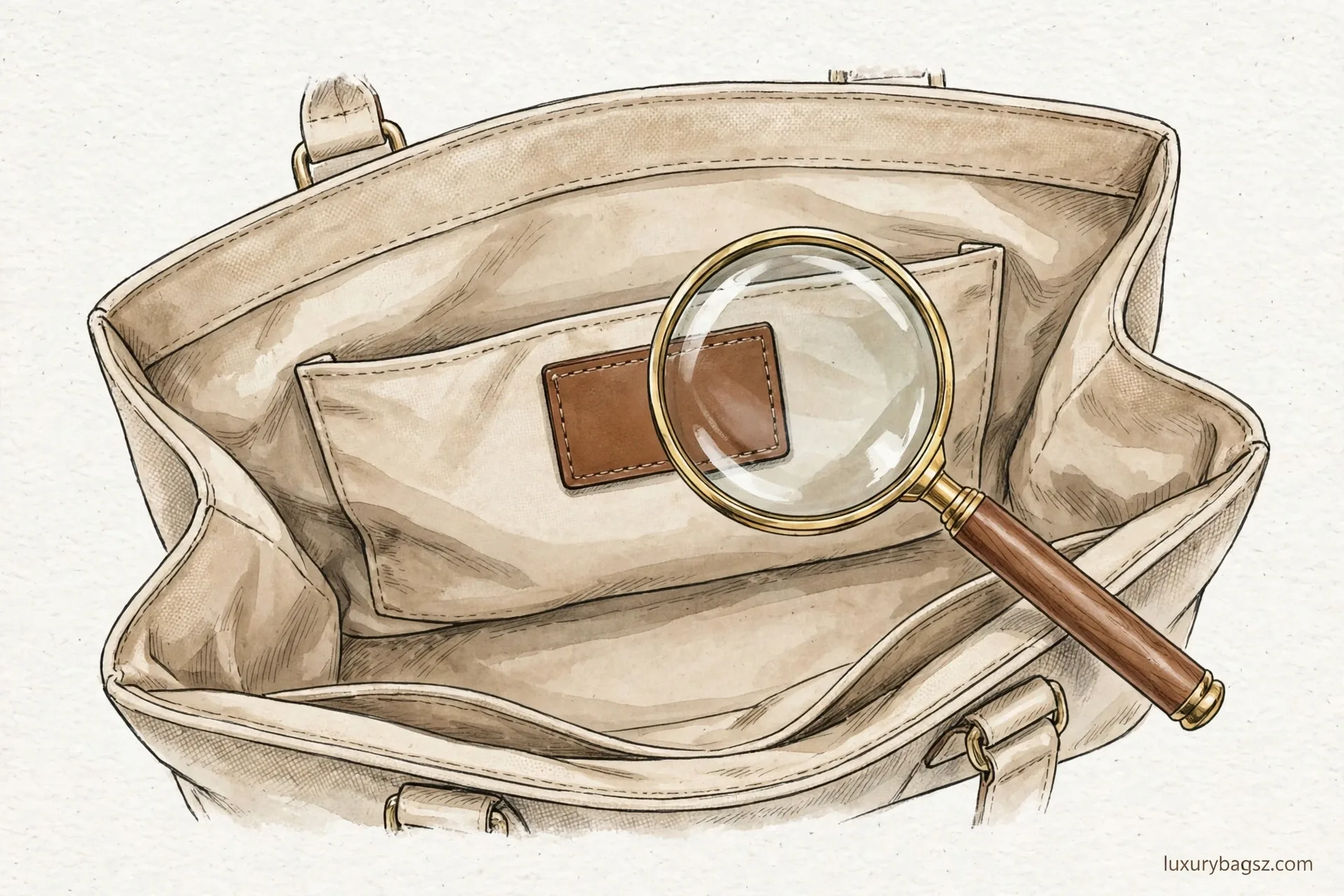
I start every Dior with the heat stamp, because it is the detail fakers practise least. The words Christian Dior have to sit at the right depth — bitten into the leather, not floating on it — with even spacing and the smaller PARIS line placed exactly beneath. I have handled enough Lady Diors and Saddles over the years to know that stamp by touch as much as by sight. If it passes, I move to the Cannage quilting or the Oblique alignment; if it fails, the bag rarely recovers.
The Check Order That Saves You Money
Start with the stamp, because it is fast and fakes get it wrong most often. Then check stitching and hardware, which need only your eyes and fingers. Then check the pattern and material, which need a genuine bag photo for comparison.
Only then check the date code and serial tag, because counterfeiters copy real formats and real numbers. A serial that decodes cleanly proves nothing on its own. Finish with the extras, which prove the least of all.
Fake-spotting follows the same order whatever the brand. Our fake Evelyne guide uses the same sequence for Hermès, and the discipline transfers directly to Dior.
The Heat Stamp: Spacing, Depth and Wording
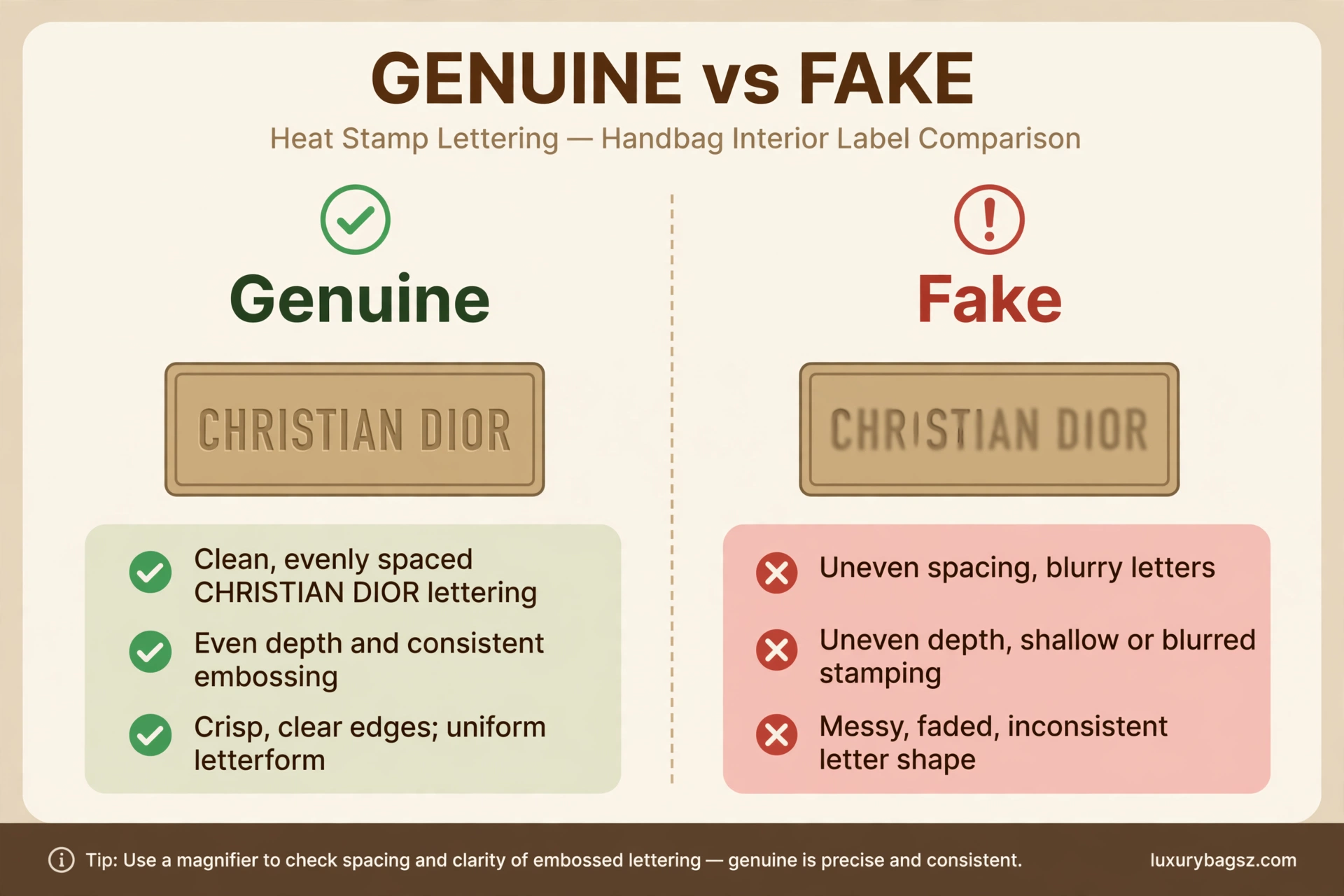
A genuine Dior heat stamp reads "Christian Dior" in clean, evenly spaced letters, with "PARIS" and the country of manufacture beneath it. Libas Collective quotes the full form as "Christian Dior PARIS made in Italy" on the bags it examined.
Look for even depth across every letter, with no blurry edges, no uneven gaps and no letters that sink deeper than their neighbours. LegitCheck's guide stresses interior label spacing and thickness, and fakes most often fail on exactly that: letters too thin, too thick or unevenly spaced.
A stamp reading "Made in China" is a red flag on its own. Dior manufactures in Italy, France and Spain, and a China stamp does not match any genuine Dior production.
Stitching: Even, Short and Clean
Genuine Dior stitching is precise, with even spacing, consistent thread colour and no loose threads. Check the handles, the flap edge and the interior pockets, where fakes most often rush the work.
LegitCheck notes that authentic handler threads and stitching run thicker and shorter than fakes in the areas it photographs. Do not over-read this: stitching varies by model and area, so compare against a genuine bag of the same model, not against a general rule. The full checklist sits in our authentication process.
Loose threads, wandering lines, mismatched thread colour and skipped stitches are all reasons to look closer. One loose thread is wear; a pattern of sloppy stitching is a fake.
Hardware: Weight, Engraving and Zippers
Genuine Dior hardware is heavy, sharply engraved and cleanly finished. Charms should feel solid, not hollow, and engraved letters should have crisp outlines and flat groove floors, not painted or blurry marks.
Check the zippers next. Genuine zipper teeth run smoother and less yellow than fakes, per LegitCheck, and the pull should be branded or from a known maker such as YKK or Lampo, never blank or snagging. A zipper that catches or feels gritty is a warning sign.
Weight alone no longer proves anything. Superfakes now use heavy hardware too, so a bag that feels reassuringly heavy can still be fake. Use weight as one check among ten, never as the verdict.


Cannage: Symmetry and Puff on the Lady Dior
Cannage quilting on a genuine Lady Dior is symmetrical, with even diamonds and an even puff across the whole panel. Each diamond should match its neighbours in size and depth, from the centre to the edges.
Shallow cannage is a common fake tell: the quilting looks pressed or flat rather than padded. Flattening from genuine wear looks different, because it concentrates on the front panel and base corners, while fake flatness is uniform across the bag.
Check the charms as well. Genuine hanging letters are solid, cleanly finished and evenly engraved, while fake charms often feel hollow, look blurry or bend easily. Compare the charm depth against genuine photos, as LegitCheck does for its keychain check.
Oblique Alignment: The Saddle Curve Seam Test
On Oblique bags, the jacquard pattern must align across seams. The Saddle's curved seam is the hardest test in this guide, because the pattern has to follow a curve without breaking or jumping.
Misaligned Oblique at the Saddle curve seam is one of the strongest fake tells on any Dior bag. Genuine bags align the pattern carefully, while fakes often let it drift, especially where the curve is tightest.
Also check the Oblique lettering itself. LegitCheck notes the dot spacing on the "i" in Dior as a detail fakes get wrong, so look closely at small letters, not just the overall pattern.
Leather and Canvas: Feel, Smell and Structure
Genuine Dior leather feels supple and consistent, never plasticky or rough, and the texture should match the model. Lambskin is soft, calfskin is firmer, and neither feels like plastic or smells strongly of chemicals.
A strong chemical smell is a red flag. Genuine leather smells like leather, while fake materials often carry a sharp, chemical odour that survives airing. Trust your nose alongside your eyes.
Book Tote canvas should feel structured, not stiff, per Libas Collective. A board-stiff tote, or one that collapses flat, fails this check. The canvas should hold the tote's rectangle while still feeling like fabric.
Date Codes and Serial Tags, Era by Era
Dior identification changed across four eras, and the format must match the bag's age. A modern microchip-era code on a 1990s bag, or a woven label on a new bag, is a mismatch worth walking away from.
| Era | Identification | Details |
|---|---|---|
| Pre-1990s | Woven fabric labels | "Christian Dior – Made in France", thinner font, looser weave, no date codes in the early 1990s |
| 1990s–2000s | Sewn leather tabs + interior stampings | Code formats by year, see below |
| 2000s–2010s | Serial stickers on authenticity cards | Some hologram-adjacent stickers |
| 2010s–present | Microchips | Codes in pockets or on leather tabs |
Late-1990s codes run two letters plus four digits, where the first and third digits give the month and the second and fourth give the year. Libas Collective gives MA-0959 as May 1999. The modern LVMH-era format runs two numbers, two letters and four numbers, such as MA-0966 DOBB 93 in the Libas example.
The code sits on the reverse of a small leather tab inside the bag, with slightly rounded tag corners. Tag locations differ by model: Lady Dior in the interior zip pocket, Saddle in the interior flat pocket, and Book Tote on the interior canvas panel.
Lady Dior Checklist: Charms, Shape and Lining
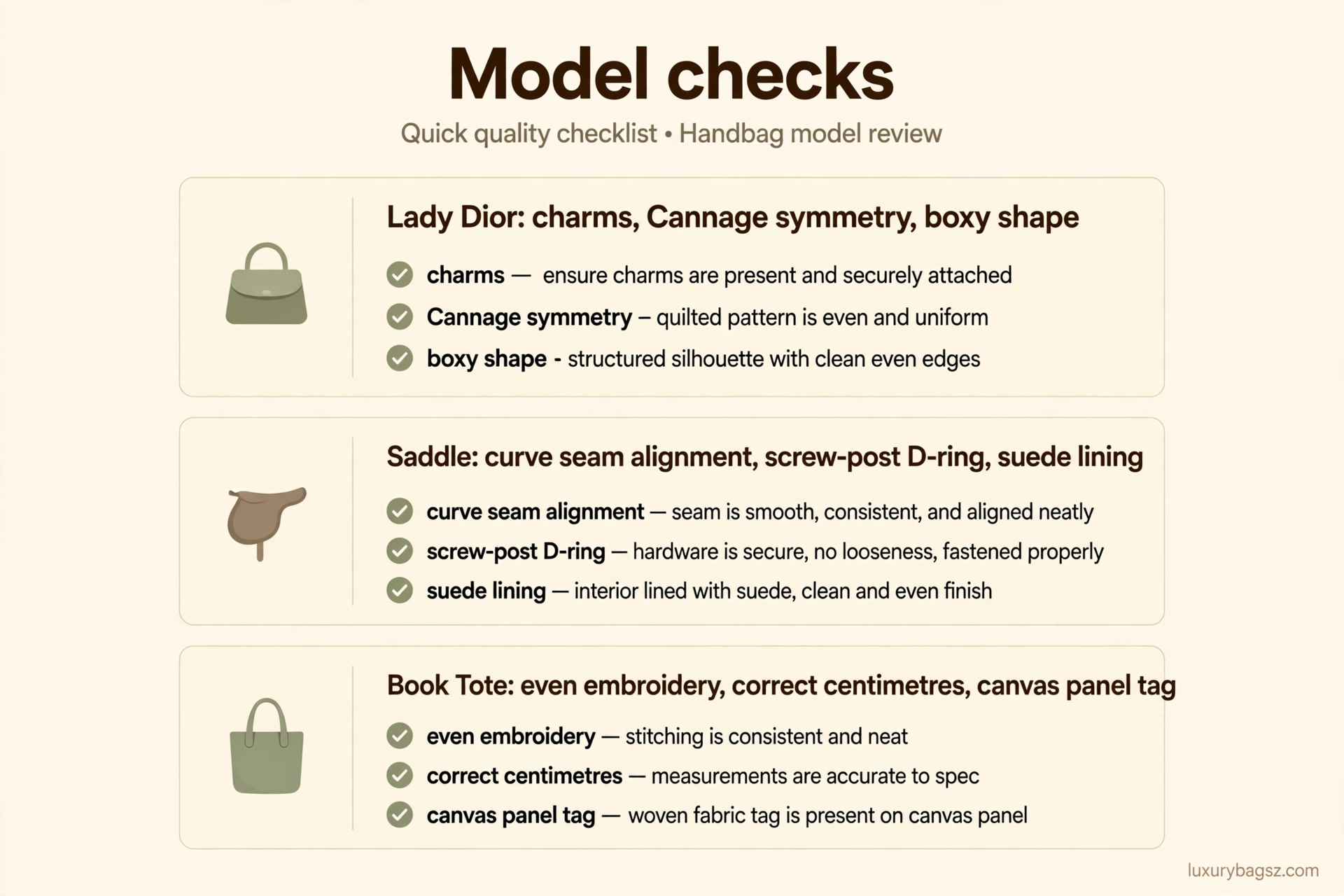
For a Lady Dior, check the charms first: solid, cleanly finished, evenly engraved letters, with no hollow feeling and no bent shapes. Then check the Cannage symmetry and puff from the cannage section, and the overall shape, which should be rigid and boxy.
LegitCheck notes a genuine Lady Dior is wider than its fake counterpart, so compare proportions against genuine photos of the same size, not against memory. A bag that looks tall and narrow for its stated size is suspect.
Check the lining and the interior zip pocket, where the date tag lives. Superfake Lady Diors most often fail on the serial label and the lining quality, per Libas Collective, so spend extra time on exactly those two details.
Saddle and Book Tote Checklists
For a Saddle, check the CD buckle and the curve seam first, then the D-ring, which must be a separate piece attached with a screw post, never moulded. Check the fine suede lining with its small zip pocket, and the interior flat pocket where the date tag sits.
For a Book Tote, check the embroidery first: even letters, consistent tension and no loose fibres, per Libas Collective. Then check the side panels and the size in centimetres, because a fake often gets the proportions wrong, and the interior canvas panel where the serial tag sits.
Superfake Saddles, like superfake Lady Diors, most often fail on the serial label and lining quality. If those two details look right and everything else checks out, the bag has passed the hardest superfake tests.
Superfakes: The Checks They Now Pass
Superfakes are high-grade copies that pass the easy checks. They use heavy hardware, copy real serial formats and real serial numbers, and reproduce dust bags, boxes and cards convincingly. A superfake can feel right, weigh right and carry the right paperwork.
The checks superfakes still fail most often are the serial label quality, the lining quality and the pattern alignment at difficult seams. That is why this guide puts the label, the lining and the Saddle curve seam at the centre of the hard checks.
Never rely on a single check, and never rely on weight or paperwork alone. If a bag passes nine checks and fails the serial label, treat the failure as decisive and get a professional opinion before paying.
Dust Bags, Boxes and Cards: What They Prove
Almost nothing, on their own. Dust bags, boxes and cards are all replicated convincingly, and genuine extras can be moved from one bag to another. A complete set of extras raises confidence slightly; it never proves a bag real.
Watch for inconsistent card fonts, which Fashionica lists as a red flag, and for box lettering that looks blurry or off-spacing, per LegitCheck. These details can confirm a fake, but clean extras can never confirm a genuine bag.
Missing extras prove nothing either. Pre-owned bags lose their paperwork all the time, and a genuine bag without a dust bag is still genuine. Judge the bag first, and let the extras stay in the background where they belong.
Seller Checks, Photos and Price Benchmarks
Ask for clear photos of the heat stamp, the serial tag, the hardware engraving and the lining before you pay. A seller who refuses serial photos, or who pressures you to complete quickly, is using two of the scam tactics Libas Collective warns about.
Watch for stolen photos and bait-and-switch listings, where the photos show a real bag and the parcel contains a fake. Ask for a photo of the bag beside a handwritten note with today's date, which is hard to fake from stolen images.
Compare the price against the pre-owned market, not the boutique price. A price 40 to 60% below the pre-owned market with no explanation is a red flag, per Fashionica. Note the exception: Book Tote second-hand prices normally run 40 to 50% of boutique price, so that discount alone is not a flag for a Book Tote.
The same discipline applies across brands, as our Classic Flap vs Boy comparison shows for pre-owned checks on a different model.
What to Do If Your Bag Is Fake
Stop using it as genuine and keep every record: the listing, the photos, the messages and the payment proof. Contact the seller first and ask for a refund, stating the failed checks plainly and calmly.
If the seller refuses, report the listing to the marketplace and open its dispute process within its timeline, because late claims are often rejected regardless of merit. A professional authentication report strengthens any claim, so get one in writing.
For future purchases, use professional authentication before paying whenever the price is high. Libas Collective recommends it above AED 5,000 pre-owned, with remote services around 100 to 200 AED, and LegitGrails as a second-opinion option. Dior boutiques do not offer formal pre-owned authentication, so do not rely on a boutique visit to settle a dispute.
Frequently Asked Questions
How can I tell if my Dior bag is real, and are superfakes easy to spot?
Check in order: heat stamp, stitching, hardware, pattern, material, date code, then extras. If two or more checks fail, treat the bag as fake and get a professional opinion.
No. Superfakes pass hardware weight, serial formats and paperwork. They most often fail on serial label quality, lining quality and pattern alignment at difficult seams.
Where is the serial number on a Dior bag, and what is a microchip?
On the reverse of a small leather tab inside: Lady Dior in the interior zip pocket, Saddle in the interior flat pocket, and Book Tote on the interior canvas panel. Modern bags also carry microchips.
The identification method for 2010s bags onwards, replacing stickers. The code sits in a pocket or on a leather tab, and it must match the bag's production era.
Do Dior bags come with authenticity cards, and can a boutique authenticate one?
Older bags came with cards and stickers by era, but Dior stopped authenticity cards on most bags in the mid-2010s. Cards prove nothing on their own and are widely copied.
No. Dior boutiques do not offer formal pre-owned authentication, per Fashionica. Use an independent authenticator such as Libas or LegitGrails.
What does a fake Dior heat stamp look like?
Letters too thin, too thick or unevenly spaced, with blurry edges or uneven depth. A stamp reading "Made in China" is a red flag on its own.
Is a cheap Dior bag always fake?
Not always. Book Tote second-hand prices normally run 40 to 50% of boutique price. A price far below the pre-owned market with no explanation is the red flag.
Should I pay for professional authentication?
Yes, for any expensive pre-owned purchase. Libas recommends it above AED 5,000 pre-owned, with remote services around 100 to 200 AED.
What should I do if I bought a fake Dior?
Keep all records, ask the seller for a refund, report the listing and open a marketplace dispute within its timeline. A written professional authentication report strengthens your claim.
Conclusion
Spotting a fake Dior bag comes down to order and discipline: stamp, stitching, hardware, pattern, material, date code, then extras. The model checklists for Lady Dior, Saddle and Book Tote catch the fakes that general checks miss, and the era table catches the bags whose identification does not match their age.
Superfakes have raised the bar, but they still fail on serial labels, linings and difficult seams. Check those hardest, never trust weight or paperwork alone, and pay for professional authentication whenever the price justifies it. Bought that way, a pre-owned Dior is a pleasure, not a gamble.