Iconic Designer Women’s Shoes: The Signature Styles That Endure
The Icons in Brief: Design First, Logo Last
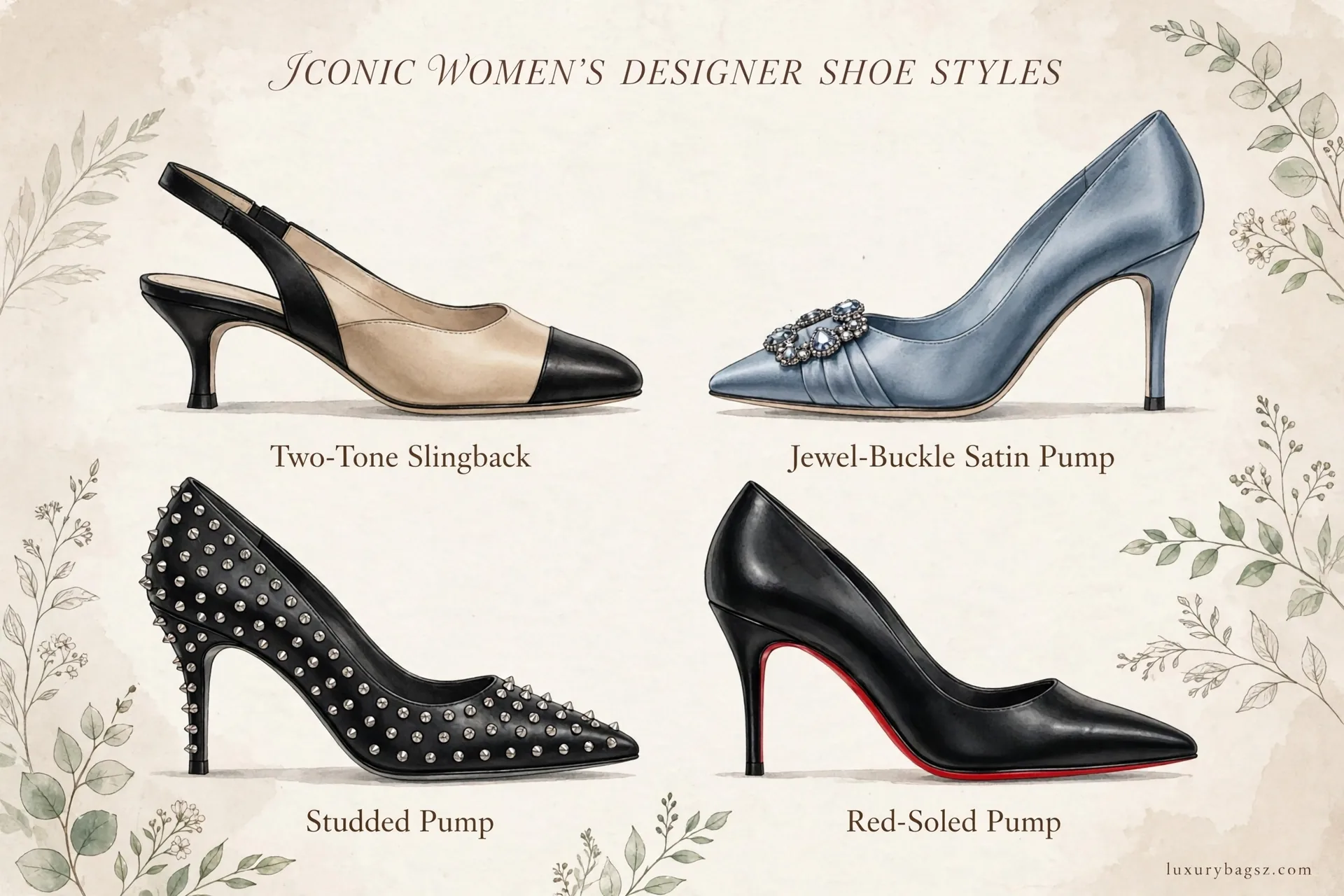
The truly iconic designer women's shoes are recognised by shape, not labels: the two-tone slingback, the red-soled stiletto, the satin pump with a crystal buckle, and the studded pump. Each solved a design problem so well that the silhouette became the signature.
That is also how to buy them. Choose the silhouette that suits your wardrobe and feet, verify authenticity with care, and an icon becomes a working shoe rather than a museum piece.
Key Takeaways

- Icons are silhouettes: two-tone slingback, red sole, jewel buckle and studs lead the list.
- Each became famous by solving a real problem, from lengthening legs to surviving red carpets.
- Signature details are exactly what counterfeiters copy, so buy icons from trusted sources.
- Classic icons hold resale value better than seasonal styles.
- Fit varies sharply between houses; an icon you cannot walk in is the wrong icon.
- Care and boxed storage protect both the shoe and its future value.
What Makes a Shoe Iconic
An iconic shoe outlives its season, its designer and usually its original price. It stays in production, or in demand, for decades because the design is immediately recognisable and endlessly copied.
The pattern is consistent: one strong idea, executed in quality materials, worn by people whose photographs travel. Our designer heels guide maps the wider heel families these icons grew from.
Icons also earn a place in the working wardrobe. The best of them are comfortable enough, and neutral enough, to wear weekly rather than worship.
The Decades in Four Silhouettes
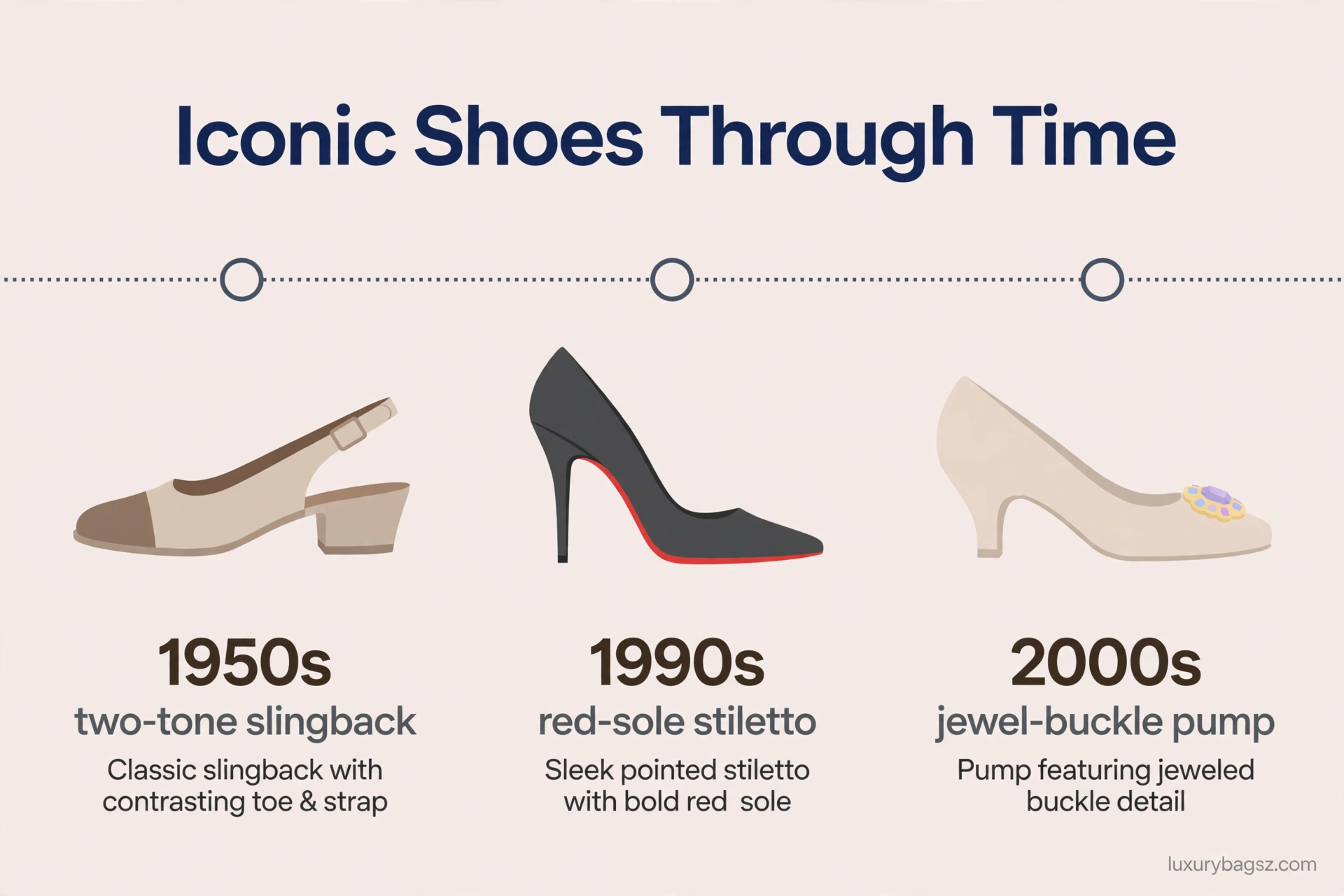
The 1950s gave the two-tone slingback, designed to lengthen the leg and finish a suit or dress with a single graphic gesture. It has never really left the shelves since.
The 1990s belonged to the red-soled stiletto, which turned the underside of a shoe into the most famous flash of colour in fashion. The 2000s answered with the jewel-buckle satin pump and the studded pump.
Each decade's icon matched its mood: polish, provocation, then ornament. Wearing one today works best when the rest of the outfit stays quiet.
The Big Four, One by One
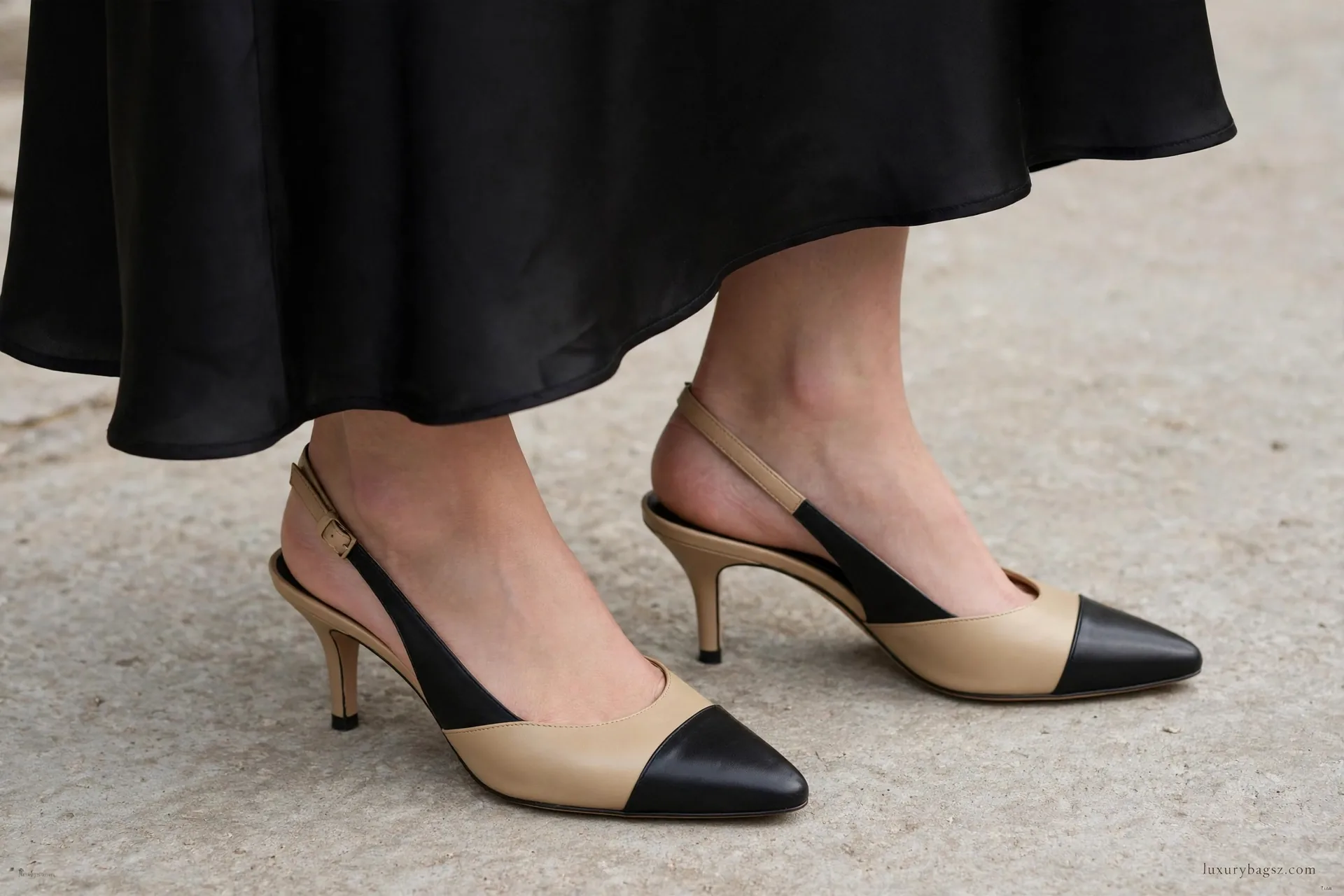
The two-tone slingback pairs a beige body with a black toe cap, lengthening the leg and anchoring neutral outfits. It is the most wearable icon on this list and the easiest to style daily.
The red-soled stiletto is pure evening architecture: a high, fine heel and that lacquered flash beneath. The jewel-buckle satin pump is its romantic counterpart, made for weddings and black tie.
The studded pump brought edge into the luxury mainstream, turning hardware into decoration. All four remain in production or in constant demand, which is the definition of the category.
The Supporting Cast
Beyond the big four sits a deep bench. Logo-letter heels such as saint laurent opyum pumps turned branding into structure, following the earlier wave of saint laurent opium shoes.
Ornament-led icons include the chandelier heels in our piece on prada chandelier shoes, while logo-ribbon slingbacks like dior j'adior shoes show how a strap can become a signature.
Regional and specialist icons matter too. The point is not to own them all, but to recognise which design language suits your own wardrobe.
Fit and Wearability of Famous Shoes
Fame does not guarantee comfort. Italian icons often run narrow, and high icons put real demands on the foot; try before committing, especially at these prices.
Some houses built their reputations on wearability as much as looks, from the sculpted heels in our sergio rossi heels profile to the platform engineering of brian atwood heels.
Buy the icon in the height you will actually wear. A mid-heel version of a famous silhouette beats the runway height sitting untouched in its box.
Authenticity: Icons Are the Most Faked
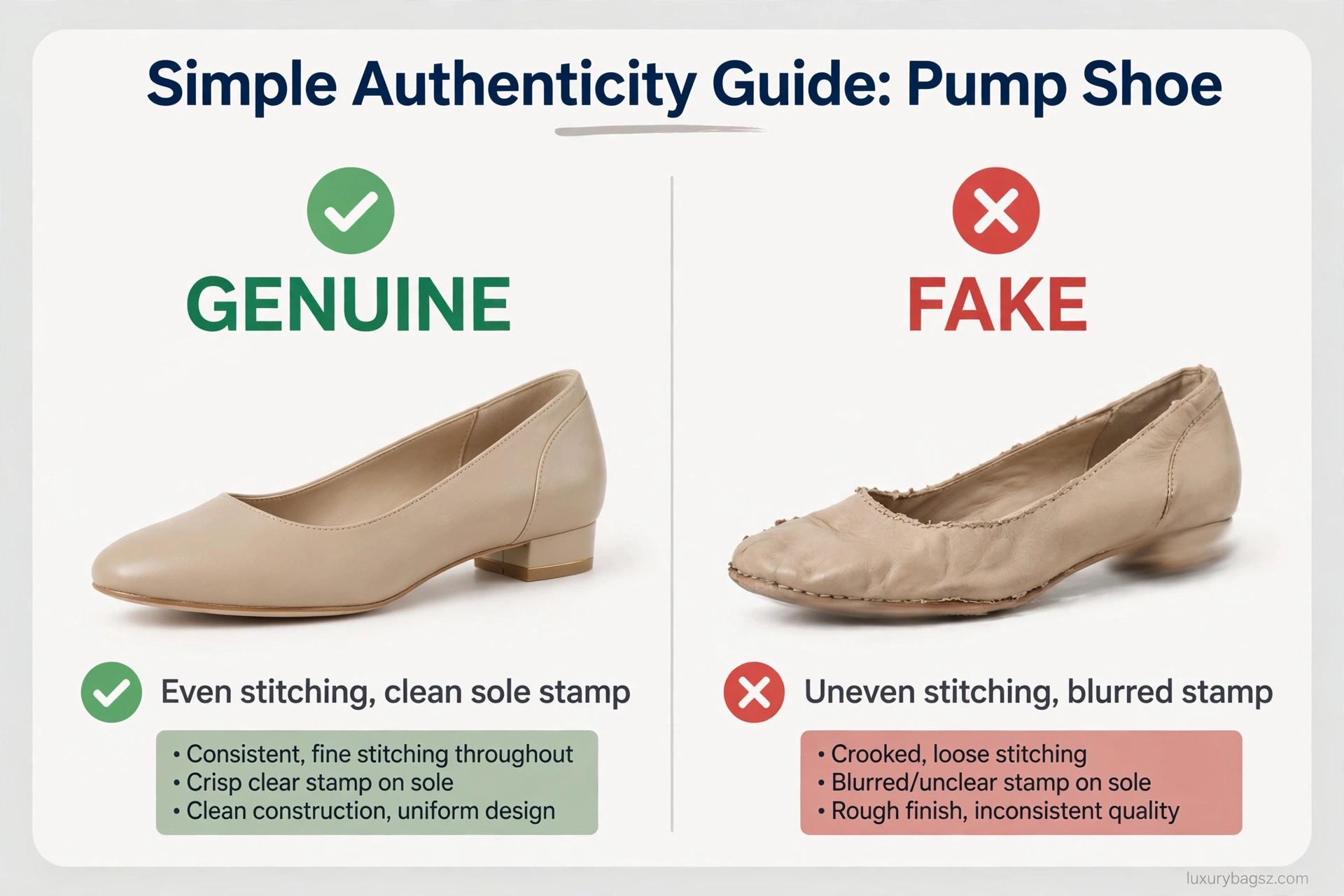
Signature shoes are the most counterfeited shoes in the world, precisely because their details are famous. Sole finish, stitching regularity and hardware weight are where fakes usually fail.
Buy icons from the brand, authorised retailers or reputable resale platforms with authentication. Keep receipts, boxes and dust bags; they support both authenticity and resale value.
Be wary of prices far below the going rate for a current icon. In this category, a bargain that looks impossible usually is.
Care and Storage for Valuable Shoes
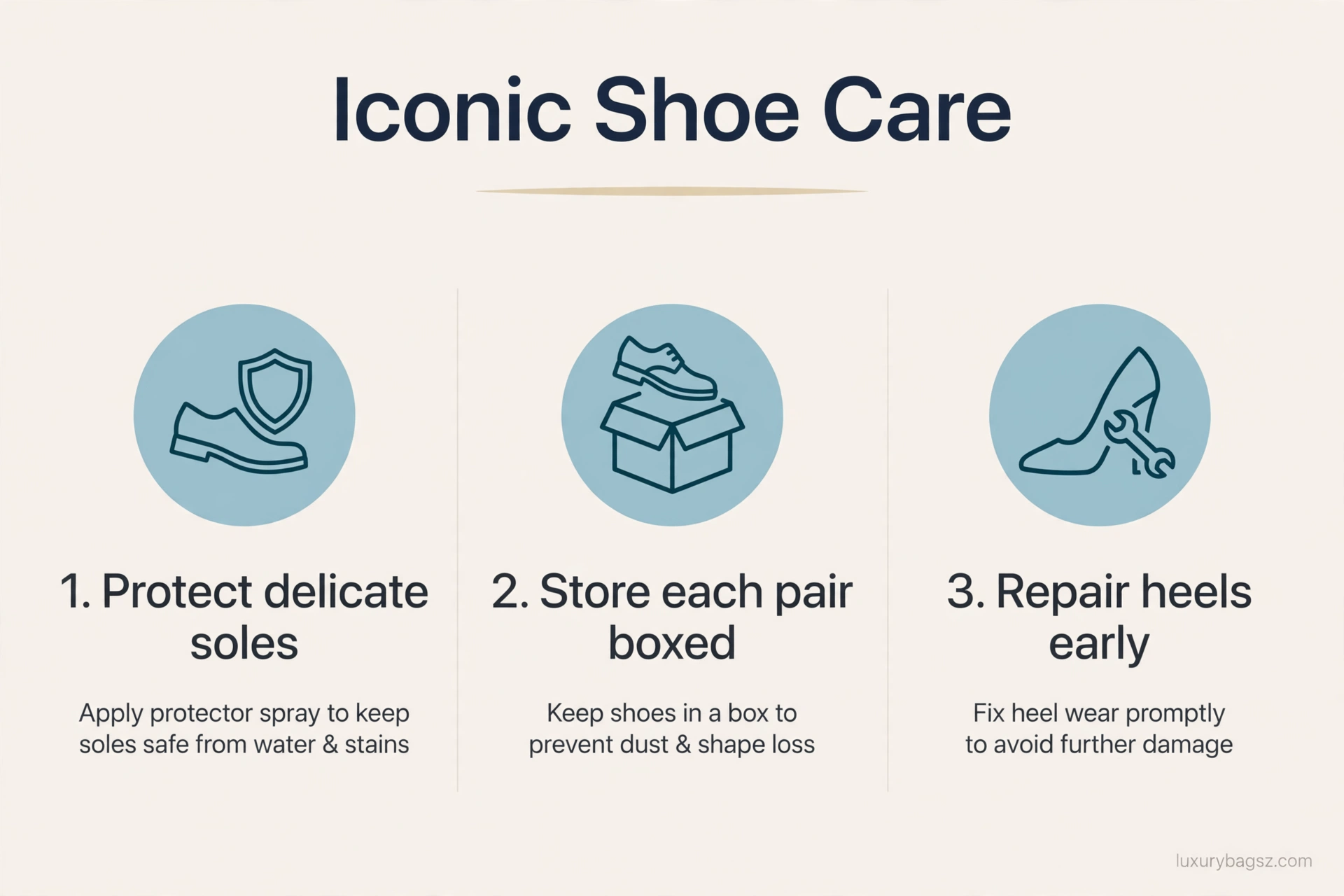
Store icons boxed, stuffed with tissue, away from sunlight that fades satin and dries leather. Cedar trees suit leather styles; tissue is safer for delicate satin uppers.
Resole leather-soled icons before the sole thins, using a cobbler experienced with designer shoes, and keep red soles maintained by a specialist if you want the finish preserved.
Clean embellishment gently with a dry or barely damp cloth. Crystals, studs and buckles should never be soaked or brushed hard.
Prices and Value Over Time
New prices for the classic icons typically run from around $800 to $1,400 depending on materials and embellishment, with exotic and crystal versions well beyond that.
Resale values for true icons hold up better than for seasonal styles, especially in classic colours and full sets with box and receipts. Condition at the toe and heel decides the number.
Treat an icon as a long-term wardrobe piece, not an investment product. Worn weekly for years, its cost per wear beats almost any trend shoe.
The Chanel Slingback: An Optical Trick From 1957
Gabrielle Chanel launched the two-tone slingback in 1957, borrowing the idea from the two-tone shoes worn by grooms and sportsmen. The beige body was chosen to lengthen the leg, and the black toe cap to make the foot look smaller and to hide scuffs where a shoe suffers most.
Every element was practical before it was pretty: the low, sturdy heel for walking, the strap for freedom at the ankle, and colours that went with everything a woman owned. The press called it the new Cinderella slipper, and women from Bardot to Deneuve made it the uniform of polished daytime dressing.
Karl Lagerfeld revived it as a headline style in 2015, sending it down the runway with everything from jeans to couture, and it has stayed a bestseller since in endless colour combinations. The classic beige and black remains the one to buy first.
It is also the most wearable icon ever made: a modest heel, a secure strap and a neutral palette. If you want one icon to wear weekly rather than admire, this is the honest answer.
Louboutin: The Red Sole That Became a Signature
Christian Louboutin opened his Paris salon in the early 1990s, and the red sole followed from a famous experiment: feeling a prototype lacked energy, he painted its sole with red nail polish. The lacquered underside became the most recognised detail in footwear.
The Pigalle, launched in 2004, is the purest expression: a pointed pump on a fine high heel, named after a Paris neighbourhood. The later So Kate pushed the pitch steeper still. Both are architecture first and comfort second, and the house has never pretended otherwise.
The red sole has been defended in court, including a long dispute with Yves Saint Laurent that ended with Louboutin’s trademark upheld for contrast soles, while all-red shoes stayed free for others to make. The legal history is part of why the detail is so fiercely consistent.
Buying notes matter at this level: the cuts run narrow, the high styles are short-distance shoes, and the red lacquer chips and scuffs with wear. Sole protectors, fitted by a cobbler, are the standard owner’s compromise between using the shoe and preserving the flash.
The Hangisi: One Scene, a Thousand Weddings
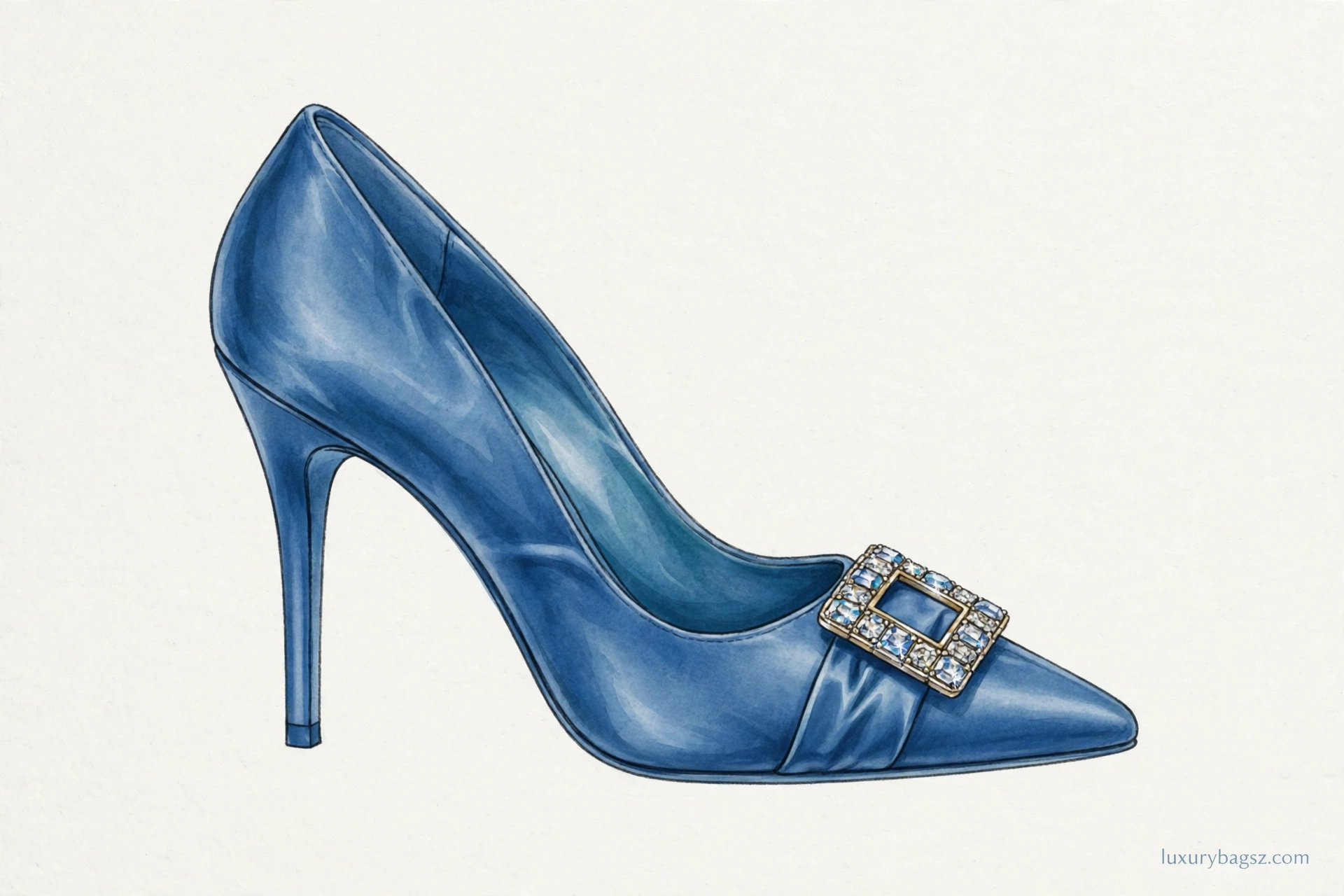
Manolo Blahnik launched the Hangisi in 2008, a satin pump with a crystal buckle inspired by Napoleonic-era ornament. Within the year, the first Sex and the City film gave it the most valuable product placement in shoe history: a proposal scene built around a blue pair.
The blue Hangisi became the definitive something blue, and the style quietly restructured bridal footwear. Brides who would never have considered a coloured shoe now plan the outfit around one.
The design has since multiplied into several heel heights, flats, mules and sandals, all carrying the same buckle. The lower heights are the wearable secret: the 70 mm version keeps the entire look and gives back an evening on your feet.
Satin is the vulnerability. It marks with water, crushes if stored badly and shows every scuff honestly, so the Hangisi rewards careful owners and punishes careless storage faster than any other icon here.
Rockstud: How Hardware Became Jewellery
Valentino launched the Rockstud in 2010, edging pumps, sandals and flats with neat rows of platinum-finish pyramid studs. It was an unlikely recipe — punk hardware on ladylike shapes — and it defined a decade of luxury footwear.
The genius was range. The same studs worked on a kitten-heel slingback, a caged sandal and a flat, so women could buy the attitude at their own height. Few icons have ever offered that ladder.
Rockstud pieces also hold a practical advantage: the studs and straps make the shoes sturdier in wear than they look, and the lower styles are genuinely walkable. The caged designs secure the foot better than most evening shoes.
Trends have moved on from peak stud, which is exactly the test an icon must pass. Rockstud remains in production and in wardrobes, worn more quietly now, which is what settling into classic status looks like.
The Older Guard: Ferragamo and Vivier
Salvatore Ferragamo built the platform wedge’s most famous monument in 1938: the Rainbow, a towering layered wedge made for Judy Garland. It proved, decades before the word existed, that a shoe could be a sculpture and a signature at once.
His daughter Fiamma followed in 1978 with the Vara, a low pump with a grosgrain bow and a small gold plaque. The Vara became the thinking woman’s uniform shoe and is still the stealth icon of the list: less photographed, more worn.
Roger Vivier, who designed for Dior in the 1950s, gave his own house the oversized buckle pump that Catherine Deneuve wore in Belle de Jour in 1967. The Belle Vivier’s chrome buckle on a modest heel remains the template for every buckle shoe since.
These older icons teach the pattern of the whole category: a designer solves a problem of the body or the eye, signs the solution with one unforgettable detail, and the detail outlives the decade.
The New Candidates: Tabi and the Mary Jane Revival
Maison Margiela’s Tabi, split-toed after Japanese work socks and shown in 1988, spent decades as a fashion insider’s password before the wider world adopted it. It is the rare icon recognised by pure shape with no logo at all.
Alaïa’s studded Mary Janes and the wider Mary Jane revival show the opposite route to fame: a childhood shoe remade in luxury materials until it reads as subversive rather than sweet.
Mach and Mach’s crystal-bow heels are the social-media generation’s bid, famous faster than any shoe in history thanks to photographs rather than runways. Whether they endure is the open question every new icon faces; the Hangisi’s survival suggests ornament plus wearability is the winning formula.
Judge candidates by the older guard’s test: one strong idea, honest materials, and a shape your wardrobe can use weekly. Hype decides the first year; those three decide the next forty.
Choosing Your First Icon
Buy the icon that fits your existing life, not the one with the biggest legend. A weekly-wear Chanel slingback or Vara will shape your style more than a Pigalle you can only stand in for photographs.
Sequence the rest by gaps. If your first icon is neutral and low, let the second be the ornament: the jewel buckle or the stud. If your first is the evening shoe, let the second be the worker.
Vintage hunting suits the older icons best, because decades of production mean deep pre-owned stock and honest prices. Verify buckles, soles and stamps with extra care; the famous details are the faked ones.
Whichever you choose, wear it immediately and often. Icons became icons on feet, in streets and in photographs of real lives, and a boxed icon is just an expensive rumour.
Wearing the Icons Now
The two-tone slingback works hardest with tailoring and denim: a blazer, straight jeans and the slingback is a complete modern uniform. It also finishes summer dresses without competing, because its colours are already a neutral palette.
The jewel-buckle pump wants a plain dress and nothing else competing at ankle height. Satin icons photograph best against matte fabrics, and the blue pair under a white or ivory dress remains the most requested bridal photograph in the business.
The red sole is a flash, not an outfit. Wear the shoe with black, navy or quiet neutrals and let the underside do the talking when you walk; pairing it with loud clothes turns a signature into a shout.
Studded styles have aged into supporting roles. A Rockstud flat or kitten heel with a simple dress or sharp trousers reads deliberate and current, while head-to-toe edge reads like a time capsule from 2013.
What the Icons Cost, and Where to Buy Them
New, the wearable icons cluster in the high hundreds to low thousands, with satin, crystals and exotic materials pushing individual styles well above that band. Prices rise most years, which is why last decade’s boutique receipts read like bargains.
Boutiques give you the full size run, the current colours and a relationship that helps when a style needs ordering. Department stores give you comparison across houses in one visit, which for a first icon is worth more than it sounds.
Pre-owned is where the depth is: decades of slingbacks, Varas and Hangisis trade constantly, and discontinued colours surface there that no boutique can order. Condition of soles and buckles decides value, so buy the photographs before the story. For one season examined closely, see our retrospective on designer shoe trends of 2014.
Paris remains the pilgrimage purchase for the French houses, and the saving on local pricing and tax refunds is real. But a shoe that needs exchanging is far from home the morning after, so pilgrimage purchases suit buyers who already know their size in the house.
Repairs: What the Houses Will Fix
Icons are worth repairing because their value, financial and personal, survives maintenance. The houses know this, and most offer repair services for their signature styles, from resoling and reheeling to replacing straps and hardware.
Loose or missing crystals on a jewel buckle can usually be replaced by the maker or a specialist cobbler, and the repair is far cheaper than the discount a damaged buckle suffers at resale. Keep any spare crystals or studs the box included; they exist for exactly this day.
Red soles are the famous dilemma. Wearing through the lacquer is normal use, and the house’s own stance has always been that the flash is a finish, not a coating for life. Many owners fit red rubber half-soles that mimic the colour; purists leave the wear honest. Either choice is defensible, but decide before the leather underneath starts to go.
Slingback straps stretch, bows fray and studs loosen, and all of it is routine cobbler work at modest cost. The repairs an icon cannot survive are structural: a cracked shank, a snapped heel or crushed satin. Buy avoiding those, maintain against the rest.
Frequently Asked Questions
What is the most iconic designer shoe of all time?
The two-tone slingback and the red-soled stiletto share the strongest claim. Both have been in demand for decades, are recognised instantly, and are copied at every price level.
Why are red soles so famous?
The lacquered red underside turned an unseen part of the shoe into a signature visible in every step and photograph. It made branding part of the design itself.
Are iconic designer shoes worth the price?
As wardrobe pieces, often yes: the classics are well made, endlessly wearable and hold resale value. As investments, treat them cautiously and buy to wear first.
How can I tell if a designer shoe is fake?
Check sole finish and colour, stitching regularity, hardware weight and the quality of box and dust bags. Buy from authorised or authenticated sources, and distrust impossible prices.
Do iconic shoes go on sale?
Core colours of true icons rarely discount at the brand itself. Seasonal colours and finishes do, and reputable resale is the other route to lower prices.
Which iconic shoe is most comfortable?
The two-tone slingback in its mid-heel form is widely considered the easiest icon to live in. Fit varies by house, so try each style rather than assuming your usual size.
Can iconic shoes be resoled?
Leather-soled styles can, by a cobbler experienced with designer footwear. Specialist work preserves finishes such as coloured soles and maintains the shoe's value.
What size do Italian designer shoes run?
Many run narrow and slightly small compared with high-street sizing. Half a size up is common, but check the specific house guidance and try on in the afternoon where possible.
Which icon suits a first designer purchase?
A classic in a neutral colour: the two-tone slingback, a jewel-buckle pump in navy or black, or a mid-heel red-sole style. All three work across work, events and evenings.
How should I store valuable shoes?
Boxed, stuffed with tissue, away from sunlight and heat, with dust bags on. Keep receipts and packaging; a full set supports authenticity and future resale.
Conclusion: Buy the Silhouette, Wear It for Years
Icons endure because the design does the talking. Pick the silhouette that fits your life, buy it from a source you trust, care for it properly, and it will still look current when today's trends are a memory.