

Saint Laurent Opium Shoes Guide: Vintage Monogram Pumps Explained
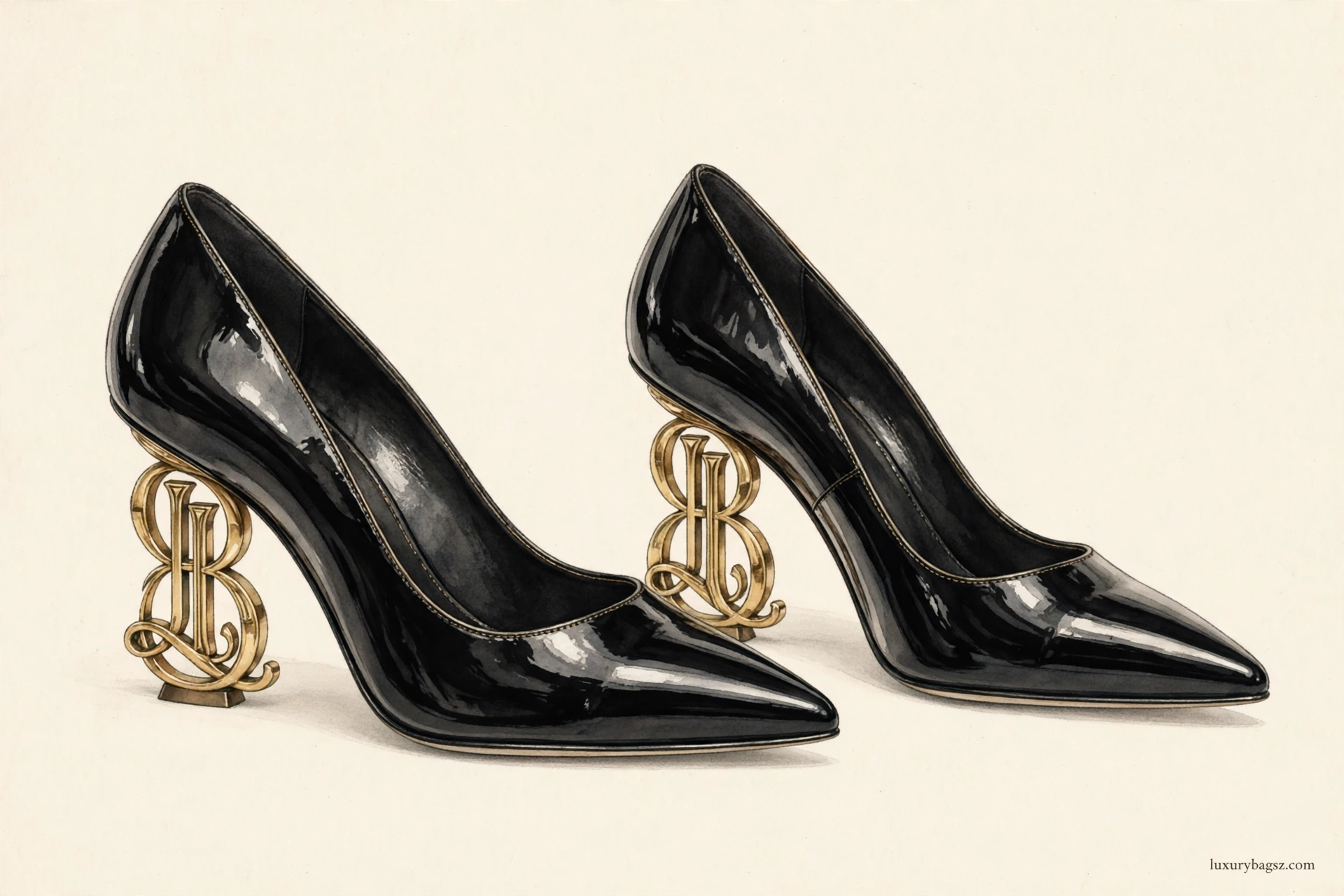
Opium in Brief: The Vintage Monogram Pump Behind the Opyum
Saint Laurent Opium shoes are the vintage monogram-heel pumps that came before the modern Opyum line. They share the same idea, a pointed pump balanced on an interlocking YSL heel, but they belong to earlier collections and are now found mainly on the resale market. If you search for Opium shoes today, you will mostly find pre-owned pairs, often listed under spellings such as Opium or Opuum. The short answer is this: treat Opium as a vintage hunt with real rewards for patient buyers, and treat the modern Opyum as the boutique alternative if you want a new pair with a warranty.
Key Takeaways

- Opium shoes are vintage Saint Laurent monogram-heel pumps from earlier collections.
- The modern equivalent is the Opyum line, sold in boutiques today with 85 mm and 110 mm heights.
- Resale listings may spell the name Opium, Opuum or Opyum, so search all three spellings.
- Expect pre-owned prices well below current Opyum retail, varying sharply with condition.
- The pointed toe fits narrowly, so wide feet often need a half size up.
- Check heel shape, insole stamps, stitching and sole wear before paying for a vintage pair.
What Are Saint Laurent Opium Shoes?
Opium shoes are pointed-toe pumps with a heel shaped like the interlocking YSL monogram, made under the Yves Saint Laurent name in earlier seasons. They are the ancestors of today's Opyum pumps, carrying the same graphic idea in older materials, lasts and finishes. The name causes confusion, because Opium is also the name of a famous Yves Saint Laurent perfume launched in 1977. The shoes and the scent share a name and an era of bold house branding, but they are different products, and a perfume listing is not a shoe listing. For context on how the house's codes developed, our Saint Laurent house guide traces the label from Yves Saint Laurent to the modern Saint Laurent name. That renaming explains why older shoes carry YSL branding that looks slightly different from today's. Vintage Opium pumps matter because they offer the monogram-heel look at resale prices, often with details and colourways no longer made. They also demand sharper buying checks, since age, wear and copies all complicate the hunt.
A Short History of the Monogram Heel
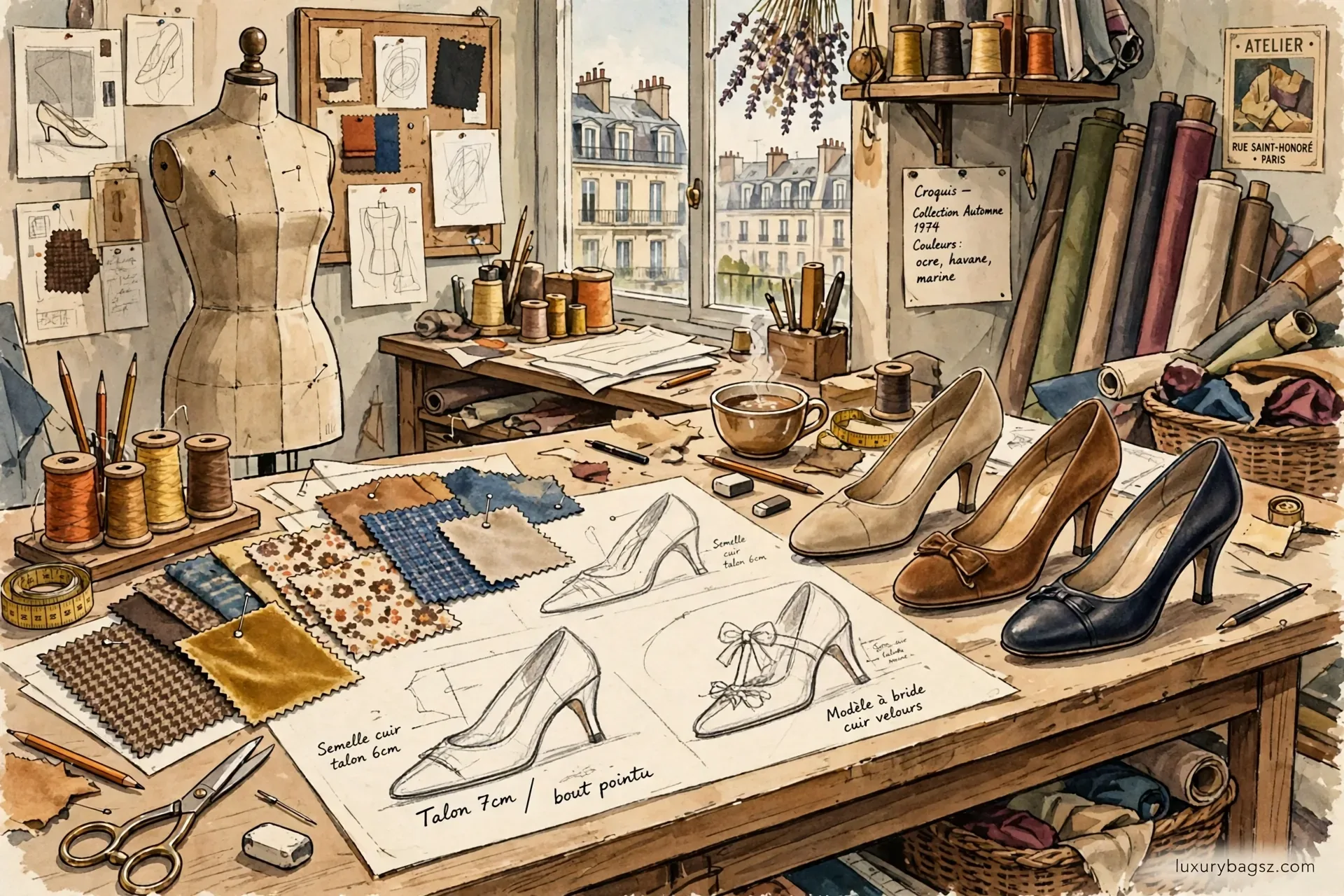
The interlocking YSL monogram was designed by Cassandre in the early 1960s and became one of fashion's most recognisable marks. Turning it into a heel was a natural step for a house that loved graphic, architectural details. Monogram-heel pumps appeared across Yves Saint Laurent collections over many seasons, rather than in a single launch year. That long run is why vintage pairs vary: heel finishes, toe shapes and insole stamps differ by era, and no single detail proves a date on its own. The modern Opyum line, launched under Anthony Vaccarello's Saint Laurent, refined the idea with cleaner uppers and a more sculptural heel. It is the boutique version of a concept the house had explored for decades, not a copy of one specific vintage shoe. For vintage buyers, that history is useful. A pair that looks exactly like a current Opyum is probably a modern pair mislabelled, while a pair with older branding, softer patent and a different insole stamp fits the vintage story better.
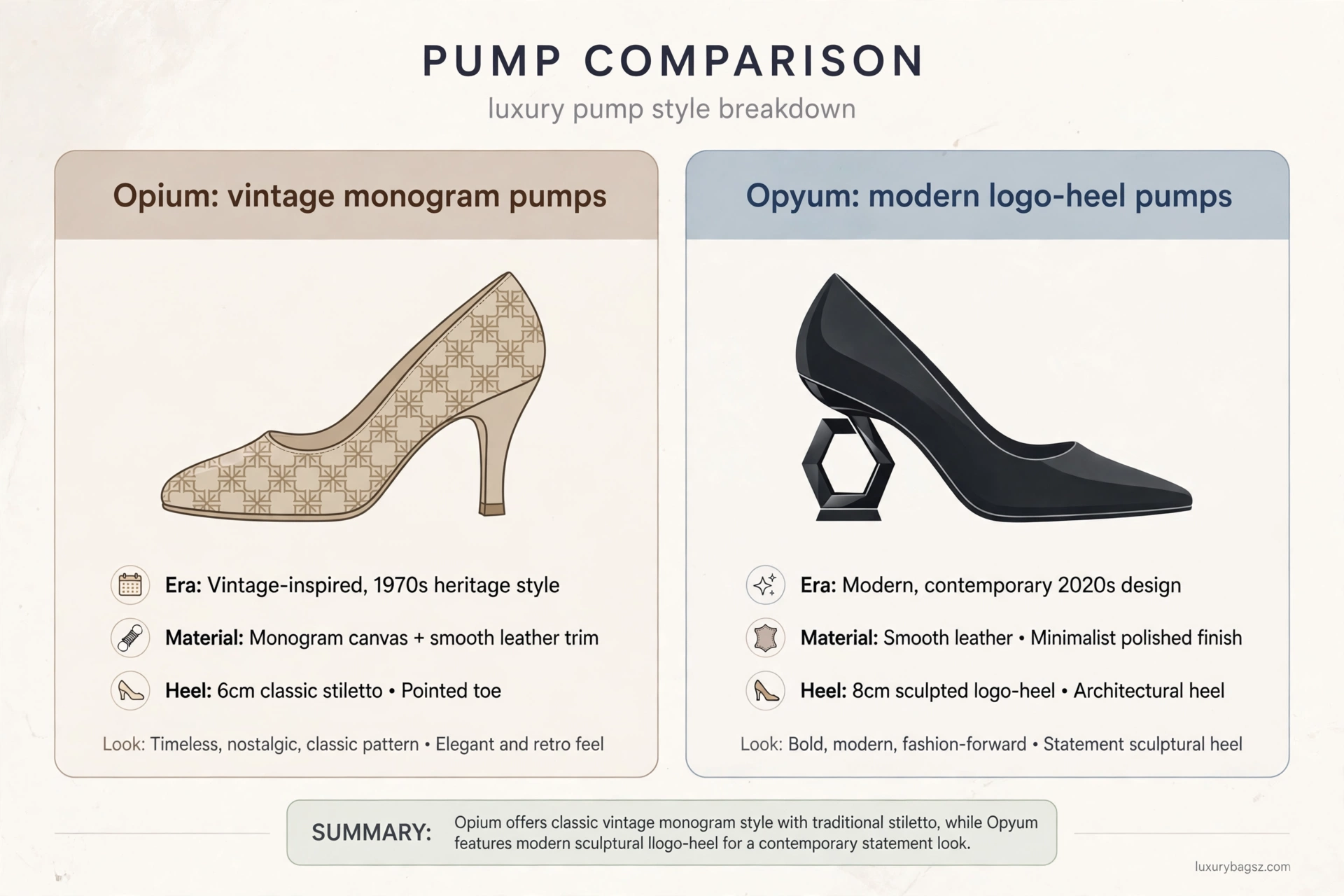
Opium Versus Opyum: The Difference That Matters
Spelling is the first clue. Opium generally signals a vintage or resale listing, while Opyum is the current Saint Laurent product name used in boutiques and on the house website today. Construction is the second clue. Modern Opyum pumps have a crisp, architectural heel and a clean, minimal upper, made to current production standards. Vintage Opium pairs may have a slightly softer heel finish, different sole stamps and signs of age that no new pair shows. Price is the third clue. A new Opyum pump typically retails around £900 to £1,400, while vintage Opium pairs on resale sites often list from a few hundred pounds upward, depending on condition, rarity and completeness. If you want a new pair with a boutique receipt and a straightforward return, buy Opyum. If you love the vintage hunt, accept older sizing and wear, and want a lower price, Opium is the rewarding route. Our first designer shoes guide can help you weigh those trade-offs before you commit.
Styles, Materials and Colours to Expect
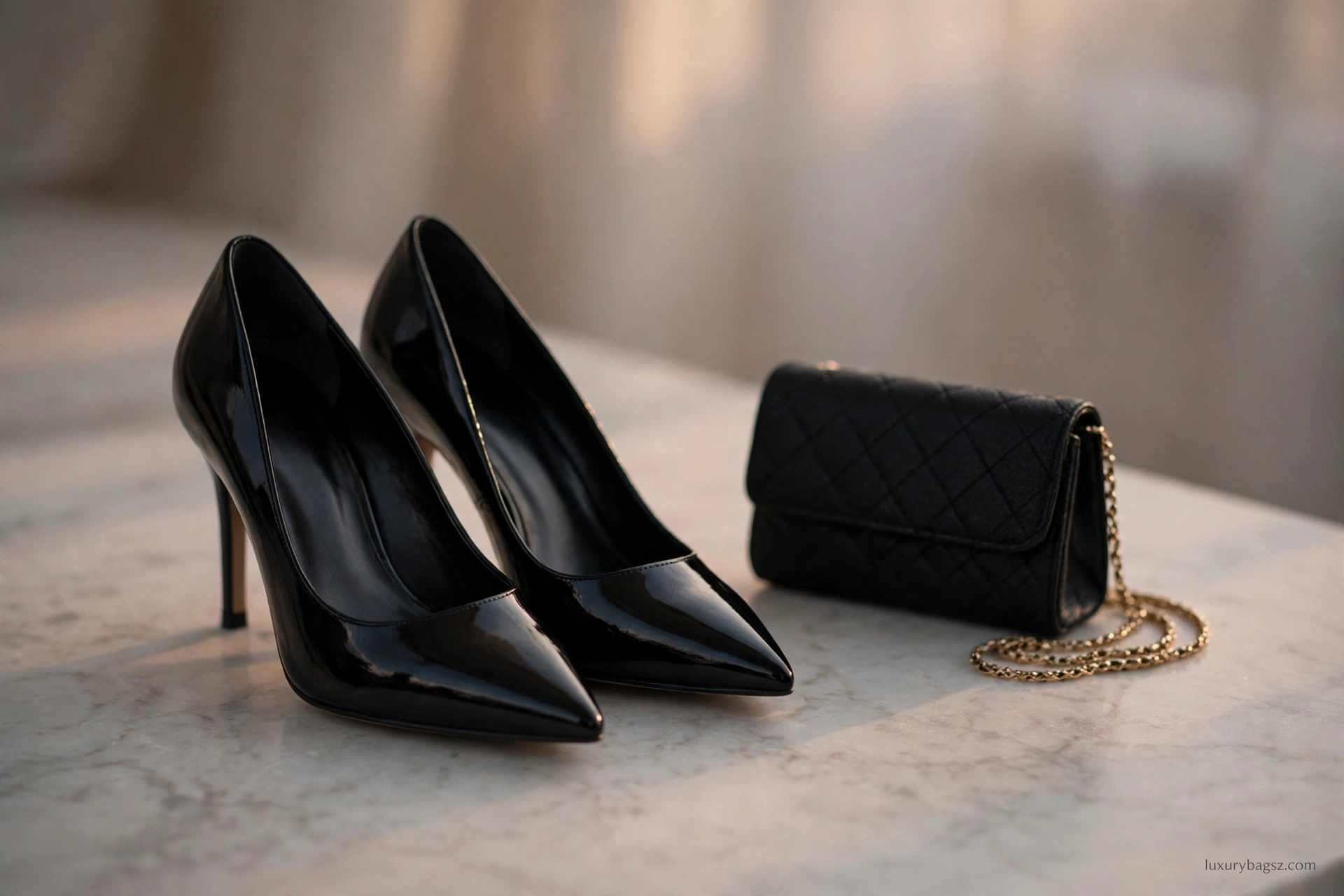
Black patent is the most common vintage Opium finish, and it remains the easiest to style and the easiest to judge for condition. Cracks, clouding and scuffs show clearly on patent, which helps buyers and hurts careless sellers equally. Other finishes appear less often: smooth leather, suede and satin versions, plus occasional metallic and coloured pairs from seasonal collections. Rarer colours can command higher prices, but only when condition matches the premium. Heel heights on vintage pairs vary more than on modern Opyums, since older collections offered a wider spread of mid and high heels. Always confirm the measured heel height of the exact pair, rather than trusting a listing title. Slingback versions exist in both vintage and modern families, and they suit buyers who want extra hold. A slingback strap also hides some fitting sins, but it adds its own wear point: check the elastic and buckle before paying.
Sizing and Fit for Vintage Pairs
Vintage sizing adds a layer of guesswork to an already narrow fit. Older lasts differ from modern ones, and a vintage 38 may not feel like a modern 38, even when the label says the same number. The pointed toe is the main issue, as with modern Opyums. It narrows the fit across the toes, so wide feet often need a half size up, and buyers between sizes should favour the larger size when the seller offers no returns. Ask the seller for insole length and width measurements, not just the labelled size. A few millimetres matter in a pointed pump, and honest sellers will measure. Refusal to measure is itself useful information. Our Jimmy Choo sizing guide explains how toe shape changes fit across houses, and the same thinking applies to vintage pairs. When in doubt, choose the pair with the clearer measurements over the pair with the prettier photographs.
Styling Vintage Monogram Pumps
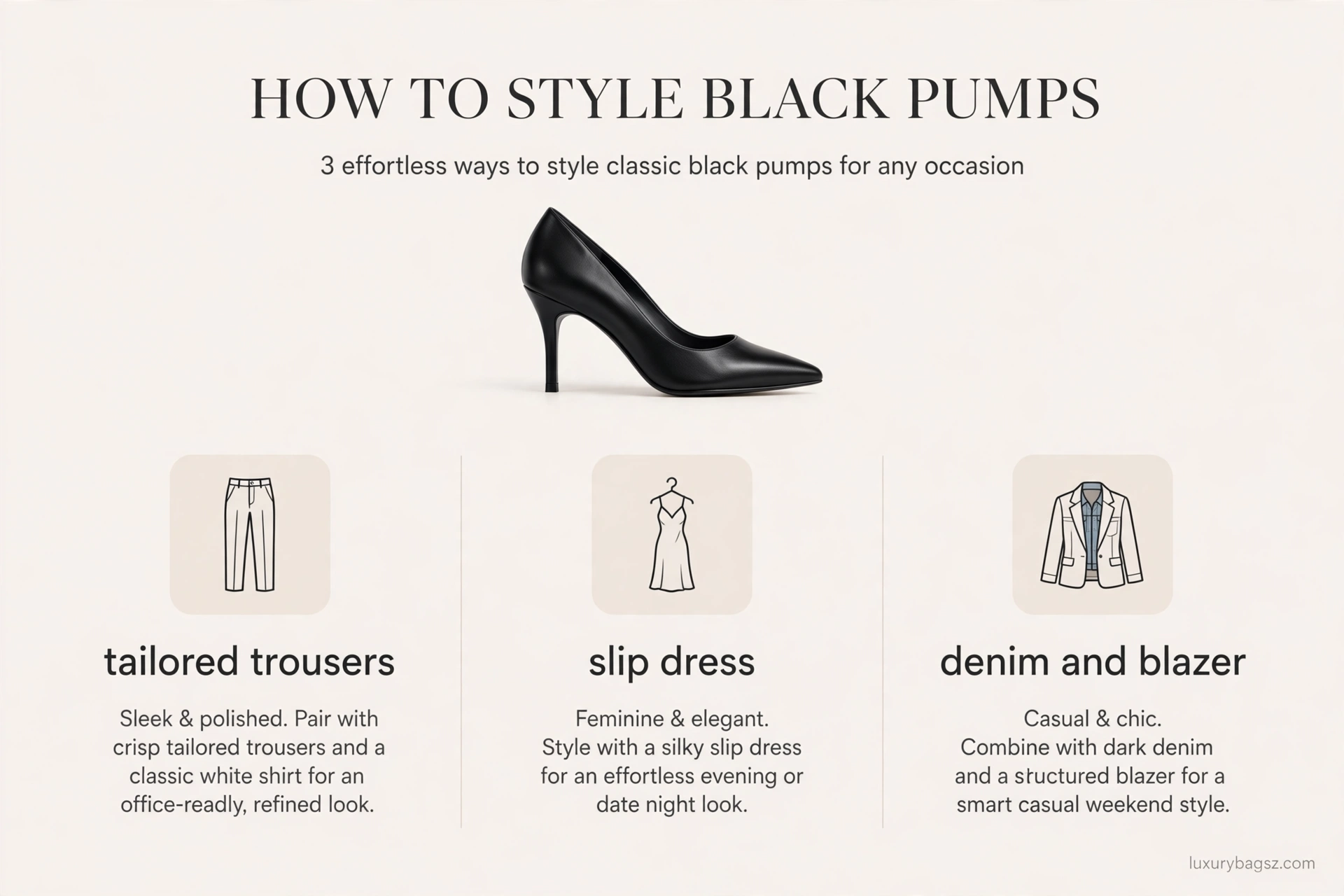
Vintage Opium pumps style much like modern Opyums: let the heel lead and keep the rest of the outfit quiet. Black patent pairs work with tailored trousers, a slip dress or a blazer over denim, and black-on-black remains the safest evening choice. Vintage pairs suit slightly softer styling too, because older patent has a gentler shine than new patent. A midi skirt, a silk blouse or a vintage-inspired dress can echo the shoe's era without turning the outfit into a costume. Keep leather care simple and consistent. Our leather care guide covers cleaning, conditioning and storage for smooth leather, and the same habits protect vintage pumps: wipe after wear, store stuffed, and keep pairs in dust bags. Avoid heavy use in rain, and never stack vintage pumps heel-to-sole in a crowded box. Patent from older seasons can mark easily, and a scuff on a rare vintage pair hurts more than the same scuff on a replaceable modern pair.
Authenticity and Condition Checks
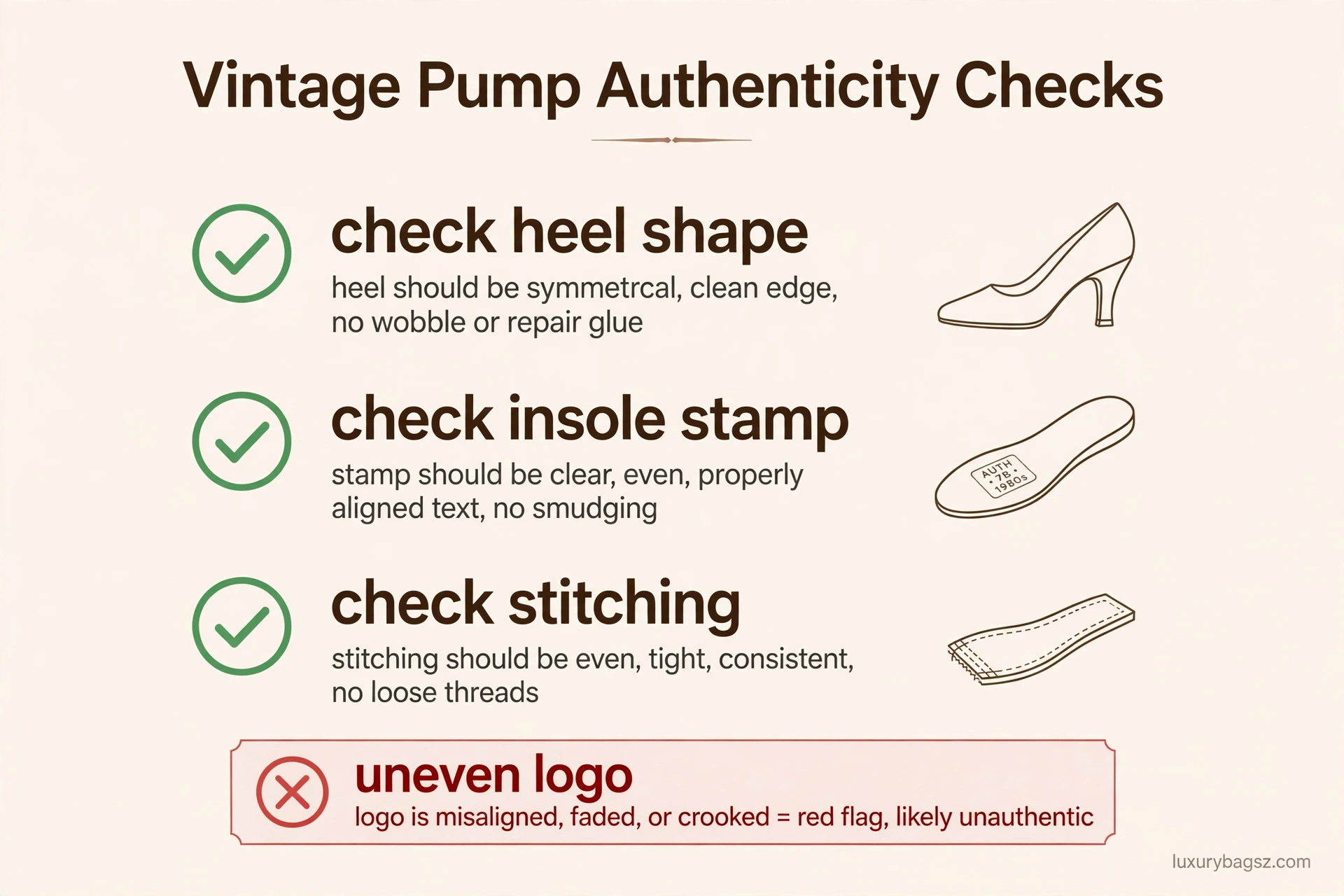
Start with the heel itself. On a genuine pair, the monogram heel should look crisp, symmetrical and well finished, with even metalwork and no wobble. A lopsided, lightweight or roughly cast heel is a warning sign. Next, check the insole stamp and stitching. Stamps should be clean and consistent with the era, stitching should be even, and the lining should feel like quality leather rather than thin plastic. No single stamp proves authenticity, so weigh all the details together. Then judge condition honestly. Check heel tips, sole wear, toe scuffs, patent cracks and insole creasing, and ask for photographs of the box and dust bags if claimed. Missing boxes lower value but do not prove a fake; poor making does. Our shoe condition grading guide shows how to read wear from near-new to well worn. Apply it strictly to vintage pairs, and seek independent authentication for any high-value purchase that feels uncertain.
Is Vintage Opium Worth It?
Vintage Opium pumps are worth it for buyers who love the monogram heel, enjoy the resale hunt and accept older sizing and wear. They offer a distinctive look at a lower price than new Opyums, with the added charm of a genuine vintage piece. They are not worth it for buyers who want a guaranteed fit, a boutique return policy or a pristine pair. Vintage sizing varies, returns may be limited, and even a well-kept pair carries decades of life in its soles and insoles. Budget for repairs too. Heel tips, sole guards and minor patent care are normal costs for vintage shoes, and a cobbler familiar with luxury heels is worth finding before you buy. Factor those costs into the price, not on top of it as a surprise. If the maths works and the checks pass, a vintage Opium pair can be a wardrobe star for years. If the checks fail or the seller will not provide measurements and photographs, walk away: another pair will appear.
Frequently Asked Questions
What are Saint Laurent Opium shoes?
They are vintage pointed-toe pumps with an interlocking YSL monogram heel, made under the Yves Saint Laurent name in earlier collections and now found mainly on the resale market.
Are Opium shoes the same as Opyum pumps?
They share the monogram-heel idea, but Opyum is the modern Saint Laurent product name sold in boutiques today, while Opium generally signals a vintage or resale pair from earlier collections.
Why do listings spell the name differently?
Resale sellers use Opium, Opuum and Opyum interchangeably, partly from older branding and partly from typing errors, so search all three spellings to catch every listing.
How much do vintage Opium shoes cost?
Prices vary widely with condition, rarity and completeness, but good vintage pairs often list from a few hundred pounds upward, well below the roughly £900 to £1,400 retail of new Opyum pumps.
Do vintage Opium shoes run true to size?
Older lasts differ from modern ones, so a vintage size may not feel like the same modern size. Ask for insole measurements, and wide feet should consider a half size up.
How can I tell real vintage Opium pumps from fakes?
Check the monogram heel for crisp, symmetrical metalwork, the insole stamp for clean era-consistent marking, even stitching, and quality leather lining, and seek independent authentication when unsure.
Are Opium shoes comfortable?
They are evening shoes with a pointed toe and a high heel, so comfort depends on heel height and fit. Most wearers manage an evening, not a full day on foot.
How should I care for vintage patent pumps?
Wipe them with a soft, dry cloth after wear, store them stuffed in dust bags, keep them away from colour-transfer risks, and let a specialist handle anything beyond light surface care.
Is the Opium name linked to the perfume?
Yes, Opium is also a famous Yves Saint Laurent perfume from 1977. The shoes and the scent share a name and an era of bold branding, but they are separate products.
Should I buy vintage Opium or new Opyum?
Buy new Opyum for guaranteed fit, boutique returns and pristine condition. Buy vintage Opium for a lower price, rarer colourways and the charm of a genuine older piece, if the checks pass.
Summary: A Vintage Hunt for the Monogram Heel
Vintage Opium pumps are the rewarding, slightly unruly ancestors of the modern Opyum. They offer the same graphic heel, older character and lower prices, in exchange for trickier sizing, wear and authentication. Search all three spellings, demand measurements and clear photographs, check the heel, stamp and stitching, and budget for heel-tip repairs. Do that, and a vintage pair can outshine many new shoes. Skip those checks, and the bargain can turn into a lesson.






