

Designer Heels Guide: Styles, Heel Heights, Sizing and What to Buy First
Designer Heels in Brief: Style First, Then Height, Then Fit
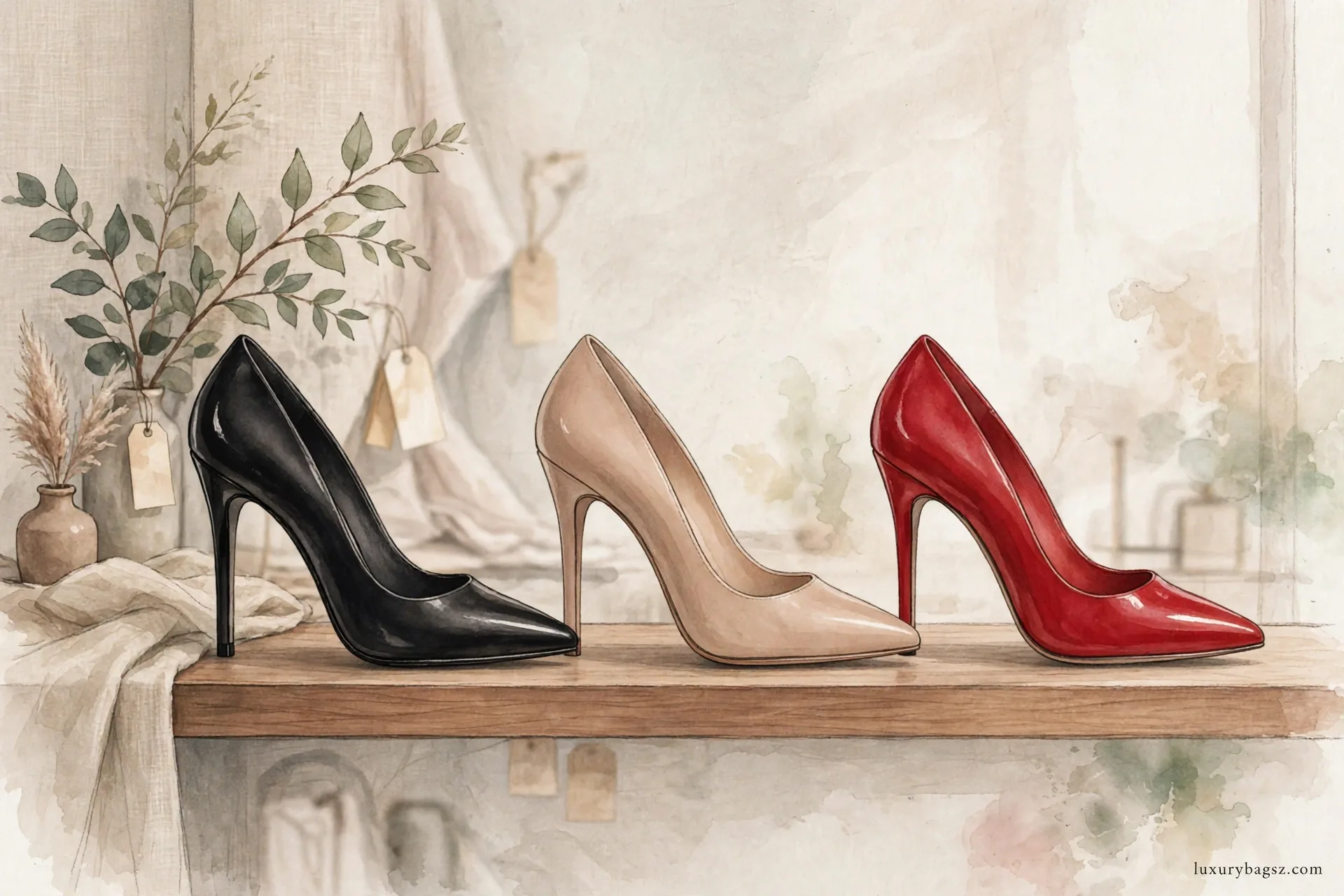
Designer heels divide into a few clear families (pumps, sandals, slingbacks, mules and heeled boots) and a few honest heel heights. Choose the family for the occasion, the height for your real walking life, then fit carefully, because houses cut differently. A first pair in a classic pump shape, at a mid height, in black or nude, will out-earn every dramatic pair in your wardrobe on cost per wear.
Key Takeaways

- Pumps are the foundation style; sandals and slingbacks handle evenings and warm weather.
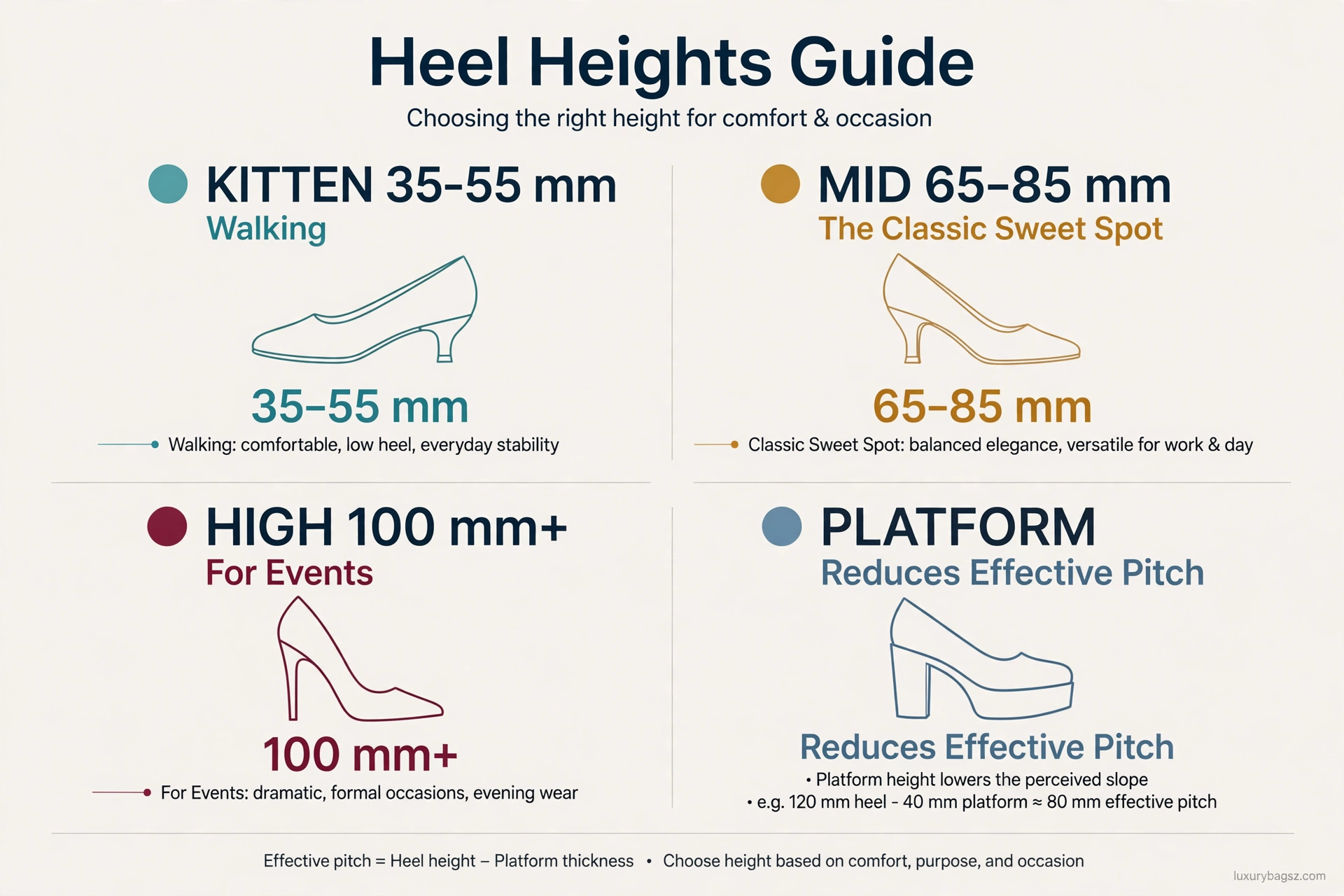
- Heel height is measured in millimetres: 50 is a kitten, 85 a classic mid, 100-plus an event heel.
- Designer sizing varies by house and country system; try or measure rather than assuming.
- Typical new designer heels run from around $600 to $1,200, with embellished pairs far higher.
- Fit at the end of the day: feet swell, and a morning fit can become an evening pinch.
- Pre-owned checks focus on heel tips, sole wear, insole condition and strap stitching.
Why Designer Heels Cost What They Do
The price buys materials and construction: full leather uppers and linings, leather soles on classic styles, shaped arches and hand finishing that cheaper heels skip. It also buys design. A house's last, the mould a shoe is built on, decides its silhouette and fit, and developing lasts is part of what you pay for. Our guide to how to buy your first designer shoes covers first-purchase budgeting in full. None of this guarantees comfort. It guarantees materials that mould, repair and age well, which is where the value sits over years of wear.
Heel Heights, Translated
Kitten heels at 35 to 55 mm give polish with genuine walkability. They suit work, weddings with dancing, and anyone returning to heels after a break. Mid heels at 65 to 85 mm are the designer sweet spot: leg-lengthening, office-appropriate and wearable for an evening. Most classic pumps are sold at 85 mm for this reason. High heels at 100 mm and above are event shoes. Platforms reduce the effective pitch, so a 120 mm heel with a 20 mm platform walks like a 100. Buy high heels for seated dinners and short distances, honestly assessed.
The Main Style Families
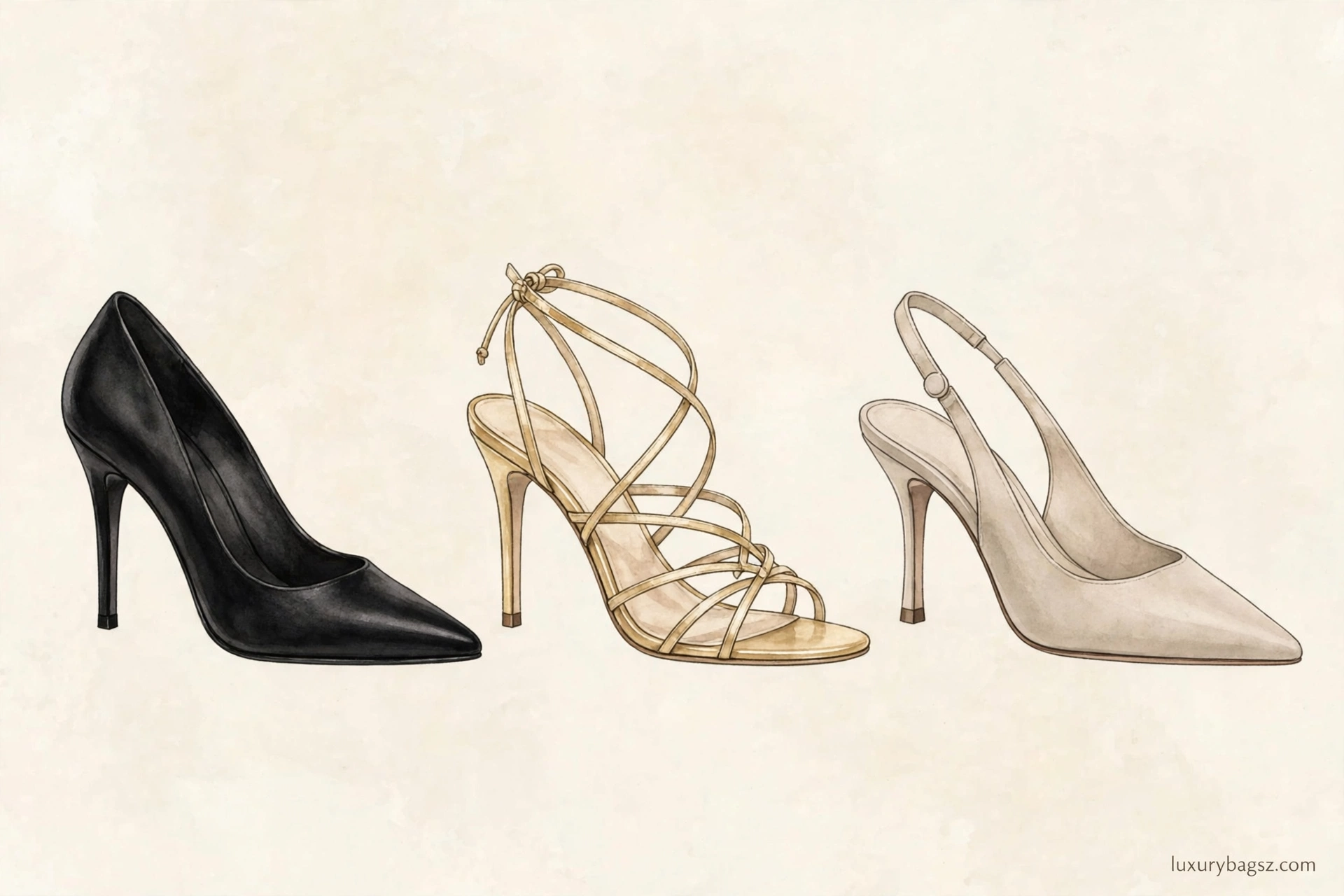
Pumps are closed-toe, slip-on and endlessly versatile; pointed toes lengthen the leg, round and almond toes read softer and often fit wider feet kinder. Sandals range from minimal two-strap evening styles to block-heeled day pairs. Slingbacks add a strap behind the heel, giving security with an open back and a lighter look. Mules slide on and suit warm weather; heeled boots carry the category through winter. A balanced collection holds one pump, one sandal and one seasonal third pair, not five variations of the same shoe.
Sizing and Fit Across Houses
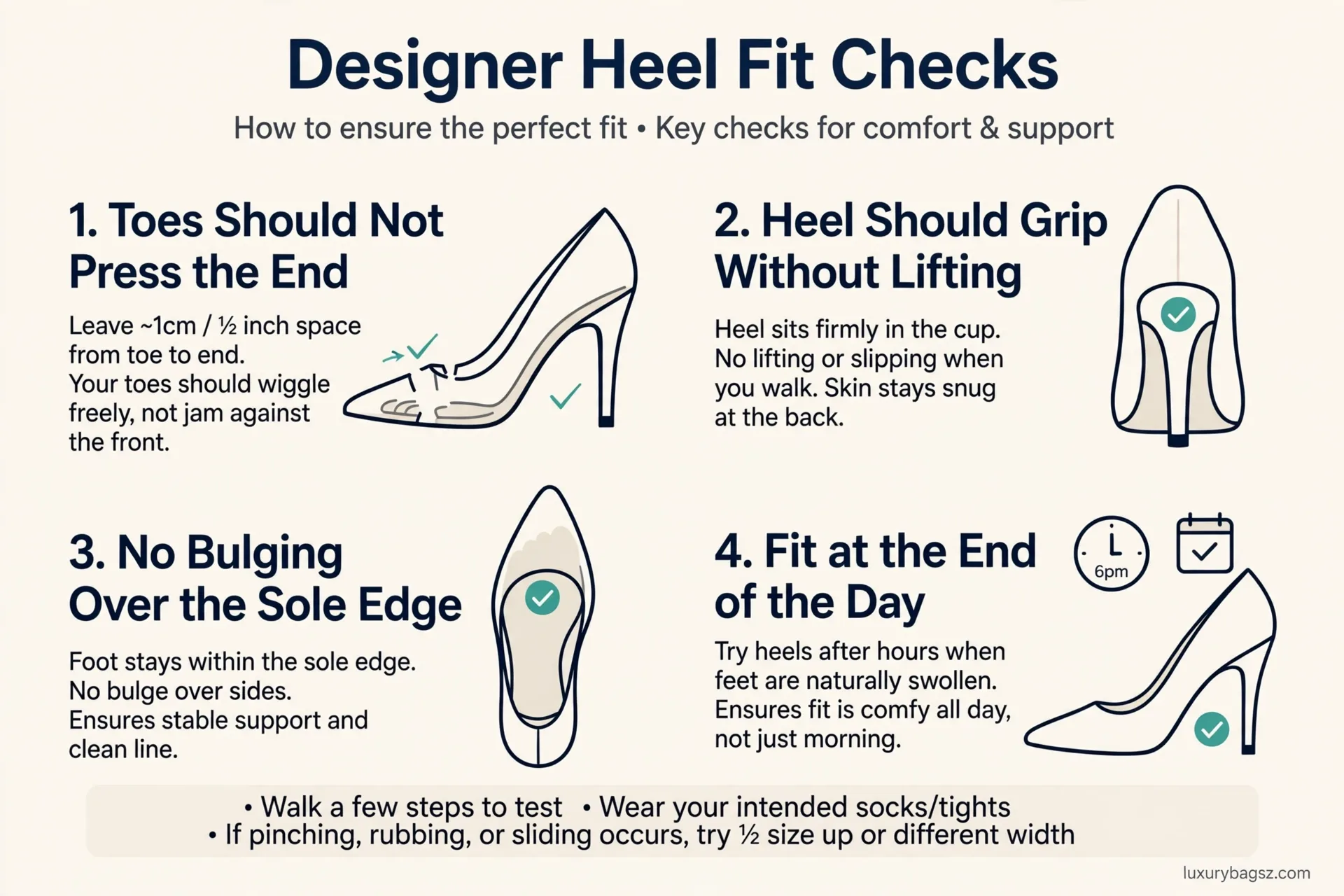
Italian, French and British houses label sizes differently, and conversions are approximate. Many designer heels run narrow and slightly small, especially pointed styles. Follow house-specific advice where it exists, as in our guide to how to size Jimmy Choo shoes, and treat half sizes seriously: in a heel, half a size is the difference between grip and slip. Fit checks are simple. Toes should not press the end, the heel should not lift out with each step, and no part of the foot should bulge over the side of the sole.
Consider your climate honestly when choosing materials. Humid summers punish suede, wet winters punish satin and untreated leather soles, and a wardrobe in a rainy city gets more value from patent and sturdy calf than from delicate finishes.
Materials and What They Suit
Smooth leather is the workhorse: durable, polishable and appropriate everywhere. Patent adds shine and rain resistance but shows scuffs and cannot be recoloured easily. Suede reads soft and rich, suits dry weather, and needs protector spray and gentle brushing. Satin belongs to evenings and weddings; it marks easily and is best kept as an occasion material. Exotic skins and heavy embellishment push prices sharply upward and care demands with them. For a first or second pair, plain leather in a core colour returns the most wear per pound.
The Pairs Worth Knowing
Every house has a signature. The classic pointed pump exists in many versions, and comparing two or three houses' cuts is the fastest way to find your fit family. Sculptural statement heels, such as those in our Saint Laurent Opyum pumps guide, trade some walkability for a logo-built heel and full evening impact. Crystal-buckled pumps, red-soled stilettos and bow-front sandals each own a look. Try the signature styles on even if you buy plain; they teach you each house's sizing quickly.
Buying Pre-Owned: Condition Checks
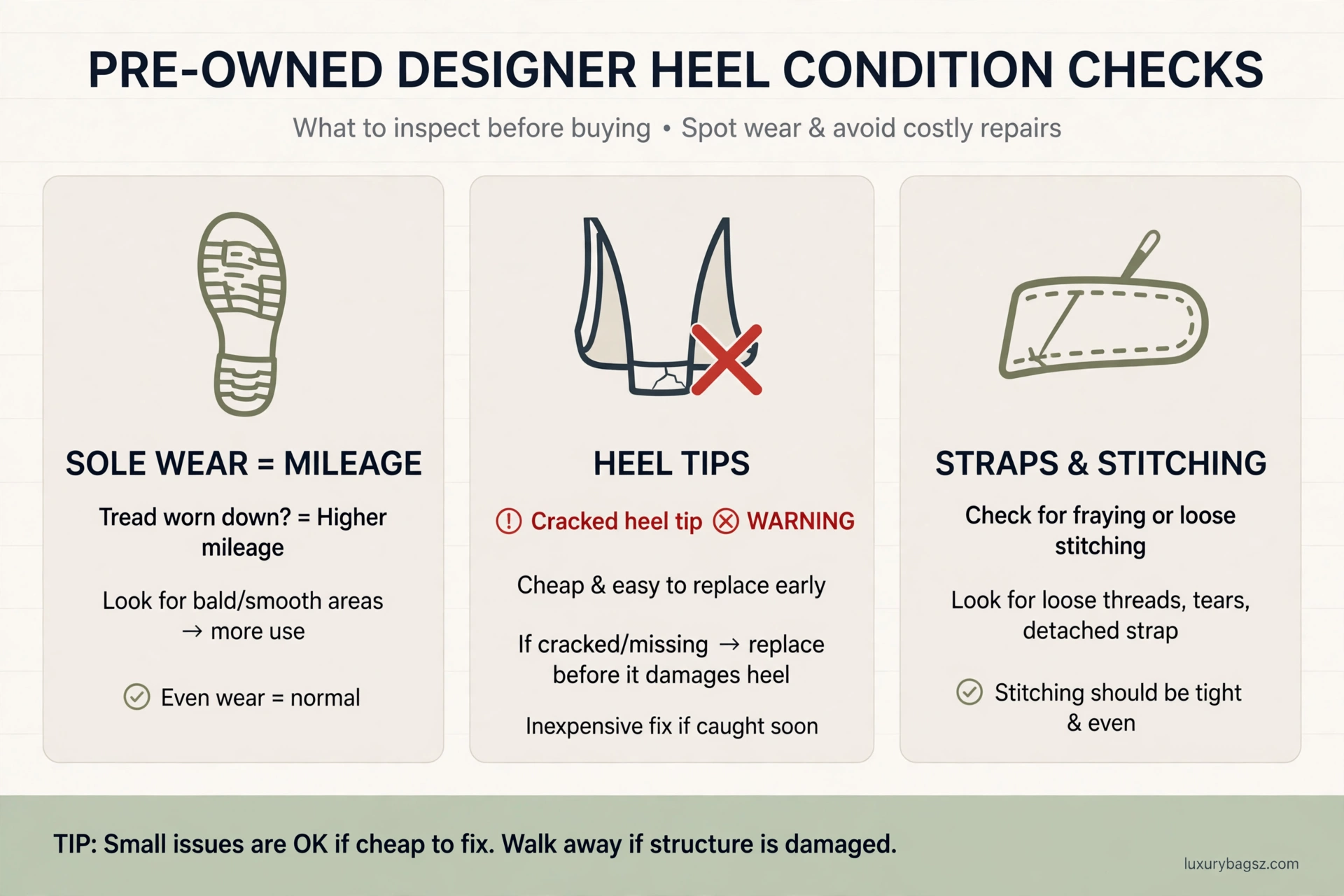
Pre-owned designer heels offer the largest savings in designer fashion, because fit makes buyers cautious. Use that caution as your checklist rather than your fear. Work through our how to grade designer shoe condition method: soles show true mileage, heel tips are cheap to replace but reveal care, and insoles show hygiene and wear honestly. Check straps and buckles on sandals, flex the shoe gently for sole cracks, and smell the pair; leather that has lived damp carries it. Lightly worn pairs in classic styles are the sweet spot.
Care That Keeps Heels Alive
Rotate pairs and rest leather a day between wears. Store heels with their shape supported, away from sunlight, and keep satin and suede in dust bags to prevent rub marks. Replace heel tips before they wear to the metal pin; the repair is cheap early and expensive late, and the clicking sound is your warning. More routines sit in our guide to how to care for leather bags and shoes. Add thin protective soles if you walk on pavements often. A cobbler fits them invisibly, and they double the life of a leather sole for modest money.
Heel Shapes and Toe Shapes, Decoded
Height is only half the geometry. A stiletto concentrates your weight on a pin, which is why it feels dramatic and sinks into grass and grates. A block heel spreads the same height across a wide base, so it walks steadier and suits lawns, cobbles and long days.
Wedges take that logic furthest, supporting the whole foot along a slope; they read more casual and work beautifully in summer. Flared heels widen towards the floor and split the difference between stiletto looks and block stability.
Sculptural heels, where the heel itself is a logo, letter or object, are the statement end of the market. They photograph better than they walk, and they date faster than any classic shape, so buy them after your foundations, not instead of them.
Toe shape changes fit as much as looks. Pointed toes lengthen the leg but compress the toes, almond toes split the difference, and square or round toes give wide feet and bunions the kindest ride. Match the toe to your foot first and the outfit second.
Comfort: Pitch, Padding and Practice
What hurts is rarely the height itself; it is the pitch, the angle between heel and forefoot. An 85 mm heel with a small platform pitches less than a plain 85, which is why platform pumps feel kinder than their numbers suggest.
Designer construction helps at the margins: shaped arches, padded insoles and balanced heel placement all reduce fatigue. But no padding rescues a shoe that is half a size wrong, and no last makes a 110 mm pitch an all-day shoe.
Break new heels in at home over several short wears before an event. Leather soles are slippery for the first outings, so scuff them lightly or ask a cobbler for rubber half-soles before you trust them on marble floors.
If comfort is your deciding factor above silhouette, our comfortable designer heels guide ranks the houses and shapes that owners can genuinely wear all day, including lower pitches and wider cuts.
Price Tiers: What Each Level Buys
Below the classic designer tier sit contemporary labels at roughly $300 to $600. You get real leather and good shapes, but simpler finishing and thinner soles than the heritage houses.
The core designer tier, roughly $600 to $1,200, is where the famous lasts, leather soles and signature silhouettes live. This is the tier the pairs worth knowing come from, and the tier with the strongest pre-owned market underneath it.
Above $1,200 you are paying for embellishment, exotic skins, hand-set crystals or a fashion moment, not for better walking. Those pairs can be worth it as occasion pieces, but they should never be a first pair.
Cost per wear reverses the obvious maths. A $900 pump worn 100 times costs $9 a wear; a $400 trend heel worn four times costs $100. The expensive classic is usually the cheap shoe.
A Three-Pair Plan That Covers a Year
First pair: a classic pump at 65 to 85 mm in black or nude-to-you smooth leather. It covers work, dinners, weddings and funerals without a second thought, and it teaches you your size in your chosen house.
Second pair: an evening sandal in a metallic or black satin, at the highest height you can honestly walk in. This is the pair for dresses, parties and summer events where the pump looks too covered.
Third pair: follow your life, not a list. Office-heavy lives add a slingback or loafer heel; social lives add a statement or embellished pair; winter lives add a heeled ankle boot. Buy the third pair only after the first two have taught you what you actually reach for.
Common Buying Mistakes
Buying for the photograph instead of the calendar is the classic error. If your real life holds two standing-up events a year, a 110 mm stiletto is jewellery, not footwear, and should be budgeted as such.
Trusting a size conversion chart without trying the shoe is the second. Conversions differ between houses, and in heels a half size is a different shoe. Order two sizes where returns allow, and judge them at the end of the day on carpet and hard floor.
Choosing satin or pale suede as a first pair is the third. Both mark on their first wet pavement, and the disappointment colours the whole purchase. Delicate materials belong in second and third pairs.
Finally, ignoring the walk home. Judge every heel by whether you could walk fifteen minutes in it at the end of the night, because sooner or later, you will have to.
Frequently Asked Questions
What heel height is best for a first designer pair?
Around 85 mm in a classic pump. It gives the full designer silhouette while staying wearable for work, dinners and events without special planning.
Do designer heels run small?
Many do, especially Italian and French pointed styles. Expect to try your usual size and the half size above; narrow cuts are common across houses.
Are designer heels more comfortable than high-street heels?
Not automatically. Materials and arch shaping are usually better, but a steep pitch is a steep pitch. Fit and height decide comfort more than the label.
How much do designer heels typically cost?
Core styles commonly run from around $600 to $1,200 new. Embellished, exotic and limited pairs rise well above that; pre-owned classic pairs cost far less.
Which colour should I buy first?
Black for maximum formality, nude-to-you for leg length and summer wear. Between them they cover most outfits; add colour or metallics third.
Can designer heels be resoled and repaired?
Yes. Leather soles can be protected or replaced, heel tips renewed and straps restitched by a good cobbler. Satin uppers, however, mark permanently.
What is the difference between a pump and a court shoe?
They are the same closed, slip-on style; pump is the American term and court shoe the British one. Designers use both names for identical silhouettes.
How do I stop my heel slipping out of the shoe?
Check sizing first; a heel that slips is often half a size large. Heel grips help marginally, but in a high heel a secure fit matters more than inserts.
Are platform heels easier to walk in?
Yes, relatively. A platform raises the front of the foot, reducing the effective angle. A 120 mm platform heel can walk like a plain 100 mm heel.
Is it worth buying designer heels pre-owned?
Often, yes. Lightly worn classic pairs sell at deep discounts. Check soles, heel tips, insoles and straps carefully, and buy from sellers with returns.
Conclusion: One Classic Pair, Worn Constantly
Designer heels reward restraint: a classic pump at a walkable height, in a core colour, fitted carefully and maintained by a cobbler. That pair will carry more outfits, more seasons and more confidence than any trolley of dramatic bargains, and it teaches you your fit family for everything after.






