How to Wear Loafers: A Complete Guide for Every Occasion
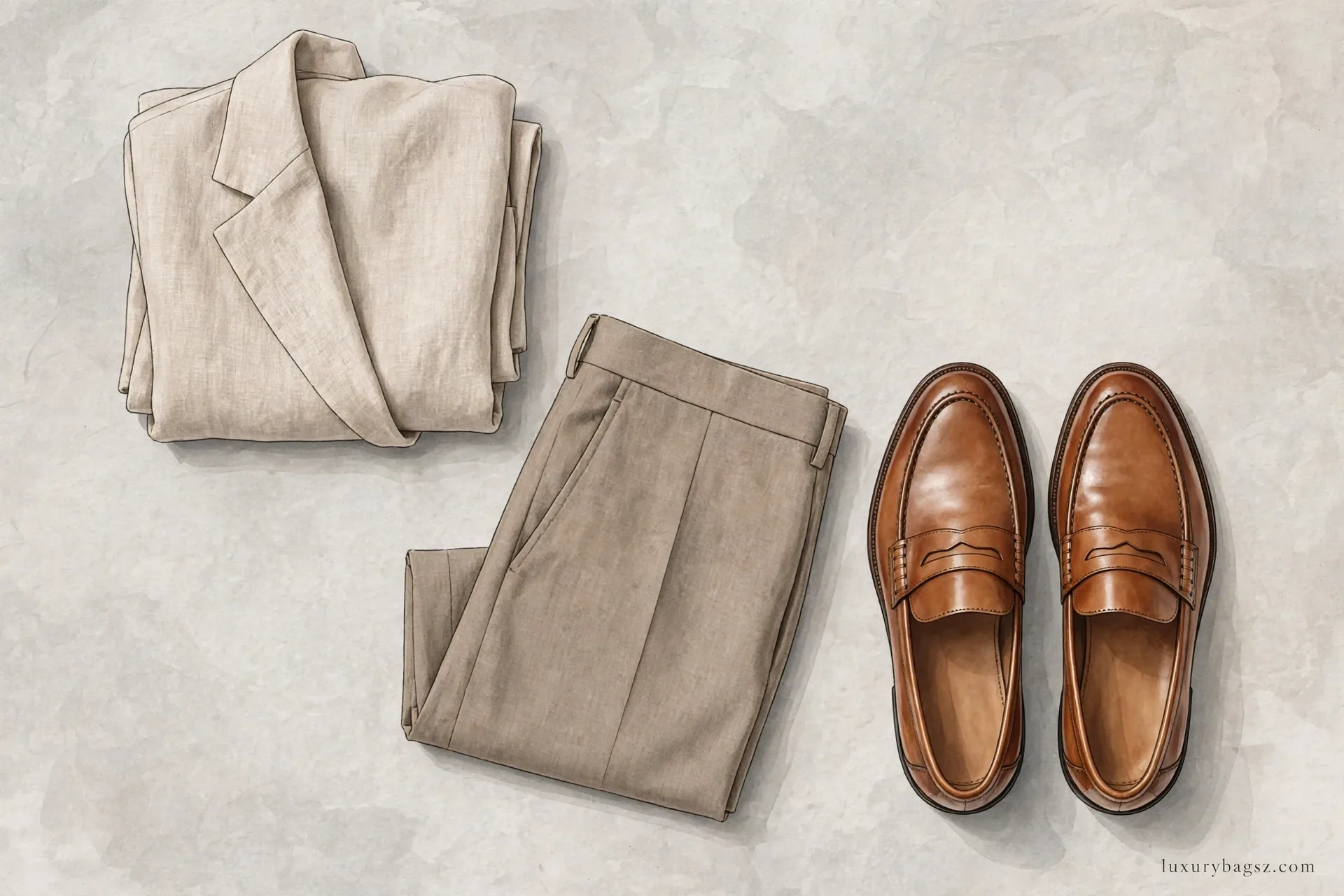
Loafers, Worn Well, From Weekend to Wedding
Loafers are laceless slip-on shoes that sit between trainers and lace-up dress shoes. They look polished without feeling stiff, which is why one good pair can cover weekends, offices and weddings.
The whole trick is matching the loafer to the outfit around it. A chunky suede loafer belongs with relaxed clothes, while a sleek black leather loafer belongs with tailoring. Swap those two and the outfit fights itself.
Start with fit, then colour, then hem length. If those three are right, most loafer outfits fall into place, and the rest of this guide fills in the details.
Key Takeaways
- Match the loafer's formality to the outfit: sleek leather for tailoring, suede or chunky soles for casual wear.
- Black is the smartest loafer colour, dark brown is the most versatile, and suede reads more relaxed than smooth leather.
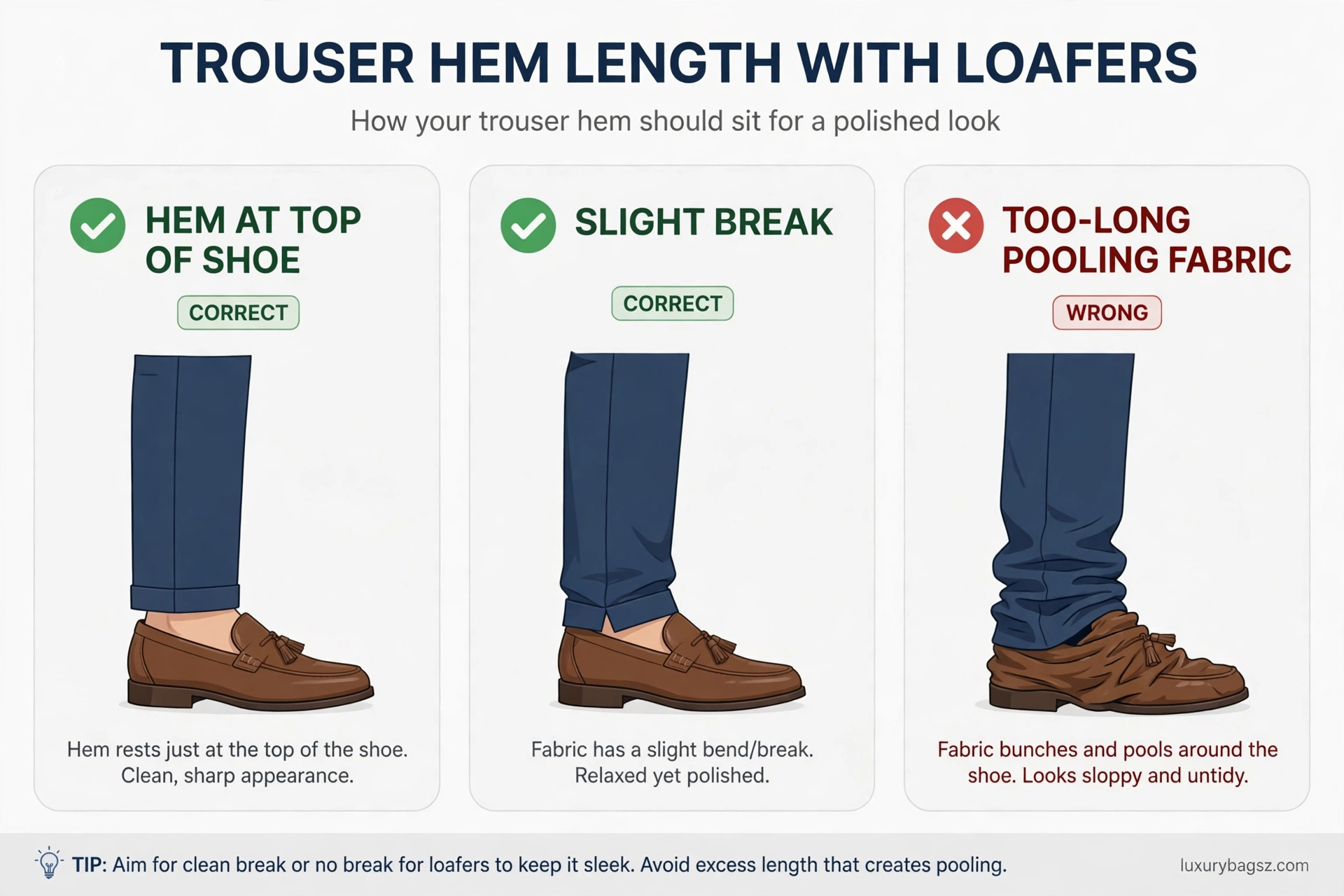
- Trousers should end at the top of the shoe or just above the ankle, with a slight break at most.
- Wear no-show socks for a bare-ankle look, or dress socks matched to your trousers for smarter outfits.
- Buy snug, not roomy: leather loafers stretch in width, but they never shrink back to fit.
Know the Main Loafer Types First
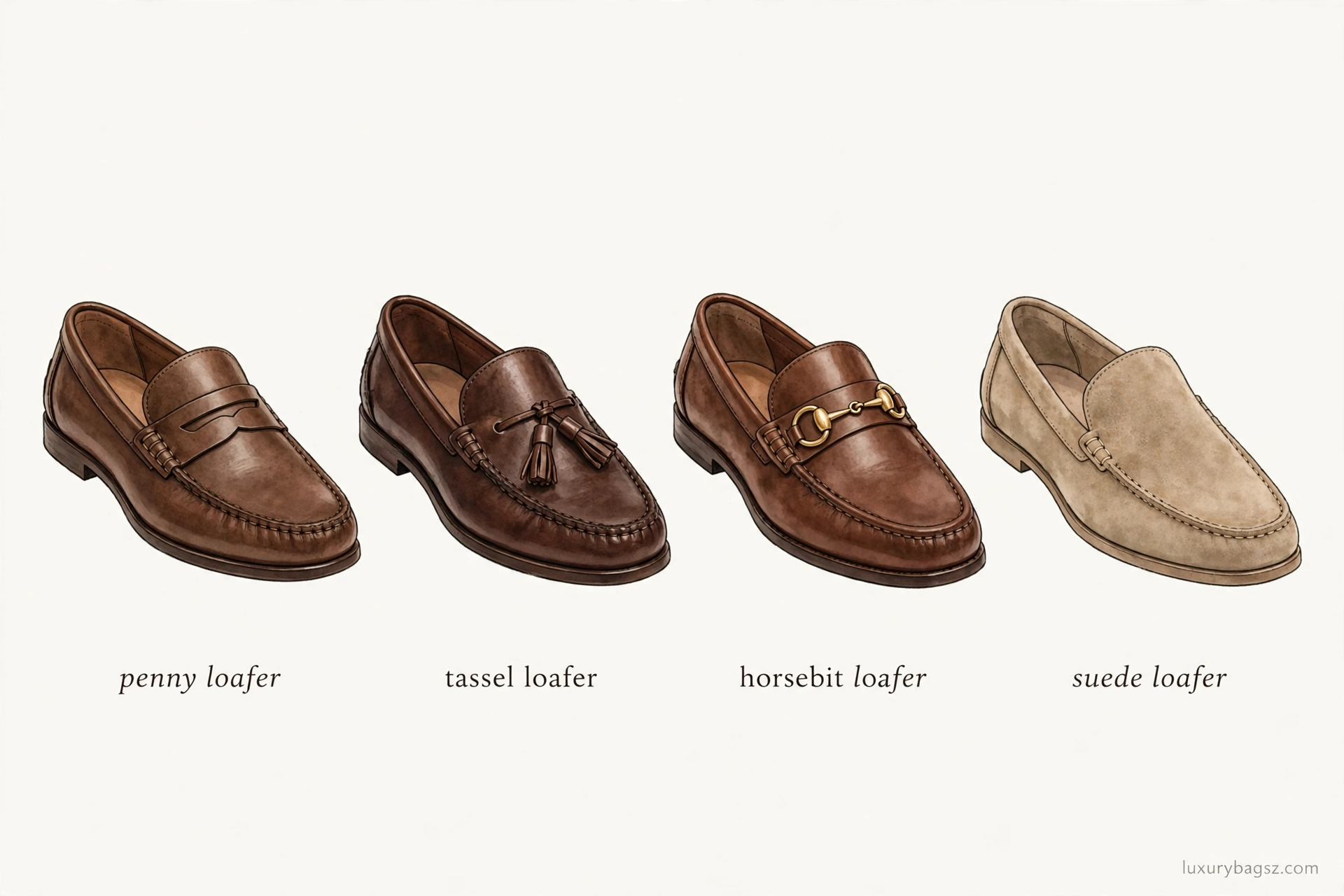
Penny loafers have a strap across the vamp with a small slot. They are the classic all-rounder, smart enough for the office and relaxed enough for chinos at the weekend.
Tassel loafers add small tassels to the front. They read a touch dressier than penny loafers and are often the best single pair if you want one shoe for many occasions.
Horsebit loafers carry a metal bar across the vamp. They look refined and slightly bold, so keep the rest of the outfit quiet and let the hardware do the talking.
Venetian loafers have no strap, tassel or hardware at all. Their clean front makes them ideal for shorts and summer outfits, where a simpler shoe looks better.
Driving loafers have soft, flexible soles with rubber studs. They are built for comfort and casual wear, not for suits or long walks on hard pavements.
Chunky loafers sit on thick or commando soles. They suit relaxed, modern outfits and wide trousers, but they clash with sharp tailoring and slim formal trousers.
Pick a Colour That Matches Your Wardrobe
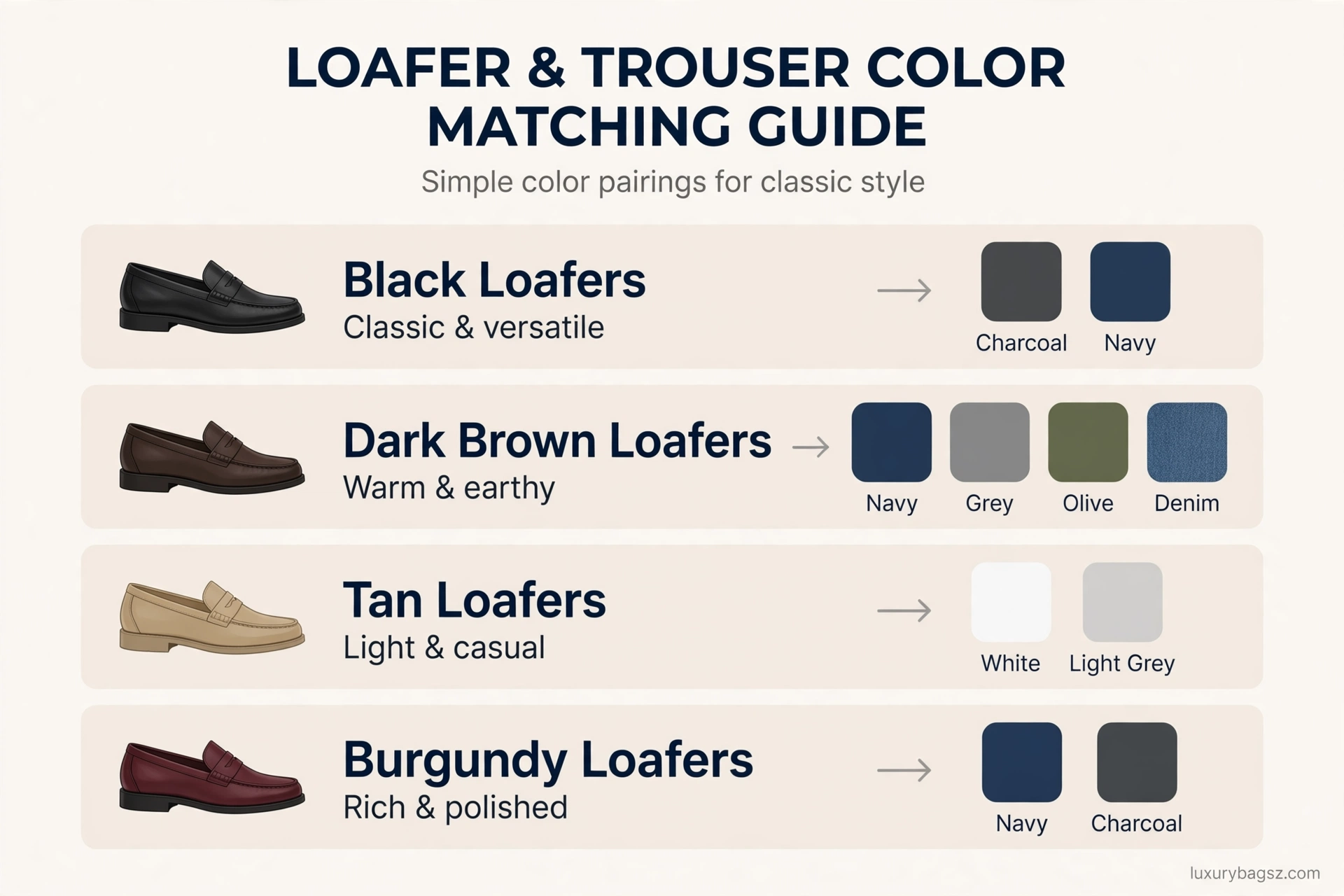
Black leather is the smartest choice and the safest with charcoal, navy and black tailoring. It looks sharp, but it can feel too formal with light summer clothes.
Dark brown leather is the most versatile loafer colour most men will own. It works with navy, grey, olive, beige and dark denim, and it softens a smart outfit without making it casual.
Tan and light brown suit spring and summer best. Pair them with navy chinos, white trousers, light grey tailoring and mid-blue jeans, and keep the rest of the outfit light.
Burgundy, or oxblood, sits between black and brown. It adds colour without shouting, and it pairs well with navy, grey and charcoal when black feels too severe.
Suede in sand, tobacco or chocolate reads relaxed whatever the colour. Save suede for dry days, spray it before first wear, and brush it once dry if it gets damp.
Match your belt to your loafers in smarter outfits. The match need not be exact, but black shoes with a tan belt, or the reverse, breaks an otherwise polished look.
Get the Fit Right Before You Style Anything
Loafers have no laces, so fit does all the work. A new leather loafer should feel snug across the instep, like a firm handshake, without pinching your toes or causing pain.
Expect a small amount of heel slip when the shoes are new. Leather softens and the sole flexes with wear, and that early slip usually disappears within a few wears.
If your heel pops fully out of the shoe on every step, the pair is too big or too wide. Do not buy it hoping it will somehow tighten, because leather only stretches wider.
Try loafers on later in the day, when your feet are slightly larger, and wear the socks you plan to pair them with. Sizing with thick socks, then wearing them sockless, changes the fit.
Between sizes, most men do better taking the smaller size in leather and their true size in synthetic materials, which stretch far less. Check the brand's own sizing notes first.
Build Outfits by Occasion, Not by Rulebook
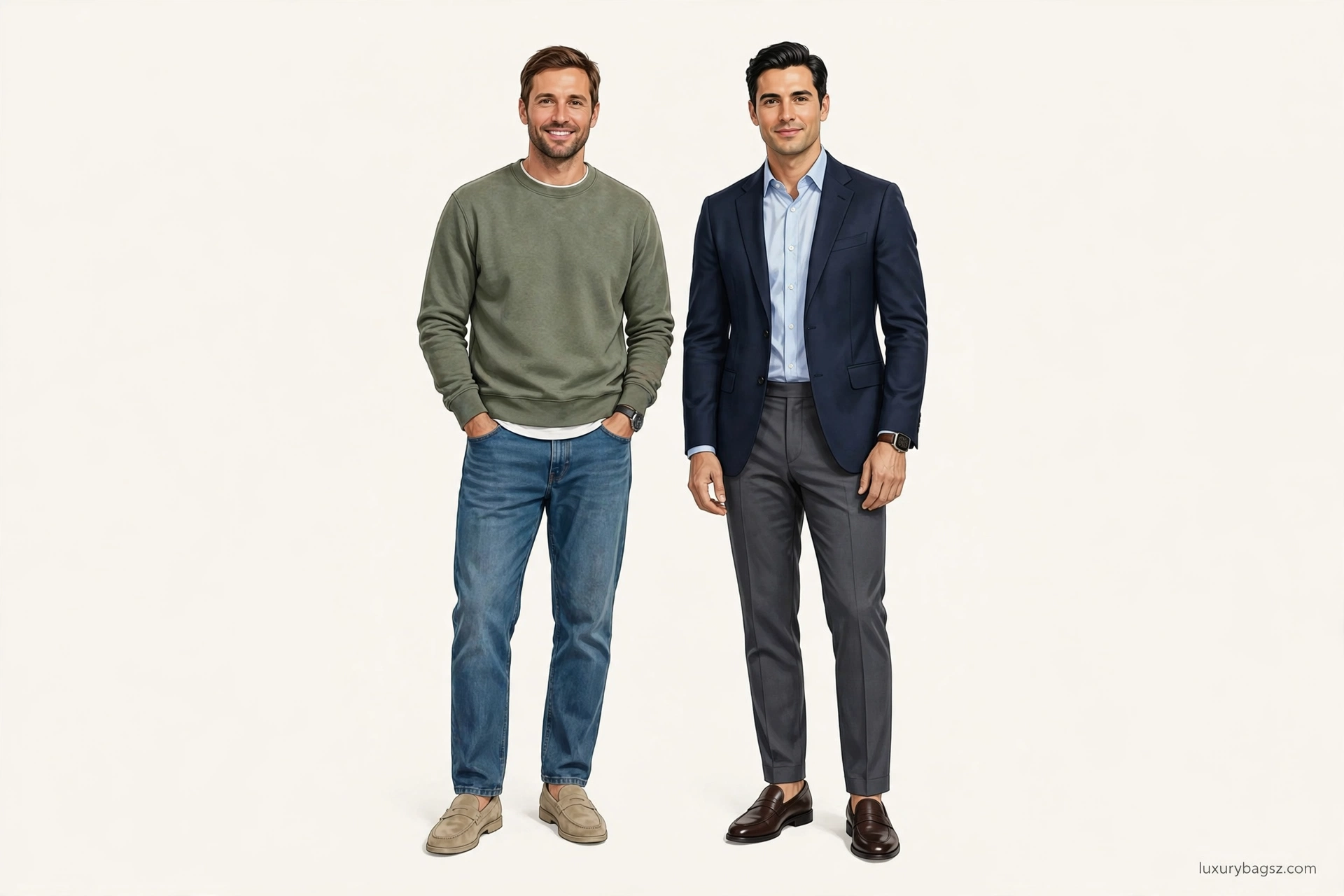
For casual weekends, wear suede or driving loafers with well-fitted jeans or chinos and a plain tee, polo or knit. Roll or crop the hem slightly so the shoe shows.
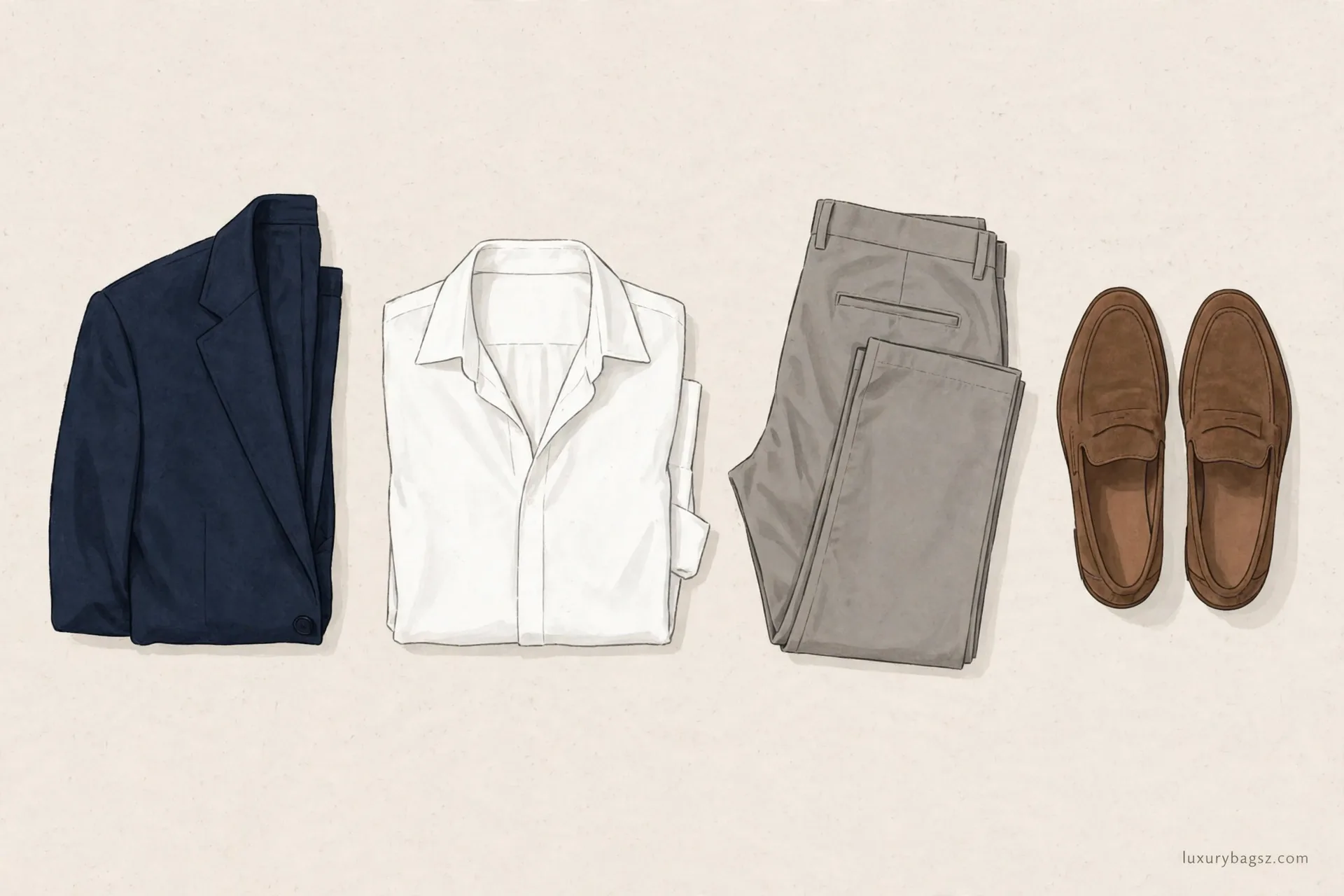
For smart casual days, choose penny or tassel loafers with chinos, dark denim and a collared shirt. Tuck the shirt in, add a lightweight jacket, and keep colours muted.
For business casual offices, an Oxford shirt, well-fitted chinos or wool trousers, a sports coat and dark leather loafers almost never fails. Match your socks to your trousers here.
For weddings and dressy evenings, wear sleek black or very dark brown leather loafers with a dark suit. Skip chunky soles, heavy stitching and bright suede for these events.
For summer, lighter suede or Venetian loafers with linen trousers, chino shorts and a linen shirt look effortless. Keep the shirt fitted, not billowy, so the outfit stays sharp.

Hem Length and Trouser Shape Matter Most
Loafers look best when the trouser ends at the top of the shoe or shows a little ankle. A slight break is fine, but fabric pooling over the shoe hides the loafer completely.
Slim and straight-leg trousers pair most easily with sleek loafers. The clean line from knee to shoe matches the shoe's own slim shape and keeps the outfit balanced.
Wide trousers need a wider, chunkier loafer to balance them. A slim dress loafer under a very wide leg looks lost, while a chunky sole holds its own against the extra fabric.
Avoid very baggy trousers with sleek loafers, and avoid ultra-skinny trousers that squeeze the calf and show too much sock. Both extremes break the proportion of the outfit.
If your trousers are too long, get them hemmed rather than rolling them into a thick cuff. One neat roll can work with jeans, but a bulky roll under tailoring looks accidental.
Socks, or No Socks: Decide on Purpose
No-show socks give the bare-ankle look while protecting the lining from sweat. This is the best choice for shorts, summer outfits and casual chinos, and it keeps shoes fresher.
Visible dress socks suit smarter outfits. Match them to your trousers for the safest look, or to your shoes as a second choice, and choose over-the-calf length for suits.
White socks with loafers can work as a deliberate retro or preppy look with cropped trousers or dark denim. Keep the socks clean, crisp and plain, never worn gym socks.
Avoid ankle socks that peek out in a thin band above the shoe. They read as neither a bare ankle nor a proper dress sock, and they spoil an otherwise clean hemline.
In cold weather, fine wool dress socks or thin ribbed socks add warmth without bulk. Thick, chunky socks change the fit and belong with boots, not with slim loafers.
Mistakes That Spoil an Otherwise Good Outfit
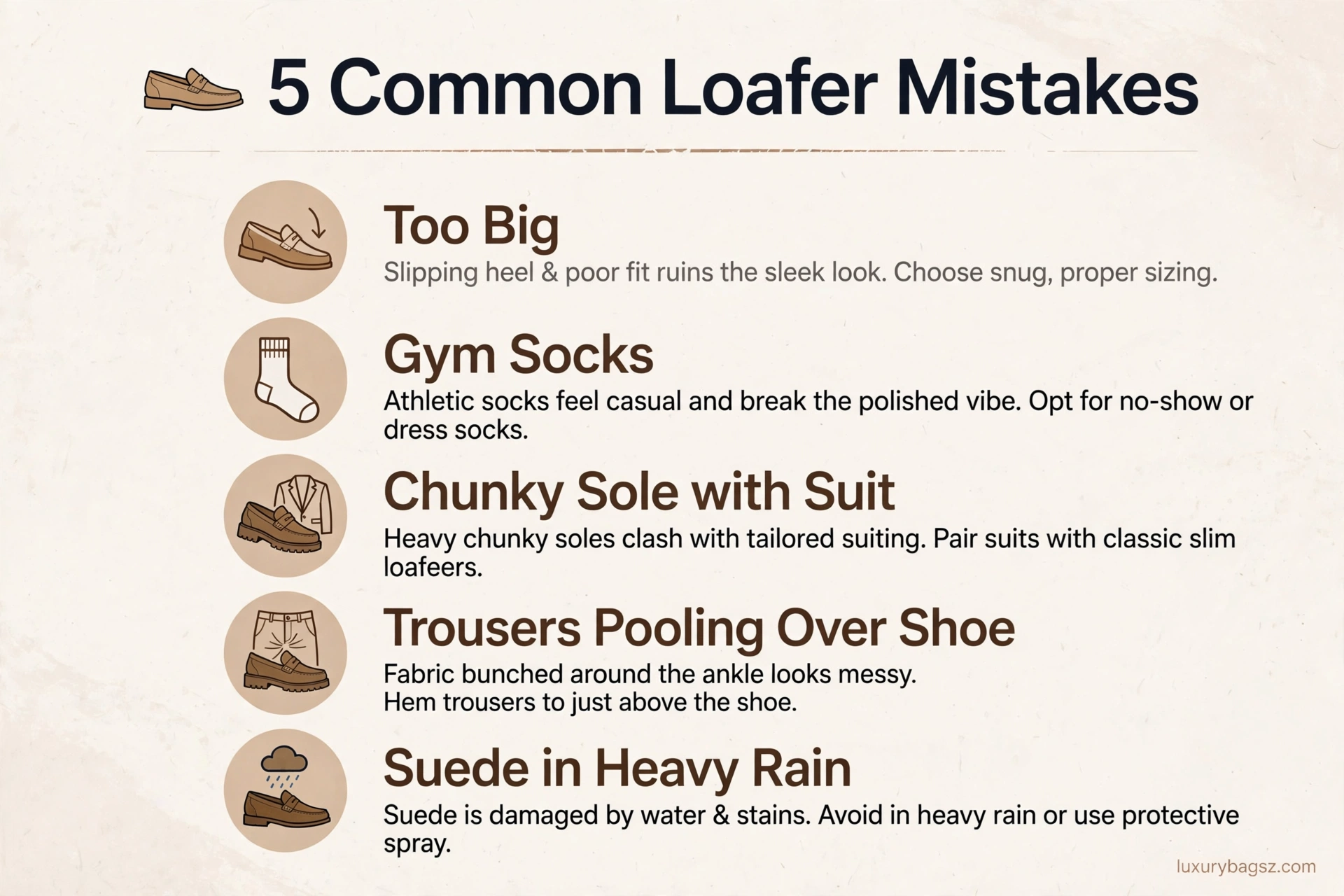
Buying too big is the most common loafer mistake. Without laces to take up slack, a loose loafer slips, squeaks and wears out of shape, so buy snug and let leather stretch.
Wearing sporty white athletic socks with dress loafers is another easy error. It reads as gym wear, not style, unless the whole outfit is a deliberate retro statement.
Pairing chunky loafers with a sharp suit, or sleek dress loafers with baggy shorts, mismatches formality. Check that shoe and clothes sit at the same level of dressiness.
Letting trousers pool over the shoe hides the loafer and shortens the leg visually. Hem trousers properly, and check the length while wearing the loafers, not other shoes.
Wearing suede loafers in heavy rain without protection is a care mistake, not just a style one. Spray suede before first wear, and keep smooth leather for wet days instead.
Neglecting care also shows fast. Scuffed, unpolished leather and flattened suede drag down a good outfit, so brush suede and polish smooth leather regularly.
Care and Rotation That Keep Loafers Looking New
Brush suede after wear with a suede brush, moving in one direction. For smooth leather, wipe with a soft dry cloth and polish when the shine fades or scuffs appear.
Use cedar shoe trees between wears. They hold the shape, absorb moisture and reduce creasing, which matters more for laceless shoes that rely on shape to stay on.
Rotate loafers so no pair is worn two days running. Leather needs a day to dry and rest, and rotation also stops one pair from wearing out months before the others.
Keep loafers away from radiators and direct heat when drying. Fast heat cracks leather and stiffens suede, while slow air-drying at room temperature keeps both supple.
Store loafers in a cool, dry place, ideally in dust bags. Avoid sealed plastic, which traps moisture, and keep them out of strong sunlight, which fades colour unevenly.
When soles wear thin or heels wear down unevenly, take the shoes to a cobbler early. A resole costs far less than a replacement pair, and it extends a good loafer's life by years.
A Simple Seasonal Rotation
In spring, tan suede and light brown leather work with chinos, linen blends and light denim. Keep colours pale on top too, so the shoes do not look heavier than the clothes.
In summer, Venetian and driving loafers in sand, cream or light brown suit shorts, linen trousers and open shirts. Use no-show socks, and keep suede away from sudden downpours.
In autumn, dark brown leather and chocolate suede pair with wool trousers, dark denim, knits and jackets. This is the season when a tassel loafer earns its keep most often.
In winter, smooth dark leather with fine wool socks handles offices and evenings best. Save suede for dry days, and rely on a darker, sturdier pair when pavements are wet or salted.
Frequently Asked Questions
Can you wear loafers every day?
Yes, if the pair fits well and you rotate it with other shoes. Daily wear without rest dries leather out faster, so give loafers a day off between wears when you can.
Are loafers formal shoes?
Loafers sit in the middle of the formality scale. Sleek leather loafers count as dress shoes and suit offices and weddings, while suede and chunky loafers are casual.
Should loafers be tight at first?
They should feel snug, not painful. Leather stretches in width and across the instep with wear, so a slightly firm first fit usually becomes comfortable within a few wears.
Can you wear loafers without socks?
Yes, in casual and summer outfits, but wear no-show socks inside the shoe. Truly bare feet make the lining damp, smelly and worn out far sooner than it should be.
What trousers go best with loafers?
Chinos, wool trousers and dark straight-leg jeans are the safest choices. Hem them to the top of the shoe, and match slimmer trousers with slimmer loafers for balance.
Are black or brown loafers more versatile?
Dark brown is more versatile across casual and smart outfits. Black is smarter and better for formal tailoring, but it feels too severe with light summer clothes.
Can you wear loafers in winter?
Yes, with wool trousers, dark denim and fine wool socks. Choose smooth leather over suede for wet days, and save suede pairs for dry weather to protect the nap.
How do you stop loafers slipping at the heel?
Buy the correct size first, since no accessory fully fixes a pair that is too big. Heel grips, tongue pads or a thin insole can help a slightly loose pair.
Are tassel loafers too dressy for jeans?
No, tassel loafers are one of the most versatile styles. A smooth brown tassel loafer works with dark jeans, chinos and many suits, provided the toe is not too chunky.
How long should good loafers last?
Well-made leather loafers can last many years with rotation, shoe trees and resoling. Cheap bonded leather wears out far sooner, so construction matters as much as care.
Final Verdict
Loafers reward three simple decisions: the right type for the occasion, a colour that matches most of your wardrobe, and a snug fit with a clean hem. Get those right and the shoe does the rest, carrying you from a weekend walk to a wedding without a change of footwear. Buy one versatile dark brown pair first, add black for formal days later, and let the rest of your wardrobe catch up.