What Is Smart Casual for Men? The Dress Code Explained With Outfits
Smart Casual, in Plain Terms
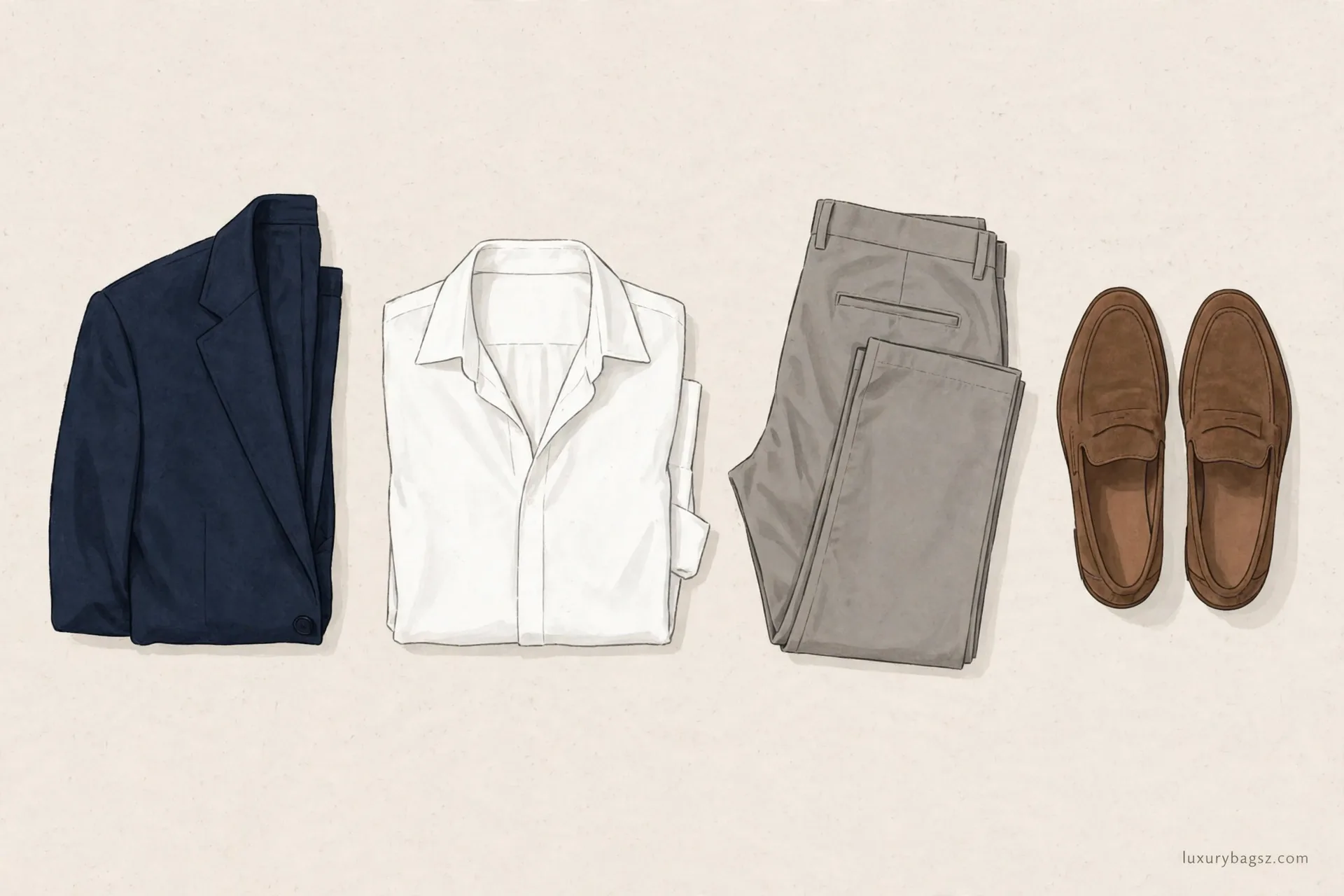
Smart casual is a dress code that mixes polished pieces with relaxed ones. Think a collared shirt or fine knit on top, tailored trousers or chinos below, and shoes that look considered rather than sporty.
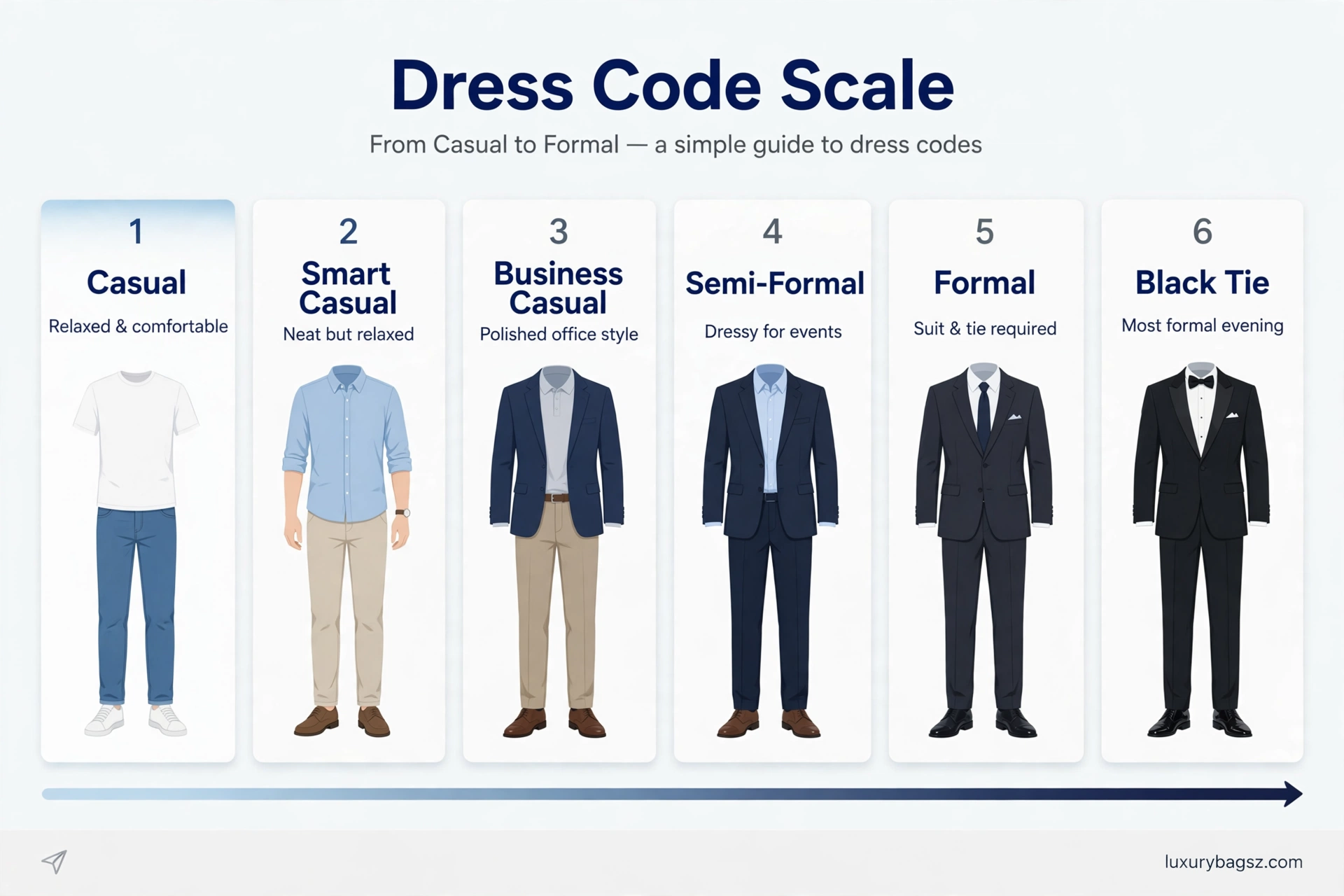
It sits between everyday casual and business casual. It is smarter than jeans and a graphic tee, but it does not require a full suit, a tie or formal dress shoes.
The key is balance. If one piece is relaxed, another should add polish, so the whole outfit looks intentional rather than accidental, however comfortable it feels.
Key Takeaways
- Smart casual usually means a collar or fine knit, tailored trousers or chinos, and smart shoes.
- A jacket is the easiest way to raise the level, and removing it relaxes the outfit fast.
- Dark, undamaged jeans can count in many settings, but a host or employer can rule them out.
- Fit and condition matter more here than in stricter codes, because no suit or tie carries the outfit.
- When in doubt, dress slightly smarter than you think the room expects.
What Smart Casual Actually Means
There is no single governing body for smart casual, and no fixed uniform. Different countries, venues and employers read the code differently, so a published dress code always wins over general advice.
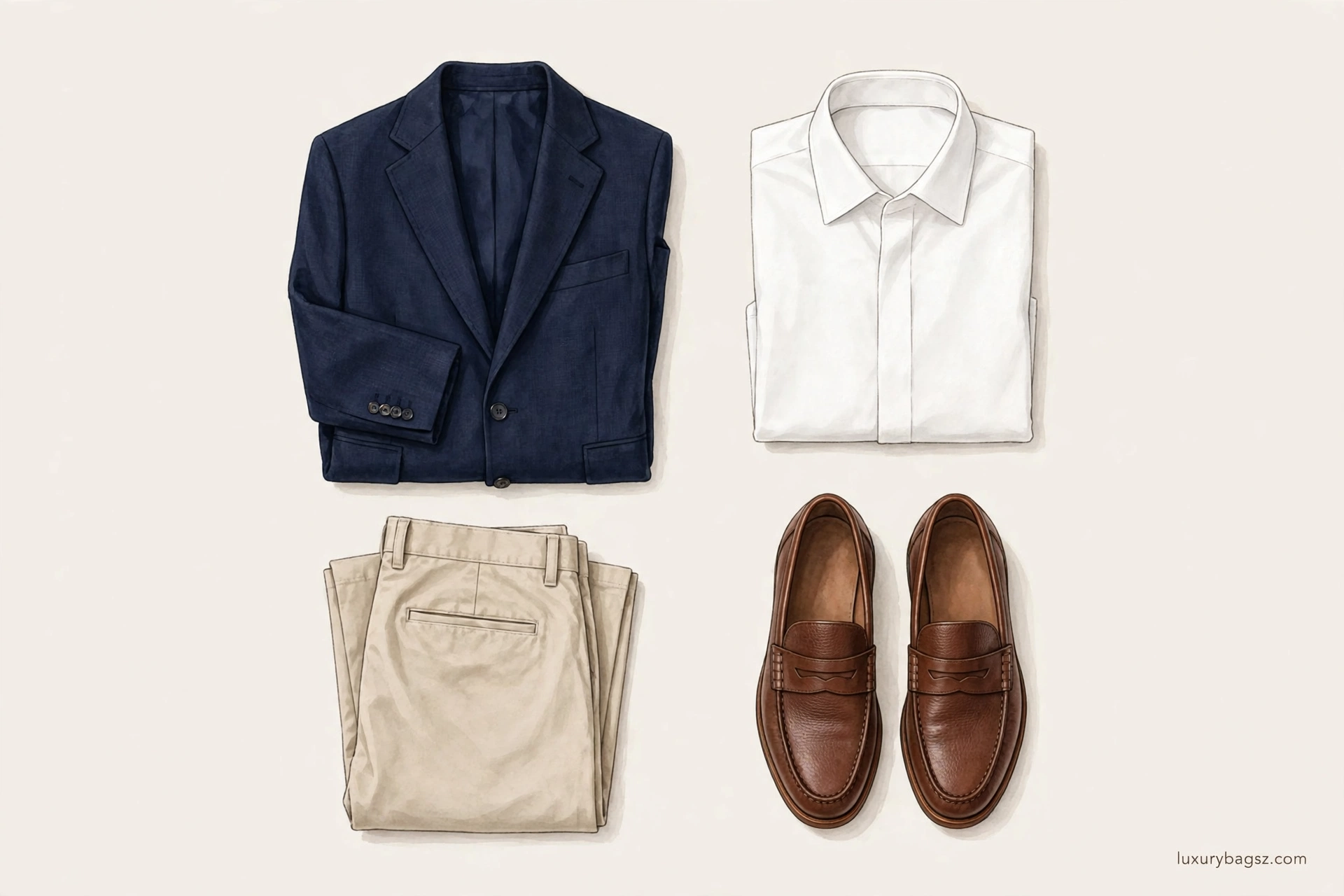
In the most common reading, smart casual combines structure with comfort. A blazer with dark jeans, an Oxford shirt with chinos, or a knit polo with tailored trousers all fit the code.
Condition does more work in smart casual than in formal dress. Without a suit to hide behind, creased shirts, scuffed shoes and faded jeans stand out immediately.
Smart casual is also a range, not a point. At the relaxed end, a polo, dark jeans and clean trainers may pass, while at the smarter end, a blazer, shirt and loafers are expected.
That range is why smart casual confuses people. The invitation rarely tells you which end it means, so you must read the venue, the time of day and the host's own style.

The Core Pieces Every Man Needs
Tops: Oxford shirts, linen shirts, knit polos and fine-gauge sweaters form the smart casual core. A plain, heavyweight tee can work under a jacket, but not on its own for smarter rooms.
Trousers: chinos in navy, tan, olive or grey are the safest choice. Tailored trousers in wool or a wool blend suit smarter settings, while dark, undamaged jeans suit relaxed ones.
Shoes: loafers, derbies, clean leather boots and minimal leather trainers cover most smart casual outfits. Sporty running shoes and flip-flops do not, however clean they are.
Jackets: an unstructured blazer, a chore jacket, a bomber or a Harrington jacket all add polish. A blazer is the most versatile, because it can be removed if the room is more relaxed.
Accessories: a leather belt, a simple watch and a clean bag complete the look. Keep accessories quiet, since smart casual rewards polish, not statement pieces.
Loafers are a natural smart casual shoe, and understanding where they sit among dress shoes helps you judge how smart any outfit actually is.
Colours, Fabrics and Fit
Colours should be mostly muted: navy, grey, charcoal, olive, tan, white and burgundy. One accent colour, such as a rust knit or a checked shirt, adds personality without noise.
Fabrics should look intentional. Cotton, linen, wool, merino and suede all suit smart casual, while shiny synthetics, thin jersey and very stretchy fabrics look less polished.
Fit should be neat but comfortable. Slim or straight trousers, shirts that tuck without billowing, and jackets that close without strain all signal that the outfit was chosen, not thrown on.
Avoid very baggy or very skinny fits in smart casual. Both extremes fight the code's balance, while a straight, well-fitted shape suits almost every body and occasion.
Check clothes in daylight before leaving home. Colours and creases that look fine indoors can look very different outside, and smart casual has no formal layer to hide them.
Outfits for Work, Dinner, Dates and Weekends
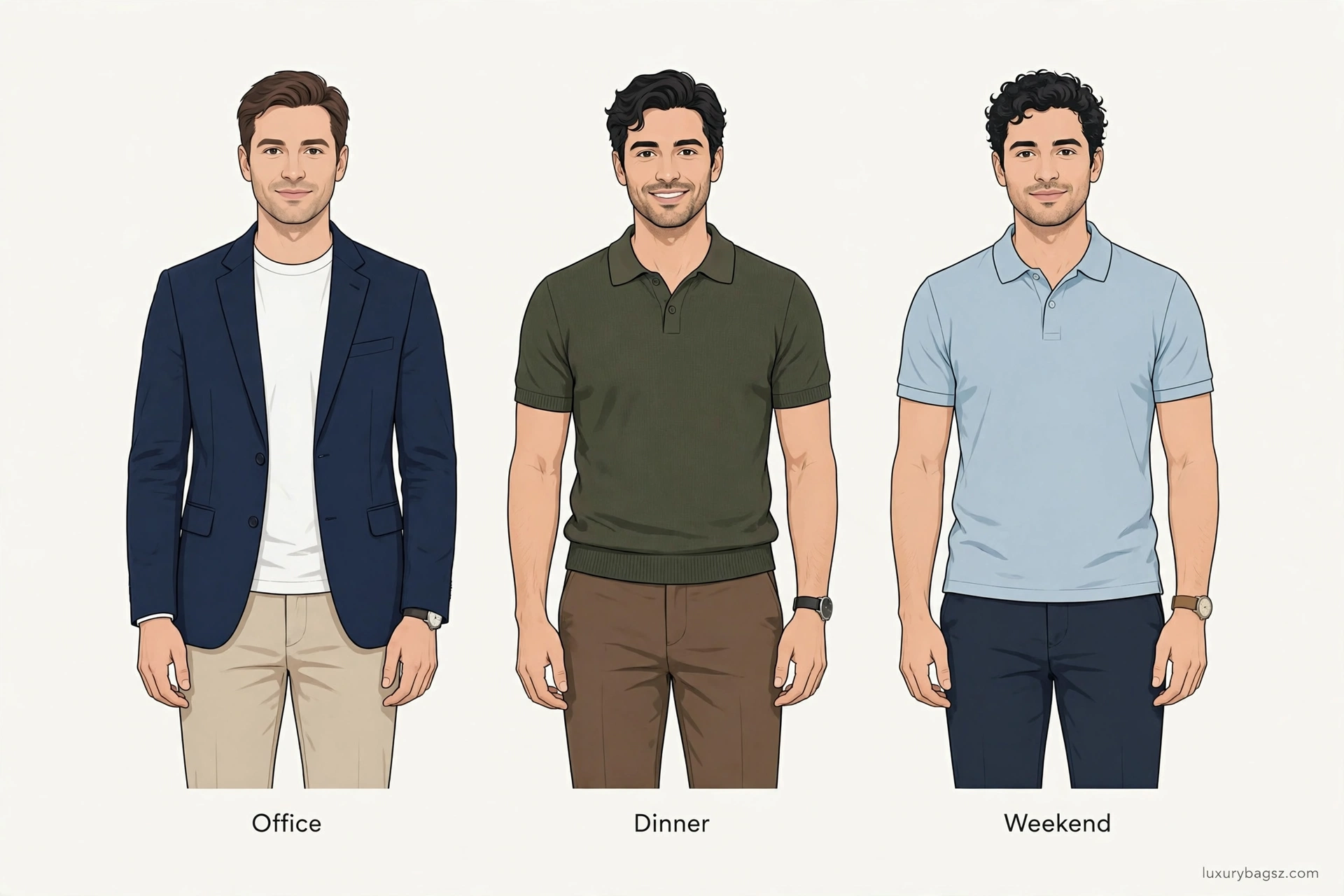
For a relaxed office, wear an Oxford shirt, navy chinos and loafers, with a blazer you can remove. This is smart enough for meetings and comfortable enough for a full day.
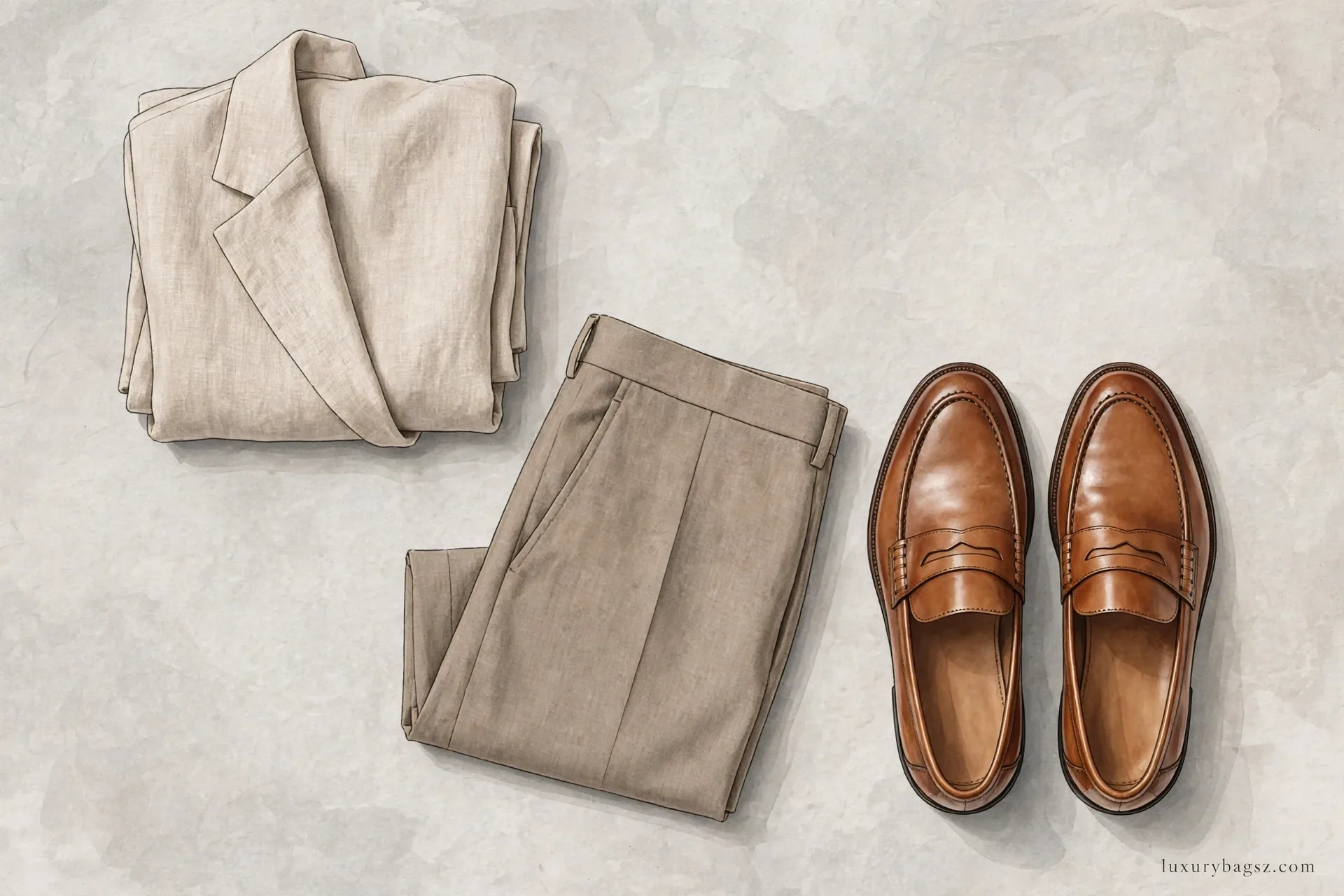
For dinner, wear a dark knit polo or a linen shirt, tailored trousers and leather loafers or derbies. A lightweight jacket adds polish for evening venues without feeling formal.
For a date, wear a well-fitted shirt, dark jeans or chinos, and clean boots or loafers. Keep colours simple and let fit do the work, rather than relying on loud patterns.
For a weekend event, wear a polo, dark chinos and minimal trainers or suede loafers. This is the relaxed end of smart casual, suited to daytime gatherings and outdoor venues.
For a relaxed wedding, wear a blazer, a shirt, tailored trousers and loafers, with a tie only if the invitation hints at it. If the invitation says formal, smart casual is not enough.
Smart Casual vs Business Casual vs Casual
Casual means comfort first: jeans, tees, hoodies and trainers, with little structure. It suits weekends, home and very relaxed social settings, but not most workplaces.
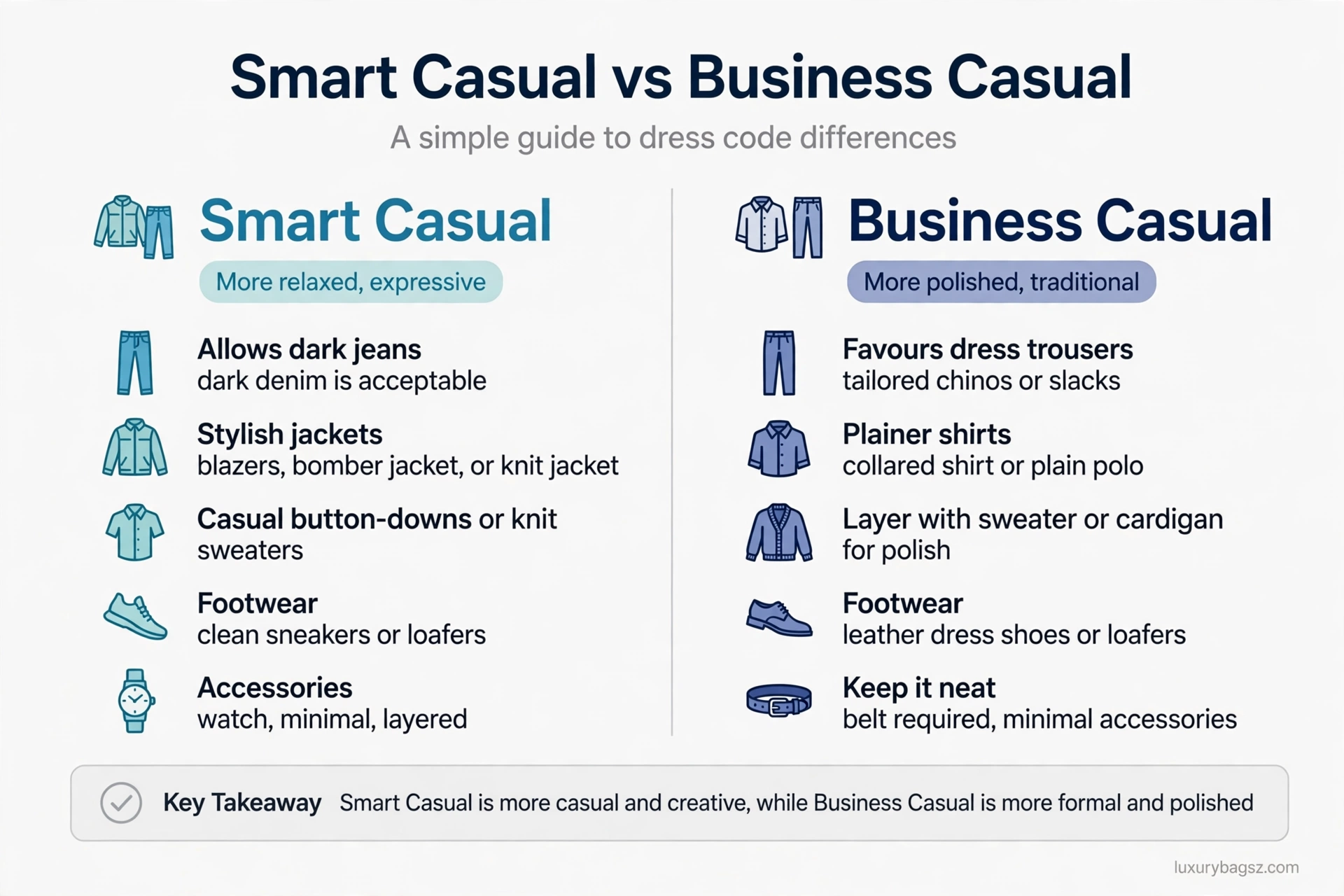
Smart casual adds polish to casual: collars, tailored trousers, smarter shoes and often a jacket. It suits dinners, dates, relaxed offices and social events where looking considered matters.
Business casual is more professional and plainer. It favours collared shirts, dress trousers or chinos, leather shoes and blazers, with less room for jeans, tees and trainers.
The overlap is real. A navy blazer, Oxford shirt and chinos could pass as either smart or business casual, depending on the office, the shoes and whether a tie appears.
When an invitation or employer uses one term, follow their published code. If they say business casual, lean professional; if they say smart casual, lean stylish and relaxed.
Seasons and Weather
In spring, layer a blazer or overshirt over a shirt, with chinos and loafers. Light colours suit the season, but keep one darker piece to ground the outfit.
In summer, linen shirts, cotton chinos and suede loafers breathe well and look right. Use no-show socks with loafers, and keep jackets unstructured and lightweight.
In autumn, add knits, suede shoes and darker colours. A fine-gauge sweater over a collared shirt, with wool trousers or dark jeans, is a classic autumn smart casual outfit.
In winter, wear a wool blazer or overcoat, dark trousers and leather boots or derbies. A scarf adds warmth and colour, but keep it simple rather than bulky and patterned.
For rain, choose leather shoes over suede, and a water-resistant jacket over a blazer. Smart casual should still look polished when wet, not like a formal outfit caught in a storm.
Mistakes That Break Smart Casual
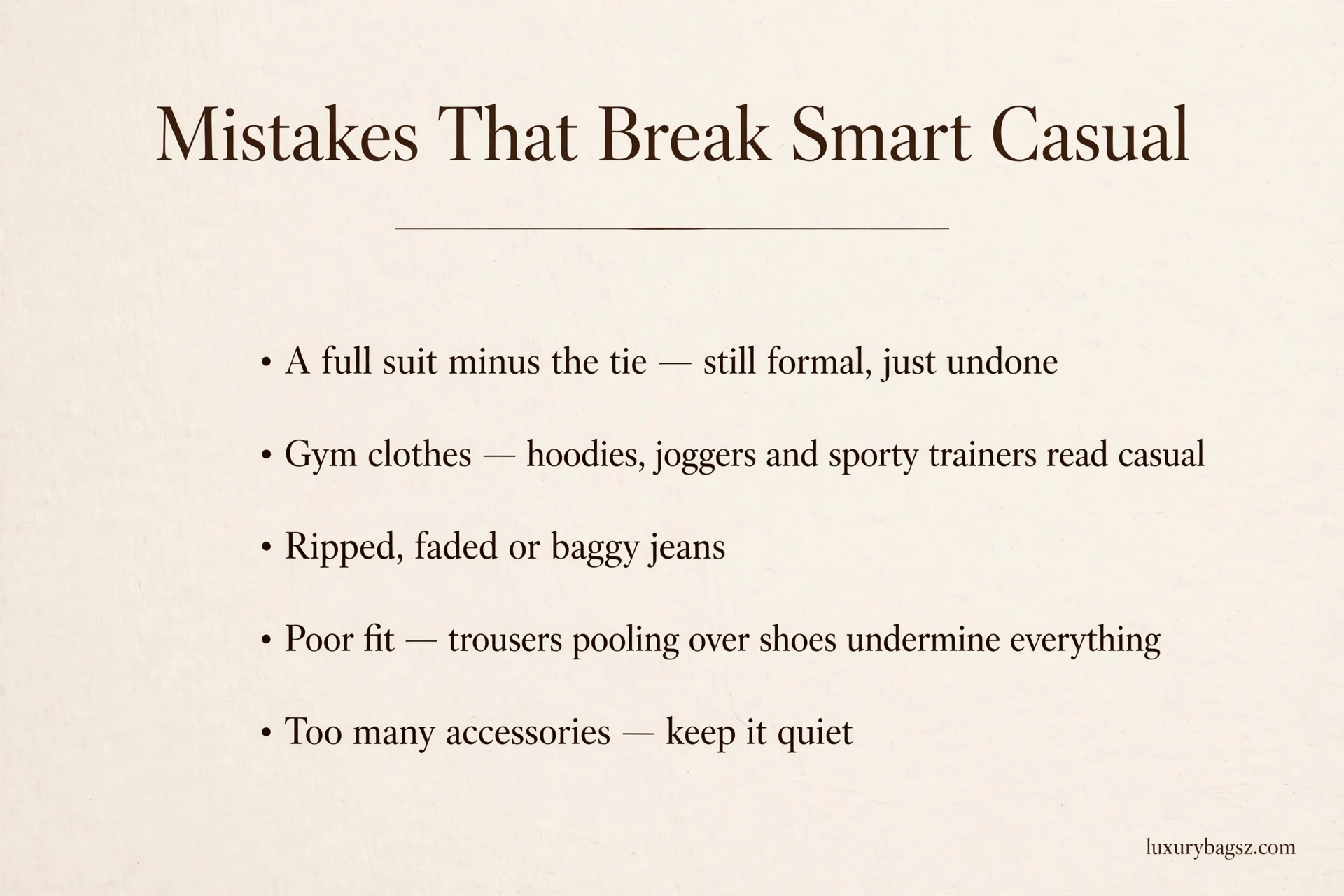
Wearing a full suit and simply removing the tie is not smart casual. If every piece is formal, the outfit is still formal, just slightly undone, and it looks uncomfortable.
Wearing gym clothes, even clean ones, is the opposite error. Trainers with sporty soles, hoodies and joggers read as casual, not smart, however expensive the brands are.
Ripped, faded or baggy jeans break smart casual in most settings. If jeans are allowed at all, they must be dark, clean, well-fitted and free from distressing.
Ignoring fit is a quiet mistake. An expensive blazer that does not fit, or trousers that pool over shoes, undermines smart casual faster than a cheaper outfit that fits well.
Over-accessorising also breaks the code. Smart casual rewards one or two quiet accessories, not a stack of bracelets, a loud belt and a patterned bag all at once.
How to Decide What to Wear When Unsure
Read the invitation first, then the venue. A restaurant, a garden party and a city office all read smart casual differently, and the venue's own style is a strong clue.
Look at what the host or senior colleagues wear on a normal day, not on a dress-down Friday. That everyday level is usually the level the dress code actually means.
Pack or carry a jacket you can add or remove. A blazer in the car or office lets you raise a relaxed outfit in seconds if the room turns out smarter than expected.
When in doubt, dress one step smarter. Being slightly overdressed in smart casual is forgiven far more easily than being underdressed, especially at dinners and weddings.
Finally, ask if you are truly unsure. A quick message to the host or organiser beats guessing, and hosts would rather answer a dress question than see a guest feel out of place.
Frequently Asked Questions
What is smart casual for men in simple terms?
Smart casual is polished but relaxed dressing: a collared shirt or fine knit, tailored trousers or chinos, and smart shoes, with a jacket to raise the level when needed.
Do you need a blazer for smart casual?
No, a blazer is not required, but it is the easiest way to look smarter. An Oxford shirt, chinos and loafers can be smart casual without a jacket in relaxed settings.
Are jeans smart casual?
Dark, clean, well-fitted jeans often count, especially with a blazer and smart shoes. Ripped, faded or baggy jeans do not, and some venues rule out all denim.
Are trainers smart casual?
Clean, minimal leather trainers can be, in relaxed settings. Sporty running shoes, chunky trainers and gym shoes are not smart casual, however clean they are.
What is the difference between smart casual and business casual?
Business casual is more professional and plainer, favouring dress trousers and collared shirts. Smart casual is more relaxed and personal, allowing dark jeans and stylish jackets.
Can you wear a T-shirt for smart casual?
A plain, heavyweight tee can work under a jacket, with tailored trousers and smart shoes. A graphic, baggy or thin tee on its own does not meet the code.
What shoes are best for smart casual?
Loafers, derbies, clean leather boots and minimal leather trainers cover most outfits. Match the shoe to the occasion: loafers for dinners, boots for winter, trainers for relaxed days.
Is smart casual OK for a wedding?
For relaxed weddings, yes, with a blazer, shirt and tailored trousers. For formal or semi-formal weddings, follow the stated dress code instead of dressing it down.
What colours suit smart casual best?
Muted colours work best: navy, grey, charcoal, olive, tan, white and burgundy. Add one accent colour for personality, and avoid neon or very loud patterns.
How do you avoid looking underdressed in smart casual?
Dress one step smarter than you expect, wear a jacket you can remove, and check fit and condition. Clean, well-fitted clothes matter more than expensive labels.
Conclusion
Smart casual is not a mystery once you see it as balance: one relaxed piece, one polished piece, clean shoes and a fit that looks chosen. Start with an Oxford shirt, chinos and loafers, add a blazer when the room demands it, and you will rarely be underdressed or overdressed again.