How to Build a Minimalist Capsule Wardrobe for Men: Fewer Pieces, More Outfits
A Minimalist Capsule Wardrobe, in Brief
A minimalist capsule wardrobe is a small, deliberate collection of clothes that all work together, usually 30 to 40 pieces including shoes. It is not about owning as little as possible, but about removing the pieces that add noise and keeping the ones that earn their place.
Build it around your real life, not an ideal one. If most of your week is work, weekends and travel, build for those three settings and let occasional formal wear sit outside the capsule.
The test for every piece is simple: does it pair with at least three things you already own? If not, it will create more problems than outfits, however good it looks alone. That rule alone builds most of a good capsule.
Key Takeaways
- A capsule is 30 to 40 versatile pieces that mix and match, not a deprivation exercise.
- Build around your three most common settings: work, weekend and travel.
- Every new piece must work with at least three pieces you already own.
- Neutrals first: navy, grey, white, black and stone, plus one quiet accent.
- Quality and fit beat quantity; replace thoughtfully as pieces wear out.
What a Capsule Wardrobe Really Is
The term capsule wardrobe dates to the 1970s, when London boutique owner Susie Faux described a collection of timeless essentials that never go out of style. The idea has lasted because it solves a real problem: too many clothes, too few outfits.
A minimalist version goes further, cutting the capsule to its most versatile core. The goal is fewer decisions in the morning, less clutter in the closet, and more wear from every piece you own.
What counts varies by method, but most approaches exclude underwear, socks, sleepwear, workout gear and heavy seasonal outerwear from the core count. Accessories like scarves and hats may sit inside or outside the capsule, depending on how strictly you count.
The number matters less than the principle. Twenty pieces that all work together beat fifty pieces that only work in one combination each, and a capsule that feels complete is better than one that feels like a punishment.
The Core Pieces
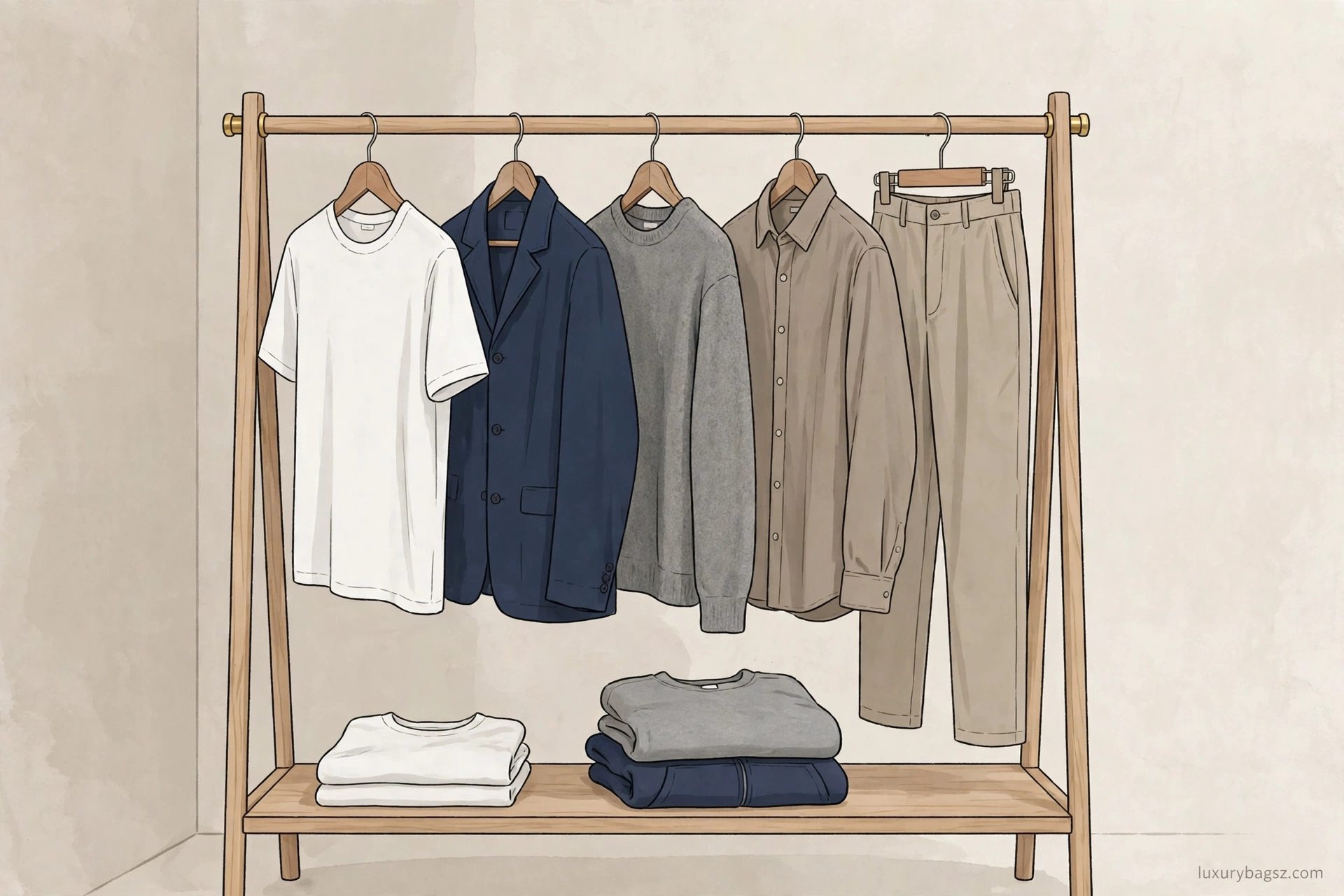
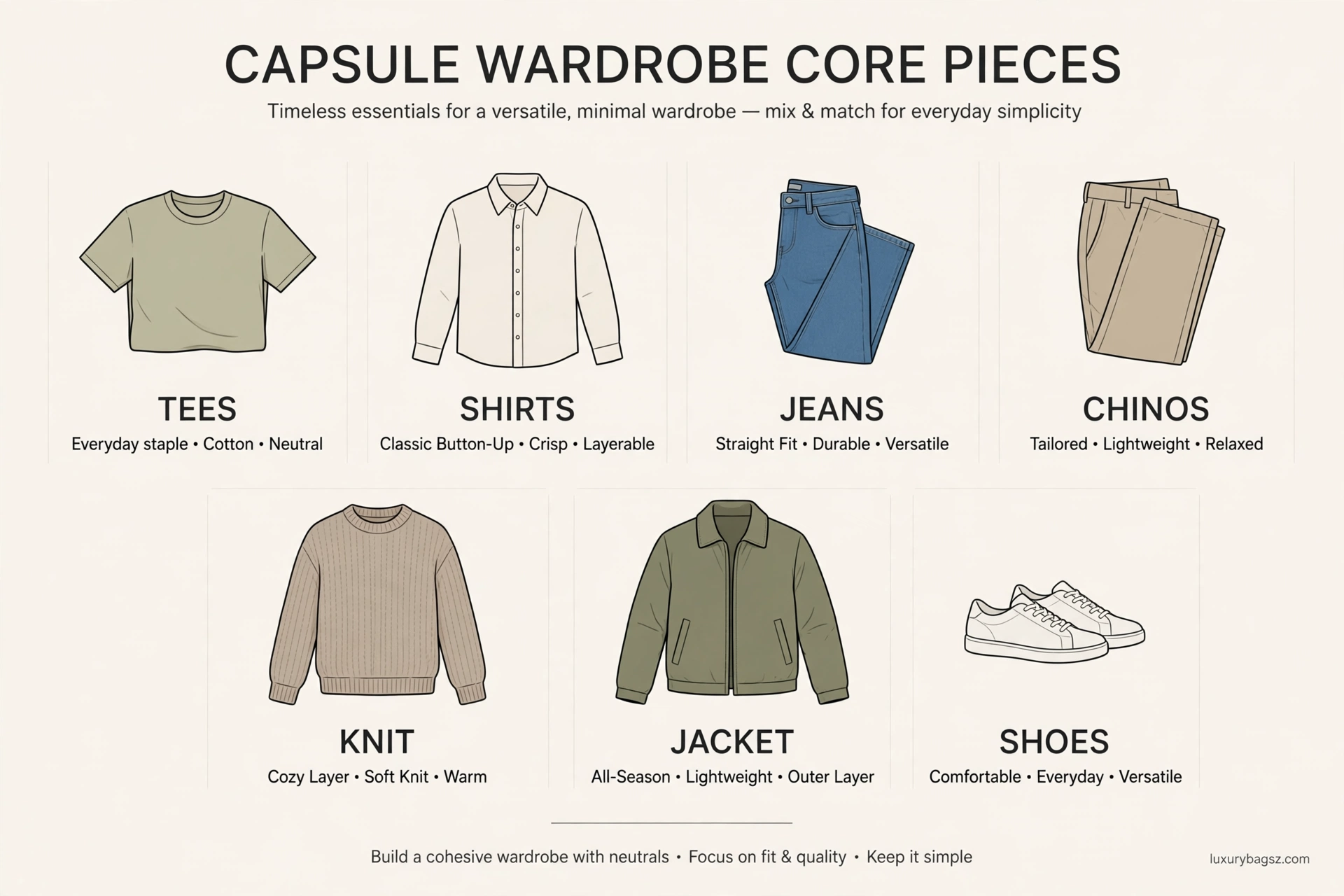
Start with tees: five to seven well-fitted tees in white, grey, navy and black form the base of countless outfits. They should fit neither too tight nor too baggy, with a collar that holds its shape after washing.
Add three to four button-down shirts, in white, light blue and perhaps a subtle pattern. Oxford cloth and chambray are ideal, since they dress up with tailoring and relax with jeans equally well.
For bottoms, two pairs of dark denim jeans and two pairs of chinos in navy, khaki or grey cover casual and smart-casual days. If your work demands it, add tailored trousers in charcoal or navy.
Layers complete the core: a lightweight knit, a sweatshirt, an overshirt or chore coat, and one versatile jacket. Add a simple blazer only if your work or social life genuinely needs one, not just in case.
Colour Palette: Neutrals First
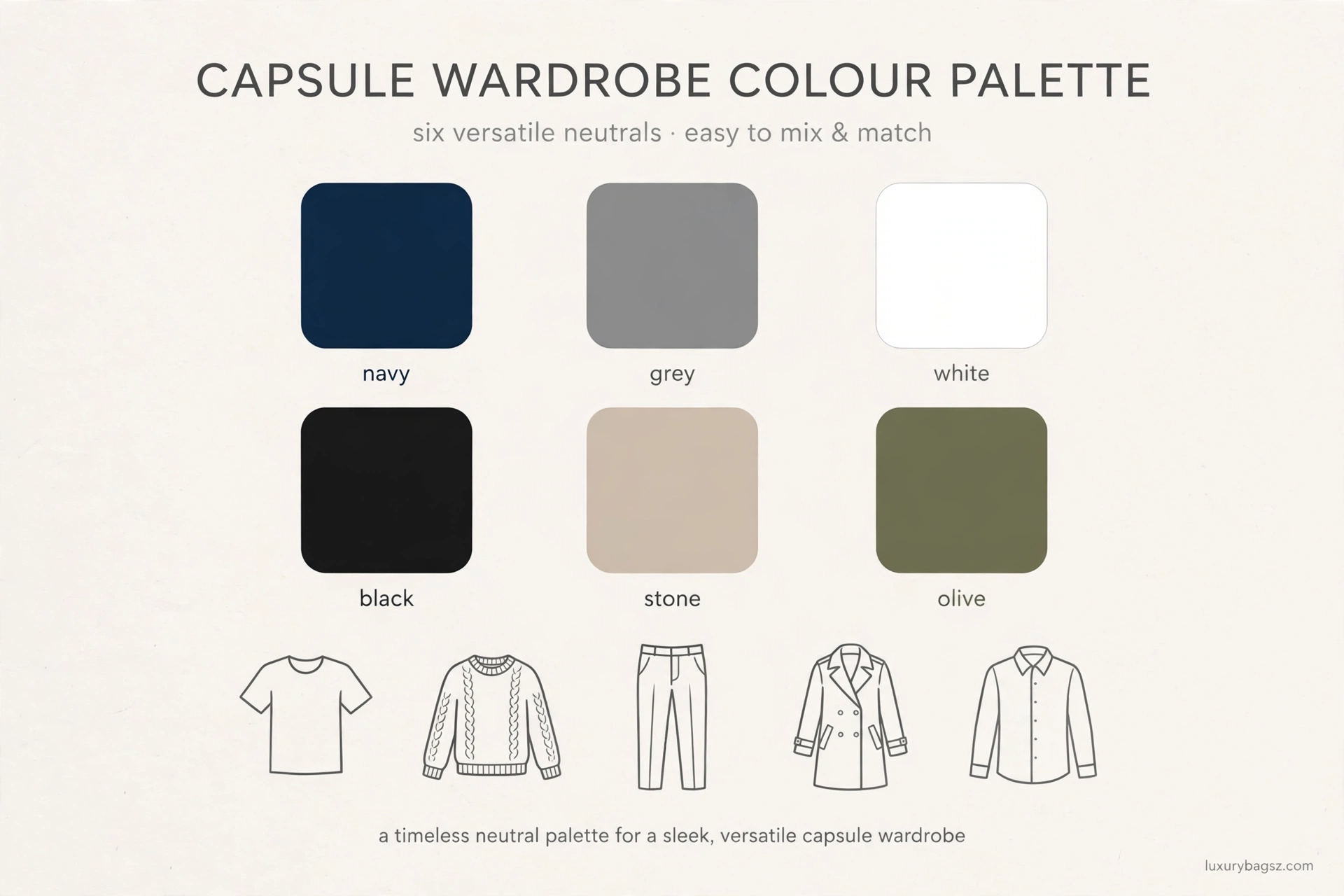
A restrained palette makes combining pieces almost effortless. Start with two or three neutral foundations: black, navy, grey, white and stone are dependable, and they all pair with each other.
Add one or two quiet accents, such as olive, burgundy or muted brown, for warmth and personality. Accents should complement the neutrals, not fight them, and they work best in smaller doses, like a knit or a jacket.
Test any new colour against your existing wardrobe before buying. If it works with at least three pieces you own, it earns a place. If it only works with one outfit, it will sit unworn more often than not.
Patterns need the same discipline. A subtle stripe or texture adds interest, but bold patterns narrow a piece's combinations fast. In a capsule, plain pieces do the heavy lifting, and patterns play a supporting role.
Footwear and Accessories
Two or three pairs of shoes cover most capsule lives. Clean white trainers handle everyday wear, a smarter pair such as brown derbies, loafers or dress shoes covers work and evenings, and boots handle cold weather and rugged days.
Neutral footwear works across more outfits and is easier to maintain in a small rotation. White, black, tan and dark brown cover almost every capsule outfit, while bright or novelty shoes narrow their use sharply.
Accessories should be few and high-quality. A good leather belt, a simple watch, a quality wallet and one versatile bag transform existing outfits more than another shirt ever will. Invest here first when upgrading.
Keep jewellery and extras minimal in a capsule. One watch, one belt per shoe colour, and one bag for daily use are enough for most men. Extra accessories add clutter faster than they add outfits.
Outfit Formulas That Multiply Pieces
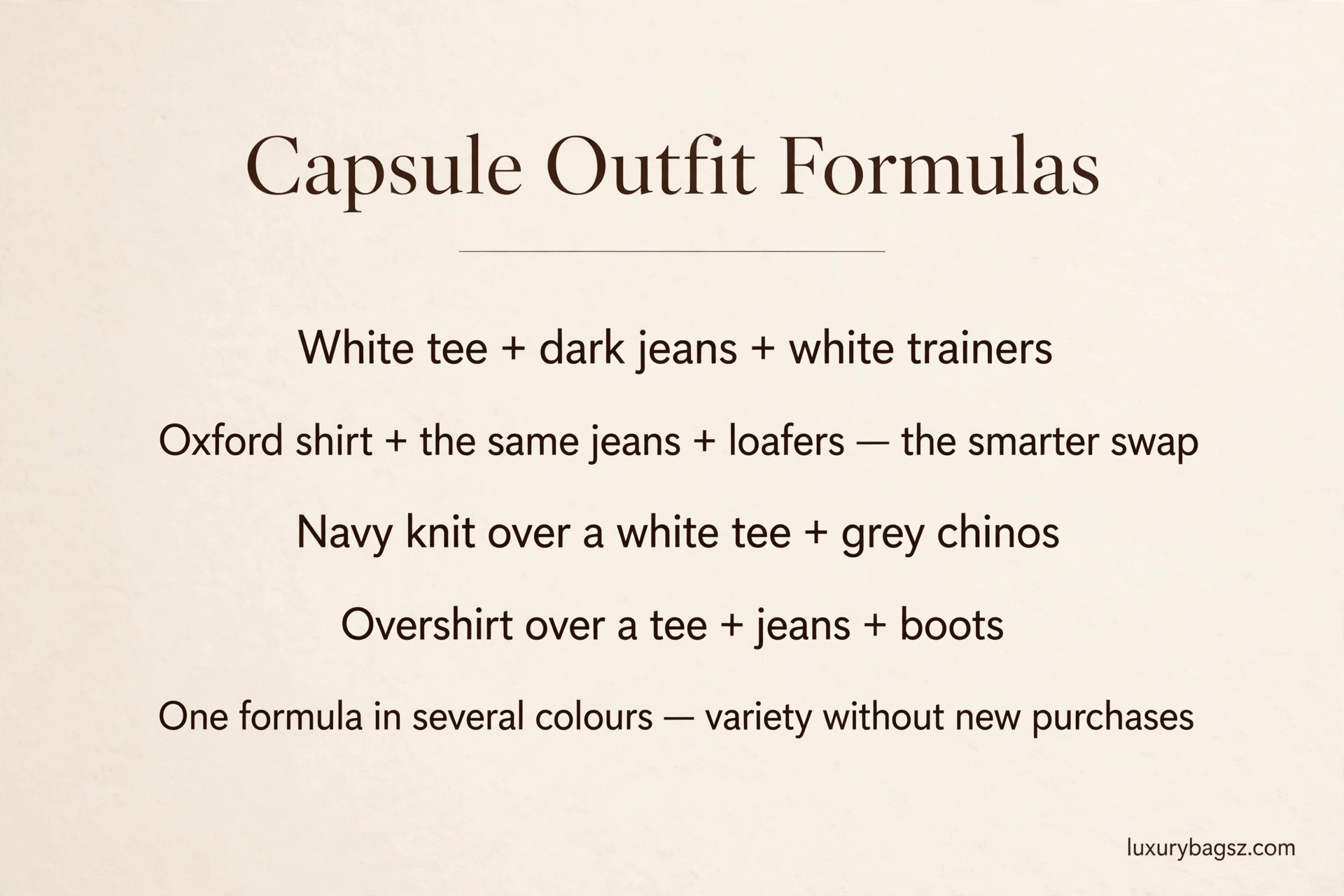
The power of a capsule is multiplication. A white tee, dark jeans and white trainers is one outfit, but swap the tee for an Oxford shirt and the trainers for loafers, and the same jeans create a second, smarter look.
A navy knit over a white tee with grey chinos is a third outfit from the same core, while an overshirt over a tee with jeans and boots is a fourth. Each piece earns its place by appearing in many combinations.
Build formulas, not just pieces. A formula like "knit plus shirt plus chinos plus loafers" can be repeated in different colours all week, giving variety without new purchases. Photograph winning combinations so you remember them.
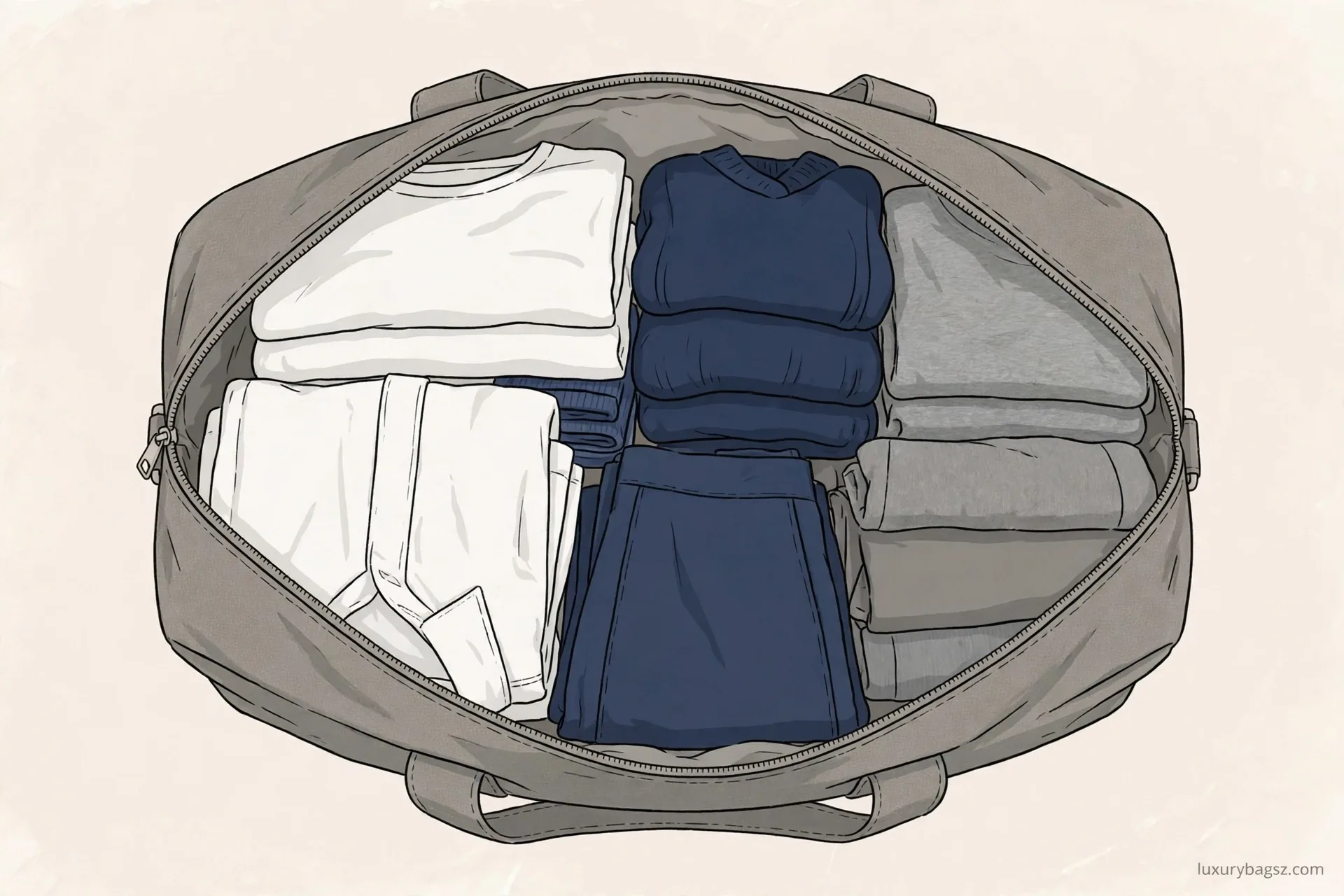
Travel shows the capsule at its best. Ten well-chosen pieces can create a week's worth of outfits in a single bag, provided every piece pairs with most of the others. That packing freedom is a practical reward for the discipline.
Remote workers need a slightly different capsule, with more emphasis on upper-body pieces for video calls. A few good shirts, knits and jackets matter more than many trousers when only the top half is regularly seen.

The Audit: Keep, Donate, Repair
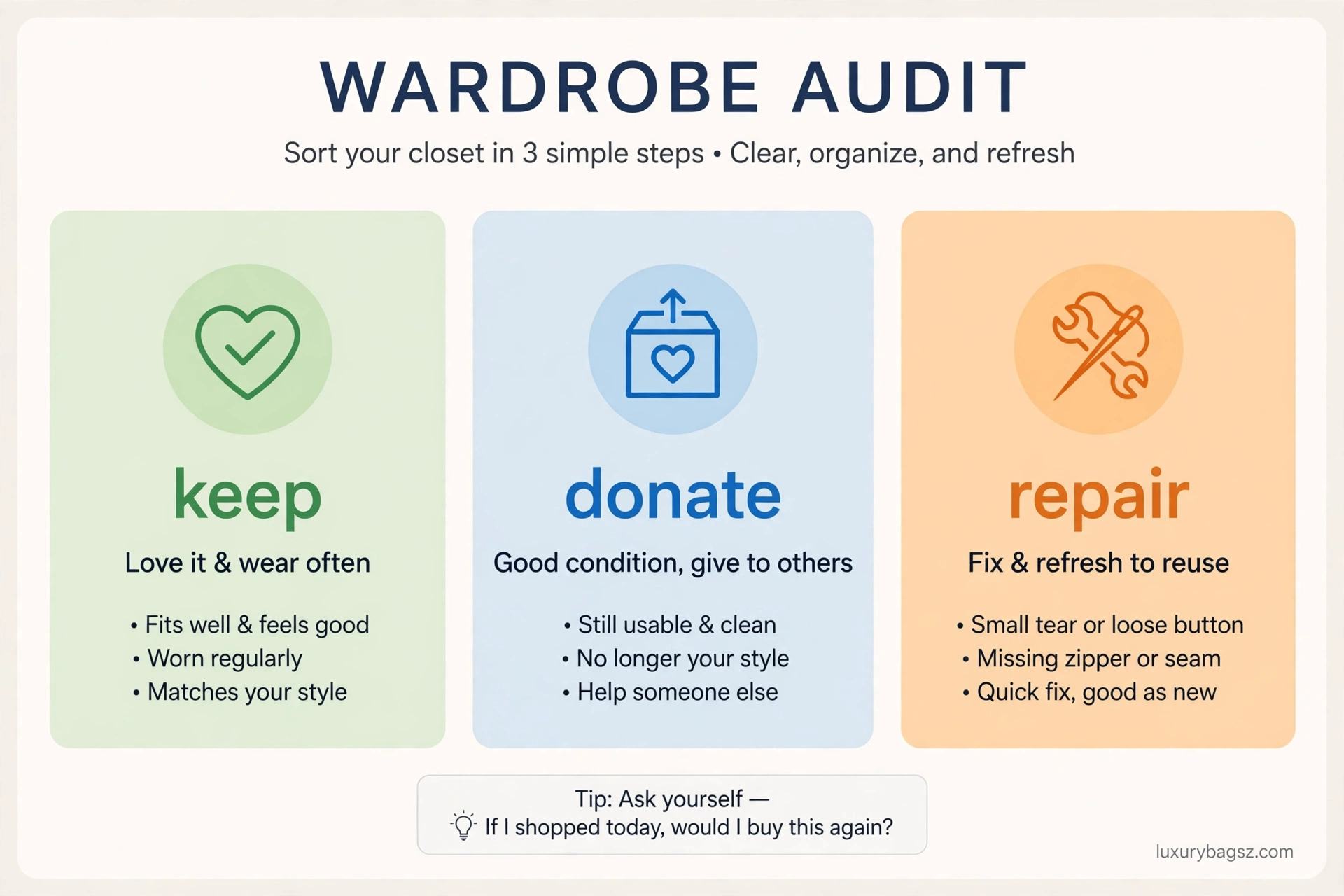
Start by emptying your closet completely and laying everything out. Seeing the full collection at once reveals duplicates, unworn pieces and gaps far better than browsing a crowded rail.
Sort into three piles: keep, donate and repair or replace. Keep only pieces that fit well, suit your current life and have been worn in the last year. Be honest about aspirational pieces that no longer fit your life.
For gaps, compare what you kept against the core list in the core pieces section. Missing categories, like a smart shoe or a versatile jacket, become your shopping list, in priority order, not impulse order.
Do not rebuild in one shopping trip. A capsule develops slowly, through thoughtful replacement as pieces wear out. Buy one or two key pieces first, live with them, and add only what the rotation genuinely lacks.
The 3-3-3 Method and Seasonal Capsules
The 3-3-3 method is a stricter minimalist approach: choose 33 items, including shoes and accessories, to wear for three months. It forces hard choices and reveals which pieces you truly rely on.
A seasonal capsule is a gentler version. Rotate a core of year-round pieces, like tees, jeans and chinos, with seasonal layers, like linen shirts in summer and knitwear in winter. Store out-of-season pieces away to keep the closet clear.
Both methods share a useful habit: a one-in, one-out rule. When a new piece enters the capsule, an old one leaves, keeping the total stable and preventing slow creep back to clutter.
Review seasonally, not constantly. At each season change, check what you actually wore, what sat unworn, and what gap appeared. Adjust the capsule from evidence, not from shopping moods.
Mistakes That Undo a Capsule
Overinvesting in trends is the first mistake. A trend-led piece may look exciting for a season, but it rarely pairs with three existing pieces and it dates fast, breaking the capsule's timeless logic.
Buying cheap basics is the second mistake. Tees, jeans and shoes wear daily in a capsule, so poor quality shows quickly and costs more in replacements. Spend more on the pieces you wear most, and save on rarely worn extras.
Ignoring fit is the third mistake. A capsule piece that does not fit well will be avoided, however versatile it looks on paper. Fit is the filter that decides whether a piece earns daily wear or closet space.
Finally, building for an imagined life rather than your real one wastes the whole exercise. A capsule full of suits for a man who works remotely, or full of hiking gear for a city dweller, will sit unworn. Build for the week you actually live.
Skin tone and contrast are a final, gentle filter, not a rulebook. Most men look best when their top contrasts clearly with their skin tone, rather than matching it closely, so test new neutrals in daylight before committing.
Frequently Asked Questions
How many pieces are in a men's capsule wardrobe?
Typically 30 to 40 pieces, including clothing, shoes and key accessories. Some methods use fewer, like the 33-item 3-3-3 method, but the exact number matters less than versatility and fit.
What colours work best for a capsule wardrobe?
Neutrals first: white, black, navy, grey and stone, plus one or two quiet accents like olive, burgundy or muted brown. This palette makes almost every combination work without thought.
How do you start a capsule wardrobe?
Audit your current closet, keep only pieces that fit and have been worn recently, define your palette, list gaps against a core essentials list, and fill gaps slowly, starting with quality basics.
Does a capsule wardrobe save money?
Over time, yes, if you buy fewer, better pieces and stop impulse purchases. The upfront cost of quality basics can be higher, but cost per wear drops sharply when every piece is worn often.
Can a capsule wardrobe suit formal work?
Yes, with tailored trousers, Oxford shirts, a blazer and smart shoes in the core. The capsule principle works for formal wardrobes too, provided the pieces are chosen for your actual dress code.
What is the 3-3-3 capsule method?
A minimalist method where you choose 33 clothing items, shoes and accessories to wear for three months. It simplifies dressing, reduces clutter and reveals which pieces you genuinely rely on.
How often should you update a capsule wardrobe?
Review seasonally. Check what you wore, what sat unworn and what gap appeared, then adjust. Replace pieces as they wear out, rather than shopping on impulse throughout the year.
Do accessories count in a capsule wardrobe?
It depends on the method. Many counts exclude underwear, socks, sleepwear and workout gear, while accessories like scarves and hats may sit inside or outside the core count. Consistency matters more than the rule.
Can you build a capsule wardrobe on a budget?
Yes, by starting with what you own, auditing honestly, and replacing gaps slowly with the best quality you can afford. Prioritise shoes, outerwear and trousers, which wear hardest.
What should you do with clothes that leave the capsule?
Donate wearable pieces, repair good pieces that need small fixes, and recycle worn-out items responsibly. Keeping cast-offs in a spare room defeats the purpose of decluttering.
Conclusion
A minimalist capsule wardrobe is not about owning less for its own sake, but about owning pieces that work harder together. Audit honestly, choose neutrals, demand that every piece pairs with three others, and build slowly. The reward is a closet that is smaller, calmer and far more useful, every single morning.