How Should Loafers Fit? Sizing, Heel Slip and Break-In Explained
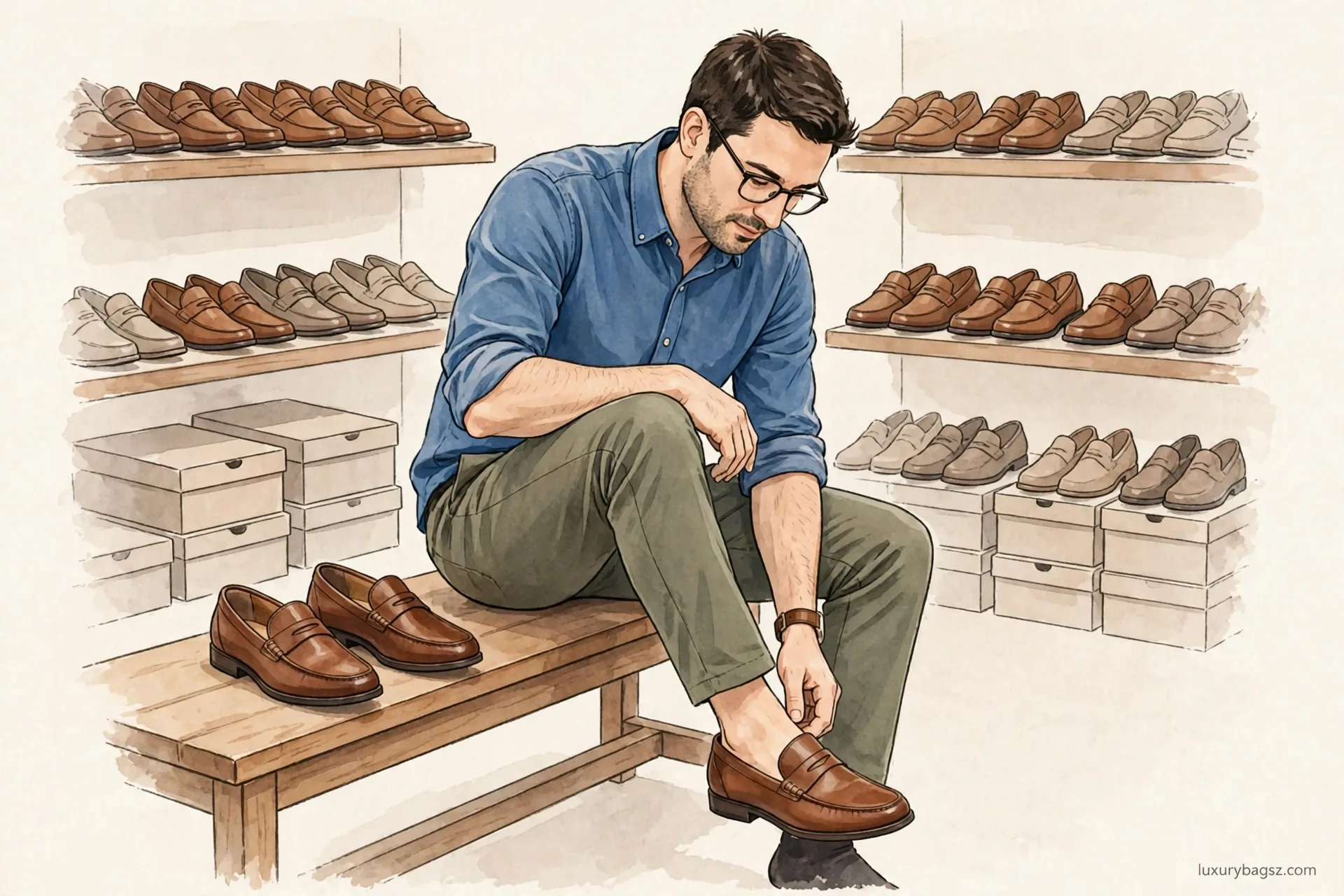
Snug, Not Painful: The Loafer Fit in One Line
Loafers should fit snugly, without pain. Because they have no laces, the leather itself must hold your foot, and a pair that feels roomy on day one will only get looser.
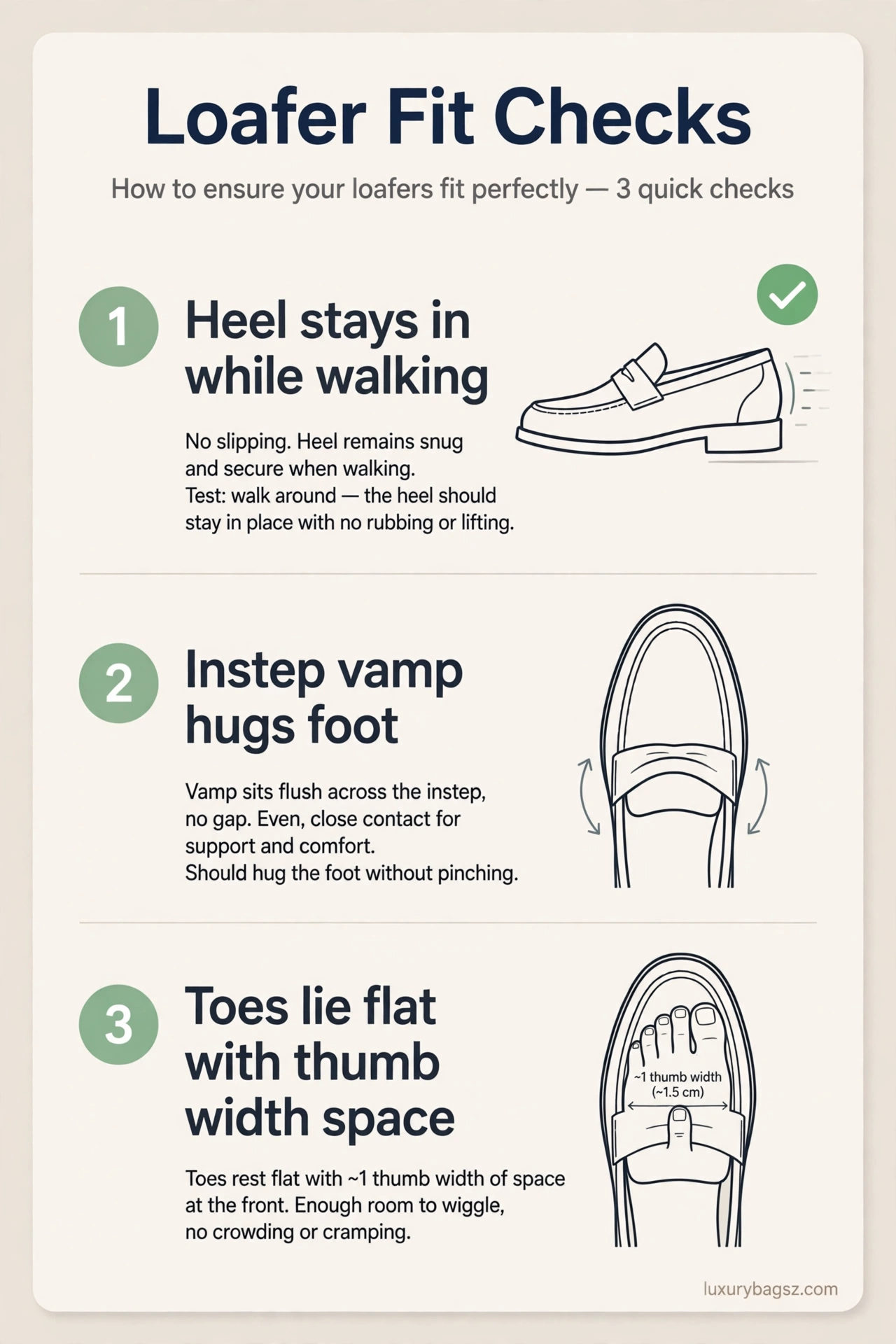
The best test is simple: walk in them. Your heel should stay in while walking, your toes should lie flat with room to wiggle, and the vamp should hug the top of your foot.
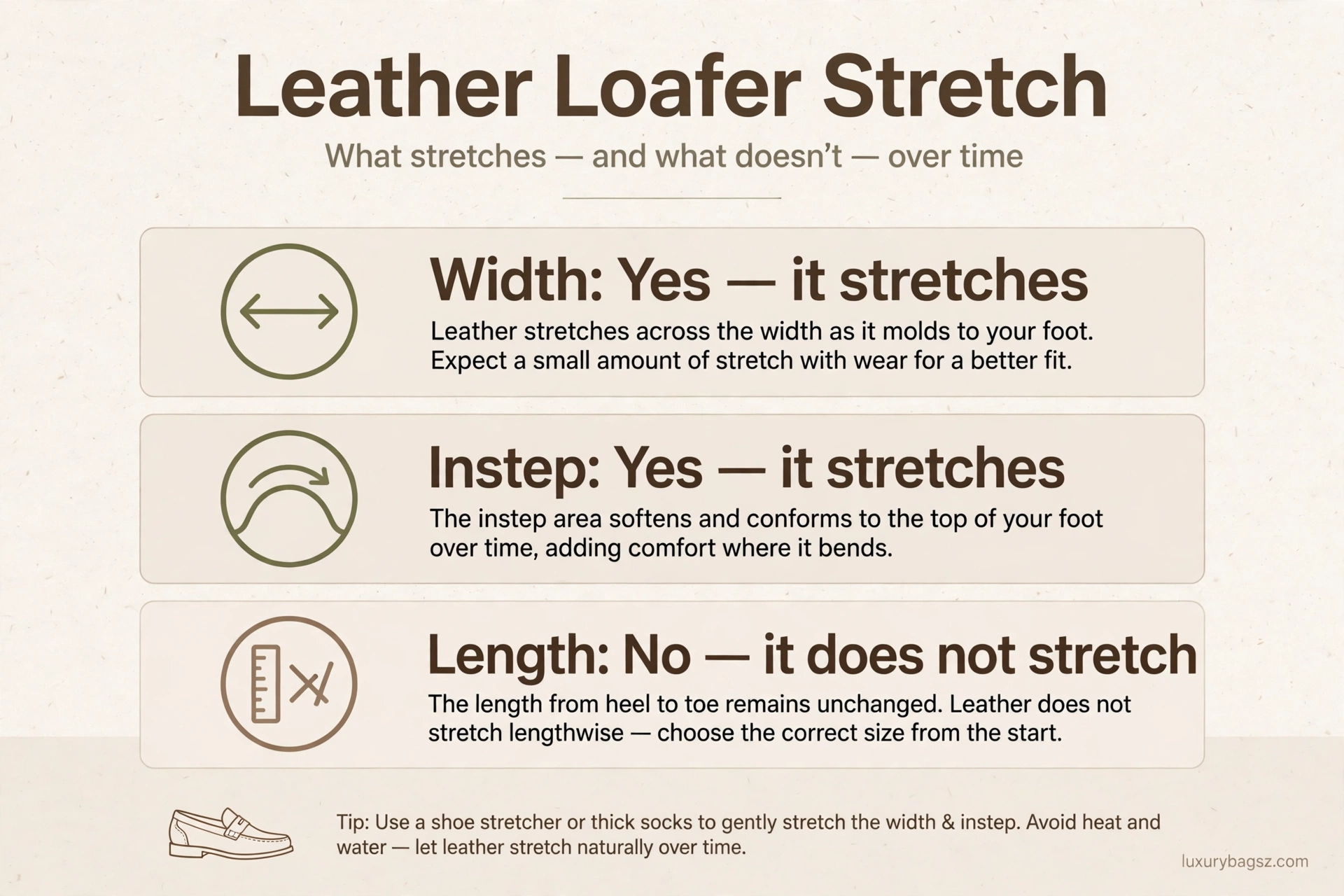
Expect new leather loafers to feel firm. Leather stretches in width and across the instep with wear, so a snug first fit usually becomes the comfortable fit you actually want.
Key Takeaways
- New loafers should feel like a firm handshake: snug across the instep, secure at the heel, roomy enough at the toes.
- Most men size down half a size from their Brannock size, and a full size from sneakers.
- A little heel slip is normal when new; a heel that pops out on every step means the pair is too big.
- Leather stretches in width and instep, but never in length, so never buy long hoping it will shrink.
- Try loafers on late in the day, wearing the socks you plan to use most.
The Three Checks: Heel, Instep and Toe
Check the heel first. Walk across the shop floor and watch for slip. A tiny slip, about a finger's width of movement, is normal in a new pair and fades as leather softens.
Check the instep next. The vamp, the leather over the top of your foot, is the anchor that replaces laces. It should feel comfortably tight, holding the shoe on without pinching.
Check the toes last. Your toes should lie flat, not curl or overlap, with about a thumb's width between your longest toe and the front of the shoe when standing.
Check all three while standing, not sitting. Feet spread under body weight, and a pair that fits while seated can feel very different once you stand and walk.
If any check fails badly, change size or try another last. A different shoe shape often fixes a fit problem that sizing up or down alone cannot solve.
Sizing Down: From Sneakers and Brannock to Loafers
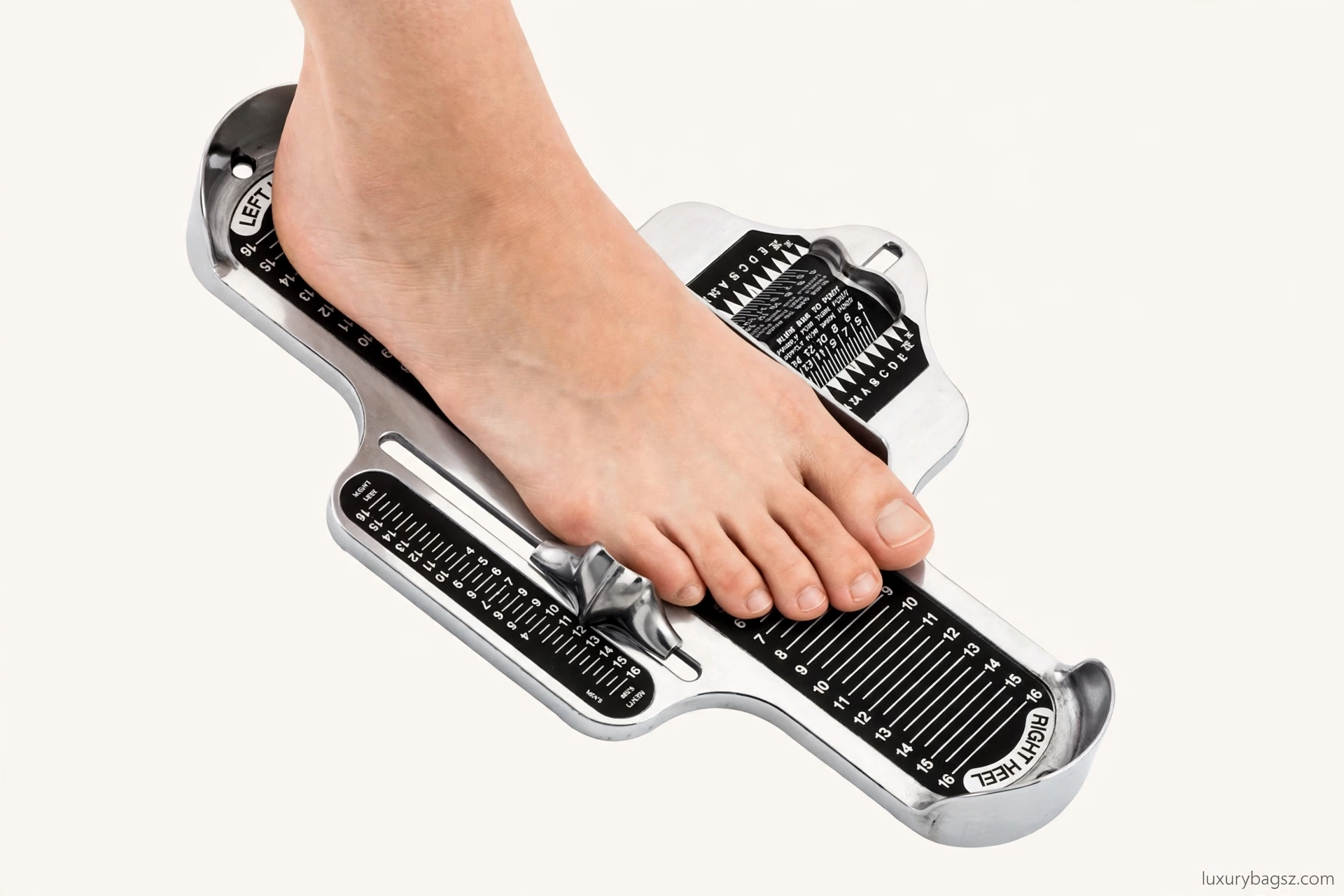
Start with your Brannock measurement, not your sneaker size. A Brannock device measures length, width and arch, and most shoe shops will measure you free of charge.
From Brannock, most men take half a size down in loafers. From sneakers, the gap is often a full size down, because sneakers are built with extra room for movement.
Between sizes, leather loafers usually favour the smaller size. Leather stretches, so a snug pair gains room, while a loose pair only gets looser with every wear.
Unlined loafers stretch more than lined ones, and suede stretches slightly faster than polished leather. If you are between sizes in suede, the smaller size is often safer.
Always check the brand's own sizing notes. Lasts differ between makers, and one brand's size 10 can fit like another brand's 9.5, regardless of what the general rule says.

How Much Heel Slip Is Normal
A little heel slip is normal in new loafers. The sole is stiff, the leather is firm, and the heel counter has not yet moulded to your foot, so some movement is expected.
The warning sign is a heel that pops fully out with every step. That means the shoe is too big or too wide, and no amount of break-in will fix a heel that escapes completely.
There is a useful distinction: you should be able to pop your heel out by flexing your arch while seated, and still keep it in while walking. Walking movement is what counts.
Heel slip also depends on socks. Thin dress socks grip less than thicker socks, so test slip in the socks you will actually wear, not in the shop's thick trial socks.
If slip persists after a week of regular wear, the pair is probably the wrong size. Heel grips can help a slightly loose pair, but they cannot rescue a pair a full size too big.
What Stretches, What Does Not, and Break-In
Leather loafers stretch in width and across the instep, the two areas where your foot presses hardest. That stretch is measured in millimetres, but it changes comfort a lot.
Leather does not stretch in length. If your toes touch the front of the shoe, or the shoe feels short, no break-in period will fix it, so do not buy short hoping for stretch.
Break-in takes a few wears, not weeks of pain. Wear new loafers indoors for an hour or two at first, then build up to full days as the leather softens around your foot.
Heat and body warmth help leather mould, which is why loafers feel better after a few warm wears. Avoid soaking shoes or using hair dryers to force break-in, as both damage leather.
Suede breaks in faster than polished leather, and unlined loafers break in faster than lined ones. Both still follow the same rule: width gives, length does not.
Wide Feet, Narrow Feet and High Insteps
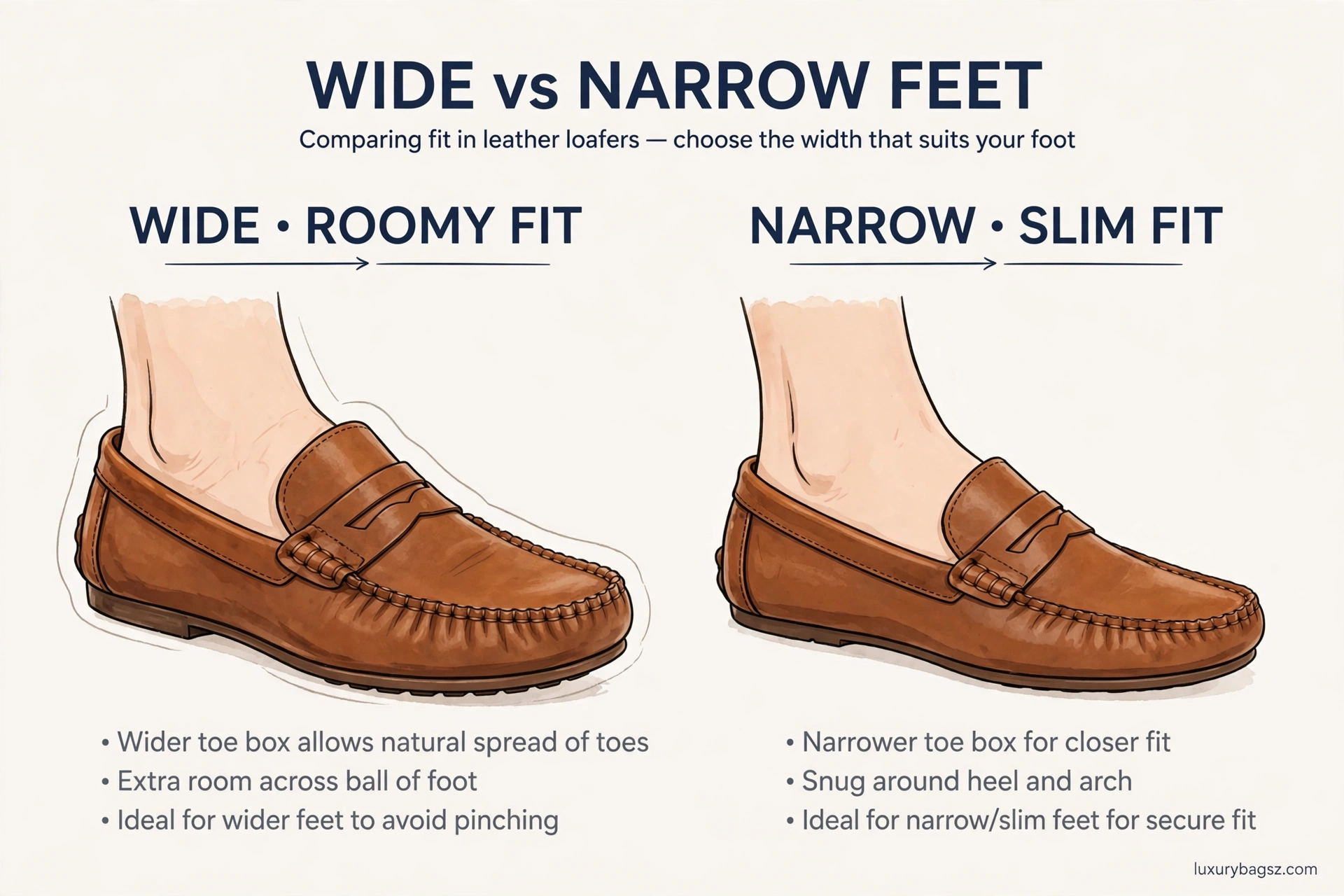
Wide feet need width first, not length. Sizing up a full size to gain width adds unwanted length, so look for wide-width options or a last with a roomier toe box.
If a wide option is unavailable, sizing up half a size is a better compromise than a full size. It gains some width without adding so much length that the heel slips.
Narrow feet need a snug instep and a narrow last. Loafers with a low vamp or a shallow shape hold narrow feet better, and an insole can fill a little extra volume.
High insteps often struggle with loafers, because the vamp must clear a taller foot. Look for loafers with a higher vamp or a more generous instep, and avoid very flat, low-cut styles.
Low insteps have the opposite problem: the vamp may gape. A penny strap adds structure here, and a tongue pad under the vamp can take up a small amount of space.
Socks, No Socks and How They Change Size
Decide how you will wear the loafers before you buy them. Sock choice changes the volume inside the shoe, and a pair fitted one way may fit differently the other way.
If you plan to wear dress socks most often, fit the loafers in dress socks. If you plan to go sockless in summer, fit them in no-show socks, which add almost no bulk.
Some men buy a half size smaller for sockless summer loafers, especially unlined pairs that stretch more. That only works if the smaller size is snug, not painful.
Thick socks can rescue a slightly loose pair for winter, but they should not be the reason you buy a loose pair. Fit for your usual sock, and treat thick socks as a bonus.
Never fit loafers barefoot in a shop and then wear them with socks at home, or the reverse. The difference in volume is small, but in a laceless shoe, small differences matter.
Fixing Loose and Tight Loafers
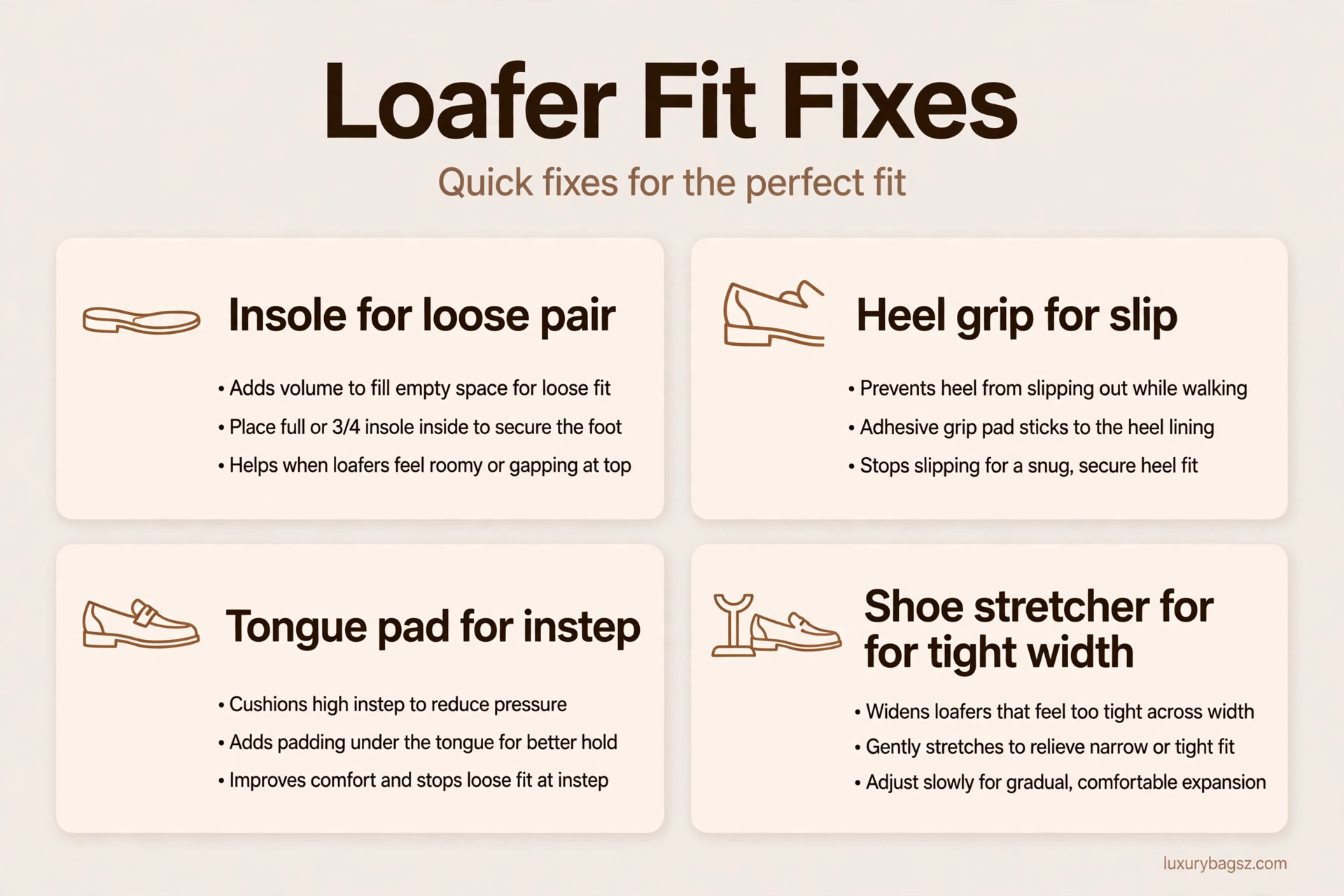
For a slightly loose pair, a thin insole fills volume across the whole foot. Some men cut an insole in half to fill only the front or back, and a little glue stops it sliding.
Heel grips stick inside the heel counter and reduce slip. Tongue pads, placed under the vamp, take up instep space. Both help small fit gaps, not large ones.
Thicker socks are the simplest fix for a slightly loose pair in cold weather. They add volume everywhere, but they also change how the shoe feels, so test them before relying on them.
For a slightly tight pair, a shoe stretcher can widen the sides and instep over a day or two. A cobbler can stretch specific tight spots, such as over the little toe, more precisely.
Avoid home remedies like freezing water bags inside shoes or soaking them and walking them dry. Those tricks risk mould, leather breakdown and damage that a cobbler cannot undo.
If a pair is painful to walk in, return or exchange it. Pain is not break-in, and a shoe that hurts on day one rarely becomes a favourite, however good it looks.
Shopping, Trying On and Knowing When to Return
Shop later in the day, when feet are at their largest. Morning fittings often feel fine, then the same shoes feel tight by evening after a day of standing and walking.
Walk on different surfaces in the shop, not just carpet. Hard floors reveal heel slip and squeaks that carpet hides, and stairs show whether the vamp holds on inclines.
Wear both shoes, not just one, and stand for a few minutes. Feet are rarely identical, so fit to the larger foot and use a small insert for the smaller one if needed.
Check the return policy before buying, especially online. Loafer fit is personal, and a free return turns a risky purchase into a simple try-on at home.
Return a pair if the heel pops out on every step, toes touch the front, or walking causes sharp pain. Those are size or last problems, not break-in problems, and they will not improve.
Like other dress shoes, loafers reward patience at purchase. A careful fitting now saves months of slipping, blisters and shoes that sit unworn in a cupboard.
Frequently Asked Questions
Should loafers be tight when new?
They should feel snug, not tight and painful. A firm, glove-like fit is correct, because leather stretches in width and across the instep during break-in.
Do you size up or down in loafers?
Most men size down half a size from Brannock, and a full size from sneakers. Between sizes, take the smaller size in leather, which stretches with wear.
Is heel slip normal in new loafers?
A small amount is normal and fades as the sole flexes and leather softens. A heel that pops fully out on every step means the pair is too big.
Do loafers stretch in length?
No, leather loafers stretch in width and instep only. Never buy a pair that feels short, hoping it will lengthen, because it will not.
Should you wear socks when trying loafers on?
Yes, wear the socks you plan to use most. Sock thickness changes the fit, and a pair fitted with the wrong socks can feel loose or tight later.
How long does loafer break-in take?
A few wears, usually, with short indoor wears first. If a pair still hurts after a week of regular wear, it is likely the wrong size or last.
Can a cobbler stretch loafers?
Yes, for width and instep tight spots. A cobbler can stretch specific areas with proper tools, but cannot add length or fix a pair that is far too small.
What if one foot is bigger than the other?
Fit to the larger foot, and use a thin insole or heel grip for the smaller foot if needed. Most people have slightly different-sized feet.
Do unlined loafers fit differently?
Yes, unlined loafers stretch more and feel softer sooner. They often suit a snugger starting fit, especially if you plan to wear them sockless in summer.
When should you return loafers?
Return them if the heel escapes on every step, toes hit the front, or walking causes sharp pain. Those faults are sizing problems, not break-in.
Conclusion
Good loafer fit comes down to three checks, one sizing rule and a little patience. Buy snug from your Brannock size, expect a little early heel slip, and let width stretch while you watch length carefully. Get that right, and loafers become the comfortable, easy shoes they are meant to be.