How to Wear Fatigues: Olive Trousers, Styled for Real Life
Fatigues, Worn Like Civilian Trousers
Fatigues are olive military-style trousers with large front patch pockets, a straight leg and a sturdy cotton twill fabric. They look civilian the moment you pair them with simple, non-military clothes and keep the rest of the outfit plain.
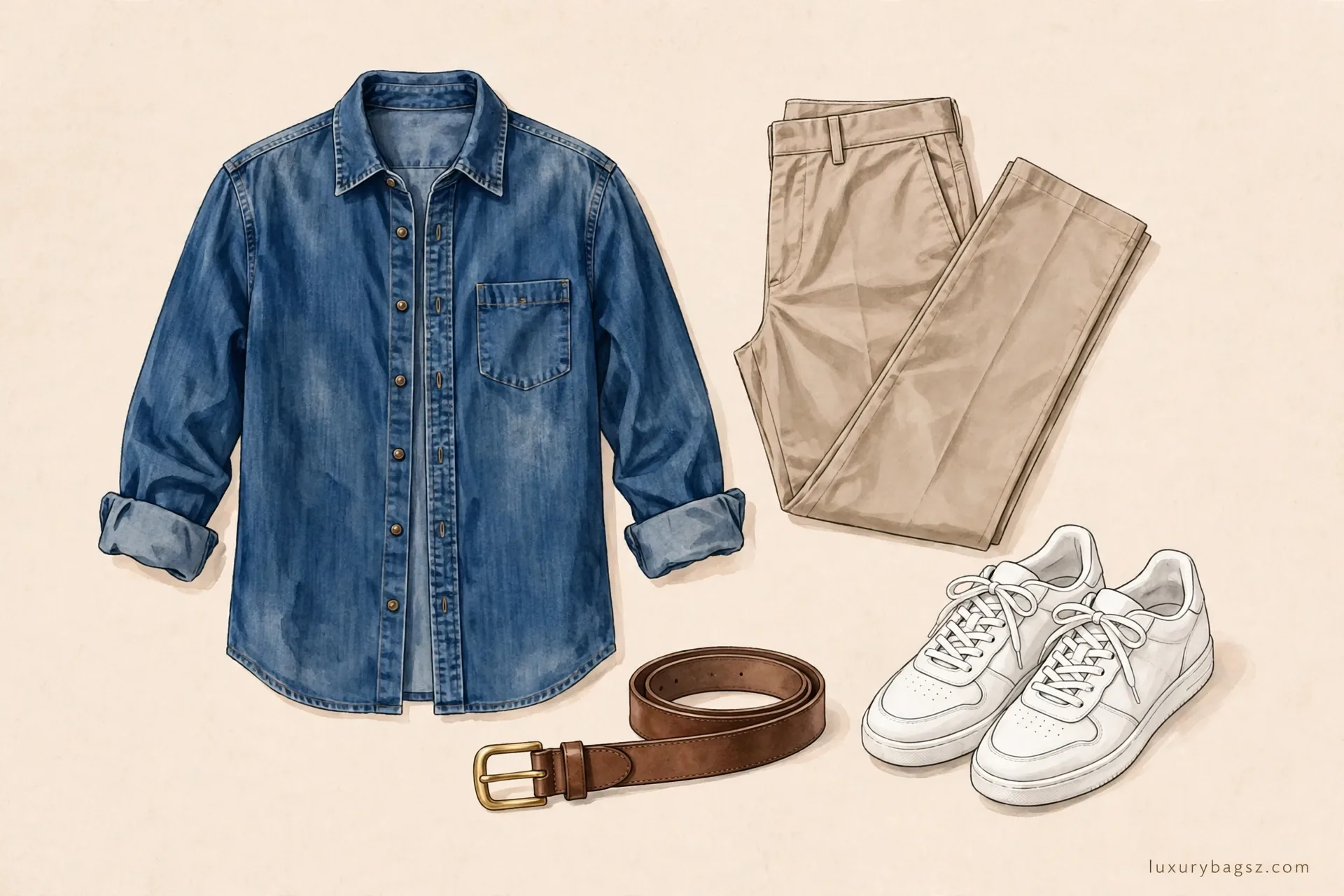
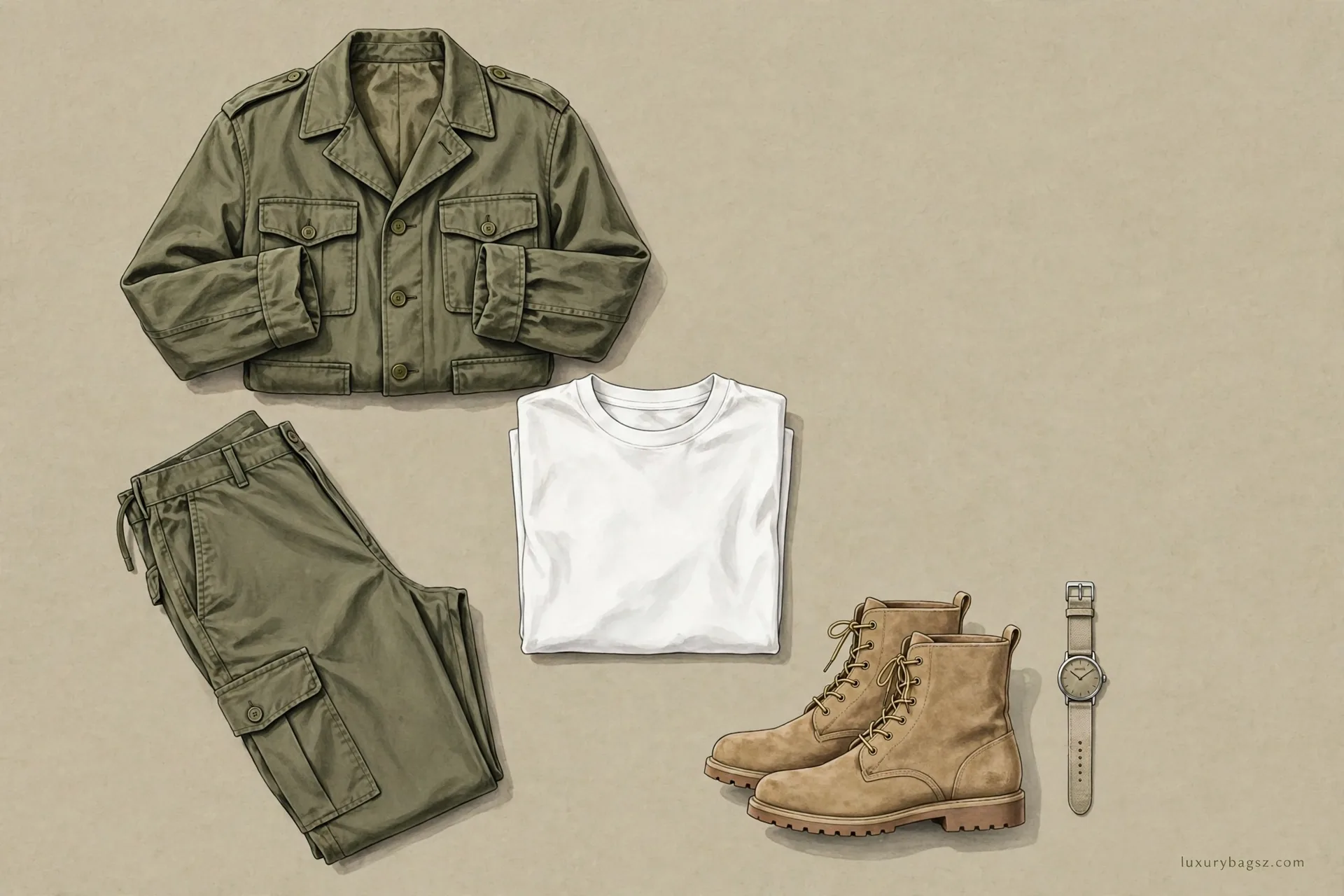
The easiest formula is fatigues with a white tee and clean sneakers. From there you can go smarter with a button-down shirt, or tougher with boots and a denim jacket, but the trousers themselves should stay the only military item.
Fit is the deciding factor. Vintage fatigues run roomy, so hem or cuff a long leg, avoid pooling fabric at the ankle, and balance the straight leg with a top that is not too baggy.
Key Takeaways
- Fatigues are olive, straight-leg, patch-pocket cotton trousers from military workwear.
- One military item per outfit: never add camo, combat boots and a field jacket together.
- White, black, navy and cream tops are the easiest matches for olive.
- Hem or cuff long legs so the fabric does not pool over your shoes.
- Sneakers keep them casual, boots add edge, loafers push them smart-casual.
What Fatigues Actually Are
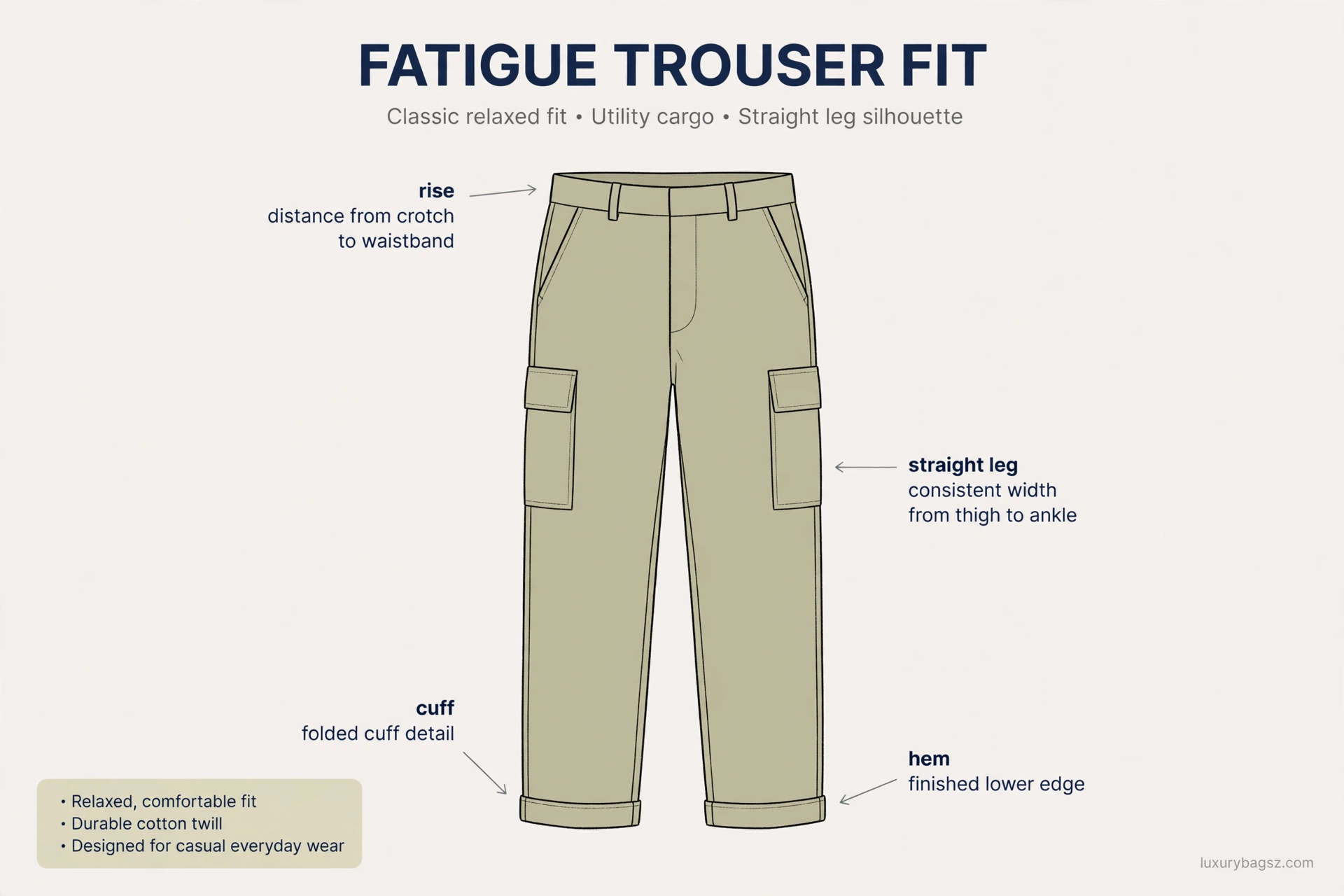
Fatigues began as US military utility trousers, most famously the OG-107 style in olive drab cotton sateen. Their signatures are a high to mid rise, a straight leg, a button fly and large patch pockets on the front, often called baker pockets.
Modern versions keep those details but cut them slimmer and in softer fabrics. You will also see fatigue-style trousers in ripstop cotton, herringbone twill and stretch blends, all of which drape a little easier than stiff vintage pairs.
Do not confuse fatigues with cargo trousers. Cargos add bulky pockets down the leg, while classic fatigues keep the pockets at the hip and front. That cleaner leg is exactly why fatigues are easier to dress up.
Fit, Hem and Proportion
Vintage fatigues often fit larger than modern trousers, with a high rise and a boxy top block. Buy with a little room to breathe, then wash and dry them once if you want a slightly closer fit, since cotton sateen often shrinks a touch.
The hem is where most fatigue outfits go wrong. Any break in a wide, straight leg adds bulk, so hem the trousers if they are long, or cuff them once or twice for a tapered effect at the ankle. A clean hem line sharpens the whole outfit.
Balance the straight leg with a top that is fitted or slightly relaxed, never oversized. A tucked tee or a half-tucked shirt shows the waistband and stops the outfit from looking shapeless. Slim tops suit wide legs, and vice versa.
Five Outfits That Always Work
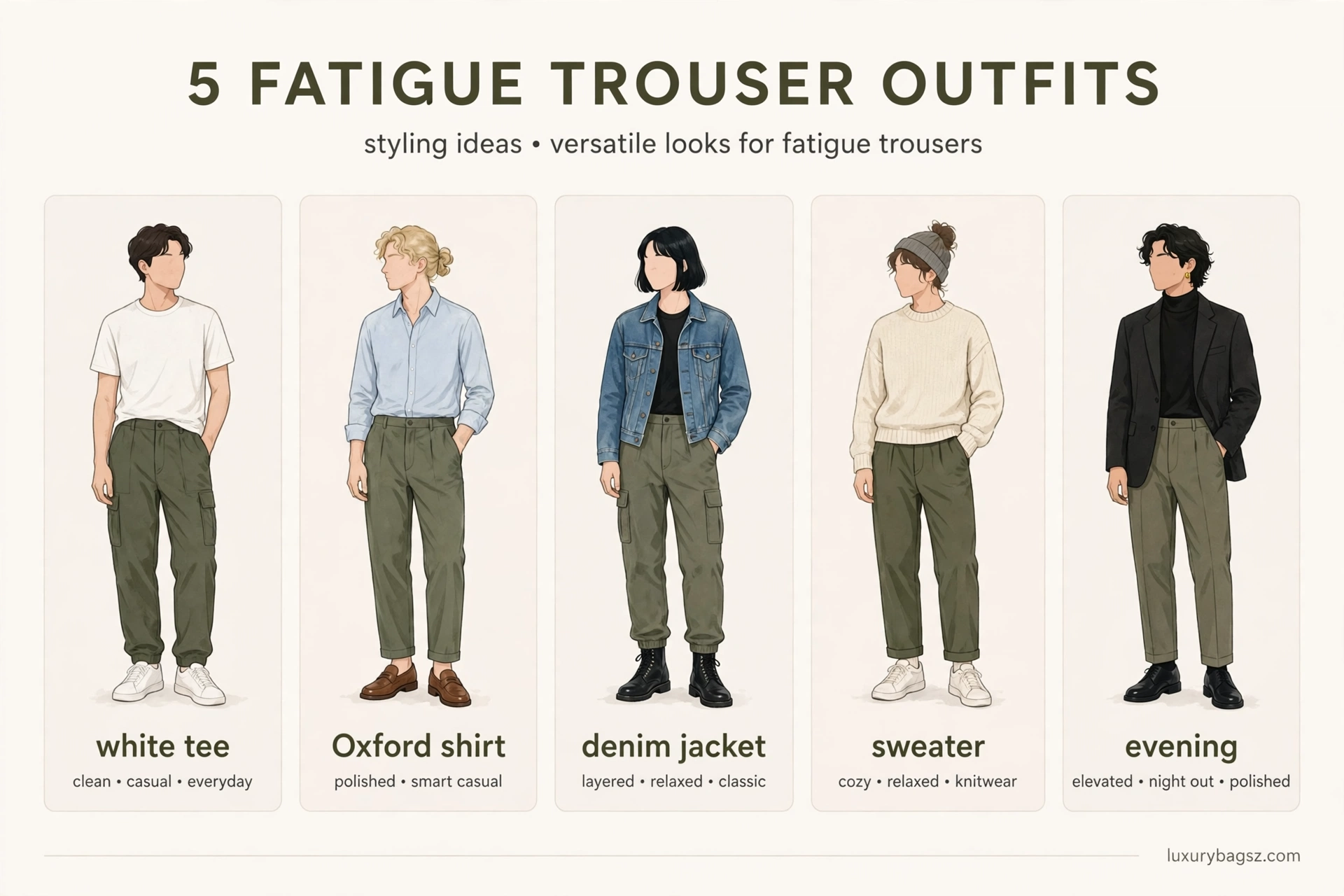
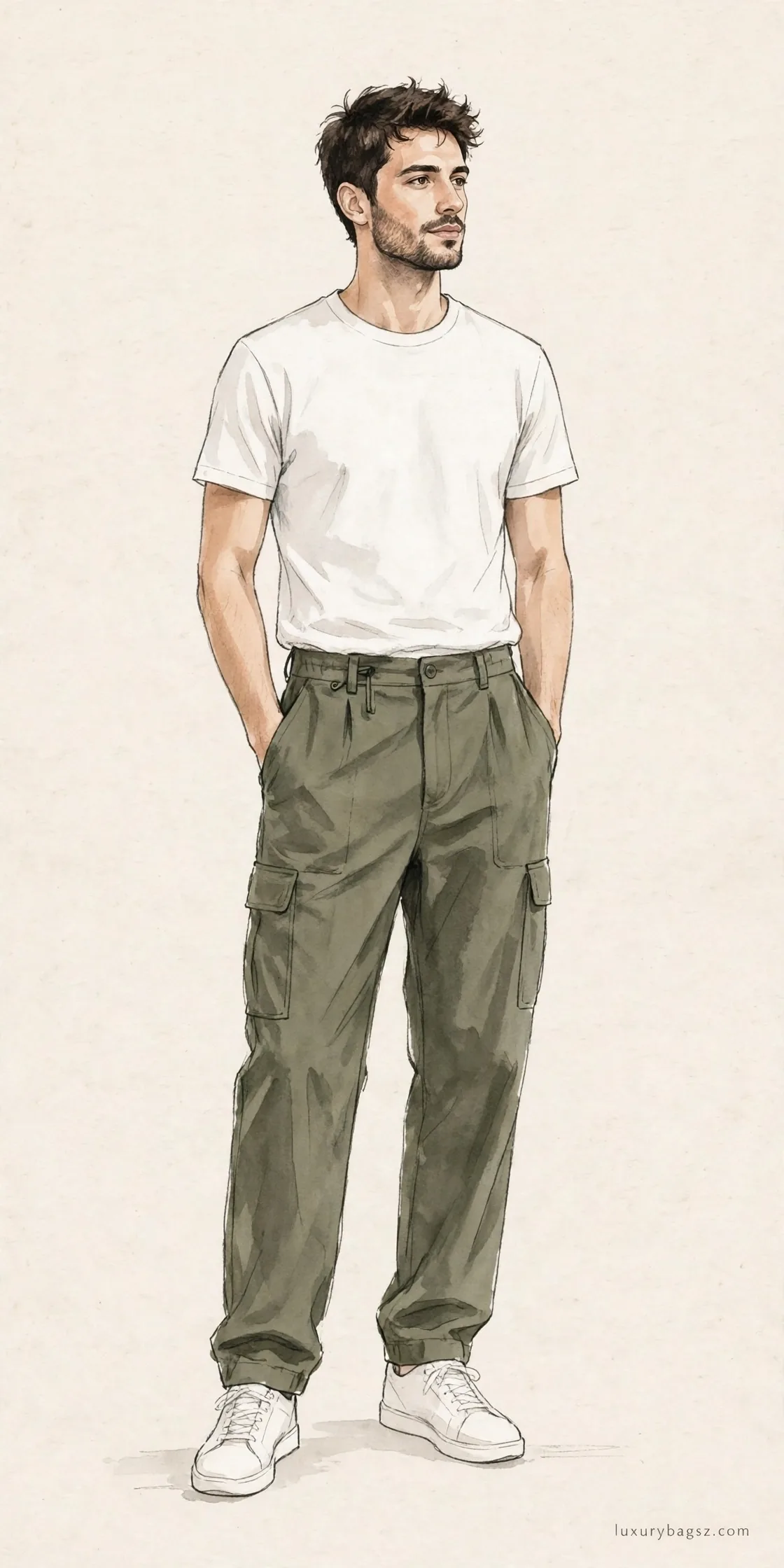
The classic is fatigues with a plain white tee, a heavy belt and white canvas sneakers. It is effortless, timeless and hard to get wrong, which makes it the best first outfit for a new pair.
For a smarter day, tuck in a crisp Oxford shirt, add suede loafers and a simple watch. The contrast between rugged trousers and a refined shirt is what makes this look feel deliberate rather than thrown together.
A denim jacket over fatigues works surprisingly well, despite doubling up on workwear. Keep the denim mid-wash, the tee plain, and the shoes simple, and the textures complement rather than compete.
In cooler weather, layer a crew-neck sweater in cream or charcoal over the trousers with leather boots. The soft knit takes down the visual weight of the twill and makes the outfit feel warm and grounded.
For evenings, try fatigues with a black knit polo or a dark henley and black leather boots. The darker top tones down the military feel and pushes the trousers firmly into smart-casual territory.

Shoes That Suit Fatigues
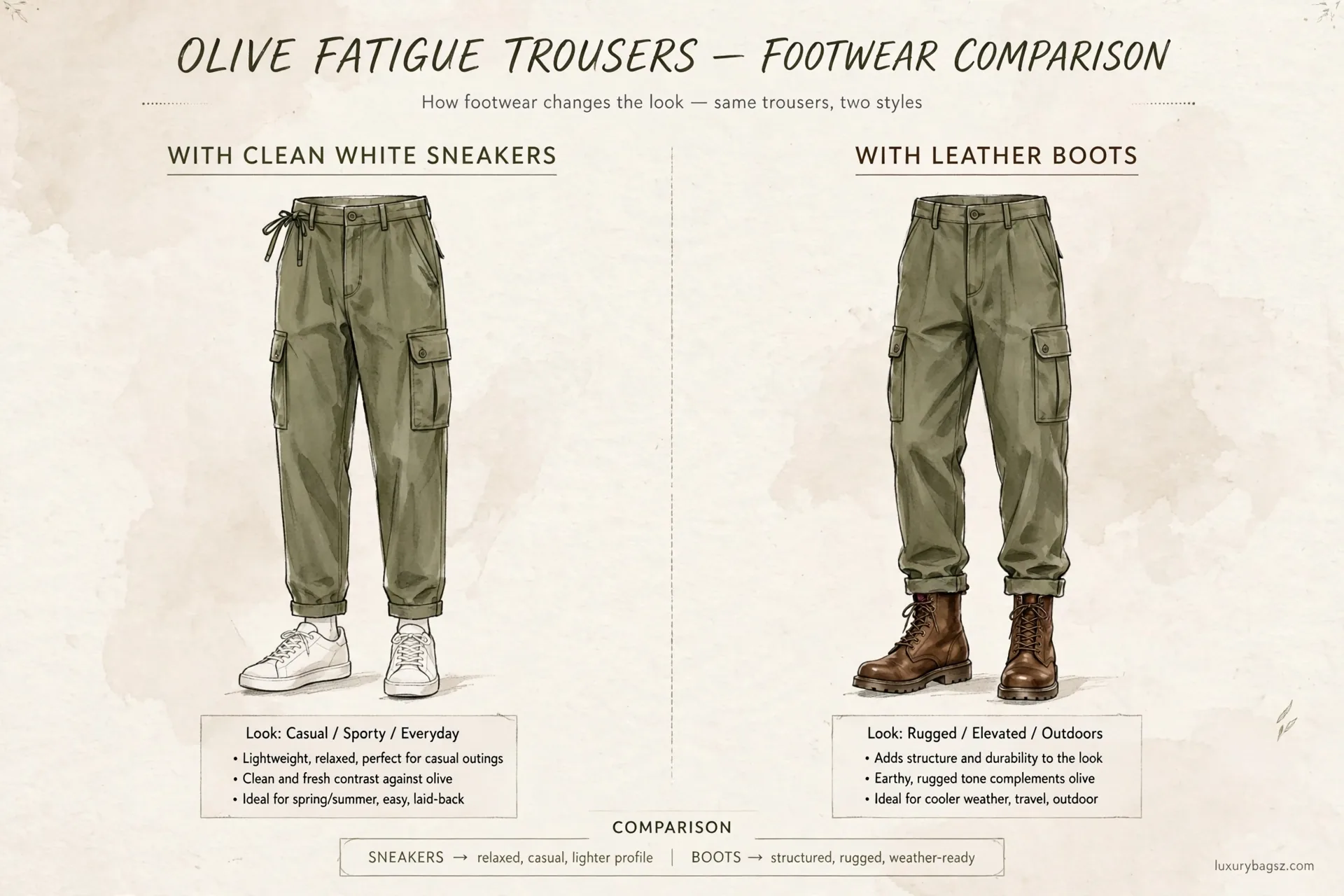
Sneakers are the default. Clean white leather sneakers modernise fatigues instantly, while canvas sneakers keep them relaxed and weekend-ready. Avoid overly sporty trainers, which clash with the trousers' workwear weight.
Boots are the second option. Service boots, Chelsea boots and simple work boots all balance the straight leg, especially when the hem sits just above the boot shaft. High-top sneakers solve the same pooling problem.
Loafers and derbies can work for smart-casual outfits, particularly in dark brown suede. The key is a clean, simple shoe with no tactical detailing, so the outfit reads polished rather than uniform-like.
Avoid very sleek formal Oxfords with fatigues, since the heavy twill swallows a delicate shoe. Likewise, avoid bulky tactical boots unless the whole outfit is genuinely for outdoor work.
Colours That Pair With Olive
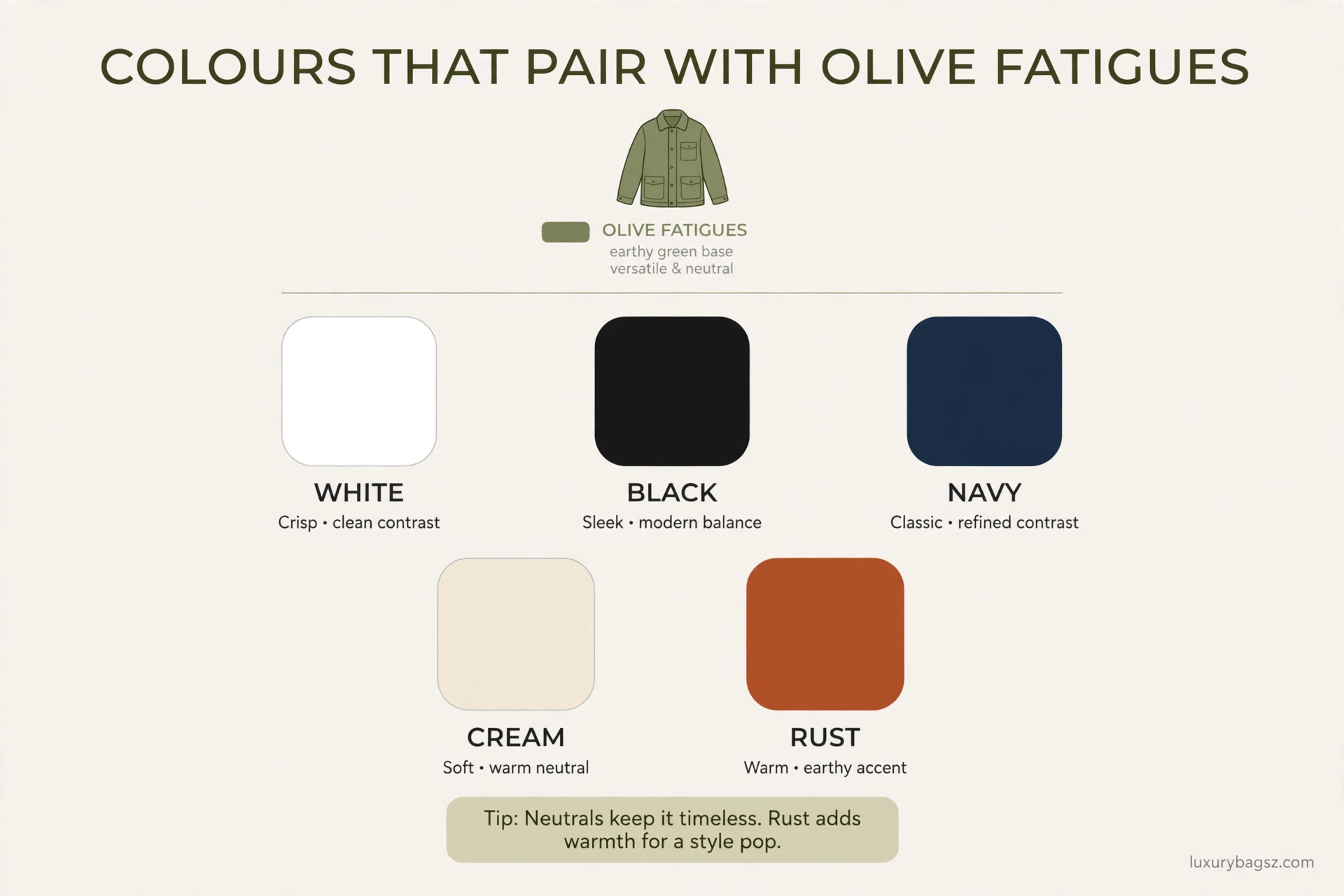
Olive is a neutral, but it needs contrast to avoid looking like a uniform. White is the easiest partner, brightening the outfit and keeping it clearly civilian. Black also works, especially for evening looks.
Navy is another strong match, sitting close to olive without blending into it. Cream, stone and grey soften the trousers for daytime, while rust and burgundy add warmth in autumn without shouting.
Avoid wearing olive on olive. An olive jacket, olive tee and olive fatigues together read as a uniform, however good each piece is alone. The same goes for head-to-toe camo, which turns a good pair of trousers into a costume.
If your fatigues are khaki rather than olive, the same rules apply, with tan and brown becoming even easier partners. Keep one strong colour in the outfit and let the rest stay neutral.
Fatigues Across the Seasons
In spring, fatigues with a tee and an open overshirt are ideal. The twill is sturdy enough for cool mornings but breathes better than heavy denim, so it suits changeable weather well.
Summer calls for lighter fatigues in cotton or a cotton blend, worn with a tee or a camp collar shirt and canvas sneakers. Roll the hem slightly to show the ankle and keep the outfit feeling light.
Autumn is fatigue season at its best. Pair them with flannel, chunky knits, waxed jackets and boots, and the military heritage feels natural rather than forced. Earth tones throughout tie the look together.
Winter works if you layer well. Thermal tops underneath, a heavy coat on top and boots below keep the outfit warm, though very cold days may call for a heavier trouser. Fatigues are a three-season staple for most climates.
Mistakes to Avoid
The first mistake is going full military. Camo, combat boots, a field jacket and fatigues together look like a uniform, not an outfit. Let the trousers be the single military reference in the look.
The second mistake is overstuffing the patch pockets. Bulging pockets ruin the line of the trousers and add visual weight at the hip. Carry phone and wallet only, and leave the rest in a bag.
The third mistake is ignoring the hem. Pooling fabric, frayed ends and dragging cuffs make fatigues look careless. A quick hem or a neat cuff costs little and changes the whole impression.
Finally, do not buy fatigues that are too tight in the thigh. The straight-leg design needs a little room to drape, and a squeezed fit fights the trouser's shape. Size for comfort, then tailor the length.
Buying, Fabric and Care
Look for cotton sateen for the classic smooth finish, or herringbone twill for extra texture and durability. A little stretch, around two percent, makes modern fatigues far more comfortable for daily wear.
Check the pocket stitching, the button fly and the waistband before buying. These are the stress points, and neat, reinforced stitching there signals a pair that will last. Vintage pairs deserve the same check, plus a look for thinning at the knees.
Wash fatigues in cold water and hang them to dry to limit shrinkage and fading. Olive dye fades with harsh washing, so skip the hot cycle and turn the trousers inside out before they go in.
Expect to pay more for well-cut modern fatigues than for surplus pairs, but the fit is usually worth it. Surplus is great for experimenting with the style; a tailored modern pair is the one you will reach for daily.
Frequently Asked Questions
What are fatigues?
Fatigues are olive military utility trousers with a straight leg, a high to mid rise and large front patch pockets, made from sturdy cotton twill or sateen. Modern versions keep the look but cut it slimmer.
Are fatigues the same as cargo pants?
No. Classic fatigues keep their pockets at the front hip, while cargo trousers add large pockets down the leg. Fatigues have a cleaner leg, which makes them easier to dress up.
What tops go with fatigues?
Plain tees, Oxford shirts, henleys, crew-neck sweaters and denim jackets all work. Keep tops simple and avoid other military or camo pieces in the same outfit.
Can you wear fatigues to a smart-casual event?
Yes, with a tucked button-down shirt, a simple belt and suede loafers or derbies. Keep the trousers clean, well-hemmed and free of heavy fading for smarter settings.
What shoes go with fatigue pants?
Clean sneakers, service boots, Chelsea boots and suede loafers all suit fatigues. Avoid very sleek formal shoes, which look too delicate against heavy twill, and bulky tactical boots for everyday wear.
Should fatigues be baggy or slim?
Neither extreme works best. Aim for a straight leg with a little room through the thigh, a clean hem and a top that balances the volume. Vintage pairs often need hemming to get there.
Can you wear fatigues in summer?
Yes, in lighter cotton versions with a tee and canvas sneakers. Cuff the hem slightly and keep colours light on top so the outfit does not feel heavy in warm weather.
Do fatigues suit all body types?
Yes, with the right fit. Taller men can carry a straighter, longer leg, while shorter men benefit from a tapered hem and a tucked top to lengthen the leg line. A good hem matters for everyone.
How do you stop fatigues looking like a uniform?
Wear only one military item, pair olive with civilian colours like white, navy or cream, and choose civilian shoes. Avoid camo, combat boots and field jackets in the same outfit.
How should you wash fatigue trousers?
Wash in cold water, inside out, and hang to dry. This limits shrinkage and fading of the olive dye. Avoid hot cycles, which fade the colour and can tighten the fit.
Summary
Fatigues are one of the easiest military pieces to wear well, because their clean straight leg and olive colour pair with almost anything plain. Keep the outfit civilian, hem the leg properly, and let a simple tee, shirt or sweater do the rest. That restraint is what turns army surplus style into an everyday staple.