Selling Designer Bags in Japan: Tokyo and Osaka Guide for Visitors and Residents
Selling Designer Bags in Japan: Tokyo and Osaka Guide for Visitors and Residents
Yes, You Can Sell in Japan, and Often on the Same Day
Yes, you can sell a designer bag in Japan as a visitor or a resident. Licensed second-hand dealers buy bags over the counter, appraise them in person, and pay the same day if you accept the quote and your identification checks out.
The catch is paperwork, not the bag. Dealers must verify who you are before they can buy, and a passport alone may not be enough. Contact the shop before you travel, get two or three quotes on one day, and never sign under pressure.
Key Takeaways
- Only licensed dealers can buy second-hand goods as a business in Japan, and their licence number should be easy to find.
- Buyout, called kaitori, is the fastest route: appraisal, quote, identification check, signature, then payment.
- Visitors can sell at some shops, but identification rules differ by store, so confirm accepted documents in advance.
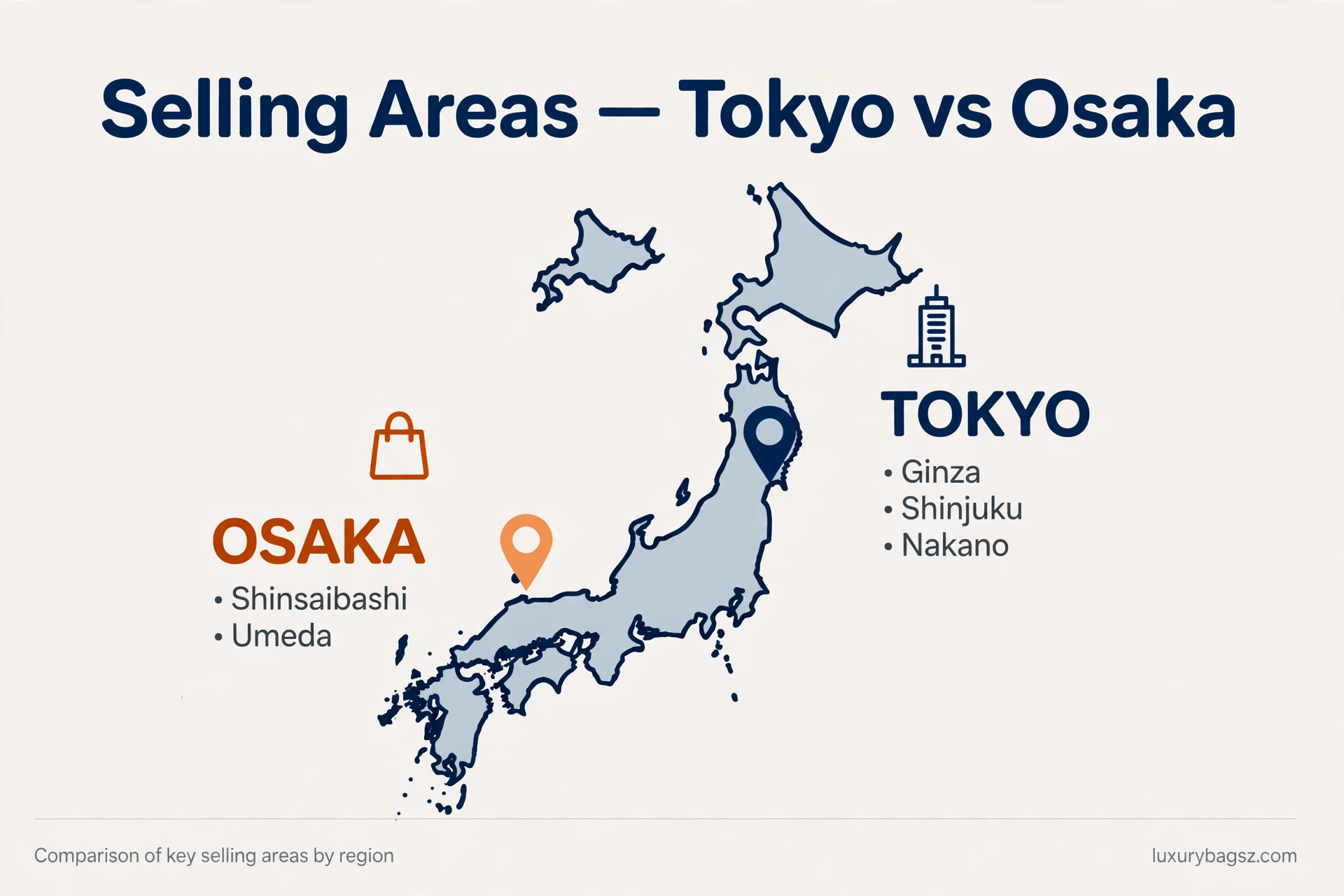
- Ginza, Shinjuku and Nakano lead in Tokyo. Shinsaibashi and Umeda lead in Osaka.
- A buyout quote is a wholesale figure, so compare it with a quote at home before you decide where to sell.
- Tax-free shopping rules apply to buying goods to take home. They give you no benefit when you sell a bag.

How Japan’s Second-Hand Luxury Market Works
Japan has a deep, well-organised market for pre-owned luxury. Owners trade in well-kept bags, dealers authenticate and grade them, and the best pieces move quickly between shops, auctions and buyers at home and abroad.
Buying and selling second-hand goods for profit is a regulated business. A dealer needs a licence issued by a Public Safety Commission, while a private owner selling their own bag does not need a licence at all.
Since April 2024, dealers trading online must publish their business name, the commission that licensed them, and their licence number on their own website. If you cannot find those details, treat that as a warning sign.
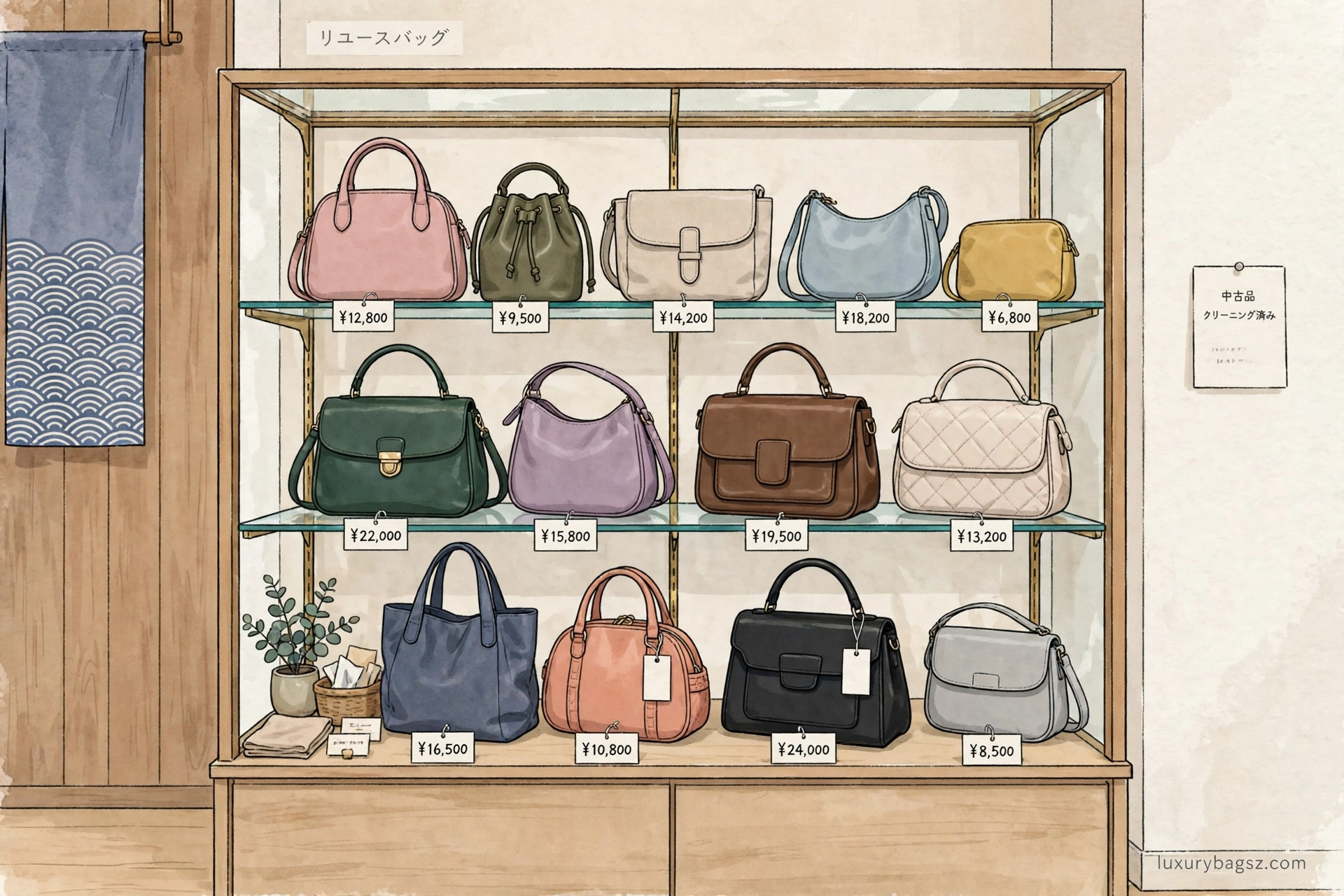
Most high-street buying happens through kaitori counters inside resale shops. The same chains that display pre-owned bags also buy them, which is why stock turns over so fast in busy districts.
Buyout, Consignment or Private Sale
A direct buyout pays you at once and ends the matter. Consignment usually aims higher, but you wait until the bag sells and you receive the sale price minus any agreed fees, so compare the final figure, not the headline.
If you are new to either route, read how luxury consignment works before you leave your bag with anyone. A private sale can pay most of all, yet it carries the fraud and dispute risk yourself.
| Route | Speed | What you receive | Effort and risk |
|---|---|---|---|
| Buyout (kaitori) | Often same day | Lowest of the three, paid at once | Low |
| Consignment | Weeks or months | Higher, minus agreed fees | Low to medium |
| Private sale | Unpredictable | Potentially highest | High |
Some shops also offer a trade-in value against another bag, and that figure can sit above a straight buyout quote. Compare it with cash offers elsewhere before you treat the higher number as better value, because it only helps if you wanted that other bag.
How the Buyout Counter Works
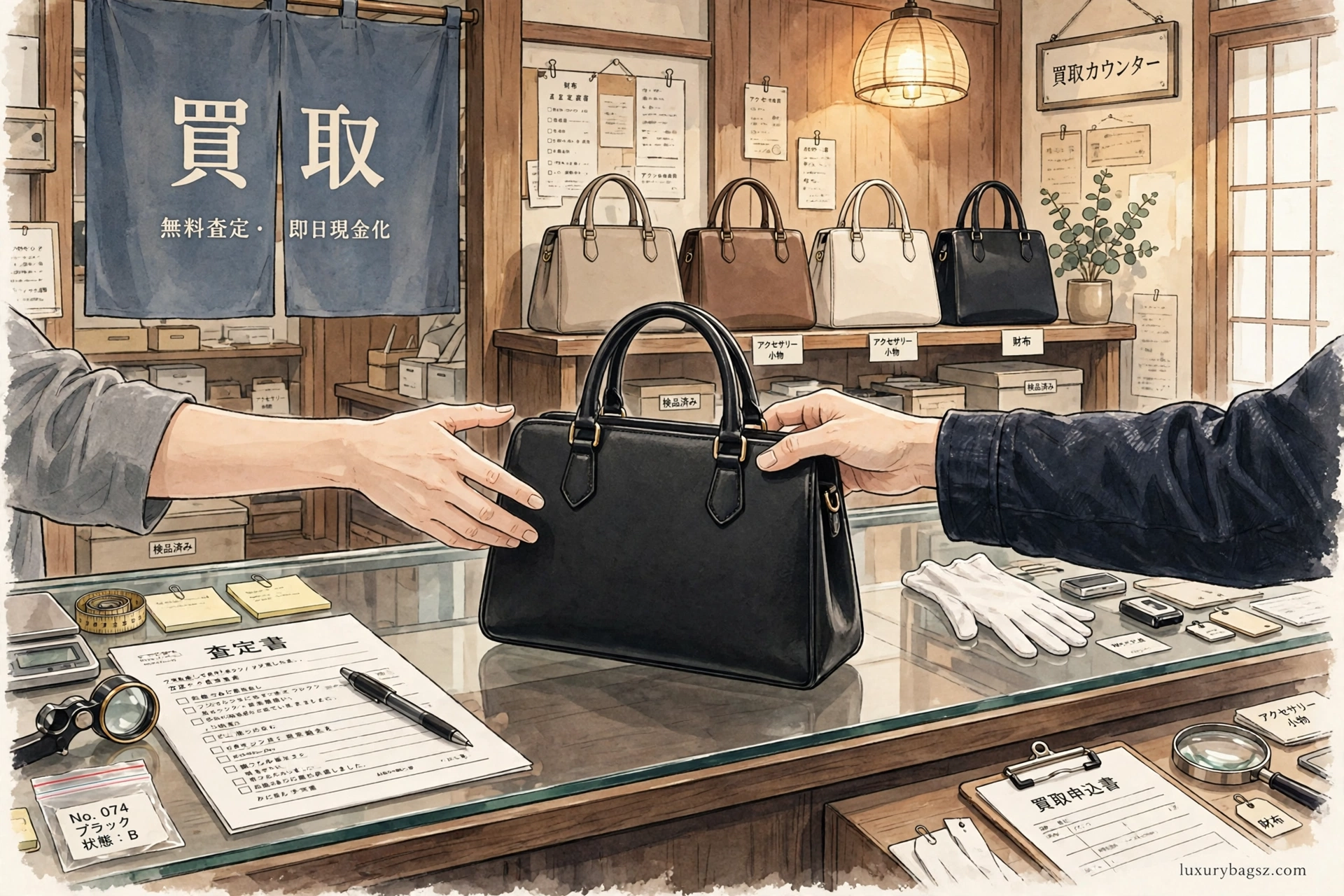
Bring the bag to the counter. Some shops take walk-ins and others prefer a booking, and a preliminary quote from photos can shorten the visit. An appointment also helps if you need an appraiser for a rare model.
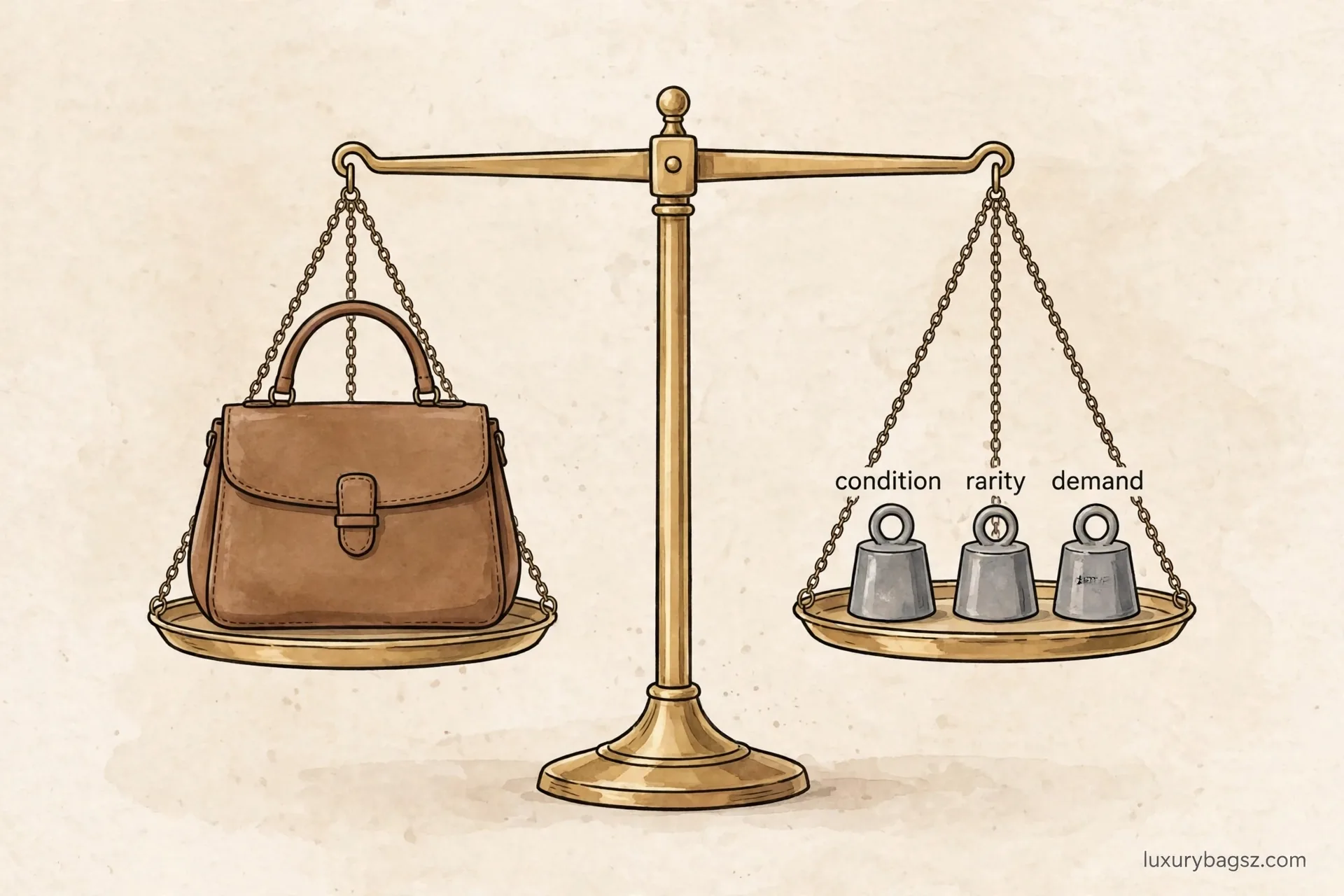
The appraiser checks authenticity, condition and completeness, then weighs current demand and the shop’s own stock. At one Hermès specialist, that check is described as taking around ten to twenty minutes for standard models.
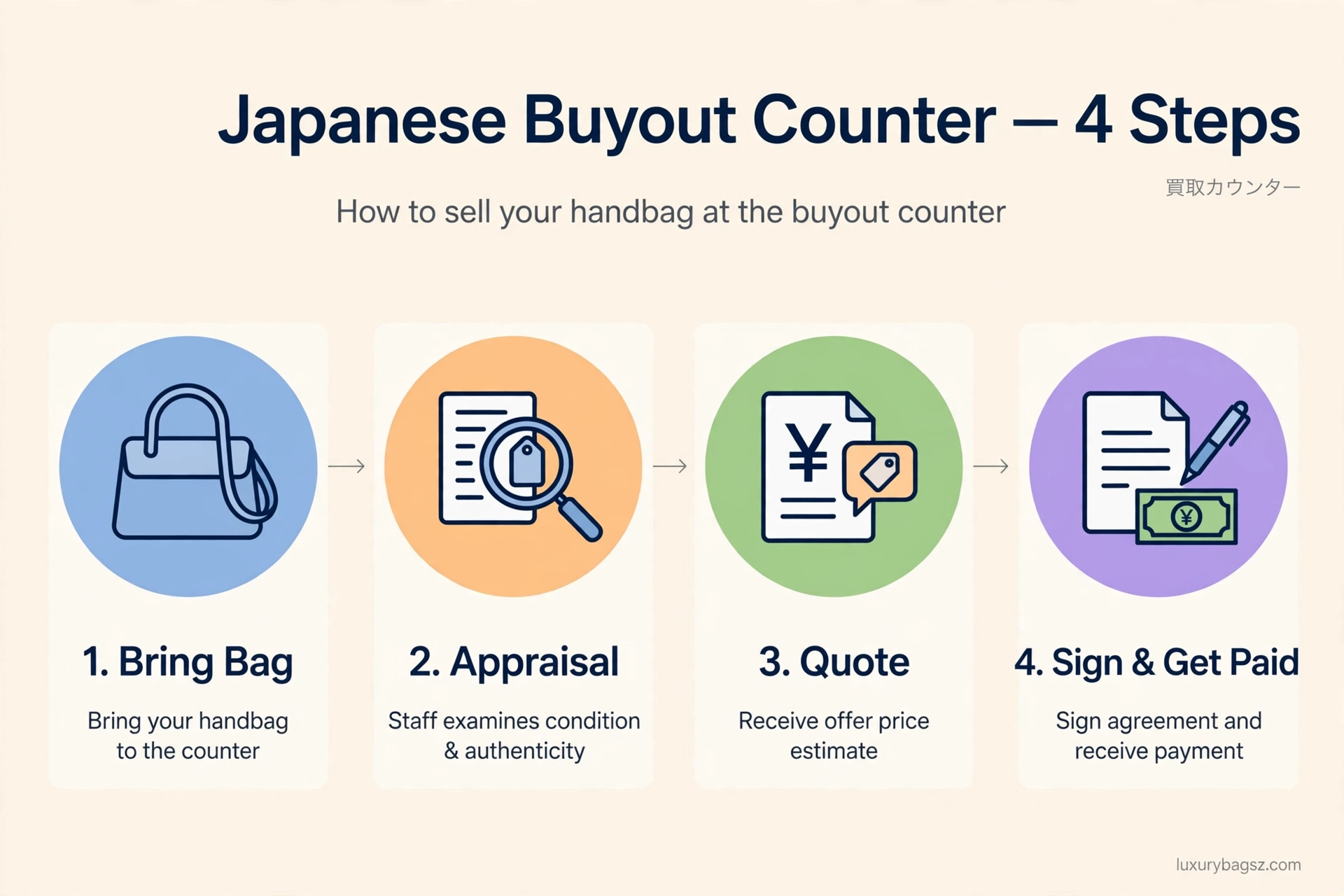
You then receive a quote. You are free to decline it and take the bag elsewhere, and a reputable shop will let you leave and think. If you accept, the shop verifies your identity, you sign, and you are paid.
Payment timing varies by shop and method. Cash can be arranged the same day at some dealers, while a bank transfer depends on the bank. Ask when and how you will be paid before you sign, and get the answer in writing.
At one Hermès specialist, the run from authentication to signing is put at around twenty to thirty minutes in total. Cash payment is then arranged within thirty minutes to two hours of the deal being confirmed, while consignment money follows within one business day after the bag sells and payment clears.
Where to Sell in Tokyo
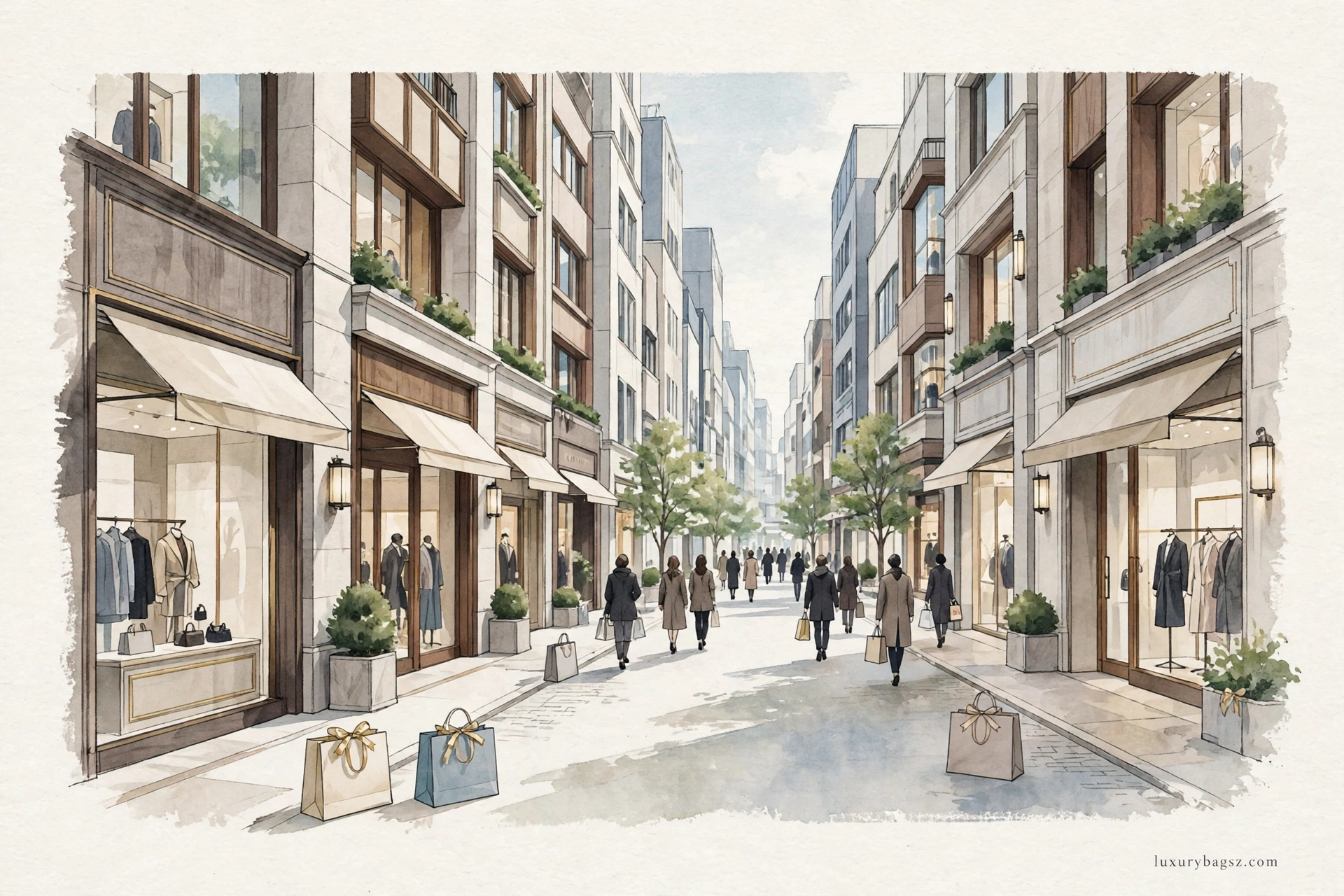
Ginza for Specialists and Flagships
Ginza suits high-value bags. Large resale flagships and single-brand specialists sit close together, so you can collect several quotes on foot. BRAND OFF’s Ginza flagship and the Hermès specialist Ginza Xiaoma both buy here.
Shinjuku for Choice in One Trip
Shinjuku gives you the widest choice in one trip. KOMEHYO runs a dedicated buy-back floor in its Shinjuku store, and Daikokuya’s main store nearby buys on an upper floor, so second and third opinions take minutes, not hours.
Nakano for Vintage and Patience
Nakano Broadway gathers many smaller resale shops under one roof, with a strong vintage flavour. It rewards patience and suits older or unusual pieces, though you may need to ask more shops to find the right buyer.
Where to Sell in Osaka
Shinsaibashi is Osaka’s resale centre. KOMEHYO has a large Shinsaibashi flagship and BRAND OFF has a Shinsaibashi store, alongside smaller vintage shops, so quotes are easy to compare within a short walk.
Umeda is the calmer alternative, with dealers near the main stations, including the Osaka store of Ginza Xiaoma. If your trip covers both cities, sell where the specialist for your brand sits, not just where you land.
| Area | Best for | Typical sellers nearby |
|---|---|---|
| Ginza, Tokyo | High-value and rare bags | Flagships and single-brand specialists |
| Shinjuku, Tokyo | Several quotes in one trip | Large chains with buy-back floors |
| Nakano, Tokyo | Vintage and unusual pieces | Smaller independent resale shops |
| Shinsaibashi, Osaka | Choice and comparison | Large chains and vintage shops |
| Umeda, Osaka | Calmer, station-side selling | Chain branches and specialists |
Which Chains and Specialists Should You Try?
Start with the type, not the name. General chains such as KOMEHYO, BRAND OFF and Daikokuya buy across brands and give you a fast market benchmark. KOMEHYO began in Nagoya in 1947 and now describes itself as Japan’s leading luxury reseller.
Ask three direct questions before you judge any quote. Is the shop actively looking for buyers for this model, size and colour, how many identical bags does it already hold, and is authentication done in-house or sent out? The answers explain the figure far better than shop size does.
ALLU and RAGTAG are also familiar resale names, with RAGTAG leaning more towards designer fashion. For a single high-value house, a specialist can pay more because it already has buyers waiting for that model.
Ginza Xiaoma is the clearest specialist example: it focuses on Hermès, offers buyout and consignment in Ginza and Umeda, and publishes its Tokyo licence number. Check the same details on any shop’s site before you visit.
Before you hand over a high-value bag anywhere, it helps to understand our authentication process and the checks a careful buyer should make. A shop that explains its checks plainly is a good sign.
Selling as a Foreigner: What Is Accepted and What Is Not
Foreigners can sell, and residents follow the same basic rules. Licensed dealers must verify a seller’s name, address, occupation and age, and keep a record of the sale. Without that check, a legitimate dealer cannot buy.
Here is the point visitors miss. Guidance described by the National Police Agency treats a passport on its own as weak proof of address, because the address in a passport is written in by the holder. Shops apply this differently.
Some shops buy from short-term visitors and others do not. Email or message the shop before you go, name the documents you hold, and ask plainly whether it can buy from you. That one message can save a wasted trip across Tokyo. If you are buying rather than selling, our guide to buying pre-owned designer bags in Tokyo maps the districts, the grading systems and the new tax-refund rules.
Residents should expect to show official identification that confirms a Japanese address. If a shop asks for a document you do not have, do not argue at the counter. Thank the staff, and try a shop whose policy fits your papers.
Tax-Free Shopping Is Not Selling
Tax-free shopping is about buying, not selling. It lets eligible visitors claim back the ten per cent consumption tax on goods they take out of Japan. It gives you no discount, refund or advantage when a dealer buys your bag.
From November 2026, visitors pay the full tax-inclusive price in the shop and claim the tax back after customs confirms the goods are leaving Japan, within ninety days. Keep every item on a receipt together for that check.
So do not buy a bag under the refund scheme and then sell it on inside Japan. Those goods are meant to leave with you. Selling is a separate deal, paid in yen, and any tax duties at home are your own to check.
Will You Get More in Japan Than at Home?
Sometimes, but not always. Japan’s deep demand helps liquid models in popular sizes and colours, and a specialist with buyers waiting may quote strongly. A common model the shop already holds in numbers will quote softly anywhere.
For Hermès, specialists name Birkin 25 and 30 and Kelly 25 and 28 as the most liquid sizes, with black, gold, Étoupe and Craie among the steadiest colours. A rare colour is not automatically worth more, because broad demand, not scarcity alone, is what holds those prices up.
Remember what a buyout quote is. It is a wholesale figure that leaves room for the shop’s costs and margin, so it sits below the price the same bag will later carry on the shelf. That gap is the price of speed and certainty.
Get a firm quote at home first, then compare like with like in yen after exchange costs. For a price anchor on the most traded house, check current Hermès handbag prices before you travel.
Quotes move with demand, season and exchange rates, so compare on the same day where you can. One Hermès specialist suggests three to five quotes on one day and using the middle range, not the highest promise, as your guide.
Preparing Your Bag and Documents
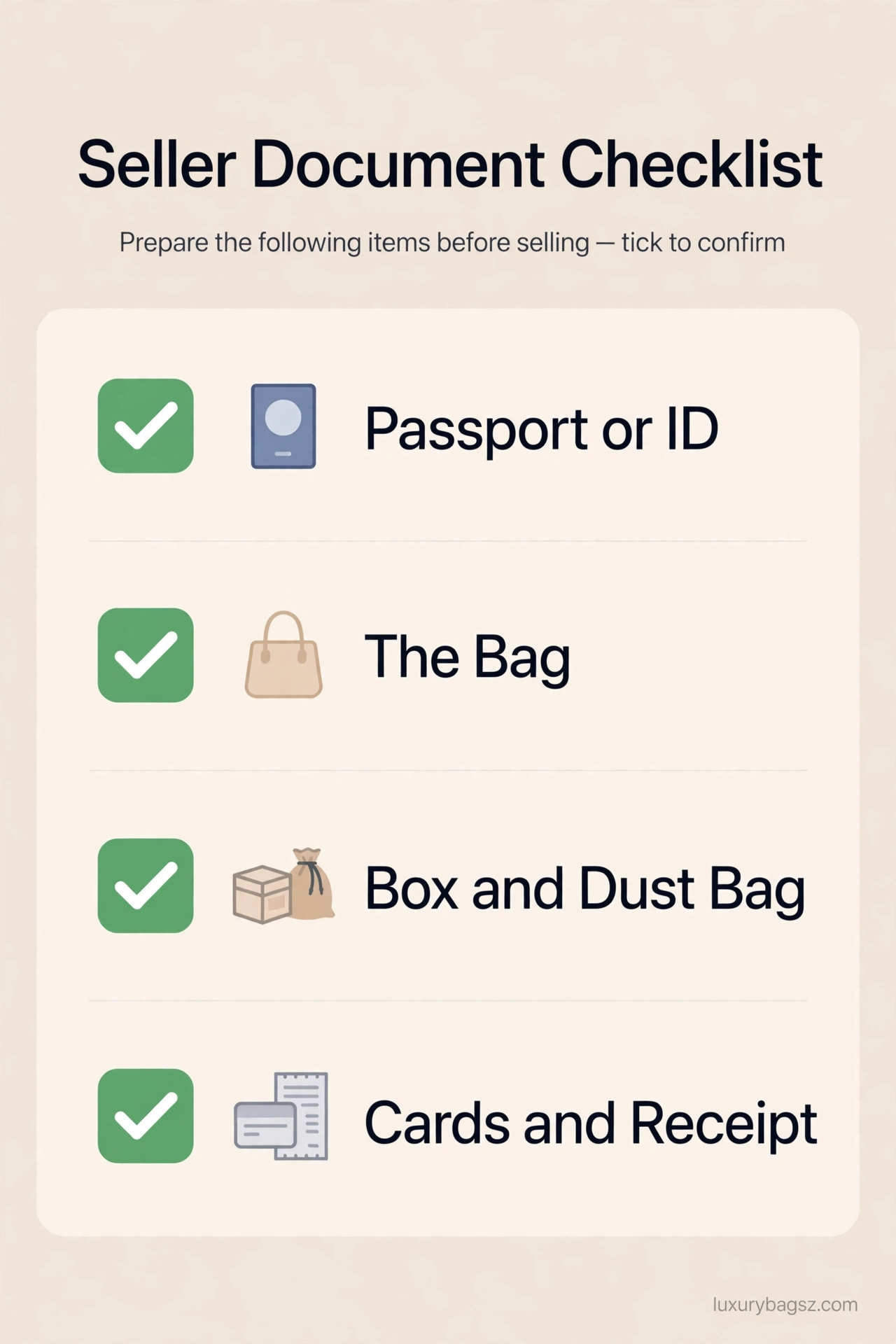
Clean the bag gently, empty every pocket, and gather the full set. Functional extras matter most: a shoulder strap, lock and keys, or a clochette can affect the quote more than the box, though the box and dust bag still help.
- The bag, cleaned gently and emptied, with no home repairs or re-dyeing.
- Strap, lock and keys, clochette, dust bag and box, where you have them.
- Cards, service records and the original receipt, if you still hold them.
- Identification the shop has confirmed it accepts, plus your contact details.
- Clear photos of the front, back, base, corners, hardware and interior, for early quotes.
For an online quote, add the handle bases, the stamp, a group shot of every accessory and a short 360-degree video to those photos. The fuller the set you send, the smaller the adjustment is likely to be once the bag is handled in the shop.
A missing receipt rarely blocks a sale, but it can slow the checks and soften the price. As Jessica, founder of Luxury Bagsz and a handbag specialist, I personally check bags in the same order a good appraiser does: structure first, then details.
With more than ten years in the bag industry and over five hundred bags examined, I use Entrupy, including microchip checks, alongside leather, stitching and hardware. That discipline is what a Japanese appraiser will apply to your bag too.
Do not pay for repairs before you sell. Poor restoration lowers value, and undisclosed work is usually spotted. My visits to leather factories in Spain and France taught me how quickly trained eyes read leather and stitching.
How to Avoid Lowball Offers and Pressure
Treat a very low first quote as information, not an insult. Ask what caused it, ask for the reasons for any deduction in writing, and ask what would raise it. A missing strap at your hotel may be worth a second trip.
Beware the flattering early quote. A photo-based promise far above every other shop often falls after the bag is handled. Compare final, in-person figures, and compare buyout cash with consignment money after fees.
Know your cooling-off position. A sale you make yourself at a shop counter has no statutory cooling-off period, so do not sign if the price feels wrong. Home-visit buying is treated differently and carries an eight-day window.
Never feel rushed by a queue, a closing time or a one-day-only claim. Thank the appraiser, keep your bag, and walk to the next counter. In Ginza, Shinjuku and Shinsaibashi, the next opinion is rarely far away.
Frequently Asked Questions
Can a tourist sell a designer bag in Japan?
At some shops, yes. The dealer must verify your identity and record the sale, and each shop decides which documents it accepts from visitors. Message the shop before you go and confirm, rather than relying on your passport alone.
Can I sell without the box or receipt?
Usually, yes. Shops buy bags without the full set every day, but missing straps, locks or papers can lower the quote and lengthen the checks. Bring everything you have, and be honest about anything that is missing.
How long does a buyout take?
A straightforward bag can be appraised, agreed and paid on the same day. Rare models, exotic leathers or pieces needing deeper checks can take longer, sometimes into the next day. Ask about timing before you hand the bag over.
Is consignment better than a buyout?
Consignment can return more because the bag sells at a retail price, but you wait for a buyer and receive that price minus agreed fees. A buyout pays less and pays at once. Choose by how soon you need the money, not by headline figures.
Do I get tax back when I sell a bag in Japan?
No. The tax refund scheme covers eligible goods you buy and take out of Japan. A sale to a dealer is a different kind of deal, and the price you agree is the price you receive, in yen, before any exchange costs at home.
What if a shop will not buy my bag?
Ask politely whether the reason is the model, condition, stock levels or your documents, but accept that some shops decline without a full explanation. A refusal is not a formal verdict on authenticity. Try a specialist for your brand next.
Final Verdict
Sell in Japan when your bag suits its market: a liquid model, a full set of extras, and papers a dealer accepts. Do the quotes on one day, in one district, and let shops compete while the bag is in your hands.
If the best Japanese quote only matches home, sell at home and travel light. If a specialist clearly beats it, take the same-day buyout, keep the paperwork, and enjoy the rest of your trip with one less worry.