Seasonal Handbag Trends: What Changes From Spring to Winter (and What Stays the Same)
Bags Follow the Calendar
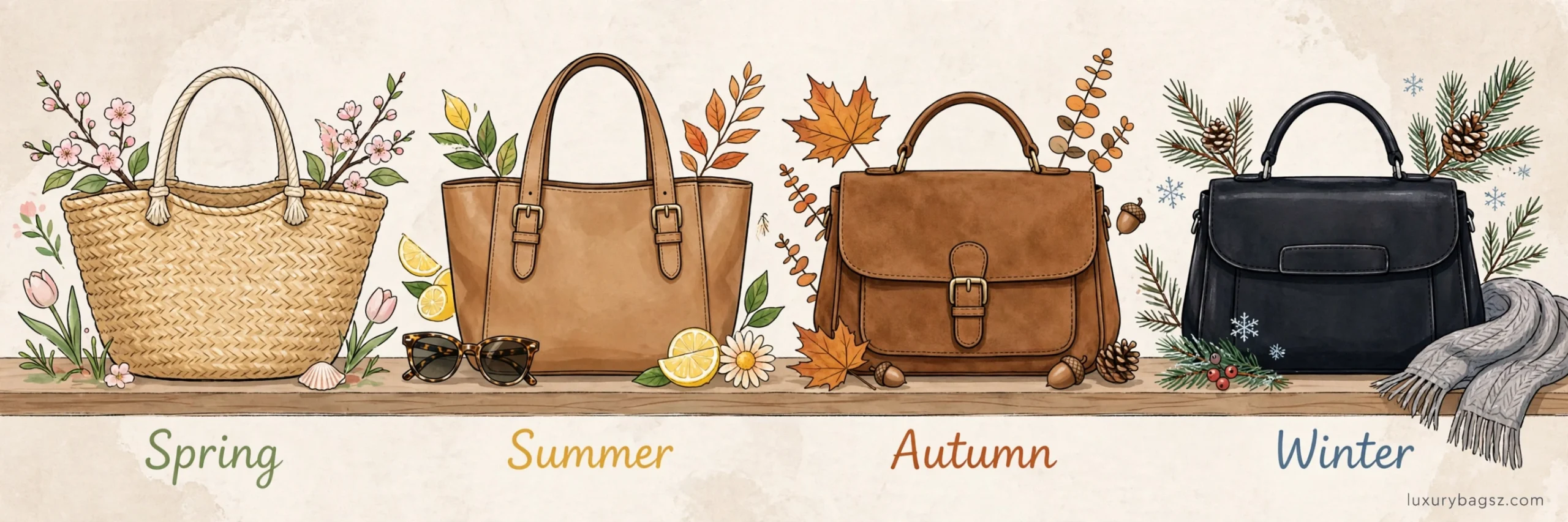
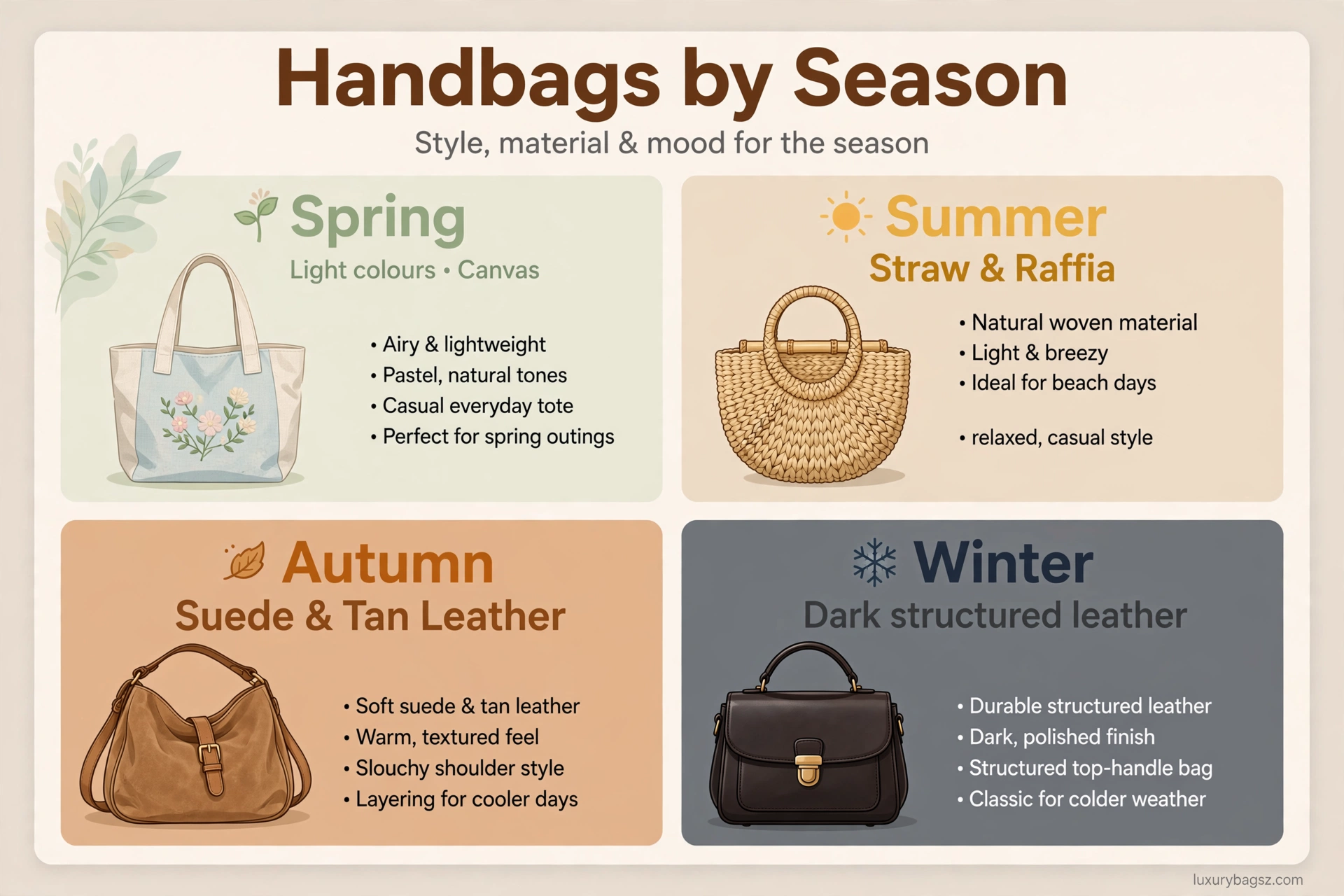
Handbags run on a seasonal rhythm as reliable as coats. For one house in depth, our Hermès seasonal colours 2026 report follows the shades season by season. Spring lightens them, summer weaves them, autumn deepens them, and winter structures them — then the wheel turns again.
Knowing the rhythm stops you buying the right bag in the wrong month and wondering why it never quite works with your clothes.
This overview walks through each season's shapes, materials and colours, then shows how a small rotation of bags can cover the whole year.
Key Takeaways
- Spring trends favour pastel and white leather, softer shapes and smaller sizes.
- Summer belongs to straw, raffia, canvas and denim — light, forgiving materials.
- Autumn deepens colour and texture: suede, chocolate leather and roomy totes return.
- Winter is structure season: black leather, polished hardware and party clutches.
- A four-bag rotation — one per season's mood — covers most wardrobes completely.
- Store off-season bags stuffed, in dust bags, so each season starts with a bag in shape.
The Seasonal Cycle, Explained
Designers show two main collections a year, spring-summer and autumn-winter, and handbag trends follow those drops — the pattern tracked in our designer handbag trends coverage.
Materials lead the change. Warm seasons need bags that shrug off heat, sand and sudden showers; cold seasons reward heavier leather and richer texture.
Colour follows light. As days brighten, palettes lighten; as they darken, bags absorb the season's browns, burgundies and blacks.
Size cycles too. Summer's totes swallow beach and market loads, autumn's bags organise work lives, and winter's evenings shrink everything to clutch scale.
Climate explains most of it, but the fashion calendar adds its own push: new materials are launched when shoppers are already changing their wardrobes, so the bag change rides along almost unnoticed.
Once you see the cycle, you can shop it backwards — buying next season's material at the end of this one, when shops discount the outgoing mood to make room for the incoming one.
Spring: Light Leather and Fresh Colour
Spring bags arrive in pastel, white and tan leather, usually in soft or lightly structured shapes that echo the season's lighter tailoring.
Top-handles and small shoulder bags dominate, sized for days that no longer need gloves, scarves and emergency layers carried along.
Fresh colour is the point of the season. A butter-yellow, powder-blue or blush bag lifts the grey and navy clothes most of us still wear in March.
If you buy one spring bag, buy it in a colour you can repeat. A pastel that matches nothing you own will spend the season in its dust bag.
Spring is also the moment to audit the whole rotation. The bags coming out of winter storage show their wear honestly, and repairs done now are ready before the season that needs them.
Lightweight linings and shorter straps suit the season's lighter coats — a small ergonomic point that decides whether a spring bag gets carried daily or left behind.
Summer: Straw, Canvas and Denim
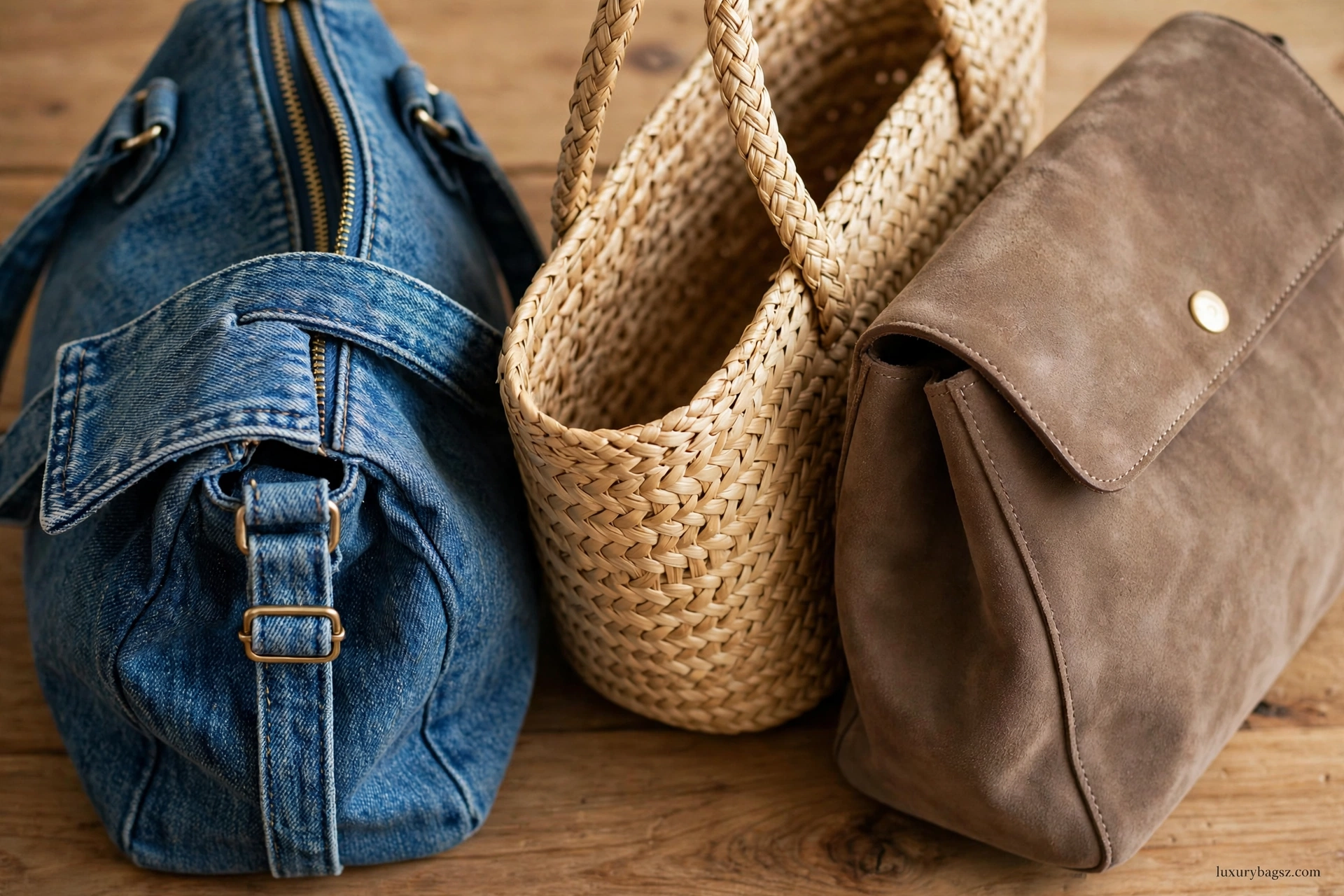
Summer is texture season. Designer straw bags and raffia totes become the default daytime carry from June onwards.
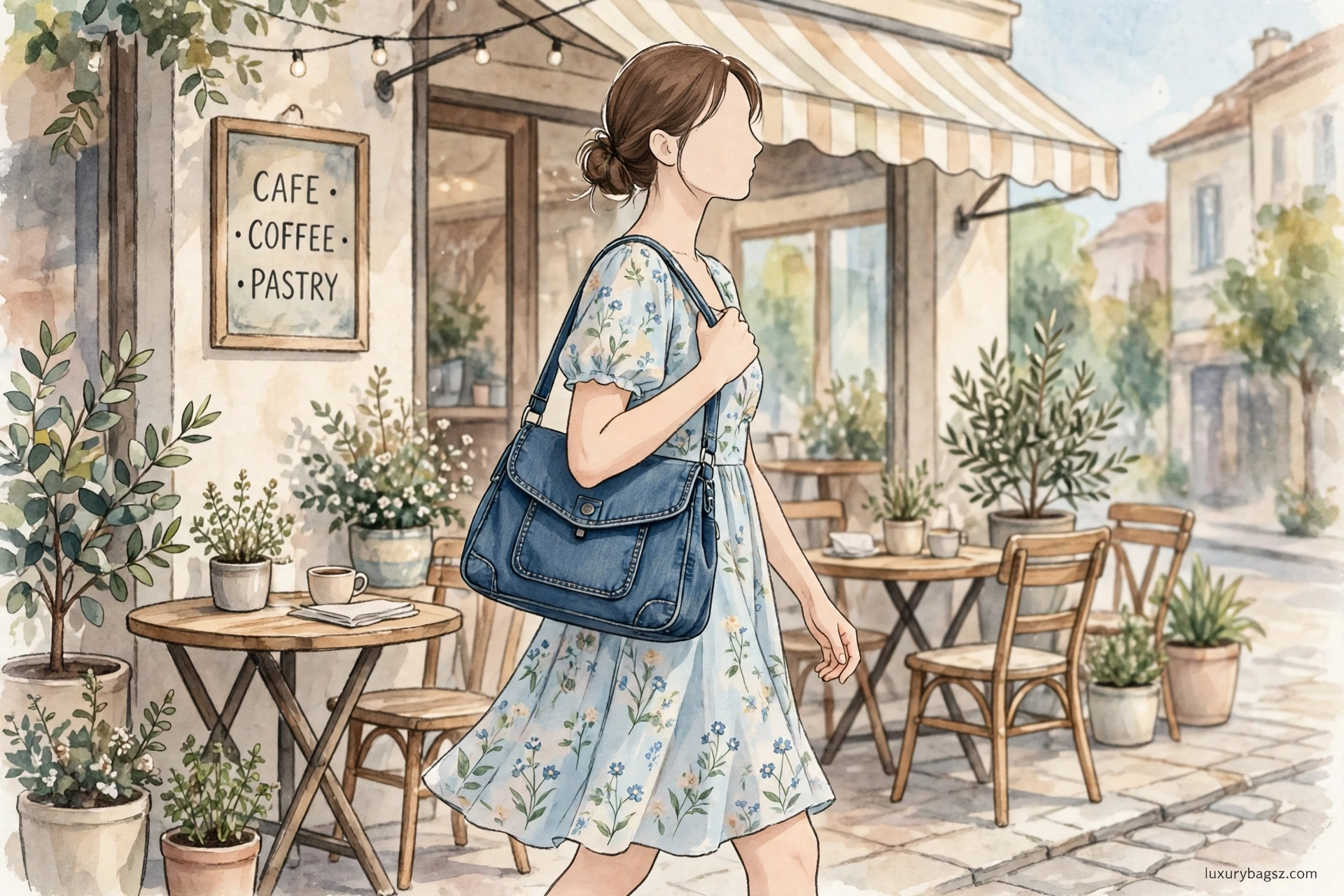
Canvas and cotton totes handle the practical end: markets, beaches, travel days. They forgive sunscreen, sand and the occasional ice-cream incident.
Denim handbags have become a summer staple of their own — the designer denim bags in current collections pair with everything from white dresses to actual jeans.
Summer's rule is lightness in every sense: pale colours, open weaves, unlined interiors and bags that do not fight the heat or the outfit.
Autumn: Suede, Depth and Room to Carry
Autumn reverses summer's logic. Colours deepen to chocolate, burgundy, olive and black, and surfaces turn matte and tactile.
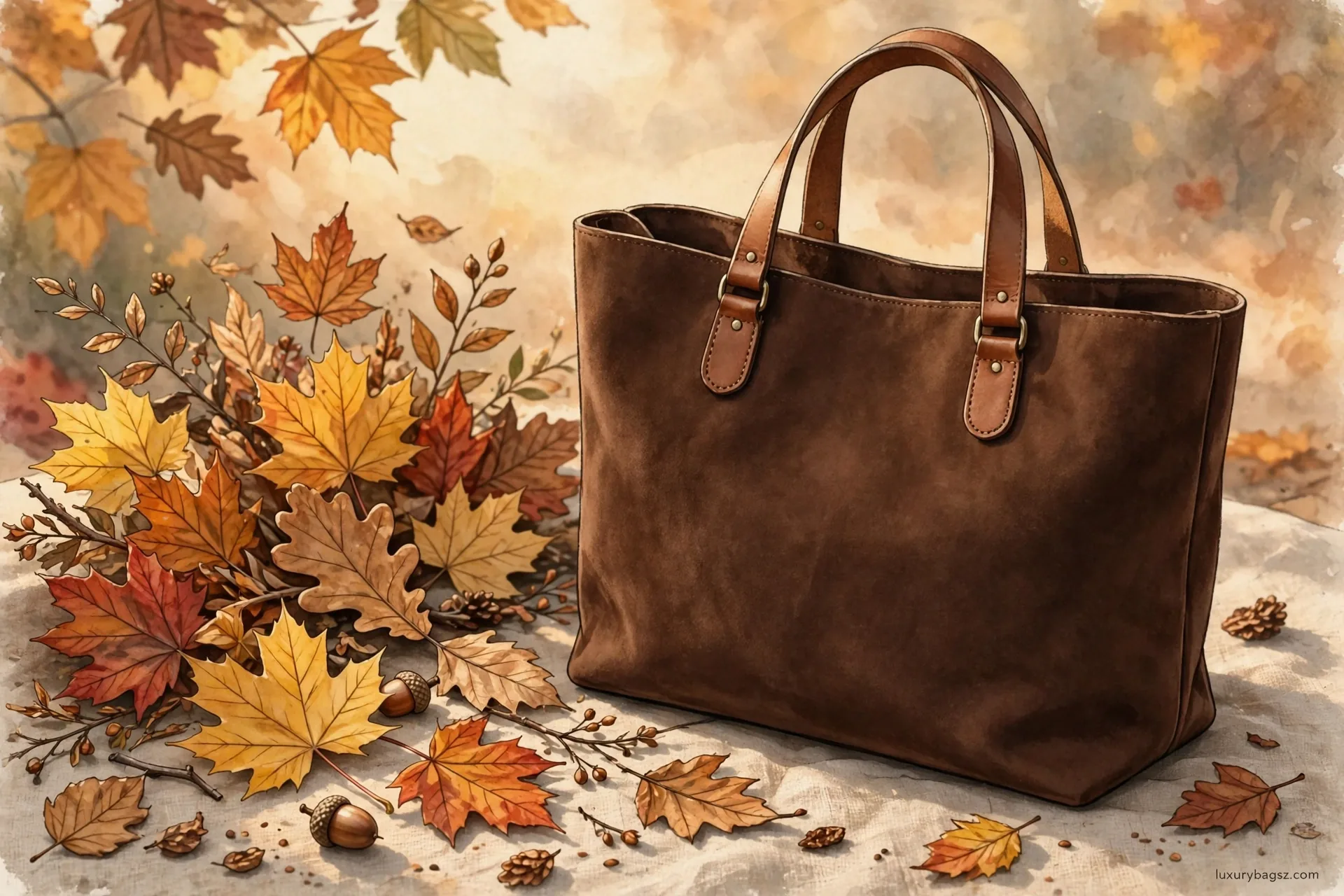
Suede bags headline the season because suede is autumn in material form — soft, warm-toned and best friends with knitwear and boots.
Sizes grow again. Totes and roomy shoulder bags return to carry the planners, laptops, layers and umbrellas that autumn days demand.
Hardware warms up too: brushed gold and brass replace summer's silver brightness, matching the season's jewellery and boot fittings.
Winter: Structure, Polish and the Party Clutch
Winter bags are the year's most formal. Smooth black leather, firm shapes and polished hardware suit coats, tailoring and dark evenings.
Structure is practical as well as smart. A bag that holds its shape sheds rain better and protects contents when you are carrying it against a heavy coat.
Evening bags shrink to clutches and miniatures in satin, velvet or metallic leather — the season of parties is the one time a tiny bag is genuinely the right size.
A winter workhorse plus one evening clutch covers the season for most people; winter is where a small rotation earns its keep most clearly.
What Never Changes
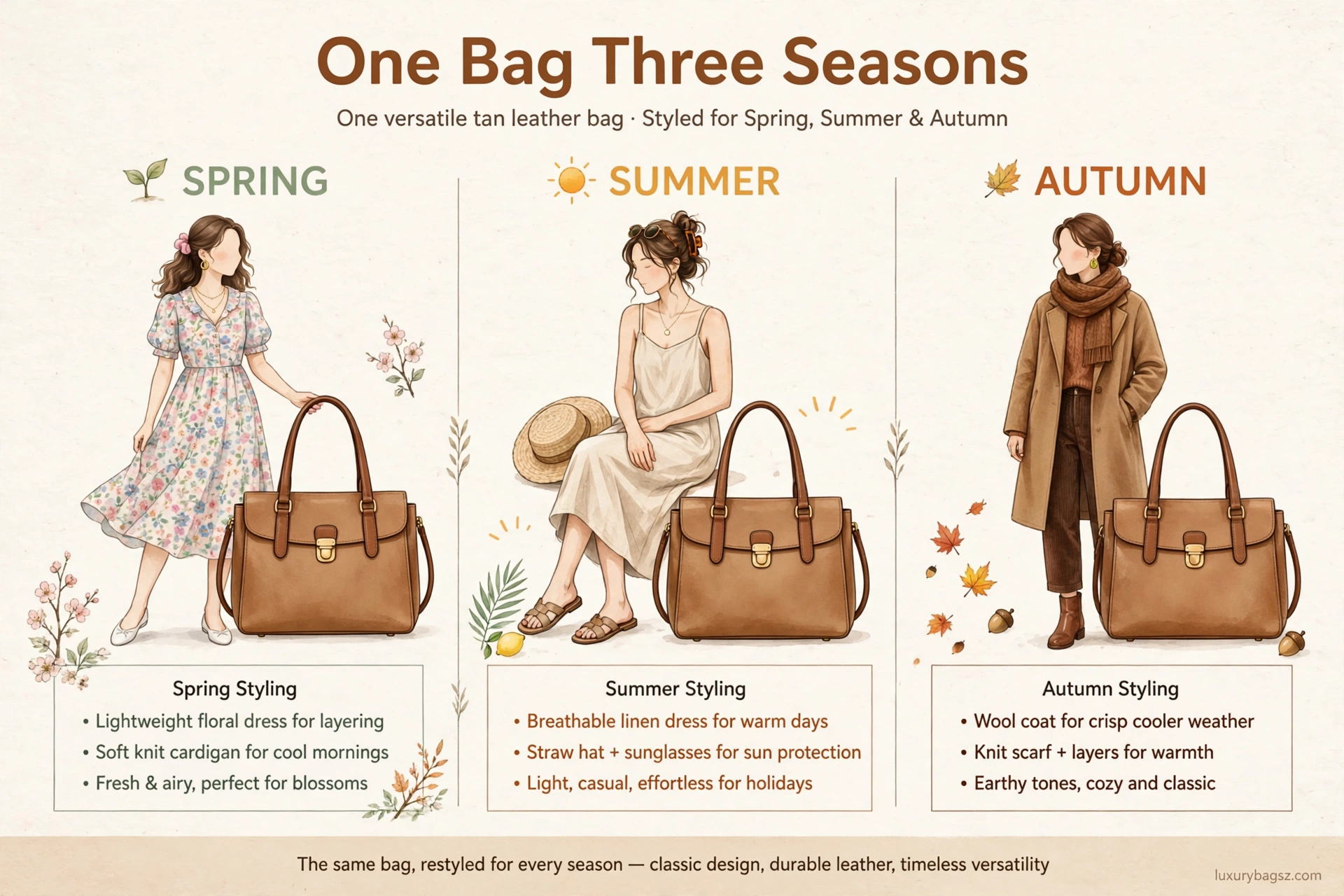
Some bags ignore the calendar. A medium black or tan leather shoulder bag in a classic shape works in every month and nearly every outfit.
Quality never goes out of season either: even stitching, solid hardware, a lining that fits, and zips that run smoothly matter more than the trend of the moment.
Neutral leather also bridges seasons. Tan reads summery in July and warms autumn browns in October; chocolate does the same trick at the darker end.
Buy trends in the seasonal materials — straw, denim, suede — and classics in leather. That split keeps both excitement and value where they belong.
Storing Bags Between Seasons
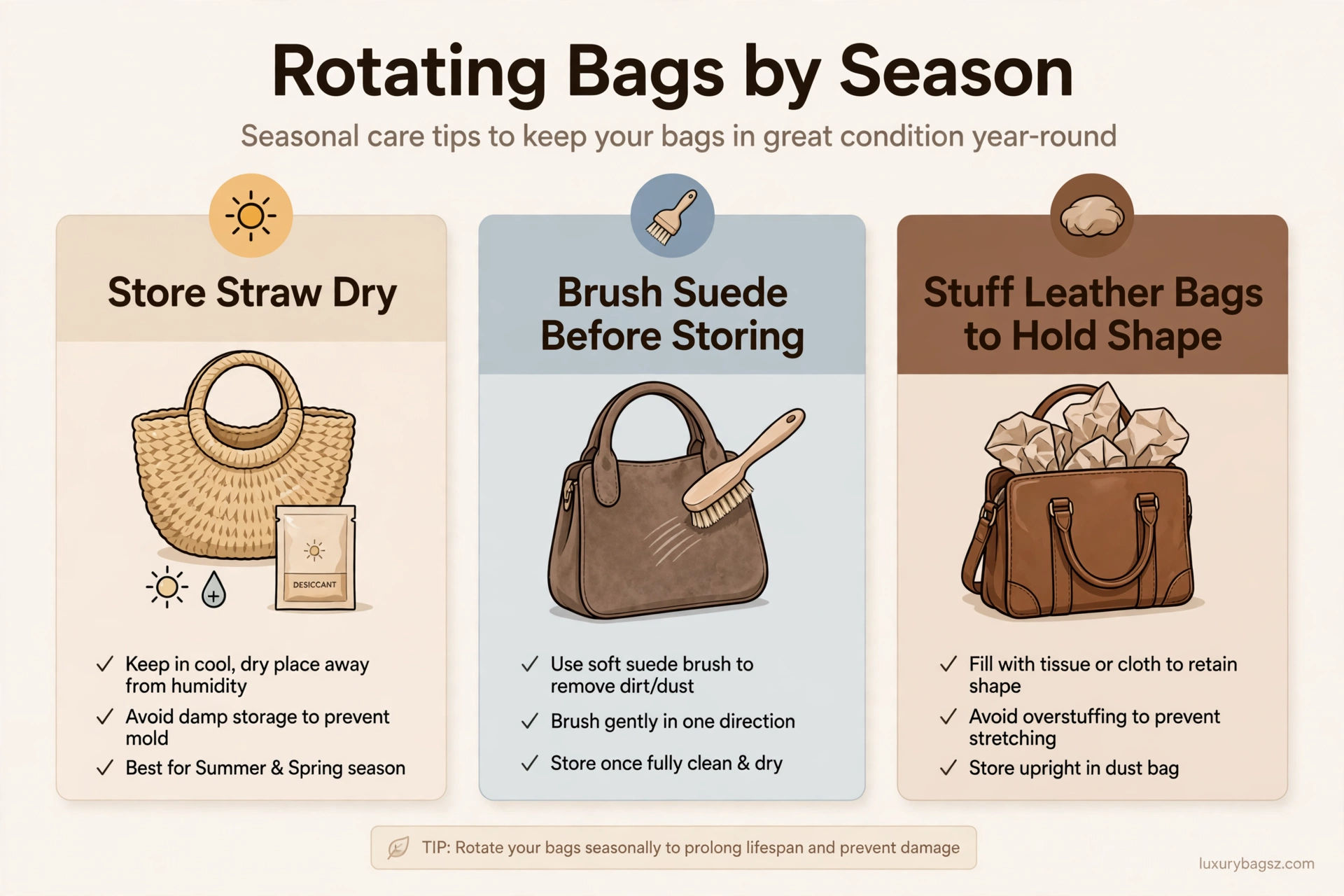
Seasonal rotation only works if bags survive their rest. Clean each bag before storing it: empty it fully, wipe the interior, and brush suede or straw free of dust.
Stuff bags lightly with tissue or a small cushion so they hold their shape, especially soft totes and slouchy shoulder bags that collapse when empty.
Store them upright in their dust bags, away from light and heat. Straw and pale leather fade fastest, so summer bags deserve the darkest shelf.
Check stored bags once mid-season. Early signs of mould, pests or a crushed shape are quick to fix; left a whole season, they often are not.
A Four-Bag Rotation That Covers the Year
Start with the classic: a medium leather shoulder bag in black or tan. This is the bag that fills every gap the others leave.
Add the summer bag: a straw or raffia tote. It carries three months of weekends and holidays and asks for almost no care in return.
Add the autumn bag: a suede or chocolate leather tote or shoulder bag with room for layers and work kit. This is the season's hardest worker.
Finish with the evening clutch: one small bag in satin, metallic or black that attends every party of the year. Four bags, twelve months, no gaps.
Add a fifth only if your life demands it — a true work tote for laptop days is the usual candidate. Beyond five, most rotations start duplicating jobs rather than covering new ones.
Keep the rotation visible in your wardrobe if you can. Bags stored out of sight get forgotten, and a seasonal swap you can see is a seasonal swap that actually happens.
Frequently Asked Questions
What are seasonal handbag trends?
They are the patterns that repeat each year as collections change: lighter colours and softer shapes in spring, woven materials in summer, deep tones and suede in autumn, structure and polish in winter.
Do I need a different bag for every season?
No. One classic leather bag covers most of the year. Seasonal bags — straw for summer, suede for autumn, a clutch for party season — add fit and pleasure rather than necessity.
When do straw bags come back each year?
Typically from late spring, once the weather turns warm, through to early autumn. Straw and raffia read as summer materials, so they jar against heavy winter coats.
Why are suede bags an autumn trend?
Suede's matte warmth matches autumn clothing — knitwear, boots, coats — and its colours deepen the season's palette. It is also fragile in heavy rain, which winter brings more of.
What colour bag works in all seasons?
Tan and black leather are the year-round champions. Tan lightens for summer and warms autumn outfits; black suits winter most but works anywhere with the right outfit.
How should I store a straw bag over winter?
Clean and brush it, stuff it lightly to hold its shape, and keep it in a dust bag away from light and damp. Check it once mid-winter for mould or crushing.
Are denim bags only for summer?
Denim peaks in summer because it pairs with light clothes and holidays, but dark denim bags work in spring and early autumn too, especially with casual outfits.
What bag trends return every single year?
Straw totes in summer, suede in autumn, black structured bags in winter and pastel leather in spring. The shapes adjust slightly; the materials are the reliable cycle.
How many bags make a good rotation?
Four is the classic answer: a year-round leather bag, a summer woven bag, an autumn textured bag and an evening clutch. Many people manage happily with three.
Should I buy trend bags in designer versions?
Buy classics designer and trends accessibly, unless the trend piece is also a proven icon. Seasonal materials like straw wear out faster, which argues against top prices there.
Conclusion
Seasonal handbag trends are a friendly cycle once you see the pattern: weave in summer, deepen in autumn, structure in winter, lighten in spring. Build a small rotation around one classic, and every season arrives with the right bag already in your wardrobe.