How to Clean a Suede Bag: Stains, Water Marks and Restoration
How to Clean a Suede Bag: Stains, Water Marks and Restoration
Clean It Dry First: The Rule That Saves Suede
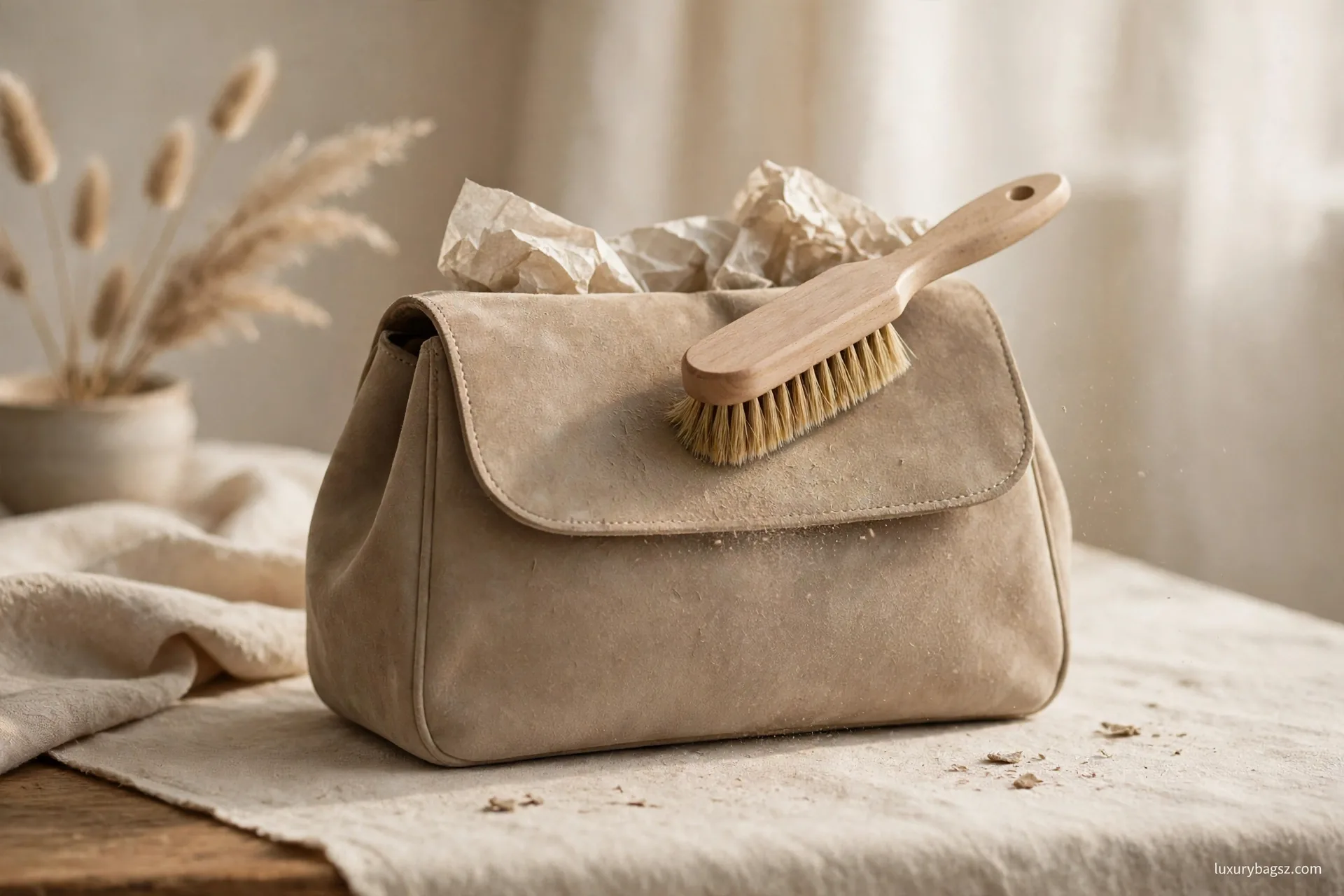
To clean a suede bag, work dry first. Empty it, stuff it to shape, brush the surface, lift marks with a suede eraser, then brush again. Treat stains one panel at a time, and use moisture only once dry methods have done all they can.
That order matters more than any product. Water or shampoo on dusty, unbrushed suede pushes dirt into the nap and fixes marks. Dry preparation removes most everyday grime alone, so many bags never need a wet clean.
Work gently throughout. Suede has no protective finish, so it absorbs water, oil and dye on contact. Most cleaning disasters — rings, dark patches, stiff nap — come from too much liquid or rubbing.
Key Takeaways
- Clean dry first: brush, erase, brush again, before any liquid touches the bag.
- Work one panel at a time and keep the bag stuffed so the surface stays even.
- Fresh dye transfer often lifts; set-in transfer and ink usually do not fully come out.
- Split suede tolerates far less moisture and rubbing than full-grain suede.
- Mould, bald corners and fading are restoration jobs, not home cleaning jobs.
- Budget for a professional clean once or twice a year if you carry pale suede regularly.
The Core Routine: Brush, Erase, Brush Again
Empty every pocket and shake out dust. Stuff the bag firmly with white tissue or a small towel until the panels feel taut. A stuffed bag gives the brush resistance and stops creases forming.
Brush the bag in short strokes in one direction, then lightly against the nap to lift trapped dust. For pressure and brush types, follow our guide on how to use a suede brush rather than improvising.
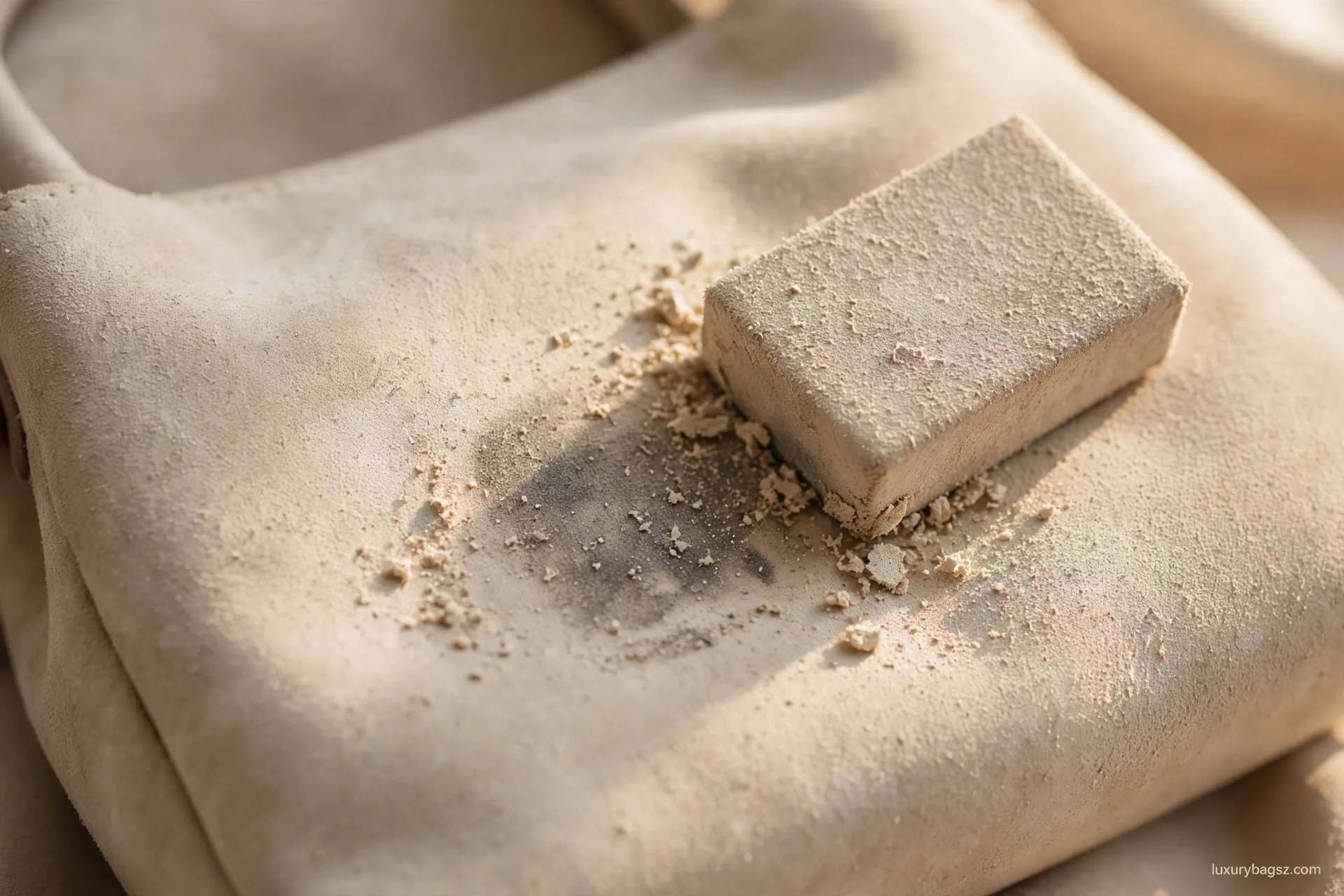
Next, rub scuffs and shiny patches gently with a suede eraser, then brush again to blend. Work panel by panel — front, sides, back, handles last — checking each in daylight. Handles carry skin oil and need separate attention.
Stain by Stain: What to Do on a Bag
Match the method to the stain; the table below covers the marks bags pick up most. Always finish by air-drying away from heat and brushing once dry.
| Stain | First move | Avoid |
|---|---|---|
| Dust and scuffs | Brush, then suede eraser | Wet wiping |
| Dried mud | Let it dry fully, then brush out | Washing it while wet |
| Water marks | Dampen the whole panel evenly | Spot-wetting one patch |
| Oil and grease | Cornflour overnight, then brush off | Soap or detergent |
| Salt lines | White vinegar on a barely damp cloth | Soaking the area |
| Ink | Blot fresh ink only, then see a specialist | Rubbing or home solvents |
Mud, Salt and Water Marks
Let mud dry completely, however tempting it is to wipe it away. Dry mud brushes out cleanly; wet mud smears deep into the nap. Salt lines respond to a cloth barely dampened with white vinegar, dabbed on and blotted dry.
Water marks form when one wet patch dries darker than the rest. The fix is counter-intuitive: lightly mist the whole panel so it dries as one even tone, keep the bag stuffed, and brush as it dries. Spot-wetting alone leaves a ring.
Oil, Grease and Ink
For oil from hands, food or cosmetics, blot — never rub — then cover the mark with cornflour or talc overnight to draw grease out. Brush off and repeat if needed. Heat and soap drive oil deeper, so patience beats scrubbing.
Fresh ink can sometimes be blotted dry before it sets. Dried ballpoint or marker is different: rubbing spreads pigment and lifts dye around it, so set-in ink belongs with a specialist.
Colour Transfer in Both Directions
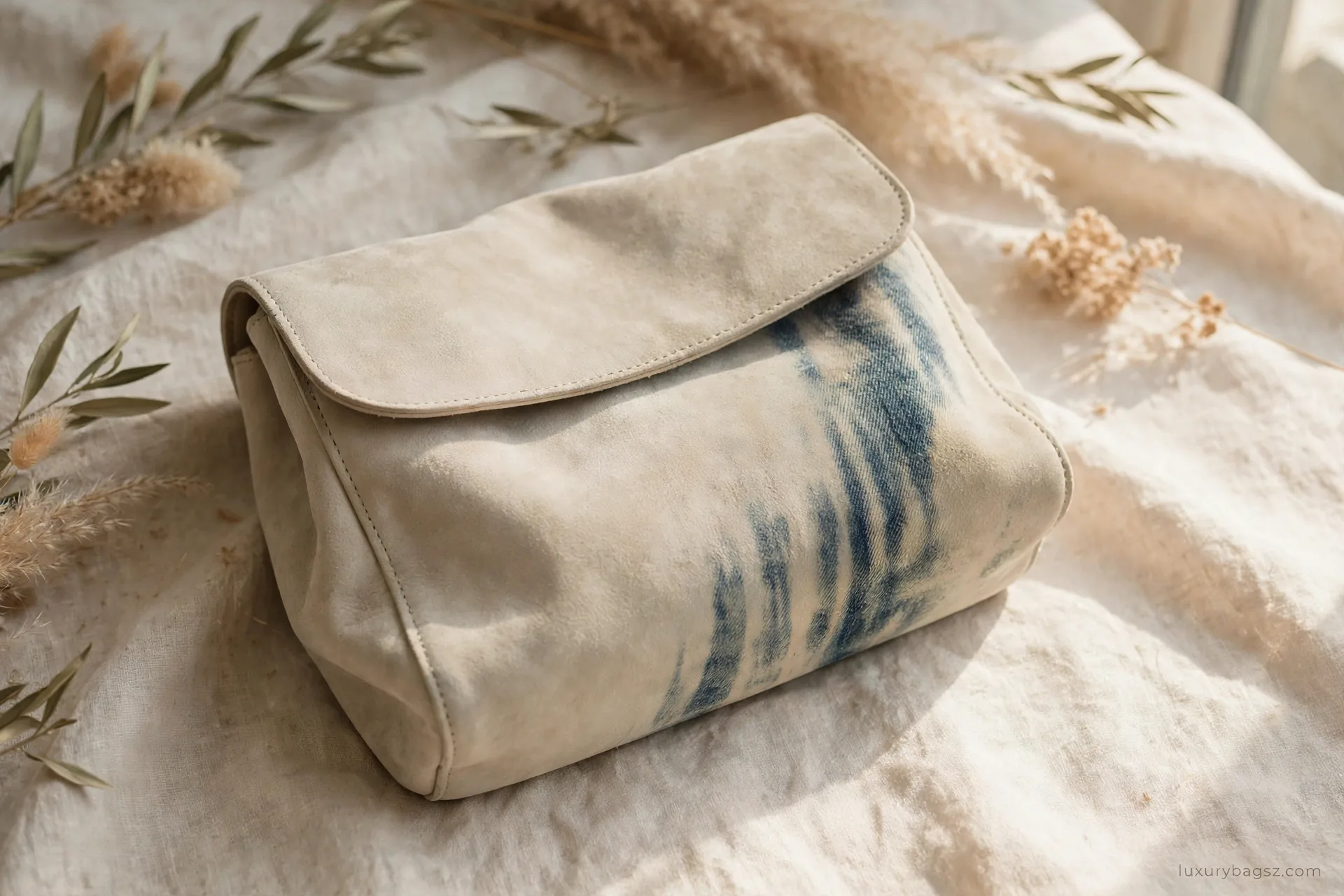
Colour transfer runs both ways and causes more heartbreak than rain. New dark denim is the worst offender against pale suede bags, while deeply dyed suede sheds colour onto light clothing.
Denim Onto Pale Suede
Prevention is a protector spray before first use, reapplied after cleaning, plus avoiding long contact with new, unwashed jeans. Rotate the side worn against your body, and brush the contact panel after each wear.
Fresh transfer, caught the same day, often lifts with an eraser and patient brushing. Once indigo has sat through heat and friction over several outings, it bonds. Home methods then fade it at best; a shadow remains.
Suede Dye Onto Clothing
Suede can also be the donor. Loosely dyed or unlined suede, especially red, navy and black, may rub off onto pale clothing — most when the bag is new, slightly damp, or carried under the arm for hours.
Test any new bag by rubbing a white cloth firmly over each panel. If colour comes away, apply protector, air the bag, and avoid light clothing until rub-off settles. A fixative helps, but nothing seals loose dye completely.
Deep Cleaning: Shampoo, Foam, Vinegar and Alcohol

When brushing no longer revives a bag, suede shampoo or cleaning foam is the next step. Apply foam to a cloth or brush, never directly to the bag, work the whole panel evenly, then wipe with a damp cloth.
Stuff the bag and dry it slowly away from radiators and sun, brushing at intervals so the nap does not set flat. Never rush drying with heat: stiff, boardy suede is usually heat-dried suede.
White vinegar suits salt and light marks; rubbing alcohol is sometimes suggested for sticky spots. Both can shift dye, pale a panel or leave a ring, worst on pale colours. Test inside, and let the test dry fully.
Split Suede Versus Full-Grain Suede
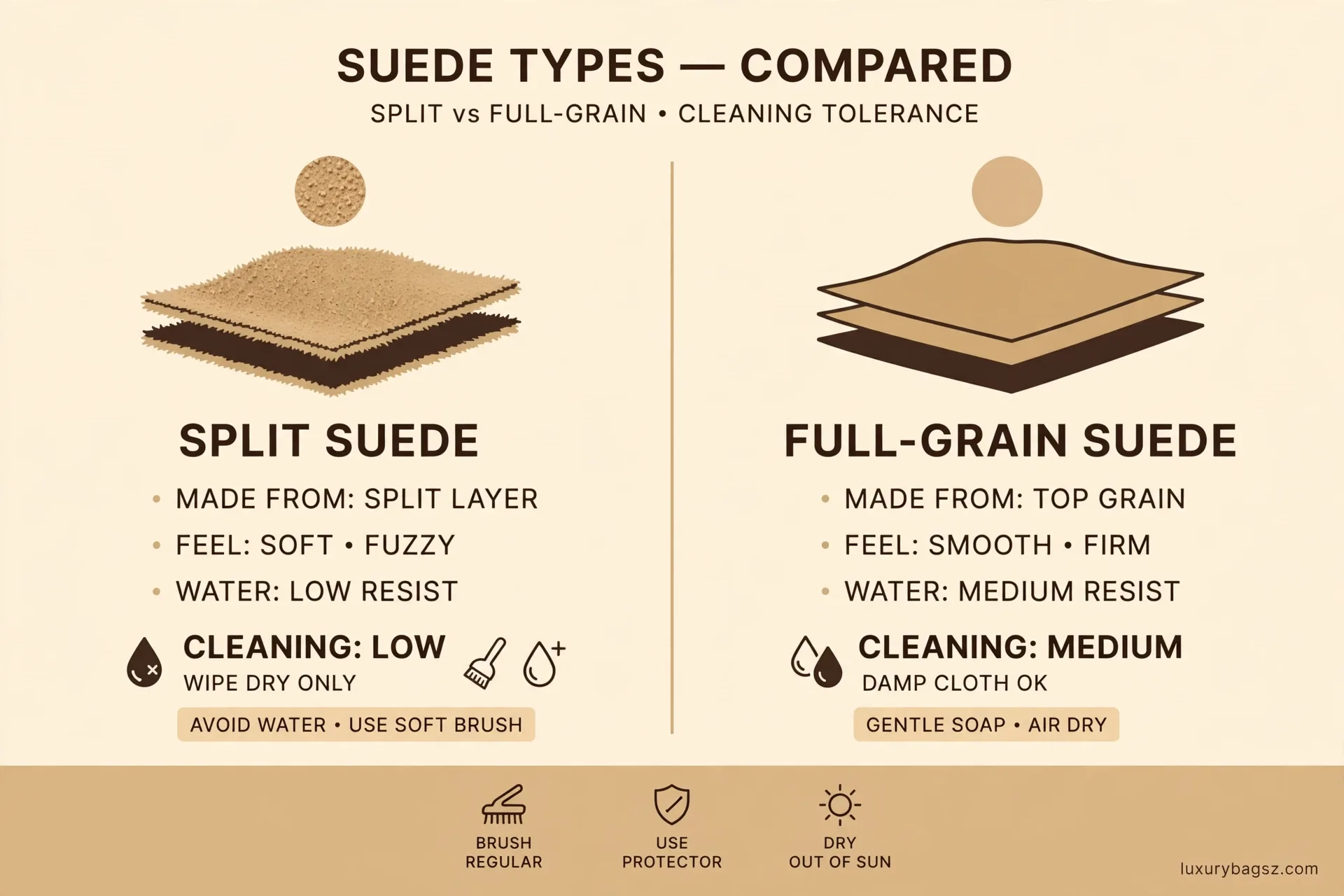
Suede quality decides how much cleaning it survives. Our Hermès leathers and materials guide covers grades, but in short: full-grain suede has a denser, stronger nap and tolerates gentle foam cleaning far better.
Split suede, made from the lower layer of the hide, is thinner and weaker, and goes bald quickly under rubbing. Clean it dry where possible, use foam sparingly at most, and never repeat a wet treatment on one area.
Protect the Bag While You Clean It
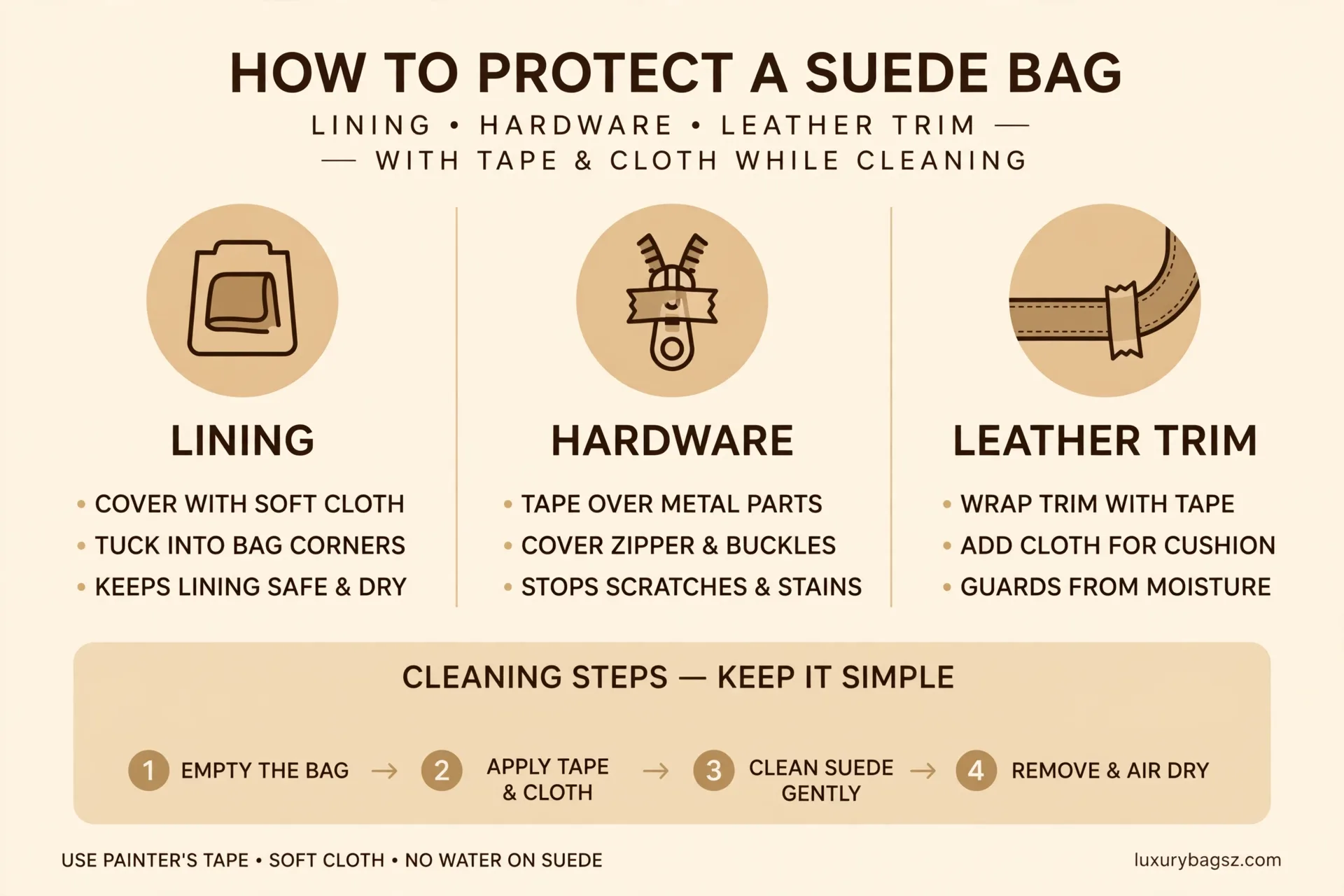
Cover zips, clasps and chains with a soft cloth or masking tape before sprays or foam. Metal polish must never touch suede, and even foam can spot hardware. Wipe hardware separately afterwards with a dry cloth.
Protect the lining by keeping moisture minimal and working from the outside in. Foam soaking through stains lining fabric and loosens glued edges. If the lining is grubby, clean it separately another day, pulled gently out.
Many suede bags have smooth-leather handles, piping or bases. Shield that trim while cleaning, and condition it separately afterwards. The method in our guide to how to clean a Hermès Birkin bag suits smooth trim — but keep conditioner off suede.
Structured bags hold their shape while stuffed, so work confidently panel by panel. Slouchy bags are harder: overstuff them, support each area on a rolled towel, and reshape them several times as they dry.
Worked Cases: Mould, Musty Odour and Set-In Ink
Mould: a bag stored damp comes out with white or green spots and a stale smell. Take it outdoors, brush the growth off away from other bags, and wipe with a cloth barely dampened with white vinegar. Air it a full day before judging.
Musty odour without visible mould usually lives in the lining. Turn the lining out where possible, air the open bag for 24 to 48 hours, and stand bicarbonate of soda in an open container inside overnight. Never spray perfume into suede.
Set-in ink: a pen leaks in a pocket and bleeds through. Blotting lifts only surface colour. A specialist may reduce the mark and re-dye the panel, but on pale suede a faint outline normally remains. Price that honestly before paying.
Restoration: Faded Colour, Bald Patches and Re-Dyeing
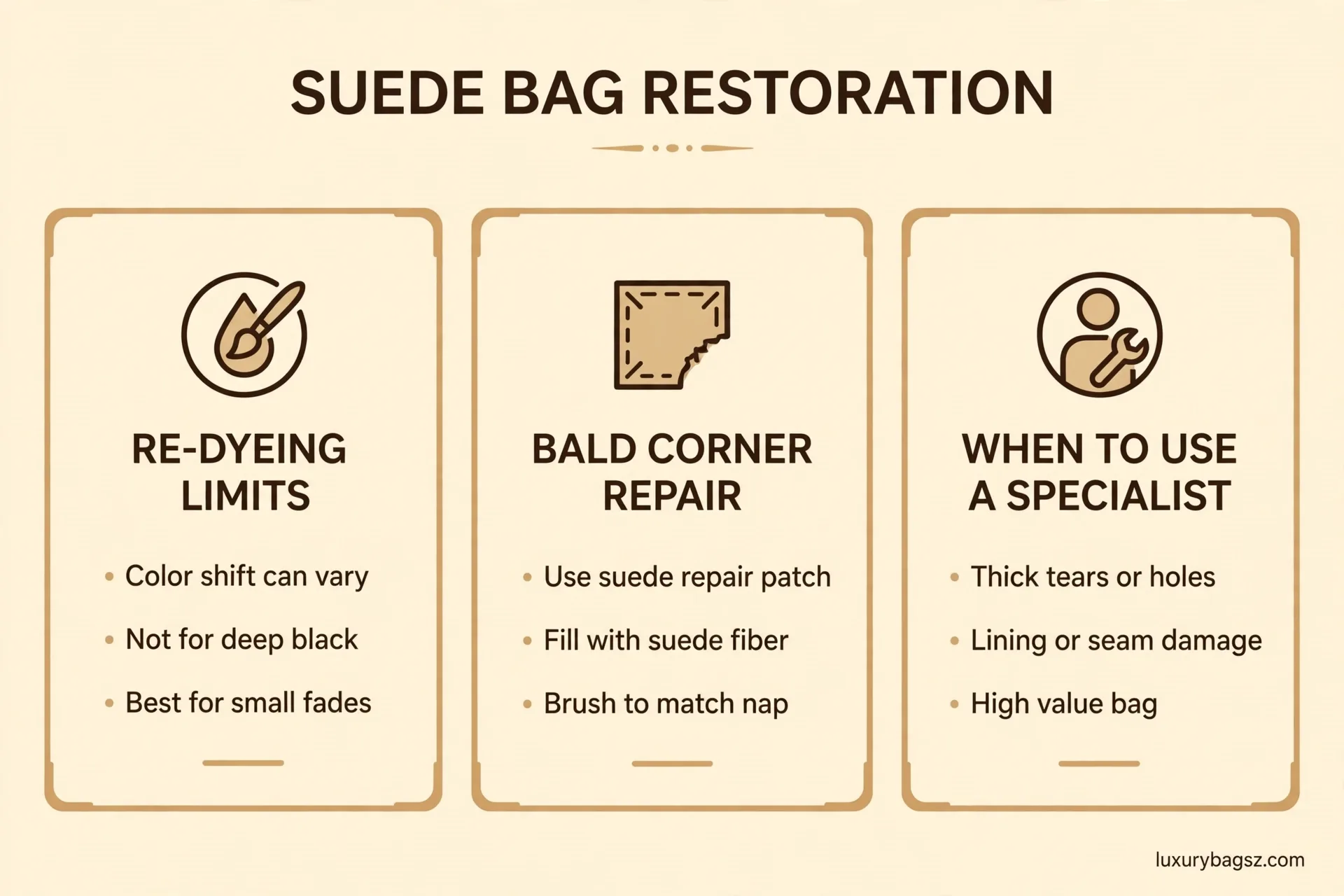
Faded colour is the most common restoration request. Sun and handling pale the high spots first: handles, flap edges, the front panel. A tinted renovator spray can even out mild fading, but rarely matches multi-tone or very pale shades.
Specialist re-dyeing strips and recolours the whole bag. Its limits are firm: the new colour is the same depth or darker, never reliably lighter, stitching may keep the old shade, and the nap can feel firmer afterwards.
Bald corners and handles, where nap has worn away completely, cannot be brushed back. A specialist may patch, re-cover or re-dye to disguise wear, but texture will differ. Corner rotation and handle wraps prevent it far more cheaply.
Restoration is not worthwhile when repairs and re-dyeing approach the bag’s resale value, when split suede has torn as well as faded, or when you loved the exact original shade. Sell honestly as-is, or keep it worn-in.
What a Professional Cleaner Actually Does
A specialist does what home cleaning cannot: solvent or immersion cleaning where construction allows, controlled re-dyeing, nap restoration with steam and brushing, lining and hardware work, and reshaping on a form as the bag dries.
Budget roughly the cost of a good dinner out for a standard clean, more for pale or designer bags needing colour work. Pale suede carried daily needs a professional clean once or twice a year, plus protector top-ups at home.
Send the bag before a stain sets for a season, not after. Ask which method will be used and whether colour change is possible. A good specialist refuses jobs where the likely result is worse than the wear.
Frequently Asked Questions
Can you wash a suede bag with water?
No. Never soak or machine-wash a suede bag. Water stiffens the nap, leaves marks and damages lining and glue. Use dry methods first, and foam or a barely damp cloth only where a stain truly needs it.
How do you get denim stains off a suede bag?
Brush first, then work the mark gently with a suede eraser. Fresh transfer often lifts well. Set-in indigo usually only fades, even for specialists, so protector spray and avoiding new denim matter more than any cure.
Does vinegar damage suede?
It can shift dye or leave a ring if used too wet or untested. Dab it on with a barely damp white cloth for salt and light marks only, after a hidden test has dried fully.
Can faded suede be dyed back to its original colour?
Sometimes close, rarely exact. Re-dyeing works best at the same depth or darker, and pale shades are hardest to match. Ask for a test area before committing the bag.
How often should a suede bag be cleaned professionally?
Pale suede in regular use benefits from a professional clean once or twice a year. Darker suede can go longer, with home brushing in between. Go sooner after mould, ink or heavy dye transfer.
Will cleaning remove bald patches on the corners?
No. Brushing lifts flattened nap, but worn-away nap cannot grow back. A specialist may disguise bald corners with dye or repair, yet the texture will never match untouched suede.
Final Verdict
Suede bags reward a dry-first routine, honest expectations about transfer and ink, and early help with mould or fading. Clean often, protect pale colours without mercy, and pay for a specialist before damage sets.