

How to Care for a Leather Sofa: Clean, Condition and Revive It Without Damage
Your Sofa, Cleaned and Revived
A leather sofa lasts decades when it is dusted often, cleaned gently, conditioned lightly, and kept out of direct sun and heat. Most sofa damage does not come from one spill. It comes from years of dust in the grain, dry air, sunlight on one arm, and harsh cleaners used once in a panic.
Start by identifying the sofa's leather finish, because aniline, semi-aniline and pigmented leather do not share one cleaning routine. Then clean it, let it dry fully, and condition only if it needs it. Stains need blotting, not scrubbing, and faded or cracked leather needs an honest check before any dye or filler is used.
This guide covers furniture leather only, not footwear, bags or jackets. Sofas are large, they sit in sun and heat, they carry body oils on headrests and armrests, and their cushions crease and crack in places no bag ever does. Their care has to match that life.
Key Takeaways
- Identify the finish first: aniline, semi-aniline and pigmented leather need different care.
- Dust weekly and deep-clean only when needed, with a product made for furniture leather.
- Always patch-test a cleaner or conditioner on a hidden spot before full use.
- Blot spills at once; never rub, soak, or dry leather with heat.
- Condition lightly, a few times a year at most, and only on clean, fully dry leather.
- Keep sofas out of direct sun and away from radiators, fires and hot air vents.
- Never use bleach, ammonia, window cleaner, dish soap or abrasive pads on leather.
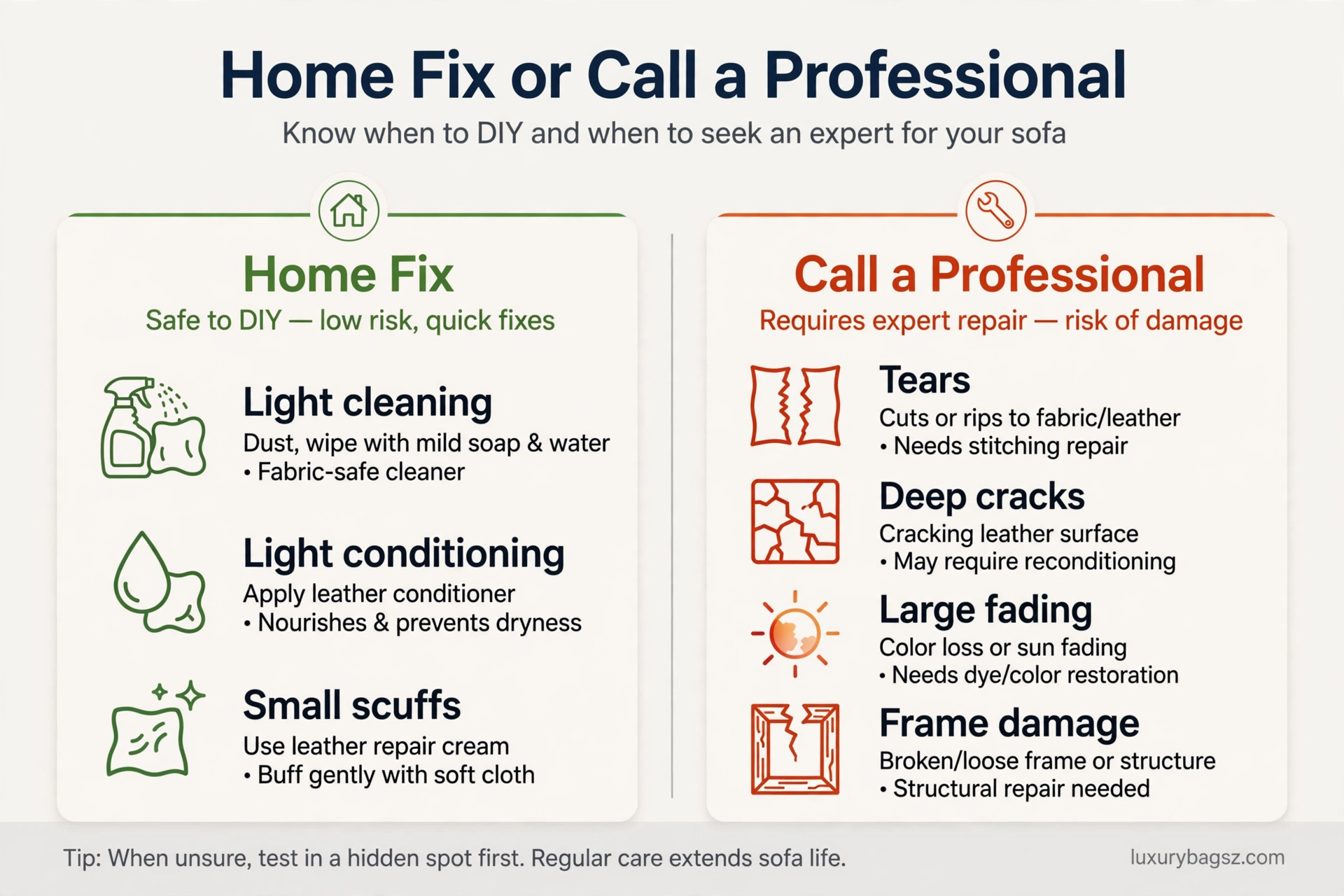
- Light scuffs and dryness often improve at home; tears, deep cracks and large fading need a professional.
- Bonded leather and faux leather are not full leather, and they do not revive the same way.
- Check seams, cushions and headrests monthly, because small damage is cheapest to fix early.
Identify Your Sofa's Leather Finish
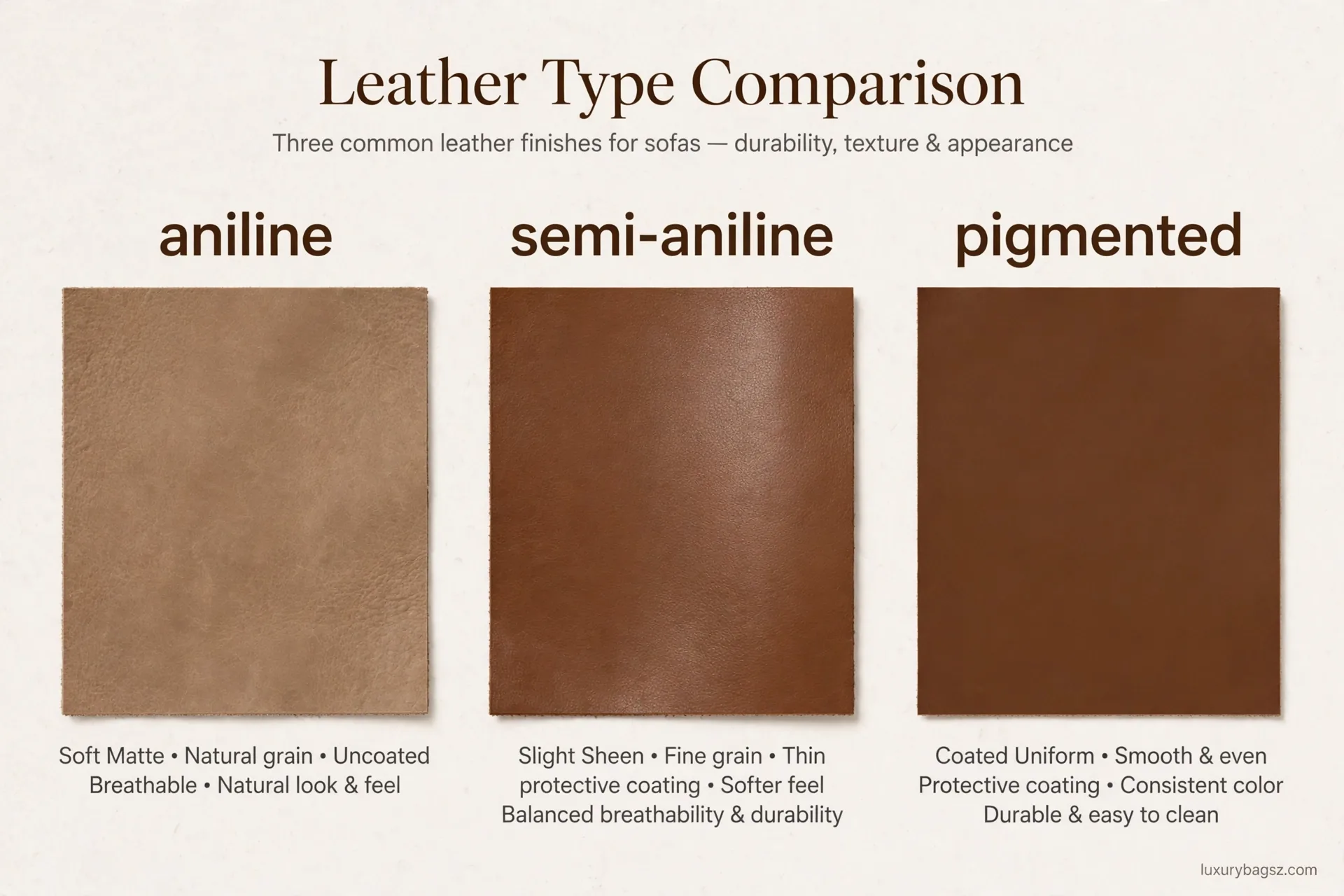
Look for the maker's label first, usually under a cushion or on the frame. It may name the leather type or give a cleaning code, but those codes are often generic, so use them as a starting point. Feel and a water test tell you more.
Aniline leather is dyed with transparent dye and has no protective coating. It feels soft and natural, shows grain and marks clearly, and soaks up a water drop almost at once. It is the most beautiful finish and the least forgiving, so it needs the gentlest care.
Semi-aniline leather has a thin protective coating over a similar dye. It still feels soft, with a slight sheen, and a water drop sits for a minute or two before slowly soaking in. It resists spills better than aniline, but is still not hard-wearing coated leather.
Pigmented leather, also called protected leather, has a polymer coating with colour pigments. It feels cooler and more uniform, and water beads on the surface. Most family sofas use it, because it resists stains and scratches far better than the other finishes.
Bonded leather is made from leather fibres bonded to a backing, with a coated surface, and it peels and flakes when it wears. Faux leather is fully synthetic. Neither responds to conditioning the way real leather does, and neither should be treated with dye or filler meant for full leather.
Build a Safe Sofa Care Kit
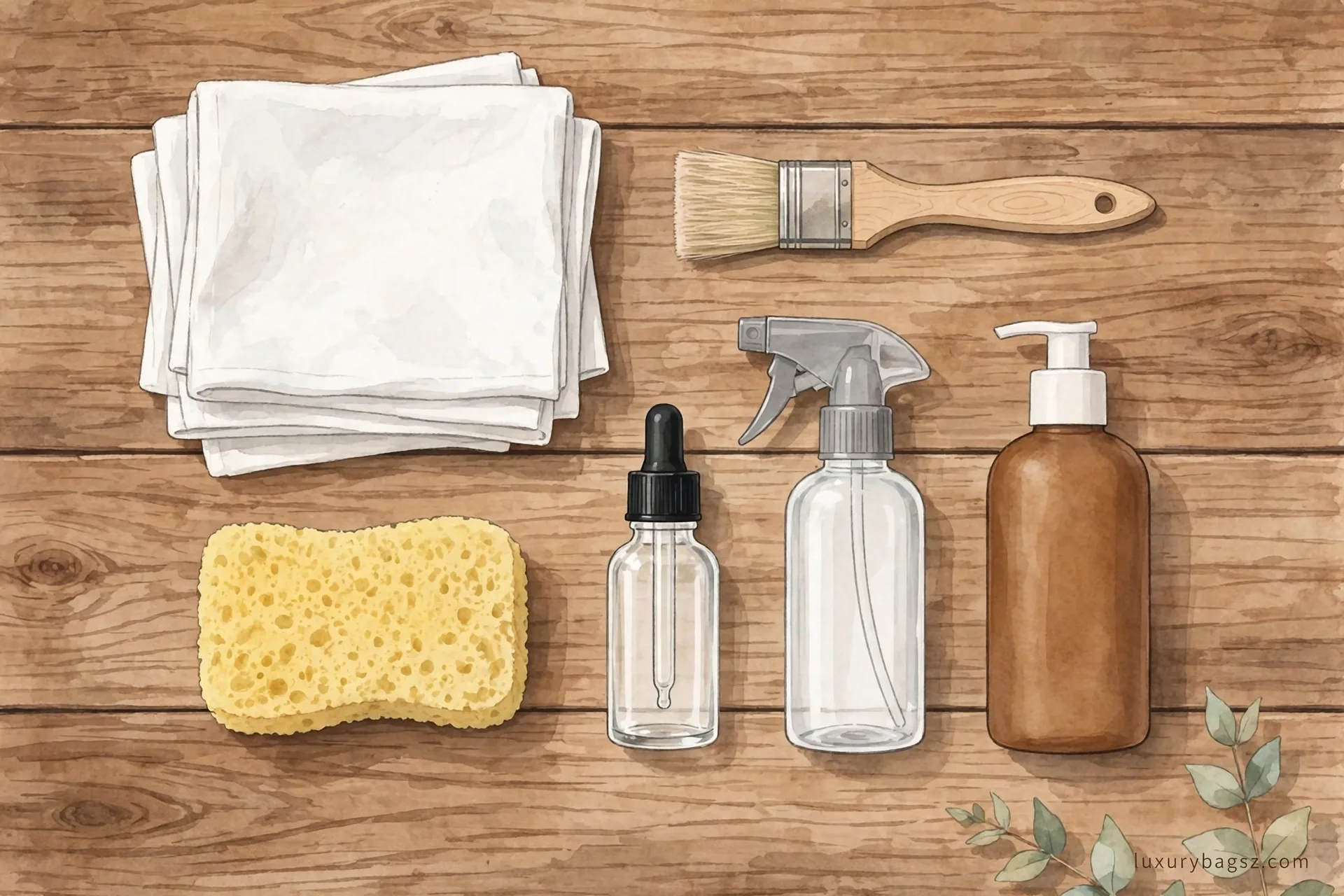
A good kit is small: a vacuum with a soft brush attachment, several soft microfibre cloths, a soft sponge, and a leather cleaner and conditioner made for furniture leather. A soft brush helps lift dirt from grain and seams.
Keep separate cloths for cleaning and for conditioning, and one cloth for pale leather and one for dark leather. Colour transfer from a dirty cloth is a real risk on a pale sofa.
Do not add household cleaners to the kit. Bleach, ammonia, window cleaner, all-purpose sprays and dish soap strip natural oils and coatings, and can leave a sofa dry, sticky or discoloured. Even mild dish soap is not a furniture leather cleaner, and specialist guides warn against it for leather couches.
Vinegar and water mixtures appear in many home guides, but furniture specialists warn they can dry leather and affect coatings. For a sofa you value, a dedicated leather cleaner is the safer choice.
General leather care overlaps here, but furniture scale changes the work. The leather bags and shoes care guide explains the same clean-then-condition order, yet a sofa needs cushion-by-cushion work and seam cleaning that a bag never does.
Routine Cleaning: Dust, Vacuum and Wipe
Routine cleaning prevents most deep-cleaning problems. Dust weekly with a soft, dry cloth, and vacuum creases, seams and under cushions with a soft brush attachment. Grit left in seams acts like sandpaper every time someone sits down.
Lift cushions out one at a time to clean beneath them, and wipe the frame and base as well. Dirt collects where cushions meet the frame, causing wear lines and odour. Replace cushions in the same places so wear stays even.
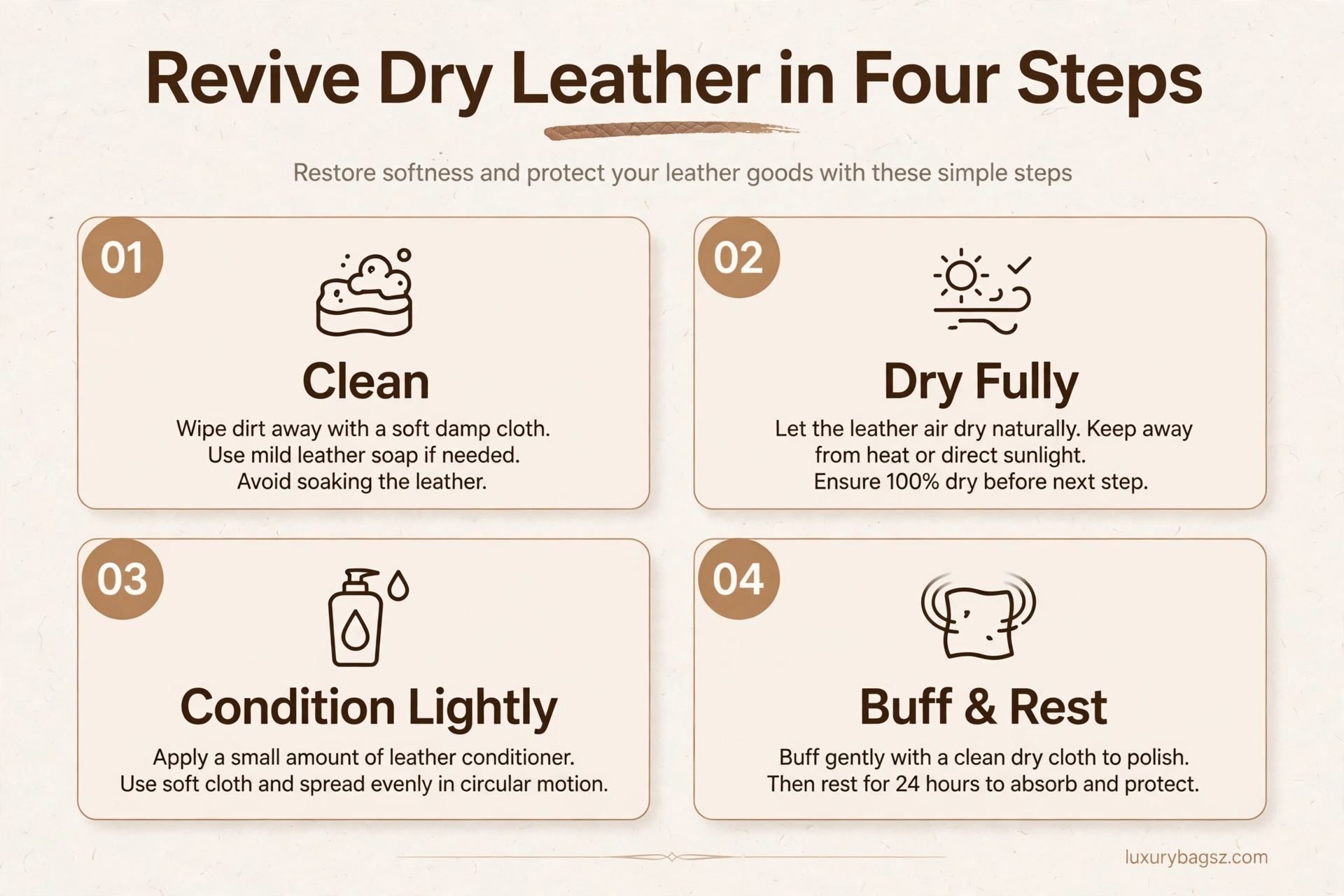
For a light wipe, use a barely damp microfibre cloth, wrung out well, and wipe in even strokes. Do not soak the leather, and let it air-dry at room temperature before anyone sits on it again, because damp leather marks more easily.
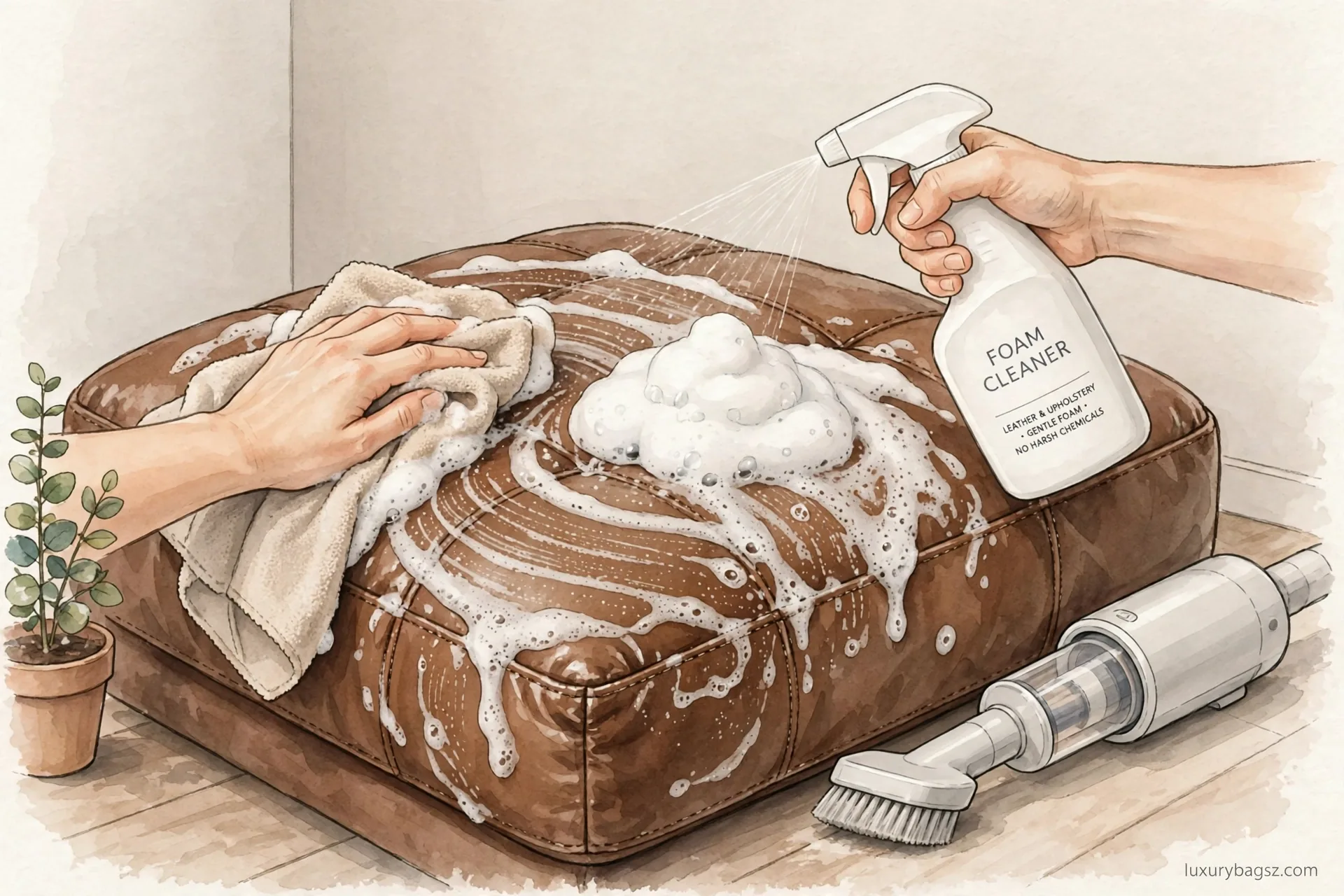
Deep-clean only when the sofa is visibly dirty, sticky or dull, or every few months for a daily-use sofa. Apply cleaner to a sponge or cloth, not directly to the leather, and work it into a light foam. Wipe away residue with a clean, barely damp cloth, then let the sofa dry fully.
Footwear care uses similar steps, but it does not transfer to sofas. The Hermès leather boots care guide deals with flex, soles and weather, while a sofa deals with sun, body oils and cushion creases. Borrow the order, not the products or timing.
Conditioning: Light, Rare and Only When Needed
Conditioner restores oils that leather loses to air, sun and use, keeping it supple and slowing cracks. It is not a weekly product. Most sofas need it only a few times a year, and some pigmented sofas even less often, because their coating already slows moisture loss.
Condition only on clean, fully dry leather. One furniture guide suggests waiting a full day after cleaning, and that caution is wise for a large sofa, where cushions can feel dry while seams are still damp. Conditioner over dampness or dirt seals both in.
Apply a small amount to a soft cloth, work it in small panels with light, even strokes, and pay extra attention to armrests, seat edges and headrests. Let it absorb, then buff away excess with a dry cloth. Leather should feel soft, not sticky or greasy.
Expect some temporary darkening, especially on pale leather. That is normal as moisture returns, and it usually fades as the conditioner absorbs. Patch-test first on a hidden spot, and wait a day before conditioning a visible panel.
Over-conditioning is a real risk on sofas. Too much product leaves a tacky surface, attracts dirt, and can soften a coated finish unevenly. Thin layers, spaced out, beat one heavy application.
Stains: Blot Fast, Rub Never
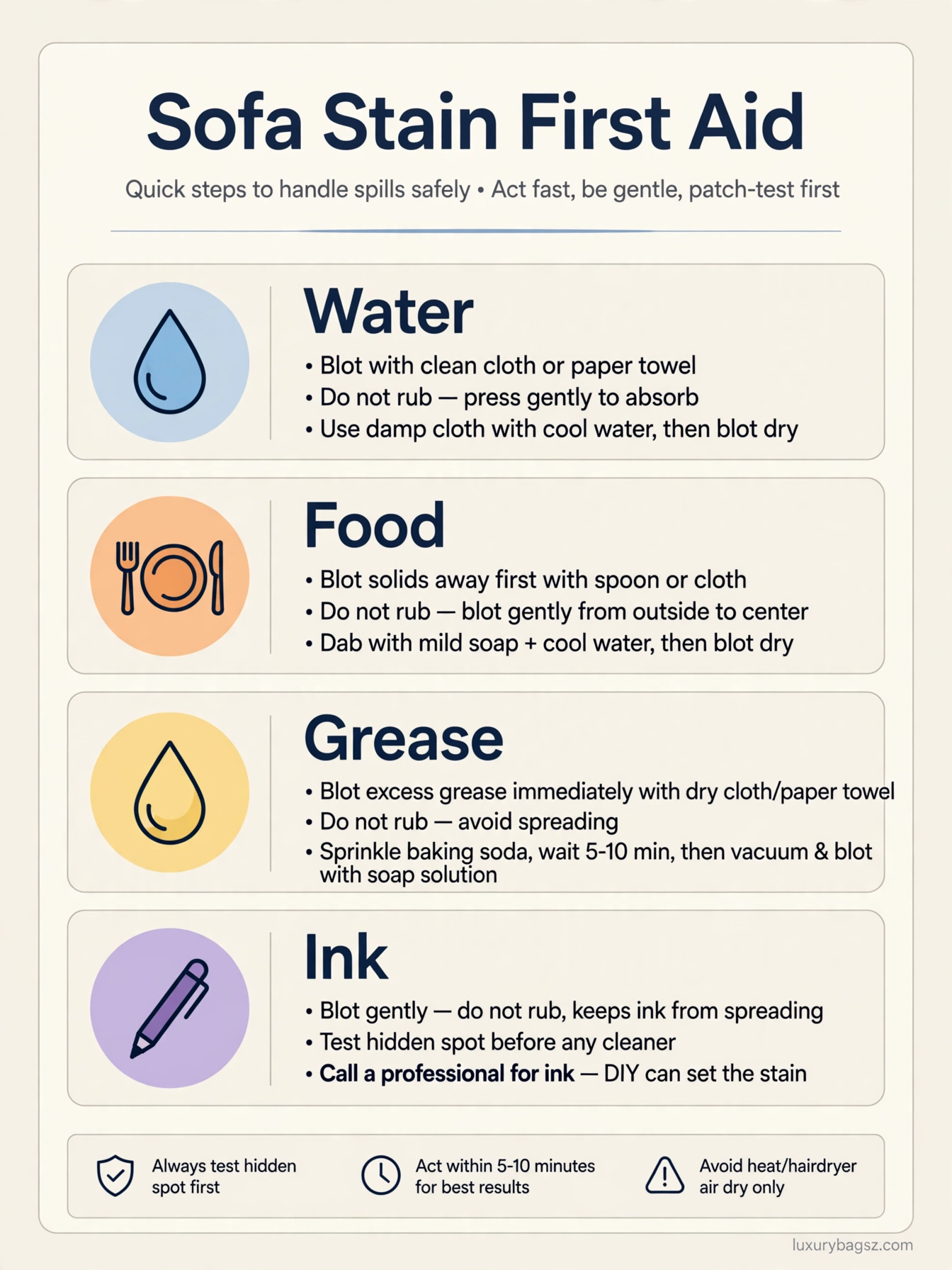
Speed matters more than strength for stains. Blot a fresh spill at once with a clean, dry cloth, pressing gently to lift liquid without spreading it. Rubbing pushes a stain deeper and can damage the finish.
For water and most drinks on pigmented leather, blot, then dab with a barely damp cloth and blot dry again. For food, lift solids first, then blot from the outside toward the centre, so you do not spread it. For grease, blot excess at once, and leave any powder treatment to a product made for leather, used exactly as its label directs.
Ink is the exception. Ink on leather, especially aniline, sets fast, and home solvents often spread it or strip colour around it. Blot gently, do not rub, and call a professional rather than trying alcohol, hairspray or a household stain remover.
For aniline leather, treat every stain as delicate. Blot only, keep liquid to a minimum, and seek specialist help for anything beyond a light water mark. Aniline has no coating, so a stain that would lift from pigmented leather can become permanent in minutes.
If a stain does not lift after two gentle attempts, stop. Repeated cleaning thins coatings and creates a shiny, worn patch harder to repair than the original mark. Note what the stain was, because that detail helps a professional choose the right treatment.
When to Call a Professional
Call a professional for tears, punctures, deep cracks, large stains, ink, wide colour loss, peeling coatings and frame or suspension problems. These jobs need matching materials, colour work and stitching skill, and a home attempt can make a clean repair impossible.
Choose a furniture leather specialist, not a general cleaner, for recolouring and structural work. Ask whether they have worked on your finish, and ask to see examples of similar sofas. A good specialist will say honestly when a repair will show and when panel replacement beats patching.
Cost should be weighed against the sofa's value and use. Professional cleaning and conditioning is often reasonable for a quality piece, while recolouring a large area or rebuilding a frame costs more. Get a quote first for major work, and ask what the result will look like in daylight.
If a sofa is bonded leather and is peeling widely, ask for an honest assessment before spending on recolouring. A specialist may advise that the material is failing and no coating will hold for long.

Frequently Asked Questions
How often should I clean a leather sofa?
Dust and vacuum creases weekly. Deep-clean only when visibly dirty, or every few months for a daily-use sofa.
How often should I condition a leather sofa?
A few times a year at most, and only when the leather feels dry. Pigmented sofas often need less, because their coating slows moisture loss. Always condition on clean, fully dry leather, and buff away excess.
How do I tell aniline, semi-aniline and pigmented leather apart?
Use the water drop test on a hidden spot: aniline soaks a drop in almost at once, semi-aniline lets it sit for a minute or two, and pigmented leather makes water bead.
Can I use dish soap or window cleaner on a leather sofa?
No. Dish soap, bleach, ammonia and window cleaner strip oils and coatings and can leave leather dry, sticky or discoloured. Use a furniture leather cleaner, patch-tested on a hidden spot first.
How do I remove a stain from a leather sofa?
Blot at once without rubbing, lift solids first for food, and dab gently with a suitable leather cleaner on a cloth. If it does not lift after two gentle attempts, stop and seek a professional.
Can I revive a faded leather sofa at home?
Light, even fading sometimes improves with cleaning and conditioning. Uneven or large-area fading usually needs professional recolouring.
Why is my leather sofa cracking?
Cracking usually follows dryness, sun, heat or lack of conditioning over time. Light dryness may improve with gentle cleaning and conditioning, but deep cracks need professional filler and recolouring.
Should I keep a leather sofa in direct sunlight?
No. Direct sun fades colour unevenly and dries leather, and one sunny side can fade within a season. Move the sofa, use curtains or blinds in strong sun, and rotate cushions.
Can bonded leather be revived like real leather?
No, not in the same way. Bonded leather peels and flakes as its bonded layer fails, and conditioner or dye will not restore it for long. Widespread peeling usually means the material itself is failing.
When should I call a professional for a leather sofa?
For tears, punctures, deep cracks, ink, large stains, wide colour loss, peeling coatings and frame or suspension problems. Home attempts can make a repair harder.
Summary
A leather sofa rewards steady, gentle care. Identify the finish, dust weekly, clean gently, condition lightly and only when needed, blot stains at once, and keep the sofa out of sun and heat. Hand tears, deep cracks and large fading to a specialist.
Follow that rhythm and a good sofa will stay supple, even in colour, and comfortable for years. Start with the cushion you sit on most.






