

Chopard Brand History and Spotlight: From a Sonvilier Workshop to Happy Diamonds
Chopard in Brief: A Family House Mastering Watches and Jewellery
Chopard is one of the rare luxury houses that competes at the very top in two crafts at once: fine watchmaking and high jewellery. It began in 1860 as a small workshop in Sonvilier, in the Swiss Jura, founded by the 24-year-old watchmaker Louis-Ulysse Chopard. It has been owned by the Scheufele family since 1963, and it remains independent rather than belonging to a large luxury group.
That independence shapes everything about the brand. Chopard makes its own high-end movements in Fleurier, it makes the Palme d'Or for the Cannes Film Festival, and it created one of the most recognisable jewellery ideas of the twentieth century: diamonds that float freely instead of sitting fixed in a setting. If you want one sentence to remember, it is this: Chopard is a family-owned Swiss house where serious horology and playful jewellery live under one roof.
Key Takeaways
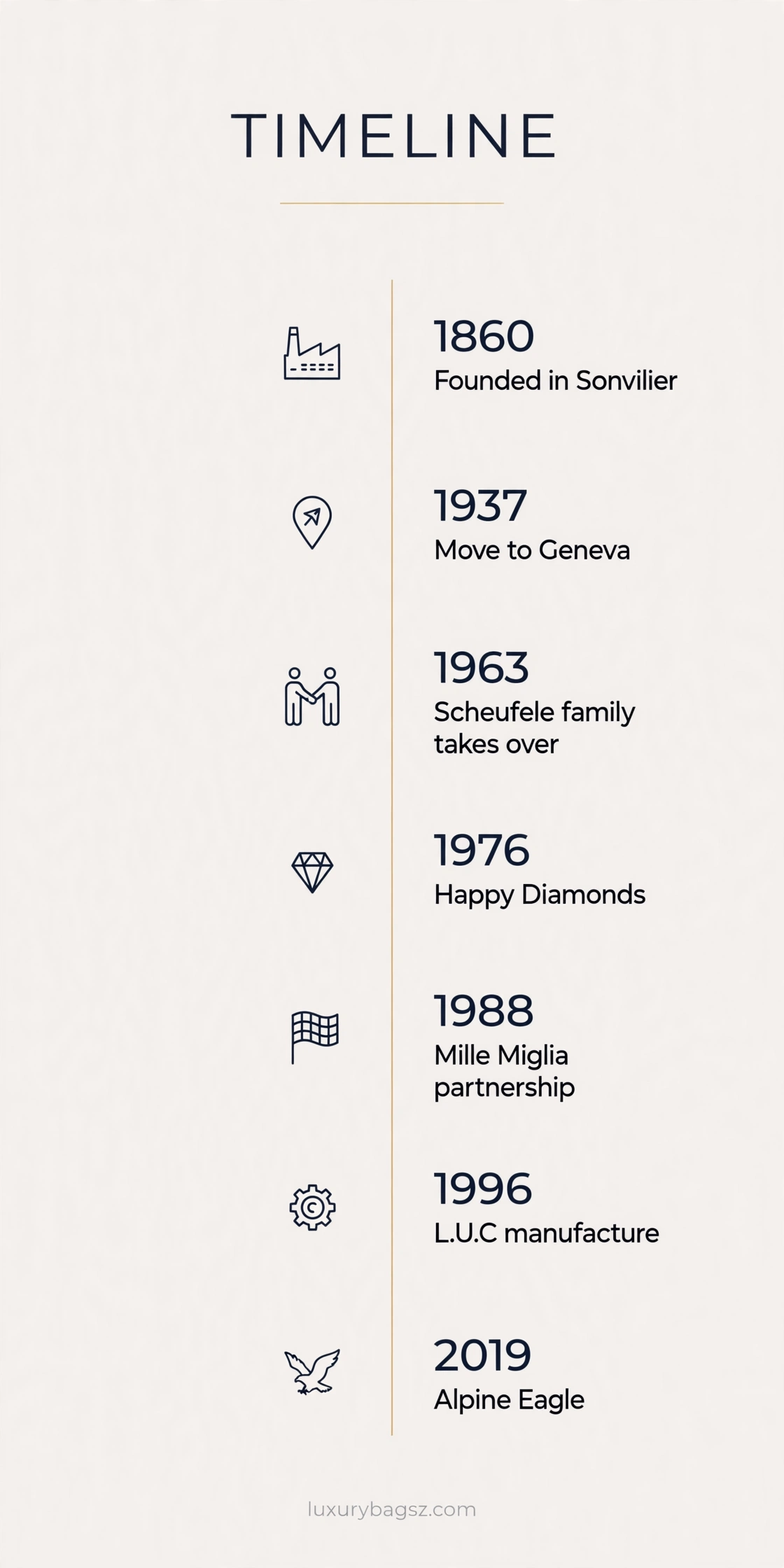
- Founded in 1860 in Sonvilier by Louis-Ulysse Chopard; moved to Geneva in 1937.
- The Scheufele family bought the house in 1963 and still owns and runs it today.
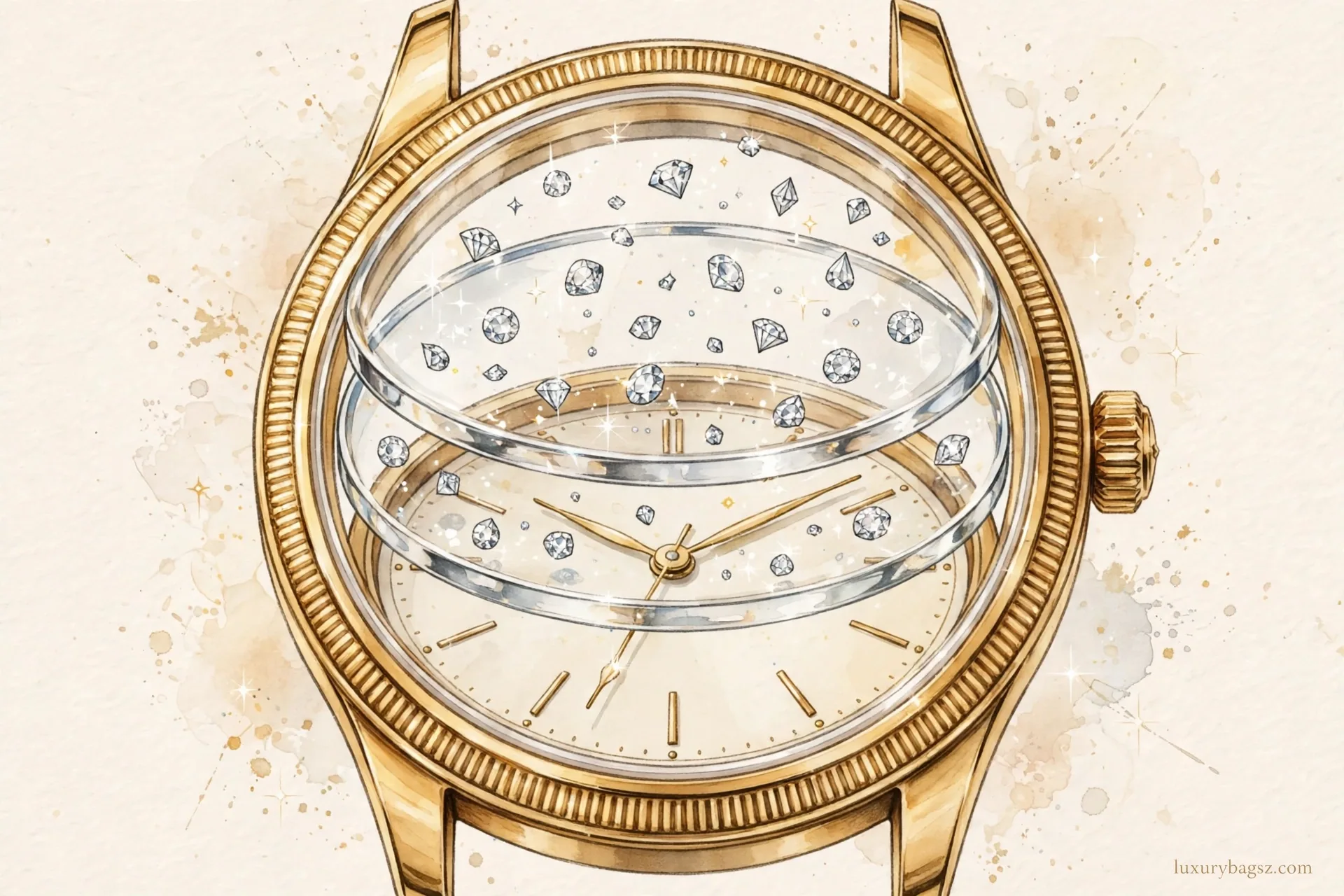
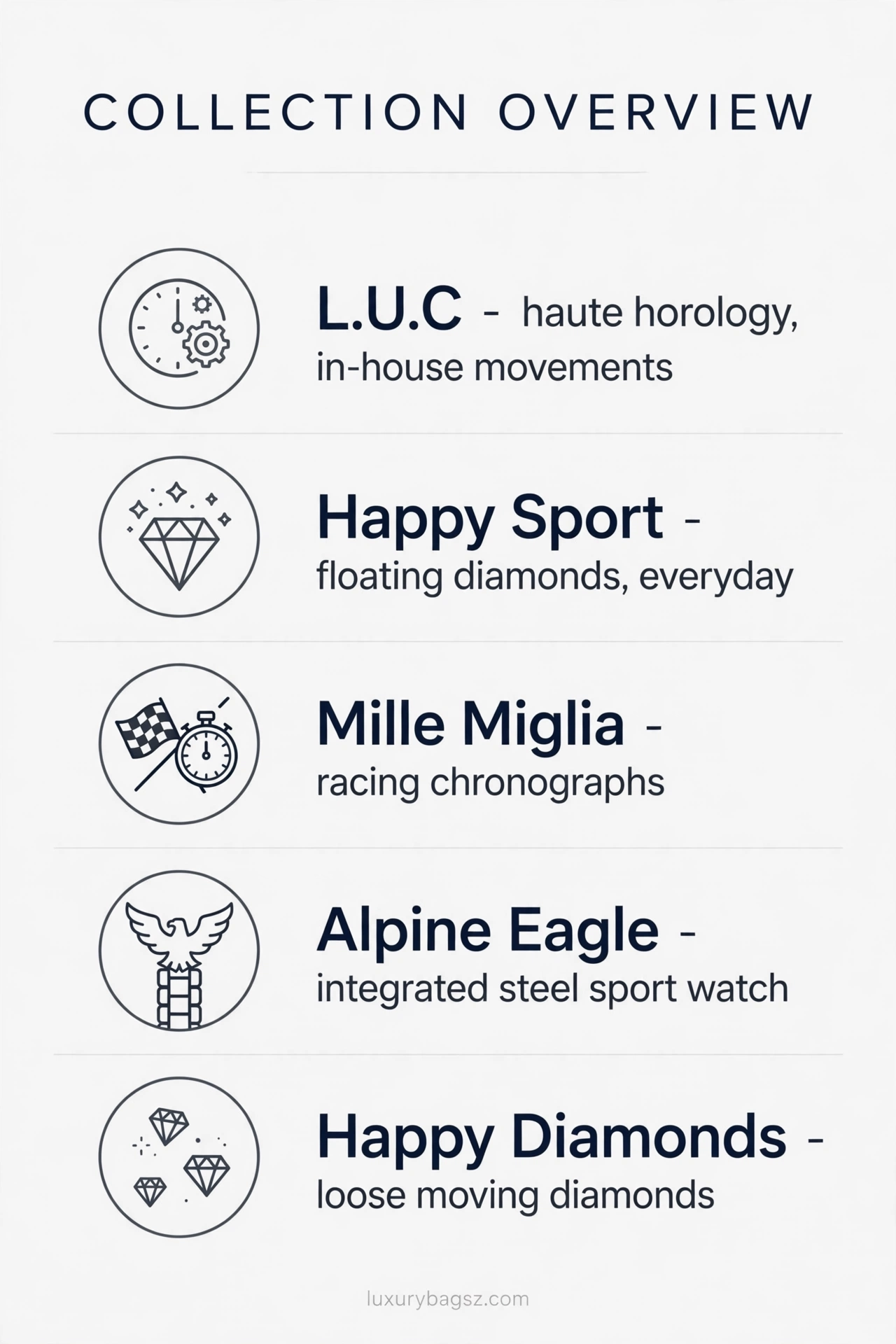
- Happy Diamonds (1976) set loose diamonds moving freely between two sapphire crystals.
- L.U.C is the in-house haute horology line, built at the Fleurier manufacture from 1996.
- Mille Miglia (from 1988) ties Chopard to the famous Italian road race.
- Alpine Eagle (2019) is the modern integrated-bracelet sport watch.
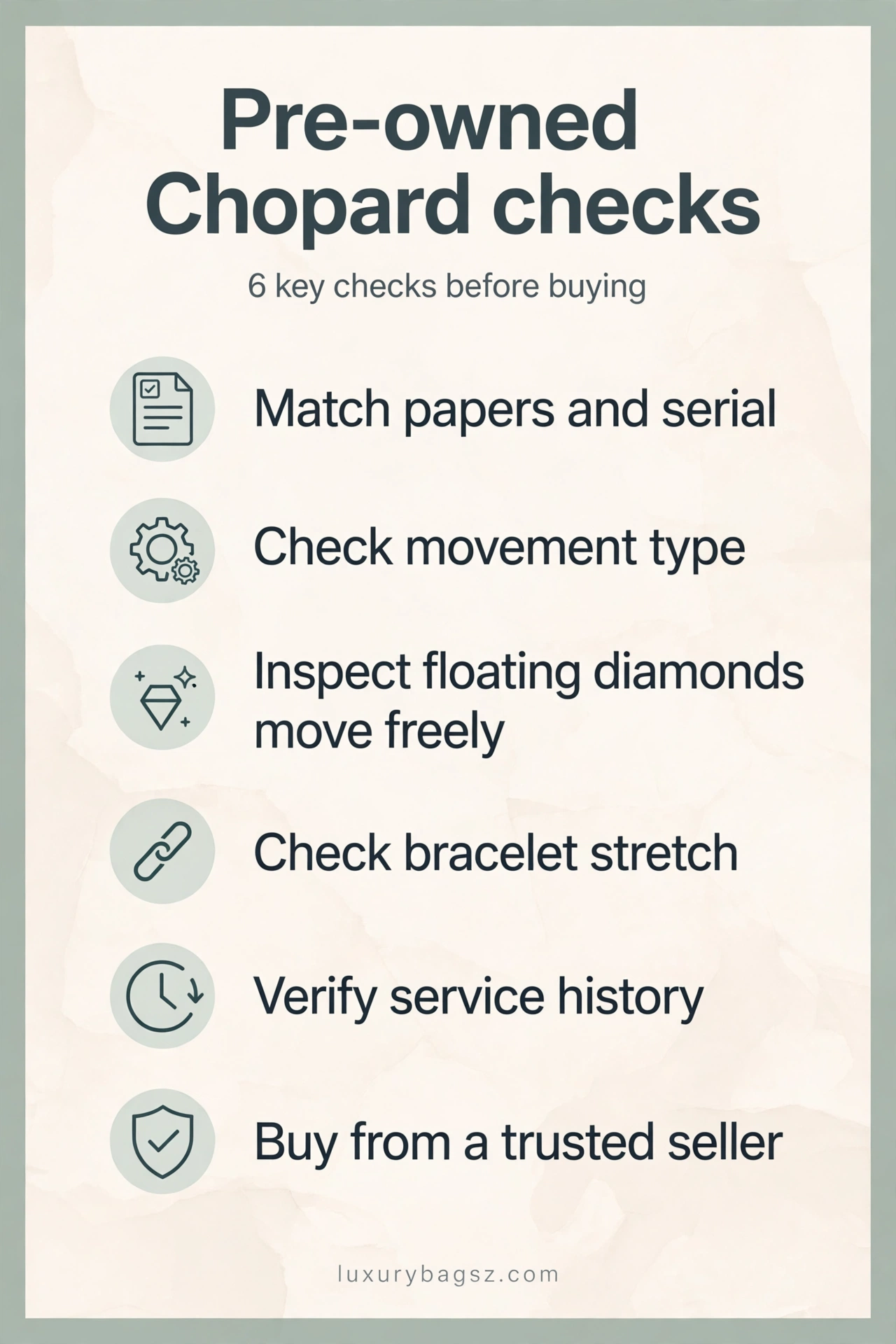
- Pre-owned buyers should check papers, movement type, bracelet stretch and service history.
The Sonvilier Beginnings: A 24-Year-Old With a Workshop
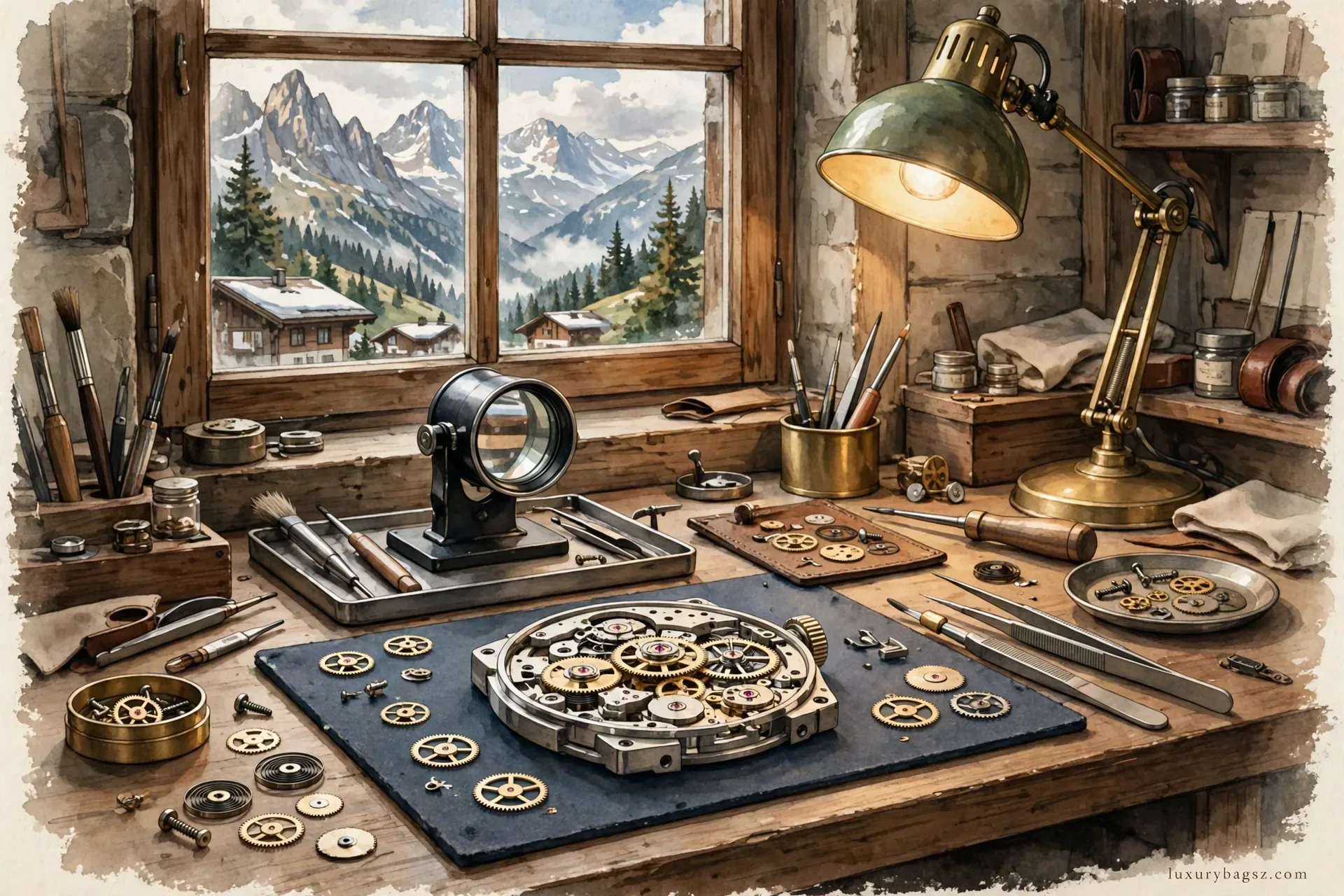
Louis-Ulysse Chopard grew up in Sonvilier, a village in the Swiss Jura where watchmaking was a winter trade for farming families. Rather than simply supplying movements to bigger firms, he saw that a finished watch earned far more than its parts alone. In 1860, aged just 24, he set up his own workshop under the L.U.C name and began making pocket watches and precision chronometers.
Quality did the talking. His timepieces earned a reputation for accuracy, and his client list reportedly included the Swiss Federal Railways and Tsar Nicholas II of Russia. That early reach matters because it shows a pattern that never left the house: Chopard aimed at demanding buyers from the start, and it built its name on precision rather than decoration alone.
The workshop years also explain the house's later obsession with making things in-house. A founder who chose to finish his own watches, rather than sell movements on, set a precedent. More than a century later, the same instinct would drive the Scheufele family to build their own movement manufacture instead of buying calibres off the shelf.
The Move to Geneva and the Family Years
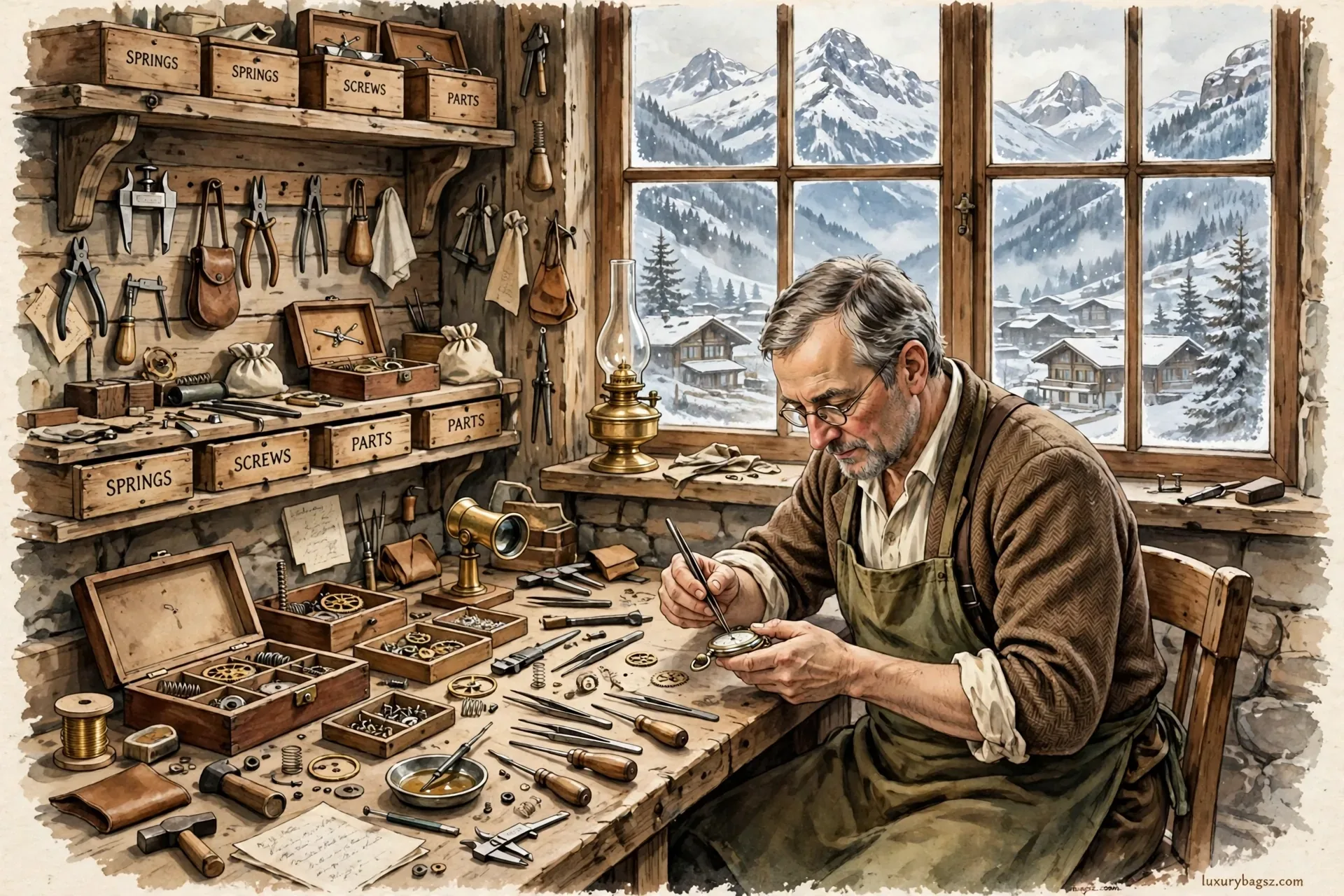
Louis-Ulysse died in 1915, and the business passed to his son Paul-Louis, then in 1943 to his grandson Paul-André. In 1937 the firm moved from the Jura to Geneva, putting it at the heart of the Swiss watch trade and within reach of the Geneva Seal, the demanding quality hallmark for movements made in the canton.
Geneva changed the company's horizons. It was no longer a village workshop selling on accuracy alone; it was a Geneva house, judged against the finest names in the city. The family kept the business going through war, the rise of wristwatches and the early shocks of quartz, but by the early 1960s the Chopard family had no heir who wanted to carry it on.
That moment could have ended the story. Instead, it opened the door to the most important chapter in the brand's history, because the buyer who stepped in was not a conglomerate looking for a logo. He was a fellow watchmaker and jeweller who wanted to build something of his own.
The Scheufele Takeover: 1963 Changes Everything
In 1963, Karl Scheufele III, a German watchmaker and jeweller from Pforzheim, bought Chopard. His family brought something the house had never had before: a jewellery business alongside the watchmaking one. Under Karl and his wife Karin, Chopard grew from a respected watchmaker into a dual-discipline luxury house.
The next generation carried that vision further. Karl-Friedrich Scheufele took charge of watches and motorsport, while his sister Caroline Scheufele took charge of jewellery and creative direction. That split of expertise is the reason Chopard feels equally convincing in both worlds today, rather than a watch brand dabbling in jewellery or a jeweller dabbling in watches.
The Scheufele era also brought a long-term mindset that conglomerate ownership rarely allows. Decisions were made for decades, not quarters. The family invested in its own manufacture, in ethical gold sourcing and in the Cannes partnership, building an identity that is still recognisably theirs more than sixty years on.
Happy Diamonds: The Idea That Made Chopard Famous
In 1976, Chopard did something no one had done before. Working with designer Ronald Kurowski, the house released diamonds from their settings altogether. In the Happy Diamonds concept, loose brilliant-cut diamonds move freely in a sealed space between two sapphire crystals, tumbling and catching the light as the wearer moves.
The idea came, fittingly, from watching water. Kurowski was inspired by sunlight on a waterfall, and the design translated that sparkle into jewellery. The first Happy Diamonds pieces were jewellery; the Happy Sport watch followed in 1993, when Caroline Scheufele turned the concept into a watch women could wear at the beach, at the gym or at dinner without changing it.
Happy Diamonds matters for two reasons. First, it gave Chopard a signature as instantly recognisable as any logo, without using a logo at all. Second, it proved the house could invent rather than merely refine. For a buyer today, the practical point is simple: check that the diamonds genuinely move freely. A Happy Diamonds piece whose stones stick or rattle oddly needs attention, and that check belongs on every pre-owned inspection list.
Collectors also love the way the concept bridges jewellery and watchmaking. If you enjoy the playful side of high jewellery, our Van Cleef & Arpels Alhambra guide covers another house built on a single unforgettable motif.
Mille Miglia: Racing Heritage on the Wrist
Chopard became the official timekeeper of the Mille Miglia, the legendary Italian road race from Brescia to Rome, in 1988. The Mille Miglia watch collection has expressed that partnership ever since, with chronographs inspired by vintage racing instruments, tachymeter bezels and straps in racing colours.
Each year brings race editions tied to that year's event, and those limited pieces are the ones collectors chase hardest. The core collection runs alongside them, offering the same motorsport language in year-round models. Movements range from chronograph calibres based on outside suppliers to manufacture movements in the higher references, so buyers should always check which movement a given reference carries.
The racing connection is also a useful authenticity signal. Genuine Mille Miglia pieces carry coherent race branding, correct case engraving and the right strap combinations for their year. A watch that mixes a race-edition dial with a standard bracelet deserves a second look and a question to the seller.
One date deserves a plain note. Sources disagree about when Chopard's Cannes Film Festival partnership began, with some giving 1988 and others 1998. The Mille Miglia date of 1988 is consistent; the Cannes date is not, so treat any single-year claim about Cannes with care.
L.U.C: Haute Horology From Fleurier
The L.U.C line is Chopard's answer to the question of whether a jewellery house can be a serious watchmaker. Named for the founder, it launched in 1996 with the first movement made entirely at Chopard's own manufacture in Fleurier. Since then it has grown into a full haute horology range: ultra-thin dress watches, perpetual calendars, tourbillons and, at the extreme, grand strike complications.
L.U.C movements are finished to a high standard, with many references carrying both COSC chronometer certification and the Fleurier Quality Foundation seal, which judges finishing and overall execution as well as timekeeping. Production volumes are small, with the collection often cited at only a few thousand pieces a year, which is part of its appeal to collectors.
For a first-time buyer, L.U.C is the deep end. Prices sit well above Happy Sport and Mille Miglia, and the value lies in movement finishing and restraint rather than showiness. If you love quiet, technically ambitious watchmaking, this is the Chopard to study. If you want instant recognition, Happy Diamonds or Alpine Eagle will serve you better.
Within Happy Sport, the practical choice is movement first, size second. Quartz versions are the accessible entry point and suit buyers who want the floating-diamond look without winding or service costs, while automatic versions appeal to collectors who value mechanical movement. Case sizes around 33 mm and 36 mm suit most wrists, and the steel bracelet versions wear more casually than gold. Always confirm which movement a listing carries, since similar-looking references can differ underneath the dial.

Alpine Eagle and the Modern Collections
In 2019, Chopard entered the integrated-bracelet sport watch arena with the Alpine Eagle, a redesign of its earlier St. Moritz line. The case and bracelet flow into one another, the dial carries an eagle-iris texture, and the steel is Chopard's own Lucent Steel A223 alloy, which the house presents as harder and more luminous than standard steel.
The Alpine Eagle matters because it put Chopard into direct conversation with the most coveted sport watches of our time. Our Rolex Submariner guide and Cartier Tank guide show how different houses answer the same question of an everyday luxury watch, and the Alpine Eagle's answer is distinctly Chopard: Alpine inspiration, in-house movement and a design that avoids copying its rivals.
Around it sit the other modern pillars. Imperiale offers a classic, octagonal ladies' watch for buyers who prefer tradition to sportiness. Ice Cube turns a single geometric motif into modernist jewellery, and the Red Carpet high jewellery collection, made each year around Cannes, shows what the atelier can do without commercial constraint. For context on how another independent-minded jewellery house balances heritage and modernity, see our Bvlgari guide.
Buying Chopard Pre-Owned: What to Check
Chopard rewards careful pre-owned buying. Start with papers and serial numbers: a full set, with box and guarantee, supports both value and confidence. Then confirm the movement type, especially in Mille Miglia and Happy Sport, where quartz and automatic versions of similar-looking references exist side by side.
On Happy Diamonds pieces, test the floating stones. They should tumble freely and evenly, without sticking or scratching sounds. On bracelets, check for stretch, particularly on older gold bracelets, and inspect clasps for wear. On any watch, ask for service history; a manufacture service is a plus, and an overdue service is a cost to factor into your offer, not a detail to discover later.
Jewellery buyers should apply the same discipline as watch buyers. Our gemstone jewellery care guide explains cleaning and storage that protect stones and settings, and our designer jewellery resale pricing guide helps you judge whether an asking price is fair. For day-to-day watch care, our watch cleaning guide covers cases, bracelets and straps. Finally, if you are weighing Chopard jewellery against other houses as an investment, our Cartier bracelet investment guide shows how to compare resale stories honestly.
Avoid the common traps: a price far below market, a seller who cannot explain a reference, and a watch whose papers belong to a different piece. Chopard is not the most faked name in luxury, but its popularity makes diligence worthwhile all the same.
Three mistakes deserve special attention. First, buying on dial colour alone: Chopard has reused similar dials across references with different movements, so a pretty dial never proves a reference. Second, ignoring bracelet wear: stretched gold bracelets and tired clasps cost real money to restore, and sellers rarely discount enough for them. Third, skipping the service question: a mechanical watch without recent service may run well on the day and still need a costly overhaul within a year. Ask for the service date in writing, and treat a vague answer as a price reduction, not a reassurance.
How Chopard Compares: Choosing Between the Great Houses
Chopard's hardest competition is not a single rival but three different kinds of house, and understanding which contest matters to you will sharpen your choice. Against Cartier, Chopard offers a stronger claim in pure watchmaking: Cartier's design genius is unmatched, but L.U.C's in-house movements and Fleurier finishing give Chopard a technical edge that design-led buyers may not need. If you want a beautiful watch that tells a design story, Cartier may win; if you want a movement story, Chopard answers better.
Against Rolex and the great sport-watch names, Chopard plays a different game. The Alpine Eagle cannot match the Submariner's resale depth or waiting-list mythology, and no honest guide should pretend otherwise. What it offers instead is individuality: an in-house movement, a distinctive eagle-iris dial and a steel alloy of its own, at prices that usually sit below the most hyped steel sport watches. Buyers who want to be recognised by fellow enthusiasts rather than by everyone in the room often prefer that trade.
Against the haute horology specialists such as Patek Philippe and A. Lange & Söhne, L.U.C holds its own on finishing and complications but lacks their auction-room mythology and decades of collector infrastructure. That is a genuine drawback for investment-led buyers and a genuine advantage for wearers, since L.U.C pieces can often be bought pre-owned at more reasonable prices than their finishing deserves.
In jewellery, the contest is with Van Cleef & Arpels, Bulgari and Cartier. Chopard's Happy Diamonds concept is more playful than any of them, and its Red Carpet high jewellery is more theatrical, but it lacks Alhambra's everyday ubiquity or the Love bracelet's cultural shorthand. Chopard jewellery suits buyers who want movement, light and a sense of fun rather than a motif everyone recognises at twenty paces.
Ethical sourcing is a further point in Chopard's favour. The house joined the Responsible Jewellery Council in 2010 and announced in 2018 that all the gold in its current creations was ethically sourced, with Fairmined gold used in selected pieces. Claims like these deserve scrutiny, but Chopard has published more on this subject than most rivals, and buyers who care about provenance can ask sellers for the relevant documentation.
So what should you buy first? For jewellery lovers, a Happy Diamonds pendant or a My Happy Hearts piece gives the signature concept at an accessible price. For watch lovers, a steel Happy Sport is the friendly entry, a Mille Miglia chronograph the enthusiast's choice, and an Alpine Eagle the modern statement. For collectors, L.U.C is the destination. In every case, buy the piece that fits your wrist, your wardrobe and your budget, and let the brand's story be the bonus rather than the reason.
Servicing deserves a final word, because it shapes the true cost of ownership. Mechanical Chopard watches should be serviced at recommended intervals through the manufacture or an authorised service centre, and a full service includes cleaning, lubrication, regulation and water-resistance testing. Keep every service receipt with the watch's papers, since a documented service history supports resale value and reassures the next buyer. For jewellery, an annual inspection of settings, clasps and floating-diamond chambers catches loose stones before they are lost, and Chopard boutiques can advise on cleaning for pieces with delicate finishes. Budget for this care from the start, and the watch or jewel you buy will reward you for decades rather than disappointing you in a single expensive repair.
Prices, Sizes and What to Expect to Pay
Chopard pricing spans a wide range, and the collection you choose matters more than the name on the dial. Entry-level pieces, including quartz Happy Sport models and smaller Happy Diamonds jewellery, have been positioned roughly in the $3,000 to $10,000 bracket in recent buyer guides, while automatic Happy Sport, Mille Miglia chronographs and Alpine Eagle models sit above that, and L.U.C haute horology sits higher still. High jewellery and Red Carpet pieces are priced individually and reach far beyond these bands.
Sizes deserve the same attention as prices. Happy Sport cases around 33 mm and 36 mm suit most wrists, while Alpine Eagle and Mille Miglia chronographs wear larger and heavier, so trying them on matters more than reading a specification sheet. On jewellery, My Happy Hearts pieces are deliberately smaller and lighter than classic Happy Diamonds, making them the better daily-wear choice for buyers who want the floating-diamond effect without weight.
A practical budgeting rule: decide your ceiling before you fall for a reference, then check pre-owned prices for the same reference in comparable condition. Chopard's pre-owned market is thinner than Rolex's, so prices vary more between sellers, and a patient buyer who compares several listings usually saves more than a hurried one. Factor in servicing too, since a manufacture service on a mechanical Chopard is a real cost that should sit inside your total budget, not outside it.
Frequently Asked Questions
When was Chopard founded?
Chopard was founded in 1860 by Louis-Ulysse Chopard in Sonvilier, Switzerland, where he made pocket watches and precision chronometers.
Who owns Chopard today?
The Scheufele family has owned Chopard since Karl Scheufele III bought it in 1963. Karl-Friedrich and Caroline Scheufele serve as co-presidents.
What is the Happy Diamonds concept?
Happy Diamonds, created in 1976, places loose diamonds between two sapphire crystals so they move freely and catch the light as the wearer moves.
What does L.U.C stand for?
L.U.C stands for Louis-Ulysse Chopard, the founder. It is the name of the in-house haute horology line and the Fleurier manufacture behind it.
When did Chopard partner with the Mille Miglia race?
Chopard became the official timekeeper of the Mille Miglia in 1988, and the Mille Miglia watch collection has run ever since.
What is the Alpine Eagle?
The Alpine Eagle, launched in 2019, is Chopard's integrated-bracelet luxury sport watch, made with the house's Lucent Steel A223 alloy and in-house movements.
Does Chopard make the Cannes Palme d'Or?
Yes. Chopard creates the Palme d'Or, the Cannes Film Festival's top prize, and produces an annual Red Carpet high jewellery collection around the festival.
Is Chopard a good pre-owned buy?
Chopard can be a strong pre-owned buy, especially L.U.C and well-kept Happy Diamonds pieces. Check papers, movement type, bracelet condition and service history before paying.
What is Lucent Steel?
Lucent Steel A223 is Chopard's proprietary steel alloy, used for the Alpine Eagle and presented as harder and brighter than standard surgical steel.
Where are Chopard watches made?
Chopard watches are made in Switzerland, with headquarters in Geneva and the L.U.C movement manufacture in Fleurier, in the canton of Neuchâtel.
Final Verdict: Why Chopard Still Matters
Chopard's story is a reminder that independence is a creative choice, not just an ownership structure. A village workshop became a Geneva house, a family sale became a sixty-year stewardship, and a waterfall's sparkle became a jewellery idea the whole world recognises. For buyers, the house offers something rare: serious movements, joyful jewellery and a modern sport watch, all from one family-owned name. Choose the collection that fits your life, check it carefully pre-owned, and you will own a piece of one of Swiss luxury's most likeable success stories. Start with the signature that speaks to you, whether that is a floating diamond, a racing chronograph or a quiet L.U.C dress watch, and let the rest of the collection wait. Chopard rewards slow collecting more than hurried buying, and its best pieces only improve with familiarity.






