Cartier Tank Watch Guide: History, Sizes and Models Explained
The Cartier Tank in Short: A Rectangular Icon Since 1919
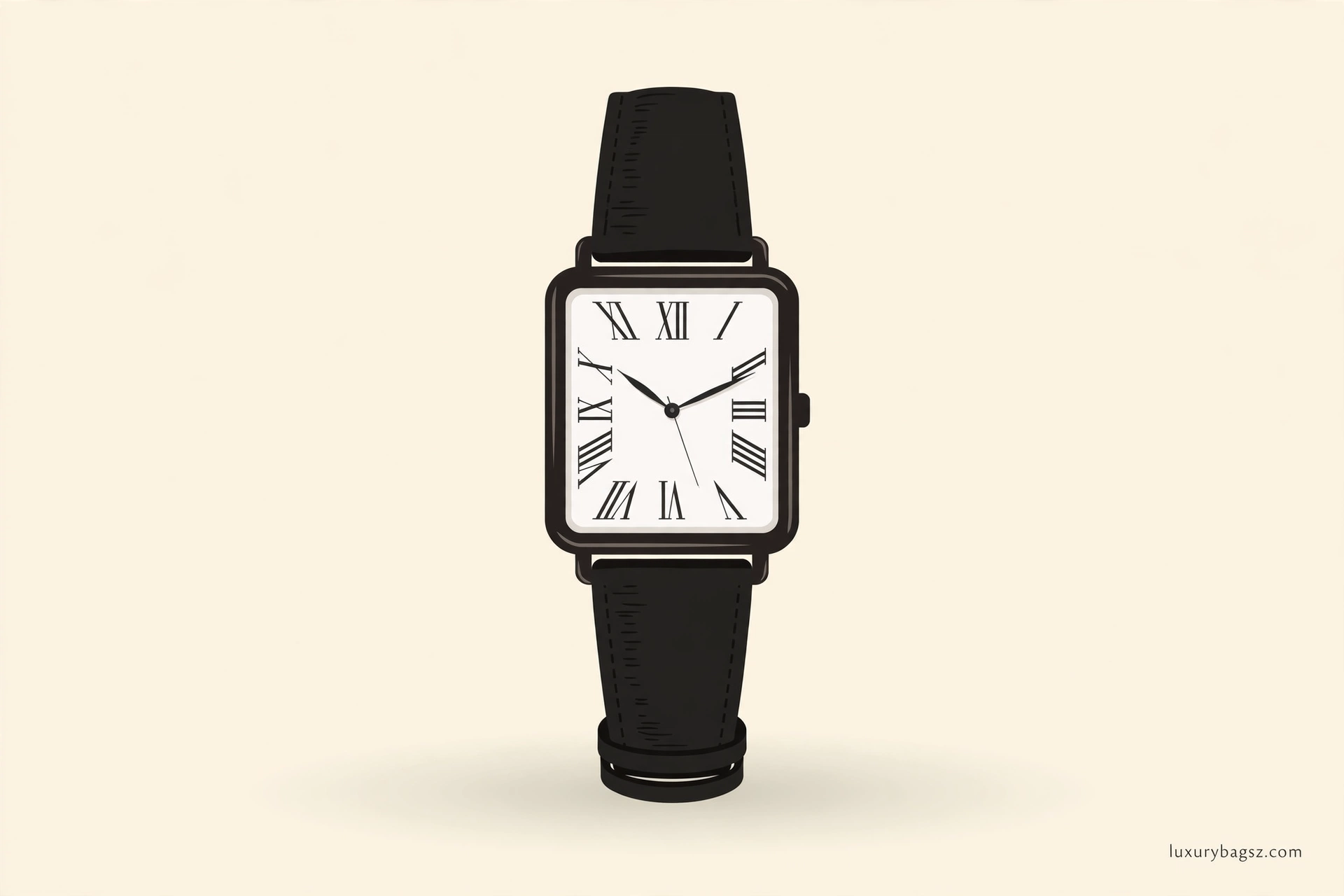
The Cartier Tank is a rectangular dress watch with Roman numerals, sword-shaped hands, a railroad minute track and a blue cabochon crown. Louis Cartier drew it in 1917, inspired by the top-down view of a Renault FT-17 tank. The first pieces reached clients in 1919.
If you want one Tank, start with the model, then the size. Tank Must is the accessible entry point in steel. Tank Louis Cartier is the purist's gold original. Tank Francaise suits bracelet lovers, and Tank Americaine suits those who want a longer, curved case.
Size by the case, not by the name. A Tank Large is still a compact watch by modern standards, and a rectangular case sits differently on the wrist than a round one. Measure your wrist, try the case on, and let the lug-to-lug length decide.
Key Takeaways
- Drawn in 1917, prototype in 1918, first public pieces in 1919.
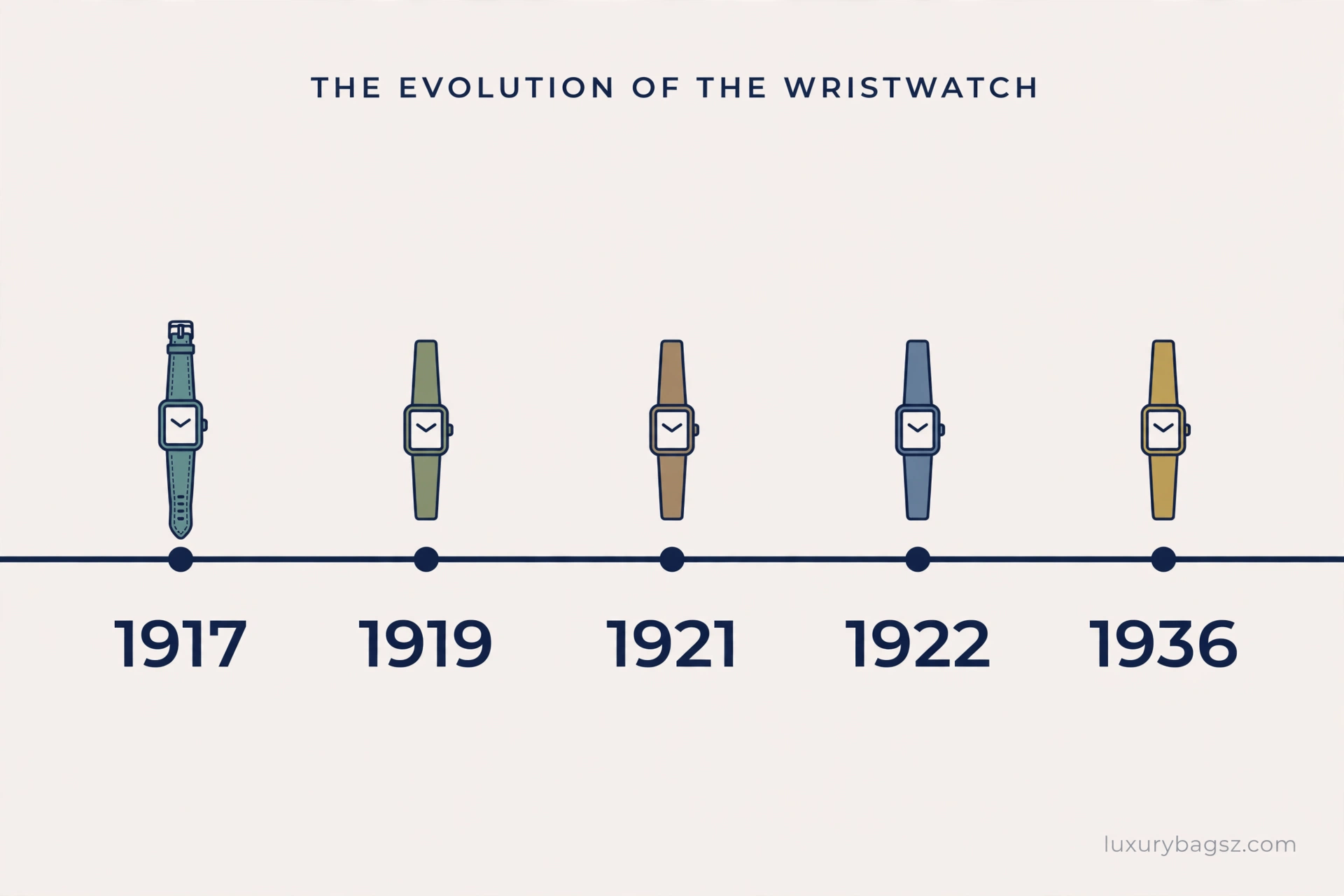
- Tank Normale came first, then Cintree in 1921 and Louis Cartier in 1922.
- Tank Louis and Solo share cases: small 29.5 x 22 mm, large 33.7 x 25.5 mm, extra-large 40.4 x 34.92 mm.
- Tank Americaine comes in small 34.8 x 19 mm and medium 41.6 x 22.6 mm.
- Tank Francaise comes in small, medium and large, from 25.7 x 21.7 mm to 36.7 x 30.5 mm.
- Small suits wrists under 6 inches; Large suits wrists from 6 to 7.5 inches as a rule of thumb.
- Tank Must is the entry point; Tank Louis Cartier is gold only, with a manual-wind movement.
- Tank Solo was discontinued in 2019 and succeeded by Tank Must in 2021.
Where the Tank Came From
During the First World War, newspapers carried images of Renault FT-17 tanks rumbling across the Western Front. Louis Cartier, steeped in the artistic life of Paris, was struck by the tank's shape seen from above: two parallel tracks flanking a central body. He turned that view into a watch case.
The idea broke with the curved, jewel-like watches of the time. Instead of a round case with lugs stuck on, the Tank used straight vertical bars, called brancards, as both case sides and strap mounts. The dial sat between them like the tank's cockpit between its tracks. Cubism's sharp lines and clean geometry shaped the result.
That origin story carries a small date puzzle, and it is worth stating plainly. Most histories date the design to 1917. Rebag's history dates the first prototype to 1918, when one was gifted to United States General John Pershing. Public sales began in 1919, with only six pieces made at first. All three dates describe different steps, not competing claims.
A Timeline: From Normale to Asymetrique
Tank Normale emerged as the first of the line, the patriarch from which every later Tank descends. It set the vocabulary: rectangular case, Roman numerals, sword hands, beaded crown with a blue cabochon, and a railroad minute track. That vocabulary still defines a Tank today.
Tank Cintree followed in 1921, with a longer, curved case that hugged the wrist. Tank Louis Cartier arrived in 1922, softening the brancards and stretching the dial into a more elegant rectangle. Many collectors still call the Louis the definitive dress Tank.
The 1920s and 1930s were a golden era for the line, with new models arriving steadily through to Tank Asymetrique in 1936. Yet rarity persisted: fewer than 6,000 Tanks were made and sold until 1969. That scarcity is part of why early Tanks command such respect, and such prices, today.
Later revivals kept the story going. The 1990s and 2000s brought renewed interest in vintage designs, with heritage reissues such as the Tank Cintree Heritage and the Tank Francaise Millennium Edition. Cartier's Prive line has since revisited historic references with traditional hand finishing.
Beyond the headline models, several historic Tanks deserve a mention because they shape what collectors hunt today. Tank Chinoise, from 1922, took the Tank's rectangle and gave it a pagoda-like top bar, a nod to Chinese temple architecture. Tank a Guichet, from 1928, hid the time behind small jumping-hour and minute windows, with no hands at all.
Tank Basculante, from 1932, flipped its case over to protect the dial during sport, a trick Humphrey Bogart reportedly loved. Tank Asymetrique, from 1936, tilted the whole dial by 30 degrees, so the watch reads naturally when the wrist rests on a table. Tank Must de Cartier, from the 1970s, brought the Tank to a wider audience with vermeil cases and lacquered dials in colours like burgundy and black.
Tank MC, a later, larger Tank, added bolder proportions and in-house automatic movements for buyers who found classic Tanks too small. None of these replaced the core line. They proved, instead, that the rectangle could stretch in almost any direction without losing its identity. When you see a vintage Tank with an odd dial or a tilted case, it is usually one of these historic branches, not a fake.
The Models That Matter Today
Tank Louis Cartier is the purest expression of the original 1917 design. It is made only in 18k gold, with a manual-wind mechanical movement, and it stays closest to Louis Cartier's vision. Buy it if you want the collector's Tank and accept gold pricing and daily winding.
Tank Must is the modern entry point, in stainless steel with quartz or SolarBeat light-powered movements. Its case has softer, rounded brancards and a slightly more elongated feel than the Louis. The Must XL stands apart with an automatic movement and a date window, which changes its character completely.
Tank Solo was the earlier entry point, introduced in 2004 in steel with quartz small and large models and an automatic extra-large. It was discontinued in 2019 and succeeded by Tank Must in 2021. Solo and Must look alike at a glance, so check the reference and movement before buying either pre-owned.
Tank Francaise has an integrated chain-link bracelet and a more angular, squarish case, making it the sportiest Tank. It is also the model most linked with Princess Diana, who wore one for years. Tank Americaine has an elongated, curved profile that hugs the wrist, giving a more contemporary, fluid look.
Dial choice changes each model more than photos suggest. The classic white dial with black Roman numerals is the safest and most legible option, and it suits every occasion. Must models add coloured lacquer dials, including deep blue, green and burgundy, plus monochrome versions where numerals and dial share one tone.
Diamond-set dials and bezels appear on some Must and Francaise models, and they shift the watch from quiet dress piece to visible jewellery. Think about when you will wear it: a diamond dial sparkles at dinner but can feel loud in a boardroom. A plain dial never dates, which is why it also resells most easily.
Case finishing matters too. Polished gold and steel show scratches and fingerprints fast, so a daily-worn Tank will pick up hairlines within months. That is normal wear, not damage, but it is worth knowing before you choose a mirror-polished case for rough daily use.
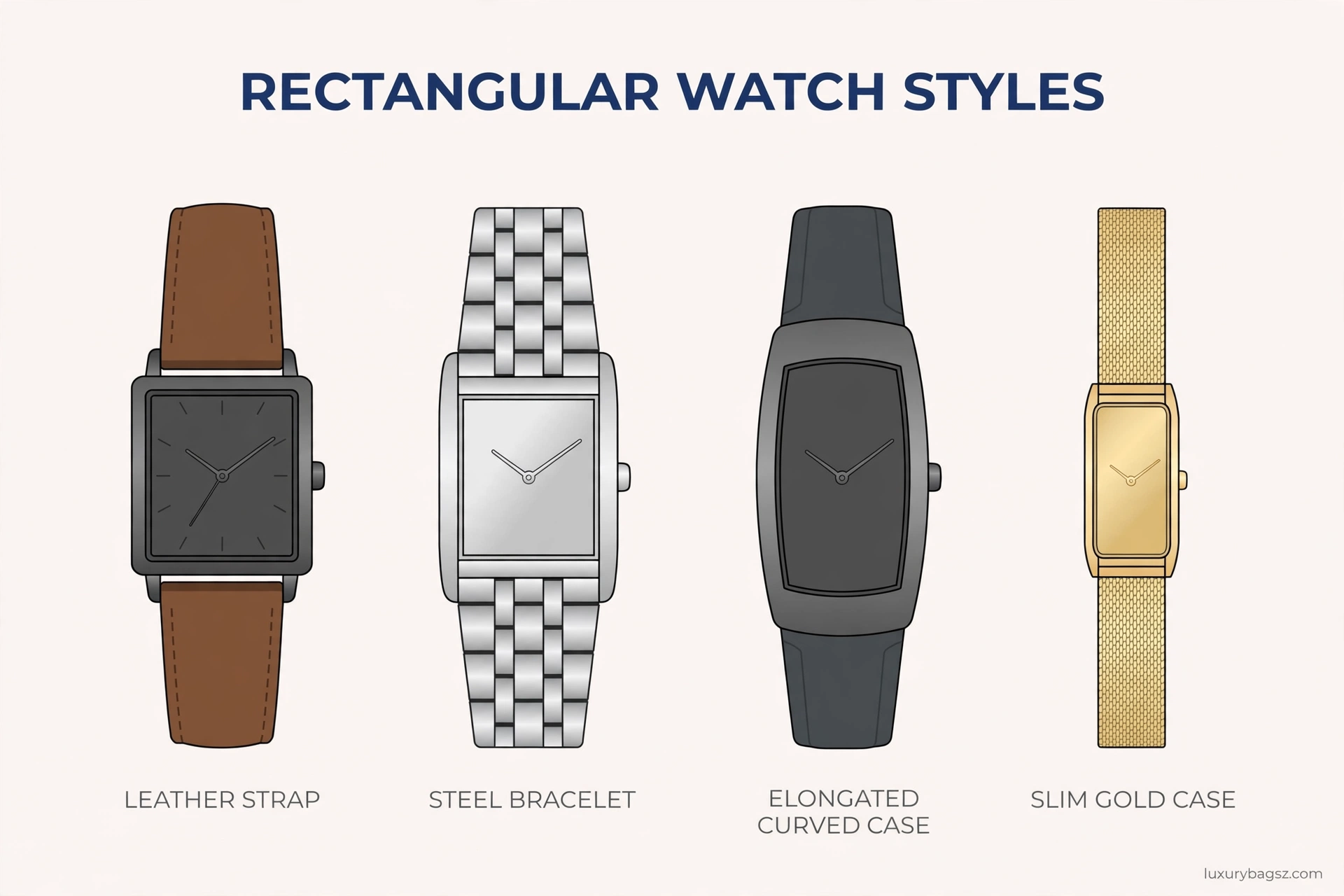

Tank Sizes by Model, in Millimetres
Tank sizing confuses first-time buyers because the names repeat across models while the cases differ. Always compare the case length by width, not the name alone. Strap or bracelet fit matters less here, since most Tanks come with an adjustable strap or bracelet.
Tank Louis Cartier comes in three sizes. Small measures 29.5 x 22 mm. Large measures 33.7 x 25.5 mm. Extra-large measures 40.4 x 34.92 mm. These are the classic Tank proportions, and Large is the size most buyers picture when they think of a Tank.
Tank Solo shares those same three cases: small 29.5 x 22 mm, large 33.7 x 25.5 mm, extra-large 40.4 x 34.92 mm. If you are choosing between a pre-owned Solo and a new Must, compare movements and case finishing rather than size, since the footprints match.
Tank Americaine comes in two sizes only. Small measures 34.8 x 19 mm, a slim, long case. Medium measures 41.6 x 22.6 mm, which is long on the wrist despite its narrow width. The curve of the case helps it sit flat, but try it on before assuming it wears small.
Tank Francaise comes in three sizes with thickness listed too. Small measures 25.7 x 21.7 x 6.8 mm. Medium measures 32 x 27 x 7.1 mm. Large measures 36.7 x 30.5 x 10.1 mm. Large is notably thicker, so it wears more like a bracelet watch than a slim dress piece.
Tank Must sizing follows a similar small, large and extra-large pattern, with the Must XL measuring about 41 x 31 mm. That XL is the automatic, date-window version, so it wears larger and thicker than its name alone suggests. For small and large Must models, always check the exact reference, since case proportions vary slightly by year and dial version.
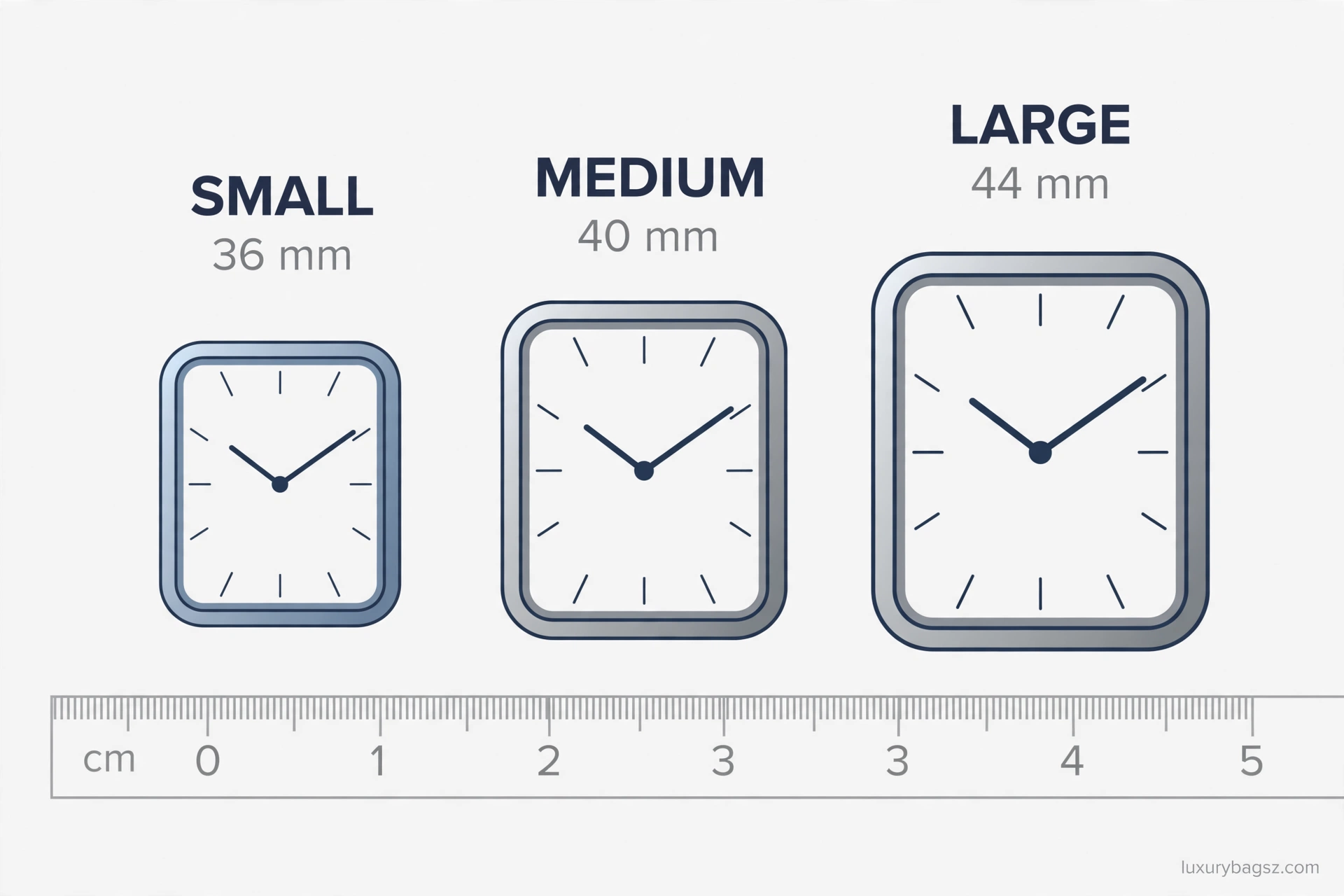
Which Size Fits Your Wrist
Start by measuring your wrist at the bone where the watch will sit. As a rough guide, Small suits wrists under 6 inches, while Large suits wrists from 6 to 7.5 inches. Extra-large and Americaine Medium suit larger wrists or buyers who want a bold presence.
Rectangular cases follow different rules than round ones. A 33 mm Tank looks smaller than a 33 mm round watch, because its width is only about 25 mm. What matters most is lug-to-lug length: the distance across the case from top to bottom. If that length overhangs your wrist, the watch will look and feel wrong.
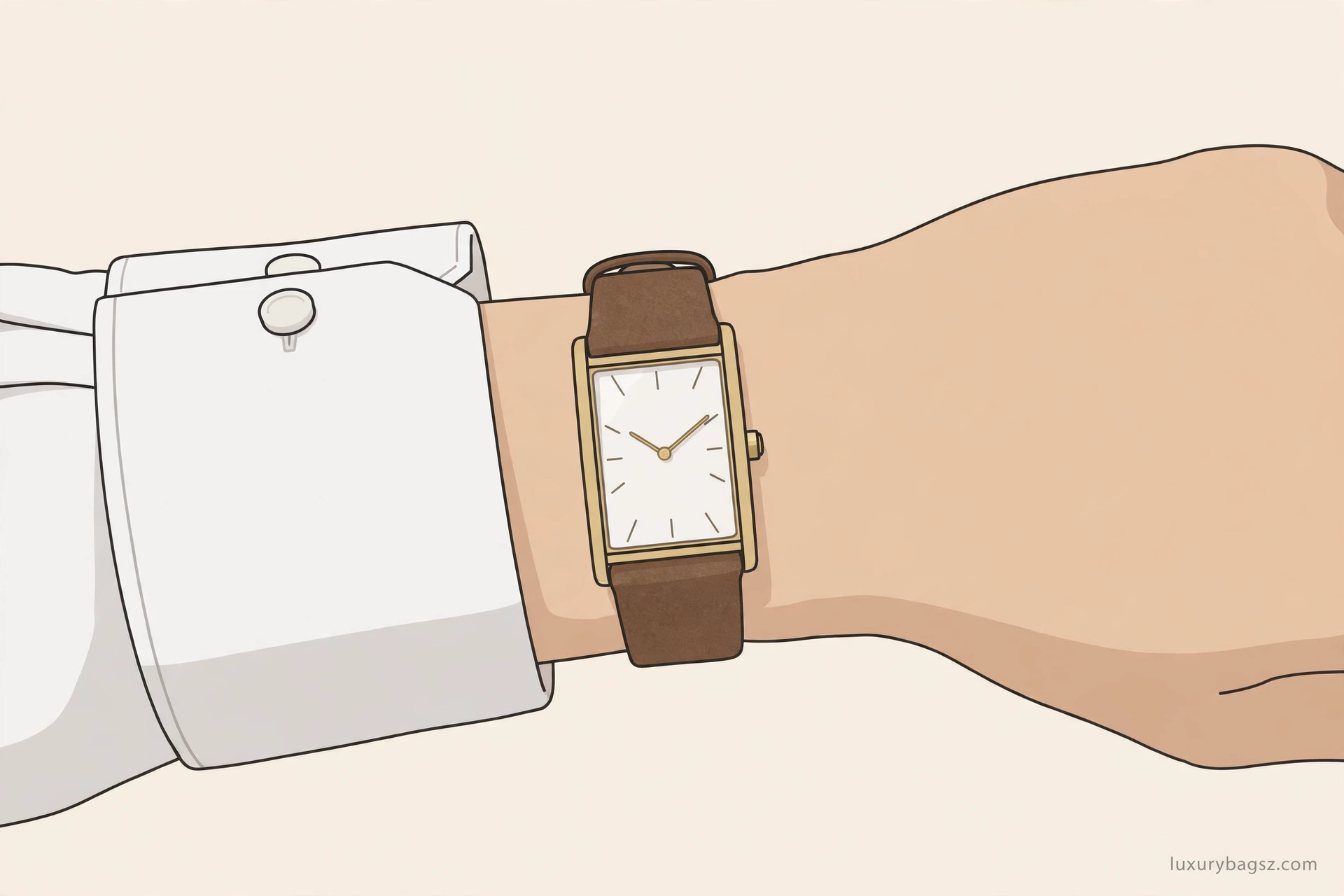
Try the watch with the strap or bracelet fitted properly, not loose on the wrist. A Tank should sit flat, with the case centred on the wrist bone and the crown clear of the hand. Wear it with the cuff you will pair it with, since a dress cuff changes how much case shows.
If you are between sizes, choose by use. Smaller reads as classic and formal, and it slips under a cuff easily. Larger reads as modern and confident, and it suits casual wear better. There is no wrong answer here, only a wrong fit, so trust the mirror over the size name.
When you try a Tank, try two sizes, not one. Wear the smaller first, then the larger, with the same shirt and the same lighting. The right size usually declares itself within a minute: it looks like it belongs, while the wrong one looks borrowed. Photograph your wrist from a normal distance too, since a mirror close-up exaggerates every watch.
Movements, Materials and What They Mean
Movement choice shapes daily life with a Tank more than most buyers expect. Quartz models are precise, slim and grab-and-go, needing only a battery change every few years. SolarBeat models run on light, which suits buyers who dislike battery changes but still want quartz ease.
Manual-wind models, led by Tank Louis Cartier, ask for a daily winding ritual. That ritual is part of the appeal for collectors, and part of the chore for everyone else. Automatic models, found in Must XL and Solo extra-large, wind from wrist motion and add a date window on Must XL.
Materials run from stainless steel through yellow, rose and white gold to platinum on rare pieces. Steel suits daily wear and bracelet models like Francaise. Gold suits the Louis and formal occasions, but it scratches more visibly and costs far more. Diamonds appear on some Must and Francaise models, raising price without changing the watch itself.
Straps deserve the same attention as cases. A leather strap changes the whole watch: black alligator reads formal, brown calf reads casual, and a steel bracelet reads sporty. Leather straps wear out with sweat and water, so budget for a replacement every year or two of daily wear. A bracelet lasts longer but needs link adjustments to fit well.
Water resistance is another honest limit. Most Tanks are dress watches with modest water resistance, meant for splashes and rain, not swimming. Never swim in a Tank on a leather strap, and have the seals checked after any battery change. A flooded Tank costs far more to repair than a seal check costs to prevent.
For a sense of how Cartier sizing works across jewellery too, our Cartier Love bracelet sizes guide shows the same small-versus-large logic. And if you are weighing Cartier against another great house, our Patek Philippe brand guide puts Tank pricing in wider context.
Buying Pre-Owned: Checks Before You Pay
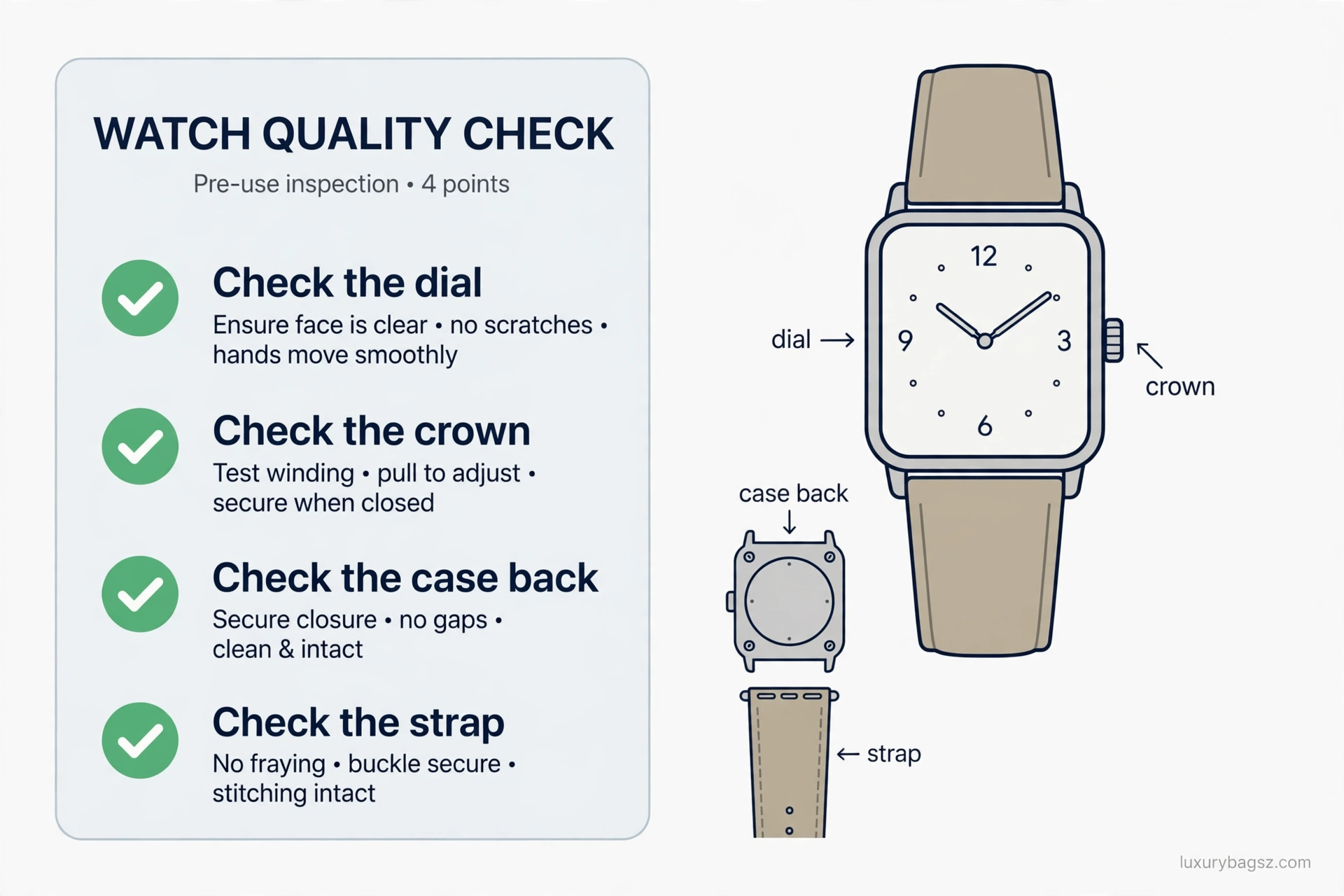
Pre-owned Tanks are plentiful, which is good for choice and bad for fakes. Start with the dial: Roman numerals should be crisp and evenly printed, with a clean railroad minute track. Blurred printing, uneven numerals or a misaligned logo are warning signs.
Check the crown cabochon, which should sit blue and smooth, not cloudy or loose. Look at the case back engraving, the serial number and the movement through an open case back if the seller allows it. A quartz Tank with a mechanical movement inside, or vice versa, is a red flag.
Ask for the full set where possible: box, papers, service history and original strap or bracelet. A replaced strap is normal wear, but a replaced dial or crown is not. Check the strap or bracelet for stretch, cracks and replaced links, since those cost real money to fix. On bracelet models, count the links and ask whether spares remain, since a bracelet that cannot fit your wrist is a costly problem.
Read our guide on how to spot a fake Cartier Tank watch for the full check list before you pay. If the seller refuses clear dial, crown and case-back photos, walk away. A genuine Tank at a fair price will survive scrutiny.
Care, Value and Which Tank to Buy
Clean a Tank with a soft dry cloth, and keep water away from leather straps entirely. Steel bracelets can be brushed gently, but the case and dial should never meet harsh cleaners or ultrasonic baths at home. Our guide on how to clean a watch covers cases, crystals, bracelets and straps in full.
Service matters more than shine. A quartz Tank needs a battery and a seal check, while a mechanical Tank needs a full service every few years. Budget for that service when you buy pre-owned, since a cheap Tank with a tired movement is not cheap for long. Keep service papers, since they support resale value.
Value retention is solid but not uniform. Guides suggest Tanks generally hold much of their retail value over five years, with vintage and gold models doing better. Must models in steel are the most liquid, since more buyers can afford them. Rare vintage pieces, like the Tank Cintree, sit in a different market altogether.
So which Tank should you buy? Choose Must for an accessible daily Tank, Francaise for a bracelet watch, Americaine for a longer curved case, and Louis Cartier for the purist's gold original. Size it by your wrist, not by the name, and buy the best condition you can afford.
Which Tank for Which Buyer
First-time buyers should start with Tank Must Large in steel on a leather strap. It is the most affordable route into the line, it wears well on most wrists, and its quartz or SolarBeat movement needs almost no attention. If you later want gold or mechanical, the Must teaches you what size and dial you actually like.
Formal dressers should look at Tank Louis Cartier Large in yellow or rose gold. It is the closest living version of the 1917 original, and its manual-wind movement suits someone who enjoys a morning ritual. Keep it for suits and evenings, and let a steel watch handle rough days.
Bracelet lovers should choose Tank Francaise Medium. Its integrated bracelet means no strap replacements, and its squarish case reads sportier than a Louis. Americaine Medium suits taller buyers and those who want presence without a round sports watch. Vintage hunters should study the historic branches in the timeline first, since those models reward knowledge and punish guesswork.
New or pre-owned is the last call. New gives warranty, a full set and a known service history, at full price. Pre-owned gives far more watch for the money, especially in Must and Solo, but demands the pre-owned checks. Either route works, as long as the size is right and the seller is honest.
Vintage Tanks: What Collectors Look For
Vintage Tanks reward study. Early pieces were made in Paris, New York and London, and each workshop left small differences in dials, cases and engravings. A Paris dial, a London case mark or a New York movement can all be correct for their era, which is why a single reference book rarely settles a vintage Tank.
Collection Privee Cartier Paris pieces, from the late 1990s and early 2000s, revived historic references with traditional hand finishing. They are prized today because they pair old designs with modern reliability. If you buy one, insist on papers and service records, since their value rests heavily on originality.
Condition beats rarity for most buyers. A common Tank in sharp, original condition is a better buy than a rare Tank with a refinished dial or replaced hands. Ask whether the dial, hands and crown are original, and accept honest wear over fresh-looking replacement parts. A vintage Tank should show its age gracefully, not hide it.
Questions to Ask Before You Buy
Ask the seller for the exact reference number first, since Tank names alone do not identify a watch. The reference pins down the model, size, material and movement, and it lets you compare like with like across listings. If a seller cannot give the reference, treat the listing as unpriced, not as a bargain.
Ask whether the watch is original throughout, and which parts, if any, have been replaced. A replaced strap is routine, but a replaced dial, crown or movement changes value and collectability. Ask for the service history too: when it was last serviced, by whom, and whether the seals were checked.
Ask about returns and authenticity guarantees in writing before paying. A reputable dealer will offer both without hesitation. Finally, ask yourself one question: does this size, model and dial suit the life you actually live? A Tank bought for the wrist you have, not the wrist you wish you had, is the one you will still wear in ten years.
Frequently Asked Questions
When was the Cartier Tank first made?
Louis Cartier drew the Tank in 1917, the first prototype followed in 1918, and the first public pieces reached clients in 1919. Only six pieces were made at first.
What inspired the Cartier Tank?
The top-down view of a Renault FT-17 tank from the First World War inspired it. The tank's parallel tracks became the watch's vertical brancards, and its body became the dial.
What are the main Cartier Tank models?
The main current models are Tank Must, Tank Louis Cartier, Tank Francaise and Tank Americaine. Tank Solo was an earlier entry model, discontinued in 2019 and succeeded by Tank Must in 2021.
What size is a Cartier Tank Louis large?
Tank Louis Cartier Large measures 33.7 x 25.5 mm. Small measures 29.5 x 22 mm and extra-large measures 40.4 x 34.92 mm.
What size Cartier Tank should I buy for a small wrist?
Small usually suits wrists under 6 inches, while Large suits wrists from 6 to 7.5 inches as a rough guide. Try the case on, since lug-to-lug length matters more than the size name.
Is the Cartier Tank a men's or women's watch?
It is a unisex watch, worn by men and women since the 1920s. Famous wearers include Rudolph Valentino, Cary Grant, Jacqueline Kennedy, Andy Warhol and Princess Diana.
What is the difference between Tank Must and Tank Solo?
Tank Solo was the entry model from 2004 to 2019, while Tank Must succeeded it in 2021 with softer brancards, more dial options and SolarBeat light-powered models. Their case sizes match, so check the reference and movement.
Is the Tank Louis Cartier manual wind?
Yes, Tank Louis Cartier uses a manual-wind mechanical movement and is made only in 18k gold. It needs daily winding, which collectors see as part of its charm.
How much does a Cartier Tank cost?
Entry steel Tank Must models start around the low thousands of dollars, while gold Tank Louis Cartier models cost far more. Always verify current boutique pricing, since prices vary by market and model year.
Is a pre-owned Cartier Tank a good buy?
Yes, if you check the dial printing, crown cabochon, case back, movement and papers, and buy from a seller who provides clear photos. Avoid sellers who refuse dial and case-back images.
Conclusion
The Tank has survived for over a century because its design is simple, strict and endlessly wearable. From the 1917 sketch to the Normale, the Louis, the Francaise and the Must, every version keeps the same rectangular promise.
Pick your model by lifestyle, your size by wrist, and your example by condition. Do that, and the Tank you buy will look as right in ten years as it does on the first day.