

History of Van Cleef & Arpels: A Love Story, the Mystery Setting and Alhambra
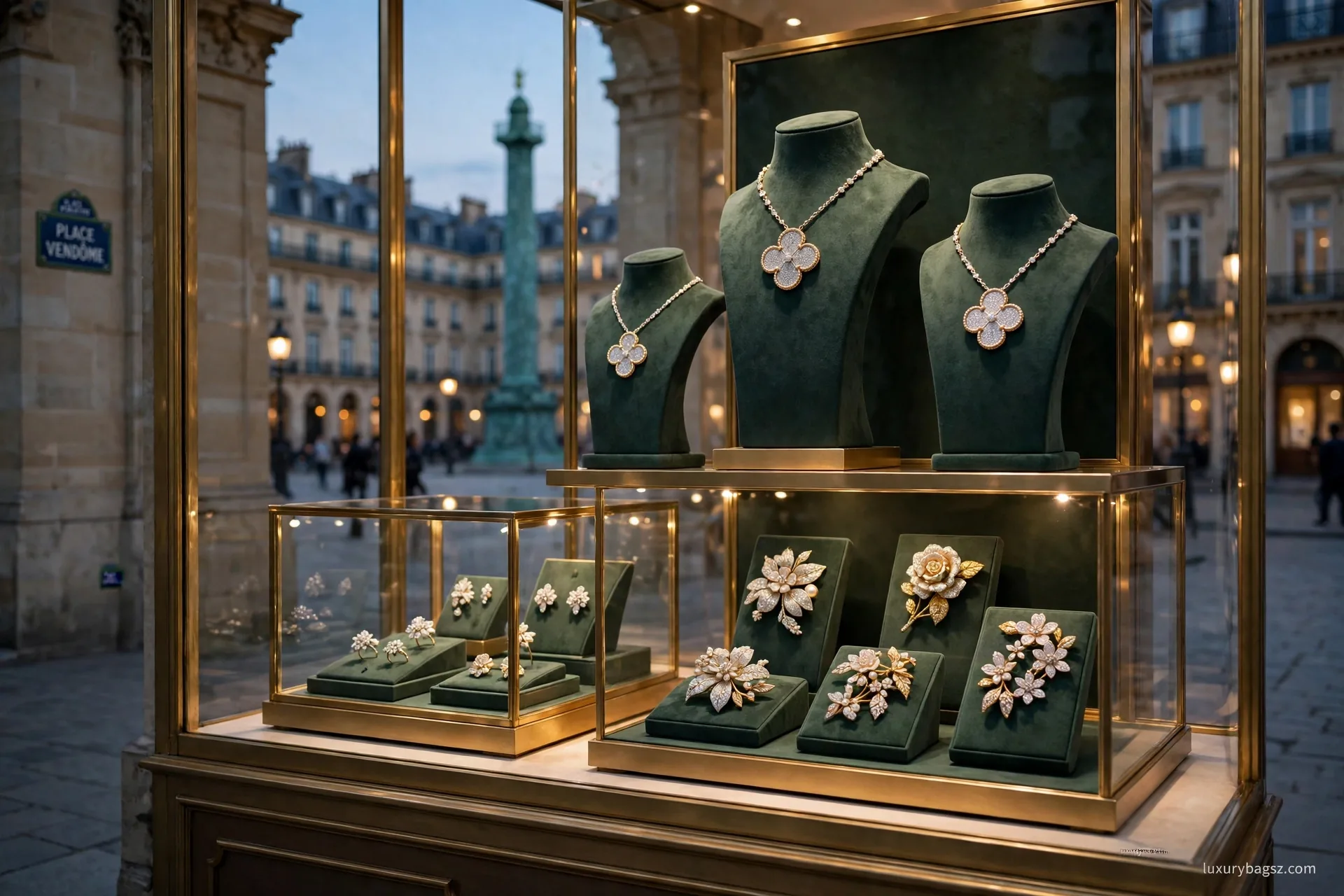
Van Cleef & Arpels in Brief: Jewellery Born From a Marriage
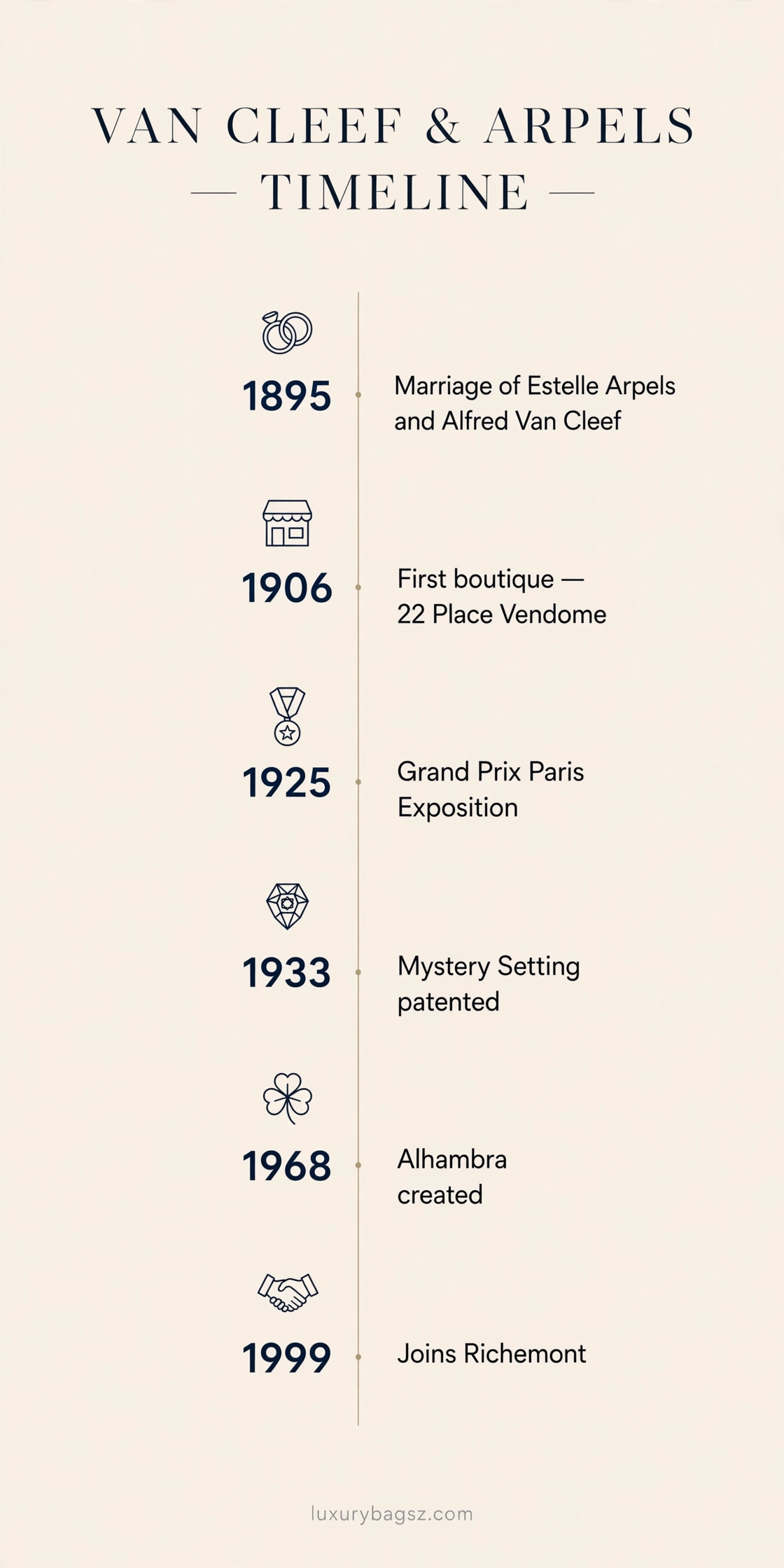
Van Cleef & Arpels is the most romantic story in high jewellery, and the romance is literal. In 1895, Estelle Arpels, daughter of a precious stone dealer, married Alfred Van Cleef, son of a stone cutter. Eleven years later, with Estelle's brothers, they opened a boutique at 22 Place Vendôme in Paris. That address is still the maison's heart today.
The house built its name on poetry made technical: flowers that look freshly picked, ballerinas caught mid-dance, and the Mystery Setting, a 1933 invention that holds stones with no visible prongs. Then, in 1968, came Alhambra, the four-leaf clover motif that turned fine jewellery into an everyday lucky charm. If you remember one thing, remember this: Van Cleef & Arpels treats nature, luck and love as serious design subjects, and it backs them with extraordinary craft.
Key Takeaways
- The maison grew from the 1895 marriage of Estelle Arpels and Alfred Van Cleef.
- The first boutique opened at 22 Place Vendôme, Paris, in 1906.
- Renée Puissant, the founders' daughter, became artistic director in 1926.
- The Mystery Setting was patented in 1933 and hides all mounting metal from the front.
- Alhambra, created in 1968, made the four-leaf clover a fine jewellery icon.
- The maison joined the Richemont group in 1999 and opened L'École in 2012.
- Pre-owned buyers should check signatures, hallmarks, motif alignment and paperwork.
A Marriage Founds a Maison
Every great jewellery house has an origin myth, but Van Cleef & Arpels has something better: a genuine love story that also made business sense. The Arpels family knew precious stones; the Van Cleef family knew how to cut and craft them. Estelle and Alfred's marriage in 1895 united those two skills in one household.
The couple did not rush. Alfred first ran his own jewellery business, and the families combined their talents gradually. In 1906, Alfred went into partnership with Estelle's brother Charles, later joined by Julien in 1908 and Louis in 1912. Each brother brought a strength: stones, craft or the commercial flair that would carry the maison abroad.
That family structure explains the house's character. Van Cleef & Arpels never felt like a factory or a corporation. It felt like a family that happened to make extraordinary jewels, and the ampersand in the name still signals that union of two families and two kinds of expertise.
22 Place Vendôme: The Right Address at the Right Moment
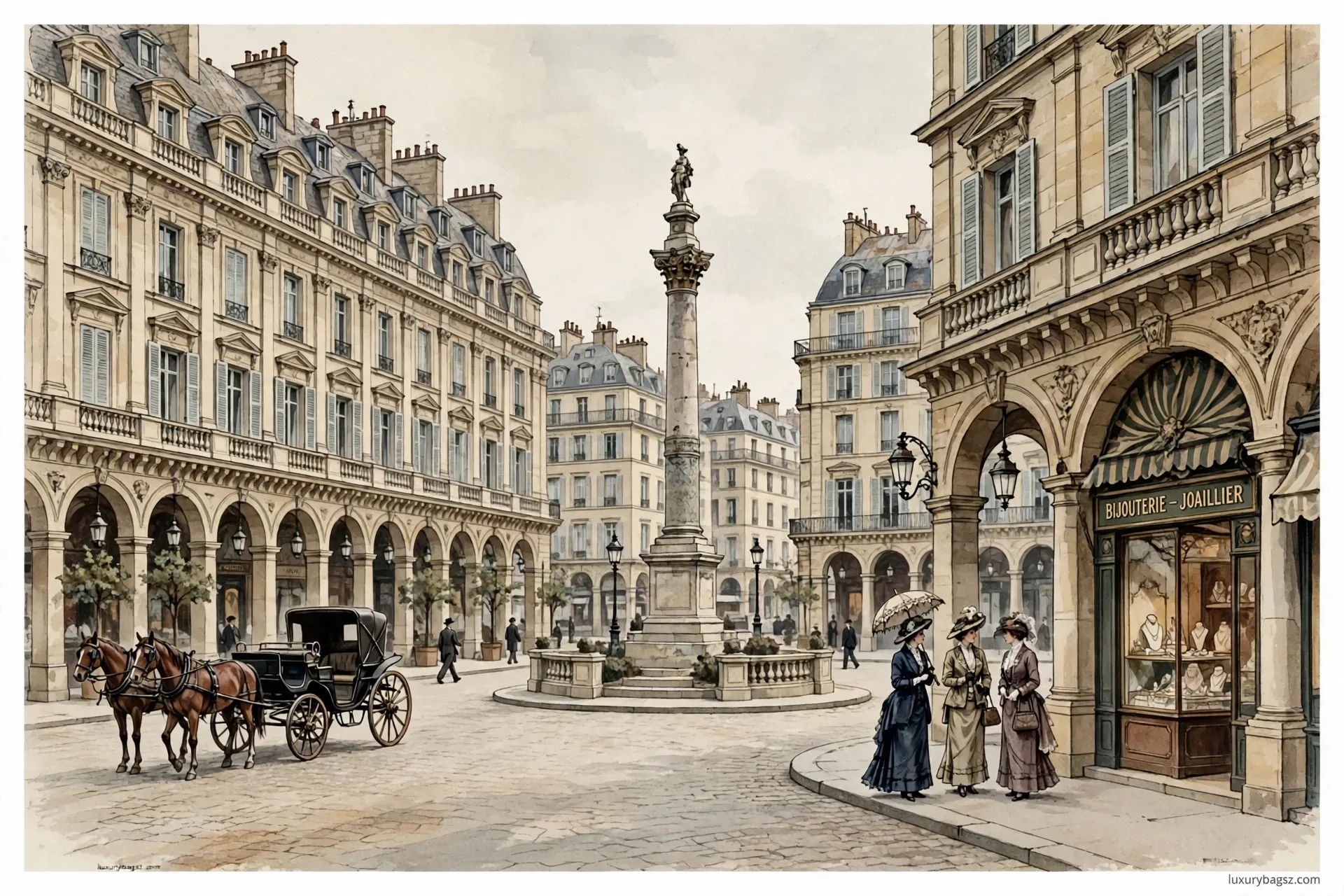
Place Vendôme was the centre of Parisian luxury in 1906, home to the Ritz and to the finest jewellers in the world. Opening at number 22 put the young maison shoulder to shoulder with its greatest rivals and opposite the clientele it wanted: aristocrats, business magnates and travellers with taste and money.
The boutique grew with the business. It soon expanded to number 24, and in later decades to number 20, forming the Salons Vendôme ensemble the maison occupies today. The square even entered the house's visual language: the Van Cleef & Arpels hallmark pairs the initials VCA with the Vendôme Column inside a horizontal lozenge.
Location was strategy, not vanity. Resort boutiques followed quickly in Dinard, Nice, Deauville and other fashionable towns, taking the maison to its clients rather than waiting for them to come to Paris. That habit of following the client, from seaside resorts to New York's Fifth Avenue, shaped the international maison we know today.
Art Deco, Renée Puissant and the 1925 Grand Prix
The maison's artistic identity was forged in the 1920s by Renée Puissant, Alfred and Estelle's daughter, who became artistic director in 1926. Working with designer René Sim Lacaze, she steered Van Cleef & Arpels away from stiff, formal jewels towards pieces with movement, colour and a sense of nature in motion.
The breakthrough came at the 1925 Paris Exposition Internationale des Arts Décoratifs. Among geometric Art Deco jewels, Van Cleef & Arpels showed roses transformed into diamonds, and the maison won the Grand Prix. The message was clear: this house could be modern without being cold, and its flowers looked alive rather than carved.
Puissant's influence lasted long after her tenure. The maison's love of floral motifs, its soft colour combinations and its willingness to let a jewel tell a story all trace back to her direction. When you see a Van Cleef & Arpels flower brooch today, you are seeing a design language that is nearly a century old and still feels fresh.
The Mystery Setting: Stones That Seem to Float
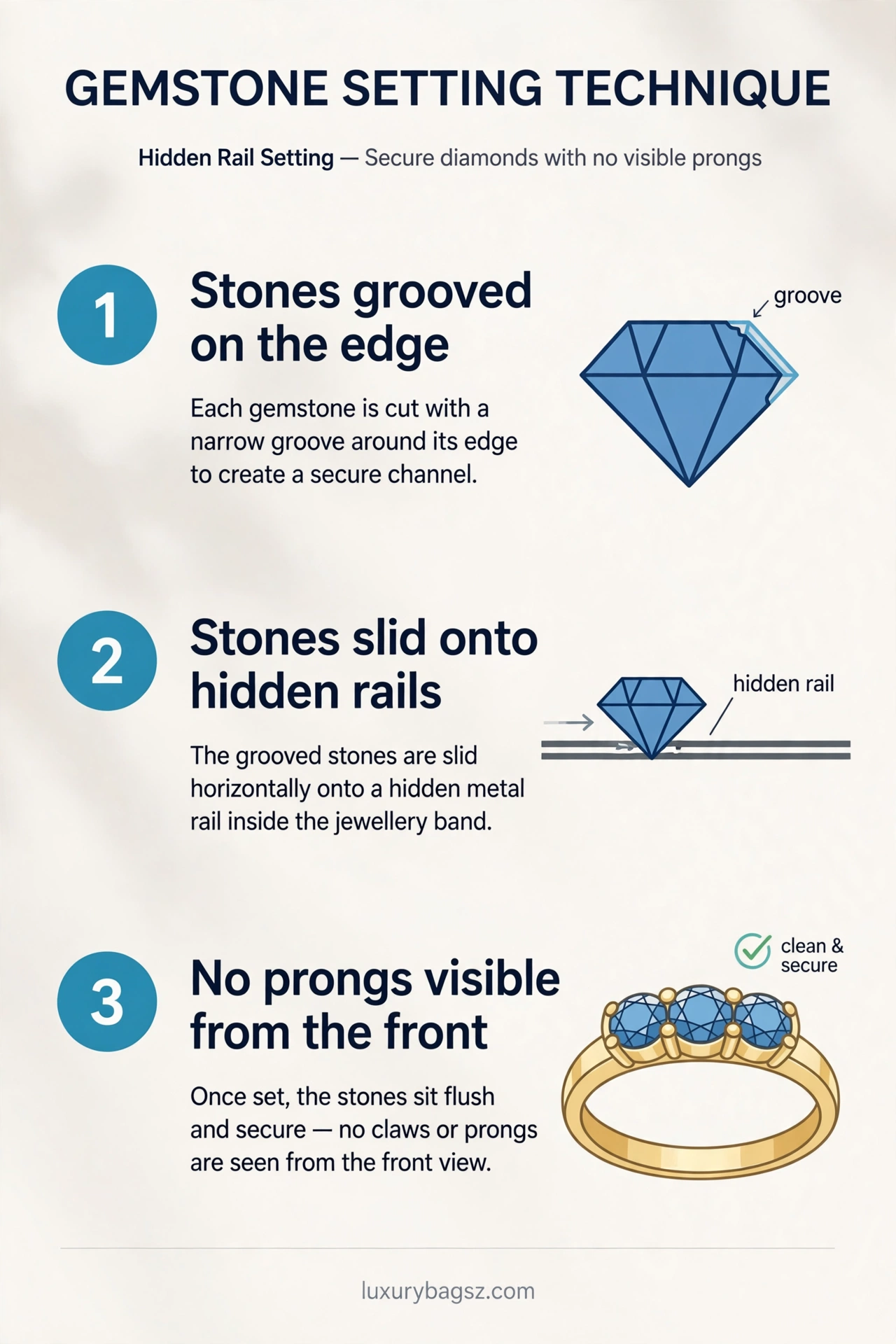
In 1933, Van Cleef & Arpels patented the Serti Mystérieux, or Mystery Setting. The technique is simple to describe and fiendishly hard to execute: each stone is grooved along its edge and slid onto a hidden framework of fine rails, so that from the front no metal shows at all. The result is a continuous surface of pure colour, as if the stones were held in place by magic.
Early Mystery Set pieces were often flat objects such as compacts and vanity cases, because the technique suited level surfaces. By 1935, the maison had mastered domed forms such as the Boule ring, and the setting went on to define its high jewellery. Later refinements added marquise stones and translucent effects, but the principle never changed: the metal must disappear.
For buyers, the Mystery Setting is both a marvel and a warning. Genuine pieces show perfectly even stone alignment and no visible prongs from the front, while damaged or poorly repaired examples show gaps, loose stones or replaced metal. Never buy a Mystery Set piece without a close inspection and, ideally, a maison or expert assessment.

Alhambra: Luck You Can Wear Every Day
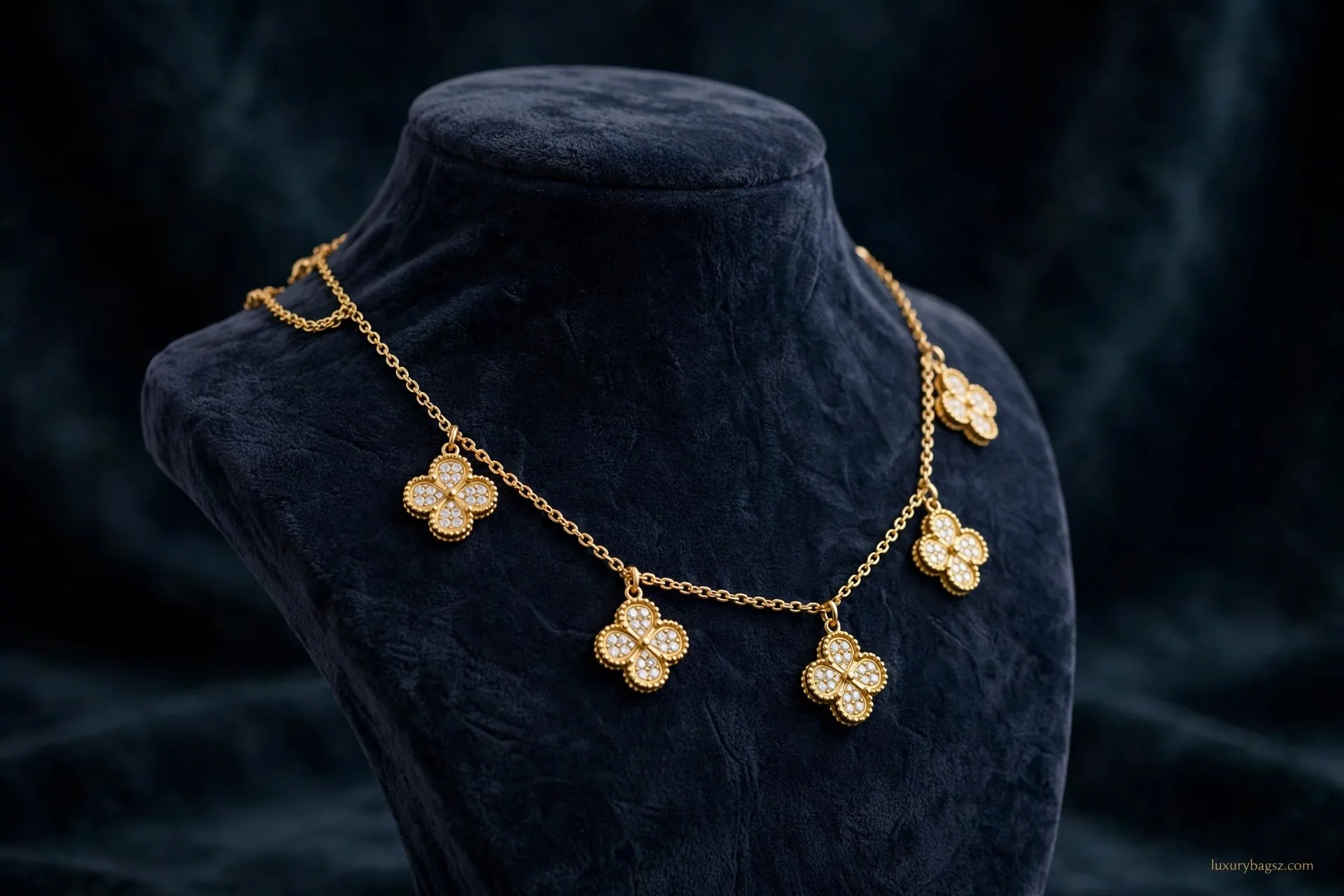
In 1968, Jacques Arpels created the Alhambra collection, inspired by the four-leaf clover. His motto, "to be lucky, you have to believe in luck," captured the spirit exactly. Alhambra was fine jewellery that did not demand a ball gown: a long necklace of clover motifs in gold, mother-of-pearl, onyx or malachite, worn with a jumper as easily as with evening dress.
The timing was perfect. Fashion was loosening up, women were buying jewellery for themselves, and Alhambra offered a precious piece that fitted daily life. Over the decades it grew into a full universe of necklaces, bracelets, earrings and watches, with motifs in many sizes and materials, yet the clover itself never changed.
Alhambra also changed how the maison is collected. It is the entry point for many buyers and the most traded Van Cleef & Arpels line on the pre-owned market. That popularity brings fakes, so motif alignment, beaded gold borders and clasp quality all matter. Our Perlée collection guide covers the maison's other great everyday line, the beaded gold Perlée pieces that pair beautifully with Alhambra.
Ballet, Royalty and Famous Clients
Van Cleef & Arpels has always dressed remarkable people, but its most poetic commission came from dance. In the 1960s, the maison's ballerina brooches inspired choreographer George Balanchine to create Jewels, the plotless ballet in three acts, each named for a gemstone: Emeralds, Rubies and Diamonds. The ballet premiered in 1967 and remains a landmark of twentieth-century dance.
Royal clients followed a similar thread of romance. The maison made jewels for queens, princesses and maharajas, and its American expansion under Claude Arpels brought it to New York society in the 1940s. Each famous client added a chapter, but the house never became a mere society jeweller; its technical inventions kept it ahead of fashion rather than behind it.
Collectors love these stories, but they should not pay for them blindly. A claimed royal or celebrity provenance needs paperwork. Without it, you are buying the jewel, not the story, and the price should reflect that. For a sense of how another maison's bracelet became a cultural icon, read our Cartier Love bracelet history.
Richemont, L'École and the Maison Today
In 1999, Van Cleef & Arpels joined the Richemont group, giving the maison the backing to expand while keeping its Parisian workshops and identity. Boutiques multiplied across Asia, the Middle East and America, and the maison became the first French jewellery house to open in Japan as early as 1973, a sign of how early it looked east.
In 2012, the maison opened L'École Van Cleef & Arpels in Paris, a school offering public courses in jewellery arts, gem identification and design history. It was a characteristically Van Cleef & Arpels move: instead of guarding its craft behind closed doors, it invited the public in to learn. The school now runs in several cities and has done more for jewellery education than any marketing campaign could.
Today the maison balances heritage and novelty with unusual grace. High jewellery collections still draw on nature, fairy tales and the archive, while Alhambra and Perlée keep the house present in daily life. Behind the boutiques, the Paris workshops still employ the specialist skills the maison depends on: Mystery Setting, miniature enamel, hardstone carving and the delicate articulation of ballerina brooches. Those workshops are the reason a new Van Cleef & Arpels piece can take hundreds of hours, and why the maison guards its techniques as closely as its designs.
For a comparison with another great jewellery name's history and buying advice, see our Tiffany & Co guide and our Chanel fashion jewellery guide.
Buying Van Cleef & Arpels Pre-Owned: What to Check
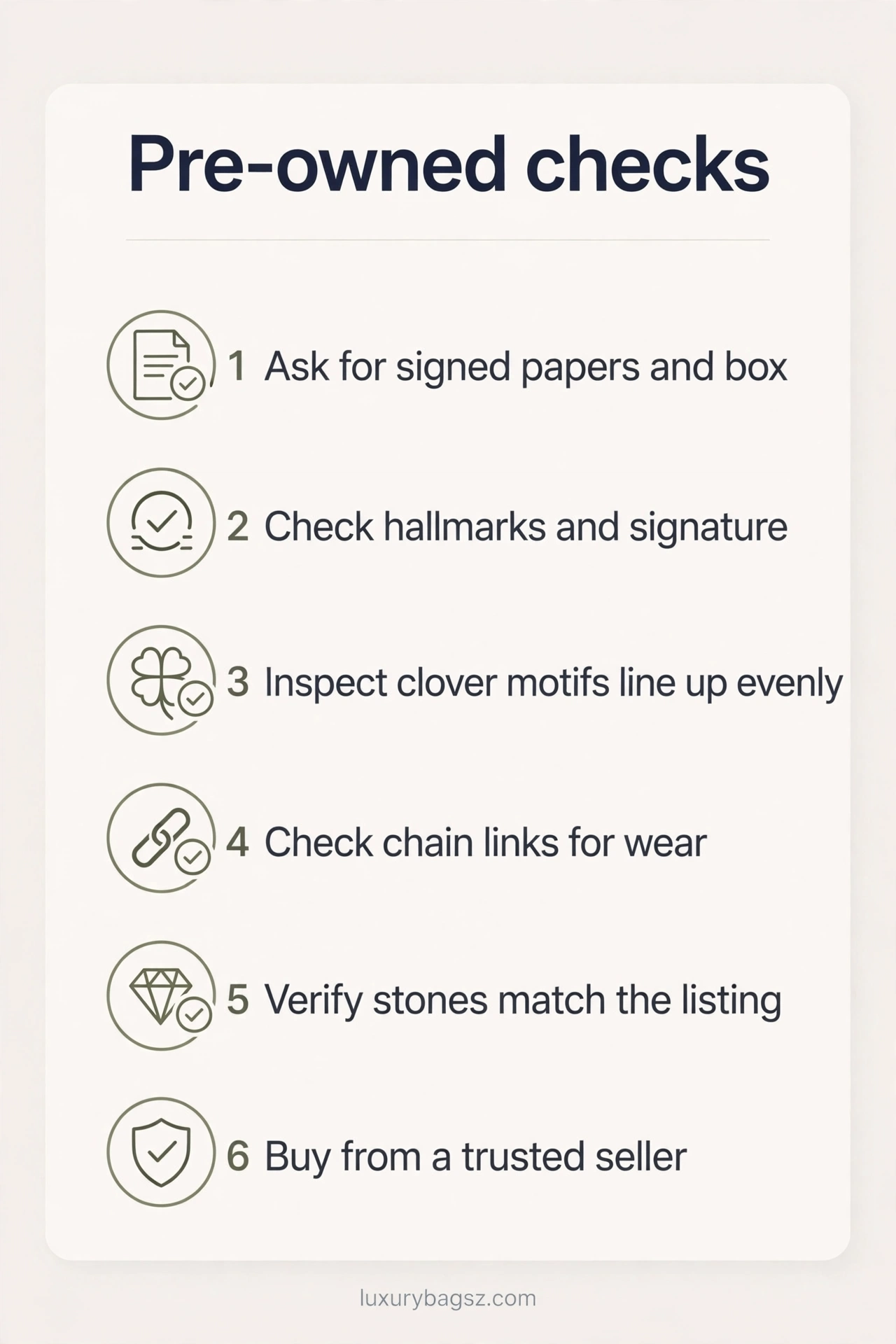
Pre-owned Van Cleef & Arpels rewards patience. Start with the signature and hallmarks: genuine pieces carry the maison's signature, French hallmarks where appropriate, and serial numbers that match their paperwork. Then examine the motifs. On Alhambra, clover shapes should be even, beaded borders crisp, and the reverse as neatly finished as the front.
Check chains, clasps and hinges for wear, and look for repairs that may have replaced original stones. On Mystery Set pieces, insist on expert inspection. On watches, confirm the movement and service history just as you would for any fine watch. A full set with box, papers and original receipt commands a premium for good reason: it removes doubt.
Care matters after purchase too. Our gemstone jewellery care guide explains which stones must never be soaked and how to store pieces safely, and our gold and diamond ring cleaning guide covers gentle cleaning at home. Before you pay, check our designer jewellery resale pricing guide so you know whether the asking price matches recent sales.
The golden rule is simple: buy the piece in front of you, not the name on the box. A well-kept Alhambra necklace with papers is a joy for decades; a doubtful piece at a bargain price is rarely a bargain.
Three mistakes deserve special attention. First, trusting photographs alone: clover alignment, beaded borders and clasp quality cannot be judged from a single studio image, so ask for close, unedited photographs of the front, reverse and clasp. Second, ignoring the reverse: genuine Van Cleef & Arpels pieces finish the back as carefully as the front, and a rough or hollow reverse is a warning sign. Third, overpaying for a story: celebrity or royal provenance without paperwork adds nothing to value, and a seller who leans on a story instead of documents is telling you where the weakness lies.
Van Cleef & Arpels vs Its Rivals: Where the Maison Wins
Every great jewellery house has a personality, and Van Cleef & Arpels' rivals help define it. Against Cartier, the maison is softer and more romantic. Cartier's genius lies in geometry, panthers and bold statements; Van Cleef & Arpels answers with flowers, fairies and ballerinas. A buyer choosing between a Cartier Juste un Clou and a Van Cleef & Arpels Perlée bracelet is really choosing between two temperaments: urban edge or poetic nature. Neither is better in the abstract, but the choice reveals the wearer.
Against Bulgari, the contrast is colour. Bulgari builds drama from large, vivid cabochon stones and Roman grandeur, while Van Cleef & Arpels builds it from miniature detail, pavé surfaces and the illusion that stones float. Bulgari shouts beautifully; Van Cleef & Arpels whispers beautifully. Evening events favour Bulgari's scale, while daily wear and close inspection favour Van Cleef & Arpels' finesse.
Against Tiffany & Co, the difference is heritage language. Tiffany speaks American optimism: clean lines, famous blue boxes and diamonds presented as milestones. Van Cleef & Arpels speaks French romance: luck, love stories and nature as metaphor. An engagement buyer might choose Tiffany for tradition and resale clarity, while a self-purchaser often chooses Van Cleef & Arpels for personal meaning.
In watches, the maison's Poetry of Time pieces, such as the Pont des Amoureux with its kissing figures marking the hours, stand apart from every rival. They are not tool watches or status watches; they are miniature scenes that happen to tell the time. That whimsy limits their audience, but for collectors who already own serious timepieces, a Van Cleef & Arpels watch offers something no other maison can: a watch that makes you smile before it makes you punctual.
So what should you buy first? For everyday luxury, a small Alhambra pendant or a Perlée bracelet is the classic entry, wearable with almost anything and easy to resell. For a statement, a vintage-style flower brooch or a Mystery Set ring shows the maison at its most skilled. For a gift with meaning, the clover's luck symbolism does half the work for you. In every case, buy the motif and material you love, check it carefully, and wear it often: Van Cleef & Arpels jewels were made to be lived in, not locked away.
Material care deserves a final word, because Alhambra's beauty depends on surfaces that need different handling. Mother-of-pearl and malachite are softer than gold and scratch more easily, so store them separately in soft pouches and keep them away from keys and hard jewellery. Onyx is tougher but can chip at edges if knocked, while turquoise is porous and should never meet perfume, creams or water for long. Gold chains should be fastened before storage to prevent tangling, and clover necklaces should be laid flat rather than hung, so the motifs do not pull on their links. A few minutes of care after each wear keeps the luck shining for years.
Prices, Sizes and What to Expect to Pay
Van Cleef & Arpels pricing rewards buyers who understand the hierarchy. Small Alhambra motifs in gold are the entry point to the maison, with larger motifs, precious materials such as mother-of-pearl, onyx and malachite, and multi-motif necklaces moving up in price from there. Perlée bracelets and rings sit in a similar entry-to-mid range, while high jewellery, Mystery Set pieces and watches with complex mechanisms occupy the top tier and are priced individually.
Size changes the look more than newcomers expect. A single small Alhambra pendant reads as a delicate accent, while a twenty-motif long necklace makes a statement even in plain gold. Vintage Alhambra, the smaller motif, suits layering and daily wear, while Magic Alhambra, the larger motif, suits evening and standalone wear. Try both against your neckline before deciding, since photographs flatten the difference.
On the pre-owned market, classic materials and full sets hold value best, while unusual stones and discontinued colours appeal to narrower audiences and can take longer to resell. Always compare recent sold prices for the exact motif size and material rather than trusting a generic brand premium. A well-kept small pendant with papers is a safer purchase than a large, undocumented piece at a tempting discount.
Frequently Asked Questions
When was Van Cleef & Arpels founded?
The maison traces its story to the 1895 marriage of Estelle Arpels and Alfred Van Cleef, and its first boutique opened at 22 Place Vendôme, Paris, in 1906.
Who founded Van Cleef & Arpels?
Alfred Van Cleef founded the maison with his brothers-in-law Charles, Julien and Louis Arpels, combining the Arpels family's stone expertise with Van Cleef's craft.
What is the Mystery Setting?
The Mystery Setting, patented in 1933, holds grooved stones on hidden rails so no prongs or metal show from the front, creating an unbroken surface of colour.
When was Alhambra created?
Alhambra was created in 1968 by Jacques Arpels, inspired by the four-leaf clover as a symbol of luck.
What is L'École Van Cleef & Arpels?
L'École, opened in Paris in 2012, is the maison's school offering public courses in jewellery making, gemmology and design history.
Is Van Cleef & Arpels part of Richemont?
Yes. Van Cleef & Arpels joined the Richemont group in 1999, after building its international boutique network through the twentieth century.
What is the Perlée collection?
Perlée is Van Cleef & Arpels' beaded gold jewellery line, with rows of tiny gold beads forming bracelets, rings and necklaces for everyday wear.
How do I spot a fake Alhambra piece?
Check even clover motifs, crisp beaded borders, a neat reverse, correct hallmarks and signature, and matching paperwork. Doubtful pieces deserve expert inspection.
Does Van Cleef & Arpels hold its value pre-owned?
Popular lines such as Alhambra and Perlée, especially in classic materials with full sets, tend to resell well, but condition and completeness matter more than the name alone.
Where is Van Cleef & Arpels headquartered?
The maison remains rooted in Paris, with its historic Salons Vendôme at 20, 22 and 24 Place Vendôme and workshops nearby.
Conclusion: Poetry Backed by Craft
Van Cleef & Arpels endures because it never chose between poetry and technique. A marriage became a maison, a square became a symbol, a grooved stone became an invisible setting, and a clover became a daily lucky charm. For buyers, the lesson is to look closely: the beauty is real, but so is the craft behind it, and the pieces that last are the ones where both are intact. Begin with a motif you love rather than a motif others recognise, wear it daily rather than saving it for occasions, and keep its papers safe. A maison built on a love story deserves jewels that become part of your own story, and the best Van Cleef & Arpels pieces do exactly that, quietly, over decades.






