

How to Care for Gemstone Jewelry: Cleaning, Storage, and Stones to Never Soak
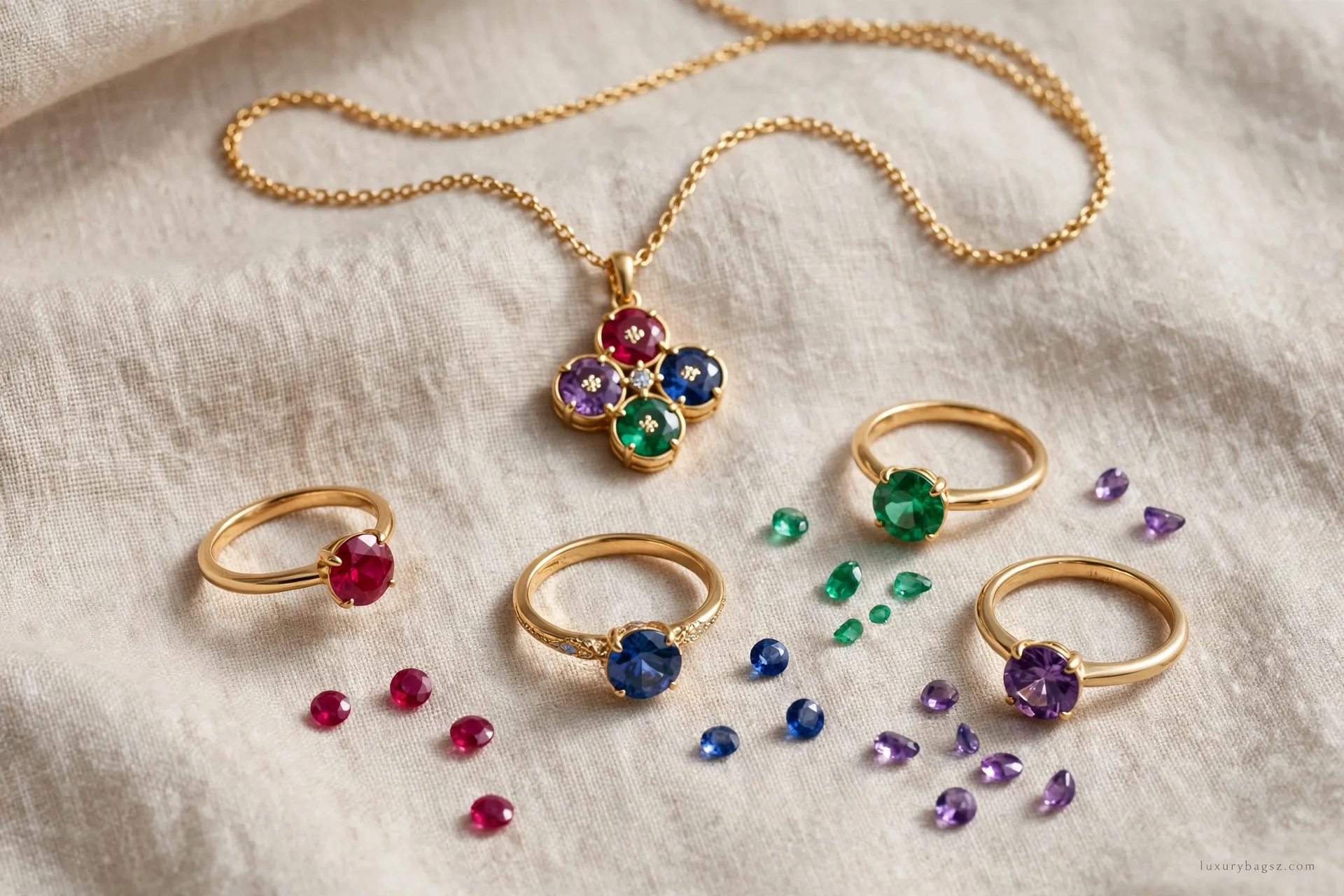
Gemstone Care at a Glance
Gemstone care has one rule above all others: match the cleaning method to the stone, not the metal. Hard stones such as diamonds, sapphires, and rubies tolerate mild soap and water, while soft and porous stones such as pearls, opals, turquoise, and malachite should only be wiped with a damp cloth. Get that split right and most damage never happens.
Start by identifying every stone you own. If you do not know a stone, use the gentlest method: a soft, barely damp cloth, no soaking, no chemicals, no ultrasonic cleaner. When in doubt, ask a jeweller first, because one wrong wash can dull a porous stone permanently.
Sources disagree on details: Rebag's guide says diamonds are the only gemstones that can be cleaned with water, while most jeweller guides allow mild soap and water for hard stones generally. This guide follows the wider consensus for hard stones, and Rebag exactly on fragile ones: no soaking for pearls, mother-of-pearl, malachite, or opal.
Key Takeaways

- Identify the stone before cleaning: hardness and porosity decide the safe method.
- Hard stones (diamond, sapphire, ruby, topaz) can be cleaned with mild soap, warm water, and a soft brush.
- Soft and porous stones (pearl, opal, turquoise, malachite, mother-of-pearl) get a damp cloth only, never a soak.
- Never use ultrasonic or steam cleaners on soft, treated, fragile, or glued stones.
- Keep perfume, lotion, hairspray, and household chemicals off all gemstone jewelry.
- Store each piece separately in a soft pouch or lined box, away from sun and heat.
- Remove gemstone jewelry before chores, gardening, sport, swimming, and heavy lifting.
- Have daily-worn rings checked yearly for loose prongs and worn settings.
Know Your Stone: Hardness and Porosity First
Two properties decide how a stone should be cleaned. Hardness, on the Mohs scale, tells you how easily a stone scratches: diamond sits at 10, sapphire and ruby near 9, pearls and opals near 2.5 to 3.5. A harder stone can scratch a softer one, which is why mixed storage causes damage.
Porosity matters just as much. Porous stones such as opal, turquoise, pearl, and malachite absorb liquids, so soap, perfume, and lotion can sink in and change colour or brilliance. Remember this pairing: hard and non-porous means washable, soft or porous means wipe only.
Treated stones add a third wrinkle. Many coloured stones are heat-treated, irradiated, or fracture-filled, and those treatments can be undone by heat, chemicals, or ultrasonic cleaning. If treatment is unknown, treat the stone as fragile and ask a jeweller before anything stronger.
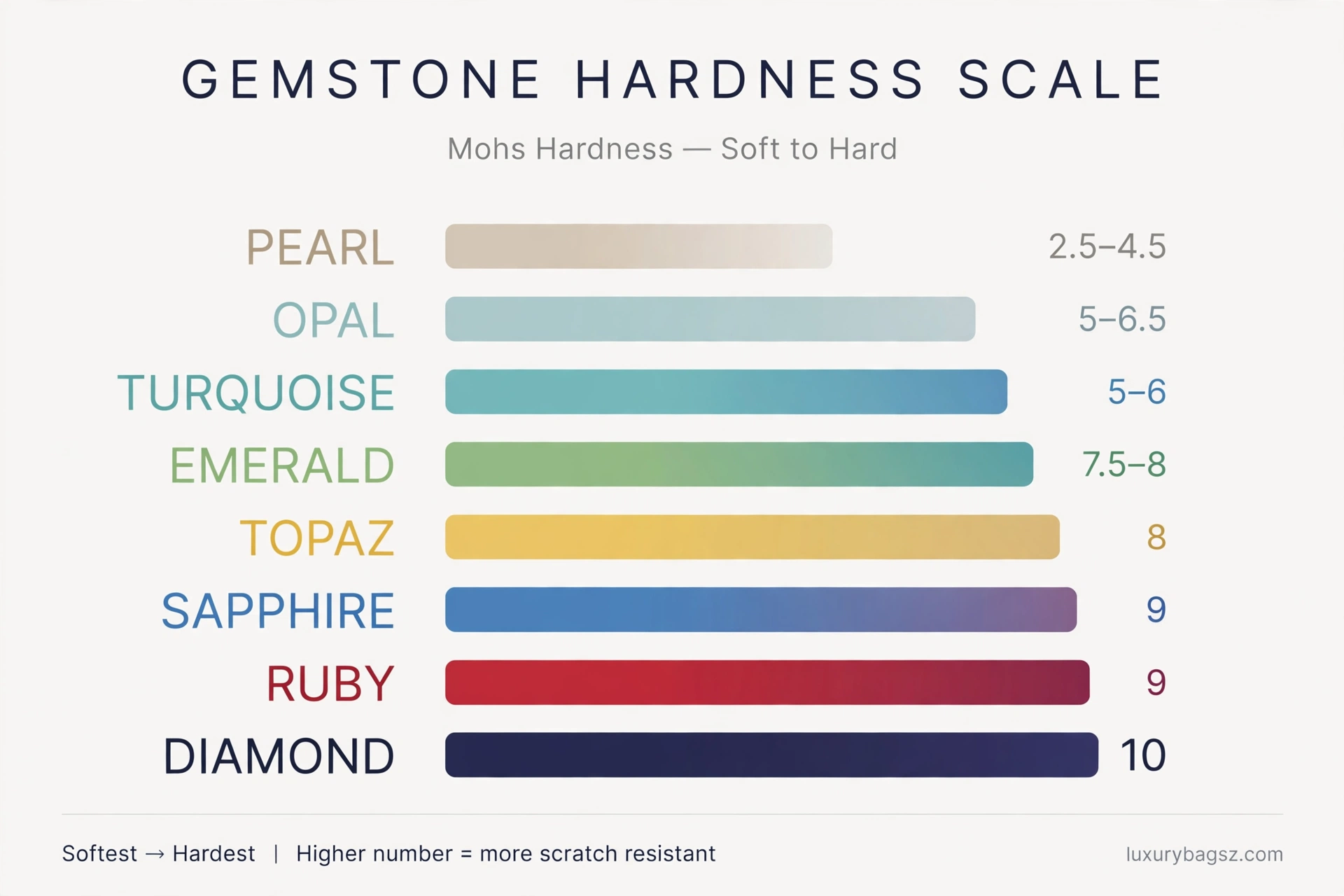
The Safe Clean for Hard Stones
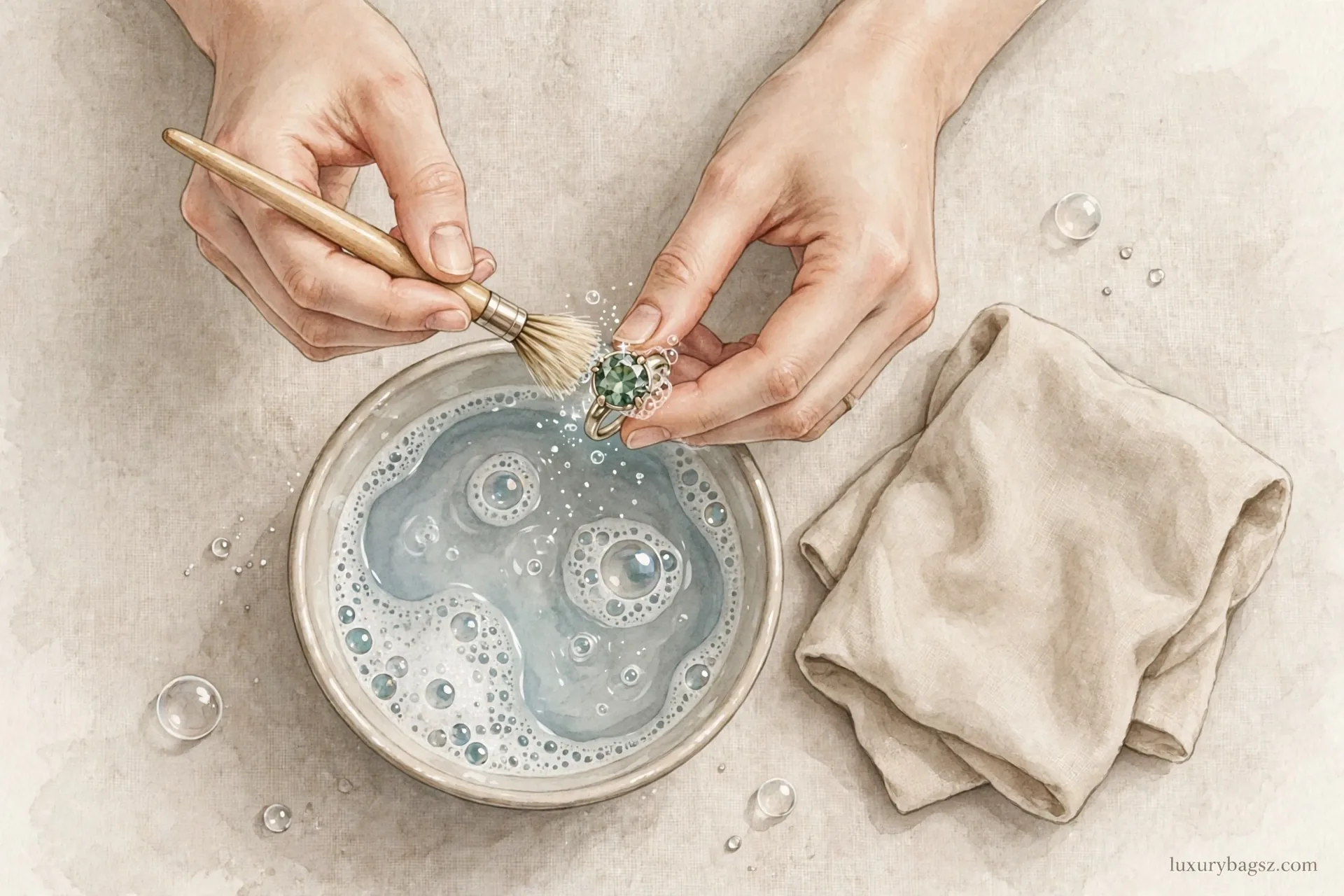
Hard stones take the full gentle routine. Mix lukewarm water with a few drops of mild, fragrance-free dish soap, and soak the piece for ten to fifteen minutes. Then brush gently with a soft toothbrush kept only for jewelry, working around the setting and under the stone.
Rinse carefully under clean lukewarm water, with the drain plugged or a bowl beneath, so a loose stone cannot vanish down the sink. Pat dry with a lint-free cloth and air-dry fully before storing. Check the setting as you dry: if a prong looks lifted or the stone moves, stop wearing the piece and take it to a jeweller.
Diamonds deserve one extra note. They are the hardest natural stone, yet they still lose sparkle fast under finger oils and lotion, and can chip if struck at the wrong angle. Clean them regularly with the same mild routine, and never assume hardness means invulnerability. Our routine for how to clean gold and diamond rings covers diamond settings in more detail.
Diamonds, Sapphires, Rubies, and Topaz in Detail
Diamonds clean easily but scratch everything else, so store them apart from softer jewelry. Rebag advises cleaning diamonds with a soft brush, a small amount of neutral-pH liquid soap, and fresh warm water, then drying with a soft cloth. That matches the wider consensus, and it is the safest diamond routine to adopt at home.
Sapphires and rubies, both corundum, are nearly as hard and take the same mild soap and water method. Their colour is generally stable, but fracture-filled stones are the exception, so confirm treatment before any deep clean. Topaz is hard but cleaves more easily, so handle it gently despite the same cleaning routine.
Amethyst, citrine, and garnet sit in the same washable group, with one caution: prolonged direct sunlight can fade amethyst and citrine. Wash them like other hard stones, but store them out of sunny windows.
Soft and Porous Stones: Wipe Only, Never Soak
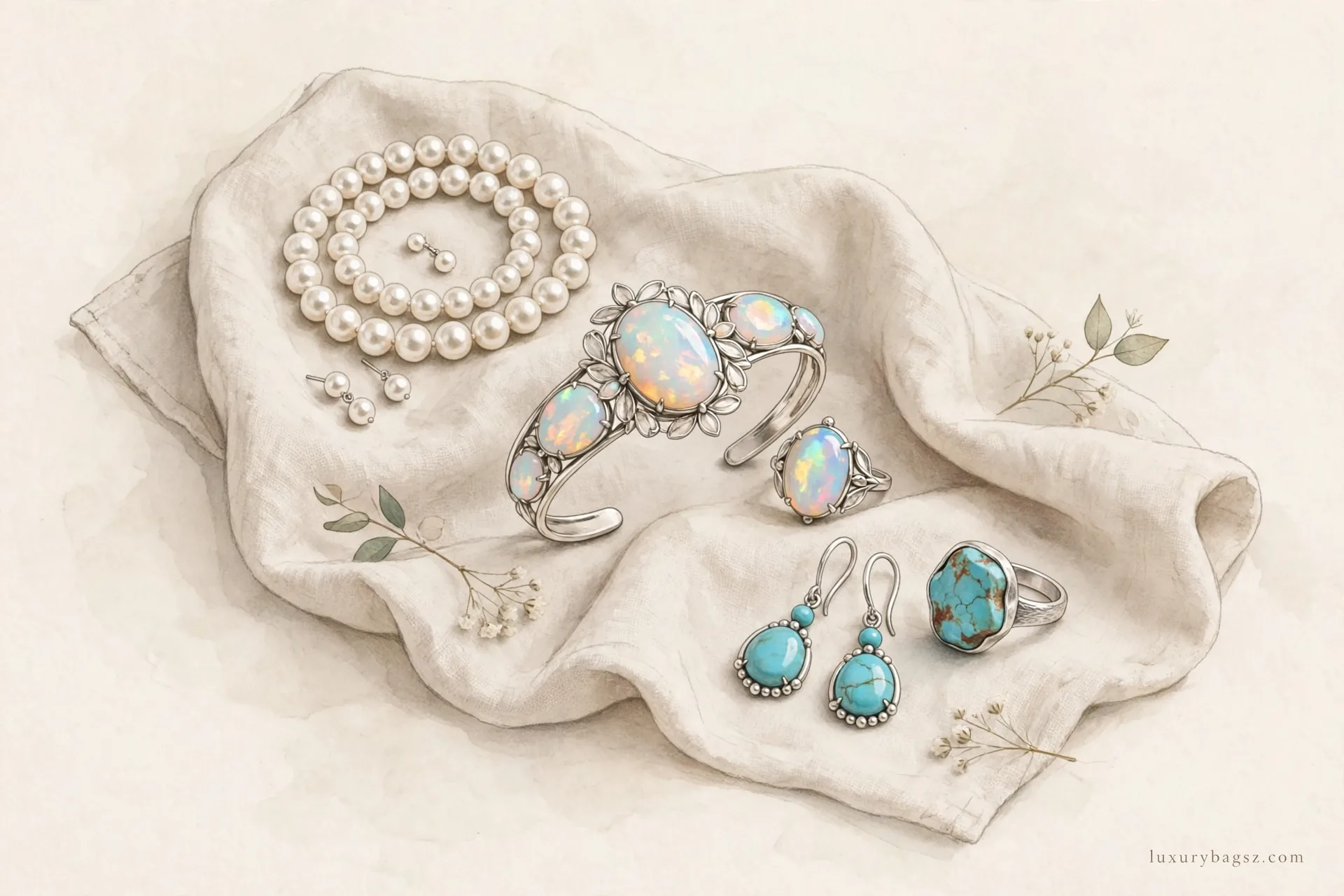
Pearls need the gentlest routine of all. Wipe them with a slightly damp cloth after wear, keep them free of perfume, cosmetics, lotion, and dirt, and have them cleaned and restrung professionally once a year if worn often. Never soak pearls or use an ultrasonic cleaner on them, since both can weaken silk thread and dull lustre.
Mother-of-pearl is cleaned with a soft, dry cloth only, since it is soft and scratches easily. Keep it away from harder gemstones in the same box. Malachite is stricter again: avoid all water, which can alter its brilliance, and wipe only with a dry cloth.
Opal and turquoise complete the wipe-only group. Opal dislikes cosmetics, hairspray, lotion, fragrance, and household chemicals, and can crack under rapid temperature change. Turquoise should never see an ultrasonic cleaner, and many guides advise no soap at all on it, since surfactants can shift its colour. Damp-cloth-only is the safe choice.
Our guide to how to clean fashion jewelry explains the same principle: the gentler the material, the gentler the method, and no shortcut is worth a ruined stone.
Emeralds, Letterwood, and the Special Cases
Emeralds are the most delicate common gemstone, and they break the hard-stone rule. Most are fracture-filled with oil or resin, so soap, detergents, heat, and ultrasonic cleaners can all damage the filling. Clean them with a soft, dry or barely damp cloth only, and leave deeper cleaning to a jeweller who knows the filling.
Letterwood, a decorative wood sometimes set in jewelry, is cleaned with a soft dry cloth, much like mother-of-pearl. It needs no water and no polish, and it should be stored away from damp, which can warp or stain it. Treat any organic inlay, whether wood, shell, or coral, as wipe-only unless a jeweller tells you otherwise.
Coral and amber belong in the same cautious group: soft, porous, and organic, so a damp cloth at most, no soaking, no chemicals, no heat. If a piece mixes materials, always clean to the most fragile material in it, never the hardest.
Storage: Separate, Soft, Dark, and Dry
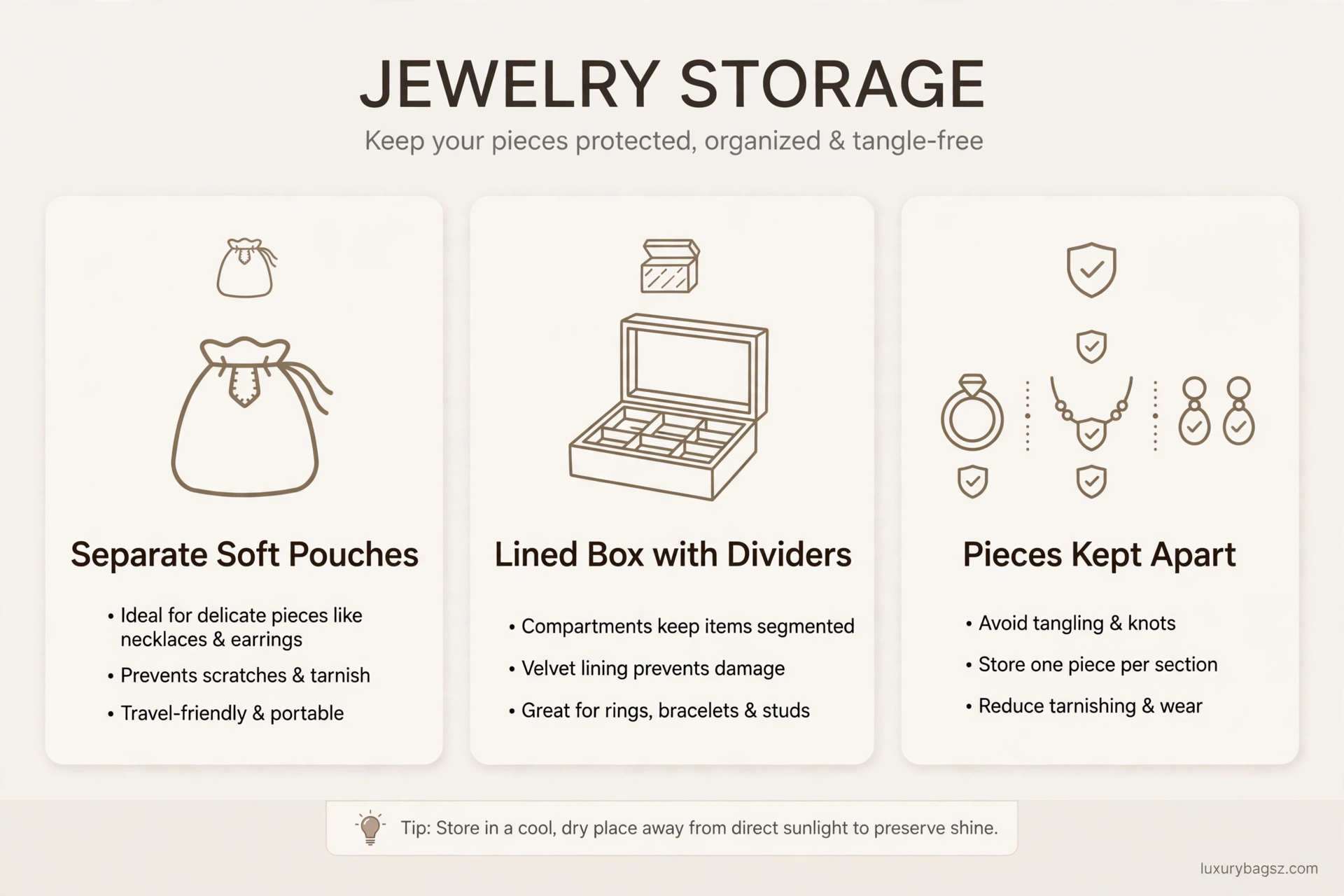
Storage causes more gemstone damage than cleaning does, because it happens every day. Store each piece separately in a soft pouch or lined box with dividers, so hard stones cannot scratch softer ones and chains cannot tangle. Diamonds deserve their own pouch without exception.
Keep jewelry away from direct sunlight, radiators, and damp bathrooms. Sun fades some coloured stones, heat stresses opals and treated stones, and damp tarnishes metals and weakens pearl thread. A cool, dry drawer away from windows suits nearly every stone.
Our guide to how to care for leather bags and shoes makes the same point for leather: cool, dry, and separate storage prevents most slow damage.
Daily Wear Rules and the Mistakes That Ruin Stones
Put jewelry on last and take it off first. Perfume, hairspray, lotion, and sunscreen should be applied and left to dry before any piece goes on. Remove gemstone jewelry before chores, gardening, sport, swimming, and heavy lifting, where chlorine, impact, and abrasion do the most harm.
Never wear gemstone jewelry in chlorinated pools, hot tubs, or the sea if you can avoid it. Chlorine attacks metals and some stones, salt water leaves residue, and cold water shrinks fingers, which is how rings slip off unnoticed. Take rings off before washing hands in public basins, where a dropped ring is easily lost.
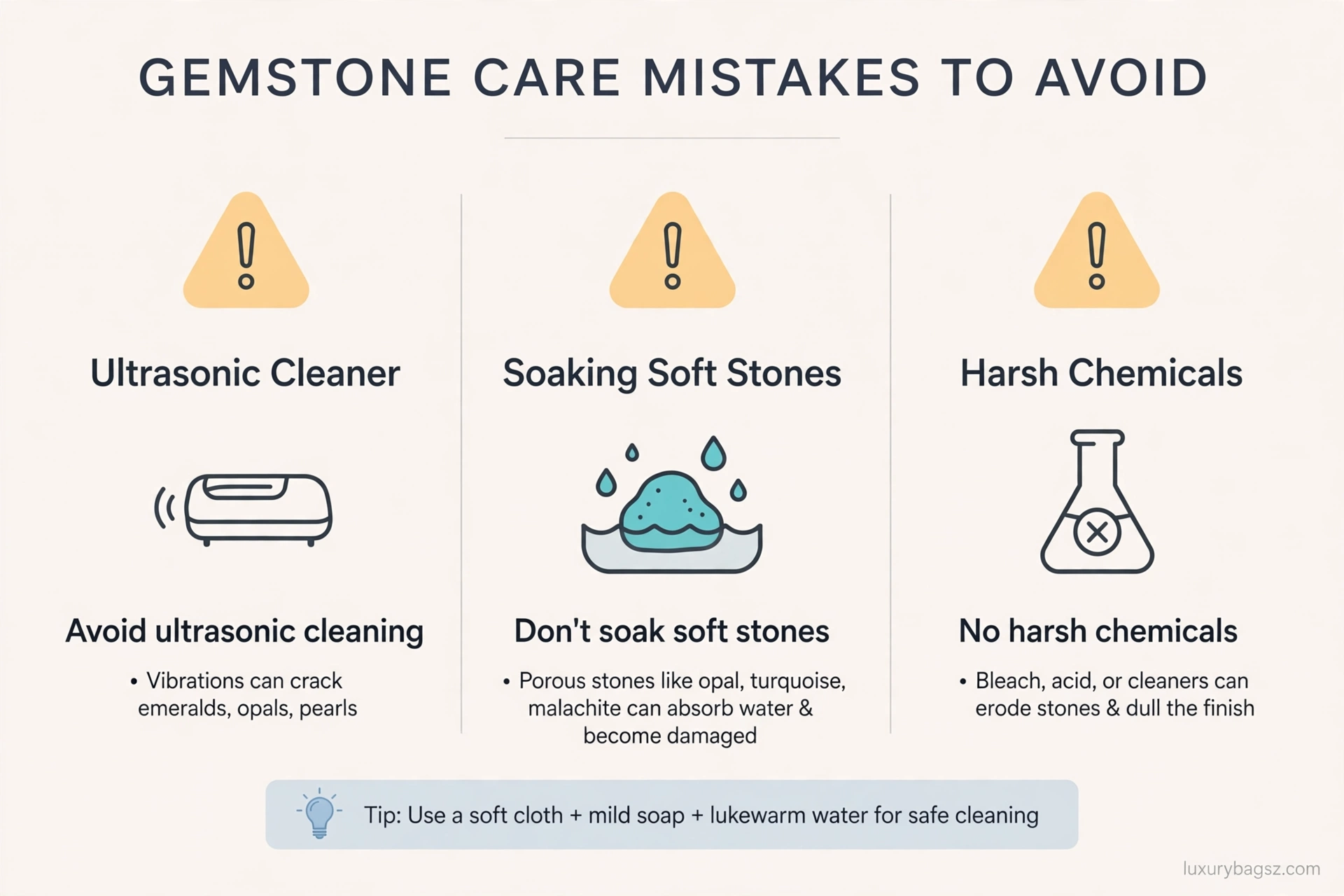
The cleaning mistakes are short and absolute. Do not use ultrasonic or steam cleaners on soft, treated, fragile, or glued stones. Do not soak pearls, opals, turquoise, malachite, mother-of-pearl, coral, or amber. Do not use bleach, ammonia, vinegar, lemon juice, or abrasive sponges on any gemstone jewelry. Do not dry pieces with heat or store them damp.
Professional Care: When to See a Jeweller
Home care keeps stones bright, but it cannot replace professional checks. Have any daily-worn ring inspected once a year: prongs wear down, settings loosen, and a professional re-tipping every few years protects stones from falling out. The visit is cheap beside the cost of a lost stone.
Take a piece in sooner if a stone moves, a prong looks lifted or bent, a clasp feels weak, a pearl strand feels stretched, or a stone looks newly chipped or cloudy. Stop wearing it until checked, since a loose stone can fall out with one more knock. Professional cleaning is also right for heavily soiled, antique, or high-value pieces.
Keep records of professional work, especially for valuable pieces. A service history supports resale value and tells a future jeweller what treatments and repairs a stone has had. If you ever sell, our guide to how to resell luxury jewellery covers how condition and records affect price.
Frequently Asked Questions
How do I clean gemstone jewelry at home?
For hard stones, use lukewarm water with mild soap and a soft brush, rinse, and dry fully. For soft or porous stones, wipe with a damp cloth only, and never soak them.
Can I use an ultrasonic cleaner on gemstone jewelry?
Only on hard, untreated stones with secure settings, and never on pearls, opals, turquoise, emeralds, treated stones, or pieces with glued elements. When unsure, skip it.
How do I clean pearls safely?
Wipe pearls with a slightly damp cloth after wear, keep them away from perfume and lotion, and have them professionally cleaned and restrung once a year if worn often.
Can gemstone jewelry get wet?
Hard stones tolerate a gentle wash, but remove all gemstone jewelry before swimming, showering, and chores, and never soak pearls, opals, turquoise, or malachite.
How should I store gemstone jewelry?
Store each piece separately in a soft pouch or lined box, away from sunlight, heat, and damp, with diamonds kept apart since they scratch softer stones.
Why has my gemstone gone cloudy?
Cloudiness usually comes from oils, lotion, soap residue, or a damaged surface. A gentle clean restores most hard stones, but a cloudy soft stone needs a jeweller's assessment.
Can sunlight damage gemstones?
Yes, prolonged direct sunlight can fade amethyst, citrine, and some other coloured stones, so store jewelry away from sunny windows and do not dry pieces in sun.
How often should gemstone rings be checked?
Have daily-worn rings checked once a year for loose prongs and worn settings, and take any piece in sooner if a stone moves or a prong looks lifted.
What chemicals damage gemstones?
Bleach, ammonia, vinegar, lemon juice, chlorine, perfume, hairspray, and household cleaners can all damage stones or settings, so keep them off jewelry entirely.
Should I clean emeralds with soap and water?
No. Most emeralds are fracture-filled, so soap, heat, and ultrasonic cleaners can damage the filling. Wipe with a soft cloth and leave deeper cleaning to a jeweller.
Summary
Gemstone care is simple once the split is clear: wash hard stones gently, wipe soft stones only, store everything separately, and keep chemicals and ultrasonic cleaners away from anything fragile. Most ruined stones were not worn hard; they were cleaned wrong once.
Learn your stones, clean to the most fragile material in each piece, and get daily-worn rings checked yearly. That routine keeps colour, brilliance, and settings intact for decades.






