

Investing in Luxury Watches: What Holds Value, What Does Not and the Risks
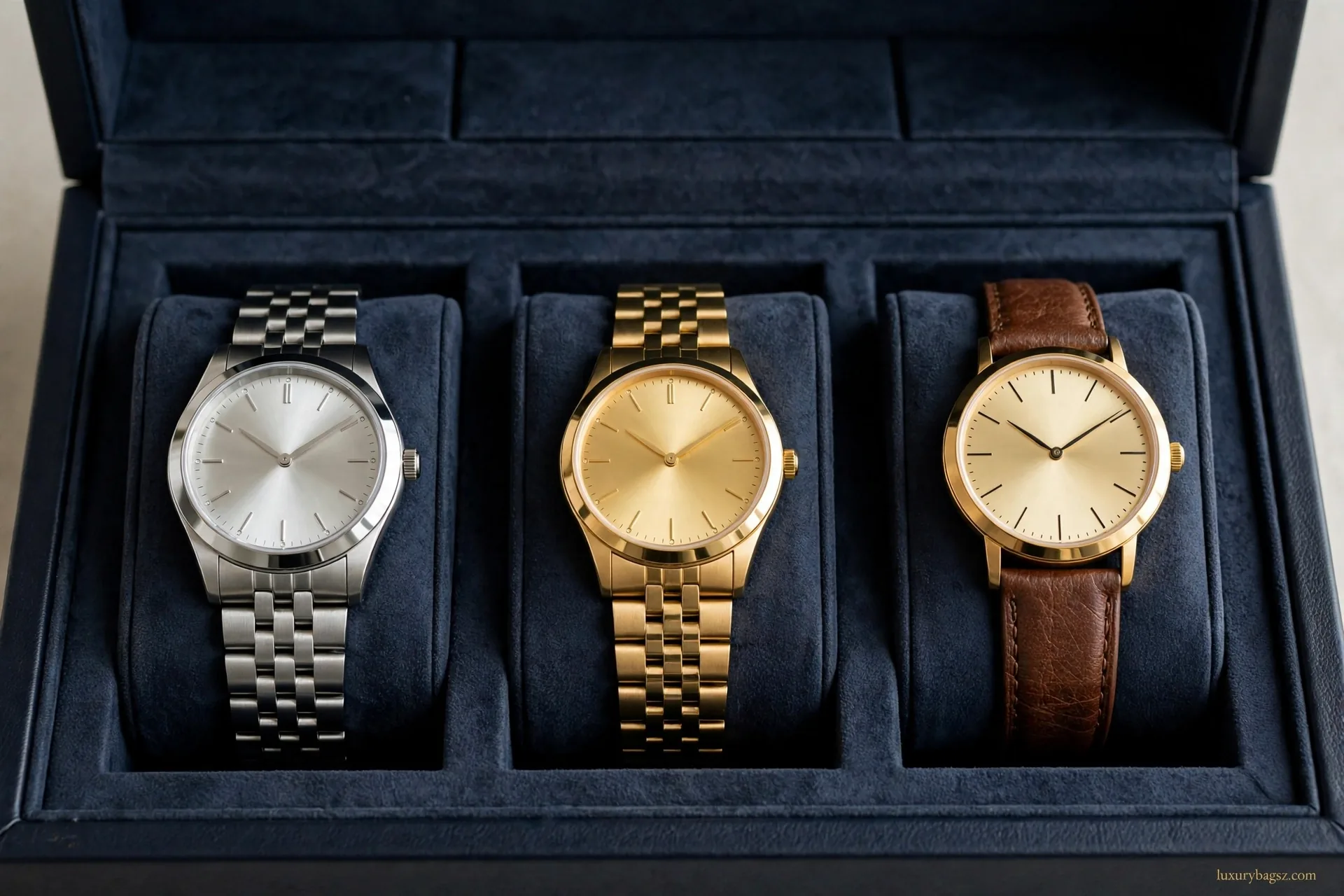
Watch Investing in Brief: Buy to Wear, Value Is a Bonus
Most luxury watches lose value when bought new at retail, and only a narrow group of high-demand models has historically held or gained value on the resale market. The honest approach is to buy a watch you will wear for years, from a reputable seller, in complete and original condition. If it holds value, that is a bonus, not a plan.
Key Takeaways
- Most new luxury watches depreciate; a small set of in-demand models is the exception.
- Brand demand, steel sports models, completeness and original condition drive resale.
- Box and papers, service history and unpolished cases genuinely affect prices.
- Servicing, insurance and dealer margins are real costs that eat headline gains.
- Secondary prices move in cycles and fell from their 2022 peak for many models.
- Never buy a watch as an investment with money you cannot afford to lock away.
Regulated investments come with disclosures, standard pricing and compensation schemes. Watches come with none of these. That single difference should set the tone for every buying decision in this market.
The Uncomfortable Starting Point
A watch is a consumer object with a resale market, not a regulated investment. There is no guaranteed buyer, no standard price and no protection if values fall. Many buyers discover that a watch bought new can be worth noticeably less the moment it leaves the boutique, because retail prices include margins the second owner will not repay. The models that defied this in recent years were exceptions driven by scarcity and waiting lists. Treating the exception as the rule is how people overpay. None of this makes watches a bad purchase. It makes them a purchase to justify by wear and enjoyment first, with value retention as a welcome secondary effect.
Geography matters as well. Models with demand across several regions can be sold into the strongest market, while a watch loved in only one country has a thinner safety net when local tastes change.
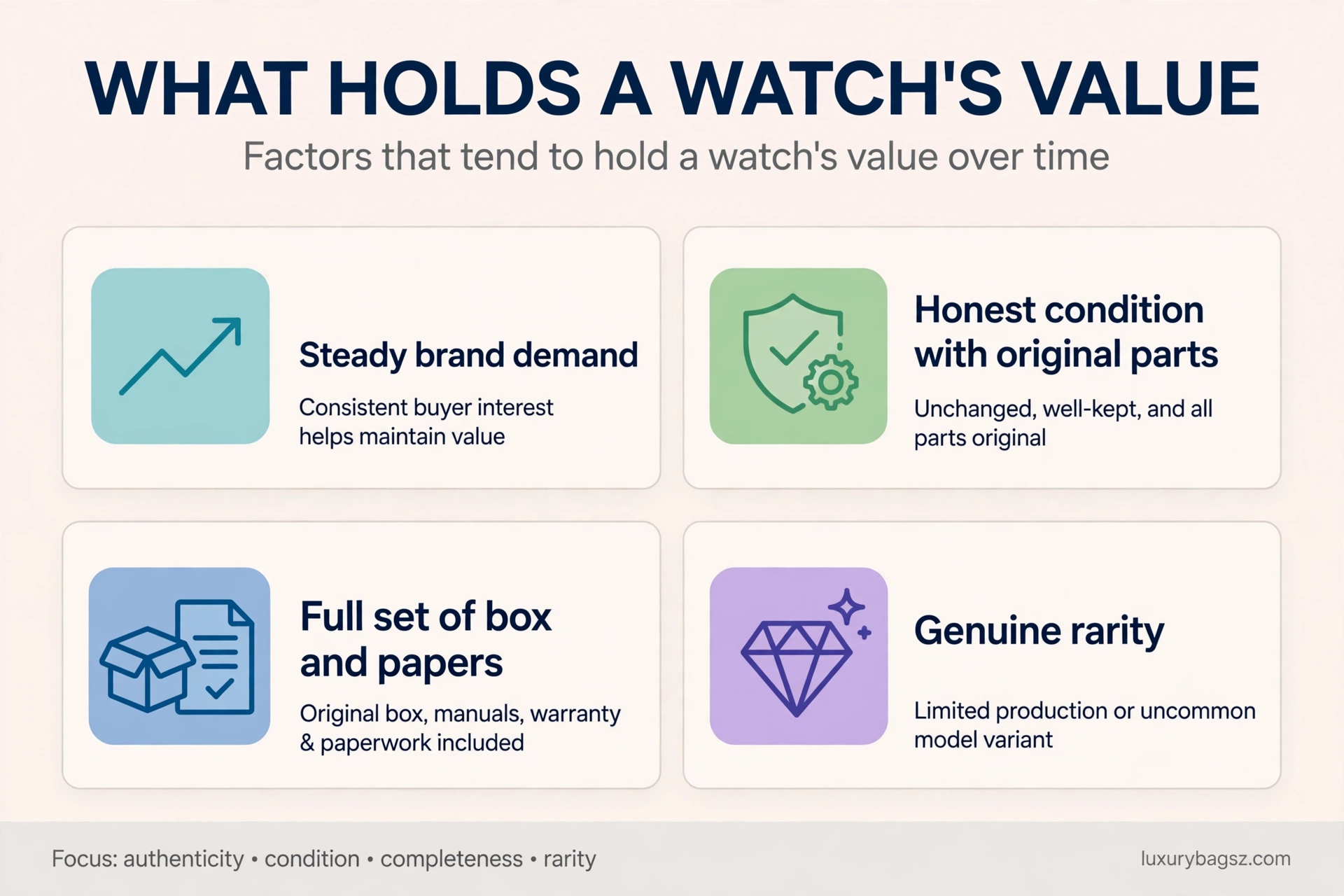
What Tends to Hold Value
Resale strength starts with demand depth: brands and models that many buyers want, in many countries, across many years. Liquidity, the ability to sell quickly at a fair price, matters most. Steel sports models from the most demanded brands have historically been the liquid core of the market. Dress watches and precious-metal versions usually soften more from retail. Completeness helps: original box, papers, hang tags, spare links and a documented service history make a watch easier to trust and therefore easier to sell. Originality helps more. Unpolished cases, original dials and hands, and correct parts protect value, while heavy polishing and replaced parts are discounted by serious buyers.
The Brands and Models Buyers Chase
Rolex sits at the centre of the value conversation because demand is broad and models change slowly. Our what to know about Rolex guide outlines the range and its waiting-list reality. Patek Philippe occupies the high end, with a small production and a long collector base. Our what to know about Patek Philippe guide explains its positioning without hype. Audemars Piguet's Royal Oak family is the third name most often cited, with integrated-bracelet sports models drawing strong demand in good condition and complete sets. Omega offers a wider, more accessible market, covered in our what to know about Omega watches guide. Expect steadier, more modest value behaviour rather than speculation. Specific references change in favour quickly, so this guide names families, not hot tips. Our Rolex Submariner guide shows one enduring family in detail.
Auction results make headlines at this end of the market, but they are a poor guide for ordinary buyers: fees, guarantees and the exceptional nature of auction pieces distort what a normal private sale achieves.
Independents, Vintage and the Specialist End
Independent watchmaking, such as the world covered by our F.P. Journe collecting guide, can produce strong results for rare pieces, but the buyer pool is small and expert. Vintage watches add condition and originality risks on top of market risk. A replaced dial or over-polished case can change value far more than the brand name suggests. Limited editions are not automatically valuable. Production numbers, real demand and whether collectors still want the model in five years matter more than the word limited. At this end of the market, expert advice before buying is not a luxury. One wrong purchase erases the gains from several right ones.
The Costs Nobody Puts on the Poster
Servicing a mechanical watch costs real money at intervals of years, and a watch sold with a recent service is worth more partly because the buyer avoids that bill. Insurance, secure storage and, for higher values, safe deposit arrangements add annual cost. So does the spread: dealers buy below the prices at which they sell. Selling routes each take their share: dealer margins, auction commissions, platform fees and insured shipping. A headline market price is rarely the amount the seller receives. Time is a cost too. Selling a watch well can take weeks or months, especially outside the most liquid models, which is why watches fail the test of an emergency fund.
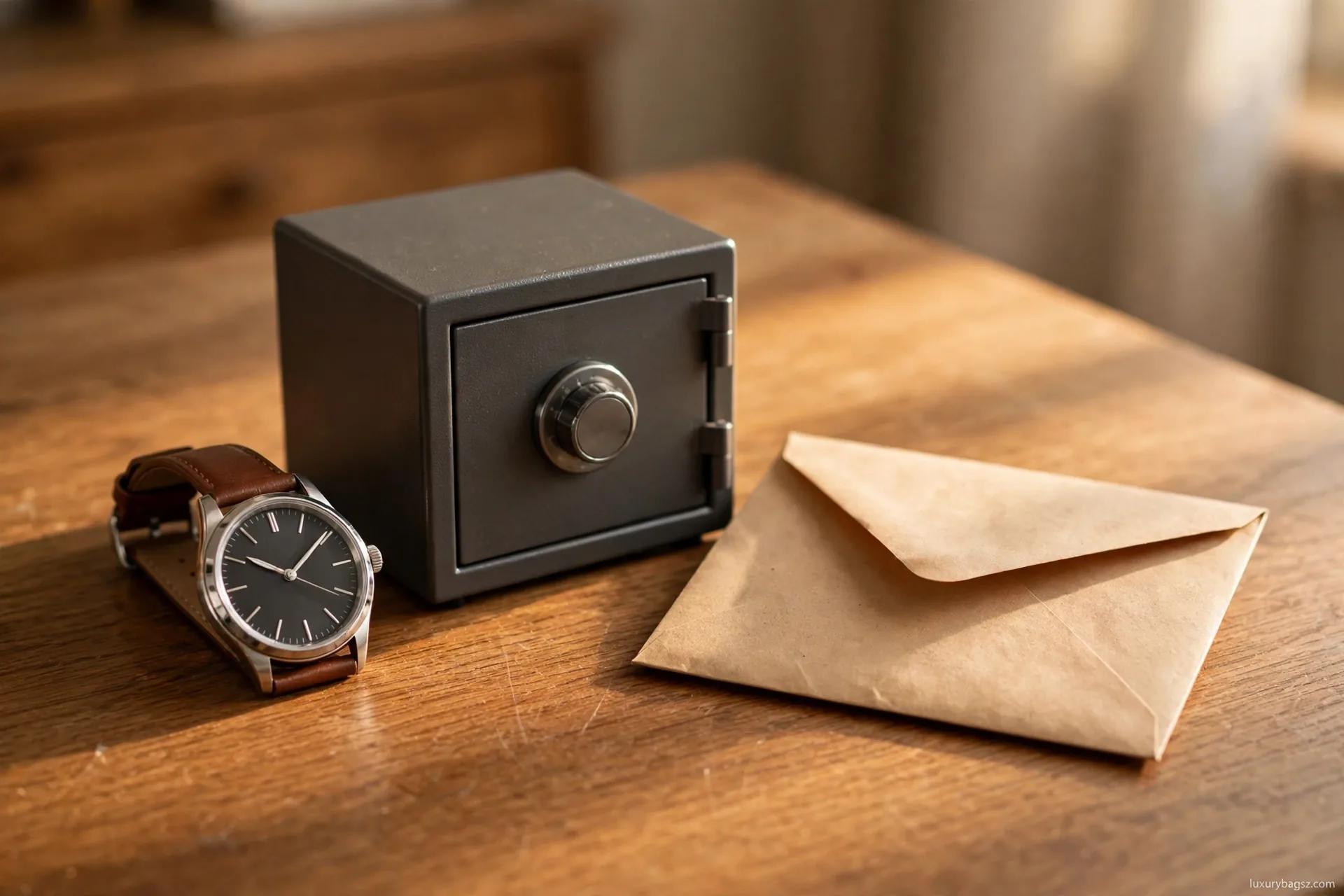
Data helps discipline here. Several published watch market indexes track secondary prices across many models, and even a quick look at their longer charts teaches more than any single season's excitement.

Market Cycles and the 2022 Lesson
Secondary watch prices rose sharply into a peak around early 2022, then corrected for many models as interest rates rose and speculative demand cooled. Widely tracked market indexes recorded that fall. The lesson is not that watches crashed forever; many liquid models stabilised at levels still above their pre-boom prices. The lesson is that prices move both ways, sometimes quickly. Buying at the top of a hype cycle, on credit, or with a short time horizon turned a correction into real losses for late buyers. Patient owners who bought to wear barely noticed. Any article promising that a specific model will rise should be read as marketing. Past demand is information, never a promise, and this guide makes no such promise either.
Buying Rules That Protect You
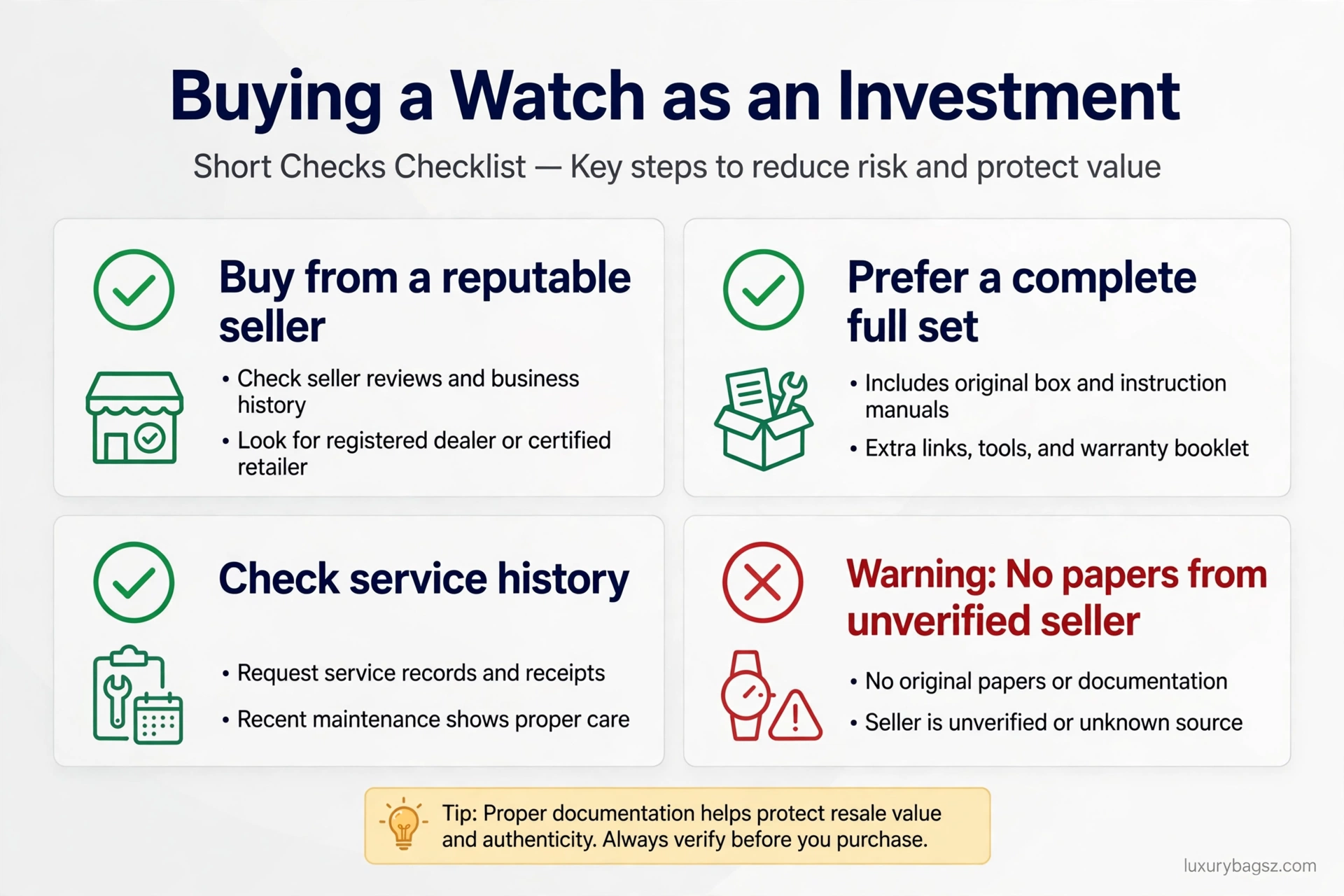
Buy the seller first: established dealers with premises, reviews, returns and clear authenticity guarantees. The cheapest listing for a valuable watch is often expensive later. Insist on clear photographs, full disclosure of polishing and replaced parts, and matching papers where a set is claimed. Our pre-owned checks apply to watches exactly as to bags. Pay by a method with buyer protection, keep every document, and photograph the watch on arrival. Record serial information securely for insurance and proof of ownership. Set a total budget that includes a service if the history is unknown. A watch bought well and serviced once is a better asset than a bargain carrying hidden faults.
A Sane Way to Think About It
Treat a luxury watch as wearable enjoyment with partial value recovery, closer to a fine car or a designer bag than to a savings account. Our vintage designer bags investment guide makes the same argument for bags. If value retention matters, buy the liquid classic in the best original condition you can afford, keep its set complete, service it properly and hold it for years, not months. Diversify your real investments elsewhere, in regulated products you understand. A watch collection built for love can still be a store of value; one built for profit rarely brings joy. And keep perspective: the best-performing watch is the one still being worn, telling time, long after market fashions have moved on twice.
Frequently Asked Questions
Are luxury watches a good investment?
Most are not, in the financial sense. A narrow group of high-demand models has held or gained value historically, but most new watches depreciate, and no return is guaranteed.
Which watches hold value best?
Historically, steel sports models from the most demanded brands, bought at sensible prices in complete, original condition, have been the most liquid and resilient. No model is exempt from falls.
Do box and papers really matter?
Yes. A complete set with matching papers, tags and spare links makes a watch easier to authenticate and resell, and buyers commonly pay more for that confidence.
Is it better to buy new or pre-owned for value?
Pre-owned buyers usually let the first owner take the initial depreciation. New purchases at retail make sense for wear and warranty, and occasionally for allocated models, but not as a default value play.
How much does servicing cost affect returns?
Significantly over time. Mechanical services cost hundreds or more depending on brand and complications, and an unserviced watch sells for less because the buyer inherits that bill.
Did luxury watch prices fall after 2022?
Yes, many secondary-market prices corrected from their early 2022 peak, as tracked by widely reported watch market indexes. Liquid classics generally fell less and stabilised sooner than hyped models.
Are limited edition watches a safe bet?
No. Limited production without lasting demand still loses value. Scarcity helps only when many collectors genuinely want the watch years later.
Should I buy a watch on finance as an investment?
No. Interest costs, depreciation risk and illiquidity make borrowed-money watch buying especially dangerous. Buy watches with money you can afford to have locked in an object.
How long should I hold a watch for value?
Years, not months. Short holds expose you to dealer spreads and market swings, while long ownership spreads costs and lets enjoyment, not speculation, justify the purchase.
Can I check a watch's value before buying?
Compare completed sales and reputable dealer listings for the same model, condition and completeness, not asking prices alone. An independent valuation helps for higher-value purchases.
Final Verdict: Wear First, Count Later
Investing language flatters watches, but the durable truth is simpler: a small group of classics tends to hold value, most watches do not, and costs and cycles decide the rest. Buy the watch you want on your wrist, from a seller you trust, in complete and original condition. If the market rewards you later, it will be because you bought well and wore happily, not because you gambled.






