

Pre-Owned Luxury Watches Buyer’s Guide: Condition, Papers and Seller Checks
Pre-Owned Buying in Brief: Buy the Seller, Then the Watch
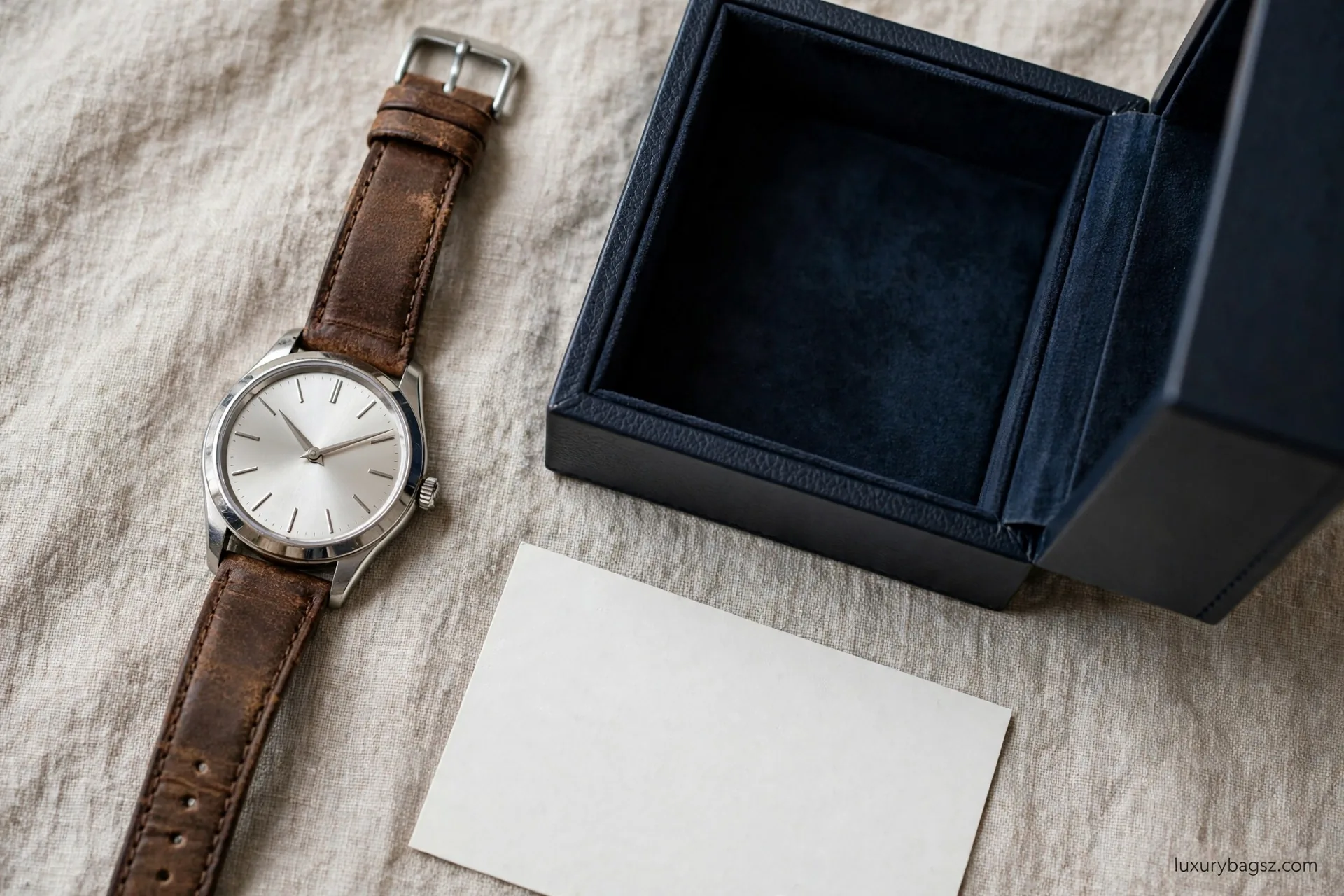
To buy a pre-owned luxury watch safely, choose a reputable seller with returns, then check condition, originality, service history and completeness before price. A cheap watch from a weak seller is the expensive route. Set a budget that includes a possible service, insist on real photographs of the actual watch, and walk away from any seller who rushes you. Good watches stay findable; bad purchases stay with you.
Key Takeaways
- Reputable sellers with returns and guarantees are worth a fair premium.
- Condition and originality matter more than a low headline price.
- Box and papers help value and trust, but they never replace checking the watch.
- Ask directly about polishing, replaced parts and service history, in writing.
- Budget for a service if the history is unknown; it is part of the true price.
- Try the watch on or confirm lug-to-lug fit before committing to buy.
Write your shortlist down with the details that matter: size range, dial colours you would accept, and your walk-away price. A written brief stops a persuasive listing from quietly rewriting your requirements.
Decide What You Actually Want First
Start with the job the watch must do: daily wear, dress occasions, sport, or a collection piece. That decision narrows brands, sizes and budgets faster than browsing listings. Research two or three target models properly: typical sizes, known variants and what a correct example looks like. Our what to know about Omega watches guide is a good model of brand homework. Set non-negotiables, usually no more than two or three: for example, a complete set, an unpolished case, or a specific dial. Too many rules make a fair search impossible. Only then look at prices, using completed sales and reputable dealer listings for the same condition level. Asking prices alone will mislead you in both directions.
Buy the Seller Before the Watch
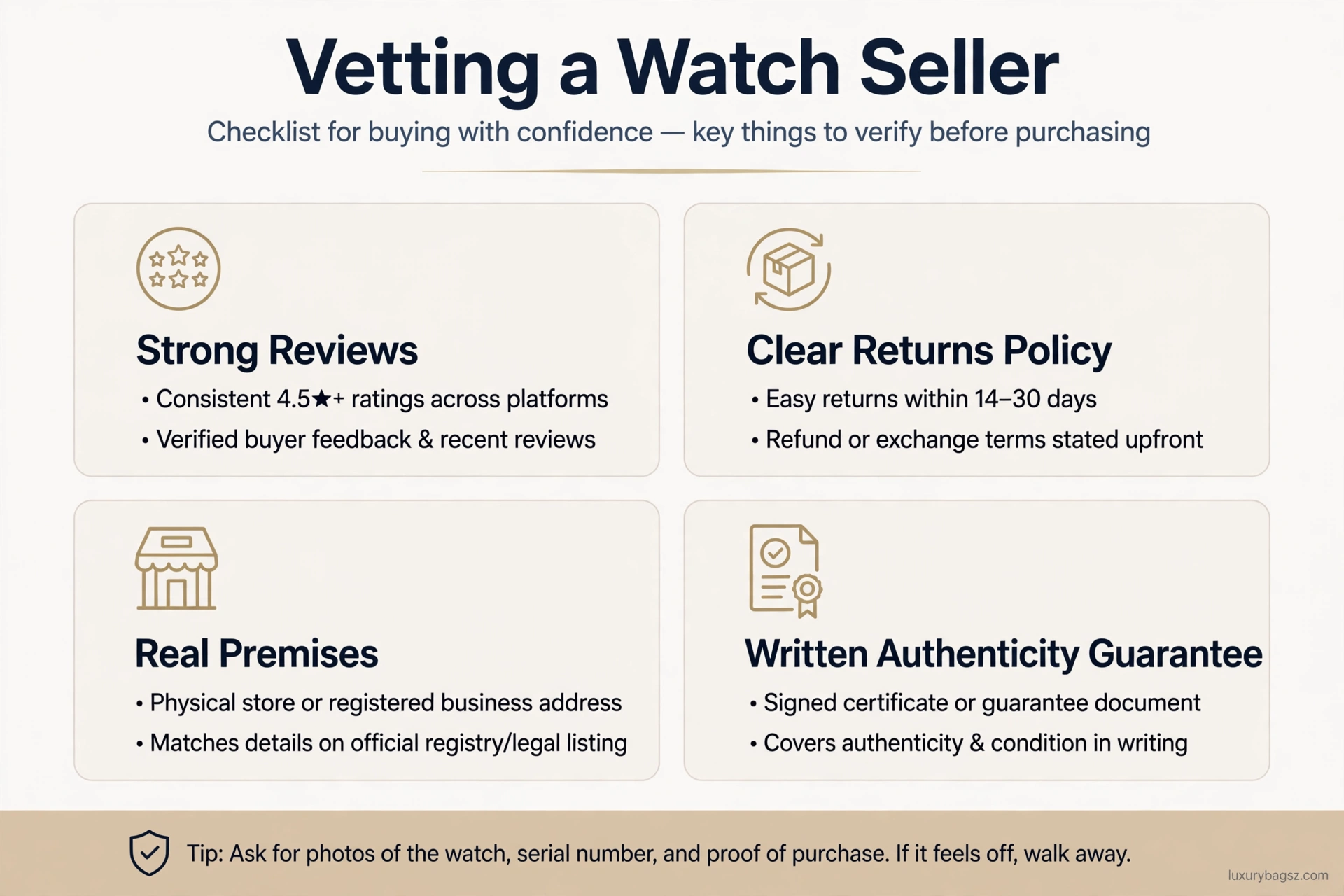
Established dealers with physical premises, long trading history, clear returns and written authenticity guarantees carry the lowest risk. Their prices reflect that safety. Marketplace and private sales can work for experienced buyers, but they demand more checks: verified identity, secure payment, and ideally an in-person or escrow arrangement. Be wary of sellers who refuse extra photographs, avoid questions about polishing or parts, or push for fast payment by unprotected methods. Pressure is information. Check reviews beyond the seller's own site, and favour specialists in watches over general sellers. Learning how condition grades are described across luxury resale helps you read their listings critically.
Bracelet stretch deserves its own look: hold the watch by the case and see how much the bracelet droops. Noticeable stretch means wear in the pins and links, and it affects both comfort and value.
Reading Condition Honestly
Condition language varies, so translate descriptions into specifics: case edges, lugs, bezel, crystal, dial, hands, bracelet stretch and clasp function all need separate attention. Light surface wear is normal on a worn watch and often preferable to heavy polishing. Sharp case lines with honest marks usually beat a rounded, mirror-polished case. Our pre-owned condition grades guide explains how grades are used across luxury resale, and the same caution applies: grade the watch in front of you, not the label. Ask for photographs in plain daylight, including the case sides, caseback, clasp and any marks mentioned. Blurred glamour shots hide exactly the details that decide value.
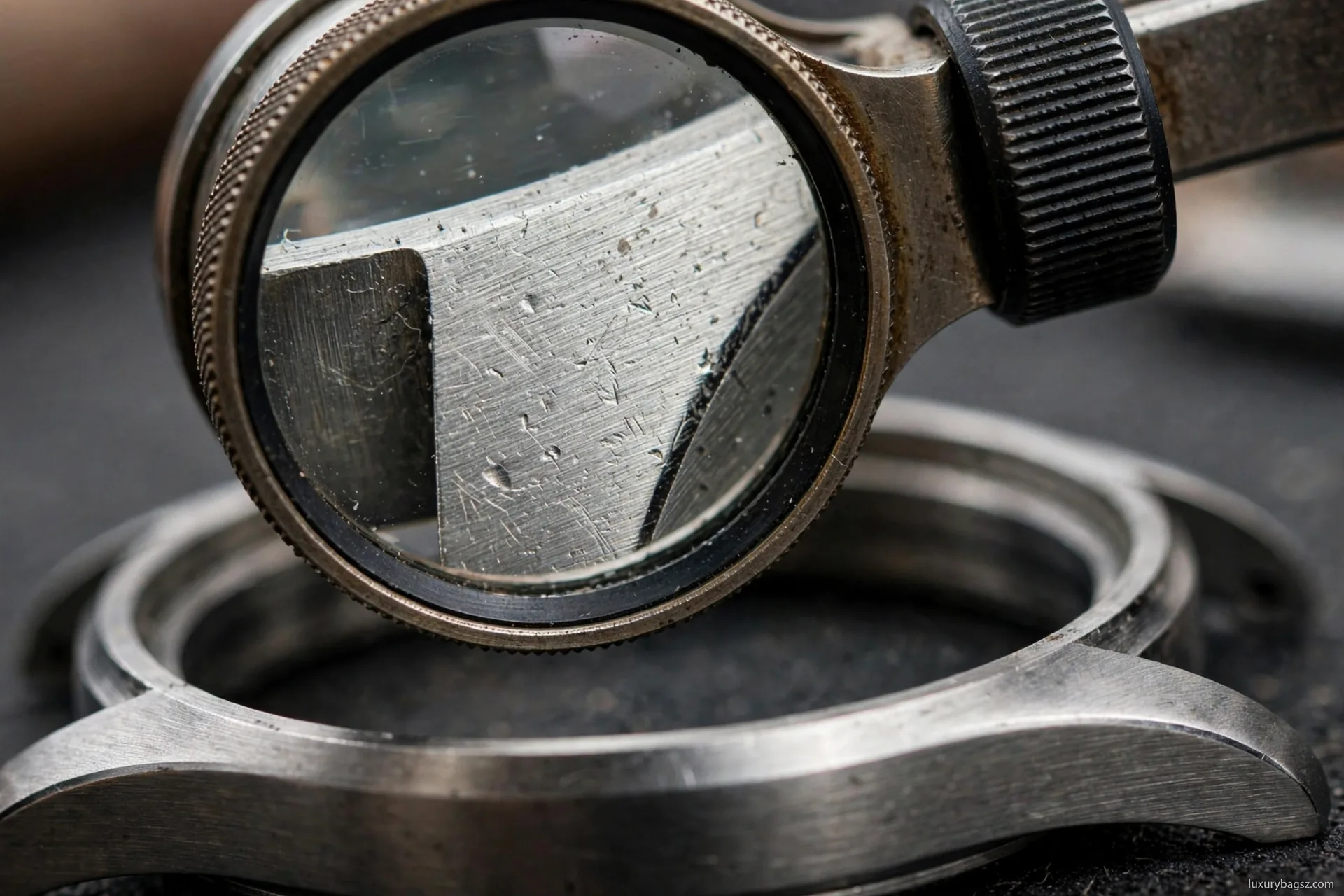
Movement correctness is the deepest layer of originality, and only a watchmaker can confirm it. On valuable vintage pieces, that inspection is not an optional extra; it is the purchase.
Originality: Dial, Hands, Parts and Polishing
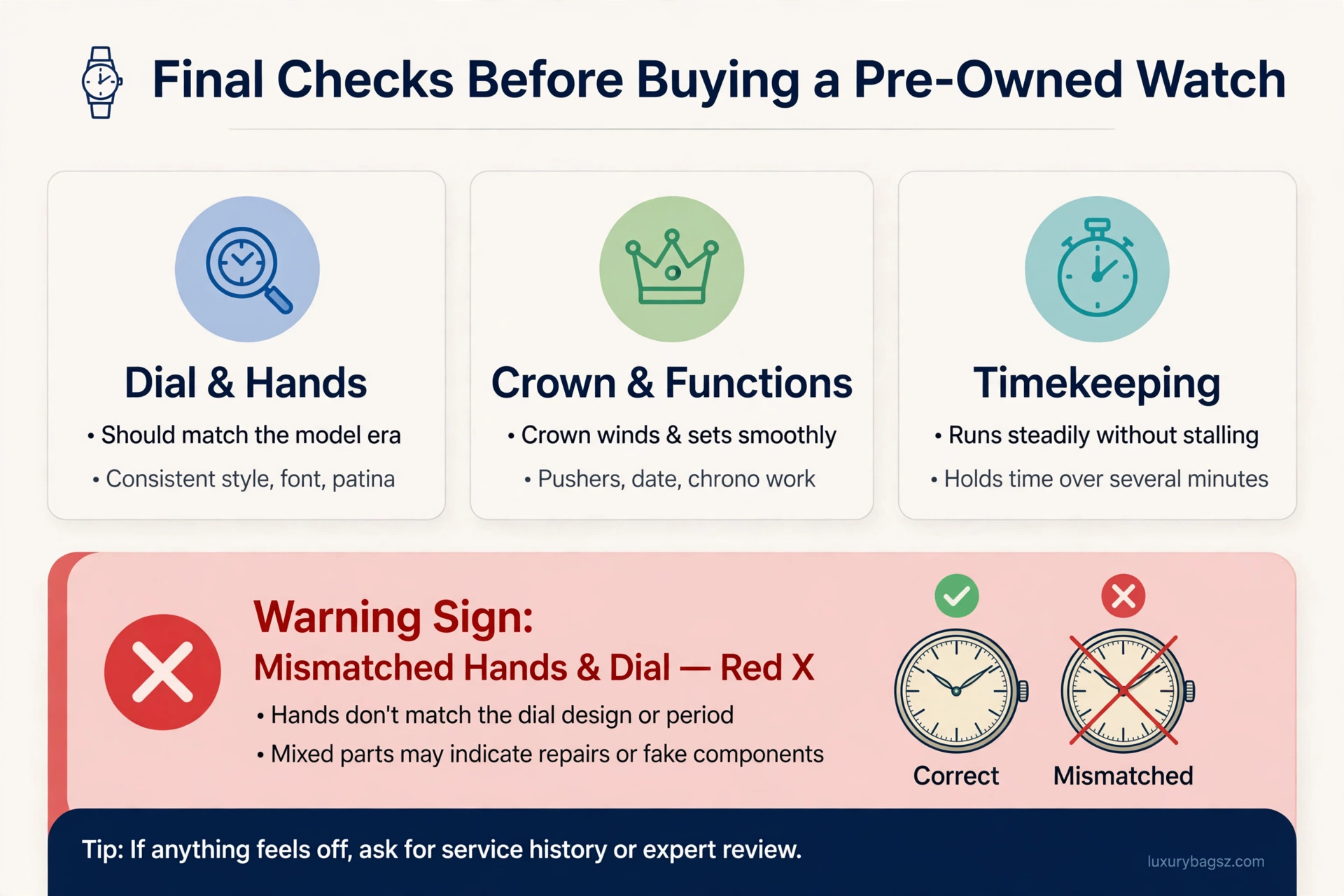
Value lives in original parts. A refinished dial, replaced hands or a service bezel may keep a watch wearable, but collectors discount them, sometimes heavily. Ask three direct questions: has the case been polished, are dial and hands original, and has anything been replaced? A good seller answers plainly and puts it in writing. Lume on dial and hands should age consistently; mismatched glow or colour suggests replacement parts. Crown, crystal and bracelet correctness also matter on collectible models. None of this makes a serviced watch a bad buy. It makes disclosure the price of trust: a correct, honest watch at a fair price beats a mystery at a tempting one.
Box, Papers and Service History
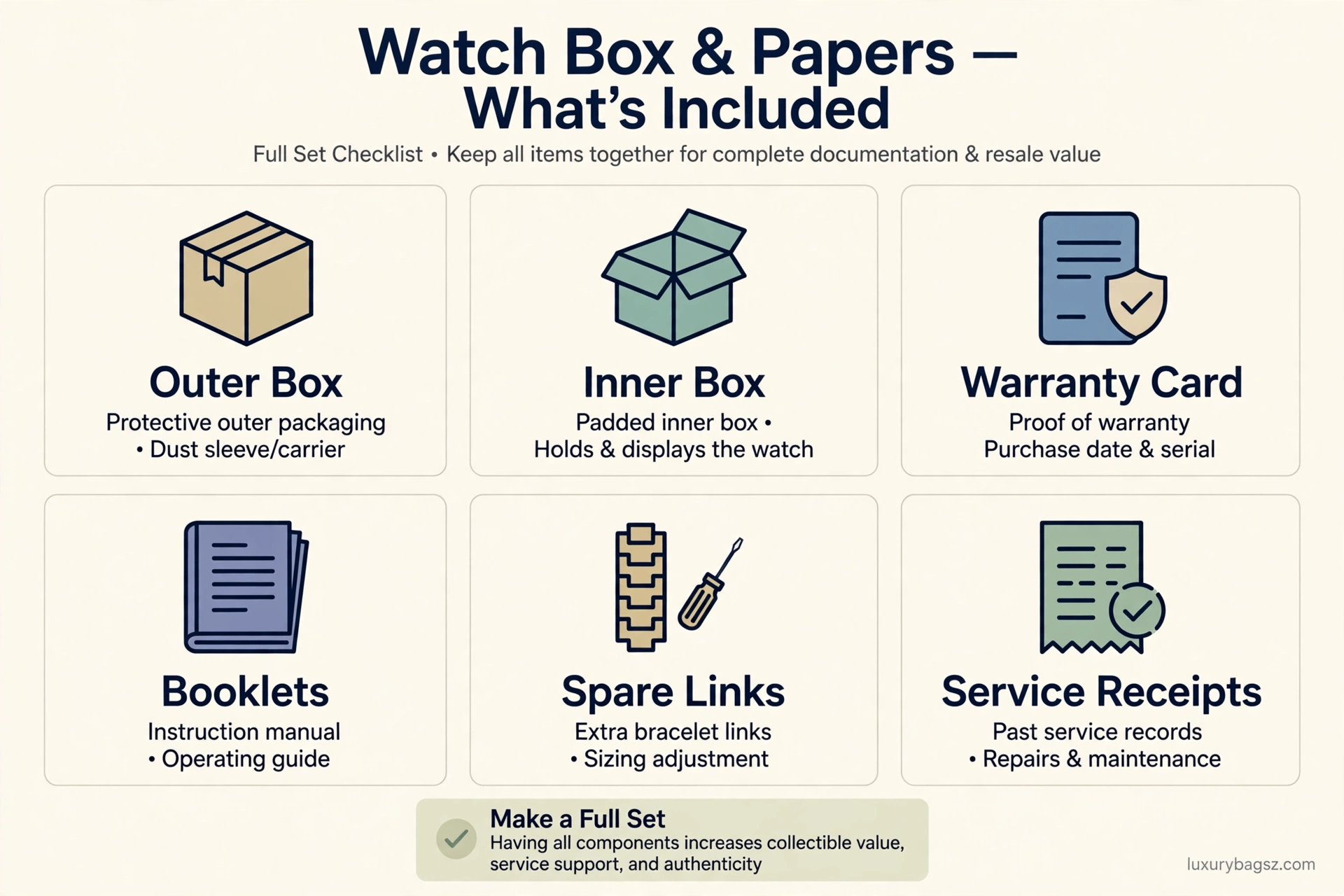
A full set usually means the original box, warranty card or papers, booklets, hang tags where applicable, and all bracelet links removed during sizing. Completeness supports value. Papers help, but they can be separated, swapped or, rarely, forged, so they support the watch rather than prove it. The watch itself must still pass every condition check. Service history is the other half of the file. A recent service by the brand or a respected watchmaker adds confidence and saves you an early bill. If history is unknown, assume a service is due and price the watch accordingly. Mechanical watches hide their internal wear; timekeeping checks by a watchmaker reveal more than looks.
Also check the strap or bracelet against the watch's age and story. A brand-new strap on a vintage watch is normal, since straps wear out, but it should be disclosed rather than presented as original.

Fit, Sizing and Bracelet Completeness
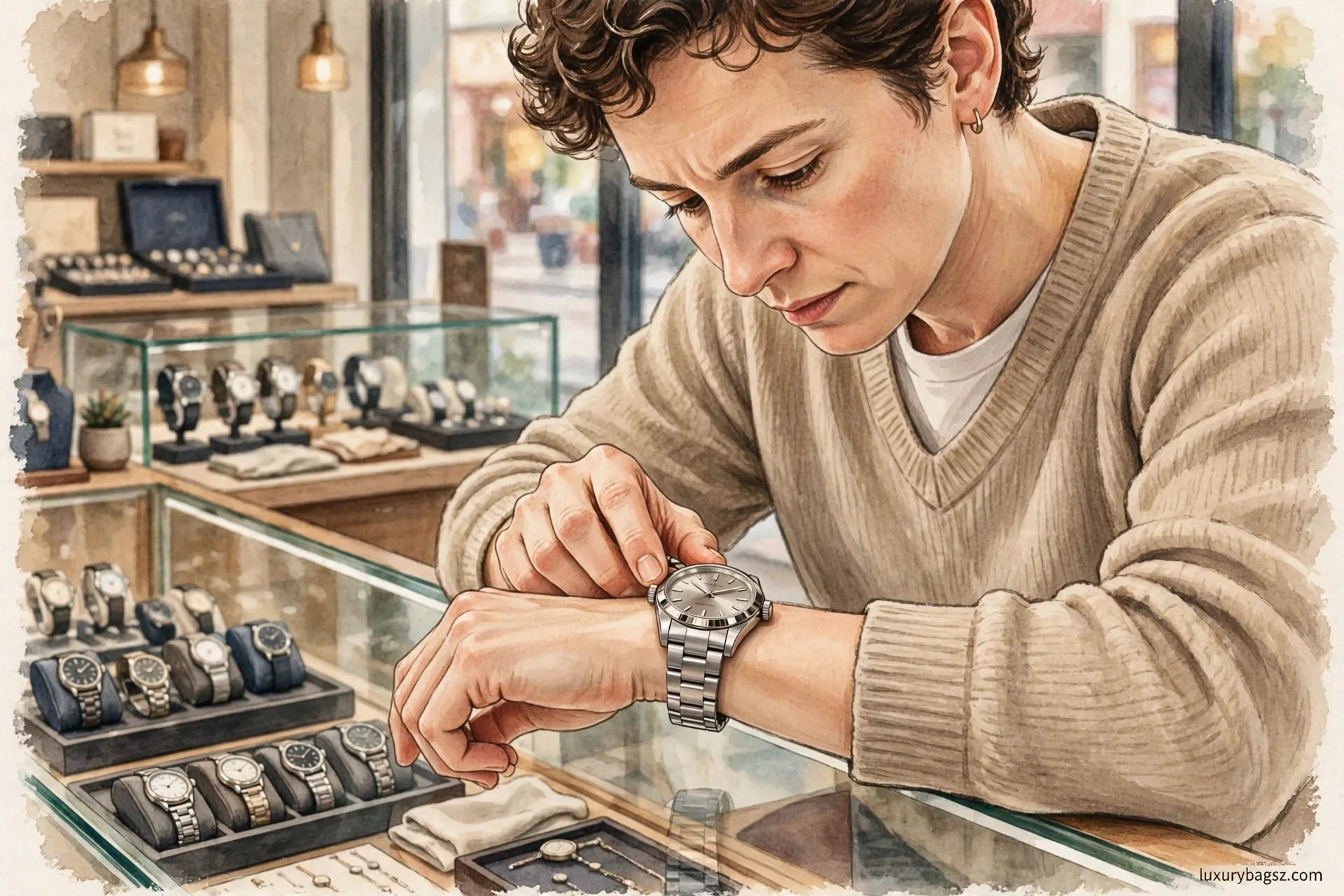
Case diameter is only half of fit. Lug-to-lug length decides whether a watch overhangs your wrist, and thickness decides how it sits under a cuff. Try before you buy where possible. Count the bracelet links. Missing links can be costly or, on older models, hard to source, and a short bracelet quietly reduces both comfort and resale value. Check clasp closure and any fine-adjustment function in person or on video. A clasp that pops open or a stiff bezel is a repair bill arriving with your purchase. Straps are consumables: a worn leather strap is a small cost, but factor a replacement into the budget rather than discovering it on delivery day.
Authenticity Checks and Red Flags
Learn the correct details for your exact target model and era before viewing: dial text, hand shapes, bezel fonts and case finishing all changed over time. Our fake Rolex checks show the standard of detail to apply, and our Rolex serial number check guide covers number checks for that brand. Red flags include prices far below market, stock photographs, mismatched serial information, vague answers about parts, and any refusal of inspection or returns. For higher-value purchases, pay for an independent watchmaker to open and inspect the watch. It is the only check that confirms the movement, and it is cheap insurance at this level.
After You Buy: Service, Care and Records
On arrival, photograph the watch, check it against the listing, test timekeeping over a few days, and confirm the crown screws down and functions work as described. Our watch cleaning guide covers safe home care. Keep the watch from shocks, magnets and water beyond its rating, especially on older seals. Store all documents, receipts and service invoices together, and insure higher-value watches properly. Good records are part of the watch's future value, as any seller will confirm. The habits in this guide mirror our pre-owned designer bag buying guide: buy the seller, grade condition honestly, and keep the paperwork forever.
Frequently Asked Questions
Is it safe to buy a pre-owned luxury watch?
Yes, from a reputable seller with returns, clear photographs and an authenticity guarantee. Most risk comes from weak sellers and rushed checks, not from pre-owned watches themselves.
What does full set mean for a watch?
It usually means the original box, warranty card or papers, booklets, any hang tags, and the complete bracelet with all links. Exact contents vary by brand and era.
Should I avoid a watch without papers?
Not automatically. Many genuine watches, especially older ones, lack papers. Without them, the seller's reputation, the watch's condition checks and an independent inspection matter even more.
Does polishing devalue a watch?
Heavy or poor polishing does, because it softens case lines and removes metal. Light professional refinishing is common; the key is disclosure and how much original shape remains.
How can I tell if parts have been replaced?
Compare dial, hands and lume against correct examples for the model and era, and ask the seller directly in writing. An independent watchmaker can confirm correctness during inspection.
Should I budget for a service after buying?
Yes, unless the watch has a recent, documented service from a trusted source. An unknown history means a service is likely due, and its cost belongs in your true purchase price.
What are the biggest red flags when buying?
Prices far below market, stock photos instead of the actual watch, refusal of returns or inspection, vague answers about parts, and pressure to pay quickly by unprotected methods.
Can I check a watch's serial number?
Often yes, against brand-appropriate references for its era, though position and format vary. Serial checks support authenticity but never replace a physical inspection of the watch and movement.
Is a warranty important on a pre-owned watch?
Yes. A dealer's written warranty, commonly a year on many pre-owned sales, shows confidence and covers early faults. Confirm exactly what it covers before paying.
What should I do as soon as the watch arrives?
Photograph it, compare every detail with the listing, check timekeeping and functions over several days, and keep all documents safely. Raise any mismatch with the seller within the returns window.
Conclusion: The Checklist Is the Discount
Pre-owned buying rewards patience more than cleverness. The buyers who do well are rarely the fastest; they are the ones who checked the seller, the condition and the paperwork in order. Follow that order every time, budget honestly for service, and a pre-owned luxury watch becomes what it should be: the same pleasure as new, bought with open eyes and money saved.






