

How to Collect F.P. Journe Watches: The Complete Collector Guide
Collecting F.P. Journe in Brief: Small Numbers, Big Ideas
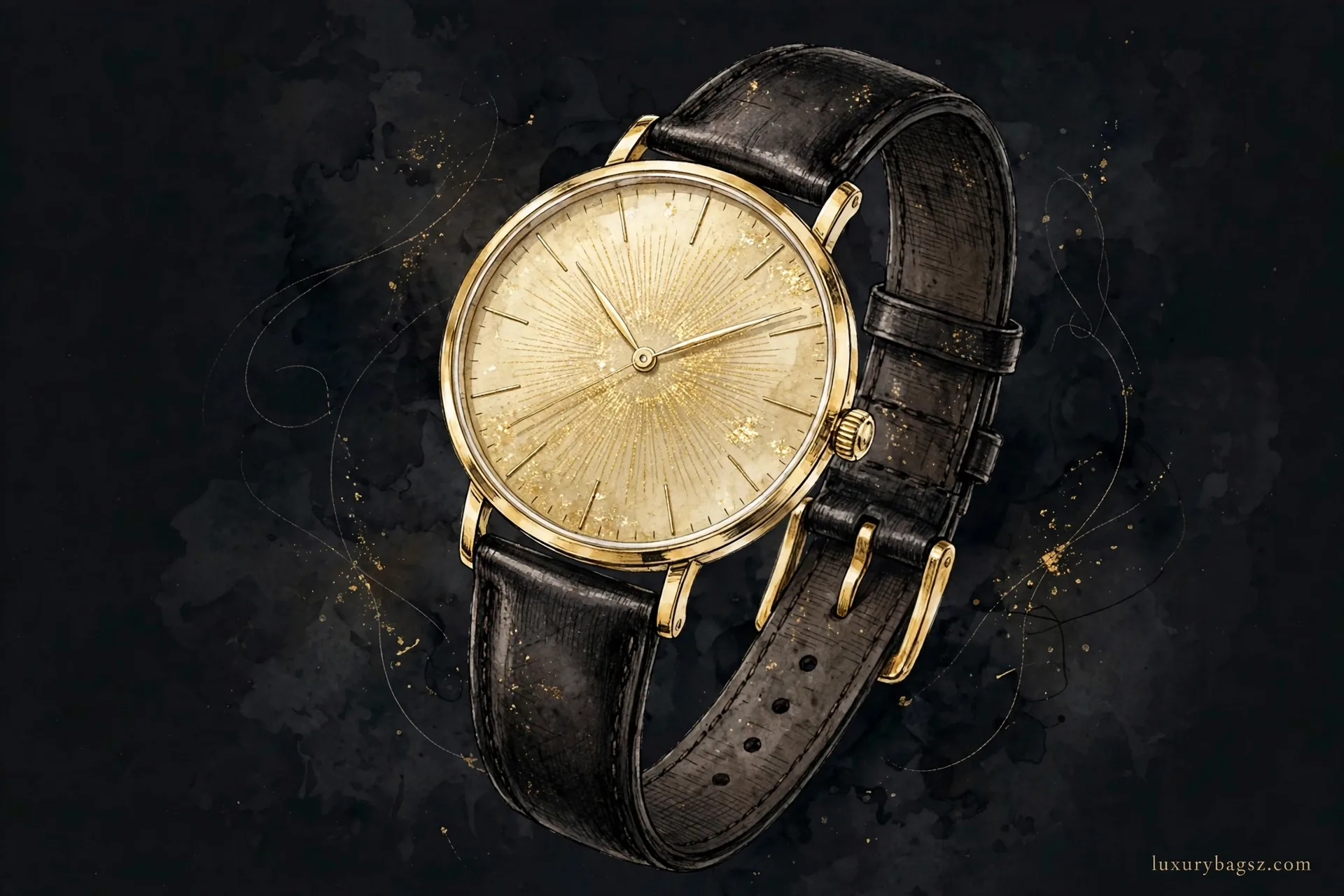
F.P. Journe is the rare modern brand that collectors discuss in the same breath as centuries-old houses. François-Paul Journe founded his Geneva manufacture in 1999, and it still produces under 1,000 mechanical watches a year by Sotheby's account, though some guides estimate 1,000 to 1,200. Either way, output is tiny, demand is large, and waiting lists are real.
The collecting logic is simple: start with the founding complications, learn the two movement eras, and buy the best-documented example you can afford. The Tourbillon Souverain and Chronomètre à Résonance define the brand's history, the Octa line defines its everyday wearability, and later models like the Chronomètre Bleu and Élégante define its accessibility.
Do not chase hype first. A Chronomètre Bleu bought at a panic premium teaches nothing, while a well-chosen Octa or a later Tourbillon teaches you the brand's language: gold dials, restrained cases, and movements built around ideas rather than decoration. Collect the idea, and the value usually follows.
Key Takeaways
- Journe founded his manufacture in 1999; early watches have 38mm cases, gold dials and brass movements.
- Brass-movement watches made until 2004 are the most sought-after early era; rose gold movements followed.
- The Tourbillon Souverain Souscription run of 20 pieces is the brand's ultimate grail.
- The Chronomètre à Résonance was the first wristwatch to use resonance for timekeeping.
- Case numbers read as number/year ordered, not necessarily the year the watch was made.
- Boutique allocation is tight, so most collectors buy pre-owned through trusted sellers.
The Man, the Motto and the Manufacture
François-Paul Journe was born in Marseilles in 1957 and learned horology restoring antique clocks, including pieces by Breguet, under his uncle in Paris. He earned his diploma in 1976, opened his own workshop by 1985, and completed his first tourbillon wristwatch in 1991. That watch became his personal piece and part of a trio of prototype tourbillons that launched his reputation.
His philosophy is engraved on every dial: Invenit et Fecit, Latin for "He Invented It and He Made It." The motto is not marketing. Journe designs and finishes movements in-house in Geneva, and his watches reinterpret 18th- and 19th-century ideas, like the tourbillon and resonance, through modern engineering rather than copying old forms.
Scale is the collector's friend and enemy. Tiny production means every reference is scarce, but it also means thin markets, long waits and little room for impulse buying. Like studying vintage Patek Philippe or Rolex, learning Journe repays patience, with the added thrill that the founder is still alive and still working.
Before the brand, Journe's early clients included Cartier, Piaget and Harry Winston, and he funded the Geneva workshop through a subscription model, taking advance deposits from supporters. That history explains the Souscription watches: the brand was literally built on collectors' trust before it had a shop window.
That trust model still shapes the brand today. Journe sells through a small boutique network rather than mass distribution, production stays tiny, and allocation favors established clients. Collectors who understand that history buy with realistic expectations about access and waiting times.
Journe's own story also explains his design language. Years spent restoring antique watches and building tourbillons for other houses taught him to value clean dials, legible displays and movements that reward close inspection. Every modern Journe carries that restoration sensibility, even the simplest time-only piece.
Tourbillon Souverain: Where It All Began
Journe launched as an independent in 1999 with the Tourbillon Souverain Souscription: 20 watches made for early supporters at half the eventual retail price. Those 20 numbered pieces are the grails of the brand. In October 2021, one sold at Sotheby's Hong Kong for HK$15.9 million, roughly $2 million, the highest Journe result at that auction house.
Early Tourbillons fall into four generations: the 1999 Souscription of 20 pieces, a second 1999 run of about 16 to 17 pieces, a third run from 1999 to 2001 of about 60 pieces, and a fourth run from 2001 to 2003 of roughly 220 to 320 pieces. Souscription pieces are numbered at 1 o'clock as XX/20, which sets them apart at a glance.
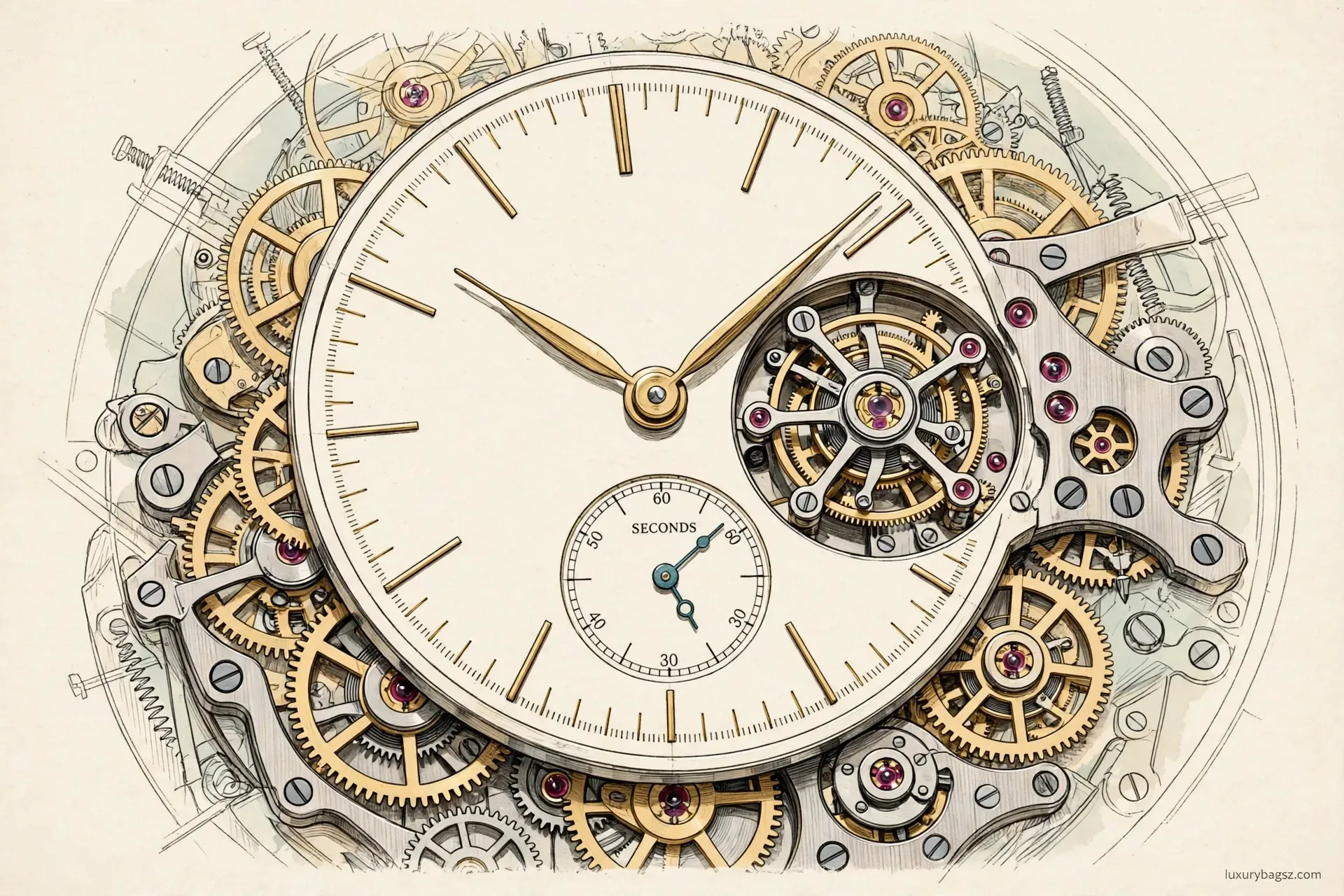
Technically, the early Tourbillon runs on caliber 1498, a rhodium-plated brass movement with the tourbillon cage at 9 o'clock and a small dial at 3 o'clock. A remontoire, a secondary power source that feeds the escapement evenly, sits at 6 o'clock: the first time one appeared in a wristwatch. In 2004, the Tourbillon Nouveau arrived with caliber 1403 in rose gold and deadbeat seconds at 6 o'clock.
The dial layout has a practical story behind it. Legend holds that the tourbillon sits at 9 o'clock and the time dial at 3 o'clock so the wearer can read the time at a glance without moving a shirt cuff over the rotating cage. Whether or not you believe the legend, the layout is unmistakably Journe, and it makes early Tourbillons easy to recognize across a room.
Generation pricing follows scarcity closely. Souscription pieces command the highest premiums, second-generation pieces follow, and fourth-generation pieces, while still rare, trade at the most accessible early-Tourbillon levels. Condition and papers move any generation sharply, so a later generation with full history can outprice an earlier one with gaps.
Watch for the small details that separate generations: dial printing, hand styles and case proportions all shifted subtly across the early runs. A loupe and a generation guide are essential tools for any early Tourbillon buyer, and a seller who resists close inspection is a seller to avoid.
Sleeper picks exist even here. The T-30, made in 2013 in just 99 examples for the 30th anniversary of Journe's first pocket watch, hides its tourbillon under a hunter caseback. The Vertical Tourbillon Souverain of 2019 turns the cage 90 degrees so gravity affects it in nearly any position; one sold at Sotheby's New York in 2024 for $336,000.
Chronomètre à Résonance: The Masterpiece
If the Tourbillon made Journe's name, the Résonance made his legend. Journe reasoned that two regulating organs placed close together could use each other's energy to regulate one another, improving precision. With the Résonance, he became the first watchmaker to bring resonance into a wristwatch.
Early Résonance production is confusing by design, and collectors love it for that. The generations run: about 10 pre-production pieces from 1999, about 40 pre-souscription pieces from 1999 to 2000, about 20 souscription pieces from 2000, and about 318 pieces in the fourth run from 2000 to 2004.
The twist is that Journe made about 50 Résonances before getting to the souscription pieces, so the numbered souscription watches were not the first ones produced.
The early pieces share the founding formula: 38mm platinum case, yellow-gold dial and brass caliber 1499, a rhodium-plated brass movement with twin independent gear trains. A crown at 12 o'clock sets the time, while a crown at 4 o'clock synchronizes the seconds hands. In November 2022, a platinum pre-souscription Résonance sold at Sotheby's for CHF 571,500.
Later versions moved to solid rose gold with calibers 1499.2 and 1499.3, adding a power-reserve indicator, and a redesigned model for the line's 20th anniversary introduced a single barrel and a differential distributing power to both escapements. Any early Résonance is a grail, but platinum cases dominate; rose gold and two-tone examples are significantly rarer.
What makes the Résonance special in daily use is its symmetry: two time displays, each with its own small seconds, side by side on the dial. The two balances must be set so their vibrations interact, which is why servicing a Résonance demands a watchmaker who understands resonance rather than one who simply cleans and oils a movement.
Buyers should also study dial variants closely. Early Résonance dials show the shimmering gold finish of the founding years, while later versions refined the layout with the power-reserve indicator. Small differences in printing, hands and case proportions separate generations, and those details are exactly what specialists check first.
Resonance itself needs a patient owner. The two balances take time to settle into synchrony after service, and a Résonance fresh from the workshop may not show its best behavior immediately. Give the watch a few days of regular wear before judging whether the resonance is performing as it should.
The Octa Line: Journe You Can Wear Daily
The Octa Réserve de Marche arrived in 2001 as the third collection, powered by caliber 1300, and stayed in production until 2014. It is simple next to a Tourbillon or Résonance, with a power-reserve indicator and a big date, but it is pure Journe in approach: the base caliber was designed from the start to house many complications within identical dimensions, rather than stacking modules on top of a base movement.
That design choice shaped everything after it. Calendrier, Lune and chronograph versions followed under the Octa umbrella, all sharing the same caliber architecture. The Octa was also Journe's first automatic movement, and its earliest pieces carry the same brass-era traits as the early Tourbillons and Résonances, making them desirable in their own right.
For a first Journe, an Octa is often the smartest buy. It delivers the gold dial, the restrained case and the in-house movement at a lower entry point than the founding complications, and it wears easily every day. Collectors who start here usually learn what they value before committing to a Tourbillon or Résonance, which is exactly the right order.
When comparing Octa versions, look past the complication list and study the dial layout and case size. Early 38mm brass-era Octas feel different on the wrist from later 40mm gold-movement versions, and the power-reserve display varies by model. Condition of the gold dial matters enormously: marks and uneven patina cannot be polished away without destroying originality.
The Octa Calendrier adds a full calendar display, the Octa Lune adds a moon phase, and the Octa Chronographe adds a chronograph, all on the same caliber architecture. That shared foundation is why Octa collectors often own several versions: each feels familiar on the wrist while offering a different complication to study.
Wrist presence varies more than specifications suggest. A 38mm Octa on a strap wears smaller than its measurements imply, while the 40mm versions fill the wrist more assertively. Try both sizes before deciding, since Journe's restrained cases can look quite different in photographs than on the arm.
Centigraphe, Élégante, Vagabondage and Chronomètre Bleu
Beyond the founding trio, four lines define the modern collection. The Centigraphe Souverain of 2007 is a chronograph that measures down to 1/100th of a second, with a manually wound caliber 1506 whose rocker-style pusher replaces traditional pushers and decouples the chronograph from timekeeping. It shows Journe reimagining a classic complication from first principles.
The Élégante of 2014 took on quartz, a field luxury watchmaking usually ignores. Its electro-mechanical movement hibernates after 35 minutes of inactivity, stopping the hands while timekeeping continues, then resets the hands when picked up. Battery life reaches up to 10 years in regular use. First designed for women collectors, it became a unisex favorite and one of the hardest contemporary Journes to get from a boutique.
The Vagabondage series, three limited editions with wandering-hour displays in tonneau cases, is the sleeper hit for hardcore collectors: extremely limited, unconventional, and unlike anything else Journe makes.
The Chronomètre Bleu of 2009 is the hype watch: a deceptively simple time-only piece in tantalum, a metal notoriously hard to work, with a blue dial that shifts in different light. Once overlooked, it now trades at many multiples of retail, a reminder that even Journe is not immune to fashion.
Dress-watch lovers often compare the Bleu's quiet confidence with classics like the Cartier Tank, another design-led watch that succeeds through proportion rather than complication. The comparison is useful: both reward buyers who value restraint over spectacle.
Material experimentation runs through the whole catalogue. The tantalum Bleu case was only the start: later Centigraphe Sport and Octa Sport models used aluminum for movements and dials, creating ultra-lightweight watches without giving up precision. As sports watches gained popularity, these models showed Journe applying his ideas to an entirely new form factor.
The Centigraphe deserves a closer look from chronograph fans. Its rocker pusher feels unlike any conventional chronograph, and the decoupling of the chronograph from timekeeping means the running seconds stay accurate while the chronograph measures. Try one on the wrist before judging it from photographs, since the pusher action is part of the appeal.
The Élégante line deserves similar attention from buyers who want Journe design without a mechanical movement. Its quartz caliber hibernates after 35 minutes off the wrist, stretching battery life to a decade, and the titanium and diamond-set versions show that Journe treats quartz with the same seriousness as mechanical work.
Brass vs Gold Eras and the Special Series
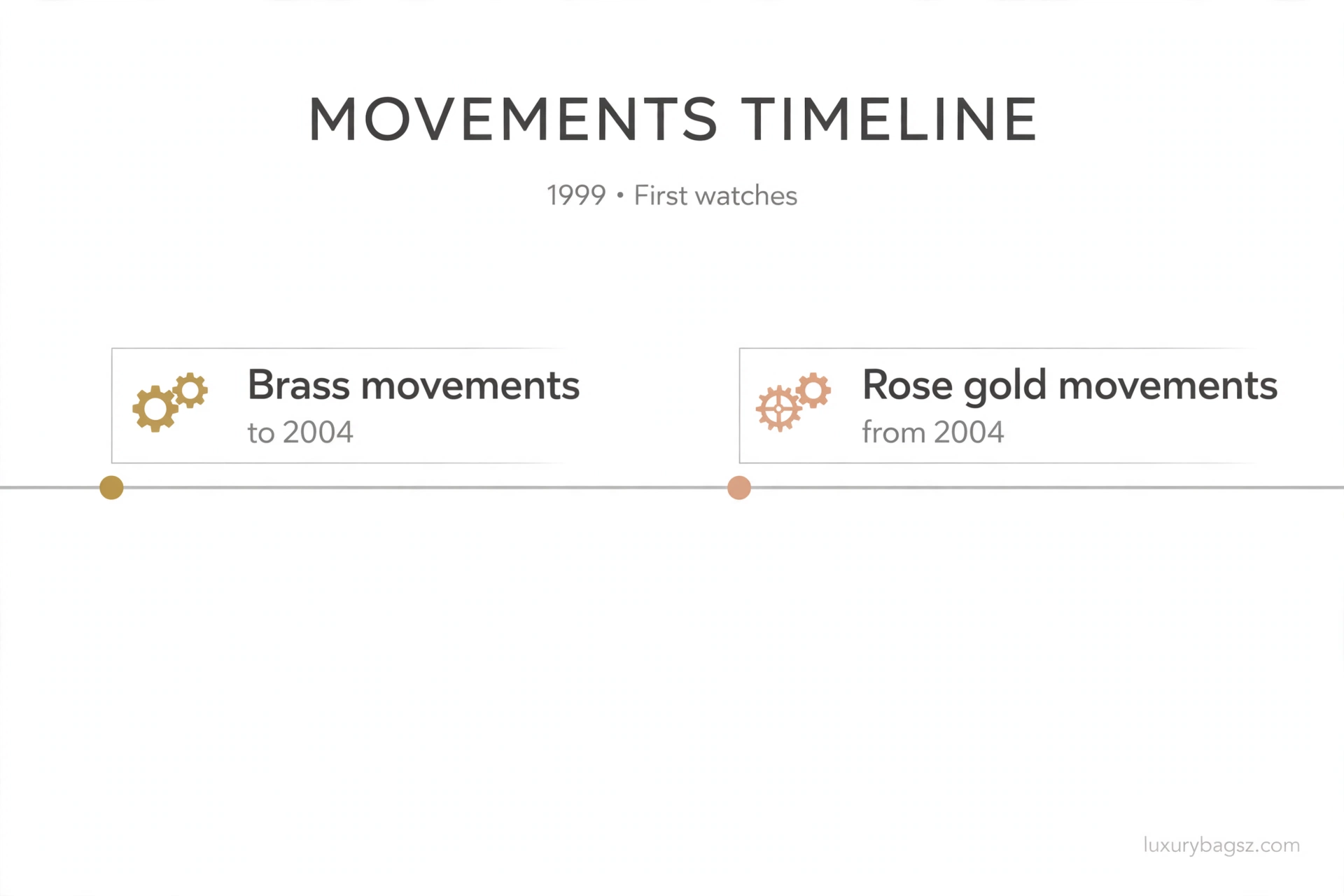
Collectors divide Journe into two eras. Until 2004, movements were brass: cheaper for a fledgling manufacture, and now prized as the formative years. From 2004 onward, movements are typically rose gold. The change touched every line, so an early brass Tourbillon and a later gold Tourbillon are genuinely different collecting propositions, not just different years.
Special series add another layer. The Ruthenium Series of 2001 to 2003 covered five models, Tourbillon Souverain, Résonance, Octa Calendrier, Octa Chronograph and Octa Réserve de Marche, with ruthenium-coated dials and movements, 99 examples of each, and the brand's first 40mm cases.
The Stainless Steel series of 2015 offered five models as a box set of just 38 sets, marking the move from 38mm to 40mm cases and giving discontinued models rose-gold movements.
The Black Label Collection is the stuff of lore: deep black lacquer dials in platinum cases, sold only through Journe boutiques and only to existing clients. A Black Label Résonance sold at Sotheby's New York in 2024 for $300,000. If a Black Label piece is offered to a stranger with no history, treat that as a warning, not an opportunity.
Individual stainless steel pieces also surface from time to time: a stainless-steel Résonance from the 2015 series sold for HK$1.8 million in 2021. Whether complete sets or single watches appear, collectors pause, because steel Journes remain among the rarest modern pieces the brand has made.
Black Label access works through the boutique network, with only a dozen boutiques worldwide carrying the line and each receiving very few pieces a year. That structure explains why Black Label watches almost never reach first-time buyers, and why any offer outside the boutique channel deserves extra verification.
If you are offered a Black Label piece, verify the boutique origin, the papers and the client history before discussing price. Black Label watches without a matching boutique story are the single most misrepresented category in Journe collecting, and the premium they command makes them a target for misdescription.
Ruthenium pieces deserve a similar caution. The ruthenium coating on dials and movements is distinctive but delicate, and refinished or recoated examples lose the very character collectors pay for. Ask for movement photographs and compare the coating against known originals before committing.
Boutique, Pre-Owned and Price: How to Actually Buy One
New Journes are hard to buy. Boutiques allocate scarce pieces to established clients, and popular models carry waits measured in years, not months. Building a relationship helps, but no purchase history guarantees an allocation, and paying over retail to "build history" with unwanted pieces is usually poor economics.
Most collectors therefore buy pre-owned, where one guide's price tiers give a rough map: entry pieces from 20,000 to 50,000 CHF for the Élégante and Chronomètre Bleu, core models from 50,000 to 100,000 CHF for most Octa and Souverain pieces, and premium pieces from 100,000 to 200,000 CHF for Résonance, Optimum and Tourbillon models.
Haute pieces run from 200,000 to 500,000 CHF for minute repeaters and rattrapantes. Treat these as tiers, not quotes: condition, era and provenance move any individual watch sharply.
Auction is the third route, and the best one for early or rare pieces with documented history. Sotheby's alone has sold nearly $35 million in F.P. Journe watches since 2021. Set a hard ceiling before bidding, including buyer's premium and taxes, and never chase a lot past it. The next comparable piece always comes along eventually, and regret costs more than patience.
Dealer pricing follows auction results with a lag, so check recent comparable sales before accepting any asking price. A dealer premium is fair when it buys vetting, warranty and return options, but it should never double as a fee for a story you could verify yourself.
Private sales between collectors can offer the best value, but they carry the most risk. Use an escrow service or a trusted intermediary for high-value pieces, and never transfer full payment before an independent inspection. A genuine seller accepts those terms without argument.
Boutique allocation, meanwhile, rewards patience and relationship. Regular contact, attendance at previews and a history of smaller purchases all count, but no spending level guarantees a specific piece. Treat boutique access as a long-term project alongside pre-owned buying, not as a substitute for it.
Auction condition reports deserve careful reading too. Houses describe visible wear honestly but rarely comment on movement condition beyond a basic running check, so budget for a full service on any auction purchase unless the lot notes prove recent work. A serviced watch and an unserviced one can differ by thousands in total cost.

Pre-Owned Checks: Case Numbers, Papers and Condition
Journe's case-numbering system is essential knowledge. Early numbers read as XX/YY, where XX is the case number and YY is the year the case was ordered, not necessarily when the watch was made or delivered. A Résonance numbered 28/99R, for example, was the 28th Résonance case ordered in 1999, yet actually the eighth Résonance ever to leave the manufacture, because the first 20 numbers were reserved for souscription orders.
Engraving style helps date a piece too. Early engravings are shallow and hand-cut, while later ones are deep and consistent laser engravings. Souscription Résonances show the later deep style, which is how collectors identified a small run of pre-souscription pieces with shallow hand engravings. Study these details before paying an early-piece premium.
Dial originality is just as important as the case. Refinished dials lose the texture and printing that define early Journe, and a replaced dial can halve a watch's collector value even when it looks cleaner. Ask whether the dial is original, and compare its printing against known examples for the reference.
Straps and buckles also tell a story. Original Journe straps and signed buckles support value, while generic replacements raise questions about the watch's history. Keep the original strap even after replacing it for wear, since a complete original set always photographs and sells better than a watch with aftermarket parts.
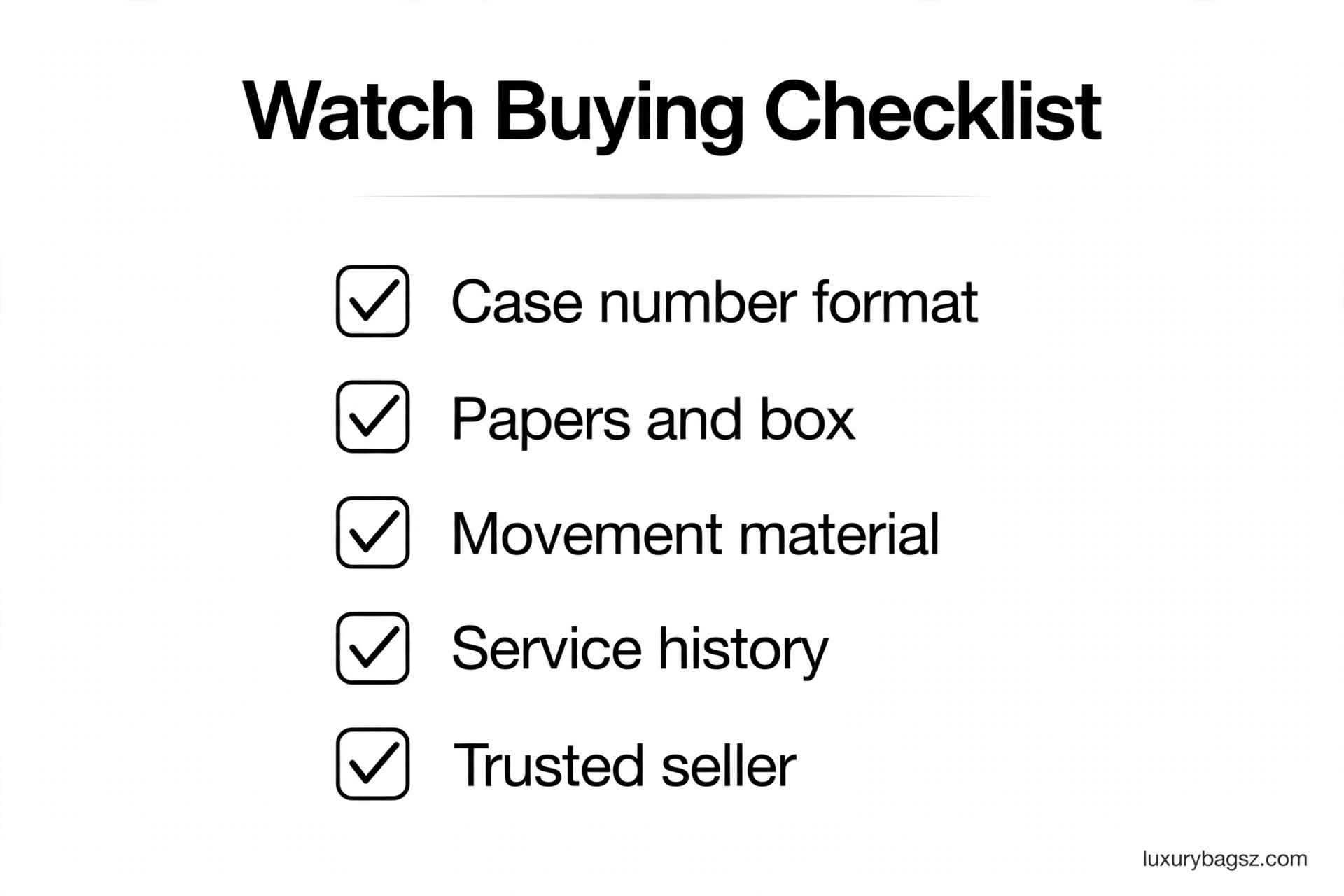
Run the standard checks as well: matching papers and box, movement material consistent with the era, service history from Journe or a trusted specialist, and a seller with a real reputation. Outright fakes are less common than modified or misdescribed pieces, so compare the watch against known references for its generation.
For general watch upkeep once you own one, our guide on how to clean a watch covers safe routines, and our fake-spotting advice for Rolex shows the inspection mindset that applies to any high-value watch.
Owning a Journe: Service, Wear and Insurance
Service intervals for Journe watches run longer than for mass-produced pieces, but service itself is specialist work. Use the manufacture or a watchmaker with proven Journe experience, especially for Tourbillon and Résonance models, where regulation and resonance setup demand specific knowledge. Keep every service receipt with the papers, since documented care supports value.
Wear your Journe, but wear it thoughtfully. Gold dials and polished cases mark easily, straps wear faster than bracelets, and water resistance on dress models is modest. A daily-worn Octa needs a strap budget and a careful routine, while a Souscription-grade piece belongs to occasions and a safe. Insure for agreed value, not purchase price alone, and update valuations as auction results move.
Finally, join the community before your next purchase. Collector forums, auction previews and boutique events teach faster than any guide, and other collectors will spot details you miss. Journe collecting is a small world, and reputation travels quickly in both directions.
Choose a collecting theme to keep your purchases focused. Some collectors follow one complication across eras, others collect one example from each line, and others chase a single era in depth. Any theme works, but a theme stops impulse buying and turns a pile of watches into a collection.
Document your own collection as carefully as you research purchases. Photograph each watch with its papers and box, record service dates and case numbers, and keep valuations current. Good records make insurance claims easier, resale smoother and the collection itself more enjoyable to revisit over time.
Storage matters as much as paperwork. Keep watches in a winder only if you wear them regularly, since unnecessary running wears movements without benefit. For pieces worn occasionally, store them stopped, in a dry case away from magnets and direct sunlight, and wind them gently once a month to keep oils distributed.
Insurance valuations need the same care as the watches themselves. Agreed-value cover based on recent auction results protects better than a generic policy limit, and most insurers require updated appraisals every few years. Photograph each watch with its papers before any claim becomes necessary, not after.
Journe Models at a Glance
The Octa line is the backbone of most collections. Built around a five-day power reserve and a gold dial, it covers time-only, calendar, moon-phase and chronograph versions, all sharing the same movement architecture. For a first Journe, an Octa offers the full brand experience at the most accessible entry point.
The Chronomètre Bleu is the design statement. Tantalum construction, a blue dial that shifts with light and a deceptively simple time-only display make it the watch non-collectors notice first. Its hype-driven pricing means patience pays: wait for the right example rather than chasing the market.
The Tourbillon Souverain is the founding complication. Early brass-movement generations with the remontoire are the most collectible, while the later rose-gold Tourbillon Nouveau adds deadbeat seconds. Any early Tourbillon demands generation research, since small differences in numbering and movement separate major price tiers.
The Résonance is the technical flagship. Dual balances, dual time displays and a symmetry no other brand attempts make it the piece serious collectors study longest. Early platinum examples dominate the market, while rose-gold and two-tone versions are far rarer and command correspondingly higher prices.
Pre-owned Résonance buyers should also confirm the resonance behavior in person where possible. A well-set pair of balances shows visibly synchronized motion, while a poorly serviced example drifts. Ask the seller for a video of the balances running before committing to a high-value purchase.
The Centigraphe and Élégante round out the picture. The Centigraphe's 1/100th-second chronograph with its rocker pusher suits buyers who love mechanical novelty, while the Élégante's hibernating quartz caliber suits buyers who want Journe design with minimal maintenance. Together they show a brand that innovates across every price tier.
New collectors often overlook the Élégante, which is a mistake. Its titanium cases wear feather-light, its dials carry the same restrained Journe language, and its entry pricing makes it the most realistic first step into the brand for many buyers. Start there if the mechanical lines feel out of reach. An Élégante on the wrist often converts skeptics, and it keeps the door open to mechanical pieces later.
Frequently Asked Questions
What is the best first F.P. Journe to buy?
An Octa Réserve de Marche or a Chronomètre Bleu, depending on budget. The Octa teaches the brand's movement language, while the Bleu offers the simplest entry into current production style. Try both on the wrist first, since the Octa's gold dial and the Bleu's tantalum case wear very differently despite similar sizes.
Are brass-movement Journes better than gold-movement ones?
Not better mechanically, but more collectible. Brass movements mark the formative years until 2004, with smaller production and artisanal character, so early brass pieces command premiums. Gold movements brought the manufacture to maturity, and later gold pieces are superbly finished watches in their own right.
How can I tell an early Tourbillon generation apart?
Souscription pieces are numbered XX/20 at 1 o'clock. Later early generations differ by production estimates and details, so compare the watch against generation guides and known examples before buying. Photographs of the dial, case back and movement together usually let a specialist confirm the generation at a glance.
What does a Journe case number like 28/99R mean?
It means the 28th Résonance case ordered in 1999. The year is when cases were ordered, not necessarily when the watch was produced or delivered, which is why early numbering has quirks. A case ordered late in a year may not have become a finished watch until well into the following year.
Can I buy a new Journe directly from a boutique?
Possibly, with patience. Boutiques allocate scarce pieces to existing clients, and popular models carry long waits. Most collectors buy pre-owned while building any boutique relationship. Attending previews, buying smaller pieces and staying in regular contact all help, but nothing guarantees allocation.
Is the Chronomètre Bleu a good investment?
It has traded at many multiples of retail, but that reflects hype as well as merit. Buy it because you love the tantalum case and shifting blue dial, not because you expect the premium to grow forever. Fashion-driven premiums can reverse as quickly as they appear, and the Bleu has already had several price cycles.
How much does a Journe cost?
Rough tiers from one guide run 20,000 to 50,000 CHF at entry level, 50,000 to 100,000 CHF for core models, 100,000 to 200,000 CHF for premium complications, and 200,000 to 500,000 CHF at the top. Individual prices vary widely. Auction results, condition and documentation can move a single watch far outside its tier, so always check recent comparable sales.
What is the rarest Journe a collector can realistically find?
A Tourbillon Souverain Souscription, one of only 20 pieces, is the ultimate prize, but early pre-souscription Résonances and the 38-set stainless steel box set are also vanishingly rare. Realistically, most collectors will encounter fourth-generation Tourbillons or later Résonances long before any of these, and those are worthy grails in themselves.
Do Journe watches hold their value?
Important early and limited pieces have a strong auction record, including nearly $35 million in Sotheby's Journe sales since 2021. Ordinary later pieces still hold up well, but condition and documentation decide the outcome. Full sets with papers, boxes and service records consistently outperform incomplete examples.
Should I service a Journe only through the manufacture?
For complicated or early pieces, yes: Journe or a proven independent Journe specialist. General watchmakers may lack the parts and knowledge these movements require, and poor service hurts value. Ask any independent for Journe-specific references before handing over a watch, and keep every service invoice with the papers.
Final Verdict: Learn the Eras, Then Buy the Best Example You Can
Collecting Journe rewards study more than spending. Learn the brass and gold eras, the Tourbillon generations, the Résonance story and the case-number quirks, then buy the best-documented watch in the line you love. A single honest Octa beats a doubtful grail every time, and the knowledge you build choosing it is what makes the next purchase, and the one after, genuinely exciting.
Start with one watch, wear it, learn it, and let the collection grow from knowledge rather than urgency. That is how the best Journe collections were built, and it remains the surest path today.






