Rolex Anatomy: The Complete Guide to Rolex Parts, Part 1
Rolex Anatomy in Brief: A Sealed Case Around a Self-Winding Heart
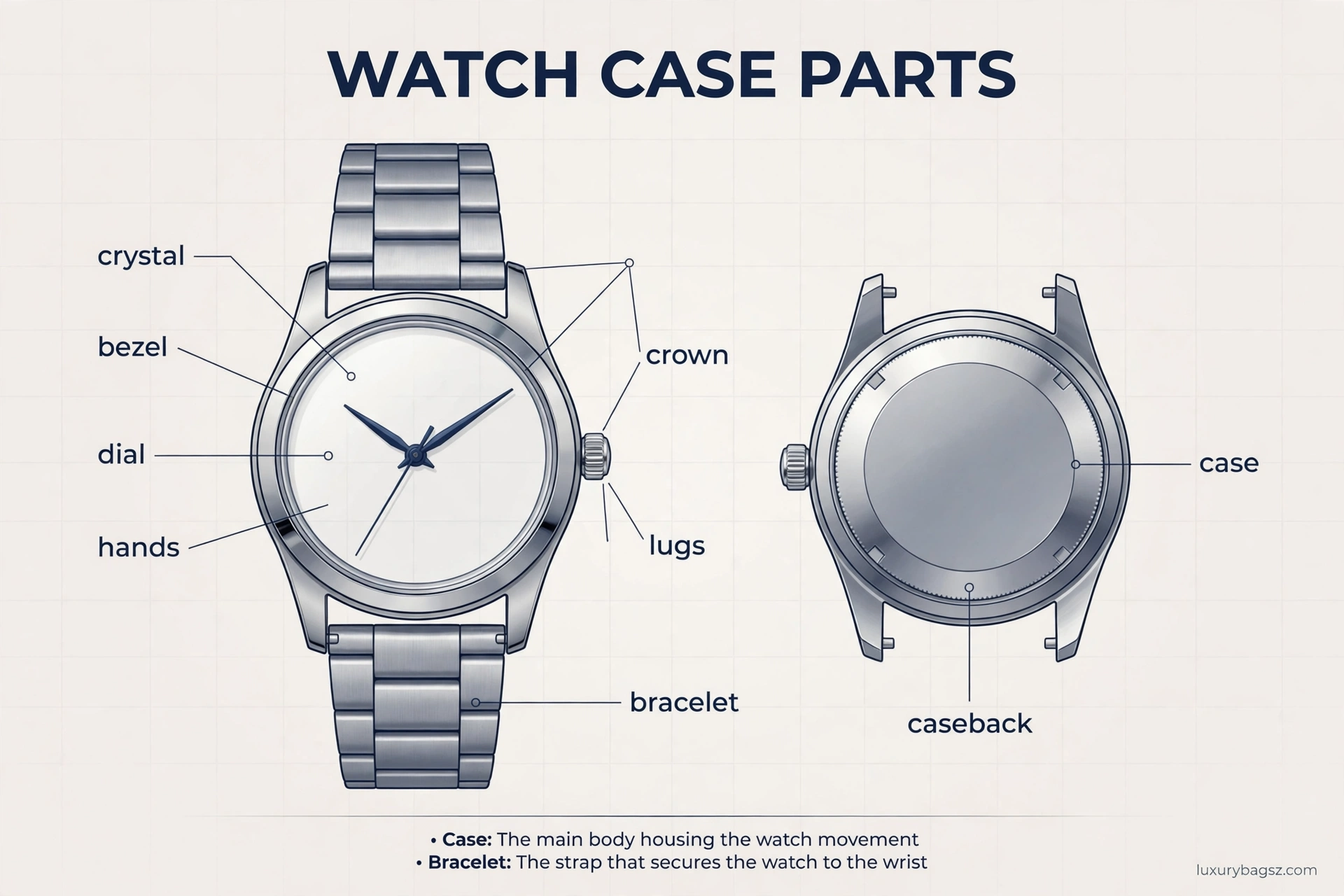
A Rolex is built around the Oyster case: a water-resistant housing with a screw-down crown and caseback, holding a self-winding mechanical movement that Rolex calls Perpetual. Outside, you read the watch through its bezel, crystal, dial and hands. On the wrist, it is held by an Oyster, Jubilee or President style bracelet, or a strap. Each part has a job.
Key Takeaways
- The Oyster case, introduced in 1926, is Rolex's water-resistant case design.
- Perpetual means self-winding: a rotor, patented in 1931, winds the movement as you move.
- Bezels are decorative on dress models and functional on divers and travellers' watches.
- Rolex uses its own names, including Cerachrom bezels, Chromalight lume and Oystersteel.
- Most Rolex casebacks are plain and screwed shut; the movement is rarely on show.
- Servicing is specialist work: never open a Rolex case yourself.
The Big Picture: Case, Movement, Display, Bracelet
Every Rolex divides into four systems: the case that seals it, the movement that drives it, the display you read, and the bracelet or strap that holds it to your wrist. Our what to know about Rolex guide gives the brand overview. This guide stays with the hardware itself, part by part, in plain terms. Rolex makes its movements in-house and designs nearly every component around durability: water resistance, shock resistance and magnetism resistance run through the whole anatomy. That is why Rolex watches feel dense and plain at the back. The engineering is hidden on purpose, sealed against water, dust and everyday knocks.
Case size and shape define the families: round Oyster cases dominate, sized from smaller dress diameters to larger professional models. Whatever the size, the construction logic of seals and screwed parts stays the same.
The Oyster Case and Its Seals
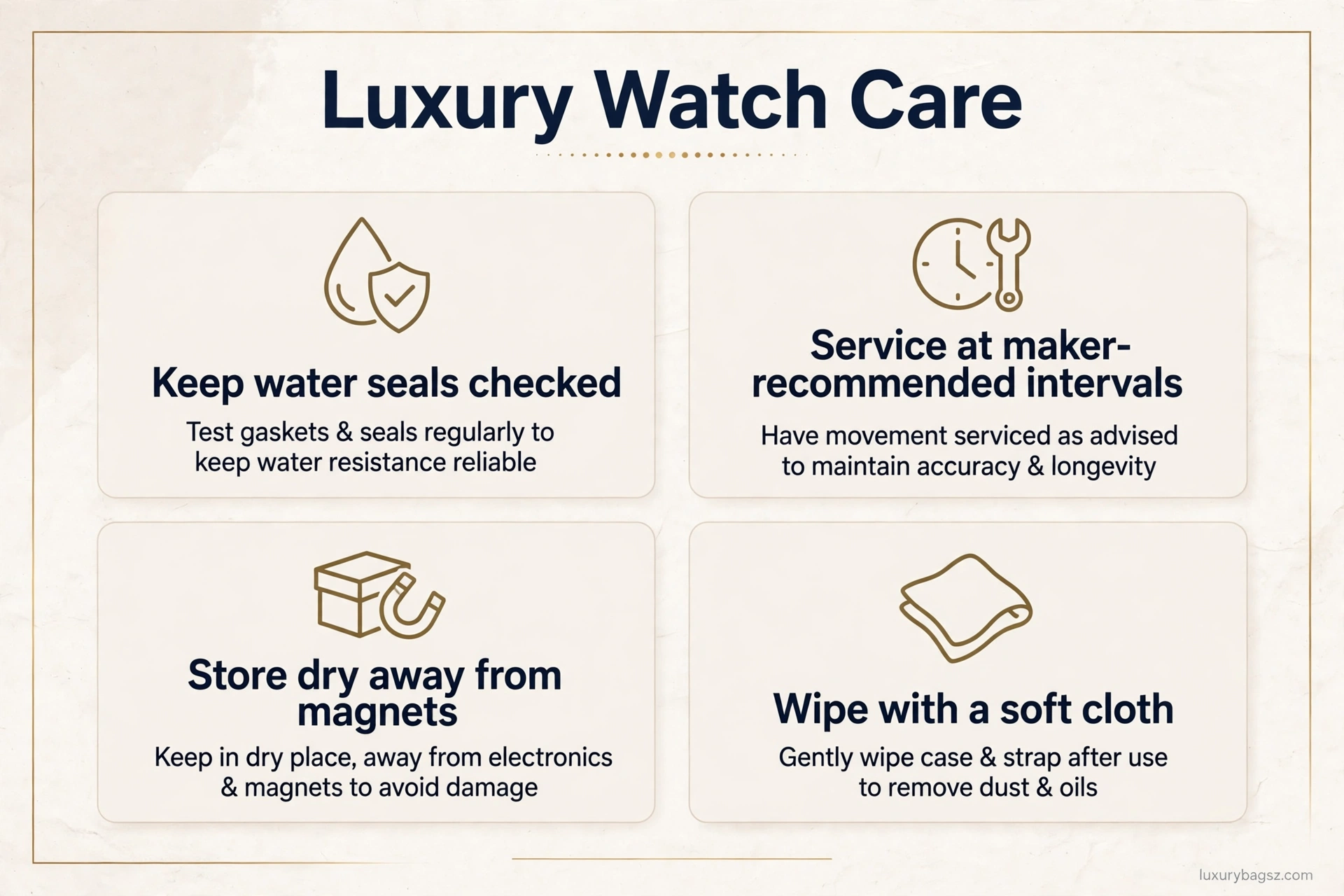
The Oyster case began in 1926 as the first waterproof wristwatch case of its kind, with a hermetically screwed bezel, caseback and winding crown protecting the movement. Modern Rolex cases are machined from solid metal: Oystersteel, gold alloys Rolex makes itself, or platinum on the most precious models. The middle case carries the movement. Screw-down casebacks and crowns, with gaskets, create the seal. Twinlock crowns use two sealed zones, while Triplock crowns, used on divers, use three for greater depth. Water resistance is rated per model and depends on those seals staying healthy. Gaskets age, so pressure testing at service intervals is part of owning any serious dive watch.
Bezels and Crystals: The Working Rim
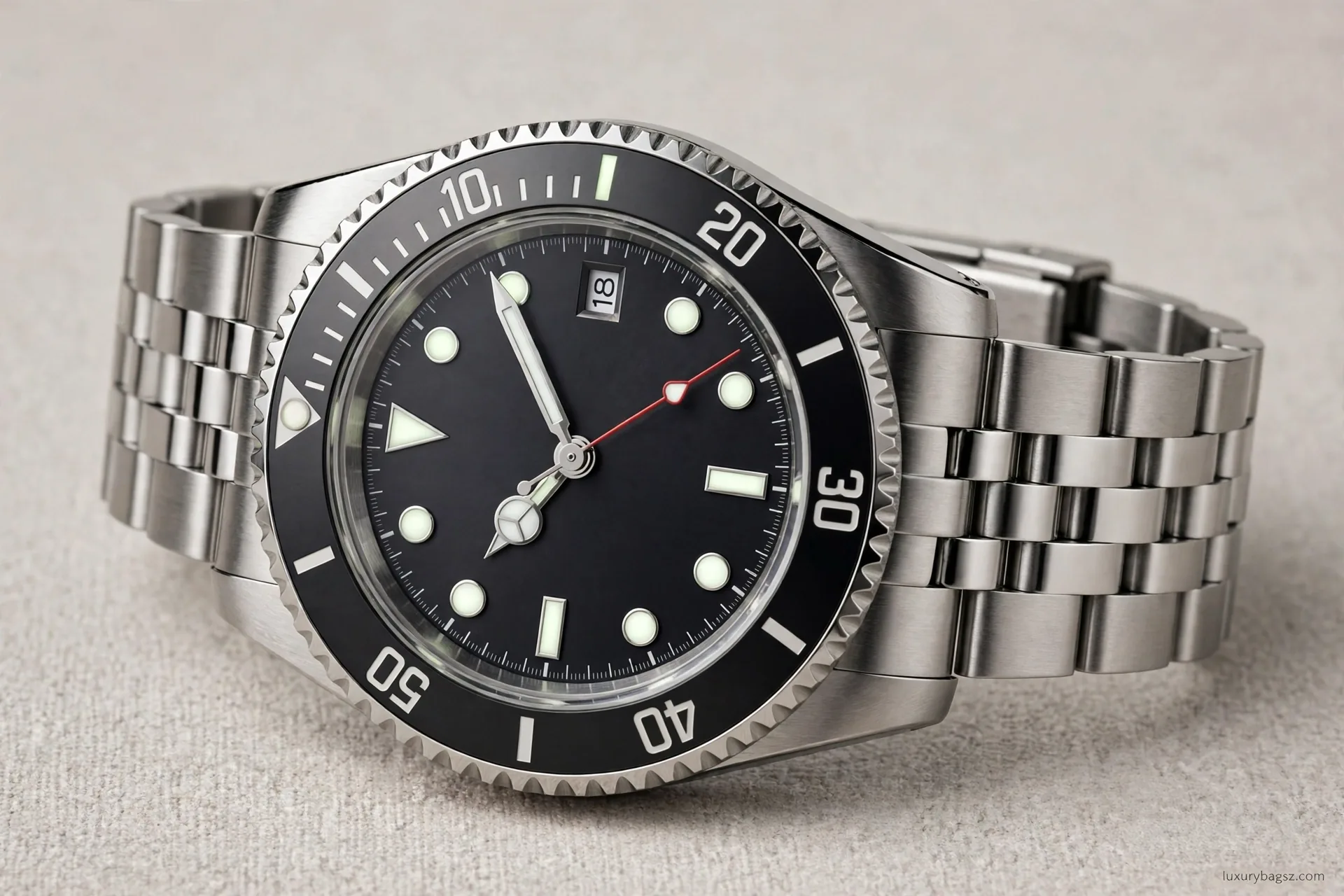
The bezel is the ring around the crystal. On a Datejust it may be smooth or fluted, the fluted version traditionally in gold, while on sports models it does real work. Divers use a unidirectional rotating bezel to time immersion, as our Rolex Submariner guide explains. Travellers' models use a 24-hour bezel to read a second time zone. Rolex calls its ceramic bezel material Cerachrom, chosen because it resists fading and scratching. Inserts in precious models can be ceramic, metal or gem-set on dress pieces. The crystal on most modern Rolex watches is sapphire, highly scratch-resistant. Over the date window on many models sits the Cyclops lens, magnifying the date for easier reading.

Hands deserve a second look when learning a model. Their shapes, lengths and lume plots are model-specific, and collectors use them as quick checks that a dial and handset belong together.
Dial, Hands and Luminosity
The dial carries hour markers, the Rolex name and model information, and on most models a date window at 3 o'clock. Applied markers in gold or steel frame luminous plots. Chromalight is Rolex's luminous material, glowing blue in the dark on sports models. Hands follow familiar patterns: Mercedes-style hour hands on many divers are a Rolex signature. Our Rolex Datejust guide shows the classic dress layout, while our Rolex Daytona guide covers the chronograph layout with its three subdials. Dial variations drive much collector interest: colours, marker styles and rare historical variants can change a watch's desirability without any change to the movement inside.
The Movement: Perpetual Self-Winding
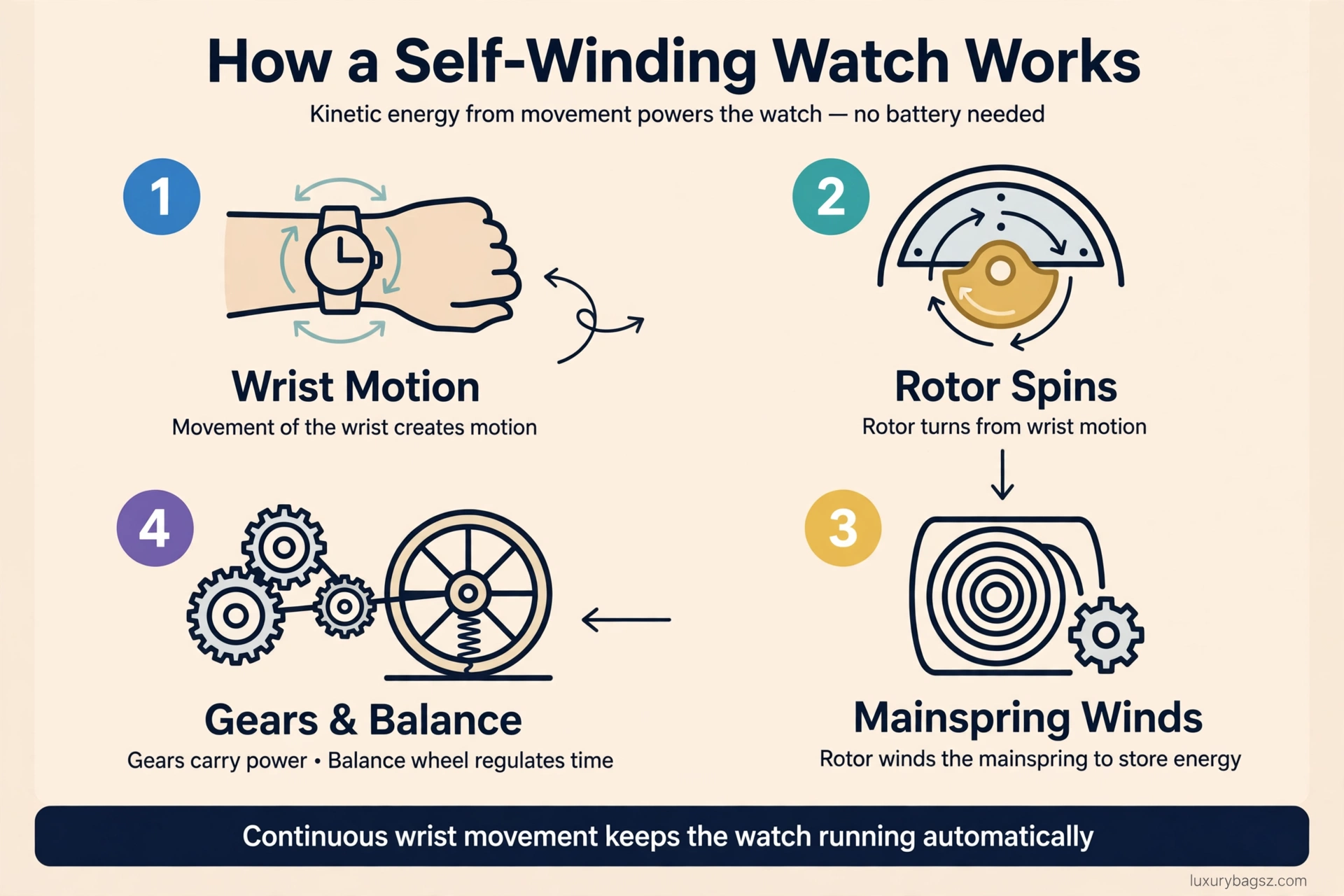
Inside, a mechanical movement stores energy in a mainspring. The Perpetual rotor, a semicircular weight patented by Rolex in 1931, swings with wrist motion and winds that spring automatically. The balance wheel and hairspring regulate the release of energy, ticking many times per second so the hands sweep smoothly. Rolex makes its hairsprings from its own alloys in modern movements. Functions beyond time and date are called complications: a chronograph times events, a GMT hand tracks another zone, and a day display spells out the weekday on Day-Date models. Power reserve varies by movement and model, so check the specific watch rather than assuming. Modern Rolex movements commonly offer around two to three days of reserve, stated cautiously as typical.
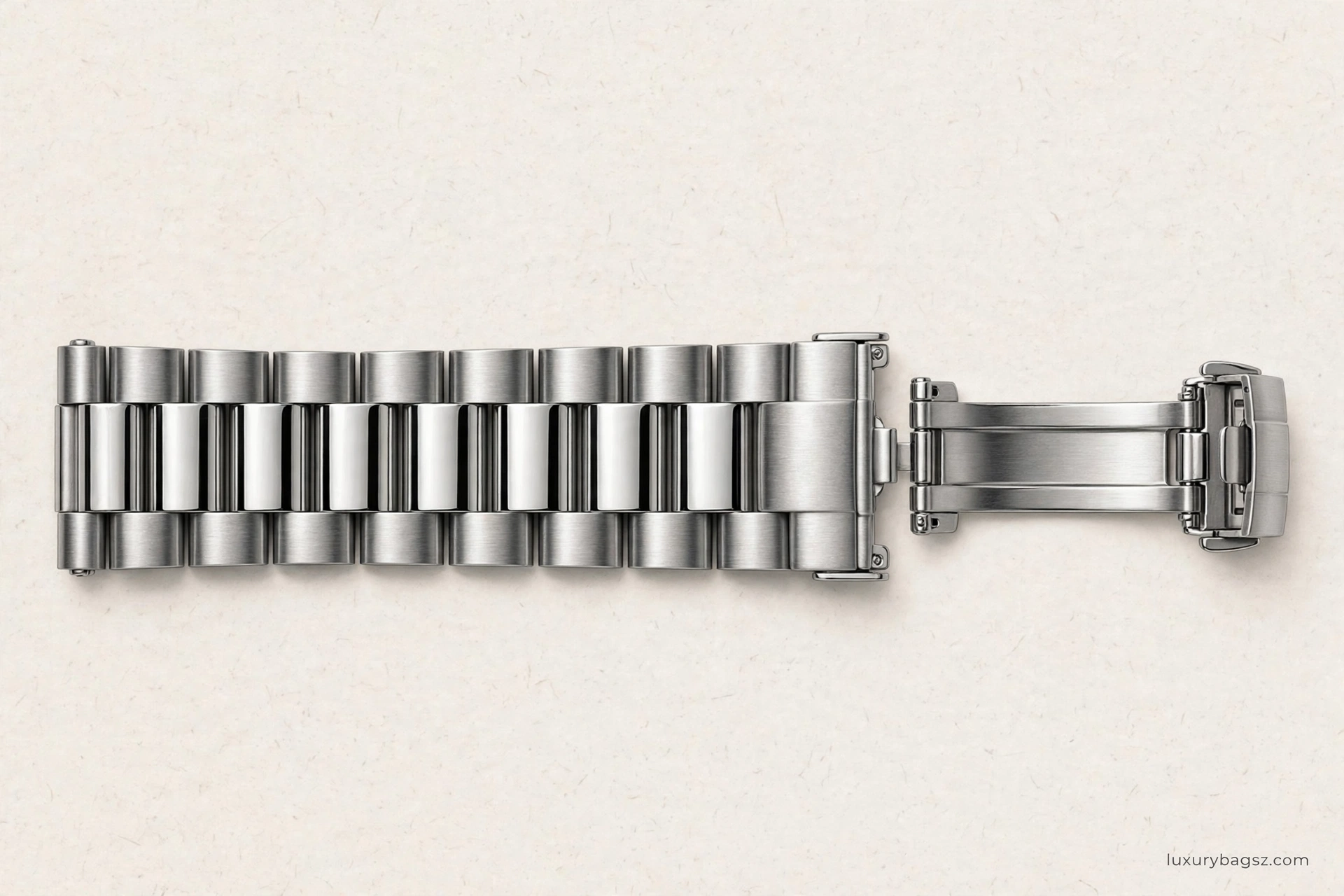
Endlinks, the pieces joining bracelet to case, should sit flush without gaps or wobble. On a well-kept watch the whole assembly feels like one object, which is a useful quality signal when examining any example.

Bracelets, Clasps and Straps
The Oyster bracelet is a robust three-link design; the Jubilee is a finer five-link design made for comfort; the President bracelet pairs with the Day-Date and has a concealed clasp. Clasps carry much of the daily engineering: many include fine adjustment systems that let the bracelet lengthen slightly without tools, useful as wrists swell in heat. Our bracelet sizing point is simple: a Rolex should sit snug but not tight, with links added or removed by a watchmaker or dealer so pins and screws are handled properly. Rubber and leather straps appear on selected models. A strap watch is still the same case and movement; the wearing feel and formality change, not the anatomy underneath.
Crown, Setting and Daily Handling
Unscrew the crown to its positions to wind the watch, set the date and set the time, following the instructions for your model. Always screw it fully back down afterwards. A Rolex left unworn will stop when its reserve runs out. A gentle manual wind through the crown restarts it; shaking a mechanical watch hard is never the right method. Keep the watch from strong magnets, heavy shocks and chemicals where you can. Our watch cleaning guide covers safe rinsing and drying at home. After sea swimming, rinsing a water-resistant model in fresh water removes salt and sand from the bezel and bracelet, provided the crown is fully screwed down first.
Terminology is the final layer of anatomy: learning words such as bezel, calibre, complication and lug lets you read listings, service reports and guides accurately, and ask sellers sharper questions.
Anatomy as an Authenticity Shortcut
Knowing the anatomy helps you spot wrongness quickly: misaligned Cyclops lenses, sloppy dial printing, loose bezels and light, rattly bracelets are all warning signs. Our fake Rolex checks go through the tests in order. Weight, finishing and the feel of the crown and bezel action matter as much as looks. Serial and reference information sits in model-specific places that have changed over the years, so verify any watch against expert references for its exact era, not general rules. For a valuable purchase, an independent watchmaker's inspection, including opening the case properly, is the only full answer. Anatomy knowledge guides your questions; it does not replace that check.
Frequently Asked Questions
What is the Oyster case?
It is Rolex's water-resistant case design, introduced in 1926, using a screwed-down bezel, caseback and winding crown with gaskets to seal the movement from water and dust.
What does Perpetual mean on a Rolex dial?
Perpetual refers to Rolex's self-winding system: a free rotor, patented in 1931, that winds the mainspring automatically from the movement of your wrist as you wear the watch.
What is Cerachrom?
Cerachrom is Rolex's name for its ceramic bezel insert material. It is used on many sports models because it resists scratching and its colour does not fade in sunlight.
Why does a Rolex have a bump over the date?
That is the Cyclops lens, a magnifying lens in the sapphire crystal above the date window. It makes the small date numerals easier to read at a glance.
Can I see the movement through the back of a Rolex?
Usually not. Most Rolex watches have a plain, solid, screw-down caseback for water resistance. Only a watchmaker should open it, during service or authentication.
What is the difference between Oyster and Jubilee bracelets?
The Oyster is a sturdy three-link bracelet with a sportier feel. The Jubilee is a five-link design, originally made for the Datejust, with a dressier, more flexible feel.
How often does a Rolex need servicing?
Rolex currently suggests a service roughly every ten years for many modern watches, but use, age and symptoms matter. Losing time, stiff winding or moisture signs mean go sooner.
What is Chromalight?
Chromalight is Rolex's luminous material used on dials and hands of many models. It glows blue in darkness and is charged by exposure to light during the day.
Is every Rolex automatic?
Almost all modern Rolex watches are self-winding mechanical, marked Perpetual. Historical exceptions exist, including old manual-wind and quartz models, but they are not the current norm.
Where is the serial number on a Rolex?
Its position varies by era, including between the lugs on older watches and on the inner bezel ring on many modern ones. Check era-specific references or ask a watchmaker to verify.
Summary: Four Systems, One Sealed Idea
Rolex anatomy is a single idea repeated at every scale: seal a precise self-winding movement inside a tough case, make every surface legible, and finish it to survive daily wear. Learn the case, bezel, dial, crown, bracelet and movement as separate systems, and any Rolex, from a dress watch to a diver, becomes easy to read, compare and check.