Chanel Fashion Jewelry Guide: Costume Pieces, History, and Buying Checks
Chanel Fashion Jewelry, Explained in Plain Terms
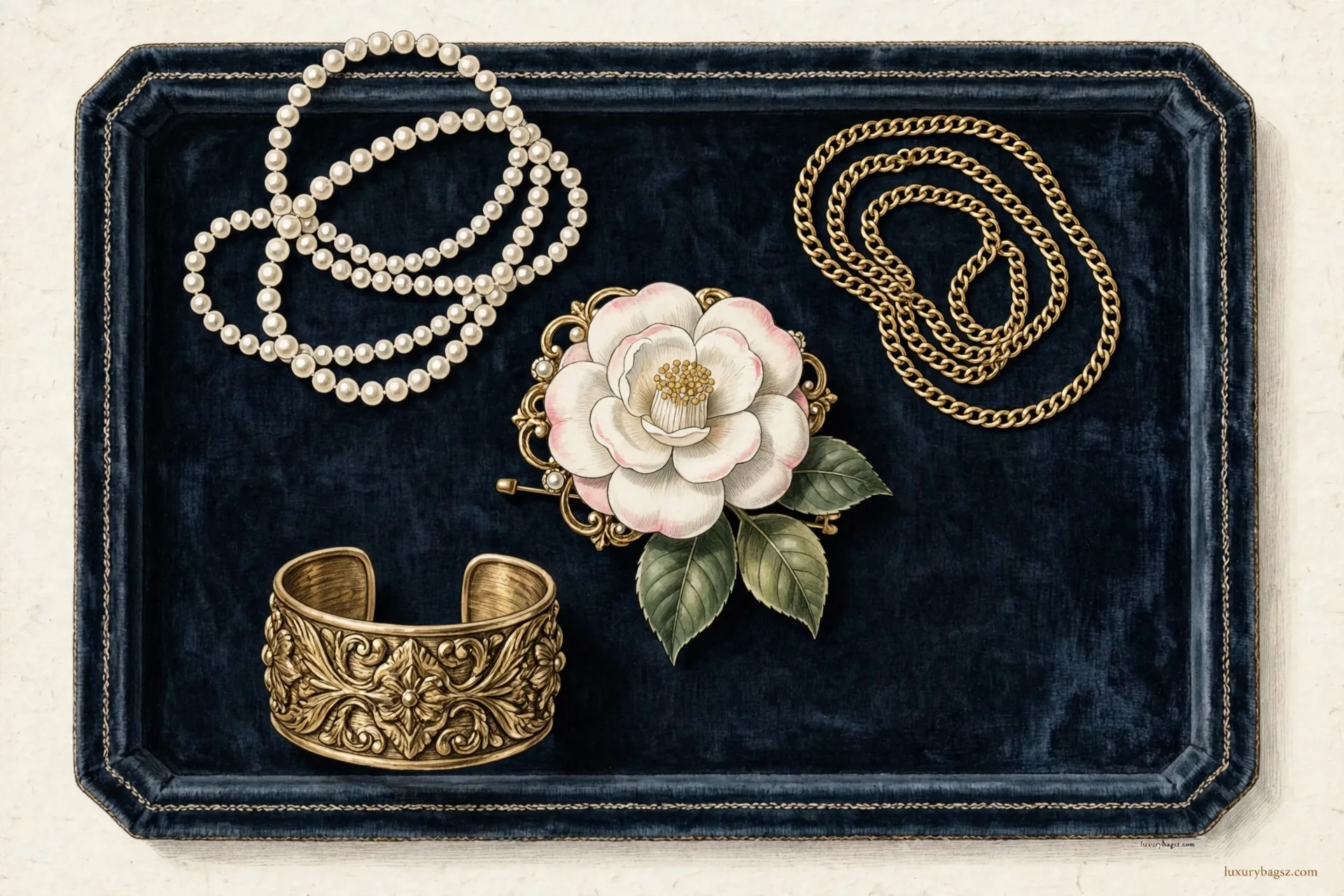
Chanel fashion jewelry means the house's costume jewelry: pieces made from non-precious materials such as gilt metal, glass, resin, and faux pearls, designed as fashion rather than as fine jewelry. Coco Chanel made this category respectable in the 1920s by layering costume pieces with fine jewelry, and the house has kept that mix ever since.
The idea was radical at the time. Before Chanel, costume jewelry was widely seen as a cheap substitute for the real thing, worn only by women who could not afford precious stones. Chanel flipped that judgment by treating design as the point and material as secondary, and her own layered look became the house signature.
That history matters when you buy today. Most Chanel fashion jewelry is bought pre-owned, prices swing widely by era and condition, and marks changed over the decades. Knowing the eras, the motifs, and the marks is what keeps a good purchase from becoming an expensive mistake.
Key Takeaways

- Chanel fashion jewelry is costume jewelry: gilt metal, glass, resin, and faux pearls, not fine jewelry.
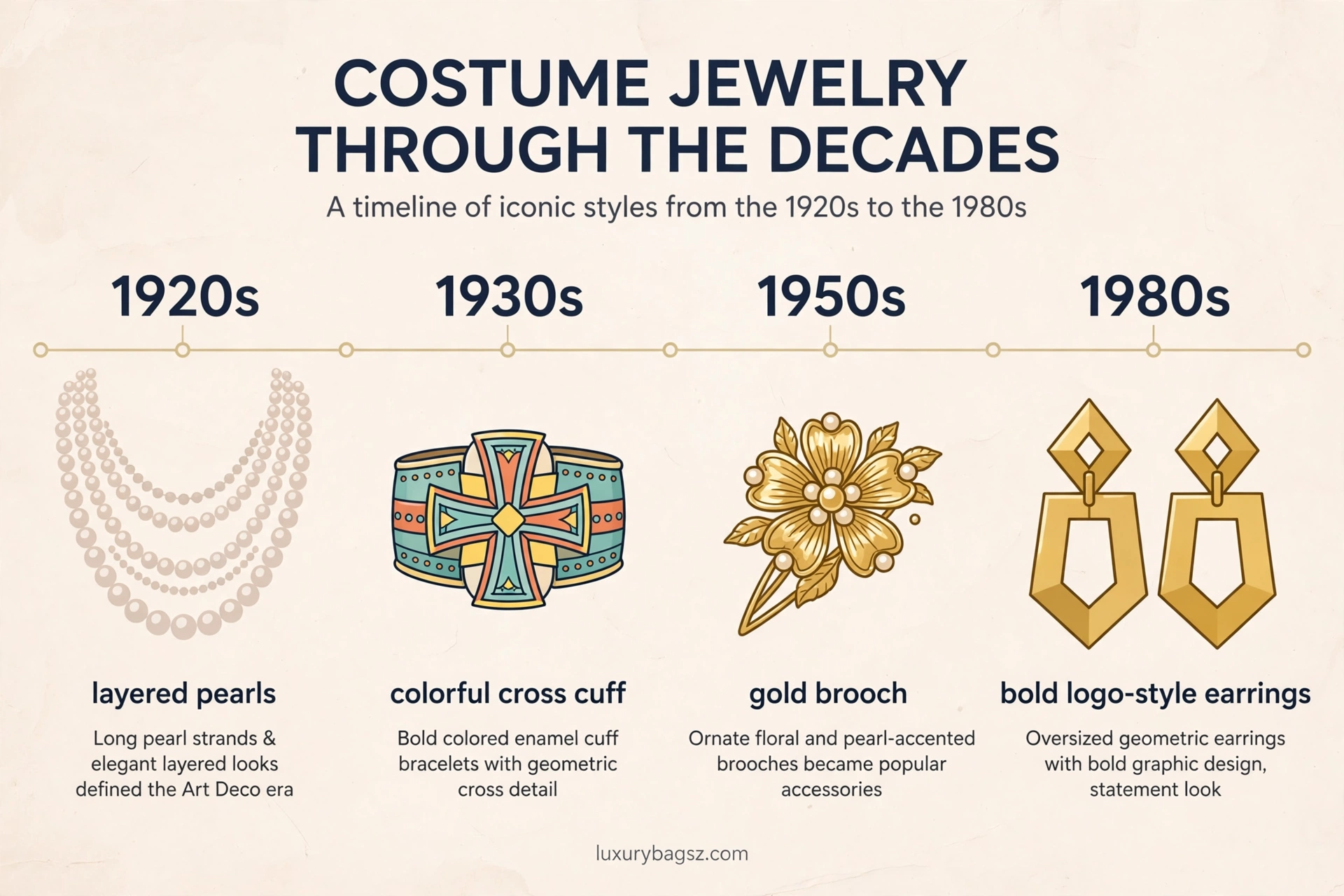
- Coco Chanel popularised mixing costume and fine pieces in the 1920s, with layered pearls and bold cuffs.
- The Maltese Cross cuffs, designed with Verdura around 1930, remain the most famous early motif.
- Early pieces (about 1914 to 1939) are often unmarked, which makes them harder to identify with confidence.
- Marks became more consistent from the 1970s onward, and later marks often carry a season code.
- Condition drives value: plating wear, missing stones, and replaced clasps all lower what a piece is worth.
- Store costume pieces separately, keep them dry, and never clean them like fine jewelry.
The Idea That Changed Jewelry
In the 1920s, Chanel's clothing was deliberately simple: shorter skirts, looser silhouettes, and fabrics that let women move freely. That restraint created room for bold accessories, and Chanel filled it with piles of costume jewelry worn over plain clothes.
She layered ropes of faux pearls, stacked bracelets, and pinned on brooches, often mixing those pieces with fine jewelry given to her by admirers. The contrast was the point. Viewers could not tell at a glance what was precious and what was not, and Chanel liked that confusion.
Her own words on the subject are often quoted: costume jewelry was meant to be an ornament and an amusement, not something made to provoke desire. That attitude freed the house to design boldly, using colour, scale, and shape without worrying about the cost of the stones.
Verdura and the Maltese Cross
Chanel's most famous early collaborator was Fulco di Verdura, an Italian aristocrat who joined the house as a textile designer and soon became head of jewelry design. The pair shared a love of baroque art and a belief that design mattered more than the value of the materials.
Their best-known creation is the Maltese Cross motif, modelled on the star of the Knights of Malta. Verdura filled the cross shape with colourful stones, and the first Chanel versions appeared as brooches, later as the wide enamel cuffs Chanel wore herself.
The original cuffs, made around 1930, sat colourful cabochon stones in a silver-alloy base over a white enamel foundation. Chanel wore them constantly, for casual days and formal evenings alike, and the wear on the surviving enamel shows just how often they were used.
Goossens, Gripoix, and the Post-War Years
Chanel closed her house during World War II and reopened in 1954. For the new era she turned to Robert Goossens, a French jeweler already well known in couture jewelry, who designed many of the house's pieces from the 1950s onward.
Goossens drew on Byzantine, Renaissance, and medieval influences, making ornate, baroque-style pieces from gilt bronze, rock crystal, and glass. His work kept Chanel's founding idea alive: luxury in appearance without reliance on precious gems.
The house also kept working with Maison Gripoix, the French atelier famous for its glass paste stones, beads, and faux pearls. Gripoix glass gave Chanel pieces their shimmering, jewel-toned colour, and floral designs from this period remain among the most collected.
How to Read Chanel Jewelry Marks
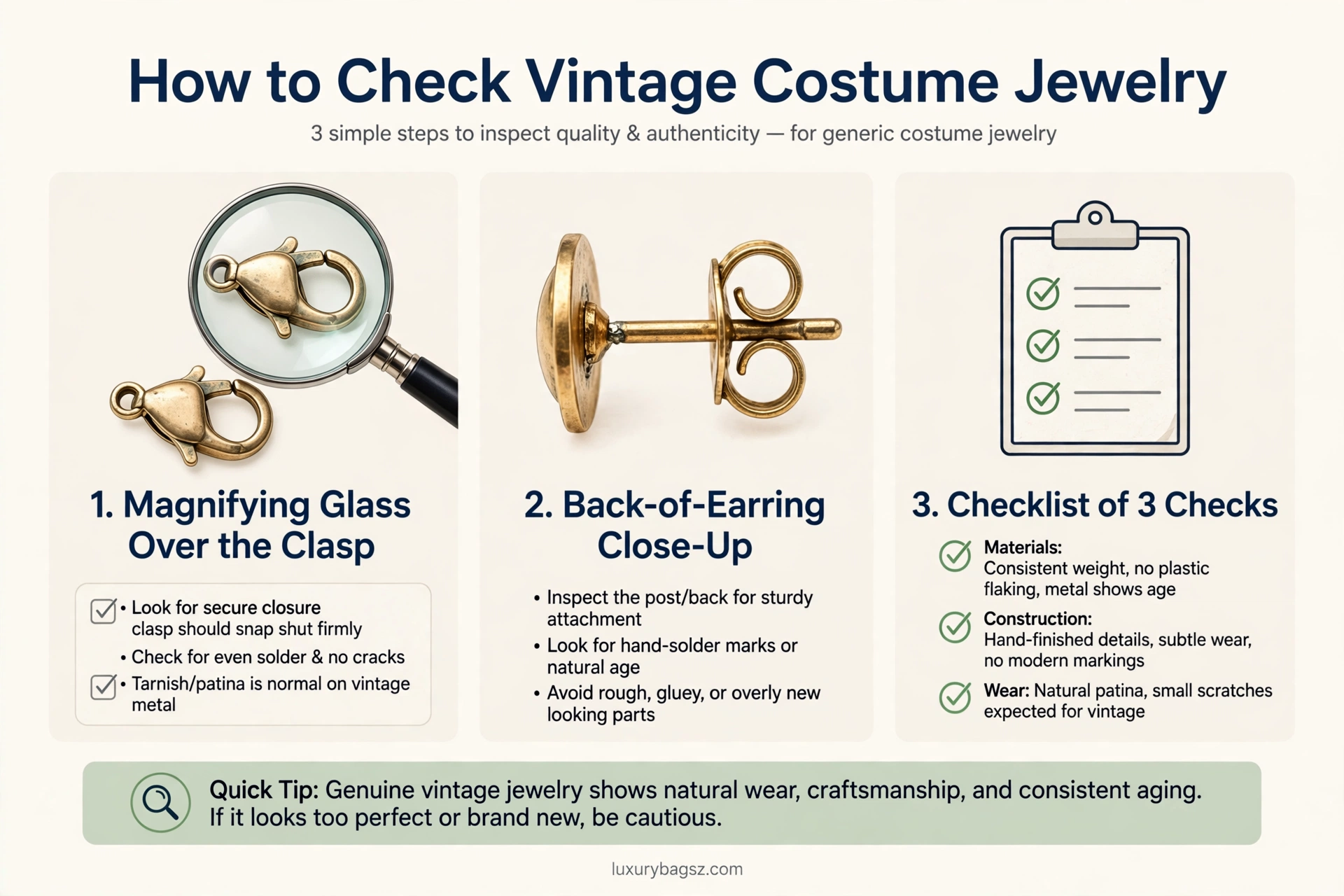
Marks are the trickiest part of buying Chanel fashion jewelry, because the house did not mark pieces consistently for decades. Early pieces, from about 1914 to 1939, are usually unmarked, so attribution rests on design, construction, and provenance rather than a stamp.
Pieces from 1954 through the 1960s were only sometimes marked, often with a round cartouche or a block mark stamped into the piece. From the 1970s onward, marking became more regular, with a round mark carrying the CHANEL name, copyright and registered symbols, and "Made in France."
Later marks are often oval and can include a season code, so a mark reading with two digits may point to the collection season. That detail helps date a piece, but it is not proof on its own. Unlike bags, where buyers study Chanel serial numbers for dating, jewelry marks need to agree with the design, the clasp, and the materials.
The Motifs to Know Before You Shop
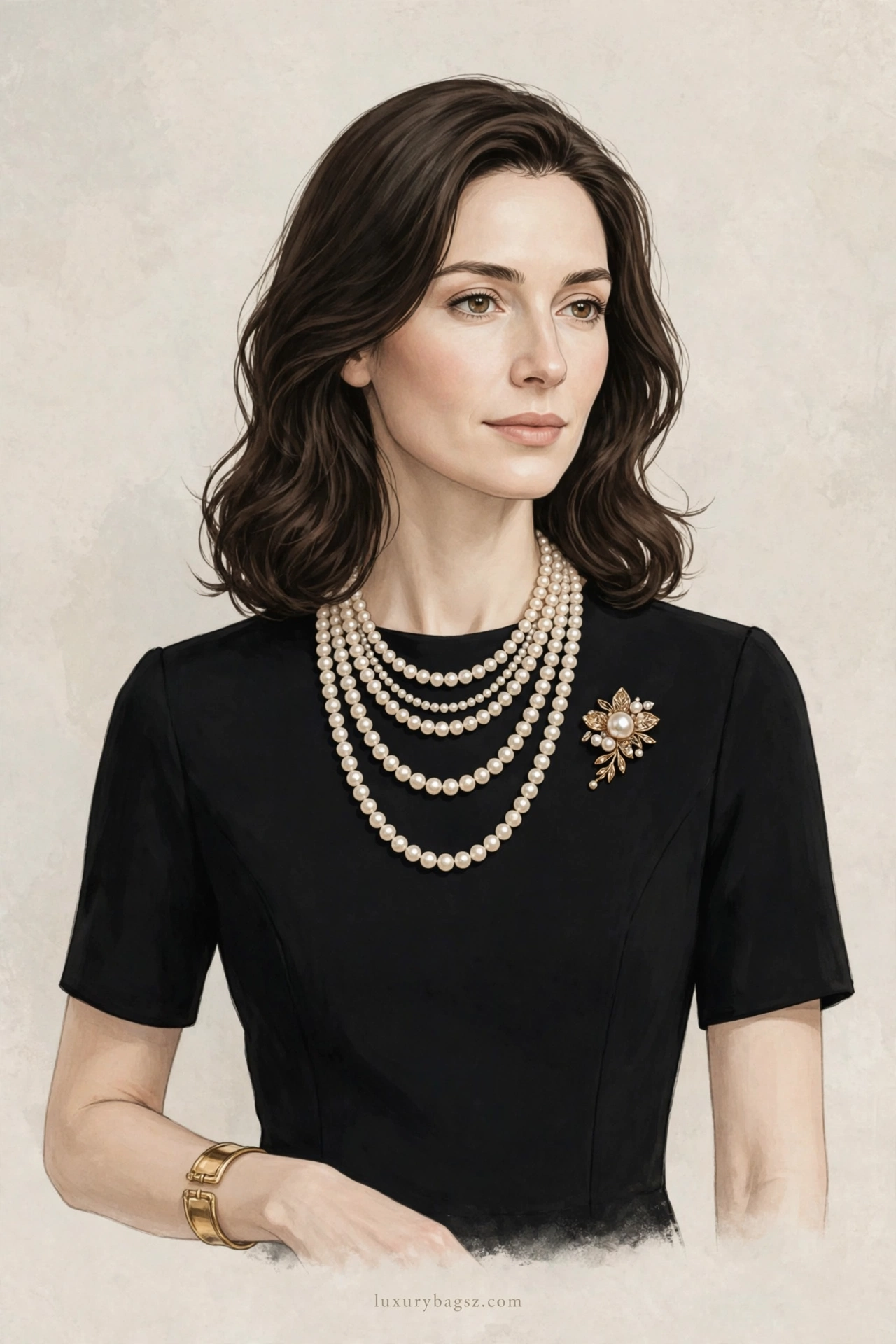
Four motifs cover most of what you will meet. Faux pearls come first: long layered strands, single strands, and pearl clip-on earrings are the most recognisable Chanel look, and they suit almost any outfit.
The interlocking CC logo grew far more prominent after Karl Lagerfeld joined the house in 1983. CC earrings, brooches, and necklaces from the Lagerfeld era are common on the pre-owned market, and condition of the plating matters more than the logo itself.
Camellia flowers, Chanel's favourite bloom, appear as brooches, earrings, and necklace pendants in enamel, resin, and crystal. Chain links, borrowed from bag chains and belts, show up as necklaces, belts, and chunky cuffs, including the vintage chain belts now back in fashion.
Wearing and Caring for Costume Jewelry
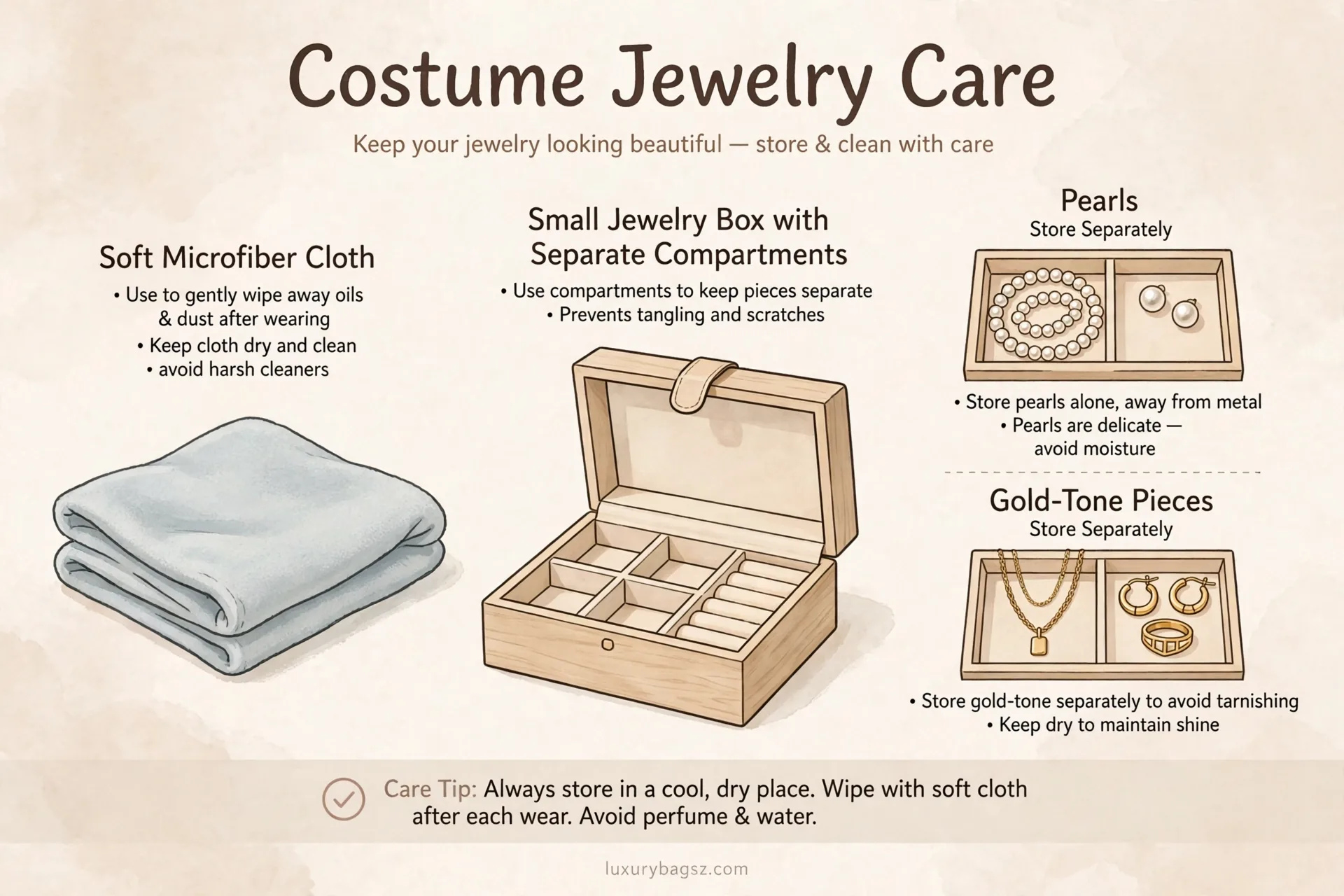
Costume jewelry needs gentler care than fine jewelry, because plating, glue, and glass stones do not survive harsh cleaning. Wipe pieces with a dry, soft cloth after wear, and keep them away from perfume, hairspray, and water.
Store each piece separately, in a pouch or a divided box, so metal does not scratch glass and pearls do not rub against harder stones. Never toss costume pieces into a shared drawer, where clasps snag and plating wears fast.
The same gentle logic applies across the house: our guide to how to clean Chanel bags stresses testing first and using the mildest method, and jewelry deserves the same caution. If a stone is loose or a clasp is failing, take the piece to a jeweler who works with costume pieces rather than forcing a home repair.
Buying Pre-Owned Without Overpaying
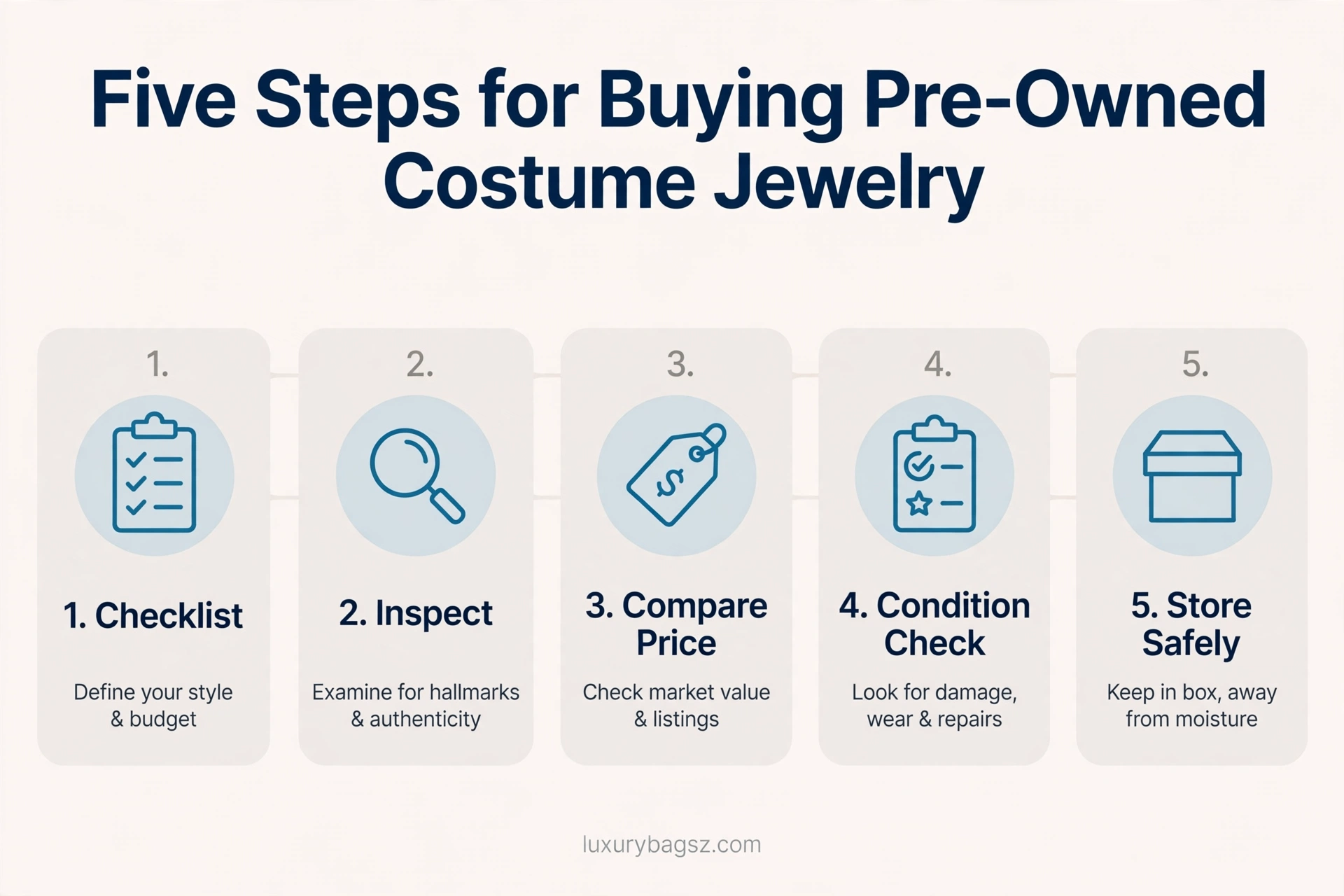
Start with condition, not price. Check plating wear on edges and clasps, look for missing or replaced stones, and test every clasp and clip. A beautiful piece with a failing clasp is a repair bill, not a bargain.
Ask for clear photos of the back of the piece, the clasp, and any mark. Sellers who refuse those photos are telling you something. Compare the design against the era it claims: a supposedly 1950s piece with a 1990s-style oval mark should raise a question, not close a sale.
Price by comparing sold listings for the same motif and era, not by asking prices alone. Our guides to how to resell luxury jewellery and how to price designer jewellery explain why sold prices, not listed prices, set the real market.
Buy from sellers with a clear return policy, and get any big claim about era or rarity in writing.
Fashion Jewelry or Fine Jewelry: Do Not Confuse Them
Chanel makes both, and the difference matters for price and care. Fashion jewelry uses non-precious materials and is priced as fashion. Fine jewelry uses precious metals and stones, is sold through the fine jewelry boutiques, and carries a very different price.
Chanel's one fine jewelry collection in Coco's lifetime was the 1932 Bijoux de Diamants show, and the house did not return to fine jewelry until the 1990s. Most pieces you meet on the pre-owned market, especially bold seasonal costume pieces, belong to the fashion line.
Sources disagree on the exact start date: some guides date the first costume pieces to 1914, others to the 1920s runway collections. The safe reading is that Chanel experimented with costume pieces early and made them central to her look in the 1920s. Either way, the design idea, not a single launch year, is what defines the category.
Frequently Asked Questions
What is Chanel fashion jewelry?
It is the house's costume jewelry line: pieces made from gilt metal, glass, resin, and faux pearls, designed as fashion accessories rather than fine jewelry.
Who designed the first Chanel fashion jewelry?
Coco Chanel drove the idea in the 1920s, working with Fulco di Verdura as head of jewelry design, and later with Robert Goossens after the 1954 reopening.
What is the Maltese Cross cuff?
A wide enamel cuff carrying a cross motif filled with colourful stones, designed by Chanel and Verdura around 1930 and worn constantly by Chanel herself.
Are early Chanel jewelry pieces marked?
Mostly not. Pieces from about 1914 to 1939 are usually unmarked, and 1950s to 1960s pieces were only sometimes marked, so design and construction matter more.
When did Chanel jewelry marks become consistent?
Marking became more regular from the 1970s onward, and later oval marks can include a season code that helps date a piece.
Is Chanel fashion jewelry worth buying pre-owned?
It can be, if condition is strong and the price reflects sold listings for the same motif and era. Plating wear and missing stones lower value sharply.
How should I clean Chanel costume jewelry?
Wipe with a dry, soft cloth, keep it away from perfume and water, and never use harsh cleaners or ultrasonic machines meant for fine jewelry.
Can I wear Chanel costume jewelry every day?
Yes, for pieces in good condition, but daily wear speeds plating wear. Rotate pieces, remove them before showering or swimming, and store them separately.
What is the difference between Chanel fashion and fine jewelry?
Fashion jewelry uses non-precious materials and fashion pricing, while fine jewelry uses precious metals and stones and sells through fine jewelry boutiques.
Should I buy Chanel jewelry as an investment?
Buy pieces you love wearing first. Some vintage motifs hold value well, but no costume piece guarantees a return, and condition is what protects resale.
Final Verdict
Chanel fashion jewelry rewards buyers who learn the story before they spend. Know the 1920s idea, the Verdura and Goossens eras, the four core motifs, and the limits of marks, and you can shop with confidence.
Start with one strong, well-conditioned piece, wear it often, and store it well. That is exactly how Chanel herself treated these pieces: as ornaments to enjoy, not treasures to lock away.