

The Complete Guide to Hermès Hardware: Gold, Palladium, and Beyond
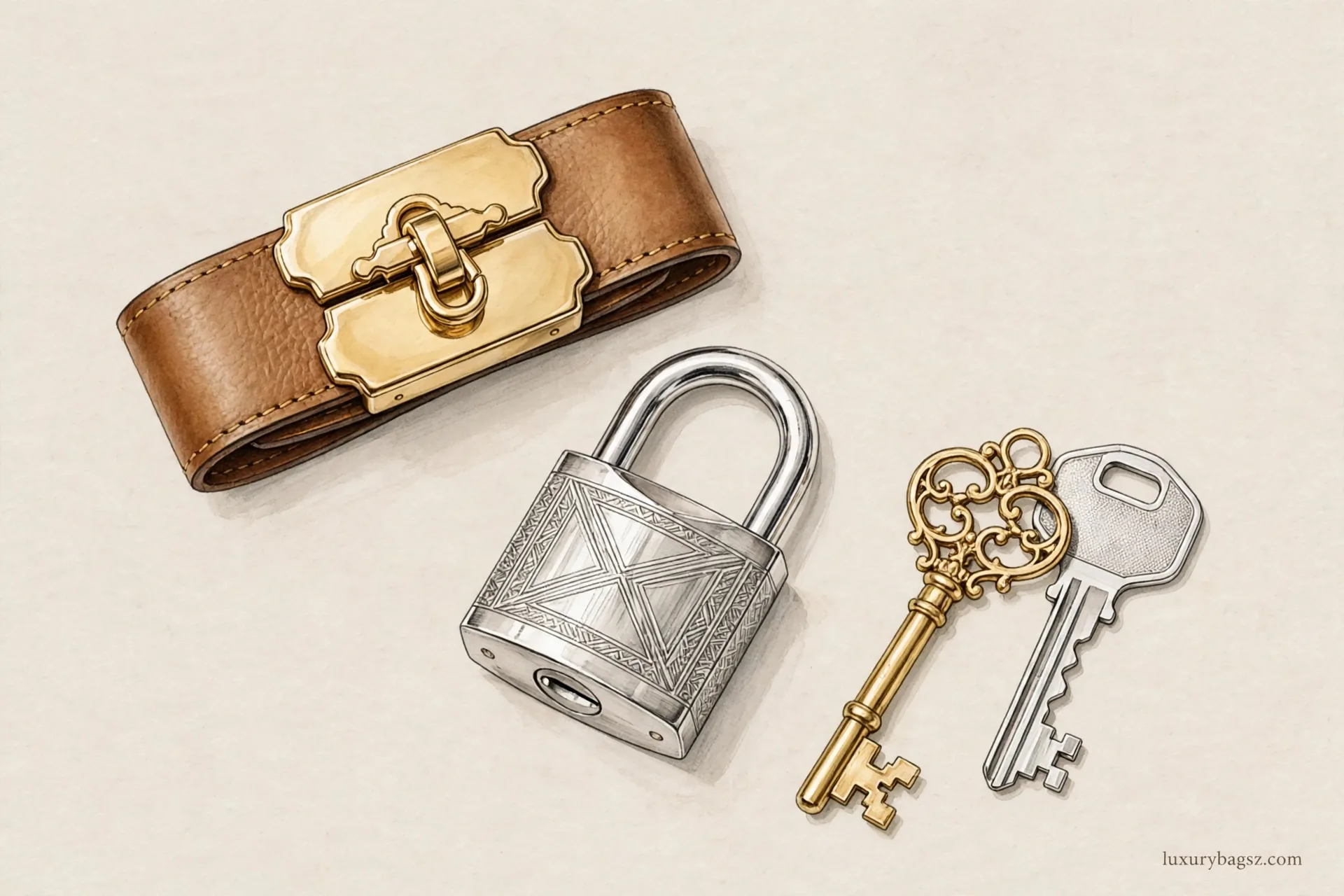
Hermès Hardware at a Glance
On a Birkin or Kelly, hardware is far more than a functional detail. The lock, plaque, feet, and clasps act like jewelry for the bag, and their finish can change the whole character of a design. A black bag with gold hardware reads classic and warm, while the same bag in palladium reads cooler and more modern.
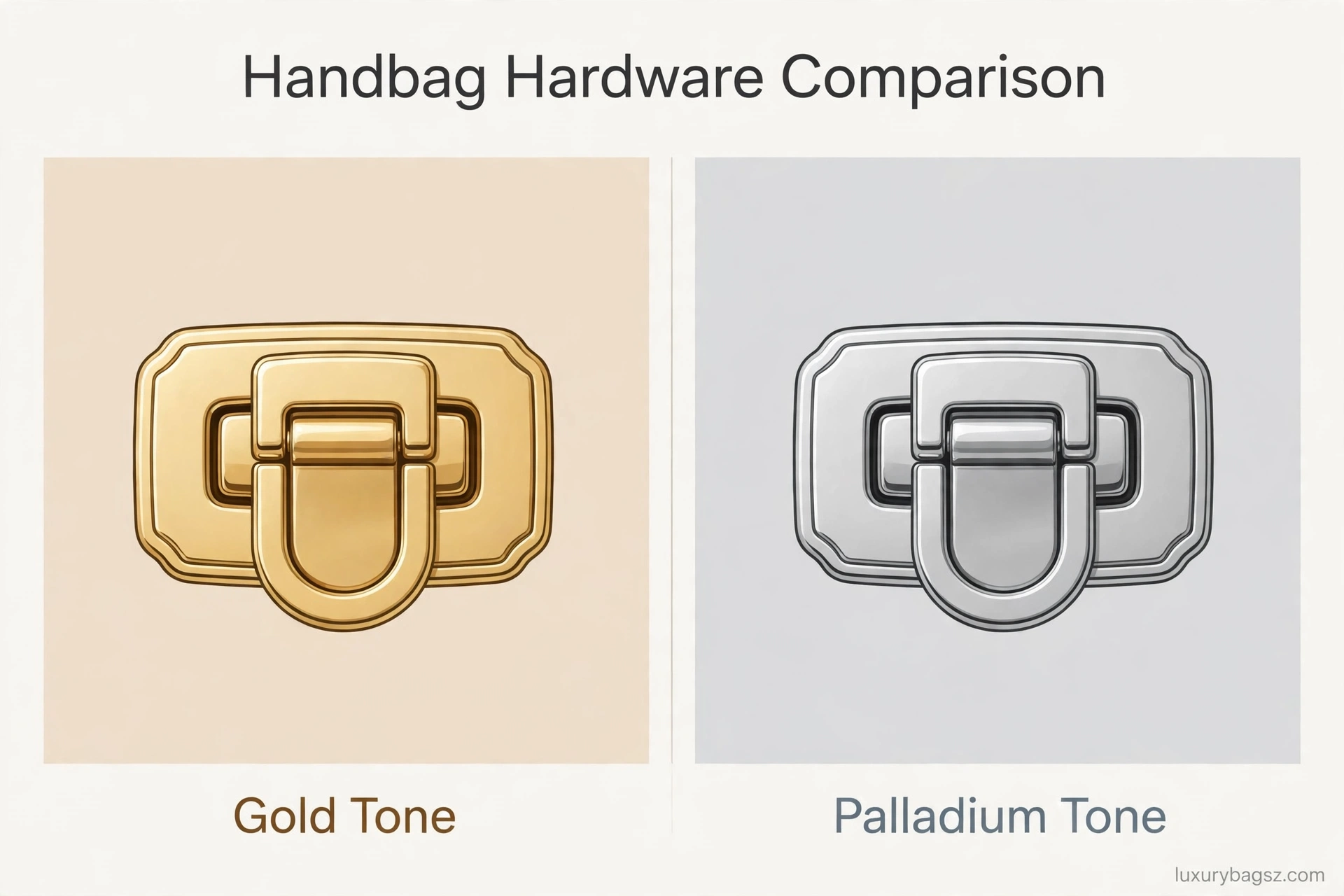
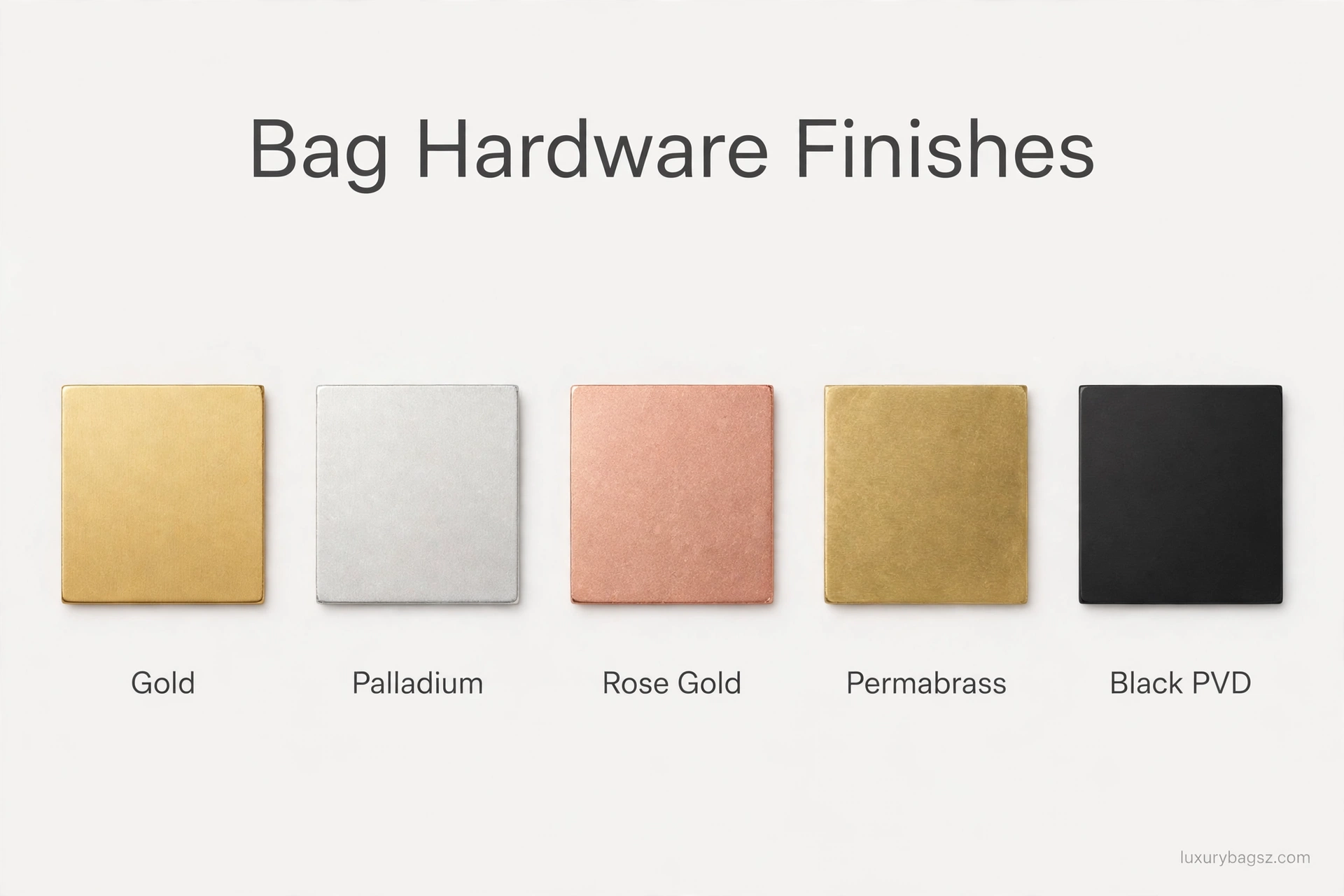
Gold and palladium are the two classic choices, and most buyers will choose between them. Beyond those, Hermès offers rose gold, permabrass, electrum, brushed finishes, ruthenium, black PVD, guilloché, enamel, and diamond-set hardware, each with its own look, rarity, and care needs.
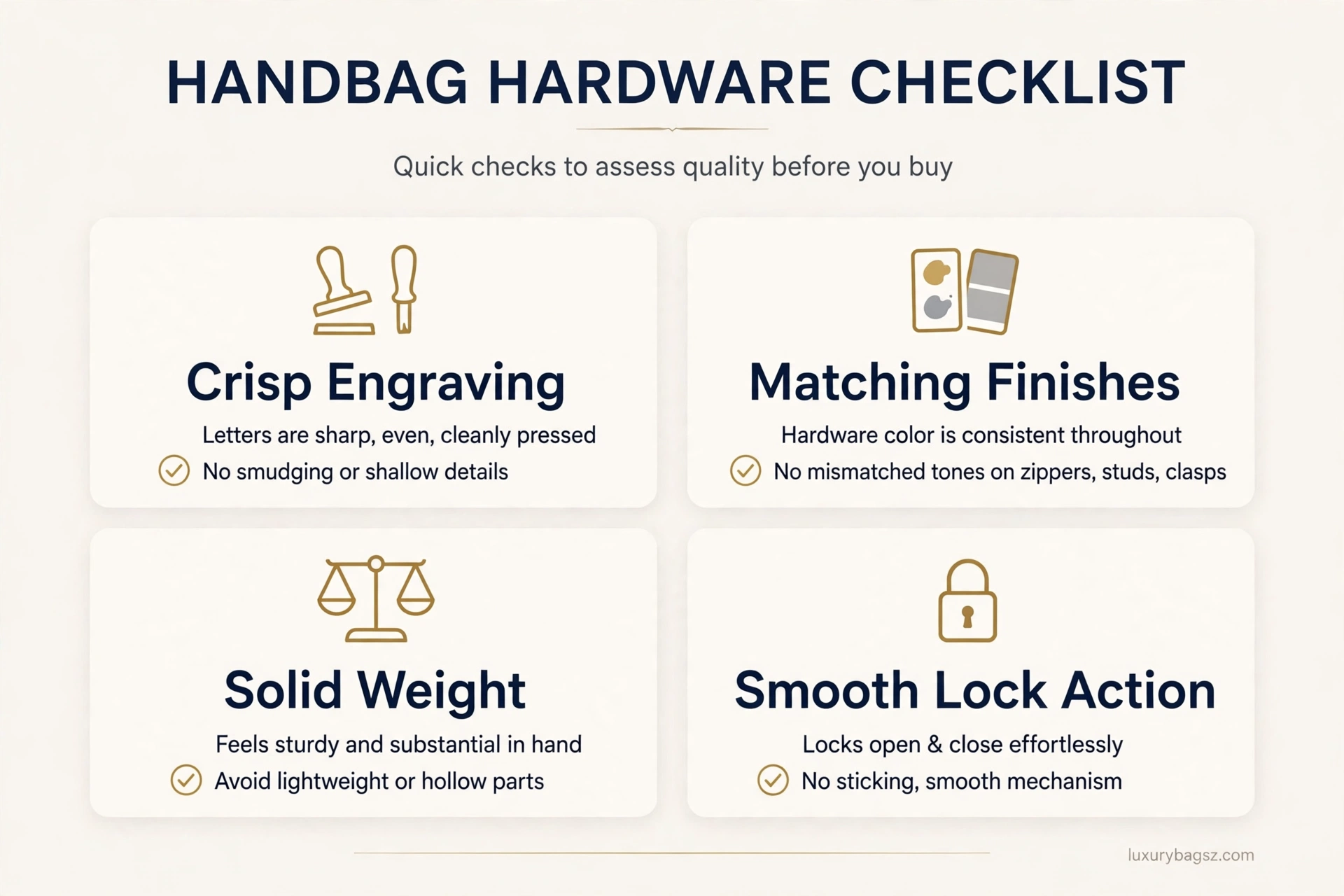
The practical rule is simple: pick the finish that suits your leather, your jewelry, and your life, then check it carefully on any pre-owned bag. Hardware should match across every piece, feel solid in the hand, and show crisp, clean engraving.
Key Takeaways

- Gold hardware (GHW) is warm and classic, typically 18-karat gold plating, while palladium hardware (PHW) is cool, bright, and tarnish-resistant.
- Rose gold, permabrass, and electrum offer softer or mixed-metal alternatives to the two classics.
- Brushed finishes soften shine and hide wear differently, while ruthenium and black PVD give darker, edgier looks.
- All hardware on one bag should match, with very few exceptions, such as gold zippers on some rose gold and permabrass bags.
- Gold shows scratches more readily than palladium, so daily-use buyers often lean palladium or brushed finishes.
What Hermès Hardware Actually Is
Hermès hardware covers every metal piece on or inside a bag: the lock, key, front plaque, feet, D-rings, clasps, zippers, and strap fittings. On a Birkin, that includes the touret, pontets, and padlock; on a Kelly, it includes the turn-lock, plaque, and handle attachments.
The base is solid brass, which gives the pieces their reassuring weight. Each piece is then plated in the chosen precious metal, so what you see is a finish over brass, not a solid gold or solid palladium object. That distinction matters when comparing standard bags with diamond-hardware editions.
One house habit helps buyers: all hardware on a given bag is normally plated in the same metal and matches throughout. Bags with rose gold or permabrass hardware are known exceptions, since they often carry gold zippers. Anything else mismatched deserves a closer look.
Size also shapes the choice. Our guide to Birkin sizes shows how the same finish reads differently on a small 25 and a larger 35, since bigger bags carry more visible metal. Try to judge hardware on the size you will actually carry.
Gold vs Palladium: The Two Classics
Gold hardware, known as GHW, is the classic warm choice. Hermès generally uses 18-karat gold plating, while select rare styles and Special Order creations have also used 24-karat gold. The finish is bright, luminous, and instantly recognizable as traditional luxury.
Gold brings warmth to dark leathers and a tonal glow to warm ones. On black, it creates a pronounced contrast that draws the eye to the lock and plaque. On Gold or Rouge H leathers, the effect is richer and more blended, like jewelry that belongs to the bag.
Palladium hardware, known as PHW, is the cool counterpart. Palladium belongs to the platinum group of metals, and its finish is brighter and whiter than silver, with a crisp, silvery shine. It resists tarnish well and keeps its cool tone over years of wear.
Palladium pairs beautifully with greys, blues, and vivid brights, where its cool tone sharpens the leather color. It also suits buyers who want a quieter, more modern read, since it does not announce itself the way gold does. Many limited-edition Birkins and Kellys are produced with palladium alone.
At auction, gold has often averaged more than palladium for regular-leather Birkins and Kellys, though the gap has narrowed in recent years. One market analysis found gold taking over 40 percent of the auction market and palladium over 52 percent, with rarer finishes sharing the rest. Treat that as a trend, not a promise about any single bag.
Rose Gold, Permabrass, and Electrum
Rose gold hardware, known as RGHW, brings a soft pink warmth to the gold palette. It is gold mixed with copper, which gives the blush tone and adds a little durability. First introduced on Hermès bags in 2018, it is a relatively recent addition and feels contemporary.
Rose gold looks especially elegant against neutral, blush, and pastel leathers. It suits buyers who find yellow gold too strong and palladium too cool, and it pairs naturally with the rose gold jewelry many people already wear. It appears most often on Special Orders and select styles.
Permabrass, known as PBHW, sits between gold and palladium with a muted champagne hue. It is the diplomatic choice: warm enough to flatter dark leathers, soft enough not to dominate pale ones. Once largely tied to Special Orders, it has become more visible on select regular-production styles in recent seasons.
Electrum is the boldest compromise of all, since it combines both metals on one bag. On the Kelly, the touret and rivets are finished in gold, while the plaque, pontet, clou, clochette, and strap clasps feature palladium. The result feels unexpected yet versatile, and collectors prize it for its rarity.
Brushed, Ruthenium, and PVD Finishes
Brushed gold (BGHW) and brushed palladium (BPHW) take the classic metals and give them a satin surface. Fine, directional brushing diffuses light instead of reflecting it, so the finish reads softer, quieter, and more modern than polished metal.
Brushed finishes have a practical advantage and a trade-off. The matte surface hides light wear differently than a mirror polish, but some collectors note that brushed hardware can show scratches more easily in certain lights. Handle a brushed bag in person before committing, since photos flatten the texture.
Ruthenium hardware (RHW) is darker and moodier, a deep smoky grey somewhere between charcoal and gunmetal. As another platinum-group metal, it reads more masculine and contemporary than palladium, and it appears on select styles, including lizard bags and men's designs.
PVD is not a metal but a coating process. Physical Vapor Deposition lays a thin coating onto the hardware, producing the intensely dark, almost black look of the celebrated So Black bags. Introduced under Jean Paul Gaultier, So Black pairs black PVD hardware with black leather for a fully monochromatic effect.
So Black and ruthenium both reward careful handling. Dark coatings can show edge wear over time, and repairs are harder to disguise than on polished gold or palladium. Buy them because you love the look, not because you expect them to hide wear forever.
Guilloché, Enamel, and Diamond Hardware
Guilloché is a decorative treatment rather than a separate metal. The hardware surface is engraved with a precise, repeating pattern, which catches light and gives the metal an almost jewelry-like shimmer. It is particularly rare in the handbag world and prized by collectors for its intricate detail.
Enamel lacquer adds color and gloss to selected hardware, most famously the H clasp of the Constance. The lacquered surface turns a functional piece into a decorative one, with the color either complementing or contrasting with the leather. Treat enamel gently, since chips are hard to restore invisibly.
Diamond hardware sits at the very top. Exceptional bags feature 18-karat white gold hardware set with diamonds, often paired with the finest exotic skins. The most famous examples are diamond Himalaya Birkins and Kellys, where the hardware alone signals a different tier of rarity.
Our guide to what a Himalaya Birkin is explains why those bags command such attention, from the gradient skins to the diamond-set fittings. For most buyers, diamond hardware is a reference point, not a shopping list, but it shows how far the house takes metalwork.
Choosing Hardware for Your Leather and Lifestyle
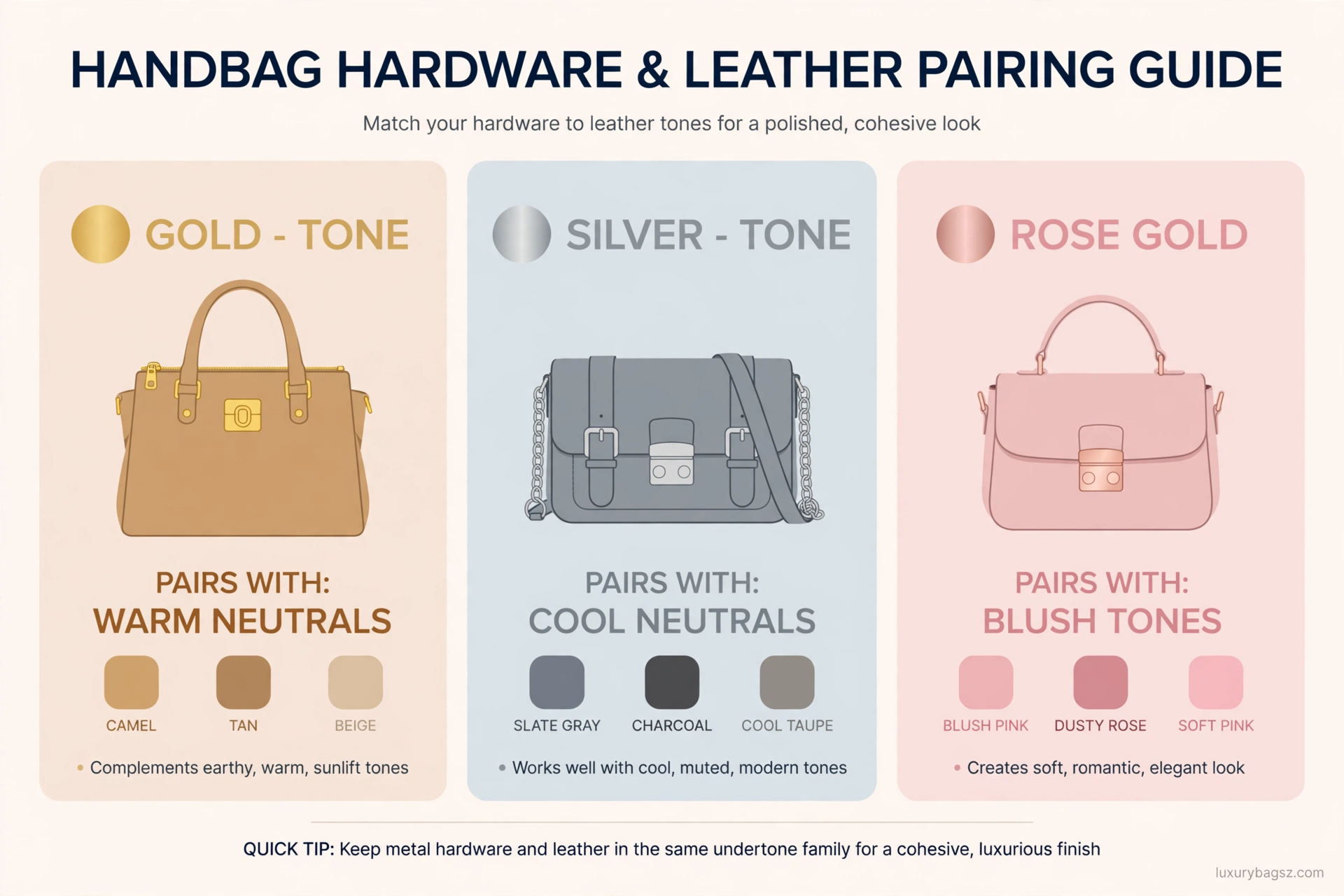
Start with your jewelry. An easy test is to look at what you wear daily: if your wedding ring and favorite earrings are yellow gold, GHW will feel natural; if they are white gold or platinum, PHW will sit more comfortably in your existing rotation.
Next, consider the leather. Gold flatters Noir, Etoupe, Rouge H, and Gold leathers with classic warmth. Palladium sharpens Etain, Blue Nuit, Gris Mouette, and vivid brights. Rose gold loves neutrals and pastels, while permabrass bridges warm and cool leathers with its champagne tone.
Then be honest about use. Gold plating shows fine scratches and fingerprints more readily than palladium, and high-contact pieces like locks and clasps wear first. If the bag will travel, commute, and live a hard daily life, palladium or a brushed finish may age more gracefully.
The Kelly-versus-Birkin shape also matters, since each shows hardware differently. Our comparison of Kelly vs Birkin notes how the Kelly's plaque and turn-lock put metal front and center, while the Birkin spreads it across straps, lock, and feet. Choose the finish on the bag you will actually wear.
Finally, think about resale breadth. Gold and palladium are the easiest finishes to resell because every buyer understands them. Rarer finishes can command premiums among collectors, but they narrow the audience, so buy rare finishes for love first and resale second.
Pre-Owned Checks: Reading Hardware Like a Collector
Start with matching. Every piece, from clasps to zippers to feet, should share the same tone, with the known rose gold and permabrass zipper exceptions. Mismatched tones, or gold showing through worn palladium, are warning signs that deserve an expert opinion.
Check the engraving with a loupe if you can. Genuine Hermès front plates are stamped "Hermès-Paris," and locks, keys, and newer zippers carry "Hermès" engraving. Palladium bags carry a hyphen after "Paris" on the front plate, while gold hardware carries a small box beside "Paris" with tiny writing inside.
Feel the weight and action. Genuine hardware feels solid and substantial, locks open and close smoothly, and clasps engage with a clean click. Lightweight, hollow-feeling pieces, sticky locks, or blurry, shallow engraving all point away from genuine house quality.
Inspect high-contact areas closely: the lock face, the plaque edges, the feet, and the zipper pull. Gold plating wears first where hands and surfaces rub, and dark PVD coatings show edge wear. Light, even wear can be honest; patchy loss, peeling, or brass showing through in odd places is not.
Our guide on how to spot a fake Birkin covers hardware alongside stitching, leather, and stamps, and it is worth reading before any pre-owned purchase. When doubt remains, pay for an independent authentication rather than trusting a listing's confidence.
Caring for Hardware So It Ages Well
Hardware ages through touch. Oils from hands, friction from surfaces, and knocks against tables all leave their mark, and gold develops a warm, lived-in glow over time that many collectors actually prefer to a brand-new shine.
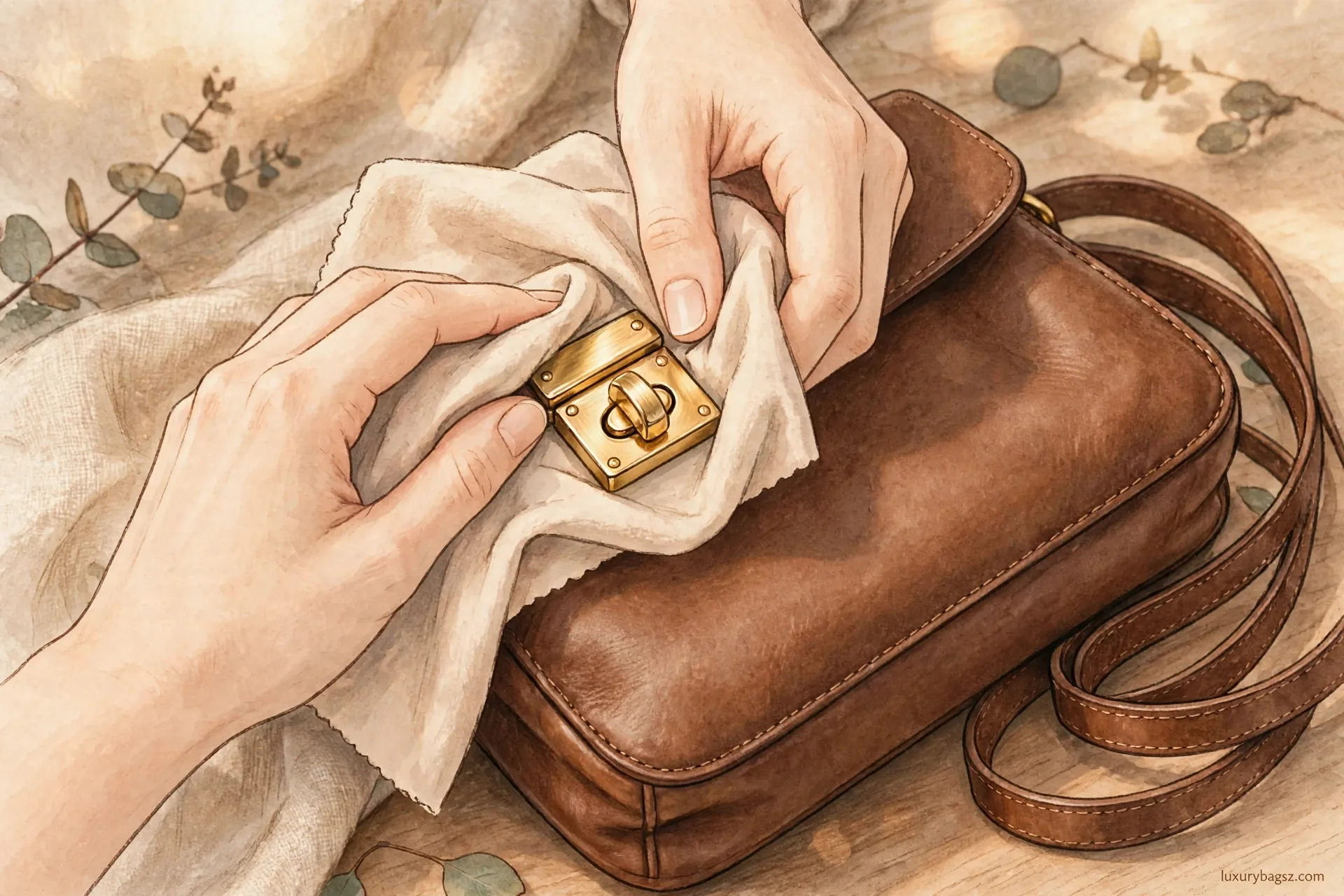
Clean gently and rarely. A soft, dry cloth removes dust and fingerprints without abrading plating, and a slightly damp cloth handles grime. Avoid metal polishes, abrasive cloths, and chemical cleaners, which can strip plating and dull engraving faster than years of normal wear.
Store the bag so metal does not rub metal. Keep the lock and keys in their clochette, rest the bag on its feet rather than its hardware, and avoid tossing keys or jewelry into the same compartment. Small habits protect the finish far better than any later restoration.
For leather care that goes with hardware care, our guide on how to clean a Birkin breaks down safe cleaning by leather type, stains, and storage. Clean the leather and the metal with different tools, and never let a leather product sit on plated hardware.
When plating wears through or a piece breaks, go to Hermès or a specialist restorer rather than a general repair shop. Re-plating is a skilled job, and a poor repair can cost more in value than the original wear. Honest wear is part of a bag's story; a bad repair is not.
Frequently Asked Questions
What is the difference between gold and palladium Hermès hardware?
Gold hardware (GHW) is warm, yellow-toned, and typically 18-karat gold plating, while palladium hardware (PHW) is cool, bright, and silvery, from a platinum-group metal. Gold reads classic and warm; palladium reads modern, cool, and more resistant to tarnish.
Is Hermès hardware solid gold?
No, standard hardware is solid brass plated in the chosen metal, such as 18-karat gold or palladium. Diamond hardware editions use 18-karat white gold set with diamonds, but even those are distinct from solid-gold construction, and the plating is the finish you see and wear.
What is permabrass hardware?
Permabrass (PBHW) is a muted champagne hue that sits between gold and palladium. It flatters both warm and cool leathers, feels softer than polished gold, and was once largely tied to Special Orders before appearing on select regular-production styles.
What is electrum hardware?
Electrum combines gold and palladium components on a single bag. On the Kelly, the touret and rivets are gold while the plaque, pontet, clou, clochette, and strap clasps are palladium. It is rare, distinctive, and prized by collectors for its mixed-metal effect.
What is So Black hardware?
So Black hardware is black PVD-coated metal, where Physical Vapor Deposition lays a thin dark coating onto the hardware. Paired with black leather, it creates a fully monochromatic bag. It looks striking but can show edge wear, so handle it with care.
Does gold hardware scratch more easily than palladium?
Yes, in general. Gold plating is softer and shows fine scratches, scuffs, and fingerprints more readily, especially on locks and clasps. Palladium resists scratching and tarnish better, which is one reason daily-use buyers often prefer it or choose a brushed finish.
How can I tell genuine Hermès hardware?
Look for matching finishes across every piece, solid weight, smooth lock action, and crisp engraving. Front plates read "Hermès-Paris," with a hyphen after "Paris" for palladium and a small box beside "Paris" for gold. Blurry engraving or mismatched tones are warning signs.
Is rose gold hardware still available?
Rose gold (RGHW) appears on select styles and Special Orders rather than across the whole range. Introduced on Hermès bags in 2018, it suits neutrals and pastels and pairs naturally with rose gold jewelry, but availability varies by season and style.
Which hardware holds value best?
Gold and palladium are the safest for resale because every buyer understands them, and gold has often averaged more at auction for regular-leather bags. Rare finishes like electrum, guilloché, and diamond can command premiums, but they appeal to a narrower collector audience.
How should I clean Hermès hardware?
Wipe gently with a soft, dry cloth, and use a slightly damp cloth only for grime. Avoid metal polishes, abrasive cloths, and chemical cleaners, which can strip plating. Store the bag on its feet, keep keys in the clochette, and send worn or broken pieces to Hermès or a specialist.
Gold or Palladium: The Finish I Reach For
The best Hermès hardware choice is the one that disappears into your life and lets the bag do its work. Gold brings warmth and tradition, palladium brings cool modernity and durability, and the rarer finishes bring personality for collectors who know exactly what they want.
Match the finish to your jewelry, your leather, and your daily reality, then verify it carefully on any pre-owned bag. A finish you love, checked properly and cared for gently, will look better in ten years than a fashionable finish you never quite trusted. That is the real luxury of getting hardware right.
Hardware is where my checking starts on every Hermès bag, because the finish tells the truth about age, care and authenticity in one look. Across the 500-plus bags I have examined, gold reads warm and traditional, palladium stays cool and forgiving — and the right answer has always been the one that serves the bag and the life around it, never the other way round.






