Hermès Blue Colours: From Bleu Nuit to Bleu Electrique
Hermès Blue Colours: From Bleu Nuit to Bleu Electrique
Hermès Blues Run From Near-Black Navy to Pale Pastel
Hermès blue colours form the widest family in the house palette, running from Bleu Nuit, which can pass for black indoors, to pale Bleu Celeste and vivid Bleu Electrique. No single blue suits every buyer, leather or budget.
This guide maps twelve well-attested blues from dark to light to bright, with undertones, leather behaviour and resale notes for each. For the wider palette beyond blue, start with our complete Hermès colours guide.
| Shade | Code | Group | Undertone |
|---|---|---|---|
| Bleu Nuit | 2Z | Dark | Greyed slate navy |
| Bleu Indigo | 76 | Dark | Violet-leaning midnight |
| Bleu Encre | M3 | Dark | Warm, pure ink navy |
| Bleu de Prusse | 7P | Dark | Slate with periwinkle |
| Bleu Saphir | 73 | Dark | Jewel navy, violet lift |
| Bleu du Nord | P3 | Dark | Cool navy with grey |
| Bleu Jean | 75 | Mid | Faded denim, faint green |
| Bleu Hydra | T7 | Bright | Brilliant cerulean |
| Bleu Electrique | 7T | Bright | Vivid cobalt, purple kiss |
| Bleu Atoll | 3P | Bright | Clear turquoise-leaning blue |
| Bleu Celeste | 7N | Light | Vivid summer-sky blue |
| Bleu Brume | T0 | Light | Misty pale ice blue |
Key Takeaways
- Dark blues such as Bleu Nuit and Bleu Saphir behave as neutrals and hold value most steadily.
- One blue is effectively three colours on Togo, Epsom and Swift, so never judge it from one photo.
- Pale blues show dye transfer first, brights show corner rub first, and dark blues forgive daily use.
- Palladium cools and sharpens a blue, gold warms it, and the gap is largest on pale shades.
- Verify the exact colour name and code on paperwork before paying, especially between navies.
The Dark Blues: Navies That Work as Neutrals
Dark blues are where most buyers should start. They pair with black and tailoring, never date, and disguise small marks.
Bleu Nuit (2Z)
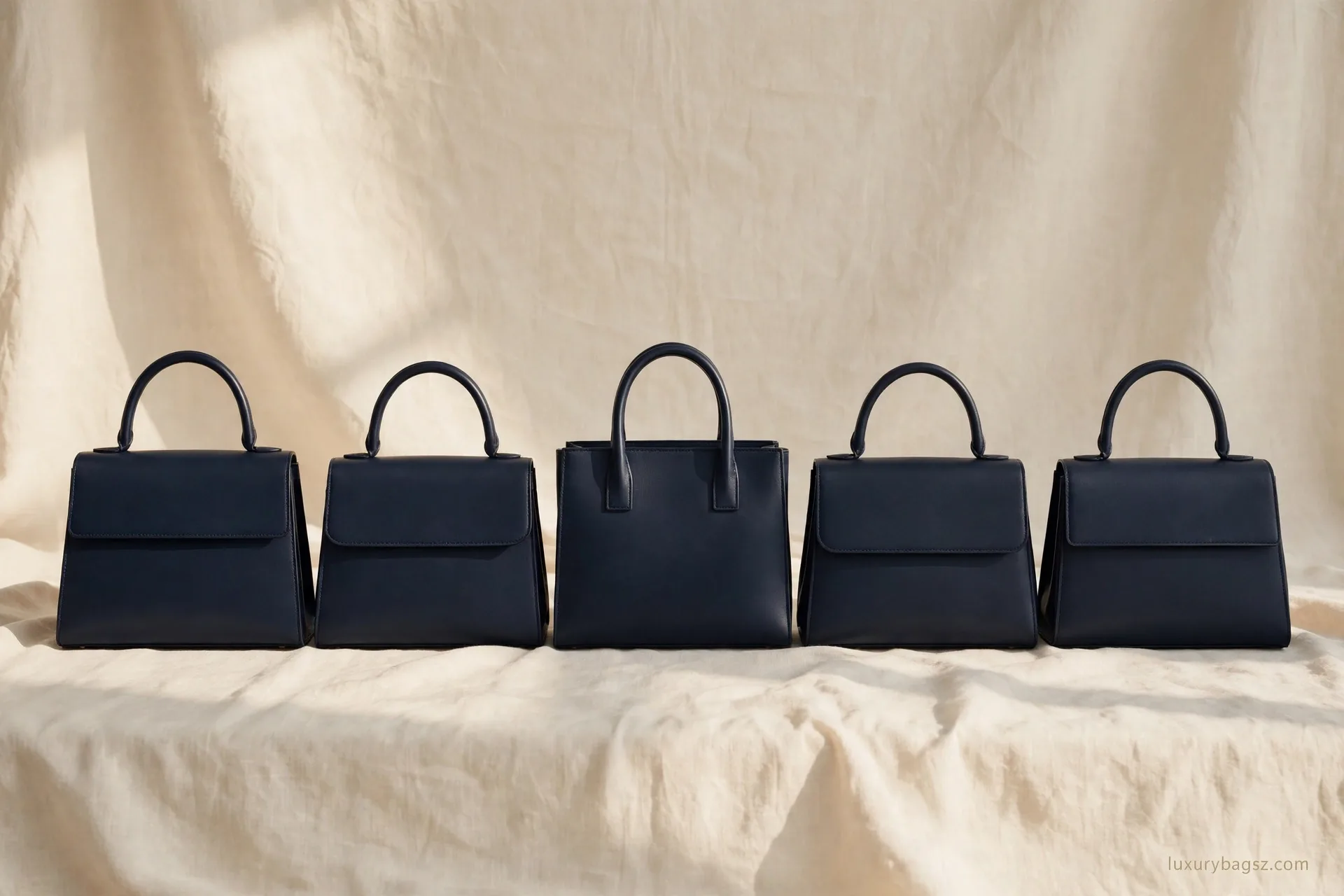
Bleu Nuit is the darkest blue Hermès offers, a heavily greyed slate navy that reads as black in indoor and low light. In daylight the navy separates clearly from Noir, which is exactly its appeal for daily wear.
It is classed among the house classic colours and suits buyers who want the discipline of a black bag with a softer edge. On Togo it looks deepest, on Epsom flatter and more formal, and on Clemence slightly muted.
Bleu Saphir (73)
Bleu Saphir is a rich jewel navy with purple undertones that emerge in the light. Unlike Bleu Nuit, it is always unmistakably blue, though its temperature shifts between warm and royal and cooler and deeper.
Christie’s notes that bags in this shade are highly valued at auction, and resellers rank it among the strongest blues. On Epsom it looks crisp and brilliant, while Togo softens it towards a classic navy.
Bleu Indigo (76) and Bleu Encre (M3)
Bleu Indigo is a deep midnight blue with violet undertones that appear in sunlight and vanish indoors, where it can pass for black. It sits close to Bleu de Prusse and rewards buyers who enjoy that shift.
Bleu Encre is a full, saturated ink navy, warmer than Bleu Nuit and without its grey. It flattens and darkens in studio photographs, so listings for Encre and Nuit are the pair most often confused online.
Bleu de Prusse (7P) and Bleu du Nord (P3)
Bleu de Prusse takes its cue from Prussian military uniforms: a dark slate blue with periwinkle undertones. It feels intellectual and restrained, closer to fountain-pen ink than to a bright navy.
Bleu du Nord is a cool, dark navy with a grey influence, described by specialists as a quiet power blue. It reads as a neutral, wears all year and looks especially strong in structured Epsom and Togo.
The Mid Blues: Bleu Jean and the Denim Family
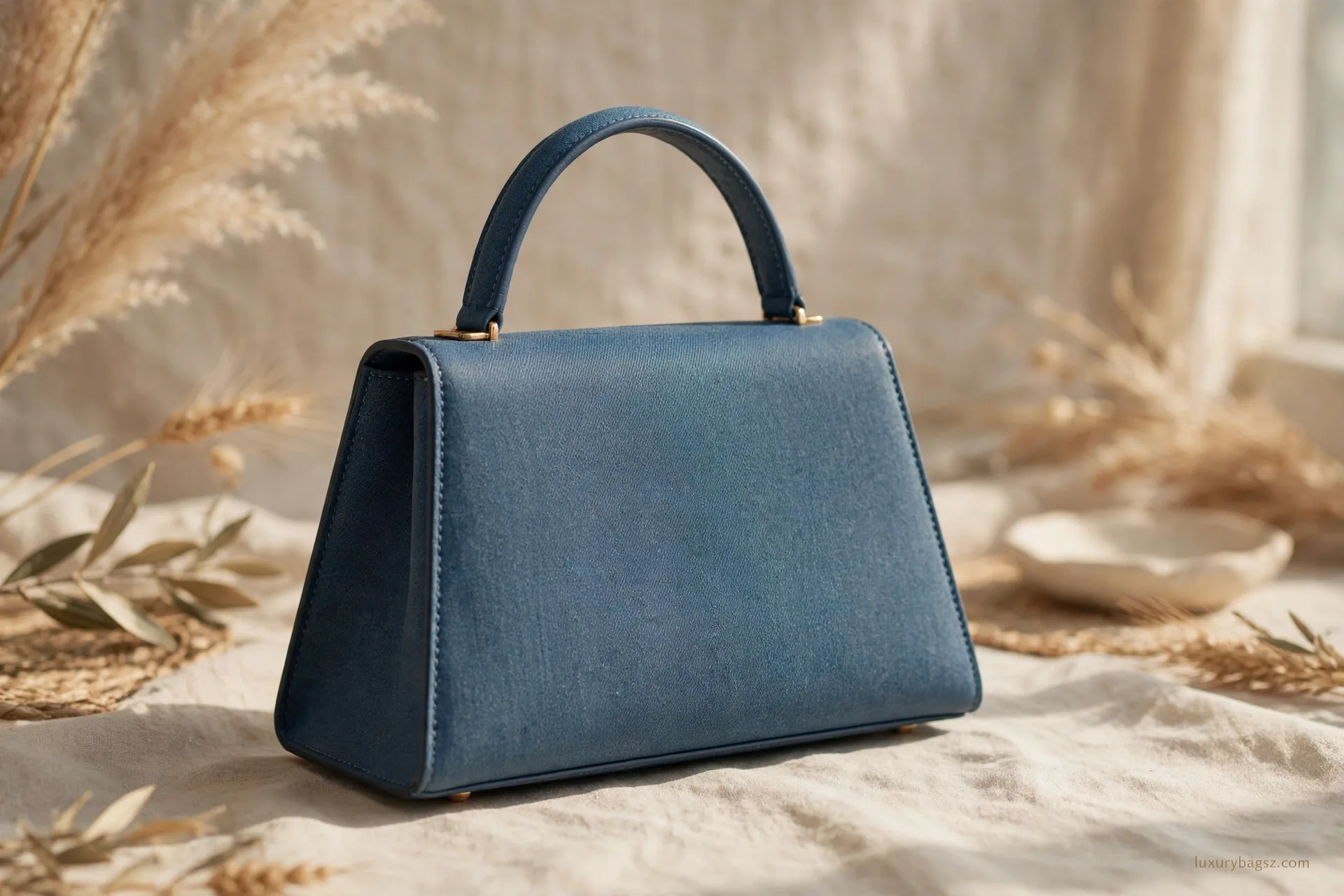
Between the navies and the brights sits the denim territory, and one name dominates it. A real-world example is the Hermès blue Clemence Birkin 30, which shows how a mid blue softens in a slouchy leather.
Bleu Jean (75)
Original Bleu Jean is the classic faded-denim shade, barely touched with a green tinge. That green edge is the giveaway in photographs: a blue that leans turquoise is usually the original, not a later reissue.
Bleu Jean divides opinion more than any navy. Devotees love its casual ease with white, grey and tan, while others find the green cast harder to pair in winter. In Clemence it looks relaxed, in Epsom far sharper.
Later New Bleu Jean versions use a different code and a cleaner tone, so ask which version the paperwork shows.
The Bright Blues: Hydra, Electrique and Atoll
Bright blues are deliberate colour choices rather than neutral substitutes. They photograph vividly, lift plain outfits instantly and divide buyers sharply, which is why condition matters so much at resale.
Bleu Hydra (T7)
Bleu Hydra is a brilliant cerulean blue, deeply saturated and luminous in smooth and fine-grained leathers. In Epsom it can look almost electric, while in Clemence the same dye reads softer and more lived-in.
Bleu Electrique (7T)
Bleu Electrique is a dark but vivid cobalt, lightly kissed by royal purple. It is darker than Hydra and Atoll, which gives it more evening weight, and it remains enormously popular on the secondary market.
Bleu Atoll (3P)
Bleu Atoll is a clear, saturated blue leaning towards turquoise, inspired by tropical waters. It is fresher and greener than Hydra, photographs beautifully and pairs especially well with palladium hardware.
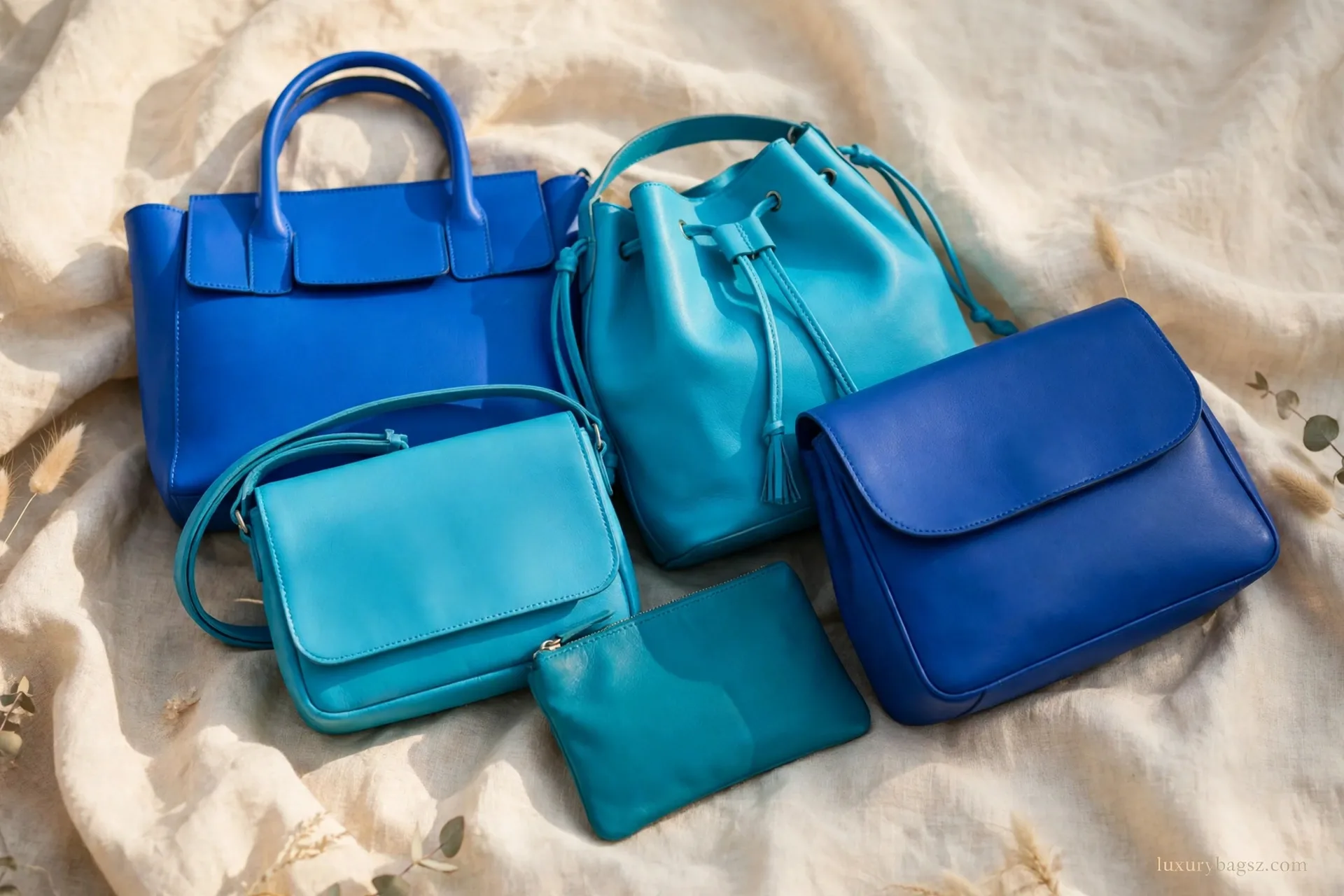
The Pale Blues: Celeste and Brume
Pale blues are the most delicate end of the family and the easiest to misjudge on screen.
Bleu Celeste (7N)
Celeste, listed by many sellers as Bleu Celeste, is the vivid blue of a summer sky. It is brighter than buyers expect from the word pastel, with a grey softness that keeps it elegant rather than sweet.
Specialists praise it in smaller sizes and in Swift and Epsom, where it feels couture rather than trendy. Do not confuse it with Ciel, a separate, paler and more muted sky blue with its own code.
Bleu Brume (T0)
Bleu Brume, or blue haze, is a soft pastel ice blue with a misty grey cast. It holds its blue reliably in daylight and photographs, so the softness reads as calm rather than as a grey bag.
On Epsom Brume sharpens and looks crisp, while on Togo it softens and deepens slightly. As with every pale blue, its beauty depends on keeping it away from dark denim and newsprint from day one.
How the Same Blue Shifts Across Leathers

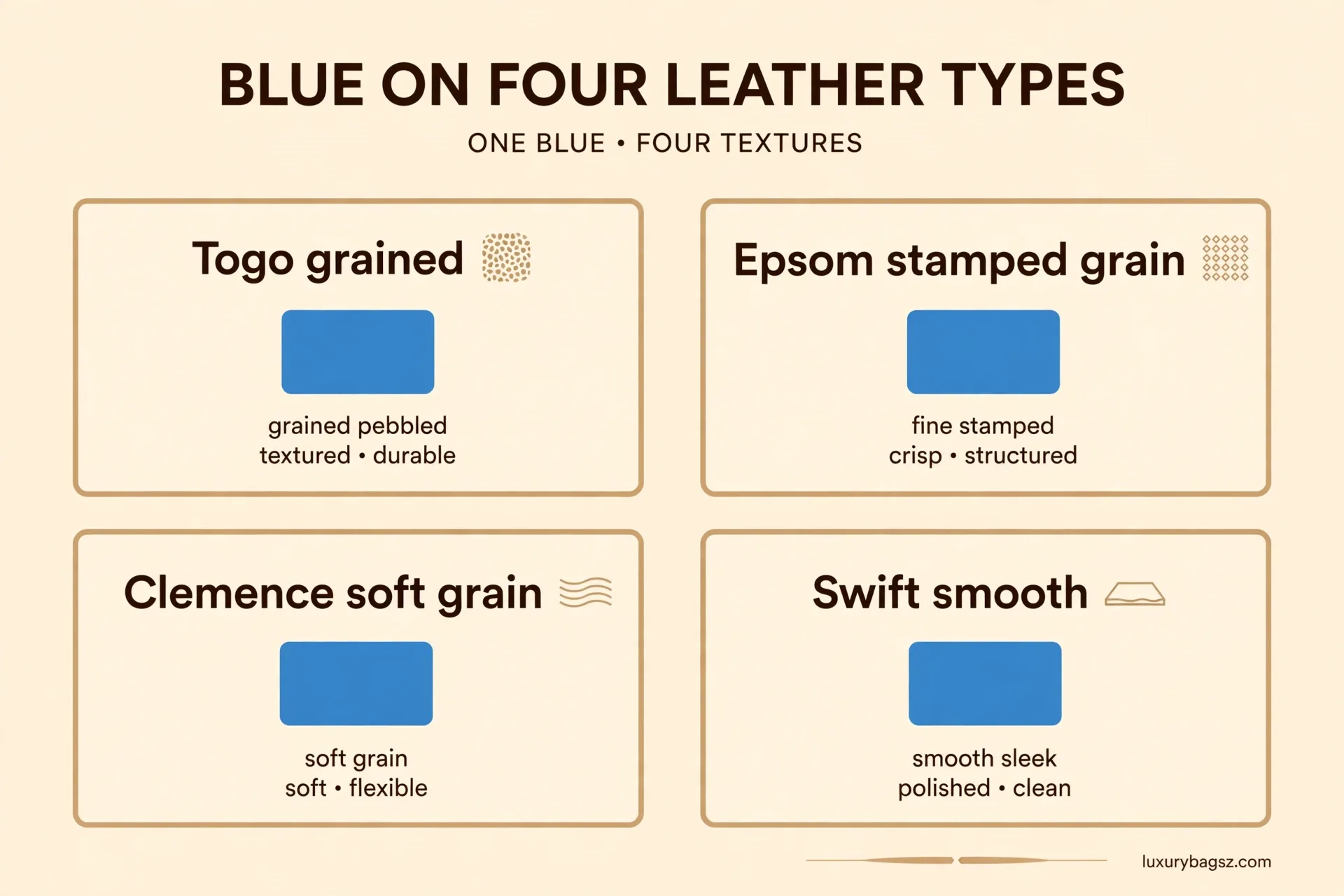
This is the biggest blue-buying trap: Hermès dye is consistent, but leather is not. Grain, finish and slouch change how a blue absorbs and reflects light, so one shade on four leathers looks like four colours.
Our Hermès leathers and materials guide covers each hide in full. In short, Epsom reflects light evenly and sharpens a blue, Togo and Clemence scatter light and deepen it, and Swift absorbs light for a richer read.
Togo and Clemence: Deeper and Softer
Togo has a fine pebbled grain that deepens blues and softens their edges, which is why Bleu Nuit in Togo photographs as flat black indoors. Clemence, softer and heavier, mutes a blue further and adds slouch.
Choose Togo or Clemence if you want a bright blue toned down, such as Hydra made wearable, or a navy made richer. Avoid them if you fell for the crisp, bright version of a shade you saw in Epsom.
Epsom and Swift: Sharper and Richer
Epsom is pressed and structured, so blues look lighter, flatter and more saturated on its surface. Bleu Saphir in Epsom is formal and brilliant, while the same shade in Togo reads as an everyday navy.
Swift is smooth and light-absorbing, giving blues depth and a slightly warmer cast. Pale Celeste and Brume look luminous in Swift, but Swift also shows scratches sooner, which matters on light colours.
Camera white balance adds a third variable: phones strip blue from pale shades and flatten dark navies towards black.
Gold or Palladium Hardware With Blue
Hardware changes a blue more than it changes a neutral, because palladium reflects cool light back into the leather and gold warms it. On pale blues the two finishes can look like two different colours.
With dark navies, gold gives the traditional, formal weight most buyers picture, while palladium keeps the bag cooler and more contemporary. Bleu Saphir holds its blue best with gold, thanks to its violet lift.
With pale blues, palladium sharpens the cool, grey edge and keeps Celeste and Brume crisp and modern. Gold softens them towards a warmer, more classic read, which suits Swift and smaller evening sizes.
With bright blues, palladium is the restraining choice and stops Atoll or Hydra shouting. Gold amplifies the statement and warms Electrique towards purple, so choose it only if you want maximum impact.
Care and Fading by Depth of Shade
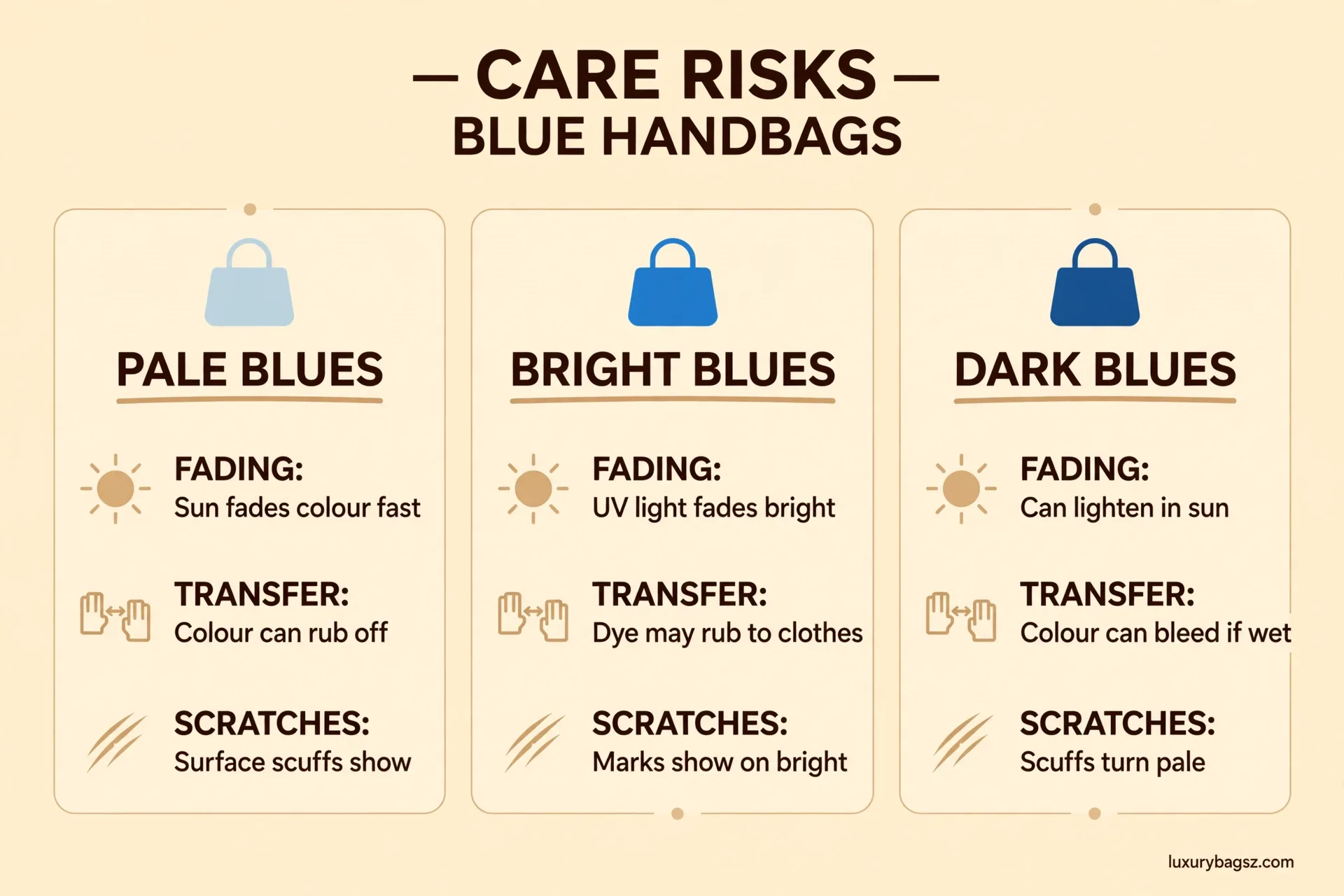
Care needs follow depth, not fashion. Dark blues are the forgiving daily choice: Bleu Nuit, Indigo and de Prusse hide dust, light rain spots and minor scuffs, and need only regular dust-bag storage.
Pale blues fail differently. Celeste and Brume pick up dye transfer from dark denim, black coats and printed linings, and transfer can set permanently on Epsom and Swift. Keep pale bags off dark clothing at first.
Bright blues show corner rub and fading first, because any loss of saturated dye contrasts with the panel around it. Rotate Hydra, Electrique and Atoll bags, keep them from prolonged sun and store them stuffed.
For every blue, avoid baby wipes and alcohol cleaners, and never store a light blue against a dark bag.
Resale Behaviour by Shade
On resale, the blues closest to neutrals behave most like neutrals. Bleu Nuit leads the family for steady demand, helped by its classic status, black-bag versatility and ability to hide wear in photographs.
Bleu Saphir follows closely, with strong auction and resale interest for its jewel tone. Bleu Jean has a loyal following but a narrower one, and its green cast means pricing varies more by market and season.
Bright blues are season and condition sensitive. Electrique has proven enduring demand, yet Hydra and Atoll achieve their best prices in spring and summer, in small sizes and in near-perfect condition.
Pale blues are scarcity driven rather than broadly liquid. A pristine Celeste or Brume piece can command strong money from the right collector, but any transfer, yellowing or corner wear cuts the buyer pool sharply.
Pre-Owned Checks: Verify the Exact Blue
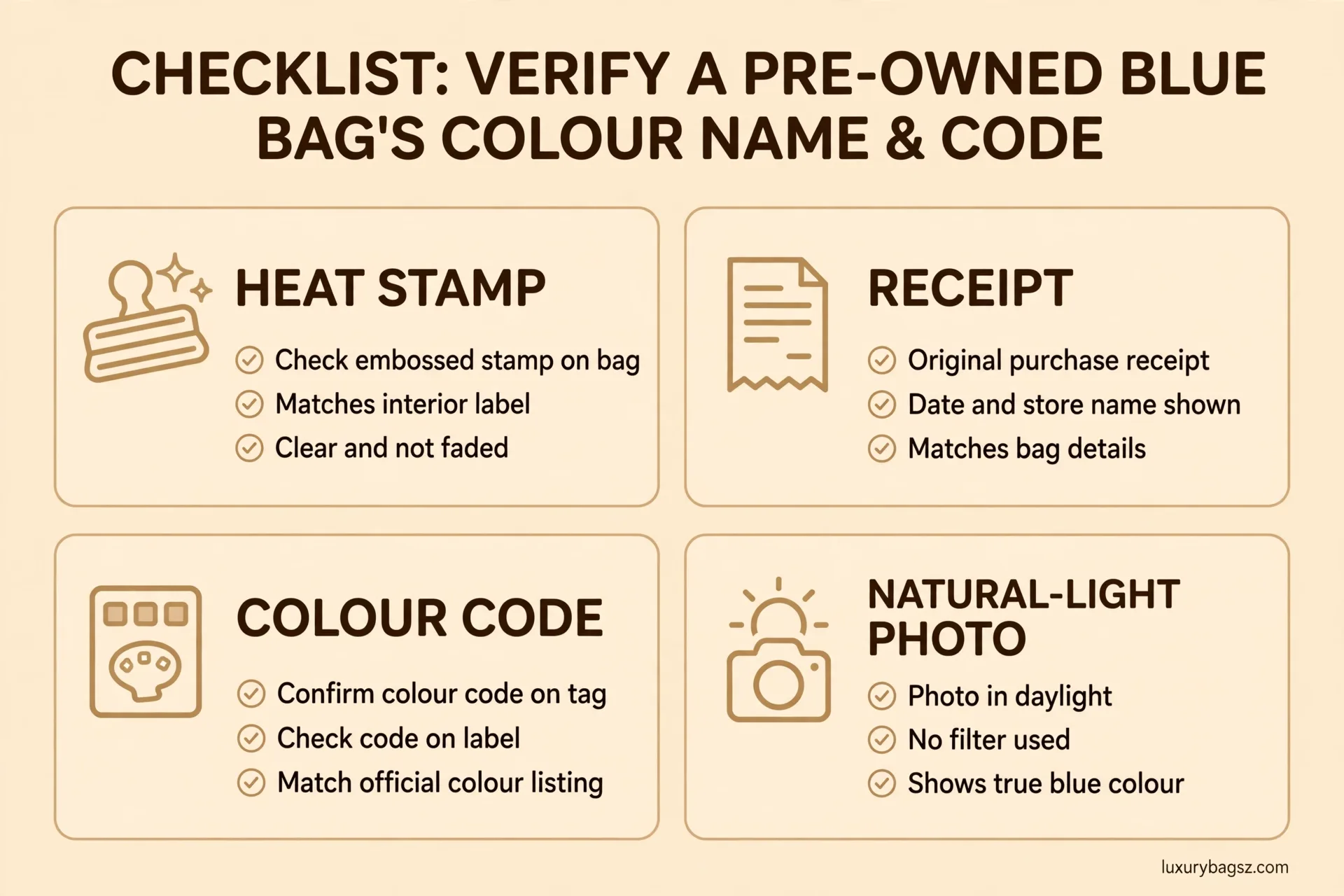
Blue is the family where a wrong name costs real money. Follow these checks before paying, and walk away if a seller resists any of them, however attractive the photographs or the asking price may look.
- Match the full colour name and code on the paperwork to the listing, letter by letter.
- Ask for unfiltered daylight and indoor photos, plus one beside a black or white item.
- Confirm the leather, as Togo, Epsom, Clemence and Swift versions price differently.
- Check whether the shade is current, rested or discontinued before paying for scarcity.
- Inspect corners, handles and the back panel for fading and dye transfer in bright light.
- Never pay a Bleu Saphir price on a vague navy listing: Saphir, Nuit, Encre and Indigo differ.
Frequently Asked Questions
What is the darkest Hermès blue?
Bleu Nuit (2Z) is the darkest blue Hermès offers. It is a greyed slate navy that can be mistaken for black indoors, with the navy showing clearly in daylight and in the hand.
What is the difference between Bleu Nuit and Bleu Saphir?
Bleu Nuit is darker and greyer, so it works as a substitute for black. Bleu Saphir is a richer jewel navy with a violet lift that always reads as blue, whatever the light.
Which Hermès blue holds its value best?
Bleu Nuit holds value most steadily because it behaves as a neutral, followed by Bleu Saphir. Bright and pale blues can do well when pristine, but they are more condition sensitive.
Why does my blue bag look different from its photos?
Leather grain, light temperature and camera white balance all shift blue at once. Epsom sharpens it, Togo and Clemence deepen it, Swift enriches it, and phones flatten dark navies towards black.
Is Bleu Jean a good first Hermès blue?
Yes, if you like its faded-denim character and faint green cast and wear casual colours often. If you want a blue that works as a year-round neutral, Bleu Nuit is the safer first choice.
How can I check a pre-owned blue is correctly named?
Match the full colour name and code on the paperwork to the listing, compare daylight photographs with verified examples in the same leather, and have the bag authenticated before paying in full.
Final Verdict
Choose Bleu Nuit or Bleu Saphir for a blue that earns its keep daily and resells calmly, Bleu Jean for relaxed denim ease, and Hydra, Electrique or Atoll for deliberate colour. Pick Celeste or Brume only with care habits to match, and always verify the exact name, code and leather before you buy.