

Fine Jewellery Worth Investing In: Signed Classics, Solid Gold and Pre-Owned Pieces That Hold Value
The Honest Answer First: Buy Wearable Value, Not a Promise
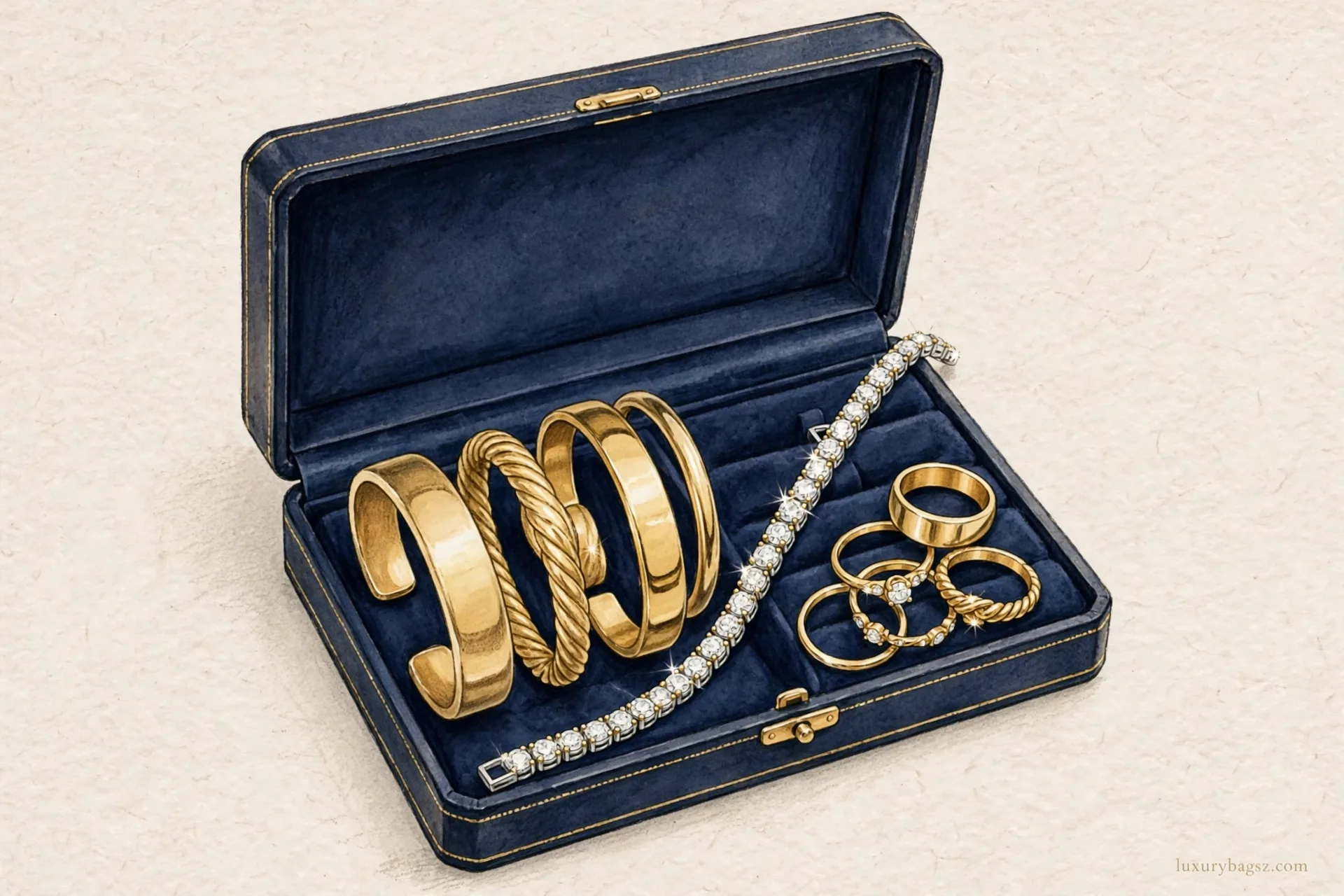
The fine jewellery most worth investing in is signed designer classics in solid gold, natural stones with papers, and heavy plain gold bought close to its metal value. Bought well, those pieces can hold a large share of their cost and be sold when needed. Bought badly, almost any jewellery loses a third or more on day one. Treat jewellery first as something to wear for decades, with resale as a safety net. That order of priorities is what separates collectors from disappointed speculators.
Key Takeaways
- Signed classics from major houses hold value better than anonymous fashion pieces.
- Retail markup is the enemy: the same piece pre-owned often costs half as much.
- Solid high-karat gold carries intrinsic metal value that plated pieces never have.
- Natural diamonds and fine coloured stones need certificates to protect resale.
- Pre-owned gold, bought by weight and hallmark, is the quiet value play.
- Jewellery is a store of value with pleasure attached, not a high-growth asset.
What Holding Value Really Means
Holding value means a piece can be resold for a fair share of what you paid, through dealers, auctions or private sale, without a desperate search for a buyer. Iconic signed designs do this best. Our analysis of whether Cartier bracelets are a good investment shows how brand, condition and papers combine. Anonymous pieces fall back on metal and stone value alone. That floor is real, but it is usually well below the retail price first paid. Measure every purchase against both floors: the signed-design floor and the melt-value floor. Buy when the price sits sensibly between them.
The Markup Problem
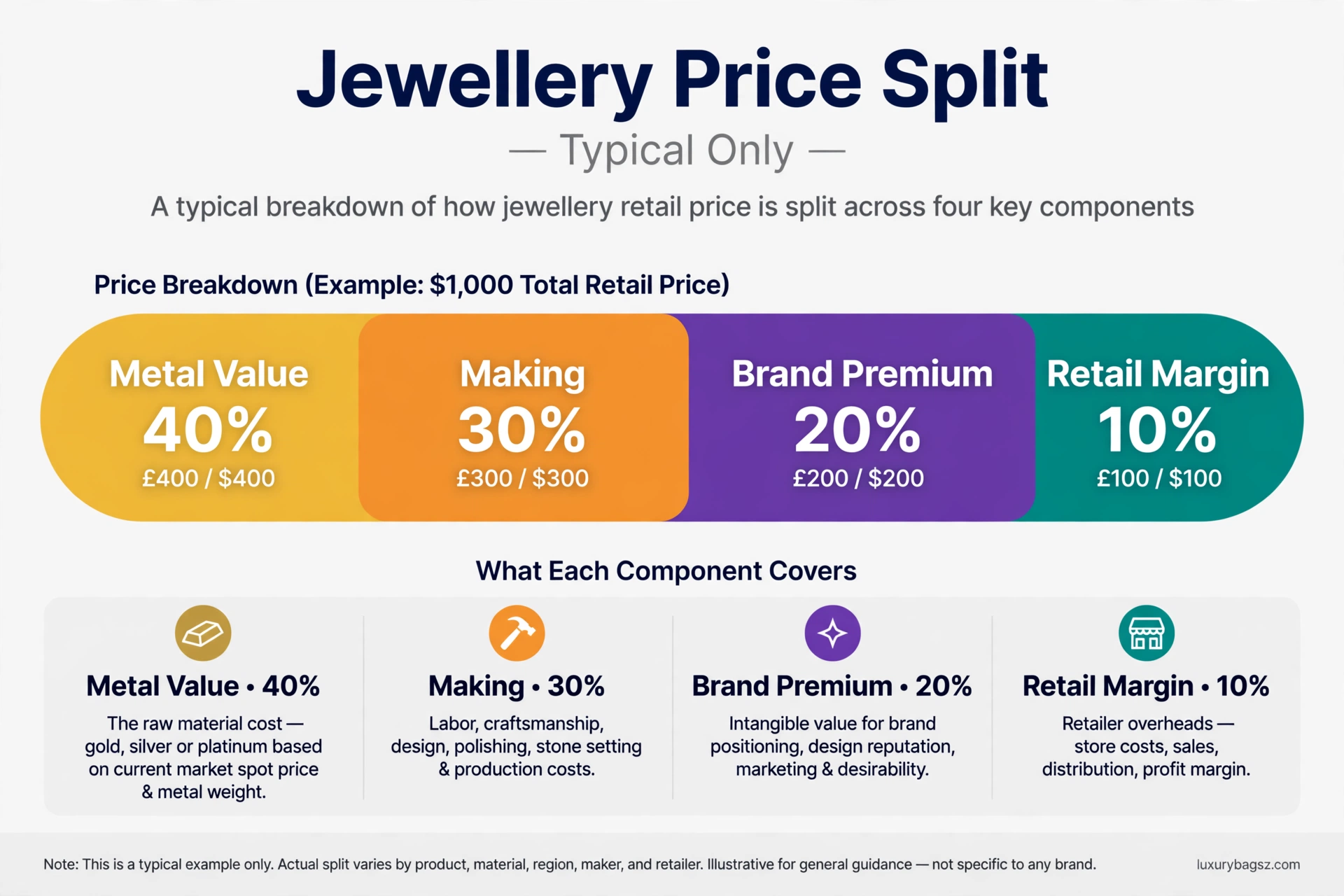
A retail jewellery price typically bundles metal, making, brand premium and shop margin. Only the first of those comes back to you automatically at resale. That is why a piece can lose a large share of its price the moment it leaves the shop, even though nothing about it has changed. Pre-owned buying skips most of that loss. The first owner paid the premium; the second owner buys the jewellery. Knowing the split changes how you shop. You start asking what a piece is, not only what it costs, and that question protects money.
Gold: Karat, Weight and the Metal Floor
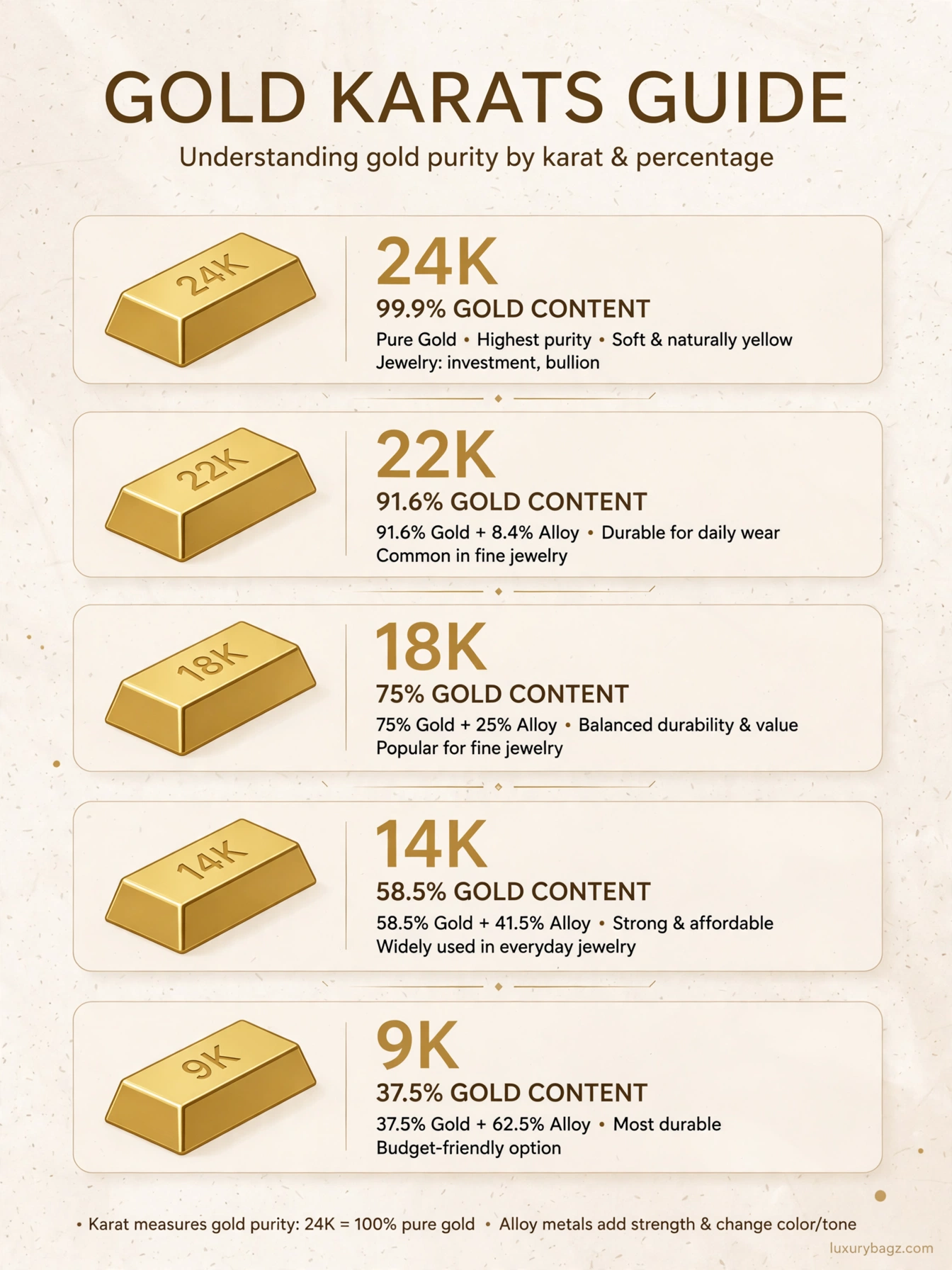
Solid gold always carries its metal value. An 18-karat piece is 75 per cent gold; 14-karat is 58.5 per cent; 9-karat is 37.5 per cent. Our types of gold guide explains how those alloys differ in colour, hardness and price. Heavy, plain pieces — chains, bangles and wedding bands — track metal value most closely because little of their price is decoration. Weigh a piece and know its karat before you buy. Those two numbers let you work out the floor under any asking price in seconds.
Signed Pieces and Famous Designs
A signature from a respected house adds a second market on top of materials: collectors who want that exact design, in that exact size. The Bvlgari resale value guide shows how a strong house's icons behave on the secondary market. Condition, original box and papers, and an unbroken service or purchase history all push a signed piece towards the top of its range. At the summit, fame alone moves prices into another world, as the most expensive diamonds list makes plain.

Stones That Protect Value
Natural diamonds with certificates from recognised laboratories resell far more easily than uncertified stones, because the buyer can verify the grade. Fine coloured stones — unheated sapphires and rubies, good emeralds — also hold value when their quality and treatment are documented. Small stones set decoratively add retail price but little resale value. Concentrate stone money in one certified centre stone where you can. Lab-grown diamonds are beautiful and far cheaper, but their resale prices are low and falling. Buy them for wear, not for stored value.
Pre-Owned Gold: The Quiet Value Play
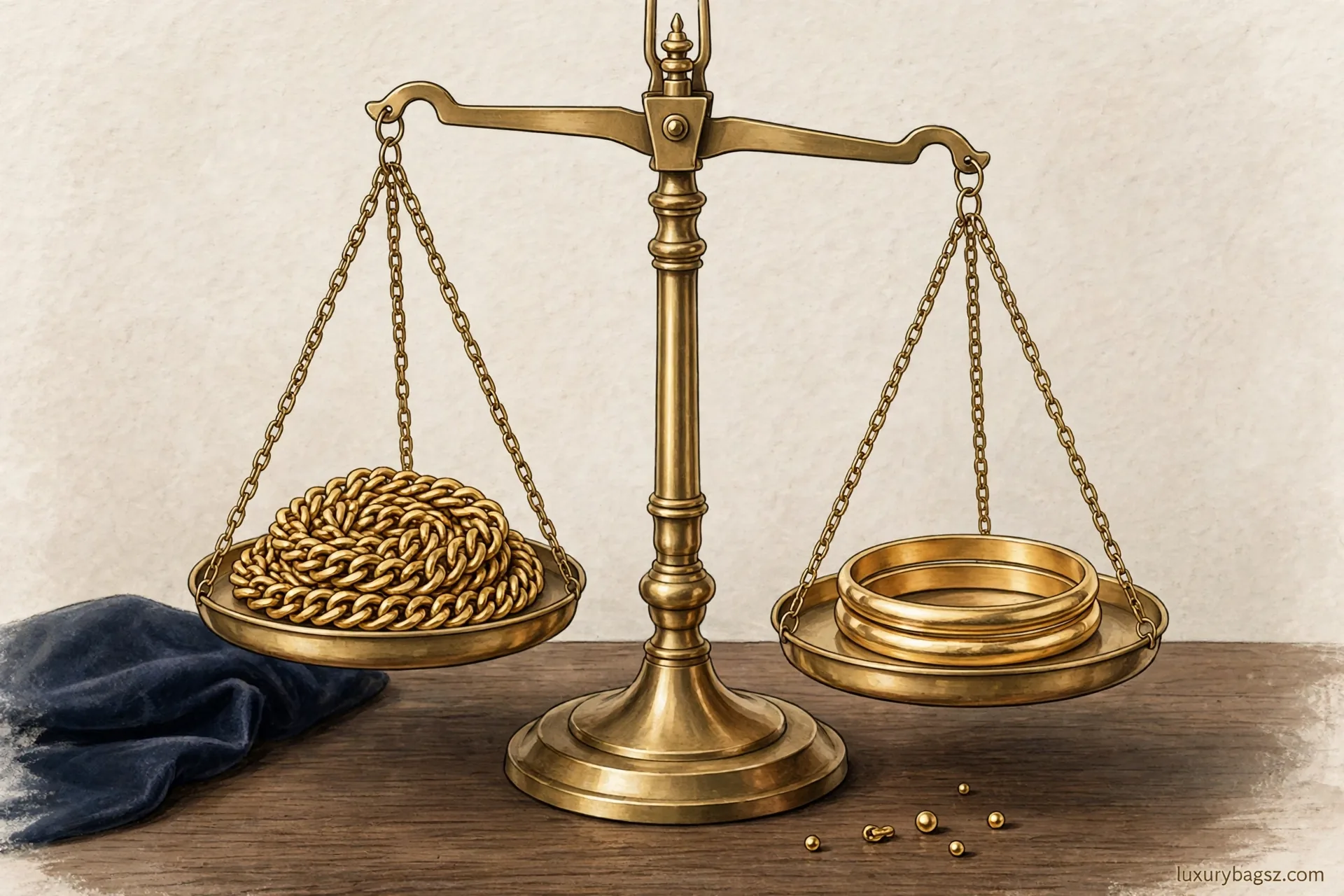
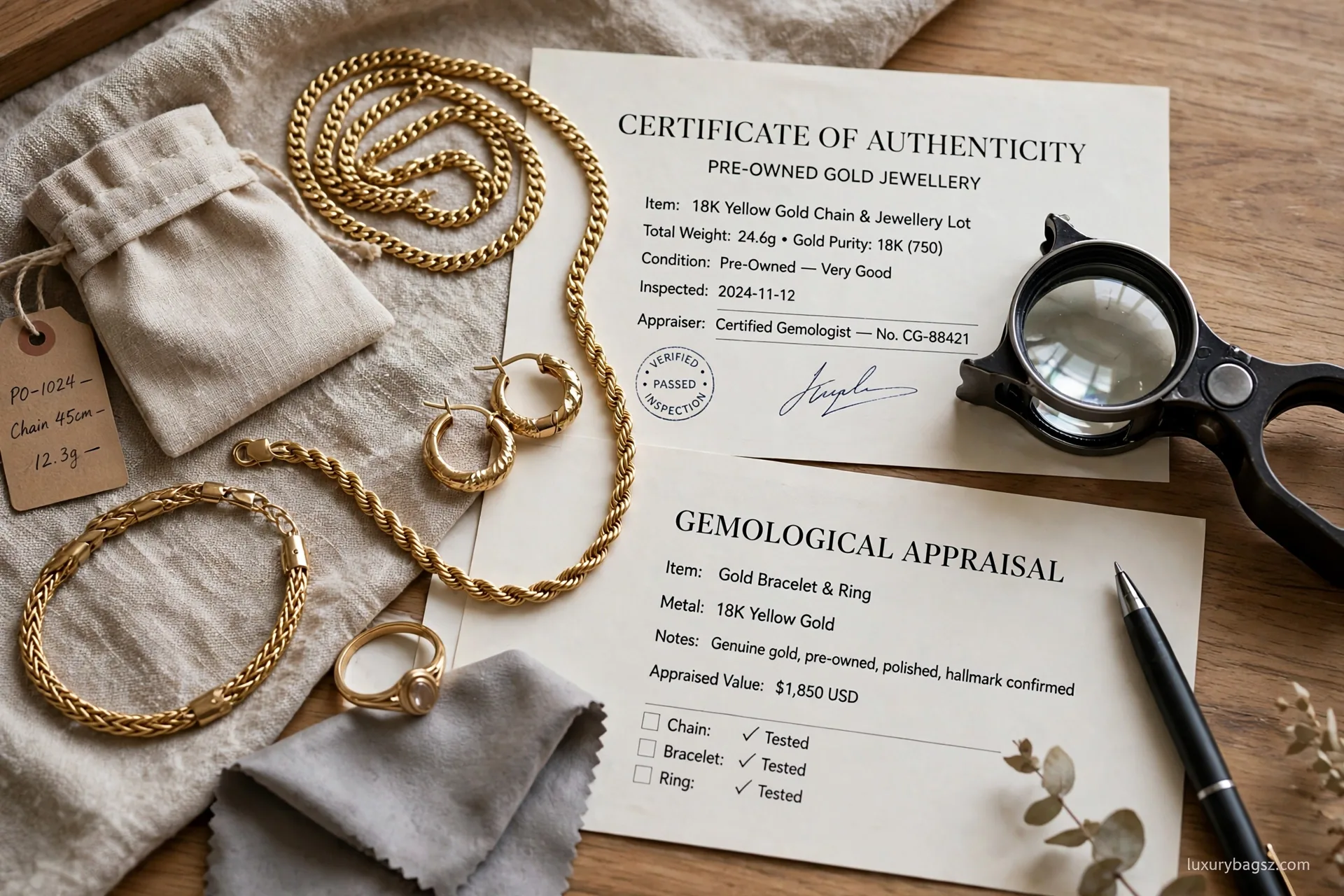
Pre-owned gold jewellery is where the maths turns friendly. You pay for metal, making and modest dealer margin, not for a launch campaign. Buy from established resellers who test metal, state karat and weight plainly, and accept returns. Estate and auction sales reward the same discipline. Check hallmarks, weigh the piece, and compare its price per gram with similar pieces. Simple, unfashionable designs often carry the best metal value. Vintage gold has a second advantage: it has already survived decades, which proves its making in a way no new piece can.
The Checks Before Money Moves
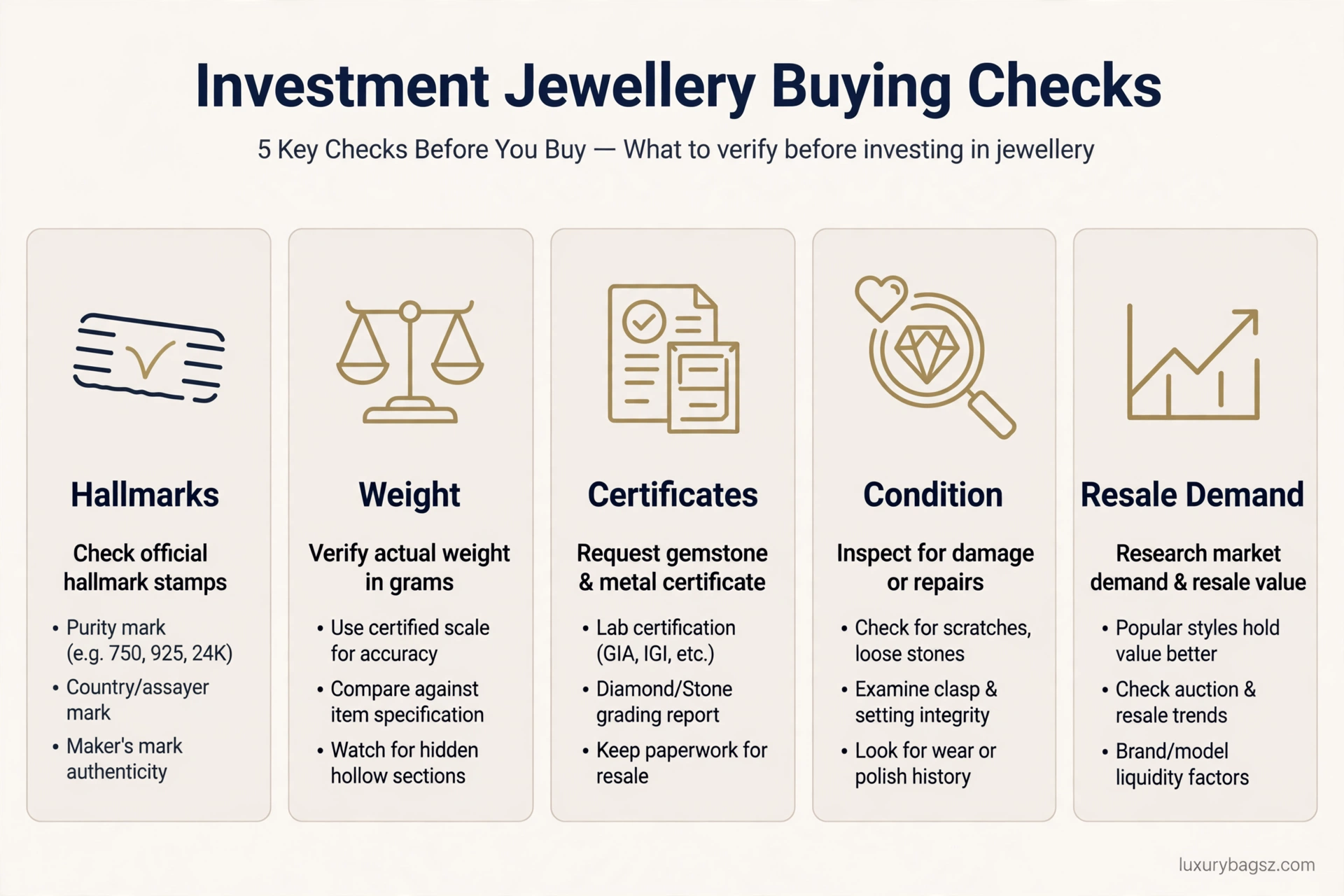
Confirm hallmarks match the stated karat, and that any signature looks crisp and correctly placed for the house in question. Ask for certificates, receipts and boxes, and treat their absence as a price negotiation, not a detail. Inspect clasps, settings and stone security. Repair costs come straight off whatever value the piece was supposed to protect. Finally, compare at least three similar sold prices, not asking prices. Sold prices are the market; asking prices are wishes.
Selling Well When the Time Comes
Presentation and patience raise resale prices. Clean pieces, complete papers and honest condition notes attract serious buyers quickly. Our how to resell luxury jewellery guide walks through channels from dealers to auctions. Pricing discipline matters as much as the channel, and our how to price designer jewellery for resale guide covers the method. Accept that even a good sale usually returns part, not all, of a retail purchase. That honesty is exactly why buying well matters more than selling well.
Period Pieces: When the Era Adds the Value
Some jewellery holds value because of when it was made, not only who made it. Art Deco pieces from the 1920s and 1930s, signed or beautifully made, have a collector market that pays for the period’s design language as much as for the stones.
Auction specialists make the comparison plainly: an unsigned Deco brooch plateaus at its material value, while the same brooch with a great house’s signature becomes a collector’s piece. The signature matters most, they note, when the design itself is rare.
Mid-century and 1970s gold sits at the friendlier end of the same market: bold, heavy and currently fashionable, much of it still trades close to metal value plus a design premium a patient buyer can capture.
The lesson generalises. Buy the era the market already respects, in the best condition available, rather than betting on which decade fashion rescues next. Period value is slow money, and slow is the point.
Platinum, Silver and the Rest of the Metal Family
Platinum is the aristocrat of the metal floor: dense, durable and traded as a precious metal, so a heavy platinum piece carries real intrinsic value. It is also harder to work and to resell privately than gold, which makes dealer spreads wider. Buy platinum to wear for decades; buy gold when liquidity matters most.
Silver is the honest disappointment of the family. Sterling jewellery is lovely and affordable, but its metal value per piece is small, so unsigned silver falls back on design alone at resale. Signed silver from famous designers breaks the rule, as design markets do.
Mixed pieces need the floor calculated by their weakest claim: a gold-plated or gold-filled piece has the floor of its base metal, not of the gold in its description. Read the hallmark, not the headline, exactly as the checks earlier in this guide insist.
Why Watches Play by Different Rules
Readers often ask whether the same logic makes watches an investment, and the comparison is instructive. Fine watches from the most demanded makers have deeper, faster resale markets than almost any jewellery, with published prices and waiting lists that jewellery rarely matches.
That liquidity cuts both ways: watch values move with fashion and speculation more visibly, and servicing a mechanical watch is a real holding cost, due every few years whether the value rises or not.
Our pieces on whether Cartier watches are worth the money work through that market in detail. The shared rule with jewellery is the one this guide began with: buy the piece to wear, from the strongest name you can justify, at the best price you can find, and let resale be the safety net rather than the plan.
The Costs of Holding Value
Stored value is not free value. Insurance on a significant collection costs a percentage every year, and insurers increasingly want valuations, photographs and sometimes a safe. Over a decade, holding costs quietly eat the appreciation a casual buyer imagined.
Security shapes behaviour too. Pieces too valuable to wear without worry have failed the first test of jewellery, whatever their price chart does. A collection that lives in a bank vault is an asset; it is no longer jewellery in any useful sense.
Maintenance belongs in the same ledger: restringing pearls, servicing clasps, re-tipping prongs and re-polishing all cost money, and neglected pieces sell at a discount that dwarfs the repair bill. Budget the upkeep when you buy, not when you sell.
None of this argues against buying well. It argues for counting honestly, which is the difference between a collector and a customer for someone else’s sales story.
Red Flags: “Investment” Jewellery to Walk Away From
Any seller who leads with returns rather than the piece is selling a story. High-pressure phrases, guaranteed buy-backs from unknown companies, and certificates from laboratories nobody has heard of are the standard costume of jewellery sold as a financial product.
Television and cruise-ship jewellery channels deserve their reputation: stones described in superlatives, prices anchored against invented comparisons, and resale values that evaporate on contact with a real dealer. Test any such piece with the floor method from this guide and the pitch deflates itself.
Celebrity and influencer brands price in fame, which is the fastest-depreciating ingredient in any product. A famous name on the box is not a signature from a great house, and the resale market knows the difference even when the launch coverage pretends not to.
Finally, beware complexity. Bundles, memberships, storage schemes and fractional diamond programmes add layers between you and a simple object you could hold, weigh and sell. Investment-grade jewellery, when it exists at all, is a heavy, signed, certified thing in your hand. Everything else is marketing wearing its clothes.
A Worked Example: Reading One Piece Three Ways
Take a plain, heavy 18-karat gold bangle offered at a round retail price. The first reading is the floor: weigh it, multiply its weight by the gold content for its karat and by the day’s metal price per gram, and you have the number any scrap buyer in the world will roughly honour.
The second reading is the dealer resale: established resellers typically offer a share of what they expect to sell the piece for, so an unsigned bangle in good condition commonly returns a modest portion of its retail price, more if you sell privately and wait.
The third reading is the signed version of the same object. Give that bangle a great house’s name, its box and its papers, and the resale conversation changes entirely, because the buyer pool now includes collectors who never weigh anything.
The gap between the three readings is the whole subject of this guide. A wise buyer knows all three numbers before paying the first one, and pays a retail price only when the wearing pleasure honestly covers the distance between reading one and reading three.
The Sensible Sequence for Building Value
Start with pre-owned heavy gold: a chain, bangle or band bought near its metal floor from a tested reseller. It teaches you hallmarks, weight and pricing with the smallest possible tuition, and it can be resold at the least loss while you learn.
Add a certified stone piece second, once you can read a laboratory report and compare sold prices calmly. One good centre stone in a classic setting, bought pre-owned or at a disciplined retail price, carries the collection’s quality.
Buy the signed classic third, when you know your size, your style and the going rate for the exact design. Signed pieces punish the uninformed buyer most, because the premiums are largest and the fakes are best.
Review the whole position yearly, alongside the insurance photographs from the holding-cost advice above. A collection assembled in this order tends to be wearable every day and defensible on paper, which is the only definition of jewellery investment this guide is willing to sign.
Frequently Asked Questions
Is fine jewellery a good investment?
As a store of value you can wear, yes, when bought well. As a growth asset to beat markets, usually no. Signed classics and pre-owned gold protect money best.
Which jewellery holds value best?
Signed iconic designs from major houses in solid gold, with papers, bought pre-owned. They combine brand demand, metal value and easy resale.
Is gold jewellery better than gold bars as an investment?
Bars track the gold price more purely and cheaply. Jewellery adds wearability and design value but carries markup, so it suits buyers who will wear it.
Does 18-karat gold hold value better than 14-karat?
Per gram, yes, because it contains more gold. In practice, weight, design and brand matter just as much, so compare price per gram across both.
Are diamonds a good store of value?
Certified natural diamonds from recognised laboratories resell most reliably. Small uncertified stones and lab-grown diamonds return little at resale.
Why does pre-owned jewellery make financial sense?
The first owner absorbed the retail markup. A pre-owned buyer pays mainly for materials, making and a modest margin, so less value evaporates.
Do boxes and papers really matter?
Yes. Complete sets sell faster and for more, especially for signed pieces, because they reassure the next buyer about authenticity and care.
How can I check what my jewellery is worth?
Weigh it, confirm its karat, then compare sold prices for similar pieces. A written appraisal for insurance is a replacement figure, not a resale value.
Which pieces should investors avoid?
Plated fashion jewellery, heavily branded seasonal designs, and uncertified stone pieces bought at full retail. Their resale floors sit far below their prices.
How much of my money should go into jewellery?
Only money you are happy to enjoy wearing for years. Treat any resale return as a bonus, and keep core savings in assets built purely for returns.
Summary: Buy the Piece, the Papers and the Price
Worth-investing jewellery is recognisable: signed or solid, certified where stones matter, heavy where gold matters, and bought below retail where possible. Follow those rules and your jewellery box becomes something rare in luxury: a pleasure that also keeps a sensible share of its cost.






