

The Most Expensive Diamonds Ever Sold: Pink Star, Blue Diamonds and Record Auction Prices
The Record at a Glance: $71.2 Million for One Pink Stone
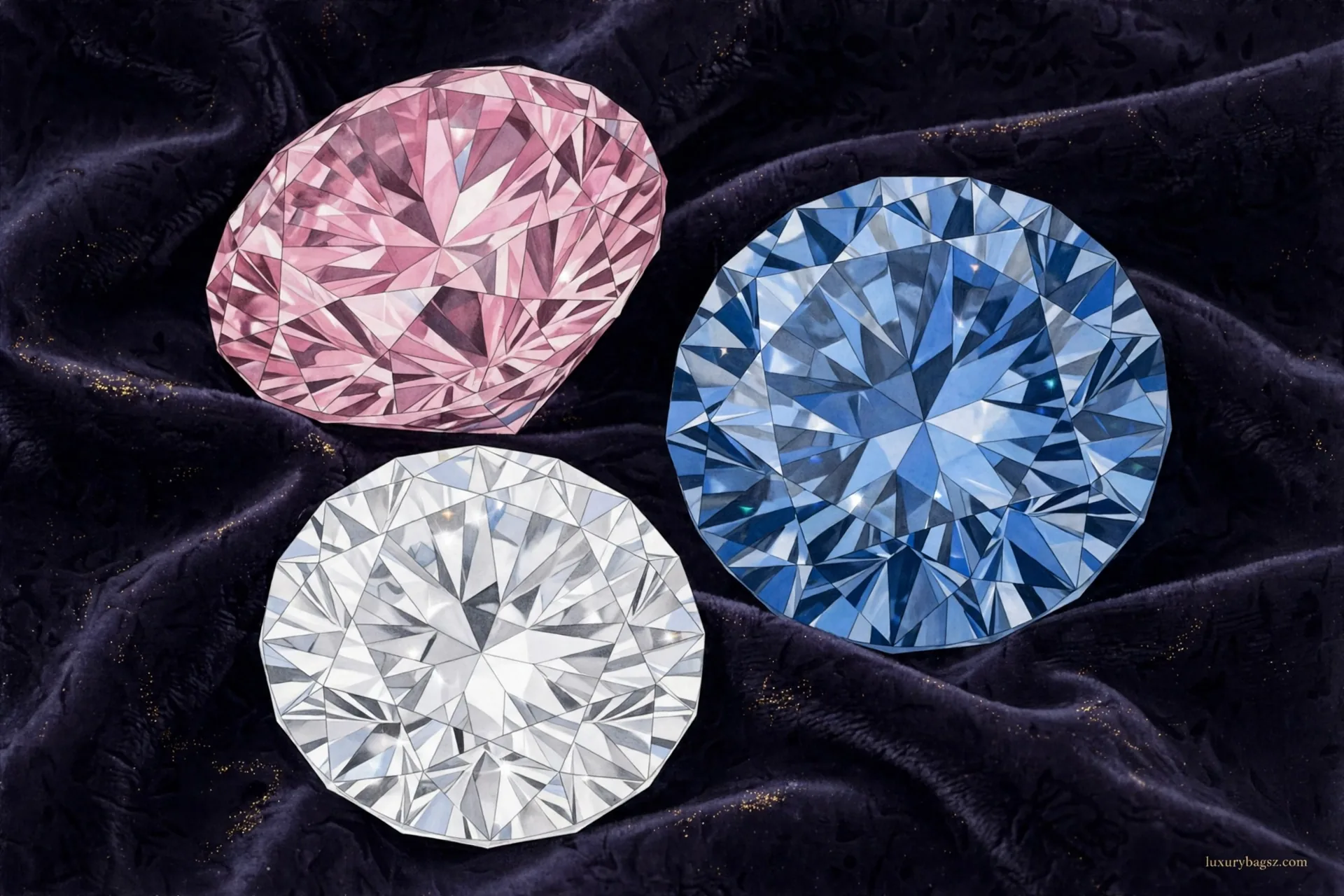
The most expensive diamond ever sold at auction is the CTF Pink Star, a 59.60-carat fancy vivid pink diamond that made $71.2 million in Hong Kong in 2017. Just behind it sit other coloured giants: the Williamson Pink Star at around $57.7 million and the Oppenheimer Blue at around $57.5 million. The pattern is clear before any detail. Colour, not size alone, writes the biggest cheques, and pink and blue stones dominate every serious record list.
Key Takeaways
- The CTF Pink Star holds the auction record at $71.2 million for 59.60 carats.
- Pink and blue diamonds fill most of the top places; white diamonds rarely compete.
- Price per carat can matter more than total price for smaller, perfect stones.
- Museum stones such as the Hope and Cullinan diamonds are valued far higher but are not for sale.
- Rarity of colour, flawless clarity and famous provenance drive record prices together.
- Auction figures include buyer premiums and reflect one day, one room and two determined bidders.
How This List Is Ranked
This list ranks diamonds by recorded public auction price, because those figures can be verified. Private sales are rumoured to be larger, but rumours are not records. Estimates for unsold famous stones run far higher. The Hope Diamond is often valued in the hundreds of millions, yet it has not been auctioned in modern times. Keeping the two ideas apart matters. One list is money that actually changed hands; the other is insurance valuations and informed guesses about priceless objects.
The CTF Pink Star: The $71.2 Million Record
Cut from a 132.5-carat rough stone found in Africa in 1999, the Pink Star took around two years to cut and polish into its 59.60-carat oval form. It was graded fancy vivid pink and internally flawless, the strongest colour grade a pink diamond can hold, at a size no rival pink has matched. An earlier Geneva sale in 2013 appeared to reach even more, but the buyer defaulted and the stone returned, which makes the 2017 Hong Kong result the true record. Prices for fine pink stones have their own logic, explored in our how to buy pink diamonds guide, though nothing at retail behaves like this one stone.
The Great Blue Diamonds
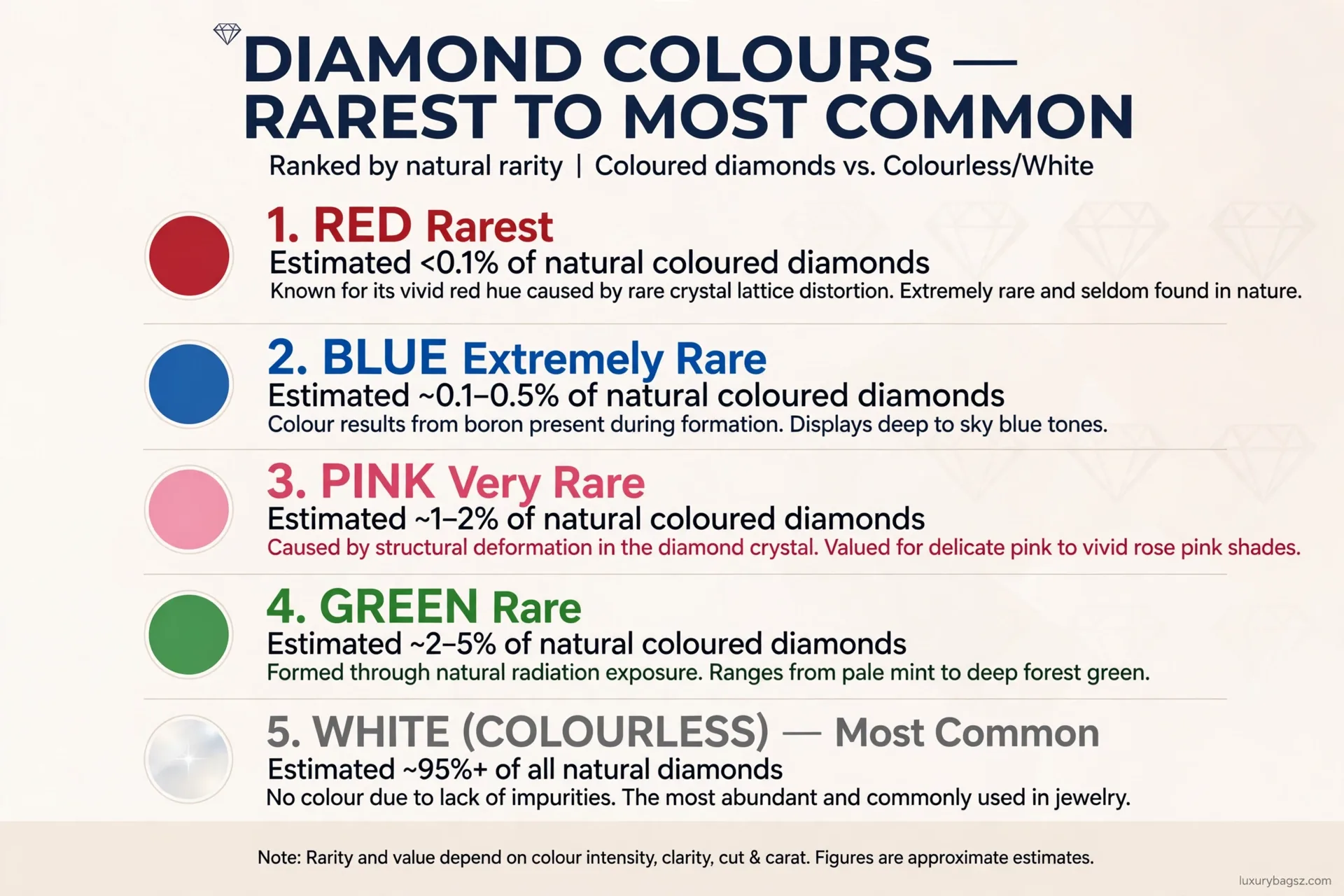
The Oppenheimer Blue, a 14.62-carat fancy vivid blue, sold for around $57.5 million in 2016 and held the record for any diamond until the Pink Star passed it. The Blue Moon of Josephine, 12.03 carats of vivid blue, made around $48.4 million in 2015, a remarkable price per carat for its size. Blue diamonds owe their colour to boron in the crystal, and large vivid examples are vanishingly rare, as our how to buy blue diamonds guide explains. The De Beers Blue, a step-cut vivid blue of 15.10 carats, joined this company in 2022 with a sale of around $57.5 million in Hong Kong.
Pink Rivals and the Per-Carat Kings
The Williamson Pink Star, just 11.15 carats, sold for around $57.7 million in 2022. Its price per carat, over $5 million, is the real headline. The Winston Pink Legacy, 18.96 carats of vivid pink, made around $50.4 million in 2018 and was bought by Harry Winston, hence its new name. The Graff Pink, 24.78 carats, sold for around $46 million in 2010 and was later recut slightly to improve its grade, a brave decision on a record stone. These results show the market clearly: a smaller, perfect pink can outrank far larger stones of weaker colour in price per carat terms.

The Priceless Museum Stones
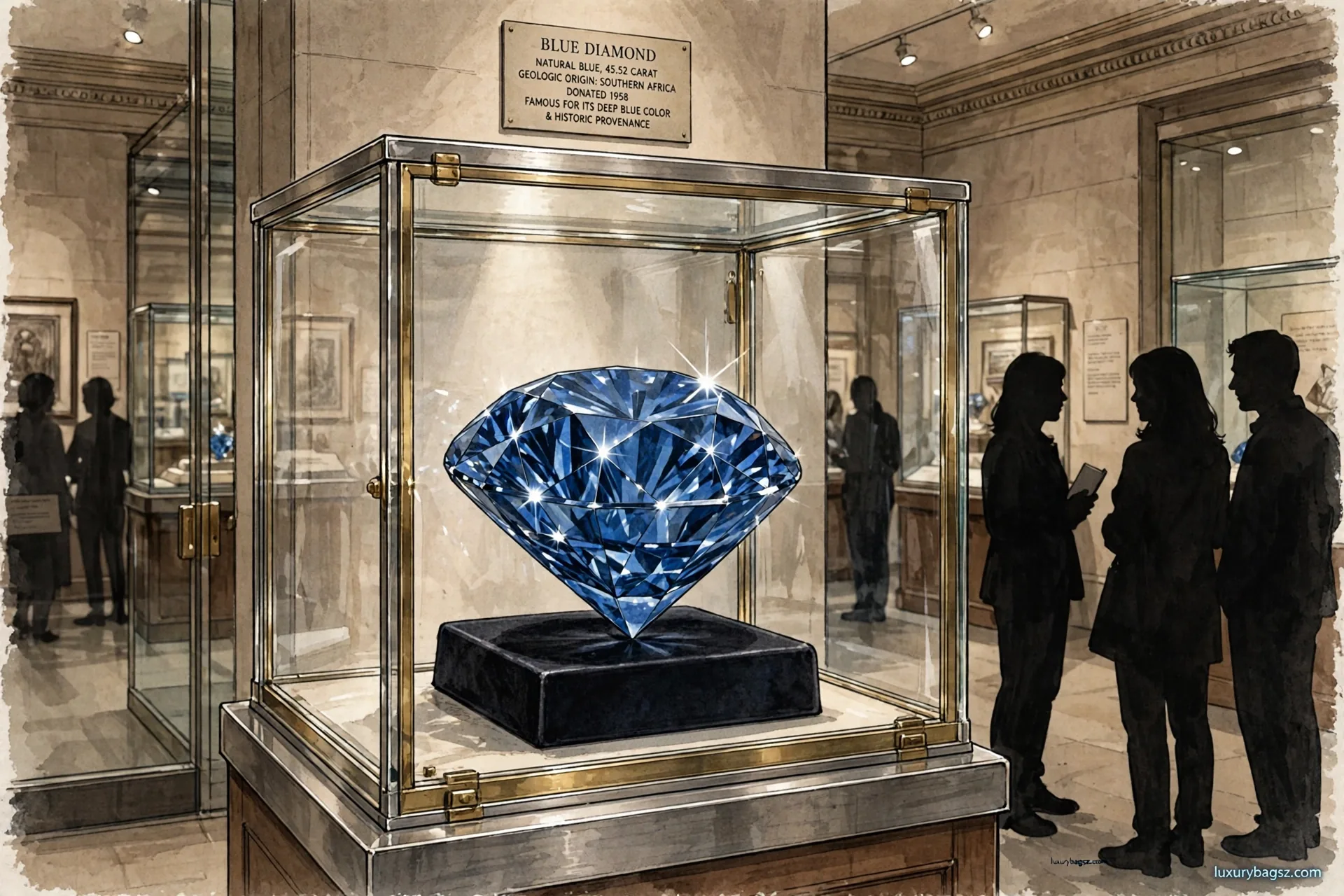
The Hope Diamond, 45.52 carats of deep blue, sits in the Smithsonian in Washington. It is insured for sums in the hundreds of millions and will never be sold. The Cullinan rough, found in South Africa in 1905, weighed 3,106 carats. Its largest cut stone, the 530.4-carat Great Star of Africa, sits in the British Crown Jewels. The Koh-i-Noor, around 105 carats in its modern cut, is also in the Crown Jewels. Its value is described simply as priceless, and its history is still debated. These stones anchor the imagination of the whole subject. Auction records measure money; museum stones measure history, and history has no reserve price.
Why Auction Nights Produce Extremes
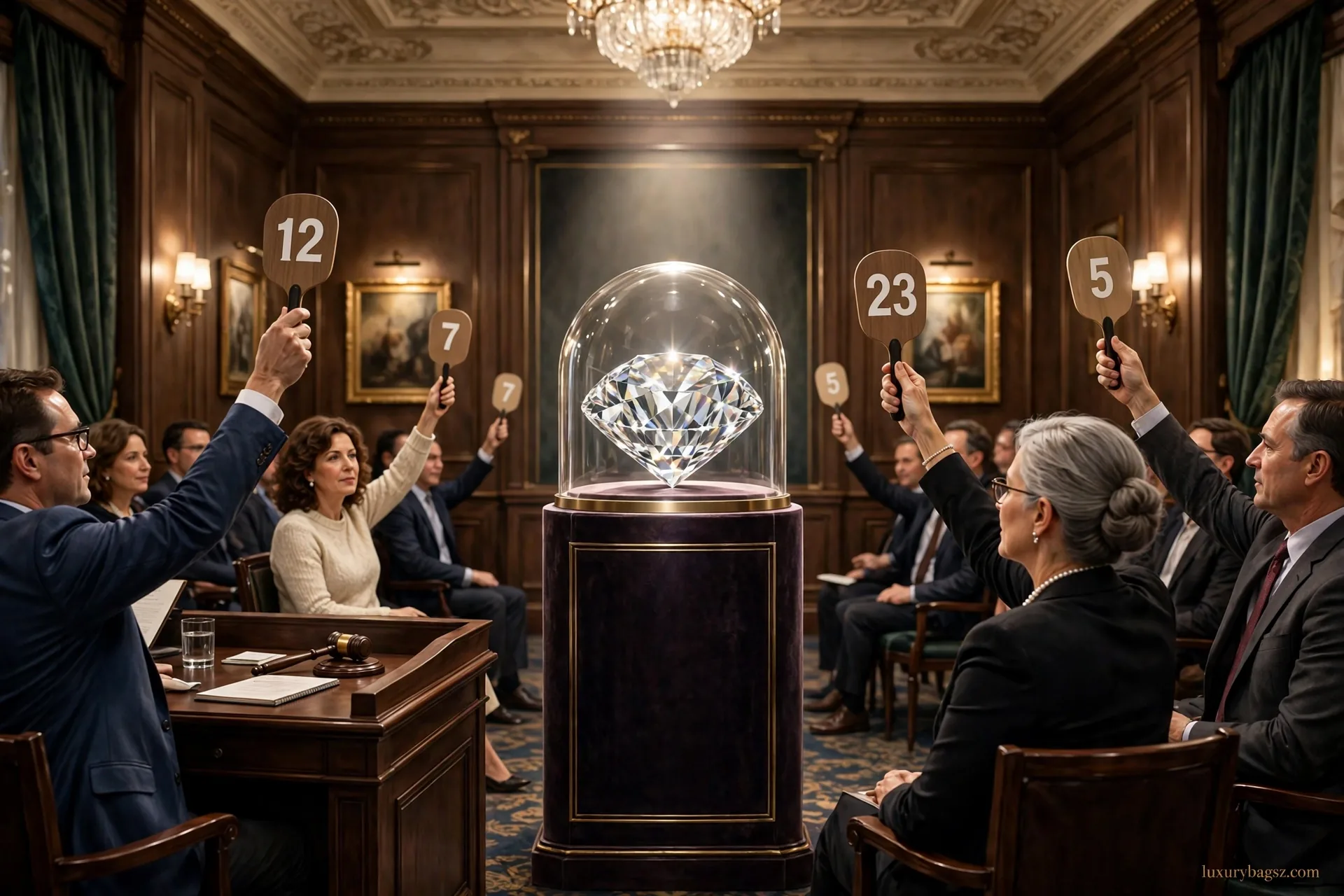
A record needs two bidders who both refuse to stop. Auction houses know this, and they place exceptional stones in evening sales built for drama. Hong Kong and Geneva dominate these results because wealthy collectors in both regions compete for coloured diamonds as stores of value and status. Telephone and room bidding, guarantees arranged in advance and the theatre of the room itself all push a great stone beyond any sober valuation. When the underbidder drops out early, the same stone can look merely expensive. Records are therefore partly about the stone and partly about the night.
What Actually Drives the Price
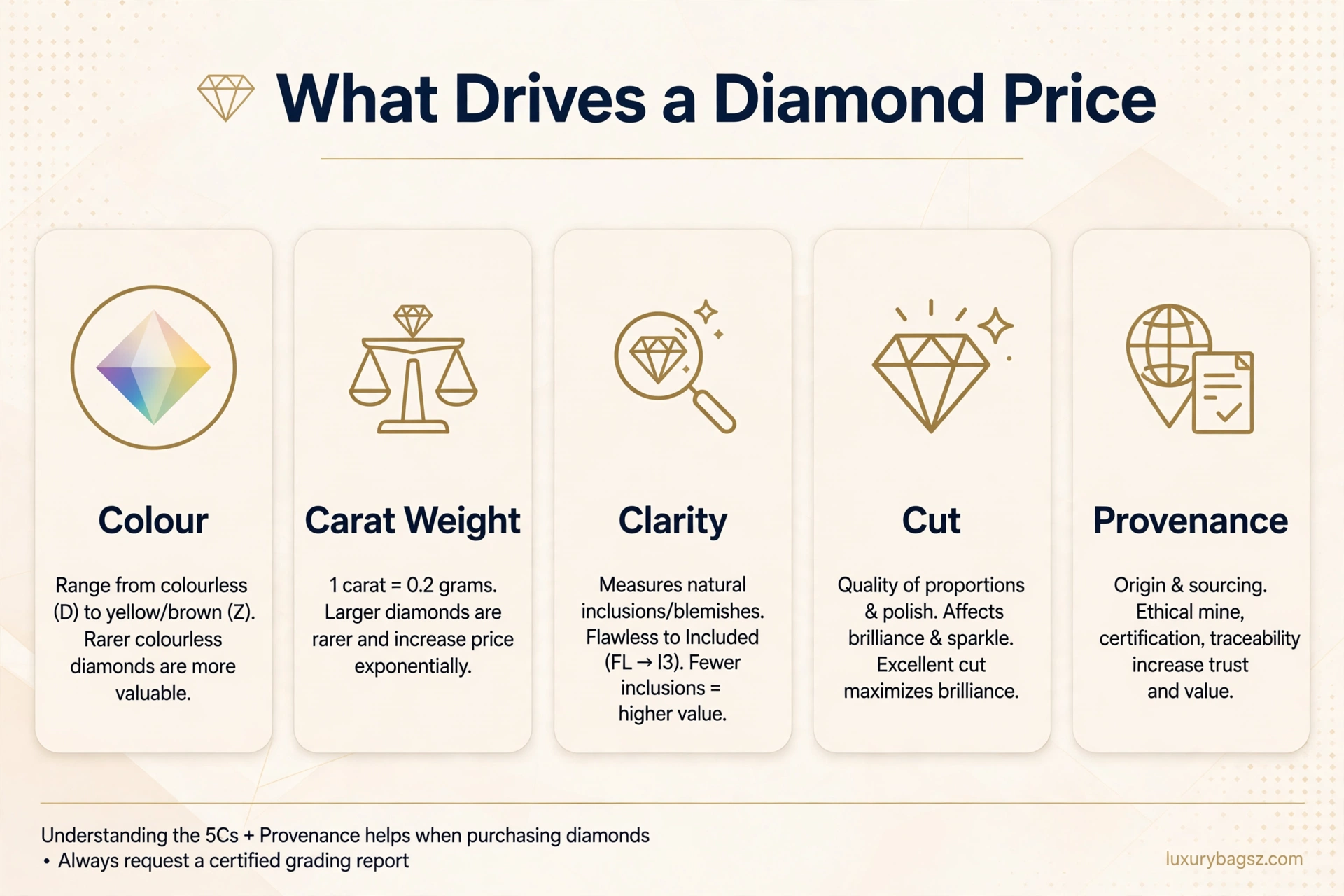
Colour comes first. A fancy vivid grade in pink, blue, red or green multiplies value in a way that extra carats in white never can. Clarity and cut follow. At this level, buyers expect internally flawless or flawless stones, cut to reveal colour at its strongest rather than to save weight. Provenance adds the final layer. A famous former owner, a historic collection or a named stone all make the next buyer pay for the story too. Our how to buy a diamond guide covers these factors at human prices, and the types of diamond cuts guide explains the shapes behind the sparkle.
What This Means for Ordinary Buyers
Almost nothing at retail behaves like these records, and that is reassuring. A fine one-carat diamond follows gem pricing, not auction theatre. What does transfer is the hierarchy: colour quality and cut matter more than chasing size, at every budget from a first ring upward. Coloured diamonds at small sizes, including lab-grown stones, let ordinary buyers enjoy the pink and blue idea without record-book money. For wearable sparkle chosen on merit, our everyday diamond jewellery guide is the sensible next read.
The Rest of the Top Ten: Bleu Royal, the Orange and the Unique Pink
The Bleu Royal, a 17.61-carat fancy vivid blue, sold in Geneva in 2023 for around $43.8 million. Set in a ring and offered from a private collection assembled over decades, it became one of the largest internally flawless vivid blues ever auctioned and proved the blue market was still setting records years after the Oppenheimer sale.
The Orange is the colour family’s outlier: a 14.82-carat fancy vivid orange sold in Geneva in 2013 for around $35.5 million. Pure orange diamonds of any size are extraordinarily rare, and this remains the largest vivid orange known, a single-stone category with no real rivals.
The Unique Pink, a 15.38-carat fancy vivid pink, made around $31.6 million in Geneva in 2016. Its name was its sales pitch: gemmologists described its colour as exceptionally pure for a pink of its size, without the secondary tones that soften most large pinks.
Together the three show the shape of the modern record market: one great stone of a rare colour, one famous sale room, and a price that the retail diamond world simply never sees.
Historic Blues and the Recut Controversy
The Wittelsbach-Graff carries the longest story on the list. A deep blue diamond of 35.56 carats with centuries of European royal history, it sold in London in 2008 for around $24.3 million to Laurence Graff, then the highest auction price ever paid for a diamond.
What happened next divided the gem world. Graff had the stone recut to remove chips and improve its clarity and colour, reducing it to 31.06 carats and renaming it the Wittelsbach-Graff. Purists mourned the lost history in every removed facet; the trade mostly admired the improved stone.
The Mellon Blue took the quieter route. A 9.75-carat fancy vivid blue from the collection of the philanthropist Rachel Mellon, it sold in New York in 2014 for around $32.6 million, a per-carat figure that underlined how completely colour had taken over the record business.
Both stones teach the same lesson as the Pink Star in different ways: at the very top, buyers pay for colour and story together, and sometimes disagree about which of the two matters more.
Red Diamonds: The Rarest Colour of All
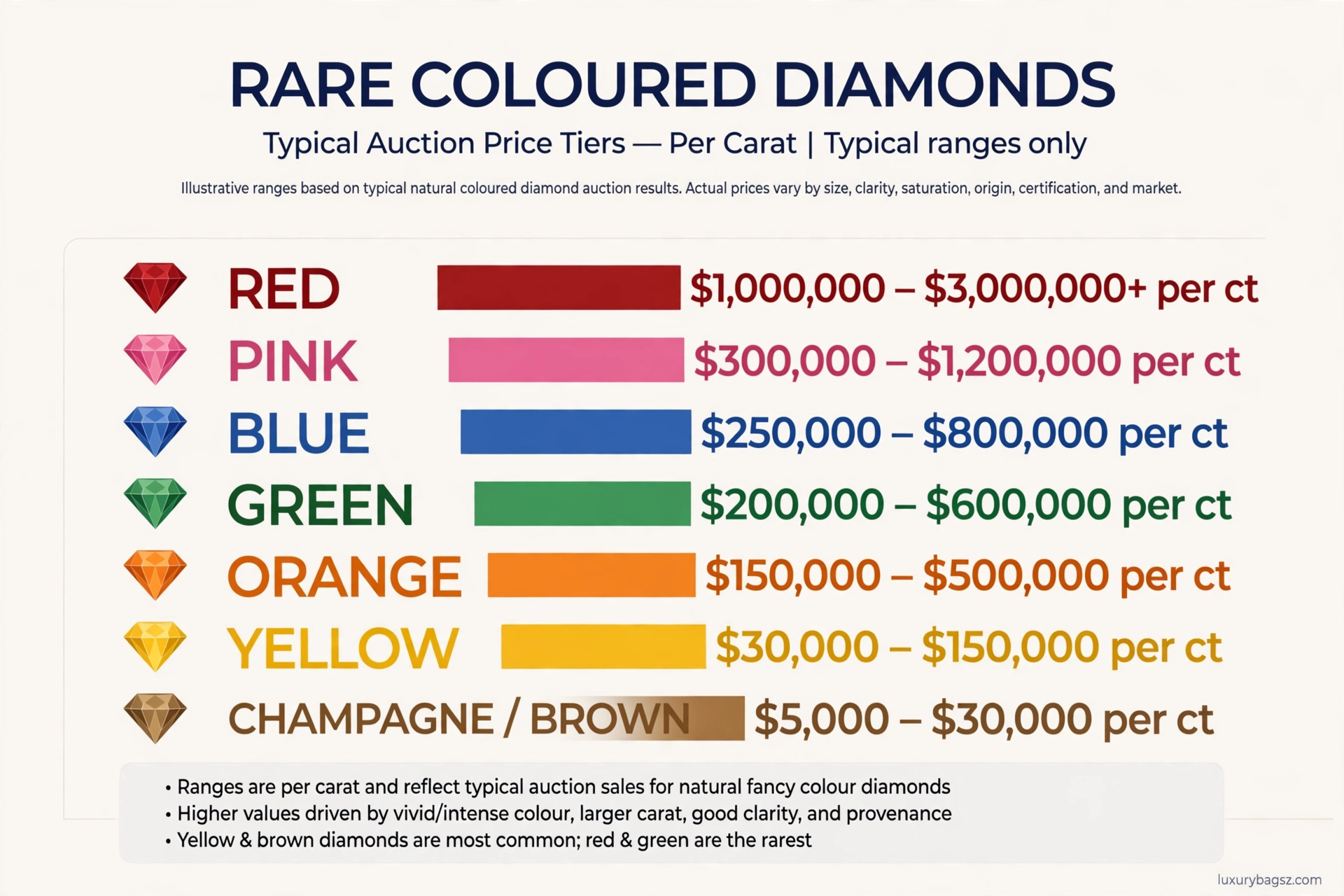
Red is the rarest fancy colour, so rare that its records are set by stones under a carat. The Hancock Red, just 0.95 carats, sold in New York in 1987 for around $880,000, close to $926,000 per carat, a per-carat record that stood for years and made the stone famous far beyond its size.
Unlike blue diamonds, whose colour comes from boron, red diamonds owe their colour to distortion in the crystal lattice itself during formation. The conditions are so specific that gem laboratories have graded only a small number of true reds, ever.
The largest known is the Moussaieff Red, a 5.11-carat fancy red that has been exhibited rather than auctioned. If it ever came to market with a motivated room, specialists expect it to rewrite the per-carat record entirely; until then it belongs with the museum stones in this guide’s earlier pages.
For ordinary buyers the red story is a collecting moral rather than a shopping guide: rarity follows colour purity and scarcity, not size, and the smallest stone in this article may be the rarest object in it.
The Record List at a Glance
For readers who want the ranking in one place, the leading verified auction results run as follows, with figures rounded and premiums included:
- CTF Pink Star, 59.60 carats, fancy vivid pink, $71.2 million, Hong Kong, 2017
- Williamson Pink Star, 11.15 carats, fancy vivid pink, $57.7 million, Hong Kong, 2022
- Oppenheimer Blue, 14.62 carats, fancy vivid blue, $57.5 million, Geneva, 2016
- De Beers Blue, 15.10 carats, fancy vivid blue, around $57.5 million, Hong Kong, 2022
- Winston Pink Legacy, 18.96 carats, fancy vivid pink, $50.4 million, Geneva, 2018
- Blue Moon of Josephine, 12.03 carats, fancy vivid blue, $48.4 million, Geneva, 2015
- Graff Pink, 24.78 carats, fancy intense pink, $46.2 million, Geneva, 2010
- Bleu Royal, 17.61 carats, fancy vivid blue, $43.8 million, Geneva, 2023
- The Orange, 14.82 carats, fancy vivid orange, $35.5 million, Geneva, 2013
- Mellon Blue, 9.75 carats, fancy vivid blue, $32.6 million, New York, 2014
Figures at this level are sometimes reported slightly differently between sources, because of currency conversion and premium treatment. The order of the very top results, however, is consistent across the major auction houses’ own records.
The White Diamond Exceptions
White diamonds do appear on the record lists, just at a lower ceiling. The Winston Legacy, a 101.73-carat D-colour flawless pear, sold in Geneva in 2013 for around $25.8 million, the leading auction result for a colourless stone and a fraction of the Pink Star’s price at nearly twice its weight.
The comparison is the cleanest illustration in this guide of the colour rule. Perfection in white is graded on an established scale and priced accordingly; perfection in vivid pink or blue is priced against near-total absence of supply.
Large whites do set one kind of record reliably: size with quality. Stones over 100 carats with top colour and clarity are genuine rarities, and the houses present them as engineering achievements as much as gems.
But if a white stone and a vivid coloured stone of the same weight ever shared a sale room, recent history leaves little doubt about which would make the headline.
Private Sales: The Deals Nobody Sees
Not every great stone passes through a sale room. The Lesedi La Rona, a 1,109-carat rough diamond from Botswana and one of the largest gem-quality rough stones ever found, was sold privately to Graff in 2017 for a reported $53 million, then cut into a family of polished stones.
Private treaty sales suit stones whose owners value discretion, and they suit buyers who prefer to negotiate rather than compete in public. The prices, when reported at all, arrive without the verification an auction result carries.
Auction houses themselves now run private sales departments for exactly this traffic, which blurs the line this guide drew at the start. The ranking method still stands: records need a public number, witnessed and published.
Somewhere between the museum stones that will never sell and the auction records that everyone sees sits this third category, probably holding stones that would trouble the list if their prices were ever printed. Probably is the operative word.
Frequently Asked Questions
What is the most expensive diamond ever sold?
The CTF Pink Star, a 59.60-carat fancy vivid pink diamond, sold for $71.2 million in Hong Kong in 2017. It remains the highest verified auction price for a diamond.
What is the most valuable diamond in the world?
By insurance and expert estimates, the Hope Diamond and the great Cullinan stones are valued far above auction records, but they are museum and Crown pieces and are not for sale.
Why are pink and blue diamonds so expensive?
Their colour comes from rare conditions during formation, and large stones with vivid grades are extremely scarce. Scarcity plus collector demand produces record prices.
Which diamond has the highest price per carat?
The Williamson Pink Star achieved over $5 million per carat in 2022, among the highest verified per-carat results for a diamond at auction.
Are white diamonds ever record breakers?
Rarely at the very top. Exceptional white stones sell for strong prices, but vivid coloured diamonds dominate the highest auction results by a wide margin.
What does fancy vivid mean?
It is the strongest saturation grade for coloured diamonds in standard grading. Fancy vivid pink or blue stones command the highest prices within their colour.
Who buys diamonds at this level?
A small circle of collectors, jewellers buying for stock or prestige, and investors. The winning bidder for the Pink Star was the retailer Chow Tai Fook.
Do auction prices include fees?
Reported totals usually include the buyer's premium added to the hammer price. Comparing results means checking that each figure is quoted the same way.
Has a red diamond ever topped the list?
Red diamonds are the rarest colour per carat, but known stones are small. The Moussaieff Red, at 5.11 carats, is famous, yet its total price cannot rival the large pinks.
Will the Pink Star record be beaten?
Probably one day, when a comparable stone meets two determined bidders. Until then, $71.2 million stands as the verified benchmark for a single diamond.
Final Verdict: Colour Writes the Records
Size impresses, but colour, clarity and story together write the records. The Pink Star's $71.2 million is what happens when all three peak in one stone. For everyone else, the lesson is portable: buy the best colour and cut your budget allows, in any size, and you are applying the record books' own logic.






