

Lab-Grown Diamonds Guide: How to Tell Them Apart, vs Natural and vs Moissanite
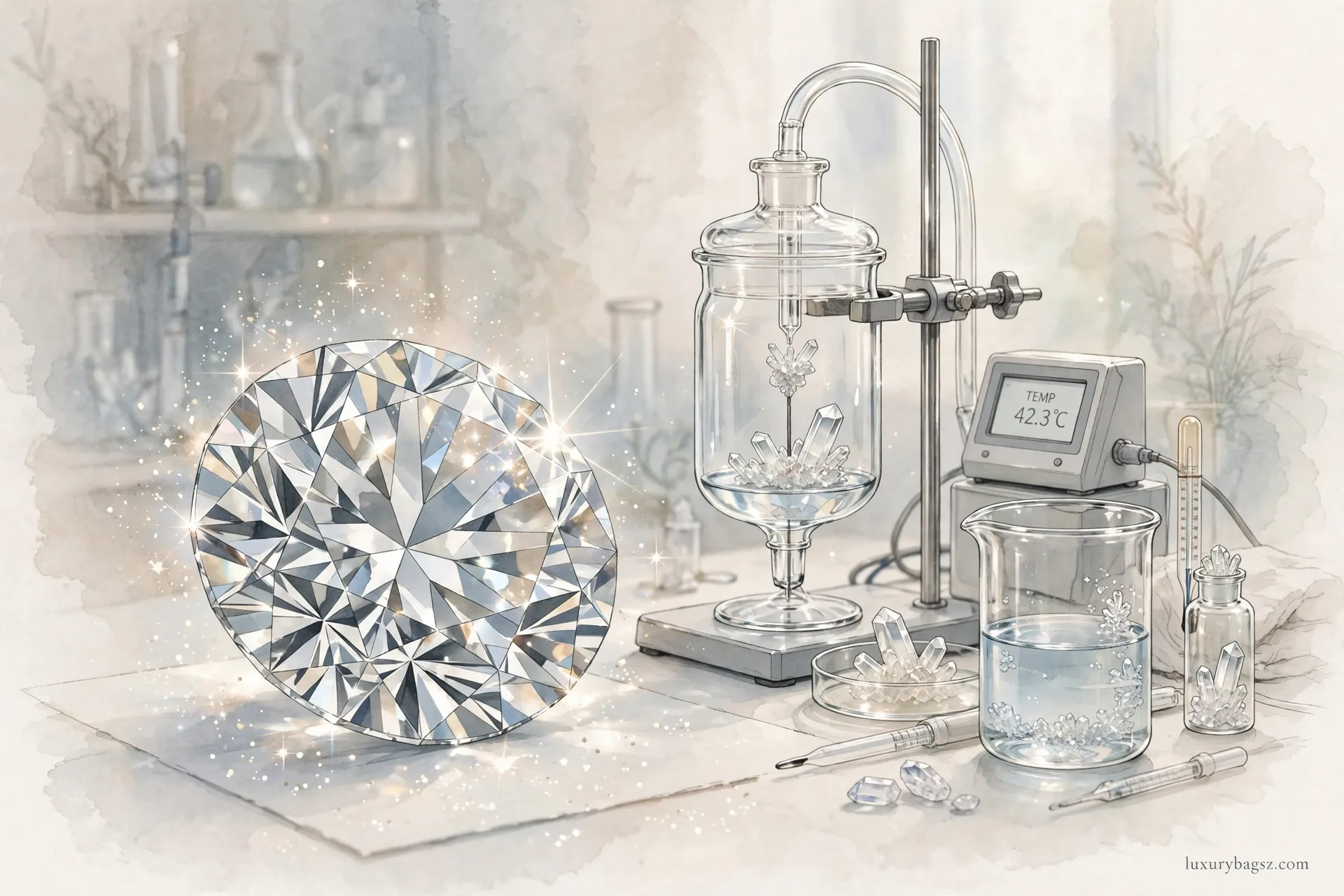
Lab-Grown Diamonds in Brief: Real Diamonds, Different Origin
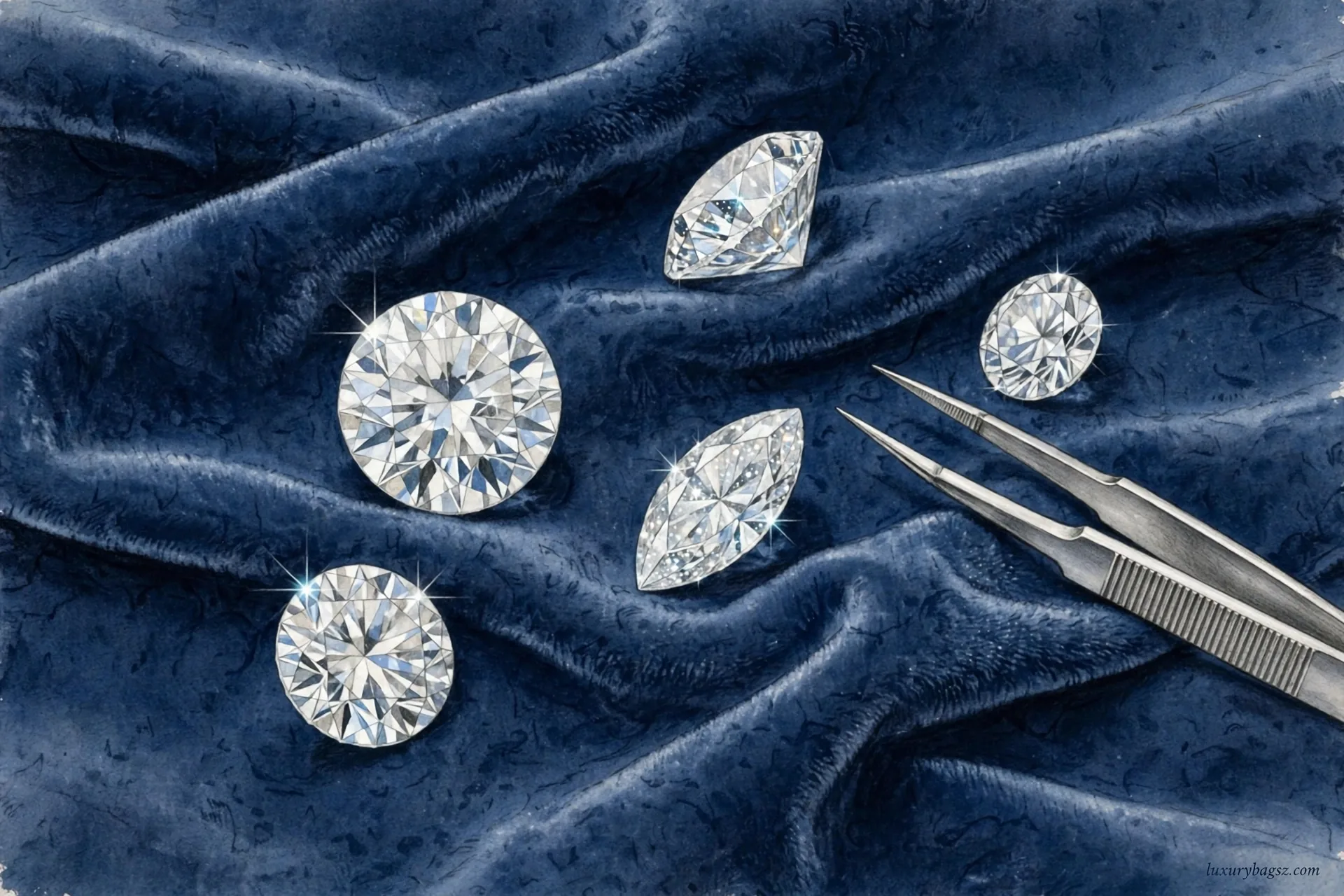
A lab-grown diamond is a real diamond: pure carbon crystal with the same hardness, brilliance and chemistry as a mined diamond. The only difference is origin, and neither your eye nor a basic pen tester can detect it. Reliable identification needs a grading report or laboratory screening equipment. Moissanite, by contrast, is a different material altogether and can be separated from both kinds of diamond with simple tests.
Key Takeaways
- Lab-grown and natural diamonds are both pure carbon and physically identical.
- No visual test separates them; jewellers use screening devices, labs use advanced instruments.
- Grading reports state origin clearly, and many lab-grown stones carry a girdle inscription.
- Moissanite is silicon carbide: harder tests, double facet edges and stronger rainbow fire give it away.
- Lab-grown prices typically sit far below natural for the same size and grades, and keep falling.
- Buy lab-grown for wear and size per pound, not as a store of value.
What a Lab-Grown Diamond Actually Is
Lab-grown diamonds start from a tiny diamond seed placed inside a chamber that recreates, in controlled form, the heat and pressure or the carbon-rich gas from which diamonds crystallise. The result is not an imitation. It is diamond by every physical definition, which is why regulators in major markets require it to be described with its origin, not as fake or synthetic-looking. Cut decides how any diamond performs, lab-grown included, so read our types of diamond cuts guide before comparing stones on price alone.
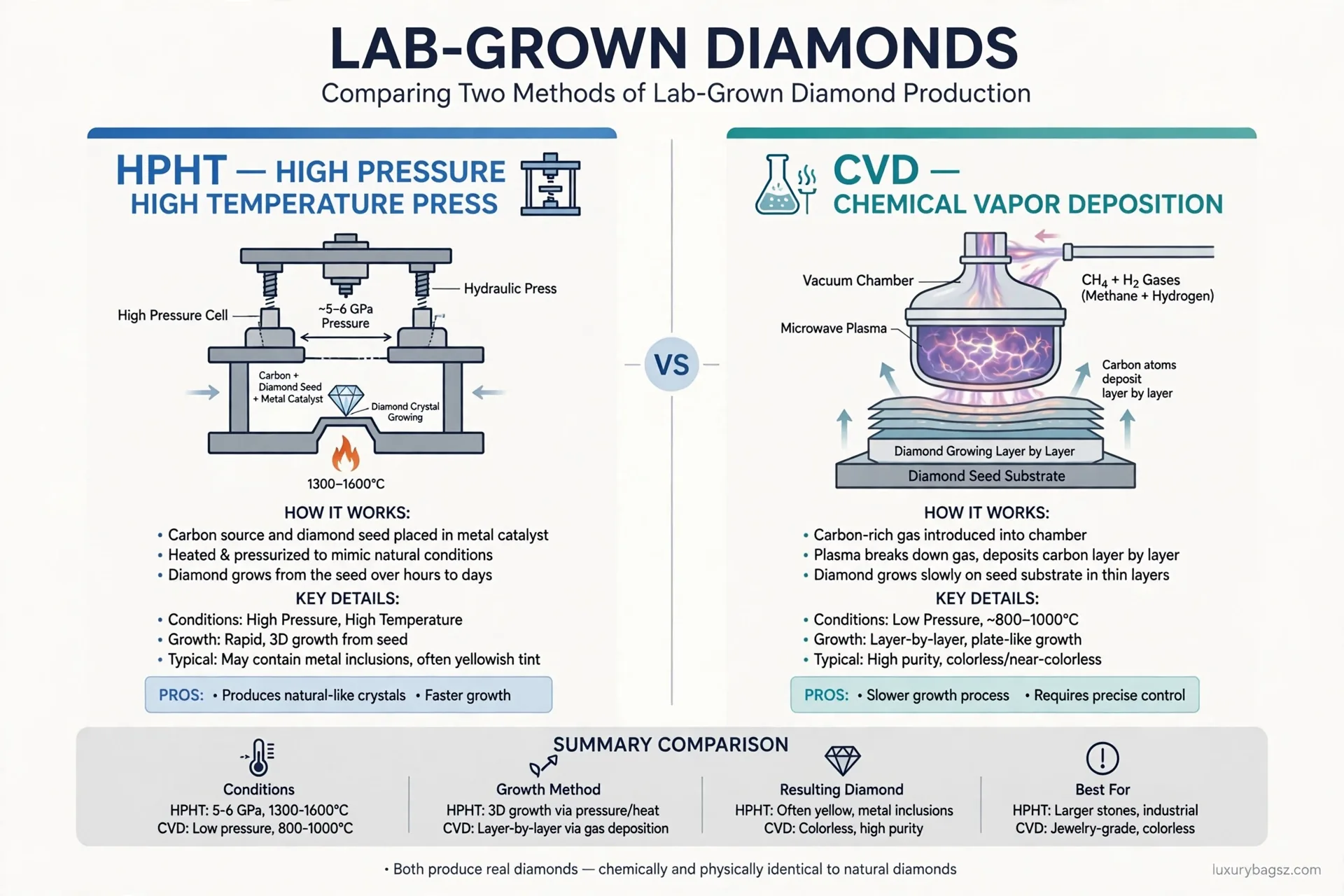
The Two Growing Methods: HPHT and CVD
HPHT, high pressure high temperature, presses carbon around a seed in a press that mimics underground conditions. It was the first commercial method and often produces stones with strong colourless grades. CVD, chemical vapour deposition, grows the crystal layer by layer from carbon gas in a vacuum chamber. It allows large, very clean crystals and is now the most common route for gem stones. Both methods produce real diamond, and reports may note the method. Neither method is inherently better; the finished stone's cut, colour and clarity decide quality.
Why Your Eye Cannot Tell Them Apart
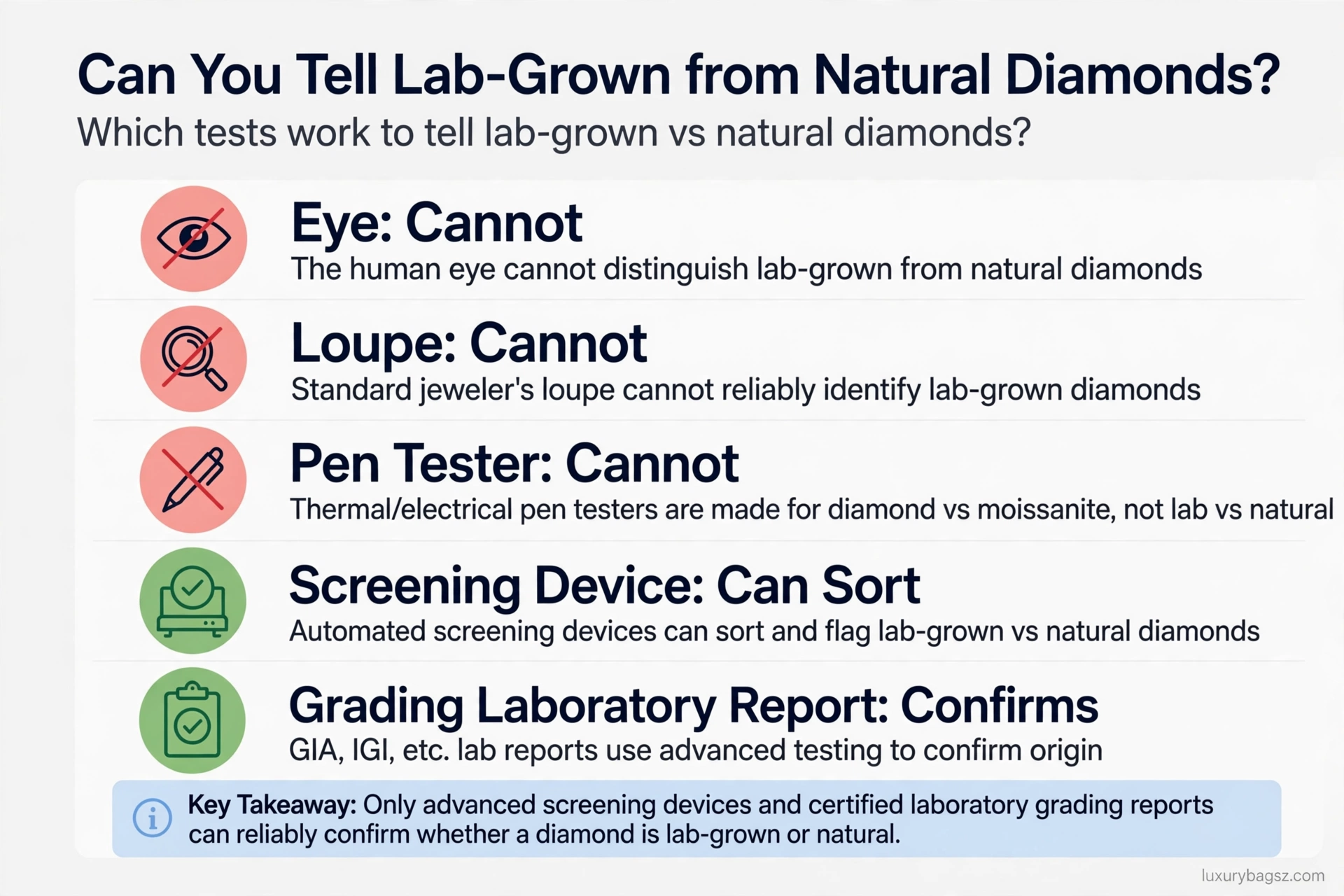
Seen side by side, a natural and a lab-grown diamond of the same cut and grades are visually the same stone. Sparkle, fire and hardness match because the crystal itself matches. Even trained gemmologists cannot separate them by loupe alone. Tiny growth features can hint at origin under magnification, but hints are not proof, and no honest jeweller will grade origin by eye. This is not a flaw in lab-grown stones; it is the definition of them. Anyone claiming they can spot one across a room is selling confidence, not knowledge.

How Identification Actually Works
Identification happens in layers. A grading report from a recognised laboratory states origin plainly, and many lab-grown stones are laser-inscribed on the girdle with the report number and origin wording. Jewellers use screening devices that test how a stone reacts to specific light wavelengths. These sort stones into natural, lab-grown or refer-for-testing, but they screen rather than certify. Full laboratory analysis settles doubtful cases. Our how to buy a diamond guide explains which reports to trust and what each line of one means.
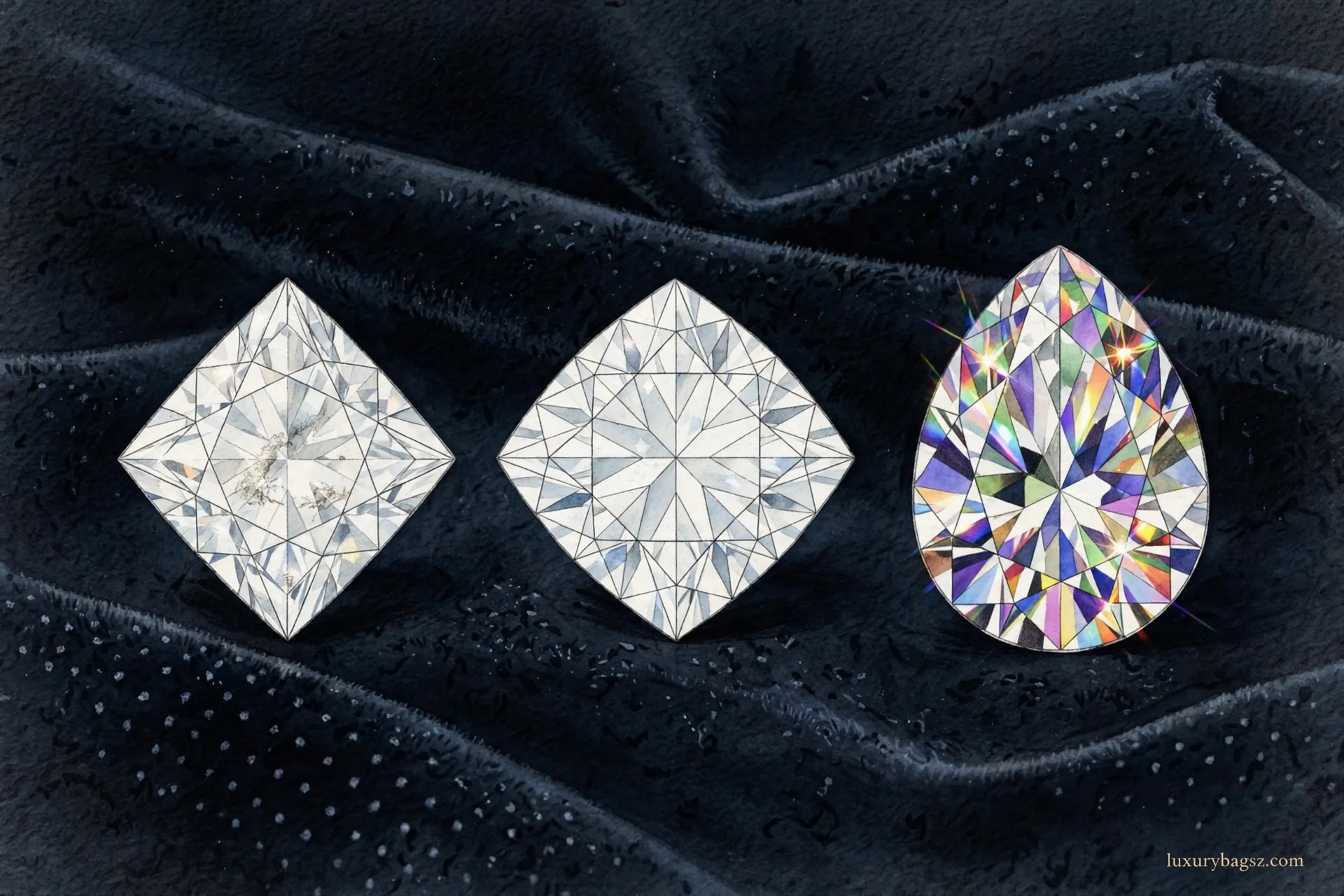
Cubic zirconia completes the look-alike family: softer still at around 8 to 8.5, it clouds and scratches with wear and fails a basic tester outright. It has its place in costume pieces, but it should never be priced or sold as anything more.
Moissanite: A Different Stone, Not a Diamond
Moissanite is silicon carbide, hardness 9.25 against diamond's 10. It is lab-created for jewellery too, which causes the confusion, but it is no more a diamond than a ruby is. It gives itself away in three ways. Its rainbow fire is stronger than diamond's, its facet edges can look doubled under a loupe, and most electrical testers flag it where diamond stays silent. A basic heat pen tester can pass moissanite as diamond, which is why multi-testers exist. Anyone buying a loose white stone should insist on a proper test or a report.
Price and Value, Stated Plainly
Lab-grown diamonds typically cost a fraction of natural stones of the same size and grades, often around 70 to 90 percent less at retail, and the gap has widened as supply grows. Natural diamonds keep a scarcity story and stronger resale demand; our most expensive diamonds guide shows the extreme end of that market. Lab-grown resale values are weak and should be assumed close to decorative only. Moissanite costs less again, per carat, than lab-grown diamond. The honest ranking is simple: natural for rarity value, lab-grown for diamond size per pound, moissanite for sparkle per pound.
Reports, Inscriptions and Buying Safely
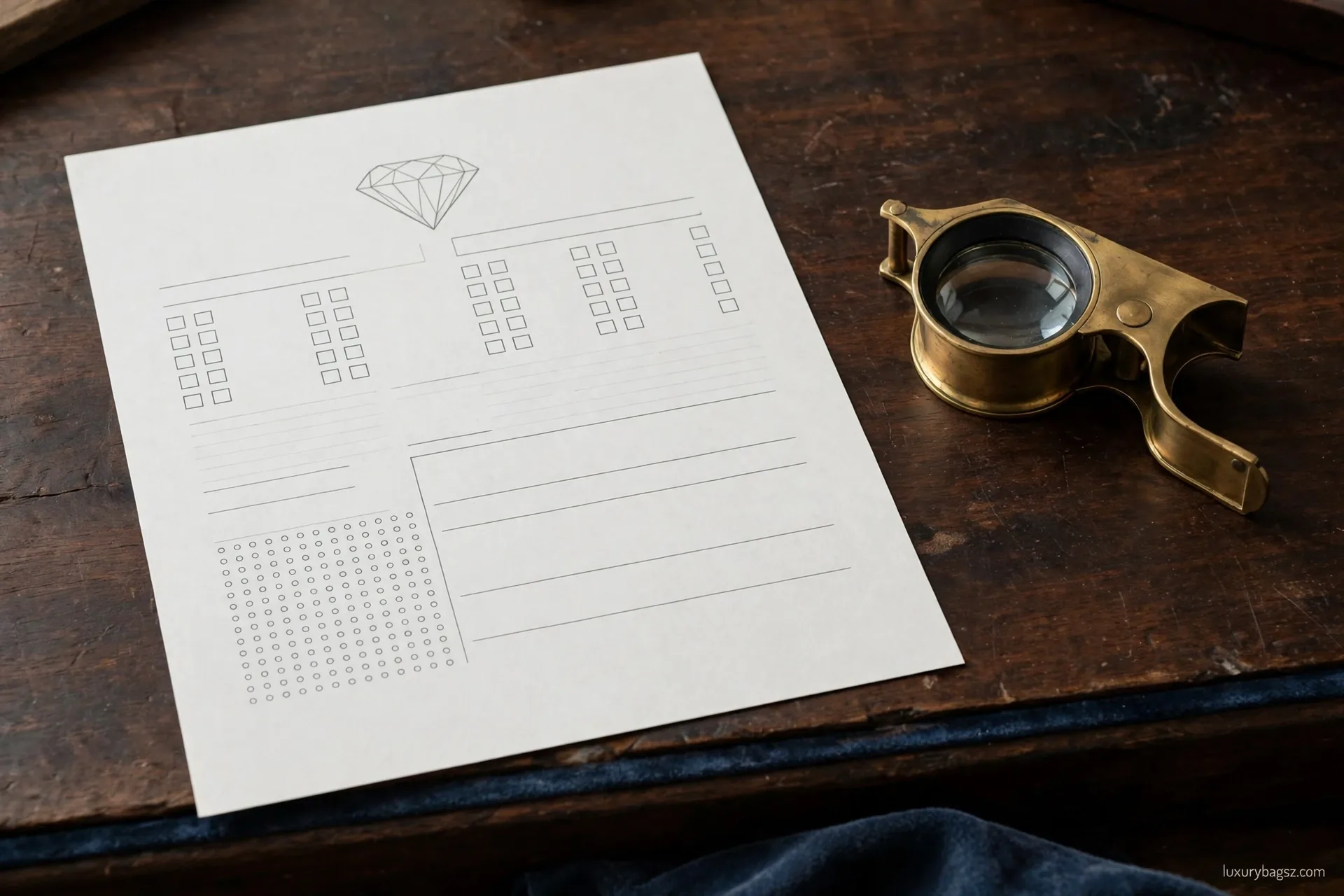
Buy any significant lab-grown stone with a report from a recognised laboratory that names its origin, grades and measurements. The report number should match a girdle inscription you can read under magnification. Reputable sellers state origin in the listing title, not the small print. Listings that say only "diamond" for a suspiciously cheap large stone deserve direct questions before money moves. Keep the report with the piece. If you later upgrade, resell or insure the stone, that document is the difference between an identified diamond and an argument.
Which Stone Should You Choose?
Choose natural diamond if rarity, tradition and resale matter and the budget covers the size you want. Choose lab-grown if you want the largest, cleanest real diamond your budget allows for daily wear. Choose moissanite openly if you love its extra fire and low cost; it is a fine gemstone in its own right and only disappoints when it is sold as something else. For daily pieces such as studs and pendants, our everyday diamond jewellery guide shows where each stone type earns its place.
Grading Lab-Grown Stones: Where to Spend and Where to Relax
The 4Cs grade lab-grown stones exactly as they grade natural ones, but the economics change the strategy. Because the stone itself is comparatively affordable, cut is where the money belongs: an excellent cut in a lab-grown stone costs little more than a poor one and decides everything the eye actually sees.
Colour can relax by a grade or two against natural-stone habits. Stones in the near-colourless range face up white in most settings, especially in yellow or rose gold, and lab-grown supply makes the top colour grades cheap enough that stepping down is a choice, not a necessity.
Clarity can relax furthest. Eye-clean is eye-clean at any origin, and inclusions in lab-grown stones, often tiny metallic or growth features, are graded on the same scale. Paying for flawless in a stone grown to order is buying a certificate line, not visible beauty.
Carat is where lab-grown changes lives rather than grades: sizes that would be a once-in-a-decade purchase in natural stones become ordinary, which is why the engagement market moved first and fastest.
Which Laboratories Grade Lab-Grown, and How Their Reports Differ
IGI grades the largest share of lab-grown diamonds and issues full 4Cs reports with precise grades, which is why so many lab-grown stones carry its paperwork. GIA, the natural market’s authority, also reports on lab-grown stones, and its reports state origin unambiguously.
Other recognised laboratories, including GCAL and regional institutes, grade lab-grown stones to similar standards. The buyer’s rule does not change with the logo: the report must name the origin, give measurements and grades, and match the stone and its inscription.
Read the comments line. Reports may note post-growth treatment, used by some growers to improve colour, and the growth method itself. Neither invalidates a stone, but both belong in the price conversation, and an honest seller will already have them in the listing.
A stone offered with only a jeweller’s own certificate, or with a report that describes the stone in unusual vagueness, should be priced as ungraded, whatever its story.
The Ethics and Environment Claims, Stated Carefully
Lab-grown diamonds are often sold as the ethical and green choice, and the truth is more specific. They avoid mining’s land disturbance and the supply-chain questions that follow natural stones, and their origin is known by construction rather than by audit.
They are not impact-free. Growing diamond takes serious energy, and the footprint of a given stone depends on the grower’s power source, which varies from renewable installations to ordinary grids. Brands that publish their energy sourcing are making the stronger claim; a bare “eco-friendly” label is marketing until it shows its working.
Natural diamonds answer with their own case: mining employment, improving traceability systems and stones that hold value across generations. Reasonable buyers land on both sides of this argument, often within the same family.
Choose on the facts you can verify, price, size, grading and the maker’s disclosures, and let the stone you love be the conclusion of the argument rather than its hostage.
Engagement Rings: The Lab-Grown Stronghold
Engagement rings are where lab-grown diamonds won first, because the purchase is size-visible, budget-bound and made by buyers comfortable asking questions. The ring on a hand is judged across a dinner table, where origin is undetectable and cut quality shouts.
Two buying details matter more here than elsewhere. First, upgrade and trade-in policies differ sharply: some sellers credit lab-grown purchases towards later stones, many do not, and the difference decides whether today’s ring can become tomorrow’s larger one.
Second, warranties and resizing: confirm the setting’s terms in writing, because a lab-grown stone in a ring is serviced exactly like a natural one, and the paperwork from this guide’s buying advice is what the jeweller will ask for at the counter in ten years.
Insure the ring for its replacement cost, which for lab-grown is refreshingly modest, and revalue it occasionally; falling lab-grown prices mean older policies can quietly over-insure a stone that now costs less to replace.
Coloured Lab-Grown Diamonds: The Affordable End of the Rainbow
The record prices in our most expensive diamonds guide belong to natural pink and blue stones, colours whose rarity is geological. In the laboratory those same colours are a recipe, and that is the most quietly revolutionary thing about lab-grown production.
Lab-grown pink, blue and yellow diamonds are real diamonds with real fancy colour grades, sold at prices that make them jewellery rather than assets. A vivid pink that would require a auction room in natural form becomes a pendant a determined saver can own.
Grading matters even more in colour, because saturation is the value and the look. Buy coloured lab-grown stones with proper reports that grade the colour’s strength and distribution, and judge them in daylight, where weak colour confesses.
Resale honesty from earlier in this guide applies unchanged: buy the colour to wear it. A lab-grown pink is a small daily luxury, not a vault stone, and priced with that understanding it is one of the best buys in modern jewellery.
Living With a Lab-Grown Diamond: Care and Durability
Care is the simplest part of the comparison: there is nothing to adapt. A lab-grown diamond is hardness 10, takes the same cleaning as a natural stone, and shrugs off the daily wear that softer gems cannot. Our how to clean jewellery guide applies to it word for word.
The setting, as always, is the vulnerable part. Claws loosen, shanks thin and stones of any origin are lost through neglected mountings, so the annual jeweller’s check recommended for all diamond rings matters identically here.
What differs is only the paperwork habit. Keep the report and receipt with the piece’s records, because if the stone is ever questioned, by an insurer, a buyer or a grandchild, its origin is a fact on paper, not a quality the eye can argue about.
Worn daily, cleaned simply and documented properly, a lab-grown diamond behaves for its owner exactly as the crystal promises: indistinguishably, for a lifetime.
Frequently Asked Questions
Is a lab-grown diamond a real diamond?
Yes. It is pure carbon crystal with the same hardness and optical behaviour as a natural diamond. The difference is where it formed, not what it is.
Can a jeweller tell lab-grown from natural by looking?
Not reliably by eye or loupe. Jewellers use screening devices for a first sort, and grading laboratories use advanced instruments to confirm origin.
Does a diamond pen tester identify lab-grown diamonds?
No. A heat-based pen tester reads lab-grown and natural diamonds the same way, because both are diamond. It also cannot be used alone to rule out moissanite.
How is moissanite different from lab-grown diamond?
Moissanite is silicon carbide, a different material with hardness 9.25, stronger rainbow fire and doubled facet edges under magnification. Lab-grown diamond is true diamond at hardness 10.
Do lab-grown diamonds come with certificates?
They should. Recognised laboratories grade lab-grown stones and state their origin on the report, often with a matching laser inscription on the girdle.
Are lab-grown diamonds a good investment?
No, not in financial terms. Prices have fallen as supply grows and resale values are weak. Buy them for size, quality and wear, not appreciation.
Will a lab-grown diamond last like a natural one?
Yes. It has the same hardness and durability, so it suits engagement rings and daily wear exactly as a natural diamond does, with the same care.
Can lab-grown diamonds look too perfect?
Large lab-grown stones often reach high colour and clarity grades affordably, which some buyers love and others find less characterful than natural stones with tiny natural features.
What does CVD or HPHT mean on a report?
They are the two growing methods: high pressure high temperature, and chemical vapour deposition. Both produce real diamond; the finished grades matter more than the method.
How can I avoid buying moissanite sold as diamond?
Insist on a grading report for significant stones, use sellers who state origin clearly, and have loose stones tested with a multi-tester that screens for moissanite.
Final Verdict: Same Crystal, Honest Differences
Lab-grown diamonds are real diamonds with a laboratory origin, identified by reports and instruments rather than eyes, and priced for wear rather than rarity. Choose between natural, lab-grown and moissanite on honest grounds (value story, size per pound, or sparkle per pound) and each of them is a good purchase.






