

Everyday Fine Jewellery: The Pieces That Quietly Elevate Every Look

The Short Answer: Five Pieces Do Almost Everything
Five pieces of everyday fine jewellery elevate nearly any look: diamond or gold studs, medium hoops, a fine chain, one pendant and a slim bracelet. Worn on rotation, they make a plain shirt look finished, a work outfit look deliberate and an evening dress look considered, without any sense of effort. The secret is not quantity. It is choosing pieces in a metal that suits you, at sizes you can wear all day, and keeping them clean and ready.
Key Takeaways
- Studs, hoops, a chain, a pendant and a bracelet form the everyday core.
- Solid gold or vermeil survives daily wear far better than thin plating.
- One metal worn consistently looks more polished than a mixture by accident.
- Small diamonds give daily sparkle; our linked guide covers sizes and settings.
- Fit matters: necklaces should sit where your usual necklines sit.
- Clean, stored-ready pieces get worn; tangled, dull pieces get skipped.
Why Fine Jewellery Works Every Day
Fine jewellery earns its name through materials. Solid gold and real stones do not peel, fade or irritate the way fashion pieces often do. That durability changes behaviour. You stop saving jewellery for occasions and start finishing outfits with it automatically, which is the whole point. Start with the diamond end of the idea in our everyday diamond jewellery guide, then build the metal pieces around it. A small, reliable set worn daily gives more pleasure per pound than a drawer of special-occasion pieces worn twice a year.
The Five-Piece Core
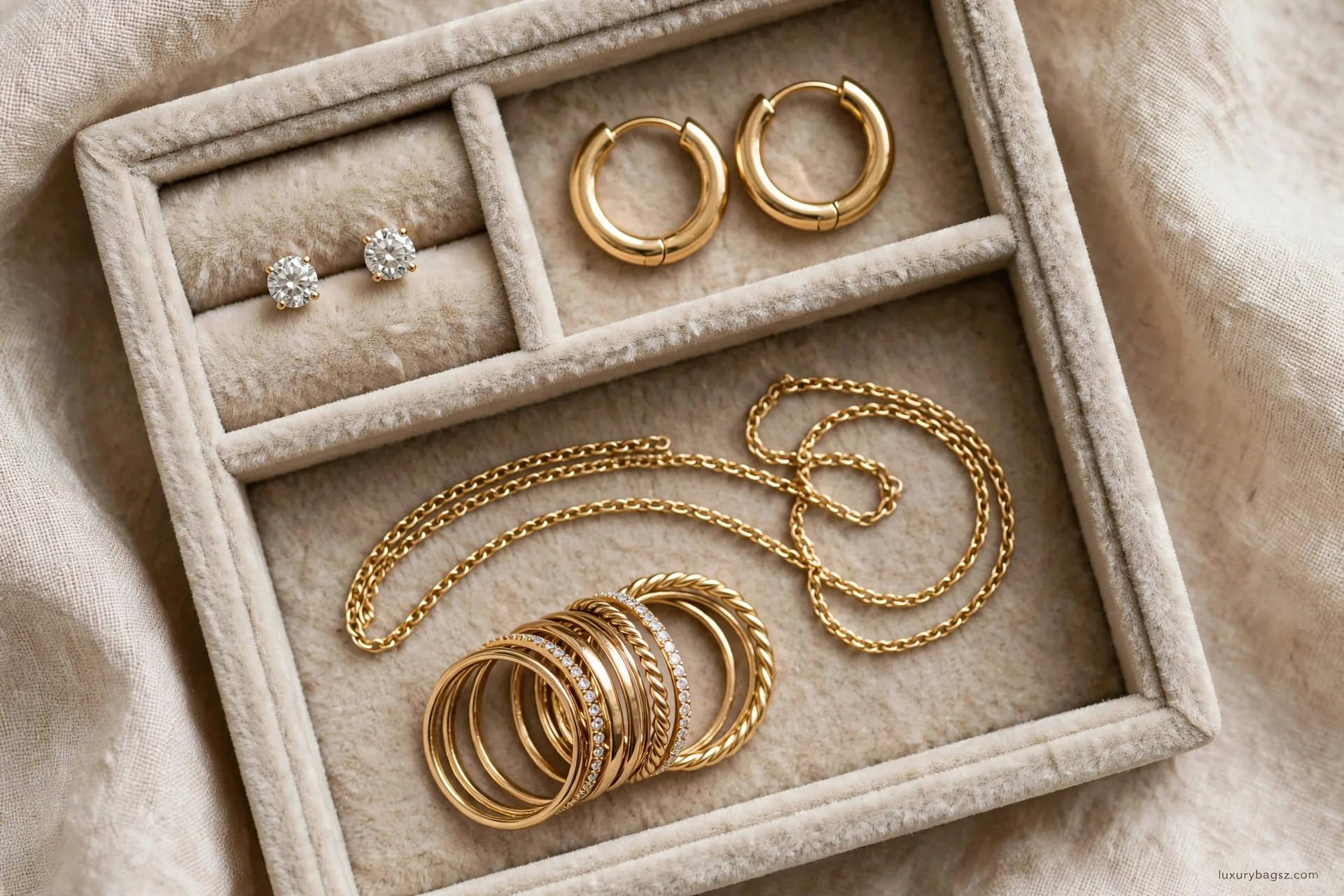
Studs first: diamond, pearl or plain gold balls that sit close to the ear and never fight with hair, collars or headphones. Hoops second: a medium pair, typically around 15–25 mm, polished enough to lift a plain top instantly. Then a fine chain at your most-used length, one pendant with meaning or sparkle, and a slim bracelet that survives typing, driving and life.
Matching Pieces to Your Actual Wardrobe
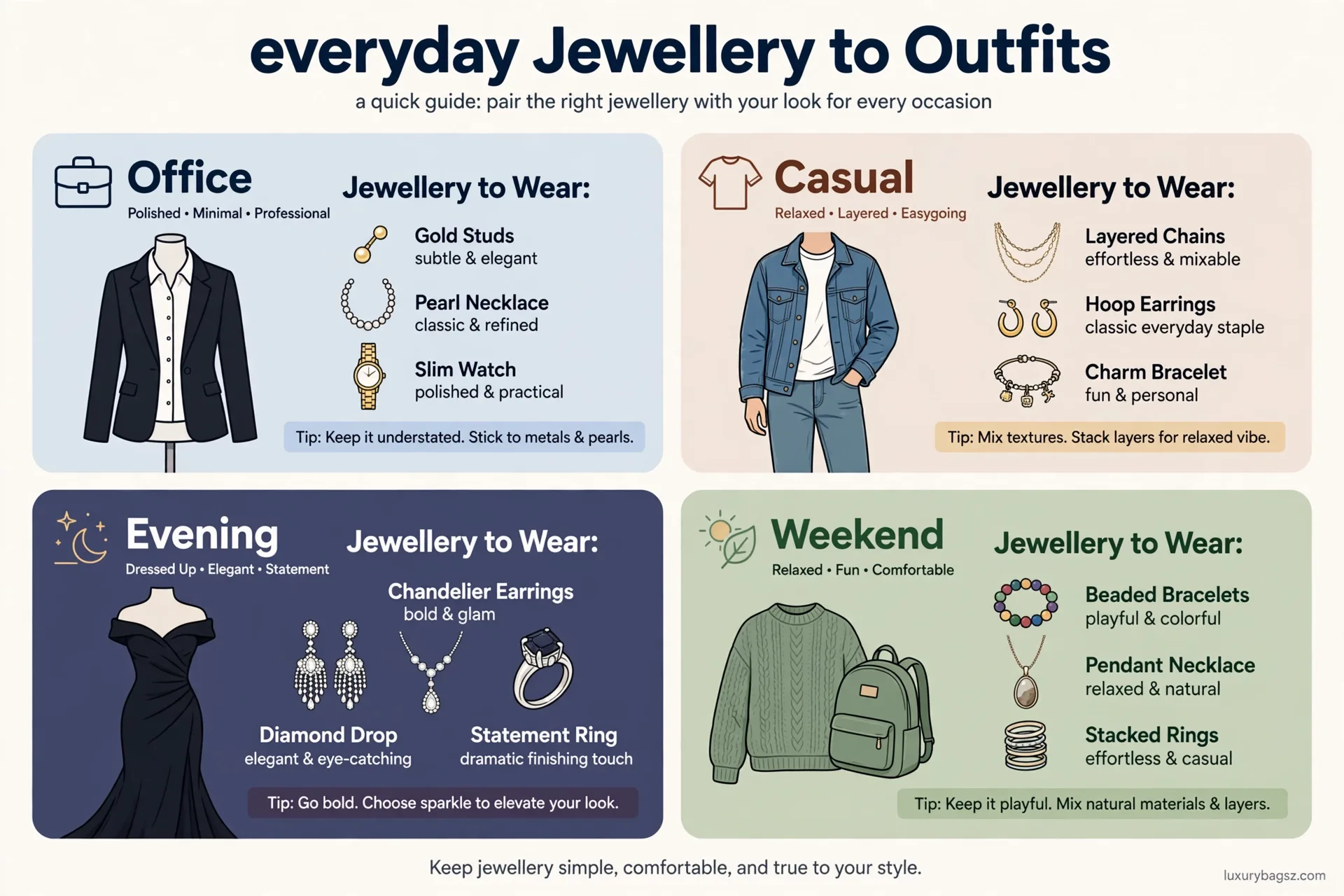
Office dressing wants quiet polish: studs, a chain that sits inside a shirt collar, and one bracelet that does not clatter on a desk. Casual dressing tolerates more: hoops, layered chains and stacked rings over knits and denim, where jewellery provides the finish clothes do not. Evening asks for one upgrade, not a change of identity: swap studs for drops, or add the bracelet's bolder partner. Weekends are for the personal pieces, the pendant and charms that tell your story when formality is off duty.
Pendants and Motifs With Meaning
A pendant turns a plain chain into something personal: an initial, a small stone, a coin or a symbol you would miss if it were gone. The Van Cleef & Arpels Alhambra guide shows how one small motif became a daily signature for thousands of wearers. Choose a motif at a size that reads at conversational distance. Too small vanishes; too large stops being an everyday piece. Mother-of-pearl and coloured stone pendants need gentler handling than plain gold, so know your material before it becomes a daily habit.

Bracelets and Rings That Survive the Day
A slim bangle, a fine chain bracelet or a single nail-inspired design adds movement and light at the wrist, where you see it most yourself. The Cartier Juste un Clou guide covers the most famous of those everyday bracelet designs and its sizes. Rings should stack comfortably without catching: plain bands, a small stone ring and one textured piece make a complete hand. Remove rings for the gym, gardening and heavy cleaning. Fine means precious, even when a piece is worn daily.

Materials That Last
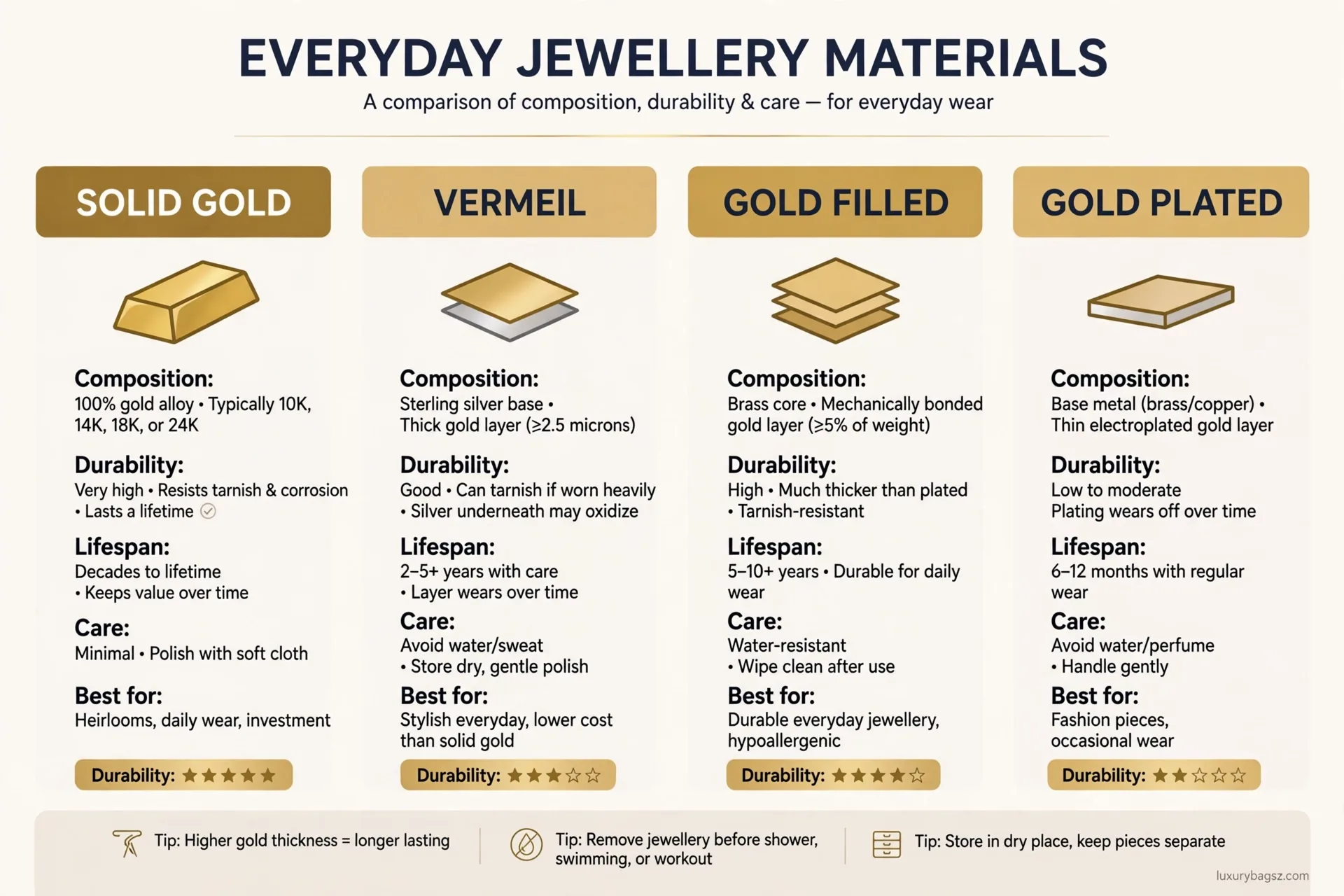
Solid 14-karat or 18-karat gold is the daily-wear benchmark: strong, bright and indifferent to water, perfume and time. Vermeil, a thick layer of gold over silver, is the honest budget alternative, lasting well if kept dry and stored softly. Gold filled sits between the two for chains and hoops. Thin plated fashion pieces sit below all three and show wear fastest. Match your buying to your habits. A swimmer or gym devotee needs solid metal; an occasional wearer can enjoy vermeil happily.
Care That Takes One Minute
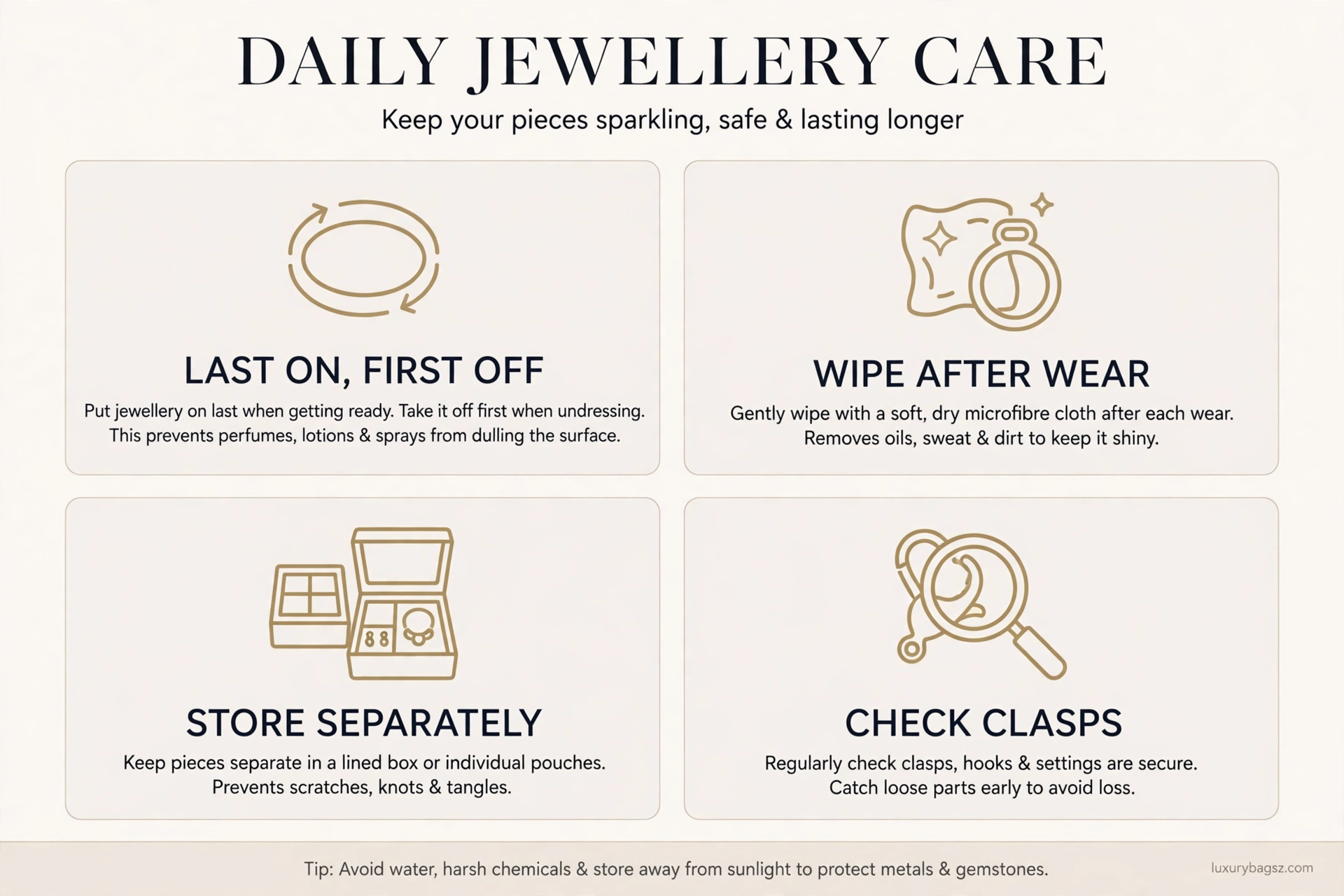
Last on, first off: jewellery goes on after perfume and hair products, and comes off before swimming, showers and sleep where practical. Wipe each piece with a soft cloth as you put it away. That single habit removes the day's film before it dulls the metal. Store pieces separately in pouches or a lined tray, and check clasps and settings every few months for looseness. Deeper stone-by-stone care sits in our how to care for gemstone jewellery guide, including what never to soak.
Building Your Set Without Waste
Buy in the order you will wear: studs, chain, hoops, bracelet, pendant. Each purchase should be worn weekly within a month or it was the wrong piece. Keep one metal as your base and add the second deliberately later, when you know how you like to mix them. Watch current directions for inspiration, not instruction; our fine jewellery trends guide shows which looks have staying power. A finished everyday set feels like handwriting: recognisably yours, produced without thinking, and quietly elevating everything it touches.
The Measurements That Decide Comfort
Everyday pieces succeed or fail on millimetres. A chain of 16 to 18 inches sits at the collarbone for most women, which is where everyday necklines live; much longer and it catches on desks and seatbelts.
Chain thickness matters as much as length. Around 1.5 to 2 mm reads fine and feminine while surviving daily pulls; under 1 mm, chains tangle, kink and snap at the clasp within a year or two of constant wear.
Huggies, the small hoops that click shut against the lobe, are the comfort champions at roughly 10 to 12 mm inner diameter: nothing dangles, nothing catches on scarves or phone calls. Medium hoops at 15 to 25 mm, as the core list suggests, are the dressed option rather than the sleeping one.
Rings worn daily do best at 1.6 to 2 mm band width, slim enough to stack and type in, substantial enough not to bend. Measure your pieces before replacing them; jewellery bought by eye alone is how collections fill with almost-right sizes.
Closures and Backs: Where Everyday Pieces Are Lost
More everyday jewellery is lost through closures than through theft or damage. A stud with a worn friction back slides out in bed, in a swimming pool or inside a jumper, and the loss is discovered hours later.
Screw backs and locking backs exist precisely for the pieces you never take off, and upgrading the backs of good studs costs little against the value of the earrings. Lever backs close drops securely; simple hooks are the everyday risk.
On necklaces and bracelets, a lobster clasp outlasts a spring-ring clasp and is easier to work one-handed. Whatever the clasp, develop the tug habit: a firm pull on every closure, every morning, takes two seconds and catches the failure before it costs a piece.
Check clasps again every few months, as the care guidance earlier in this guide advises. A clasp that has started opening with a soft click instead of a firm one is asking to be replaced, and jewellers do it cheaply while you wait.
Sleeping, Showering and Training: The Honest Rules
Can you sleep in it? Fine chains tangle and stretch overnight, prong-set stones wear their claws against bed linen, and studs press into the skin behind the ear. Smooth huggies and plain bands are the only pieces that genuinely sleep well.
Showering is gentler than sleeping but not free: soap and conditioner film dulls stones and metal, and the real risk is mechanical, a chain or earring going down the drain during hair washing. Solid gold itself does not care about water; the drain does not care about your gold.
Training is the clearest rule of all: rings off for weights, always, because a barbell can bend a band and injure the finger inside it. Chains come off for contact sports and swimming in the sea, where a lost piece is simply gone.
The pieces that survive a decade of daily wear are usually the ones with a small nightly ritual: off, wiped, into the tray. It takes less time than brushing your teeth.
Skin, Allergies and Choosing Your Metal Colour
Itchy earlobes and green-tinged skin are usually alloy stories, not gold stories. Nickel, used in some white gold alloys, is the common irritant; palladium-based white gold and platinum avoid it, and yellow and rose gold rarely trouble anyone.
White gold’s bright finish is a rhodium plating over a warmer alloy, so daily-worn white gold pieces need replating every so often to keep their colour. That maintenance is normal, cheap and worth asking about before you buy, not after the ring turns creamy.
Choose the base colour by your wardrobe and your watch, not by a chart of skin tones alone. If your clothes run warm, black and tailored, yellow gold gives the contrast; a wardrobe of blues, greys and whites often suits white metals better.
Sensitive skin settles the question faster than taste does: buy the metal you can forget you are wearing. Everyday jewellery that itches is occasion jewellery with extra steps.
Hallmarks and the Checks Before You Pay
Real everyday pieces announce themselves in tiny stamps: 585 for 14-karat and 750 for 18-karat in the fineness system, or 14K and 18K in the karat system, usually inside a ring band or on a clasp tag. No stamp at all on a supposedly solid piece is a reason to pause.
Ask for the gram weight. Solid gold is sold partly by weight, and a seller who can state the weight, the karat and the stone details plainly is answering the questions a serious buyer asks.
Repair terms decide the long-term value of a daily piece more than the purchase price does. Ask who resizes, re-tips prongs, replaces clasps and replates white gold, and what each job costs. Our guide to how to authenticate luxury jewellery walks through the verification end of these checks in more depth.
Buy the piece you can maintain locally and wear weekly. An everyday set is infrastructure, and infrastructure is judged on whether it can be serviced, not only on how it shines on day one.
Cost Per Wear: The Arithmetic of Everyday Pieces
Divide any piece’s price by the days you will actually wear it and the economics of fine jewellery reverse. A solid chain worn two hundred days a year costs less per outing than the plated necklace replaced every season because its finish wore through.
This is why the building order in this guide puts the daily pieces first. The set earns its price back through repetition, while the spectacular occasion piece, worn twice a year, carries the highest cost per wear in the box however it was bought.
The arithmetic also exposes bad buys quickly. A fashionable piece you will wear six times before the trend moves on needs to be cheap to make sense; a plain piece you will wear six hundred times can justify real gold.
When in doubt between two pieces, ask which one your ordinary Tuesday wants. Everyday fine jewellery is bought for Tuesdays, and Tuesdays are most of life.
Frequently Asked Questions
What jewellery should I wear every day?
A core of studs, medium hoops, a fine chain, one pendant and a slim bracelet covers almost every outfit. Add stacking rings once those five feel automatic.
Is it safe to wear fine jewellery daily?
Yes, in solid gold with secure settings. Remove pieces for heavy exercise, swimming and harsh chemicals, and have settings checked once or twice a year.
Which metal is best for everyday jewellery?
Solid 14-karat gold balances durability, colour and price for most people. White gold and platinum suit cooler skin tones and formal wardrobes.
How do I choose a necklace length?
Measure where your usual necklines sit. A 40–45 cm chain suits most collars; a 50 cm chain layers over knits. Try lengths against your own clothes.
Can I sleep in my jewellery?
Fine chains and studs survive it, but sleep wears clasps, bends posts and tangles hair. Taking pieces off at night extends their life noticeably.
How many pieces should I wear at once?
Two to four is the comfortable everyday range: earrings, one neck piece, one wrist piece. More can work when pieces are deliberately layered.
Are small diamonds worth it for daily wear?
Yes. Small diamond studs and pendants give light and polish at every angle, work with everything, and in solid settings last for decades.
How do I stop my jewellery looking dull?
Wipe pieces after wear, store them dry and separately, and give them a gentle soapy soak regularly. Most dullness is surface film, not damage.
Is vermeil good enough for everyday pieces?
For moderate wear, yes, if it is genuine vermeil with a thick gold layer. Keep it dry, store it softly and expect eventual gentle fading at edges.
What should my first fine piece be?
The one you will wear most: usually diamond or gold studs, or a fine chain. Start where your wardrobe has the biggest daily gap.
Conclusion: Small Pieces, Worn Constantly
Everyday fine jewellery is not about impressing a room. It is about the quiet lift of studs, a chain and a bracelet that make ordinary clothes look finished. Choose solid materials, buy in wearing order, care for pieces in a minute a day, and your smallest jewellery will do your hardest work.






