Types of Gold Explained: Yellow, White and Rose — Alloys, Karats, Durability and Care
Gold Colours in Brief: One Metal, Three Alloys
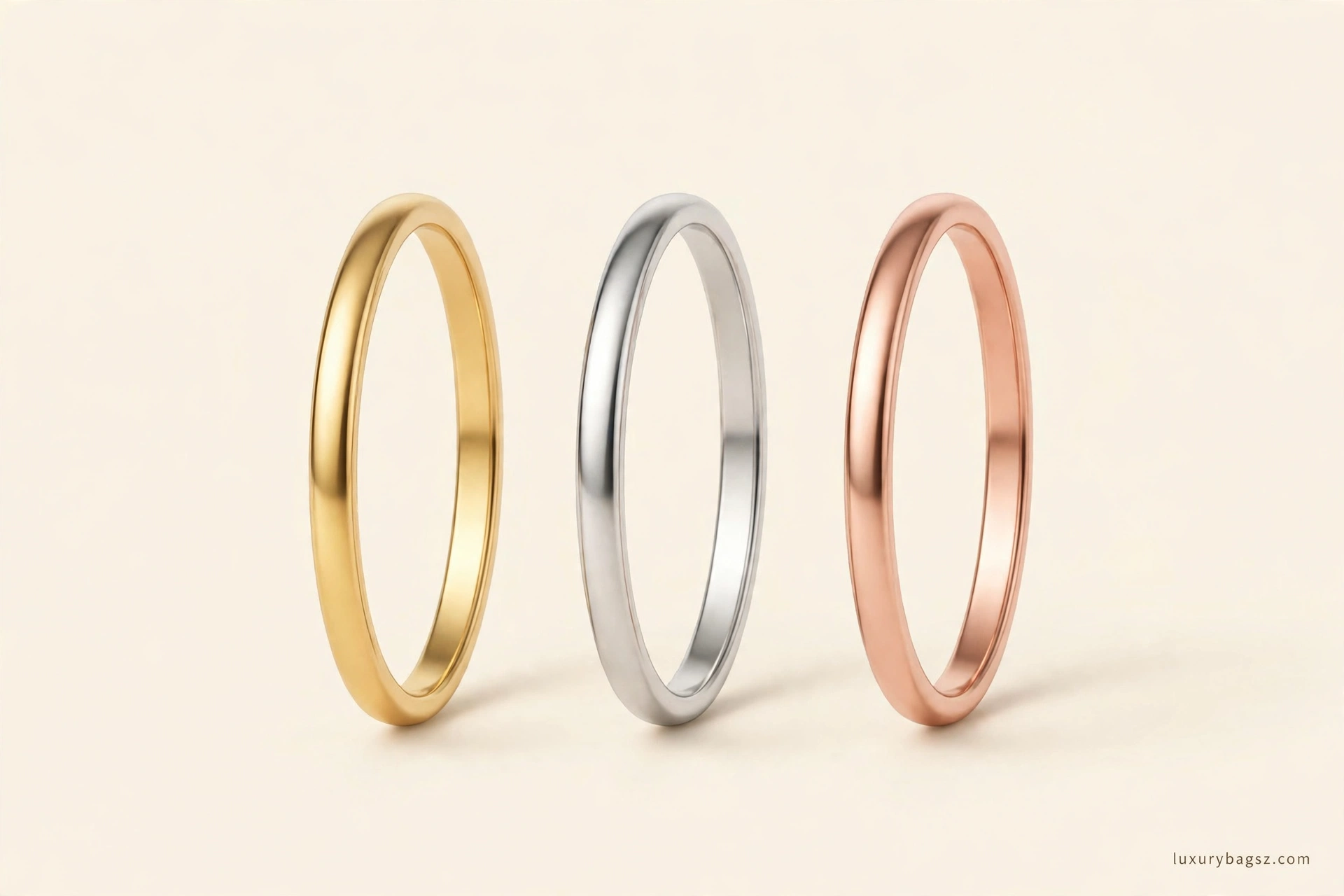
Yellow, white and rose gold are the same precious metal at the same purity. What changes is the alloy: the other metals mixed with pure gold to make it hard enough for jewellery. Yellow keeps gold's natural colour, white is lightened with pale metals, and rose is warmed with extra copper. At equal karats, none contains more gold than the others.
Key Takeaways
- Pure gold is yellow, soft and always mixed with other metals for jewellery.
- Karat measures purity: 18 karat is 75 percent gold, 14 karat is about 58 percent.
- White gold is usually rhodium-plated and needs replating over time.
- Rose gold's colour comes from copper and runs through the metal.
- Nickel-based white gold can trouble sensitive skin; palladium-based is kinder.
- All three cost about the same at equal karat; making and stones drive price.
Why Pure Gold Needs Partners
Pure gold, 24 karat, is beautiful and almost useless for a ring. It is so soft that stones loosen and bands bend out of shape in ordinary wear. Jewellers therefore alloy it: they melt gold with measured amounts of other metals to add hardness, and the recipe they choose sets the colour. That is the whole secret of gold types. Colour is not a coating or a grade of quality; it is chemistry, decided in the crucible before making begins. Once you know the recipes, every buying question, about durability, allergies, care and price, becomes much easier to answer.
Geography explains part of gold's variety. Different regions settled on different standard purities and tones over centuries, which is why heirloom pieces from different countries can look surprisingly different side by side.
Karats: The Number That Matters Most
Karat counts how many of 24 parts are pure gold. Eighteen karat gold is 18 parts gold to 6 parts alloy, written as 750, meaning 75 percent gold. Fourteen karat, marked 585, is about 58 percent gold and a little harder. Nine karat, marked 375, is legal gold in the UK but much paler and less rich. Higher karat means richer colour and more gold value; lower karat often means a tougher, cheaper piece. Both are honest choices for different jobs. Read the hallmark before anything else. It tells you the purity in any colour, and it is the figure that decides scrap and resale value later.
Hallmarks reward a moment with a magnifier. A clear 750 or 585 stamp, with its maker's mark, is the fastest honest summary of what a piece is, whatever colour catches your eye first.
Yellow Gold: The Original
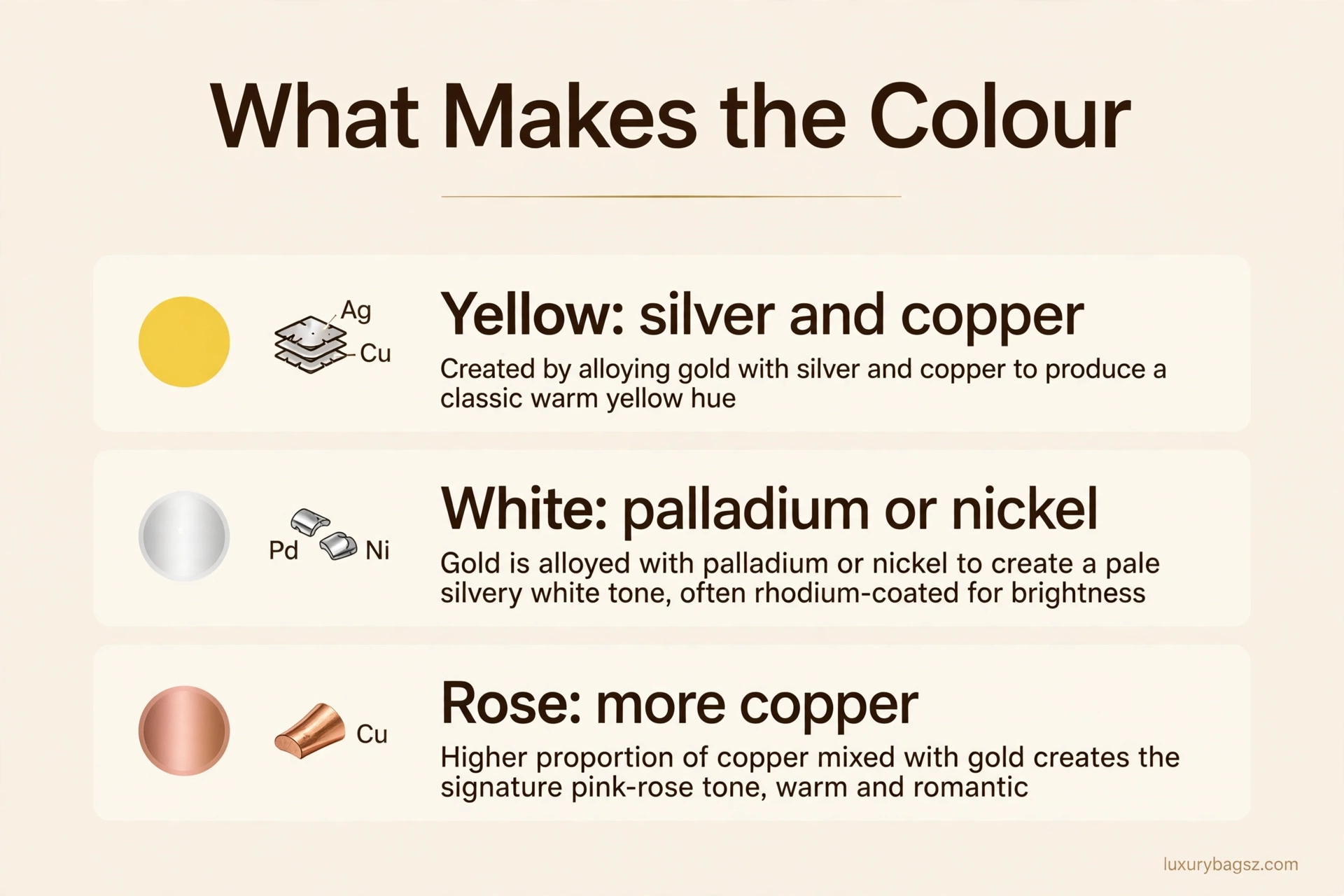
Yellow gold is alloyed mainly with silver and copper in balance, keeping the warm colour gold has straight from the ground. It is the classic choice for wedding bands and heirlooms, it flatters warm skin tones, and it is the easiest colour to resize and repair anywhere. Hardware lovers will know the tone from pieces in our Hermès hardware guide, where yellow gold is the warm option against cool palladium. Yellow gold shows scratches honestly but polishes back beautifully. For a ring worn daily for decades, it remains the lowest-maintenance colour overall.
White Gold: Rhodium and Two Recipes
White gold is gold lightened with pale metals. The older recipe uses nickel, which whitens well and is hard, but can irritate the minority of wearers with nickel sensitivity. The kinder recipe uses palladium, a platinum-family metal. Palladium white gold costs a little more, needs no apology to sensitive skin and looks a touch greyer. Most white gold jewellery is finished with rhodium plating, a bright white layer that gives the icy shop-window colour. That layer is thin and temporary. When plating wears, typically after a year or two of daily wear, a warm tint shows beneath. Replating is a routine, inexpensive jeweller's job, so budget for it.
Ask which recipe a white gold piece uses before buying if your skin is sensitive. A reputable jeweller will know whether the alloy is nickel or palladium based and will answer without hesitation.
Rose Gold: Copper's Blush
Rose gold swaps much of the alloy to copper, and copper's red warmth turns the gold pink. More copper gives redder gold; less gives a softer blush. The colour runs through the metal, so there is no plating to lose and scratches show the same colour beneath. Rose gold is, quietly, the practical romantic. It suits almost every skin tone, pairs beautifully with white metals in two-tone pieces and anchors the looks in our sculptural gold jewellery guide. One note of care: copper-rich alloys dislike harsh chemicals. Keep rose gold away from strong cleaners and remove it for chlorinated pools.

Durability and Daily Wear Compared
At the same karat, all three colours wear similarly, with small differences. Nickel white gold is the hardest; rose, helped by copper, is also tough; yellow sits between. Karat changes wear more than colour does. A 14 karat band of any colour will generally outlast an 18 karat band in hard daily use, while looking a little paler. Settings matter as much as metal. High, thin claws on any colour will catch and bend before a low, sturdy bezel in the softest gold will. Choose purity for your life first, then colour for your eye. That order avoids most regrets we hear about gold jewellery.
Settings wear differently by position. A ring's claws meet the world daily, while a pendant barely touches anything, so judge durability advice by the piece, not by the metal alone in isolation.
Care for Each Colour
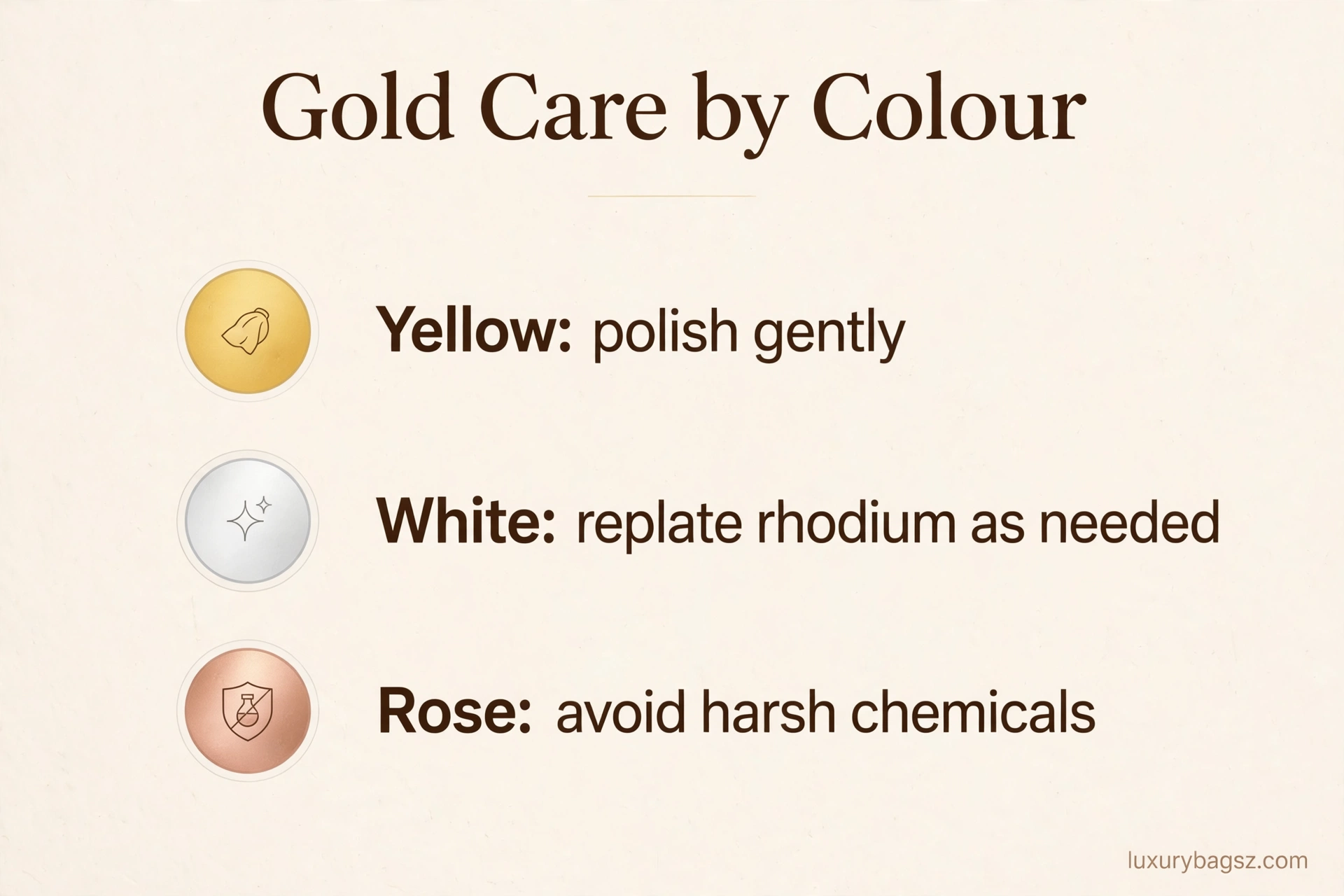
Daily care is shared: warm water, a drop of mild soap, a very soft brush and a lint-free cloth will clean all three colours safely at home. Our how to clean gold and diamond rings guide gives the full routine, including what to avoid around stones. Colour-specific care is short. White gold adds rhodium replating when the warm tint returns; rose gold adds distance from harsh chemicals; yellow adds nothing at all. Have settings checked yearly whatever the colour. A tightened claw costs little; a lost stone costs a great deal more.
Choosing and Mixing Your Colour
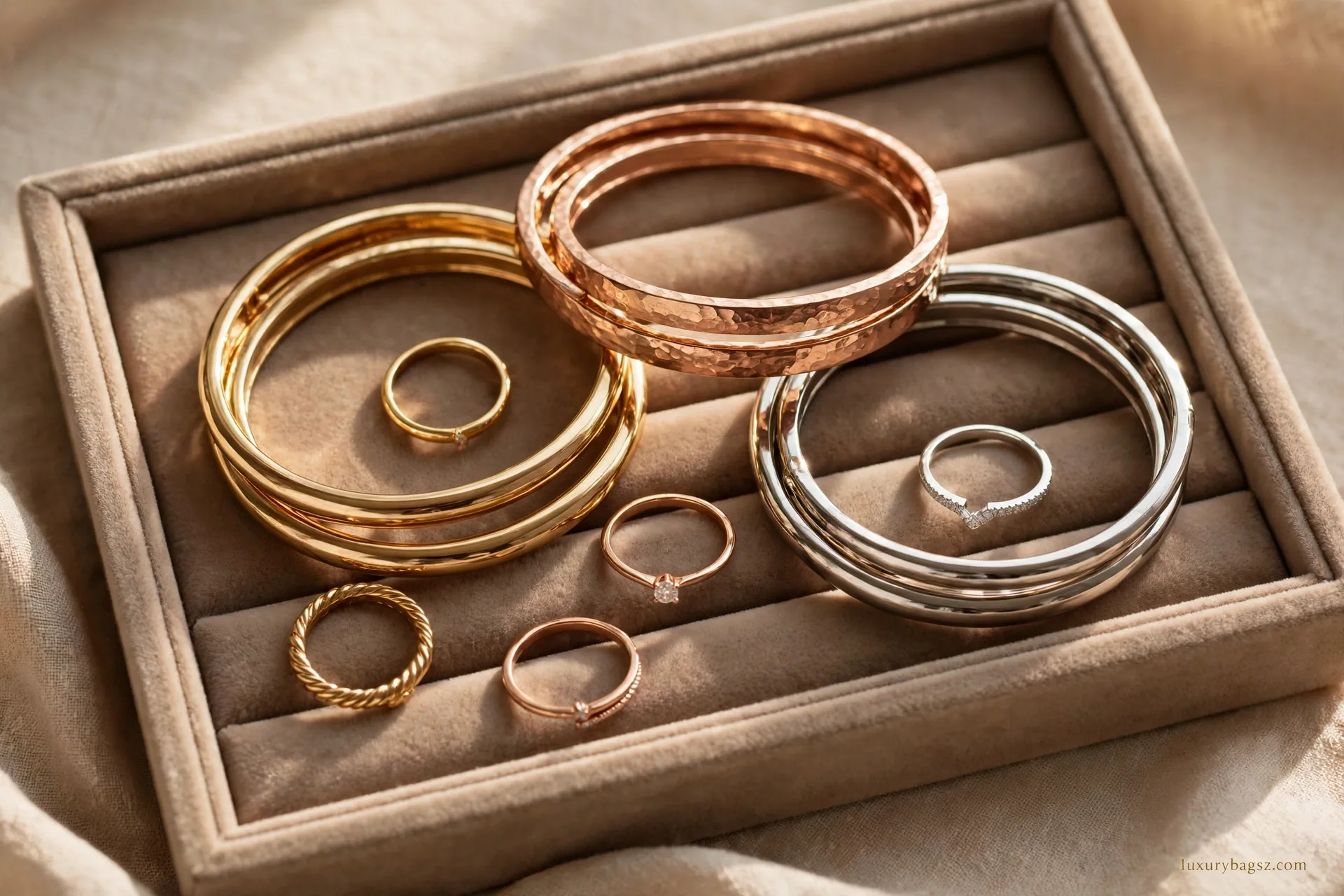
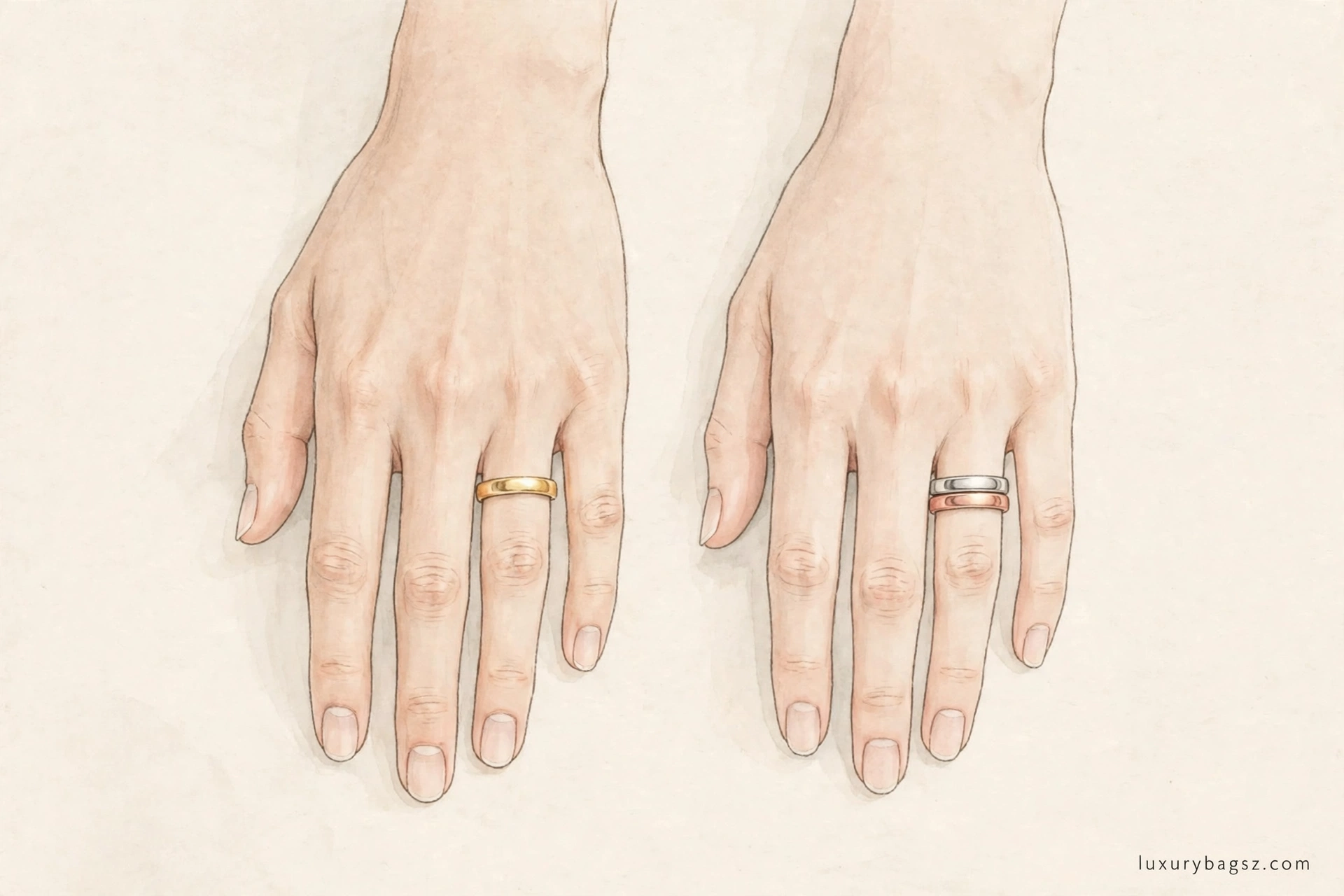
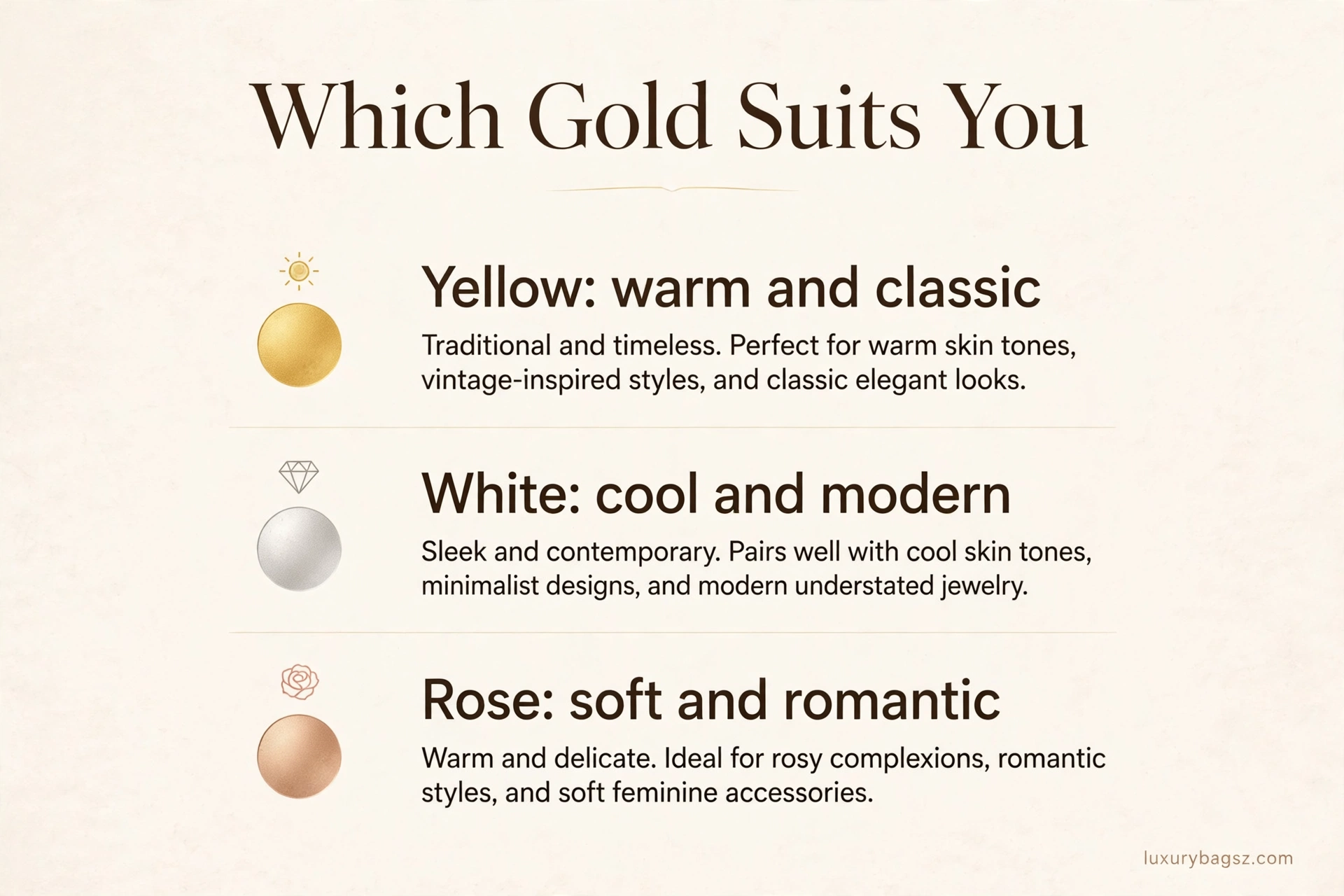
Try all three against your skin in daylight. Yellow warms, white cools and sharpens, and rose flatters almost everyone, which is why jewellers suggest it to the undecided. Consider your stones. Colourless diamonds look whitest in white metal, while warm stones and vintage cuts often glow in yellow and rose settings. Mixing colours is a style, not an error. Stacked bands and two-tone pieces, like the everyday mixes in our everyday diamond jewellery guide, are deliberately chosen by many wearers. There is no best type of gold, only the recipe that suits your skin, your stones and your tolerance for upkeep. Choose that one and wear it daily.
If you are choosing a wedding band, wear test pieces for a full day where a jeweller allows it. Comfort, edge profile and colour against your skin only reveal themselves over hours, not minutes.
Frequently Asked Questions
Is one colour of gold worth more than the others?
At the same karat, no. All contain the same proportion of pure gold, so value follows karat, weight, making and stones rather than colour.
What is the difference between 14 and 18 karat gold?
Eighteen karat is 75 percent gold and richer in colour. Fourteen karat is about 58 percent, a little paler, usually harder and cheaper.
Why does white gold turn yellow over time?
Its bright finish is rhodium plating over naturally warm-toned white gold. When the thin plating wears, the warmer base shows until it is replated.
Can I be allergic to white gold?
Some wearers react to nickel-based white gold. Palladium-based white gold avoids nickel and is the safer choice for sensitive skin.
Does rose gold fade?
No. Its colour comes from copper in the alloy and runs through the metal, so there is no coating to wear away, though it can patina gently.
Which gold is best for an engagement ring?
Any, at a suitable karat and setting. White makes colourless diamonds look whiter, yellow is the classic low-upkeep choice, and rose is distinctive and tough.
Is 9 karat gold real gold?
Yes, and it is hallmarked 375 in the UK, but it contains only 37.5 percent gold. It is paler, harder and less valuable than 14 or 18 karat.
Can different gold colours be worn together?
Yes. Mixed-metal stacking and two-tone designs are long-established styles. Keep karats similar if you want colours to age at the same pace.
How often does white gold need replating?
With daily wear, often every 12 to 24 months, depending on the piece and your hands. It is a quick, routine job for a jeweller.
Which colour needs the least care?
Yellow gold, on balance. It has no plating to renew and a forgiving colour, needing only gentle cleaning and periodic setting checks.
Final Verdict: Pick the Recipe You Will Wear
Yellow, white and rose are three recipes for the same gold, each honest, each durable and each suited to different skin, stones and habits. Choose karat for your life, colour for your eye, and plan the small care each colour asks. Do that and any of the three will serve for decades.