

Fine Jewellery Trends Now: Sculptural Gold, Silver’s Return, Coloured Stones and Pearls
The Direction in Brief: Bigger Forms, Warmer Metals, Real Stones
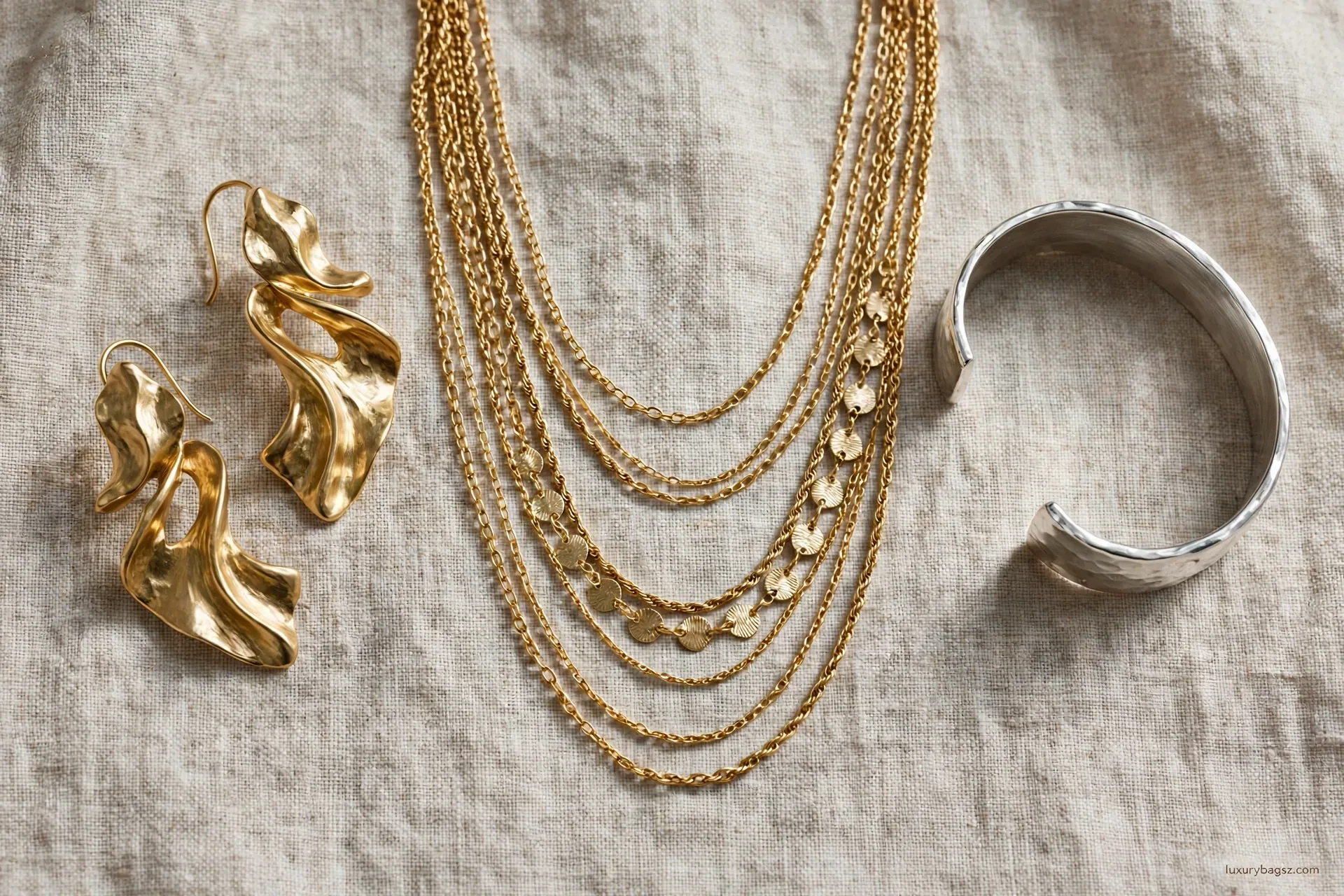
Fine jewellery is moving towards sculptural gold, coloured stones and pieces with presence, while silver and mixed metals have returned in force alongside them. The direct answer for buyers is simple: one strong, well-made piece now does the work that a pile of delicate layers did a few seasons ago. Underneath the drama, the classics are holding. Pearls, tennis bracelets and plain hoops keep selling, which tells you where lasting value sits.
Key Takeaways
- Sculptural, bold gold is the headline trend, worn as one strong piece.
- Silver and mixed metals are back, helped by the high price of gold.
- Coloured gemstones are gaining share against plain diamond designs.
- Pearls, pinky rings and signet styles carry the heirloom mood of the moment.
- Lab-grown diamonds are now a mainstream fine jewellery choice.
- Designer directions differ, but craft and permanence beat novelty everywhere.
Sculptural Gold Takes the Lead
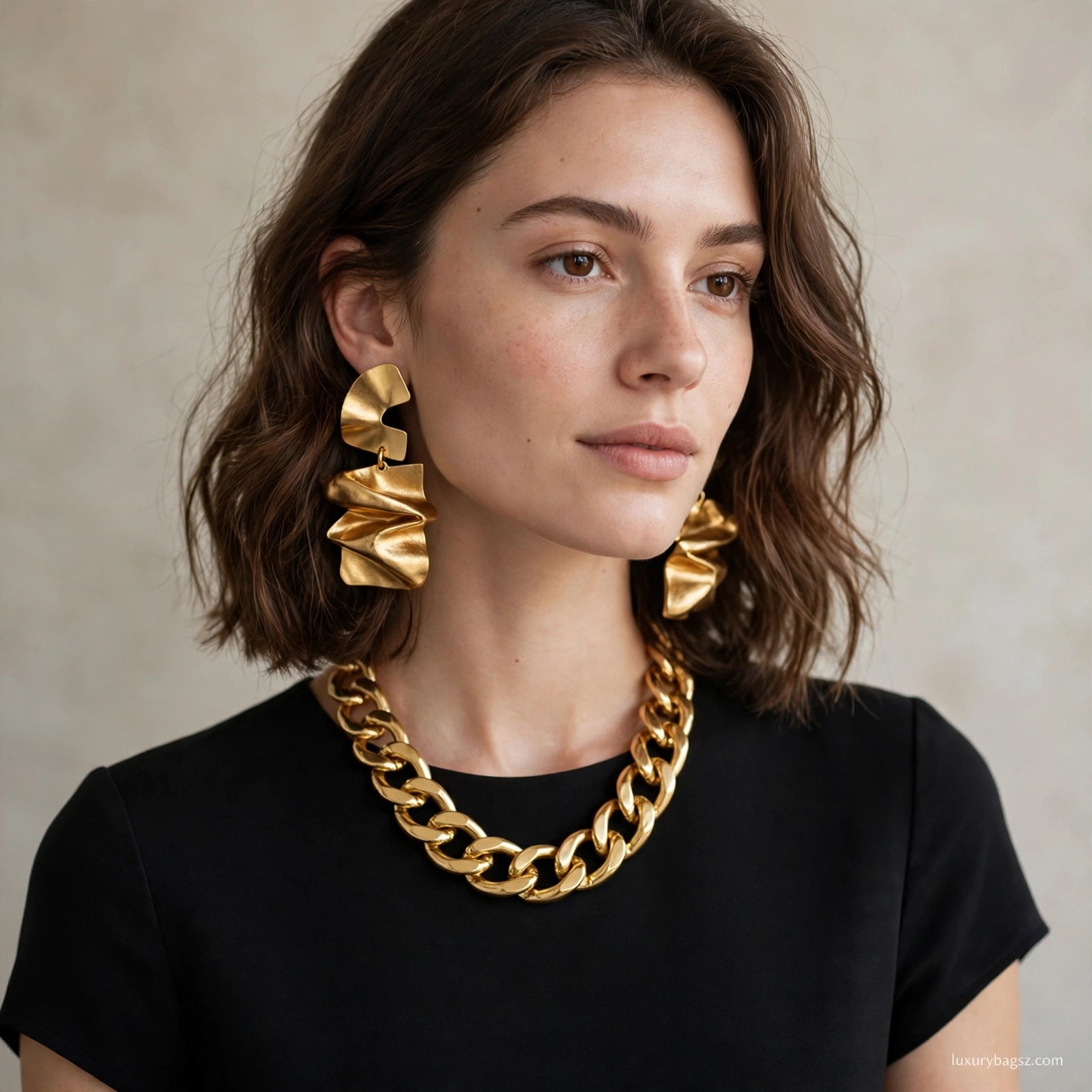
Earrings, cuffs and pendants have grown bolder, with molten curves and architectural shapes replacing fine, barely-there chains as the statement of the day. Our sculptural gold jewellery guide shows the forms in detail, from dome rings to wide, hammered cuffs. The appeal is practical as well as visual. One sculptural piece finishes a plain dress or knit completely, with no styling effort around it. Choose weight and finish carefully. A bold piece you can wear all day beats a dramatic one that only survives an evening.
The Trend Map at a Glance
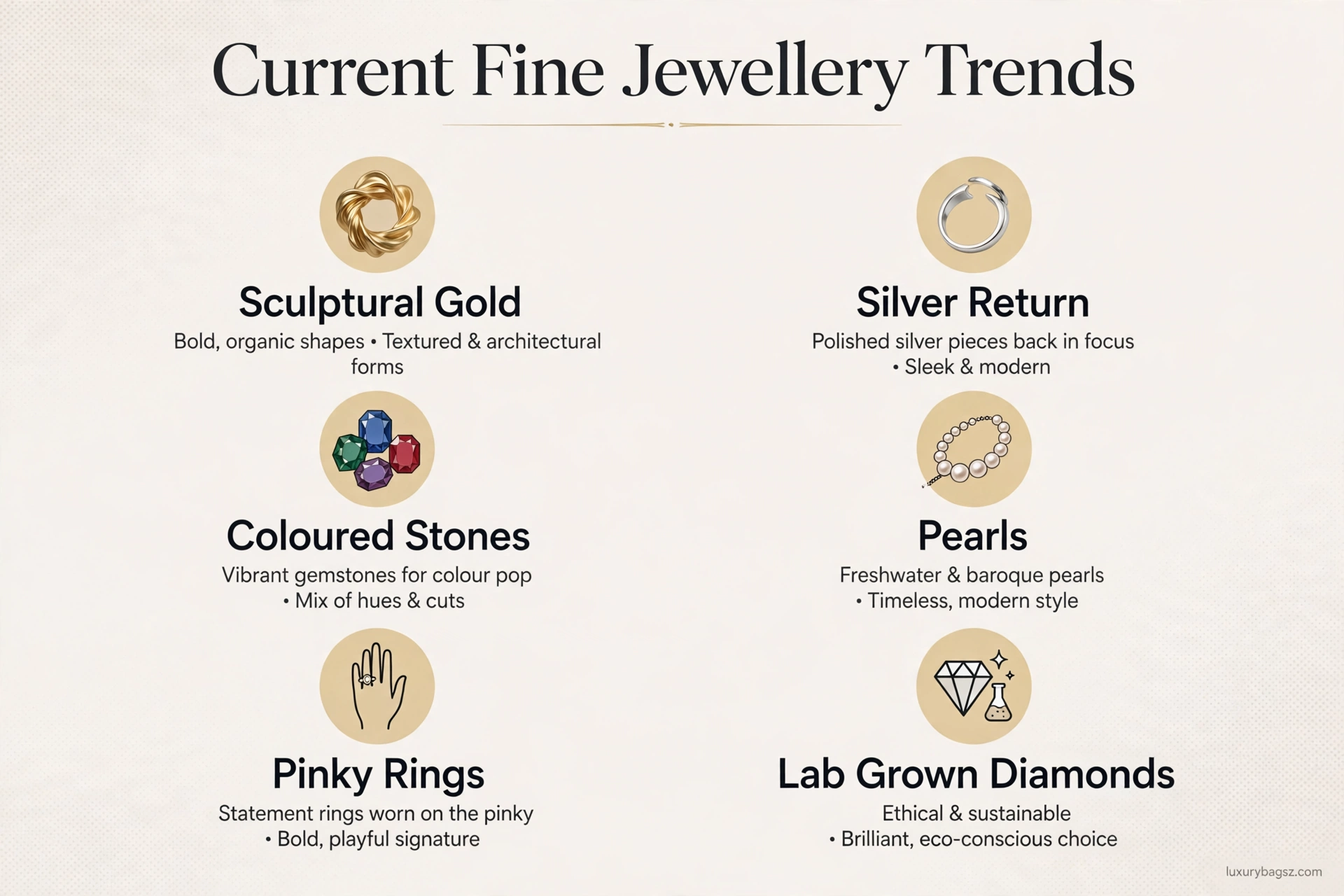
Six directions cover most of what designers, retailers and stylists are pushing now, and most wardrobes need only one or two of them. Sculptural gold leads, silver follows, then coloured stones, pearls, pinky rings and lab-grown diamonds, each suiting a different kind of buyer. Treat the map as a menu, not a list to complete. Trends serve your existing wardrobe or they are just expensive homework.
Coloured Stones Move Centre Stage
Sapphires in every shade, emeralds, tourmalines and garnets are taking the places that plain white diamonds held by default for years. Colour gives a piece personality at lower cost per carat than fine white diamonds, which is part of the commercial logic behind the shift. At the extreme end, colour is also where the records live, as the most expensive diamonds list shows for pink and blue stones. Buy colour you love at the size you can see across a room. A tiny fine stone pleases a certificate more than it pleases the eye.

Pearls, Pinky Rings and the Heirloom Mood
Pearls have escaped their formal image. Baroque and irregular pearls on gold chains read modern, relaxed and quietly expensive at once. Pinky rings and signets carry the same heirloom mood in miniature, often engraved or set with a single coloured stone. These are the gentlest trends to adopt because the pieces underneath are classics. Our everyday diamond jewellery guide covers the same timeless logic for daily wear. If a trend piece would still look right in a photograph ten years old, it is a safe branch of the current mood.
Silver and Mixed Metals Return
Silver is fashionable again, in chunky cuffs, chains and earrings that make the most of its cool brightness at a friendlier price than gold. Mixed metals have become a deliberate style rather than a mistake, with two-tone pieces designed to bridge a whole jewellery box. The metal families behind these looks are explained in our types of gold guide, covering yellow, white and rose gold. Silver needs a little more care against tarnish, but a polishing cloth and dry storage keep it bright with minimal effort.
Wearing a Trend Without Waste
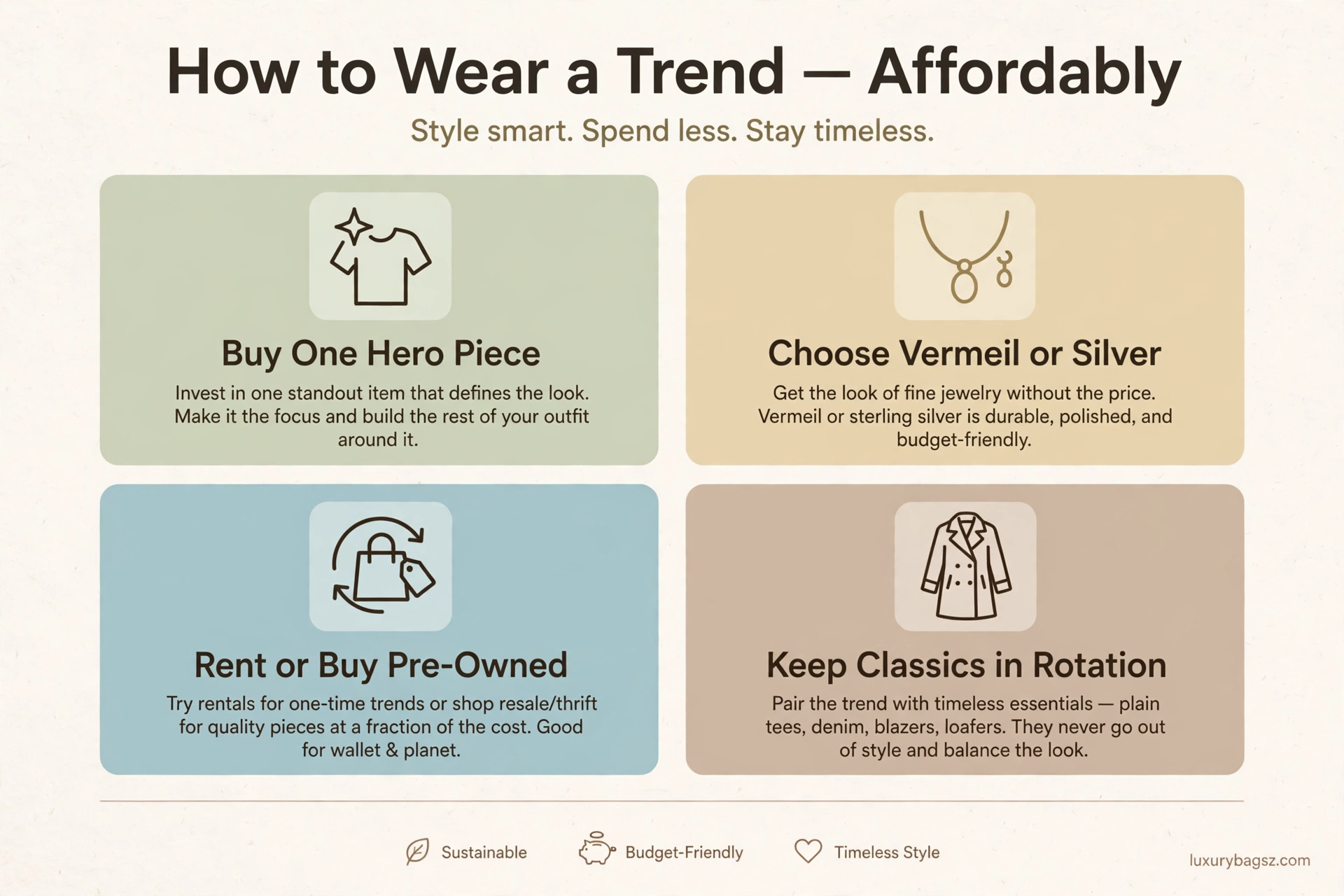
Buy one hero piece per trend, in the best material you can manage, rather than five cheap versions that will tire together. Vermeil and solid silver carry a gold or silver look honestly at lower cost, as long as you know which you are buying. Pre-owned designer pieces are the other smart route into a current look, often at half of retail or less. Renting for one event beats buying a dramatic piece you will wear twice and store for a decade.
Which Trends Will Last
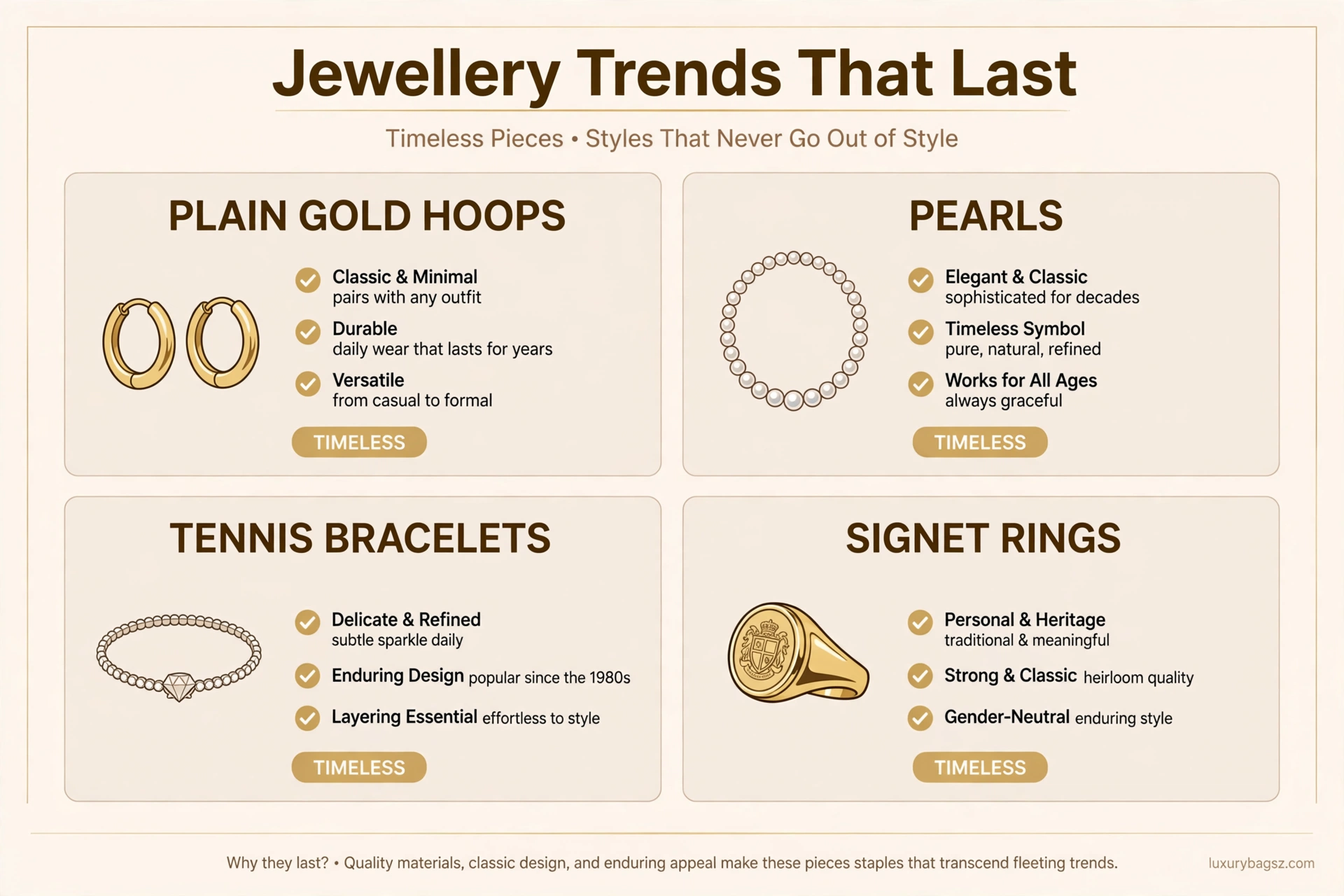
Plain gold hoops, pearls, tennis bracelets and signet rings were here before this cycle and will be here after it, in slightly changing proportions. Sculptural gold has a good chance of lasting in softened form, because its roots are in classic modernist jewellery rather than novelty. The pieces most at risk are oversized novelty shapes in plated metal, where the fashion and the finish expire at the same time. A useful test: if the piece were unbranded and ten years old, would you still pick it up? Lasting trends pass that test easily.
How Designers Differ
Heritage houses move slowly, refreshing icons with new stones, sizes and limited finishes rather than chasing each season's shape. Independent designers move fastest, working in recycled metals, unusual stones and one-off forms that larger houses cannot risk. Signed pieces from respected houses hold an extra layer of value, as explained in our guide to what makes signed jewellery valuable. Follow the designer whose direction matches your wardrobe's direction. A trend worn against your own style always looks borrowed.
Lab-Grown Diamonds Become Ordinary
The quietest big change is that lab-grown diamonds have stopped being a debate and become a department. Tennis bracelets, studs and pendants that were financially out of reach in mined stones are now bought routinely, and the trend coverage has moved on to styling them.
The honest buying logic runs in two directions at once. Lab stones are chemically diamonds, grade identically and cost dramatically less, which suits pieces bought to be worn. Their resale values, however, have fallen as supply has grown, which suits nobody buying them as a store of value.
So the rule most jewellers now give is simple: buy lab-grown for wear and pleasure, and do not buy it as an investment. Our lab-grown diamonds guide works through the grading, pricing and certification detail behind that advice.
Expect the design effect to keep growing. When the stone is no longer the budget problem, designers spend the money on gold weight and form, which is one reason the sculptural trend and the lab trend keep appearing in the same collections.
Layering, Edited: How Stacking Looks Now
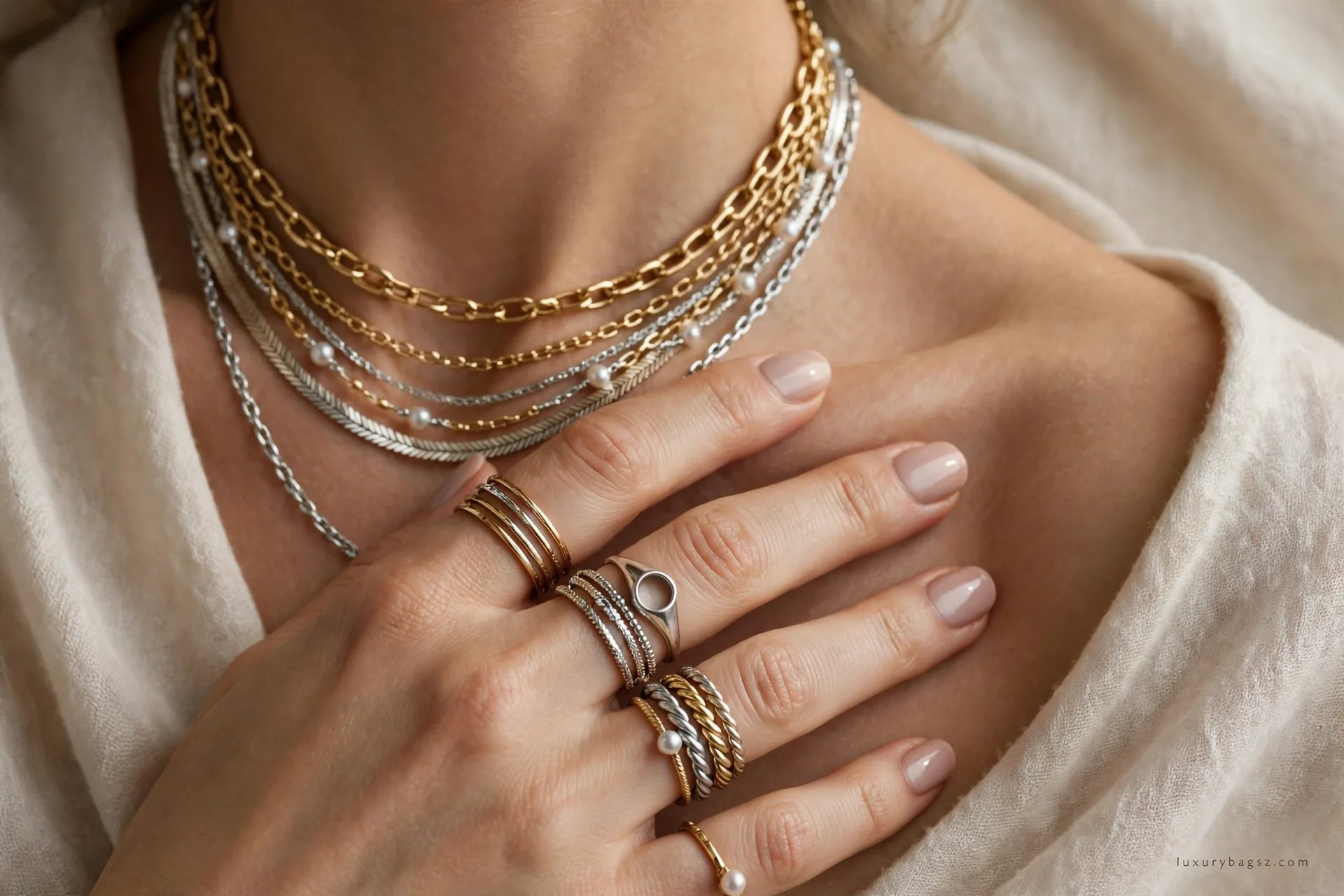
Layering has not died; it has been edited. The current version replaces the tangle of five fine chains with two or three deliberate layers at clearly separated lengths, often mixing a bold chain with a finer one so the contrast does the work.
The working formula stylists repeat is a short chain or collar first, a pendant at mid-length, and, if a third layer earns its place, a longer chain with weight to it. Three lengths that nearly touch read as a mistake; three that clearly separate read as an outfit.
Ring and bracelet stacking follows the same editing: mixed metals allowed, textures varied, but one hand quieter than the other. The result looks collected rather than accumulated.
Guides disagree about whether the moment belongs to layering or to one hero piece, and both camps are describing real wardrobes. The synthesis most women land on is one hero, layered lightly: the sculptural piece leads, and one or two quieter pieces support it.
Personalisation: Initials, Birthstones and Charms
Personalised jewellery is the trend that retailers report customers asking for by name: initial pendants, birthstone pieces, engraved signets and charms that mark dates, places and people. It is the opposite of anonymous luxury, and it photographs as identity rather than expense.
Charms have had the sharpest revival, moving from teenage bracelets to fine gold pendants worn singly on chains. The grown-up version is restraint: one charm with a story beats a jangling archive.
Birthstones benefit from the coloured stone trend described earlier in this guide, since a sapphire or garnet pendant now reads as fashion first and meaning second, which is exactly the order most wearers want in public.
Personalisation kills resale value and extends wearing life, because pieces tied to a person get worn for decades and inherited with their stories attached. As a trend it is really an anti-trend, which is why it keeps surviving trend cycles.
Brooches and the Vintage Revival
Brooches are the surprise return of the cycle, helped by red carpets, menswear styling and a vintage market full of pieces nobody’s grandmother is wearing anymore. Worn on a lapel, at a collar point or pinning a scarf, a brooch is the one-piece outfit change.
The vintage route matters here more than in any other category. Mid-century and signed vintage brooches offer craftsmanship and stones at prices modern equivalents cannot match, and condition, a working pin and original stones, is where the value sits.
Modern houses are answering with new brooch designs, but the honest advice is to shop the revival second-hand first. The supply is deep, the prices are sane, and a vintage piece has already passed the ten-year test this guide recommends for lasting trends.
Styling decides whether a brooch reads current or costume: one brooch, placed asymmetrically, on simple tailoring or a plain knit. Clustered, centred and matched to earrings, it walks straight back into the past it came from.
What High Gold Prices Are Doing to Design
Gold’s price is a design force now. When metal costs this much, houses respond with hollow constructions, thinner profiles and silver or vermeil versions of gold looks, and buyers have learned to ask the question that settles it: what does it weigh?
A sculptural piece can look identical in solid and hollow versions while differing enormously in feel, durability and value. Solid pieces carry a satisfying weight and repair well for decades; hollow pieces dent, and thin hollow forms cannot always be repaired once crushed.
This economics explains several trends in this guide at once: silver’s return, mixed metals, vermeil’s respectability and the investment language around fine jewellery. Shoppers are treating weight as substance, literally.
The buyer’s move is to price by the gram where possible, compare like with like, and put the budget into metal and making rather than stones and branding when a piece is meant to last. In an expensive-gold era, the scale is a shopping tool.
Men’s Fine Jewellery Joins the Mainstream
The other expansion is across the aisle. Chains, signet rings, bracelets and even pearl necklaces for men have moved from celebrity styling into ordinary retail ranges, and the houses now design men’s fine jewellery rather than merely resizing women’s pieces.
The styles winning are the classics in heavier weights: curb and Figaro chains, plain signets, cord and bead bracelets, and single pendants with a symbol or stone. Men’s jewellery succeeds when it looks like equipment or insignia rather than decoration.
For women buying gifts, the direction of travel is helpful: a chain or signet in 14-karat gold is now a standard, safe luxury gift in the way a wallet or watch used to be, and our must-have jewellery pieces guide covers the choosing logic for the core designs.
Expect the categories to keep blurring. Pearls, charms and coloured stones are appearing on both sides of the shop, and the styling, one strong piece worn plainly, is identical. The trend machinery has finally noticed half the population.
Recycled Metals and the Sustainability Standard
Recycled gold has become the default claim of serious fine jewellery brands, and it is one claim with substance behind it: recycled gold is chemically identical to mined gold, carries a far smaller footprint, and arrives with chain-of-custody paperwork from reputable refiners.
Traceability is the newer frontier. Buyers increasingly ask where stones were cut and metals refined, and houses that can answer with documents rather than adjectives are winning the trust argument with younger customers.
The most sustainable trend piece is still a second-hand one, which is why the vintage and pre-owned routes recommended throughout this guide keep compounding: they satisfy the fashion, the budget and the footprint in a single purchase.
Treat vague green language as a styling claim, not a fact. “Responsibly made” without a refiner, a standard or a certificate is marketing; the brands doing the work name their sources, and naming is the test to apply.
The Trend Calendar: When to Buy What
Trends arrive in shops months after they appear on runways, and prices follow a calendar of their own. The full-price window for a fashionable piece is at the season’s start; by its end, the same piece is discounted at high-street level but rarely at fine level, where houses protect prices.
That asymmetry is the fine jewellery buyer’s advantage. A trend worth having in solid gold or real stones does not need to be bought in its first month: the design will still be stocked, and the pre-owned market will soon offer early buyers’ pieces at a discount.
The exception is the limited and numbered end of the market, where waiting genuinely loses the piece. Learn to tell manufactured urgency from real scarcity; most trend jewellery is the former wearing the latter’s clothes.
Patience also filters your own taste. A trend you still want after three months of seeing it everywhere is a preference; a trend you wanted for one weekend was a mood, and moods should be rented or bought cheaply, never financed in 18-karat gold.
Frequently Asked Questions
What is the biggest fine jewellery trend right now?
Sculptural gold is the headline: bold earrings, cuffs and pendants with molten or architectural forms, worn as one strong piece rather than layers of fine chains.
Is silver really back in fashion?
Yes. Chunky silver cuffs, chains and earrings are a leading direction, helped by gold prices and by a taste for cooler, brighter metal in everyday styling.
Are lab-grown diamonds a trend or a permanent change?
They look permanent. Lab-grown stones are now sold by mainstream fine jewellers as a standard option, mainly changing price rather than appearance.
Which trend is safest to spend money on?
Pearls, plain gold hoops, tennis bracelets and signet rings. Each is fashionable now and was fashionable decades ago, so the fashion risk is minimal.
How do I wear bold jewellery without overdoing it?
Let one piece lead. A sculptural earring needs a quiet neckline; a wide cuff needs clean sleeves. Balance, not quantity, makes bold jewellery look expensive.
Are coloured gemstones a good buy?
They can be excellent value and give more visible size and personality per pound than white diamonds. Buy colour you love and check treatment disclosures.
What is a pinky ring, and why is it trending?
A ring worn on the smallest finger, often a signet or a single-stone design. It reads confident and heirloom-like, which fits the current mood perfectly.
Should I mix gold and silver?
Yes, when it is done deliberately: repeat each metal at least twice, or use a two-tone bridge piece, so the mix reads as a choice rather than an accident.
Do trends differ between designer houses?
Yes. Heritage houses refresh icons slowly, while independent designers experiment quickly. Both directions are valid; choose the pace that suits your wardrobe.
How often do fine jewellery trends change?
Slower than clothing. Fine jewellery directions run in multi-year cycles because materials cost real money, which is why one good trend piece is a sensible buy.
Conclusion: One Strong Piece, Chosen on Merit
The current directions reward confidence: sculptural gold, honest silver, real colour and pearls with personality, each worn with intent. Pick the one trend that flatters what you already own, buy it in a material that will last, and let the rest of the cycle pass you by.






