How to Get a Hermès Bag Appointment
Getting an Appointment, in Brief
A Hermès bag appointment is a booked meeting with a sales associate to talk about leather goods, not a ticket that guarantees a bag. That one fact explains most of the confusion around it. Hermès does not publish a single global appointment rule, so the right method depends on the store, the city, and the kind of bag you want. Paris works differently from a home boutique, and a general visit works differently from a leather appointment. In Paris, most first-time visitors use an online lottery the day before, for one of three boutiques. At home, most people start by walking in, calling, or asking a sales associate they already know, and the store then books what it can. An appointment gives you time, attention, and a chance to be considered for what is available that day. It does not promise a Birkin, a Kelly, or a Constance, and anyone who sells you that promise is selling something else. If you want the shortest path, start here: pick one home store, learn its local method before you travel, and treat Paris as a separate lottery with its own rules. Patience, flexibility, and a short, honest wish list help more than any shortcut.Key Takeaways
- Hermès publishes no single global appointment rule; method varies by store, city, and bag type.
- Paris uses a day-before online lottery for leather appointments at three boutiques, and winning it is not a bag offer.
- At home, appointments are usually booked in person, by phone, or through a sales associate you already know.
- A general appointment and a leather appointment are not the same thing, and confusing them wastes a visit.
- No published spend threshold unlocks a bag, and no appointment fee is published in the sources checked for this guide.
- A short, flexible wish list with real alternatives helps a sales associate far more than a long, rigid list.
- Sources disagree on walk-in success, quota details, and timing, and this guide states those disagreements plainly.
Part 1: What a Hermès Bag Appointment Actually Is
A bag appointment is a private meeting, usually one to one, with a sales associate in a boutique. You talk about what you want, what you use daily, and what the store may be able to show you. It is not a checkout queue, and it is not a reservation for a named bag held in a back room. Stock is not promised in advance, and the associate often does not know until the day what will be available to offer. Some appointments last a few minutes, and some last much longer, with scarves, small leather goods, and other pieces shown along the way. The length says little about the outcome, so do not read a short meeting as a rejection. A bag appointment is also different from simply entering a store. You can browse scarves, shoes, and ready-to-wear in many stores without a leather appointment, even when bag viewing itself is controlled. That split is why two shoppers can describe the same store in opposite ways. One browsed freely, while the other waited for a leather meeting, and both reports can be true at once. Think of the appointment as access to a conversation, not access to a product. That mindset keeps expectations honest, and it keeps the meeting pleasant for both sides.Part 2: No Single Global Rule, and Why That Matters
Hermès runs boutiques in many countries, under local managers, with local stock and local demand. A rule that works in Paris would not work the same way in a small city store with far fewer visitors. The brand also keeps allocation decisions private, so shoppers learn the system from experience reports, not from a public rulebook. Those reports conflict, because stores really do behave differently. Some guides smooth over that conflict by picking one version and presenting it as universal. That is the fastest way to mislead a reader who then travels to a store that works another way. This guide does the opposite: where sources disagree, it says so, and it names the place or the situation behind each version. A Paris fact is labelled as a Paris fact, and a home-store habit is labelled as a home-store habit. You should still check the method for your exact store before you go, by calling or visiting it. A guide written this year can be out of date by your trip, because local practice changes without an announcement. The practical rule is simple: trust the store in front of you over a general claim online. If the host at the door says walk-ins are queued today, that is your rule for today. A store that used a queue last year may use bookings this year, and a store that took phone bookings may now ask you to visit in person. Local practice is not frozen, so a second check close to your trip is worth the effort. Keep a short note for each store you visit, with the date, the method given, and the name of the person who told you. That note prevents confusion later, when two stores give two different answers.Part 3: Paris, the Online Lottery, Step by Step
Paris is the exception that most guides describe first, because it has a formal online system. Three boutiques take part: Faubourg Saint-Honoré, George V, and Sèvres, and shoppers often call the first one FSH. You apply on a smartphone, the day before the appointment you want, through the Paris appointment site. Reports agree on the day-before pattern, but they disagree on the closing time, with some saying 19:00 Paris time and others saying 18:30. This guide follows the 19:00 version, because it appears in the most recent Paris guides checked, but you should open the site early and not rely on the last minutes. If the window closes earlier than you expect, an early entry costs you nothing. You enter your name, phone number, email, and passport details, and you pick a store or choose no preference. Choosing no preference enters you for all three stores at once, which many guides recommend for a first trip. After you apply, you get a welcome email, and that email is not your appointment. You must find a second email asking you to confirm your request, and click its link, or your entry is void. That two-email trap catches many first-time applicants, so check spam and promotions folders at once. If you cannot find the second email, treat your entry as unconfirmed and try again the next day. Results arrive by email in the evening before the appointment day, and successful applicants learn their time then. Reports disagree on the exact hour, ranging from early evening to 20:00 to 22:00, so watch your inbox through the evening. Hermès no longer sends a rejection email in recent reports, which means silence means no appointment that day. Do not wait by the door for a message that is not coming, and do not assume a glitch. Paris boutiques are closed on Sundays, so you apply on Saturday for a Monday appointment. Holidays work the same way, with the day before a closure being the day to apply for the next open day. You must be the person who registered, and you must bring the passport that matches the registration. The appointment cannot be handed to a friend, a partner, or a family member on the day. Recent guides also report that applying from outside France may be blocked, and that a local Wi-Fi connection may be needed. Other reports say some European applications work, but that claim is unconfirmed, so plan to apply while you are in France.

Part 4: Paris, If You Win, If You Lose, and If You Walk In
Winning the Paris lottery feels like the hard part, but it is only the entry ticket. You still meet an associate who checks what, if anything, can be offered to you that day. One widely shared first-hand account describes a lottery win after many trips, followed by no quota bag offer at all. That story matters, because it breaks the idea that a win equals a Birkin or a Kelly. In that account, the associate checked for the requested sizes and colours, then returned with other pieces that did not match the dream bag. The shopper left without a bag, and that outcome was disappointing, but it was not unusual. Most lottery appointments, in the reports checked, end with a non-quota offer, no offer, or a smaller leather good. A quota offer happens, but it is not the normal result, and it should never be promised in advance. If you lose, apply again every day you are in Paris, because each day is a fresh draw. A five-day trip gives five chances, and a single try followed by giving up wastes the system as it is designed. You can also ask in person about walk-in cancellations, politely and early in the day. Reports agree this sometimes works, and they also agree it often does not, so treat it as a bonus, not a plan. A hotel concierge at a luxury Paris hotel is sometimes suggested as a quiet route, especially for regular guests. That route is unconfirmed as a reliable method, and it should never be paid for as a guaranteed appointment. If you already have a sales associate in Paris from an earlier trip, you may be able to contact them directly. Recent reports say even that route now often points back to the online system, so expect the lottery to apply anyway. A companion may wait nearby, but the appointment itself is for the registered person only. Do not bring a group into a small salon, and do not ask a companion to try bags on your behalf. If your appointment time changes during the day, check your email and messages again before you leave your hotel. Recent reports say Paris times can shift earlier or later, so a morning check is a sensible habit.Part 5: Home Boutiques, How Appointments Usually Start
Outside Paris, the starting point is usually your nearest boutique, not a website lottery. You walk in, you call, or you ask at the door how bag appointments are handled that week. Some stores keep a host at the door who manages entry when the store is busy. That host may add you to a queue for the leather area, book you for later, or invite you to browse other departments first. Other stores ask you to register with an associate and wait for a call or message when a meeting opens up. That wait can be days, and it can be longer at busy flagship stores in large cities. A good first question is simple and polite: how do you book a leather appointment here? Ask it before you mention a specific bag, because the answer tells you whether you need a booking, a queue, or a named associate. Calling ahead is useful when you are travelling to a store for the first time, because it saves a wasted journey. Ask about hours, busy days, and whether bag viewing needs a booking on that day. Do not assume that a method that worked in one city will work in another, even within the same country. Flagship stores, airport stores, and smaller regional stores often run different door policies. If a store says it is walk-in for general shopping, that does not mean bag viewing is walk-in too. Ask the leather question directly, or you may browse happily and still miss the meeting you came for. Some shoppers report booking by email with a store, especially when they already have an associate there. Email can work, but it can also sit unread during busy weeks, so a polite follow-up visit or call is reasonable. If you are visiting a city for only a day, say so when you first ask, and ask honestly whether a meeting is realistic that day. A clear no saves you a long wait, while a vague maybe can waste the whole trip.Part 6: General Appointments and Leather Appointments Are Different
A general appointment, where one exists, is a meeting to shop the wider boutique: scarves, shoes, ready-to-wear, jewellery, and homeware. It is a pleasant, useful visit, but it is not automatically a bag meeting. A leather appointment is a meeting focused on bags and small leather goods, and it is the meeting that matters for a quota bag. Some stores use the term leather appointment only for Paris, while others use it for any bag-focused booking. That wording gap causes real confusion, because a shopper may book a general visit and expect bag offers that were never part of that booking. Always confirm which kind of meeting you have booked, in plain words. At a large flagship, such as Madison Avenue in New York, general shopping is reported as walk-in, with a host managing the leather floor when it is busy. That is a local pattern, not a global Hermès rule, and it may change. In smaller stores, one associate may handle both kinds of visit in a single meeting, moving from scarves to bags as the conversation develops. That flexibility is an advantage of a smaller store, and it is worth seeking out. If you are offered a general appointment and you want a bag meeting, say so clearly and ask what step comes next. A polite, direct question saves both sides from a mismatched expectation on the day.Part 7: What Happens at the Appointment, in Order
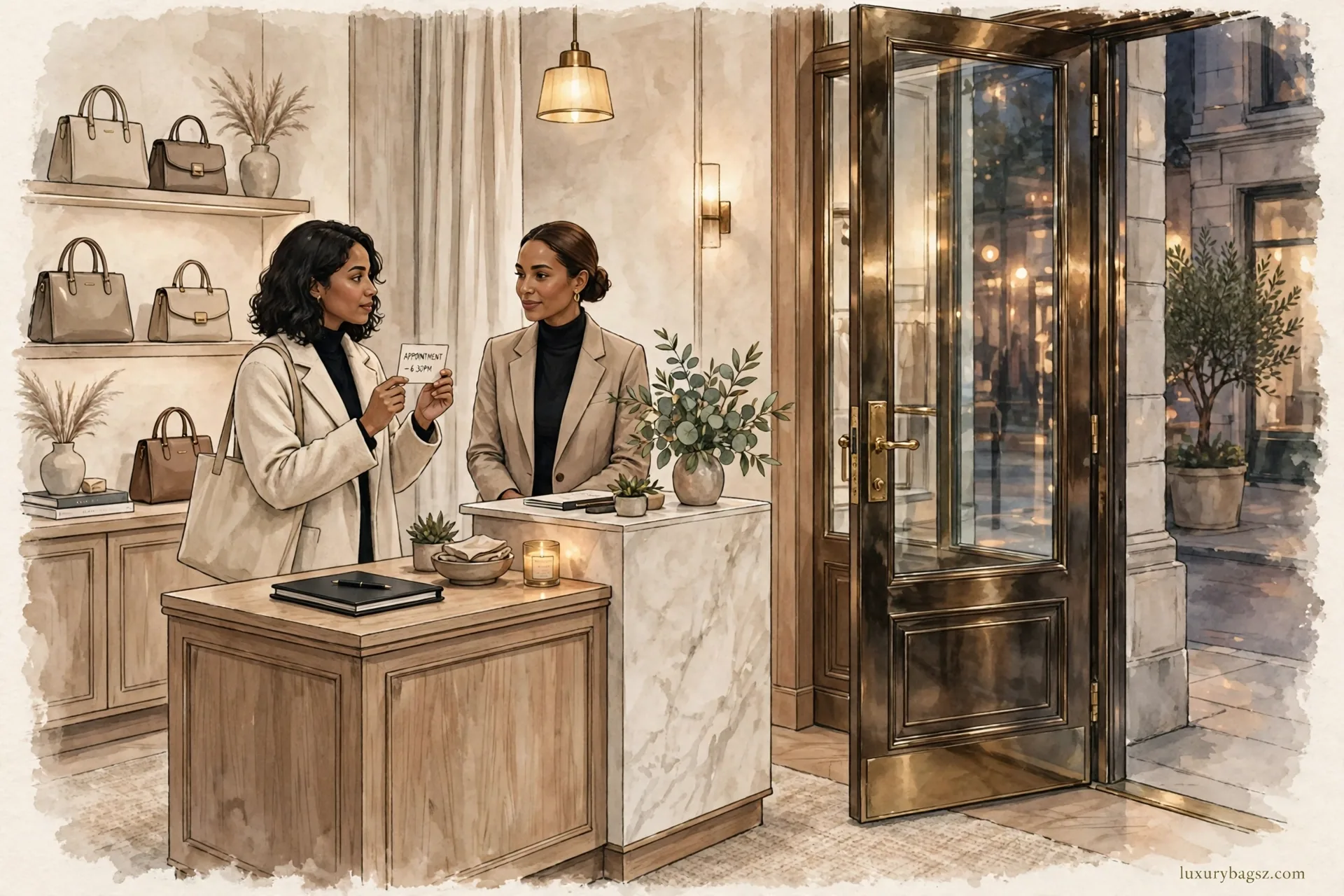
You arrive early, check in at the host desk or with your associate, and show ID if asked. In Paris, your passport is checked against the lottery registration, so the name must match exactly. You are then taken to a salon or a quiet area, often away from the main shop floor, where you sit with your associate. The setting is calm and private, and the pace is slower than a normal shop visit. Your associate will ask what you are looking for, how you use bags daily, and what sizes, colours, and leathers you like. This is a conversation, not an interrogation, and honest answers help more than rehearsed ones. The associate may leave to check stock, and that check can take several minutes. Waiting in the salon while they check is normal, and it does not mean a bag is coming, or that one is not. If something is available for you, it is brought out, often in its box, and you can look at it properly. If nothing matches, you may be shown alternatives, other leather goods, or nothing at all, with thanks and an invitation to return. Payment, if you buy, follows the normal boutique process, with ID and card checks as required. If you do not buy, thank the associate, confirm your wish list, and leave the door open for a future visit.
Part 8: The SA Relationship, Without the Myths
A sales associate, often shortened to SA, is your main contact in a boutique, and a good one matters. The associate notes your wishes, remembers your taste, and advocates for you when stock arrives. Building that relationship starts with repeat visits to one store, with one associate where possible. Visiting many stores at once splits your history, and it makes it harder for any one associate to know you well. Loyalty to one store is widely reported as helpful, but it is not a published rule, and it is not a guarantee. Some shoppers report offers after few visits, while others report long waits despite years of loyalty. Buying across categories is also widely reported as helpful: scarves, shoes, ready-to-wear, jewellery, and homeware show a broad interest in the brand. That breadth is noted, but no published formula turns it into a bag. A small leather good can be a natural first purchase, and a card holder is a classic example. A guide to the Hermès Calvi card holder shows how such a piece works, and why it suits a first visit. Other categories matter too, and a shopper who already owns a belt may find the comparison useful. A guide to the Kelly bracelet vs Kelly belt shows how one name can cover two very different pieces. The key warning is simple: buy only things you want, or plan to gift. Buying random pieces to hit an imagined total is reported, again and again, as a poor strategy that associates can spot. If you do not like your associate, you can ask for a different one on a later visit, politely and without blame. A poor fit helps no one, and a fresh start with an associate you trust is better than a forced relationship. Associates change roles, move stores, and take leave, so a relationship can pause through no fault of yours. If your associate leaves, introduce yourself again, share your wish list, and give the new associate time to learn your taste. Text and message contact should follow the associate’s lead, not yours. If they offer a number or an email, use it sparingly, with a clear purpose, and do not send repeated bag requests between visits.Part 9: Wish Lists That Actually Help an SA
A wish list is a short note of what you want, kept by your associate, and updated over time. It is not a contract, and it is not a queue with a visible number, so do not expect a position or a date. The best wish lists are short, specific, and flexible. Name the model, give a size range, list a colour range, name a leather or two, and state your hardware preference, then add real alternatives. An example that matches the infographic in this guide is a Kelly 28 in Togo or Epsom, in Noir, Etoupe, Gold, or Bleu Celeste, with gold or palladium hardware. That example is specific, yet it leaves room to move. Alternatives make the list workable: a smaller Kelly 25, a different neutral colour, or a non-quota model for daily use. An associate with three workable options can help you, while one with a single rigid demand often cannot. Size choices deserve care, because a bag that looks right in photos may feel wrong on your body. A guide to Lindy sizes explained shows how size numbers translate into daily carry, and that habit transfers to other models. Keep the list honest about daily use, including what you carry, how you travel, and whether you need a shoulder strap. A bag that fits your life is easier to love, and easier for an associate to match. Update the list when your taste changes, and say so directly, rather than letting an old wish linger. An out-of-date list can lead to an offer you no longer want, which wastes a rare chance. A very long list, with every model, colour, and leather, reads as indecision, not enthusiasm. Pick one first choice, two or three acceptable changes, and leave the rest for later visits.
Part 10: What to Wear, Bring, Say, and Not Say
Dress neatly, in clothes you feel confident in, and that suit the bag you want to discuss. You do not need head-to-toe luxury labels, and you do not need to wear Hermès to be taken seriously. Comfort matters, because you may stand, walk, and try bags on, and a stiff outfit makes that harder. Choose shoes you can walk in, and a bag-free hand, so you can hold a new bag properly. Bring ID, and in Paris bring the passport used for the lottery registration. Bring your phone, for messages about timing, and a short written wish list, so you do not forget a size or colour under pressure. Bring payment in the normal way you would for a large purchase, but do not wave it around or mention it as leverage. An associate does not need to be told you can pay; that fact is assumed. Say what you love about the craft, the leather, or the design, and how the bag fits your life. Specific, personal reasons sound genuine, because they are genuine, and they help an associate picture you with the bag. Do not open with a demand, a threat, or a claim about how much you have spent. Do not ask what is in the back in a way that sounds like an inspection, and do not mention resale value at all. Resale talk is widely reported as a red flag for associates, because it suggests the bag will be sold on quickly. If resale is your plan, this guide cannot help you present it as genuine personal use, and you should not try. Do not name-drop other stores, other associates, or other clients to pressure your associate. Comparisons sound transactional, and they rarely speed up a process that depends on local stock.
Part 11: Timing, Frequency, and How Often to Ask
Timing matters, but not in the magical way some guides claim. Weekday mornings are often calmer than weekends, and busy periods like fashion week or holidays are often harder for a first meeting. Deliveries are reported midweek in some cities, with Tuesdays and Thursdays named in several accounts. That pattern is unconfirmed as a global rule, and it varies by store, so do not plan a trip around it alone. Visit regularly, but not so often that you become a pressure presence. Once every few weeks is a pattern many shoppers report as workable for building a relationship, while daily visits are not. Ask about your wish list at the end of a visit, once you have browsed and talked, rather than at the door. That order feels natural, and it gives the associate time to know you before the bag question arrives. If you are told nothing is available, thank the associate, confirm your wishes, and ask when to check back. A graceful exit leaves a better impression than a disappointed argument, and it keeps the next visit warm. Do not ask the same question to several associates in one store on one day, hoping for a different answer. Staff talk to each other, and repeated asking reads as shopping for a yes, not as genuine interest. If you move cities, tell your associate, and ask how your history transfers, rather than assuming it does. Reports disagree on how fully history moves between stores, so a direct question beats a guess. Holiday periods, sales events, and new store openings all raise foot traffic, and they can tighten door control for weeks. A quiet Tuesday in a normal month is a kinder first visit than a launch weekend. If you miss a meeting because you arrived late, apologise briefly and ask how to rebook, rather than arguing about traffic or queues. Lateness happens, but a calm rebooking request protects the next chance.Part 12: Regional Differences You Should Expect
Paris is the most formal system, with a lottery, passport checks, and three named boutiques. It suits visitors who can apply daily, and it frustrates visitors who expect a home-store relationship to carry over. The United States is reported as a mix of walk-in general shopping and booked or queued leather meetings, with flagship stores busier than regional ones. New York reports differ from smaller cities, so local checking matters. The United Kingdom, Europe outside Paris, and other regions are reported as a mix of phone bookings, in-person registration, and associate-led meetings. No single European method covers every boutique, and London flagships behave differently from smaller stores. Asia is widely described as highly competitive, with long relationships and high demand in major cities. That description appears in many shopper accounts, but it is not a published Hermès ranking, and individual stores still vary. The Middle East is also described as busy, with flagship stores and strong demand for quota bags. Again, that is a shopper-report pattern, not an official rule, and it should not be used to judge a single store. Global tracking of purchases is reported in recent guides, with claims that quota counts now follow a client across countries. That claim is unconfirmed by Hermès, and older reports describe country-by-country counting, so the two versions conflict. Do not plan a trip around a rumoured loophole, such as buying in a quieter country to avoid a home quota. If global tracking applies, the loophole fails, and if it does not, the trip still costs time and money. Language, ID rules, and tax refund rules also differ by country, and they affect the visit in practical ways. Bring the ID the store asks for, and ask about tax procedures before you pay, not after. Tourist shoppers should also ask about tax refund paperwork and payment methods before a large purchase, because those steps take time. Sorting them at the end of a long meeting, under pressure, is a poor way to finish. Language help is usually available in major boutiques, but a short written wish list helps in any language. Model, size, colour, and leather, written clearly, reduce misunderstanding when words fail.Part 13: Quota Bags, Non-Quota Bags, and What an Appointment Can Offer
Quota bags are the most controlled models, traditionally Birkin, Kelly, and Constance, with a reported limit of two per client per year. That limit is widely reported, but Hermès does not publish it as a public rule in the sources checked. Recent reports say more models now count toward quota in many boutiques, including Kelly Danse, Kelly Pochette, Kelly Elan, and Constance Elan. Other reports still describe the classic three-model list, so the two versions conflict and the wider list should be treated as reported, not confirmed. Non-quota bags are easier to discuss at an appointment, because they are not subject to the same control. Evelyne, Garden Party, Picotin, Herbag, and similar models are often shown when a quota bag is not available. An Evelyne is a useful example, because it is a casual crossbody that many shoppers buy while waiting for a quota offer. A guide to the Hermès Evelyne bag explains its sizes, strap, and daily use in full. A Geta is another non-quota example that shoppers often meet first, because it is newer and less controlled than a Birkin. A guide to the Hermès Geta bag covers what it is, and why it appeals as a first Hermès bag. An appointment may therefore end with a non-quota bag, a small leather good, a scarf, or nothing at all. None of those outcomes means the appointment failed, because the meeting itself builds the relationship for later. If you only want a quota bag and nothing else, say so honestly, but accept that the wait may be longer. If you are open to a non-quota bag, say that too, because flexibility gives your associate something real to offer. Never accept a bag you do not want just to stay in favour, and never decline every offer in a way that sounds dismissive. A polite decline, with a reason tied to size or use, keeps the wish list credible. A wish list can also include a note about what you already own, so an associate does not offer a near-duplicate. That note is helpful, and it shows you are thinking about use, not just about collecting names. If an offer arrives in a colour you love but a size you cannot use, a polite decline with a size reason is better than a forced yes. Forced purchases lead to regret, and regret leads to a bag that stays in its box.Part 14: Myths Versus Reality, Including Buying Your Way In
The biggest myth is that a fixed spend unlocks a bag, as if a hidden total, once reached, triggers an offer. No published threshold exists in the sources checked, and no associate has a public points chart to show you. A related myth is that buying your way in works if you spend fast enough, in one visit, on pieces you do not want. Shoppers and guides both report that rapid, forced spending can look suspicious, not loyal, and can work against you. Another myth is that a single big purchase, such as jewellery or ready-to-wear, guarantees a quota bag next time. A large purchase may be remembered, but it is not a voucher, and stock still has to arrive in your size and colour. The opposite myth is that spending does not matter at all, and that a first-time visitor has the same chance as a long-term client at a home boutique. That version ignores the many reports where history, breadth, and loyalty are clearly noted by associates. The honest position sits between those myths: spending and loyalty are reported as helpful, but neither is sufficient alone, and neither is published as a rule. Timing, stock, store, and associate judgement all play a part that money alone cannot control. A further myth is that an appointment, a concierge, or a paid service can guarantee a quota bag. Paid appointment sellers exist online, but no verified method guarantees an offer, and paying a third party for access risks money, ID misuse, and disappointment. Another myth is that dressing in full Hermès, or arriving with an expensive bag, decides the outcome. Neat, confident dress helps the tone of a meeting, but it does not replace a wish list, a relationship, or available stock. A final myth is that one rejection, or one empty appointment, ends your chances. Shoppers report many empty visits before an offer, and a polite return, with an updated wish list, is the normal path, not a sign of failure.
Part 15: If You Cannot Get an Appointment, Honest Alternatives
If Paris lottery attempts fail, keep applying daily while you are there, and ask in person about cancellations. If that still fails, enjoy the wider boutique, and treat the trip as relationship building, not as a wasted journey. If your home store cannot book you soon, ask what step is missing: a named associate, a registration, or a quieter day. A clear next step is more useful than repeated general asking, and it shows you listened. Consider a smaller or regional store, where demand may be lower and meetings may be easier to book. A regional associate who knows you well can be more helpful than a flagship associate who has never met you. Consider a non-quota bag first, bought in a normal meeting, while your quota wish stays on record. That purchase is useful in itself, and it gives you a bag to enjoy while you wait, without forcing a quota timeline. Consider the pre-owned market only with full care, because prices, condition, and authenticity all need checking. A guide to spotting a fake Hermès Kelly bag covers the checks that matter before you pay a reseller. If you do buy a bag, by any route, learn how to keep it well from the start. A guide to storing a Hermès Kelly bag covers dust bags, stuffing, humidity, and handling habits that protect leather. Do not pay a stranger for an appointment, a queue place, or a guaranteed offer, and do not share passport details with an unofficial seller. Hermès appointments are booked through the boutique or its Paris site, not through a paid middleman. Do not let a failed appointment push you into a rushed, overpriced, or doubtful purchase elsewhere. A bag bought in haste, from a source you do not trust, costs more in worry than a longer wait costs in patience. Keep a simple record of your own journey, with dates, stores, and outcomes, for your own use. That record helps you see progress over months, even when individual visits feel empty at the time. If waiting starts to feel stressful, step back for a season and enjoy the pieces you already own. A bag appointment should be a pleasant luxury errand, not a source of constant anxiety or debt.Frequently Asked Questions
Do I need an appointment to enter a Hermès store, and can I just walk in and ask for a bag appointment?
In many stores, no, because general browsing for scarves, shoes, and ready-to-wear is walk-in. Bag viewing, especially for quota bags, is often controlled separately, so ask about leather appointments directly.
In some stores, yes, and a host may queue you for the leather area or book you later. In Paris, walk-in cancellations sometimes work, but they are unreliable, so do not rely on them as your only plan.
How do I get a bag appointment in Paris, and does winning the lottery guarantee a Birkin or Kelly?
Apply online the day before, through the Paris appointment site, during the reported 10:30 to 19:00 Paris time window. Confirm via the second email, watch for an evening result, and bring the passport used for registration.
No, and this point cannot be stressed enough. A lottery win guarantees a meeting, not an offer, and many lottery appointments end with a non-quota bag, a small leather good, or no bag at all.
How do I get an appointment at my home boutique?
Walk in or call, ask how leather appointments are booked there, and register with an associate if that is the local method. Stick to one store and one associate where possible, so your history and wishes stay in one place.
Is there a spend amount that guarantees a bag offer?
No published spend threshold exists in the sources checked for this guide. Spending across categories and visiting regularly are reported as helpful, but they are not a published formula, and forced spending can work against you.
What is a leather appointment, and how is it different?
A leather appointment is a meeting focused on bags and small leather goods, while a general appointment covers the wider boutique. Confirm which kind you have booked, because a general visit does not automatically include bag offers.
What should I put on my wish list?
Name the model, a size range, a colour range, one or two leathers, and your hardware preference, then add two or three real alternatives. A short, flexible list helps an associate, while a long, rigid list often cannot be matched.
What should I bring to a bag appointment, and what should I do if I do not get one?
Bring ID, and in Paris the passport used for registration, plus your phone and a short written wish list. Dress neatly and comfortably, and leave resale talk, demands, and pressure tactics at home.
Apply again daily in Paris, ask about cancellations politely, and at home ask for a clear next step. Consider a regional store, a non-quota bag first, or a longer wait, and never pay an unofficial seller for access.
Final Verdict
Getting a Hermès bag appointment is less about a secret trick and more about matching your method to your store. Paris needs a daily lottery entry, with a confirmed second email and a passport that matches, while a home store needs a direct question, a named associate, and patience.
The strongest position you can build is a simple one: one store, one associate you trust, a short wish list with real alternatives, and visits that show genuine interest across the brand. That position does not guarantee a bag, and no honest guide should claim otherwise.
Expect empty appointments, expect waiting, and expect sources to disagree, because stores really do differ. When a guide promises a fixed spend, a guaranteed offer, or a global rule, treat that promise as a warning sign, not as help.
Start with the store in front of you, ask how it books leather meetings, and write down the answer. That single, local fact will take you further than any universal formula, and it keeps your next visit calm, polite, and ready for whatever stock the day brings.