Are Jeans Business Casual? When They Work and How to Wear Them
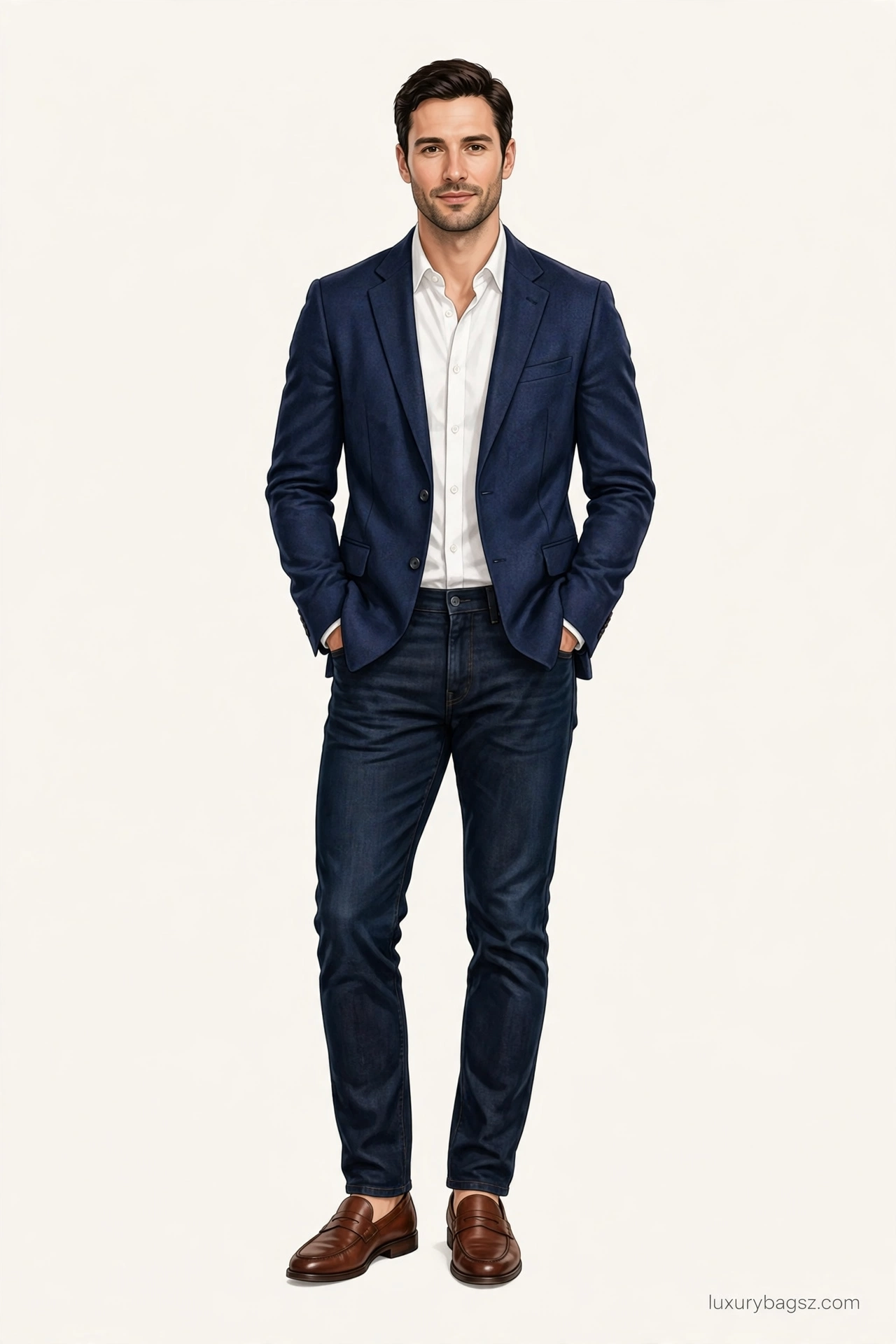
Jeans Can Be Business Casual, But Not Every Pair Qualifies
Yes, jeans can be business casual, in many modern workplaces, provided they are dark, well-fitted, clean and styled with smarter pieces. That sentence has four conditions, and all four matter.
Fit, wash, styling and workplace culture decide the answer together. Get all four right and jeans look as sharp as dress trousers; miss one and they look like weekend clothes at work.
The safest way to think about it is this: treat business casual jeans like dress trousers that happen to be denim. If a pair would fail as trousers, it will fail as jeans too.
Key Takeaways
- Dark indigo or black jeans, in a slim or straight cut, are the safest business casual choice.
- No rips, fading, distressing, logos or baggy fits: condition and cut decide whether jeans pass.
- Pair jeans with a structured top: a blazer, a collared shirt or a fine knit, plus leather shoes.
- Check your actual office culture first; tech and creative offices accept jeans far more than law or finance.
- Skip jeans for job interviews and important client meetings, even where they are normally accepted.
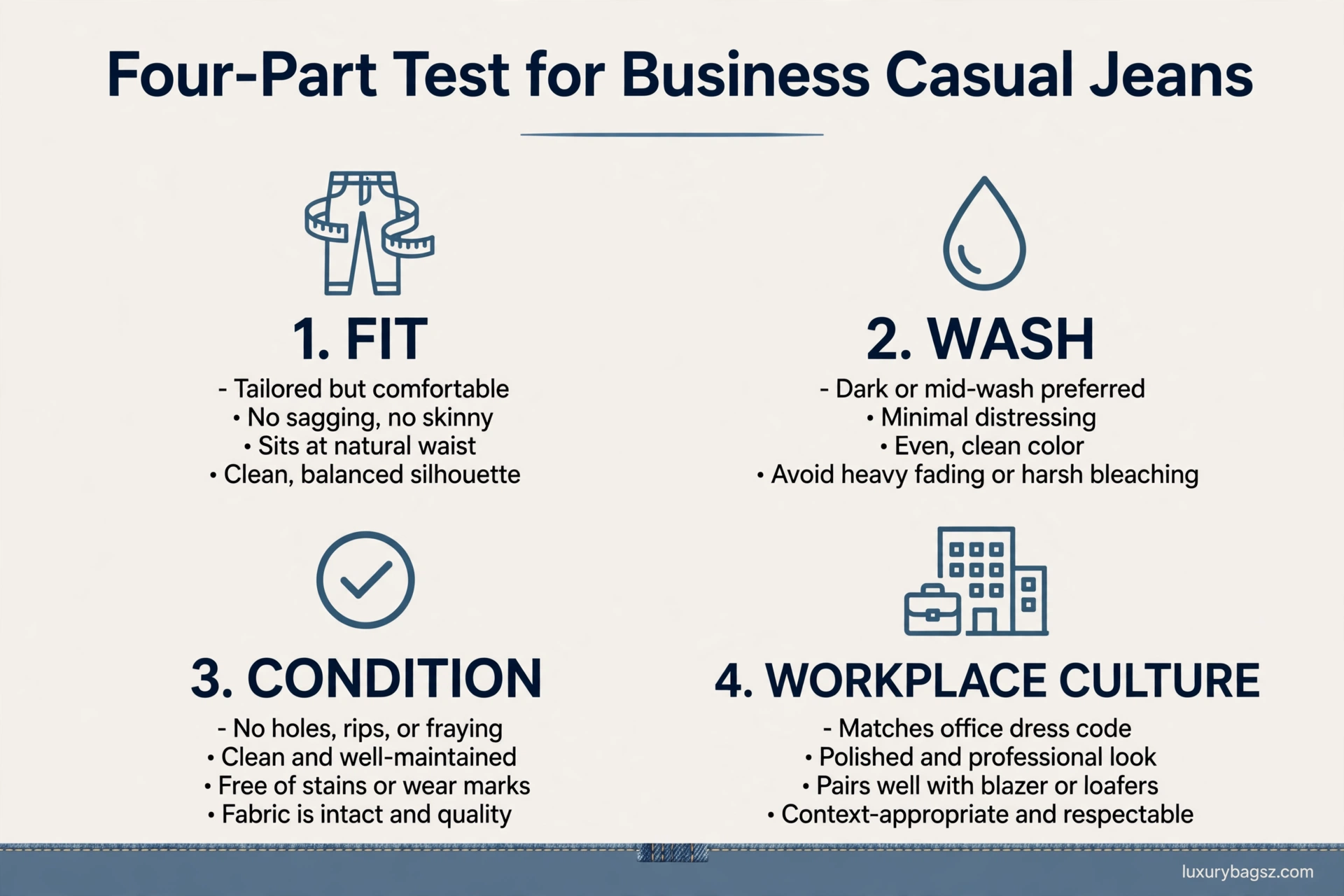
The Four-Part Test for Business Casual Jeans
Fit first: slim, straight or tailored cuts look structured and intentional. Baggy jeans look relaxed, skin-tight jeans look strained, and both fail the business casual test.
Wash second: dark indigo, black or deep charcoal read as professional. Light washes, heavy fading and acid washes read as casual, however expensive the jeans are.
Condition third: jeans must be clean, pressed and free from rips, fraying and worn patches. Even designer distressing counts against a pair in a business setting.
Culture fourth: your office's actual dress code decides. A pair that passes in a startup may fail in a law firm, and a written policy beats any general guide, including this one.
Run every pair through all four tests before wearing it to work. A dark, well-fitted pair that is ripped fails; a clean, light pair in a strict office fails too.

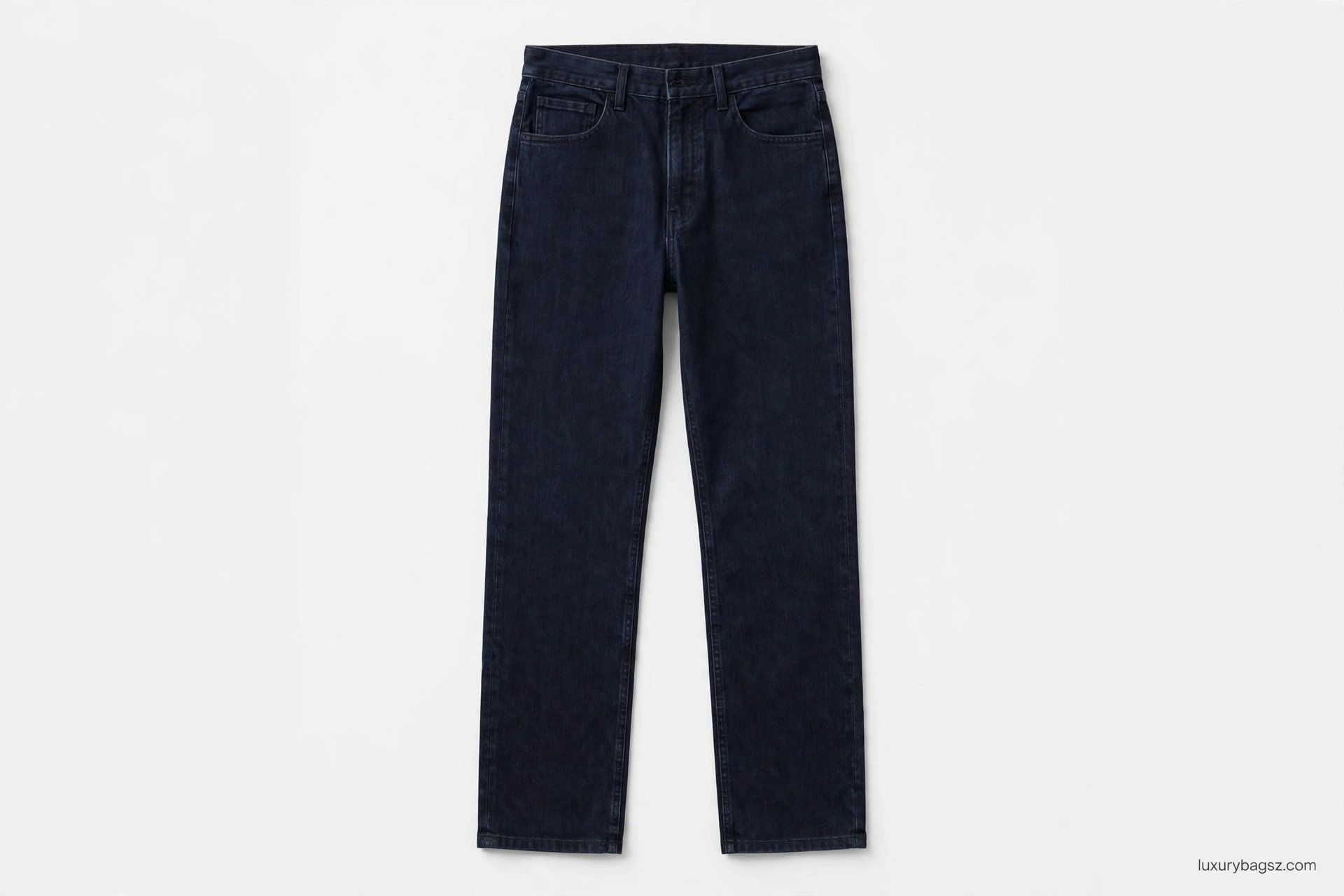
Which Jeans Pass, and Which Fail
Passing jeans are dark indigo or black, slim or straight, with a mid or high rise that sits well with a tucked shirt. The fabric should hold its shape through the day.
Structured denim with a little stretch works well, because it keeps its line without feeling stiff. Overly stretchy denim loses shape by lunch and starts to look sloppy.
Failing jeans include ripped, distressed, bleached, acid-washed and heavily faded pairs. Large logos, embellishments and cargo pockets also push jeans out of business casual.
White jeans, very light jeans and brightly coloured jeans fail in most offices, even when clean. They read as summer or fashion pieces, not as professional trousers.
When in doubt, choose the darkest, plainest pair you own. Dark jeans are the most forgiving, the easiest to pair, and the least likely to draw a comment from a manager.
Reading Your Office Culture
Tech, startup, creative and media offices usually accept dark jeans daily. In those workplaces, jeans with a shirt and blazer are normal, not a statement.
Finance, law, consulting and client-facing roles usually restrict jeans to Fridays or non-client days. In those offices, jeans are a privilege for quiet days, not a daily default.
Government and public-sector offices vary widely by agency and team. Some accept jeans, others do not, so check with a supervisor rather than copying another department.
A useful test is to watch what senior people wear on a normal Tuesday, not on casual Friday. Tuesday shows the real standard, while Friday shows the relaxed exception.
If the dress code is unwritten, ask once, plainly. A short question to a manager beats a week of guessing, and it shows you take the office standard seriously.
Three Outfits That Always Work
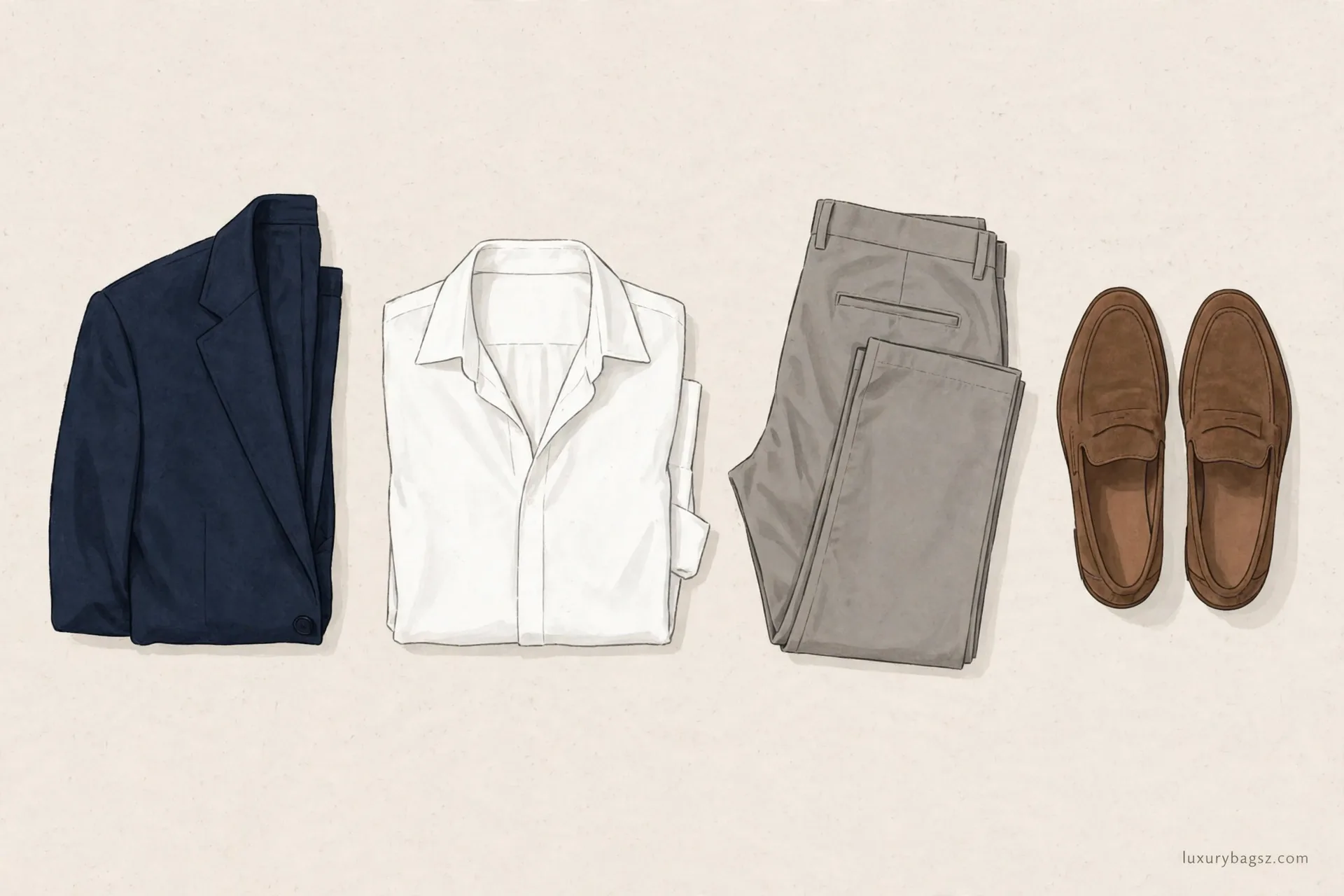
Jeans plus blazer is the sharpest formula. Dark jeans, a collared shirt, a navy or charcoal blazer and leather loafers or derbies look office-ready in most relaxed workplaces.
Jeans plus button-down shirt is the classic, reliable version. Tuck the shirt in, add a leather belt and leather shoes, and keep the shirt crisp and plain or subtly patterned.
Jeans plus fine knit suits cooler days. A merino sweater or fine-gauge knit over a collared shirt, with dark jeans and leather shoes, looks smart without a jacket.
Shoes matter as much as tops. Leather loafers, derbies and clean dress boots all support business casual jeans, while trainers and sandals pull the outfit back to casual.
As a general rule, dress shoes in leather are the safest footwear with business casual jeans, because they add the structure that denim lacks.

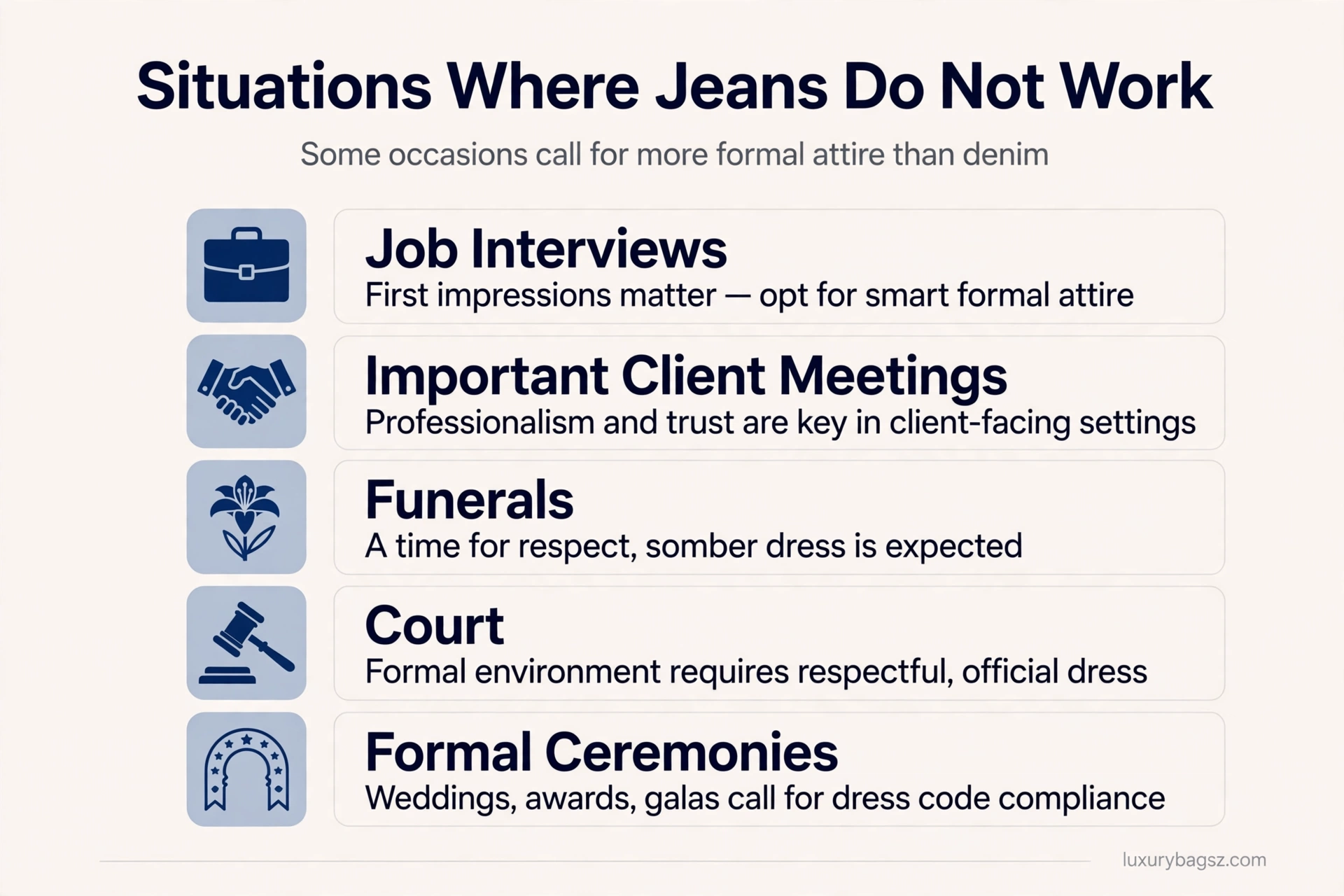
When Jeans Do Not Work, Even If They Are Dark
Job interviews are the clearest exception. Even where jeans are normally accepted, dress trousers show more effort, and interviews are the wrong place to test a dress code.
Important client meetings, board meetings and formal presentations also call for trousers. When the stakes are high, the safer, more formal choice is worth the extra effort.
Funerals, court appearances and very formal ceremonies are not jeans occasions, however dark the pair. Those settings have their own codes, and jeans break them.
If your manager, a client or a dress-code note says no jeans, that ends the question. No general guide overrules a specific instruction from the people who set the standard.
Finally, if you feel unsure all morning, you are probably underdressed. Confidence is part of business casual, and a pair of trousers you trust beats jeans you keep second-guessing.
Fit Details: Rise, Hem, Belt and Shirt
Rise matters: a mid or high rise looks more professional and pairs better with tucked shirts. A very low rise shows skin or underwear when sitting, which no office wants.
Hem jeans to sit at the top of your shoes, with a slight break at most. Pooling fabric over shoes looks untidy, and a high cuff looks too casual for business settings.
Tuck your shirt in for business casual jeans. An untucked shirt with jeans reads as weekend wear, while a tucked shirt, even without a blazer, signals that the outfit is for work.
Wear a leather belt that matches your shoes in colour family. A dress belt, not a wide casual belt with a large buckle, keeps the waistline looking professional.
Keep the whole outfit pressed and clean. Business casual jeans should look like they were chosen that morning, not pulled from a weekend pile and worn to the office.
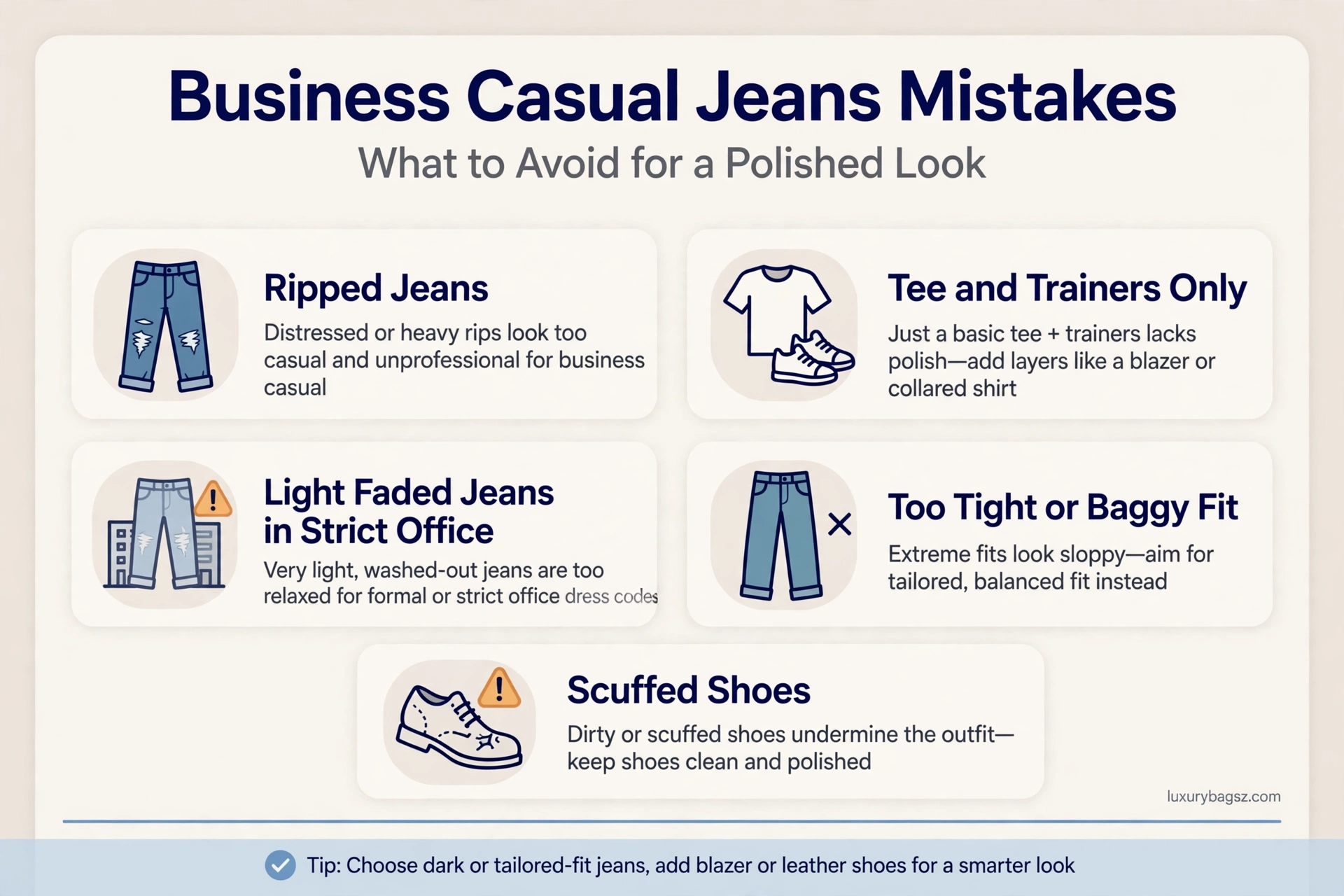
Mistakes That Turn Business Jeans Into Weekend Jeans
Wearing ripped or distressed jeans is the fastest way to fail. Even small, fashionable rips read as weekend wear in an office, and they are hard to defend to a manager.
Pairing jeans with a tee and trainers, without a structured layer, is another common error. The outfit may be clean, but it lacks the polish that business casual requires.
Choosing light or faded jeans for a conservative office is a culture mistake. The jeans may be perfect in cut, but the wash alone can make them look too casual for the room.
Wearing jeans that are too tight or too baggy breaks the fit test. Business casual needs a structured, intentional shape, not a fashion-forward extreme in either direction.
Neglecting shoes is a quiet mistake. Scuffed trainers or sandals with otherwise good jeans drag the whole outfit down, while polished leather shoes lift it up.
Buying, Caring and Building a Work Jeans Rotation
Buy one excellent dark pair before buying several average ones. A single pair of dark indigo, straight-leg jeans covers most business casual days if it fits well.
Wash jeans inside out, in cold water, and air-dry them when you can. That preserves the dark colour, which is the very quality that makes jeans pass as business casual.
Rotate at least two pairs for work, so no pair is worn daily. Rotation keeps the colour dark, the shape structured, and the fabric from wearing thin at stress points.
Iron or steam jeans before work if they crease. Business casual jeans should look pressed, not like they came straight from a drawer, and a quick steam takes only minutes.
If your office moves to a stricter code, or you change jobs, keep the jeans for weekends. Dark jeans never lose their casual value, even when they stop being work-appropriate.
Frequently Asked Questions
Are jeans business casual?
Yes, in many workplaces, if they are dark, well-fitted, clean and styled with smarter pieces. The office's actual dress code is the final authority, not any general rule.
What colour jeans are safest for work?
Dark indigo or black jeans are safest. They resemble dress trousers, pair easily with blazers and shirts, and avoid the casual signal of light or faded washes.
Can you wear jeans to a job interview?
No, not even if the dress code says business casual. Dress trousers show more effort, and interviews are the one setting where testing the code is unwise.
Are ripped jeans ever business casual?
No, rips and distressing read as weekend wear in almost every office. Even designer distressing fails the condition test for business casual jeans.
Should you tuck your shirt in with business casual jeans?
Yes, tucking in a collared shirt is the standard. It signals that the outfit is for work, while an untucked shirt with jeans reads as weekend wear.
What shoes go with business casual jeans?
Leather loafers, derbies and clean dress boots are best. They add structure that denim lacks, while trainers and sandals pull the outfit back to casual.
Can you wear jeans with a blazer to work?
Yes, dark jeans, a collared shirt and a blazer are one of the strongest business casual formulas, provided jeans are accepted in your office at all.
Do jeans count as business casual in finance or law?
Usually only on Fridays or non-client days, if at all. Conservative, client-facing offices keep jeans restricted, so check the office policy before wearing them.
How many pairs of work jeans do you need?
Two dark pairs are enough for most rotations. Rotation preserves colour and shape, and it stops one pair from wearing out while the other sits unworn.
Are black jeans business casual?
Yes, clean, unfaded black jeans in a slim or straight cut are business casual in relaxed offices. Keep them truly black, since faded black jeans look grey and tired.
Summary
Jeans are business casual when they pass four tests: a structured fit, a dark wash, perfect condition, and an office that actually accepts them. Pair them with a blazer or collared shirt and leather shoes, skip them for interviews and formal days, and they will serve your working week well.