

What Is a Hermès Himalaya Birkin? The Holy Grail Bag, Explained
The Birkin in Himalaya, in Brief
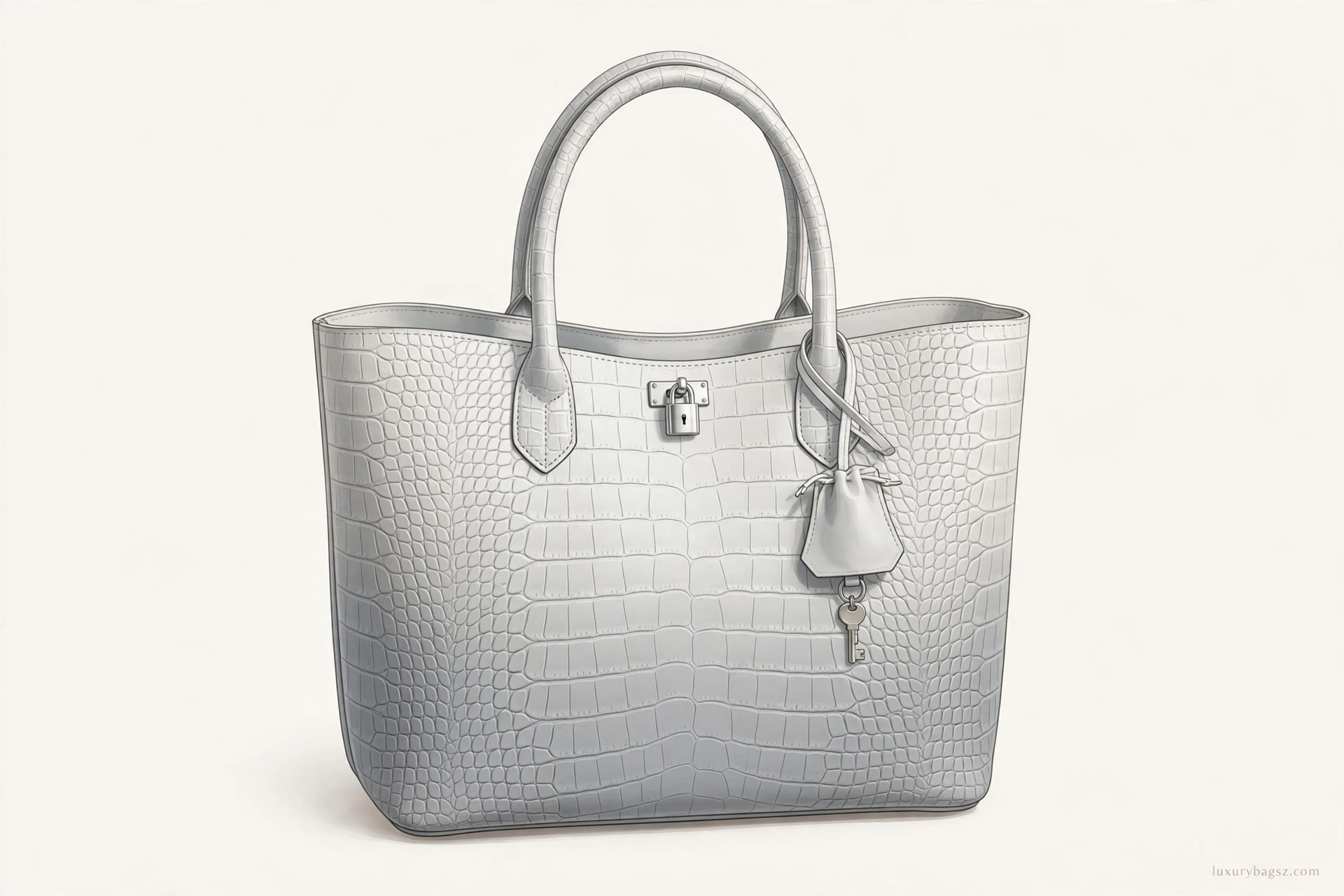
The Hermès Himalaya Birkin is a Birkin bag made from matte Niloticus crocodile, dyed in a pale gradient that fades from smoky grey to pearly white. Collectors call it the holy grail of handbags, and it is often described as the rarest bag Hermès makes.
The gradient is the whole point. It is meant to recall snowcapped Himalayan peaks, and achieving it takes a slow, secretive dyeing process that only a few skins can survive. That difficulty, not marketing, is what keeps numbers tiny.
Prices match the legend. Non-diamond examples regularly trade in six figures, and diamond-set versions have passed $450,000 in private sales. This guide covers the history, the making, sizes, hardware, prices, and pre-owned checks.
Key Takeaways

- Himalaya is a colour treatment on matte Niloticus crocodile, not a separate leather.
- The modern Himalaya Birkin debuted in 2008 in the 30 cm size.
- Standard sizes are 25, 30, and 35, with the 25 currently the most sought-after.
- Hardware is palladium or diamond-set 18-karat white gold; nothing else is standard.
- Record prices differ across sources because auction, private-sale, diamond, and non-diamond results get mixed together.
- Retail, when a boutique offers one at all, is far below secondary market prices, and getting offered one is the hard part.
- Matte crocodile needs gentle care: no water, no harsh cleaners, and a soft cloth only.
What the Himalaya Birkin Actually Is
Himalaya describes a finish, not a species or a leather type. The skin is Niloticus crocodile, from the Nile crocodile, chosen for its fine, even scales. The pale gradient is then dyed onto that skin by hand.
The gradient runs from a smoky grey at the edges and base to a near-white centre. On a strong example, the fade looks smooth and even, with no hard line where one tone stops and the next begins. Collectors prize balanced shading above all else.
The name can mislead. Himalaya says nothing about where the crocodile lived. It describes the look of the finished bag: pale peaks fading into grey, like snow on a mountainside.
One confusion to clear early: our guide to is Birkin the same as Hermes explains the brand-versus-bag mix-up that trips up new buyers. If you are new to the bag itself, start with our guide to the standard Birkin before weighing up Himalaya details.
From Natura to Matte White: A Short History
The Himalaya story starts before the modern bag. In the 1990s, Hermès made a green-brown ombré alligator finish called Vert Celadon Natura, produced only in the Kelly line. It nodded to early 20th-century exotic bags, when natural pigment was nearly impossible to strip from skins.
Around the turn of the millennium, Hermès revisited the idea and made no more than about 10 of these Kelly bags for private sale. Those early Natura pieces are a separate chapter, not modern Himalayas, and they should never be priced as if they were.
The modern Himalaya Birkin debuted in 2008, quietly offered to top clients in the 30 cm size. The 35 arrived in 2009 and the 25 in 2012. In the late 2000s, Hermès refined the process into the Matte White Himalayan, and later added a greyer variant called Matte Gris Cendre Himalayan.

How the Gradient Is Made
Making a Himalaya starts with choosing a naturally light skin, which is itself a hard task. Only pale skins can take the gradient evenly, and most crocodile skins do not qualify. That selection step alone limits how many bags can ever be made.
The hide is then dry salted to preserve it, soaked to clean it, limed for descaling, and de-limed to prepare it for pickling. It is chrome-tanned for durability, shaved and degreased to thin it out, re-tanned to soften it, and finally dried.
Only then does the dyeing begin. Hermès guards the dyeing method closely, and outsiders know little about it beyond its difficulty. The result is a matte finish with a soft, chalky depth, quite unlike the shine of a standard crocodile bag.
Because the finish spread to the Plume, the Constance, and certain small exotic goods, exact production counts are guesswork. Estimates rest on what appears on the secondary market, not on published Hermès figures, so treat any precise count with caution.
The greyer Matte Gris Cendre variant arrived later and is sometimes confused with the standard Matte White. It is a distinct colourway, greyer overall, and it trades on its own merits rather than as a substitute for the classic white-to-grey fade.
Sizes and Hardware at a Glance
The Himalaya Birkin comes in three standard sizes: 25, 30, and 35 centimetres across the base. The 30 was the debut size and remains the most common at auction, balancing space and elegance.
The 25 is now the most sought-after, compact enough for evening yet strong enough for daily use. The 35 is the rarest size but has softer demand, and worn examples trade lower than the smaller sizes. Our Birkin sizes guide compares all three in detail.
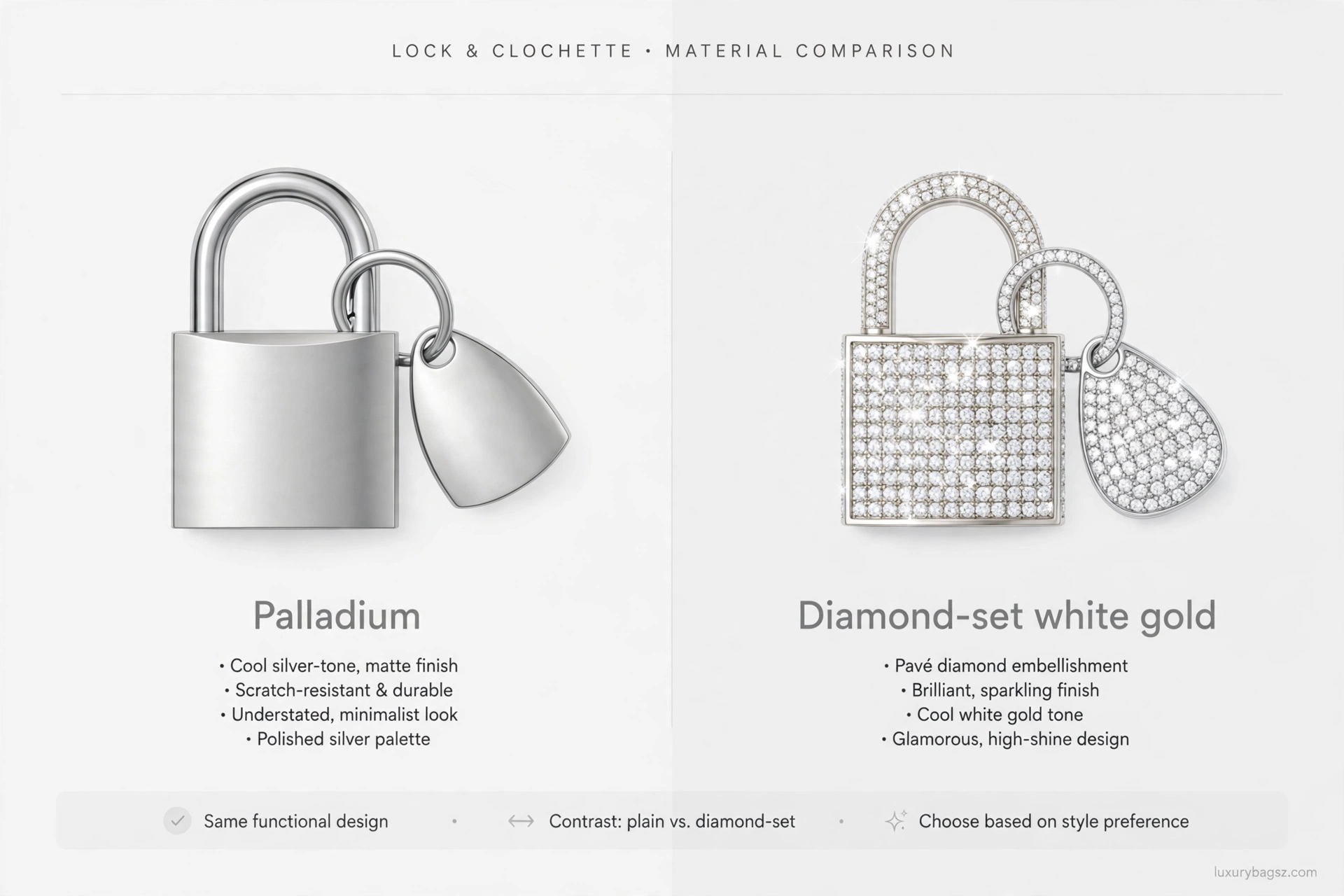
Hardware follows a strict rule. Authentic Himalayans carry palladium or diamond-set white gold hardware only, and any other finish is an immediate authentication concern. Diamond versions set stones into the white gold clasp and padlock, adding a jewellery component on top of an already rare bag.
Choosing between the two is a lifestyle decision, not just a budget one. Palladium versions are lighter, quieter, and easier to carry daily, while diamond versions are jewellery pieces that demand careful handling and insurance. Most collectors who actually carry their bag choose palladium.
The Birkin's open top, twin handles, and lock-and-clochette closure carry over unchanged. For a side-by-side with its famous sibling, see the Kelly and Birkin compared guide.

Why the Birkin Shape Suits the Gradient
The Birkin's wide, open body shows off the gradient better than a narrow bag could. The fade runs across large, flat panels of crocodile, so the eye reads the full white-to-grey sweep at a glance.
That visibility cuts both ways. Any uneven dyeing, blotch, or wear shows just as clearly, which is why condition matters so much to price. A pristine panel commands a large premium over a worn one.
The matte finish also changes how the bag wears. It looks softer and more understated than shiny crocodile, which suits the Birkin's everyday shape. Collectors often describe it as the most wearable form of the world's most unwearable-priced bag.
What It Costs, and Why Sources Disagree
Here is where plain speaking matters, because published record prices genuinely disagree. The disagreement is not sloppy reporting; it comes from mixing different categories of sale.
Start with the milestones most sources agree on. A matte white Diamond Himalaya Birkin 30 sold for $300,168 in 2016, then the most expensive handbag sold at auction. In 2017, a Diamond Himalaya Birkin reached nearly $380,000 at Christie's, a figure many guides still cite as the record.
Later results complicate the picture. Sotheby's reports a non-diamond Birkin 25 at $320,000 on its marketplace in 2021, a Diamond Himalayan Birkin 30 at $450,000 in a private sale in 2022, and a Diamond Birkin 25 at $336,000 at auction in February 2025. A private sale is not an auction record, so the 2022 figure does not replace the auction milestones.
For ordinary, non-diamond examples, Sotheby's averages since 2021 run about $187,000 for the Birkin 25 and $143,000 for the Birkin 30, with pristine 25s approaching $200,000. Prices peaked in 2021 and 2022, then moderated as luxury spending cooled.
Retail tells a different story. Rebag's guide put the largest 40 cm size at around $120,000 retail, with auction prices from about $90,000 for standard examples, while another guide puts retail near $50,000 when a boutique offers one at all. The gap between those retail figures shows how little hard retail data exists.
Getting offered one is the real barrier. Our guide to how to get a Hermes appointment explains the boutique process, and our explainer on the Hermes quota shows why boutiques, not money alone, decide who buys.
For the wider pricing picture, read why Birkin costs so much and what a Birkin costs.
Pre-Owned Checks Before You Pay
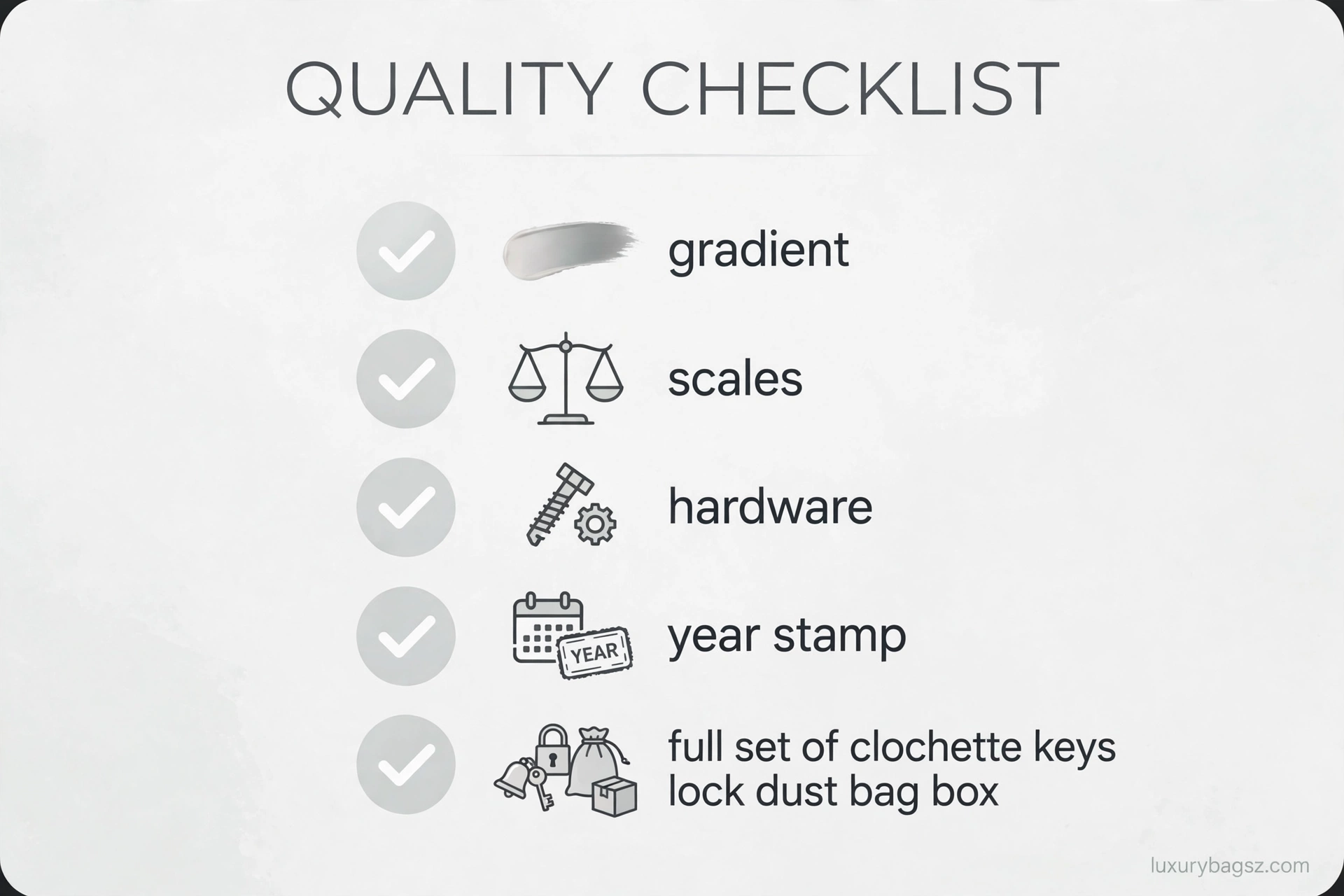
A Himalaya Birkin is exactly the kind of bag that attracts convincing fakes, so checks matter more here than on an ordinary bag. Start with the gradient itself: it should fade smoothly, with even scales and no blotchy patches or painted look.
Check the hardware next. Palladium should look soft and silver-toned, not bright chrome, and diamond versions should show fine, even stone setting. Any other hardware finish is an immediate concern, not a curiosity.
Read the blind stamp for the year code, and compare it with the bag's claimed date. Ask for the full set: clochette, keys, lock, dust bag, and box. A missing set does not prove a fake, but it should lower the price and raise your caution.
Finally, get an independent opinion before paying six figures. Our guide to how to spot a fake Birkin covers the detailed checks, and our guide to how to authenticate a pre-owned bag explains the process.
Caring for Matte Crocodile
Matte crocodile is less forgiving than smooth calf leather. Water marks it, sunlight fades the pale gradient, and oils from hands darken it over time. Handle it with clean, dry hands, and keep it out of rain.
Clean only with a soft, dry cloth, wiped gently along the scales. Never use water, baby wipes, or harsh cleaners on matte crocodile, and never condition it with products made for smooth leather. If a mark appears, stop and ask a specialist rather than experimenting.
Storage matters as much as cleaning. Keep the bag stuffed to hold its shape, standing upright in its dust bag, away from heat and direct sun. Our guide to how to clean a Birkin covers care by leather type, including exotics.
Matte crocodile also differs from shiny crocodile in care. Shiny finishes tolerate a light buff, but matte finishes show every rub and watermark, so pressure must stay minimal. Think of matte as a suede among crocodiles: beautiful, delicate, and unforgiving of shortcuts.
Himalaya Birkin or Himalaya Kelly?
Buyers who can reach this level usually face one question: Birkin or Kelly? The gradient is the same, the skin is the same, and the rarity is the same. The difference is the shape, and the shape changes everything about how the bag lives.
The Birkin is open-topped, roomier, and easier to live with day to day. It swallows a day's essentials without fuss, and its wide panels show the gradient at its best. The Kelly is structured, formal, and closed with a flap and clasp, suiting occasions where the bag stays in hand.
Prices differ too. Non-diamond Birkin 25s and Kelly 25s have averaged similar figures since 2021, but larger Birkins hold value better than larger Kellys, while diamond Kellys have set the bigger auction headlines. Neither shape is the safer buy; condition and size matter more than the name on the flap.
Choose by how you carry. If you want space and ease, take the Birkin. If you want structure and ceremony, take the Kelly. Either way, you own one of the rarest bags Hermès makes.
Frequently Asked Questions
What is a Hermès Himalaya Birkin?
It is a Birkin bag in matte Niloticus crocodile, dyed in a white-to-smoky-grey gradient meant to recall snowcapped Himalayan peaks. Himalaya is a colour treatment, not a separate leather.
When did the Himalaya Birkin first appear?
The modern Himalaya Birkin debuted in 2008 in the 30 cm size, followed by the 35 in 2009 and the 25 in 2012. An earlier green-brown Natura Kelly from the 1990s is a separate experiment.
What sizes does the Himalaya Birkin come in?
The standard sizes are 25, 30, and 35 centimetres. The 25 is currently the most sought-after, while the 35 is rarer but has softer demand.
What hardware does a Himalaya Birkin have?
Authentic examples carry palladium or diamond-set white gold hardware only. Any other finish is an immediate authentication concern.
How much does a Himalaya Birkin cost?
Non-diamond examples have averaged roughly $187,000 for the 25 and $143,000 for the 30 since 2021, according to Sotheby's. Diamond versions range roughly from $250,000 to $450,000 and beyond.
What is the most expensive Himalaya Birkin ever sold?
It depends on the category. A Diamond Birkin 30 reached nearly $380,000 at Christie's in 2017, while a Diamond Birkin 30 later passed $450,000 in a 2022 private sale. Auction and private-sale records are different things.
Why are Himalaya Birkins so rare?
Only naturally light crocodile skins can take the gradient, and the dyeing process is slow and closely guarded. That combination keeps output tiny even as demand stays high.
Can you buy a Himalaya Birkin from Hermès directly?
In theory, yes, but boutiques offer them only to established clients, and supply is tiny. Most buyers find them on the secondary market instead, at a large premium.
Is a Himalaya Birkin a good investment?
Past prices rose sharply into 2021 and 2022, then moderated, so it is not a guaranteed gain. Buy it because you want the bag, and treat any future value as a bonus, not a promise.
How do I care for a Himalaya Birkin?
Keep it dry, out of direct sun, and away from oils and harsh cleaners. Wipe gently with a soft, dry cloth, store it stuffed and upright in its dust bag, and leave any mark to a specialist.
Conclusion
The Himalaya Birkin earns its holy-grail label honestly: a painstaking gradient on rare pale crocodile, made in tiny numbers, on the house's most famous shape. Its prices are real, but so is the confusion around them, so compare like with like before you judge any figure.
If you ever buy one, buy the example in front of you, not the legend. Check the gradient, the hardware, the stamp, and the set, get an independent opinion, and care for the matte crocodile gently. That is how a bag like this stays beautiful for decades.






