

What Does Hermès Quota Mean?
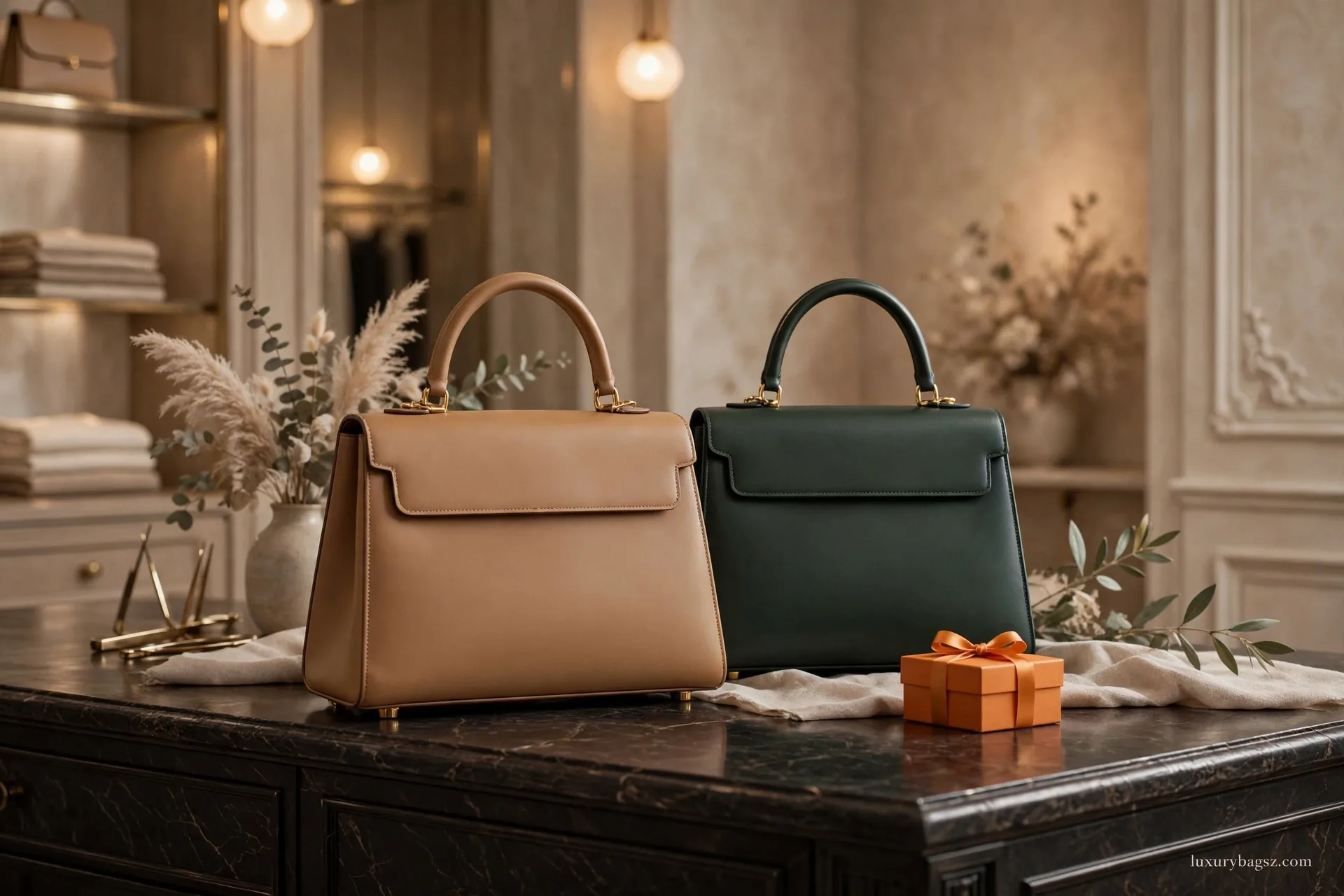
The Quota in Brief
A Hermès quota is a limit, reported by collectors and specialist guides, on how many of the most sought-after bags one client may buy from a boutique in a year. It is not a shopping rule you can read on a Hermès price list, and that gap between lore and proof is the whole story of this guide.
The direct answer is this: collectors most often report a limit of two quota bags per client per calendar year. The bags at the centre of that report are the Birkin and the Kelly, while the Constance is disputed, and most other Hermès bags are reported as non-quota.
Hermès itself publishes no official quota policy, no quota list, and no yearly number. Its United States website says only that the Birkin, Kelly and Constance are sold in stores, and invites clients to discuss availability there. Everything beyond that is a report, not a rule.
That distinction matters more than any single number in this guide. When a seller, a forum post, or a video states a quota figure as if Hermès had announced it, treat that claim with care, and check it against your own boutique before you plan a purchase around it.
If you only remember one thing, remember this: a quota, as collectors use the word, caps how many of a tiny group of bags you may be offered in a year. It does not promise you a bag, it does not set a price, and it does not turn spending into a guarantee.
Key Takeaways
- “Quota” is collector language for a reported yearly cap on the most requested Hermès bags, not a published Hermès policy.
- The Birkin and the Kelly are the only bags counted as quota bags in every report reviewed for this guide.
- The Constance is disputed: some boutiques and guides treat it as a quota bag, while others do not.
- Collectors most often report two quota bags per client per calendar year, with unconfirmed one-bag reports for some clients.
- Evelyne, Lindy, Picotin, Herbag and Geta are widely reported as non-quota bags, so buying one does not use up quota.
- Hermès publishes no spend threshold, ratio, or pre-spend chart, and no amount of spending guarantees an offer.
- A wishlist records your preferences, an appointment gives you a meeting, and neither one promises a quota bag.
- What counts is your own boutique’s answer, because reported practice varies by boutique, region, and client.
Part 1: What the Word Quota Means in a Boutique
In ordinary language, a quota is a fixed share or a maximum number allowed. In Hermès collector language, it means the maximum number of the most in-demand bags that one client is reported to be allowed to buy in a year.
The word matters because it frames the whole buying experience. Without a quota idea, a Birkin looks like any luxury bag: expensive, but buyable if you can pay. With a quota idea, it becomes an allocated bag, offered by the boutique rather than simply sold to whoever asks first.
That allocation idea is the part collectors agree on most. A quota bag is not sitting on a shelf waiting for a buyer, in the usual telling. It arrives at a boutique, and a sales associate offers it to a particular client, at a particular moment, for reasons the boutique does not publish.
The word also carries a warning. A quota is a ceiling, not a promise, in every careful account of the system. Two per year, where that figure is reported, means at most two, not two guaranteed offers, and not two bags of your exact choice.
Newcomers often hear “quota” and assume it works like a ticket or a ration book. It does not, because there is no public counter, no published balance, and no card you can check. The only record that matters, in collector reports, is the boutique’s own client record.
That is why this guide keeps two labels apart throughout. “Confirmed” means Hermès itself has said it, or a primary source proves it. “Reported” means collectors, resellers, or specialist guides say it, and Hermès has not confirmed it. The quota itself sits firmly in the second group.
Part 2: Which Bags Collectors Call Quota Bags
Only two bags appear as quota bags in every report reviewed for this guide: the Birkin and the Kelly. If you hear the phrase “quota bag” with no other detail, it almost always means one of those two, in some size, leather, and colour.
The Birkin is the structured, open-top tote with two top handles and a turn-lock closure. The Kelly is the older, dressier flap bag with a single top handle, a sculpted flap, and a removable shoulder strap. Both are handmade, both are scarce relative to demand, and both anchor the quota conversation.
Size does not appear to change the basic picture for these two, in the reports reviewed. A Birkin 25 and a Birkin 35 are both described as quota bags, and a classic Kelly and a Mini Kelly II are both described the same way. The scarcity, not the size, is what puts them in the group.
Kelly variations are where the edges blur, and the blur is worth naming. Some reports say certain Kelly styles, such as the Kelly Danse and the Kelly Ado, count as quota bags at some boutiques, while other reports list a Kelly Danse variant among non-quota bags. The two claims disagree, and no published Hermès list settles them.
That disagreement is a useful lesson in itself. A quota list that changes from boutique to boutique is not a list at all in the official sense. It is a pattern of local practice, described by people watching many boutiques, and local practice can differ without anyone being dishonest.
For a buyer, the practical point is simple. Assume a Birkin or a Kelly counts toward quota, whatever its size, and ask your own boutique about any Kelly variation before you treat it as free of quota. An assumption here is cheaper than a surprise later.


Part 3: The Constance Problem, Stated Plainly
The Constance is the great disputed case in the quota story, and any guide that gives you a single clean answer about it is hiding a real disagreement. Some respected sources call it a quota bag, and others do not, and both sides have named examples behind them.
One side of the argument runs like this: in China, Singapore, Canada, and some other markets, the Constance is treated as a quota bag alongside the Birkin and Kelly. Guides that take this view often add that it is generally more attainable than a Birkin or Kelly, even where it counts.
The other side runs like this: in the United States and in Europe, the Constance is not treated as a quota bag, even though it is still hard to get and still sold only in stores. Guides that take this view point to boutiques where a Constance can be bought without using up a quota slot.
Our own Hermès Constance guide states the same disagreement, noting that one major source calls it a quota bag while another guide calls it part of the “Big Three” without counting it as quota. That guide does not resolve the clash, and neither does this one, because boutique practice is the deciding factor.
Region is only part of the explanation, and it should not be overstated. Reports also suggest that practice can differ between boutiques in the same country, and between clients at the same boutique, depending on stock, demand, and the individual relationship.
The honest advice for a Constance buyer is therefore boring, but useful. Do not buy a Constance on the assumption that it will, or will not, use quota. Ask the boutique directly, before you buy, how it will record that particular bag for your client profile.
That question also protects you pre-owned. A reseller who markets a Constance as a “quota bag” to justify a premium is using a disputed label as a selling point. The bag’s leather, condition, and size matter far more than the label attached to it.
Part 4: Which Bags Are Reported as Non-Quota
Most Hermès bags are reported as non-quota, and that is good news for a new buyer. Non-quota does not mean easy to walk in and buy on the spot, but it does mean no reported yearly cap applies, and no quota slot is used when you buy one.
The Hermès Evelyne bag is the classic example, and often the first Hermès bag a new client buys. It is a laid-back crossbody with a perforated “H” on the front, built originally for carrying horse-grooming gear, which explains its ventilation holes.
The Lindy is another widely reported non-quota bag, a soft, double-zip shoulder bag that carries by hand or on the shoulder. Our guide to Hermès Lindy sizes covers its sizes, and the Lindy family is useful proof that “non-quota” and “unwanted” are very different things.
The Picotin, a small open bucket bag inspired by a horse’s feed bag, is also listed among non-quota bags by specialist publishers. Its simplicity and lower entry price make it a frequent first leather purchase, and it is often the bag collectors name when asked for an attainable Hermès piece.
The Hermès Herbag is reported the same way, and it is a useful case because it looks like a Kelly cousin. Its canvas-and-leather body and lower price set it apart, and its reported non-quota status shows that looks alone do not decide quota.
The Hermès Geta bag is also reported as a non-quota bag in the sources reviewed, even though it is a newer, popular style. Popularity alone does not make a bag quota, which is a point worth repeating, because new buyers often assume that anything hard to find must count.
Other names appear on publisher non-quota lists too, including the Garden Party, Bolide, Jypsière, and Roulis. The list is long, and it varies a little between publishers, but its message is steady: most of the Hermès range sits outside the quota conversation entirely.

Part 5: What Does Not Count Toward Quota
If a bag is reported as non-quota, buying it does not count toward your quota, in the collector telling of the system. That single fact reshapes how a sensible first year at Hermès can look, because you can build a real collection without touching a quota slot at all.
Scarves, shoes, ready-to-wear, jewellery, watches, fragrance, and homeware also do not count toward quota, because they are not quota bags in the first place. These are the purchases collectors call “pre-spend,” a word this guide returns to in Part 9, and their role is about relationship, not about quota arithmetic.
Small leather goods sit in the same group. A card holder, a wallet, or a belt does not use a quota slot, even when it carries a famous name. A Kelly belt, for example, is a belt, not a Kelly bag, and the difference between the two is worth knowing before you shop.
That naming trap catches real buyers, which is why a guide comparing the Hermès Kelly bracelet and the Kelly belt is worth reading alongside this one. A Kelly name on a bracelet or a belt does not make that item a quota bag, and it should never be sold to you as one.
Exotic skins deserve a careful note here, because they confuse the picture. An exotic Birkin or Kelly is still a Birkin or Kelly, so it is still reported as a quota bag, while an exotic version of a non-quota bag is still reported as non-quota. Skin changes price and scarcity, not the quota category itself, in the reports reviewed.
Second-hand buying sits outside quota entirely, in a different sense. Buying a pre-owned Birkin from a reseller does not use boutique quota, because you are not buying from a boutique at all. It also does not build boutique quota eligibility, a point that matters for buyers who hope a resale purchase will unlock a boutique offer.
The same logic applies to gifts, in the reports reviewed. A quota bag bought by someone else, for you, counts against that buyer’s reported quota, not yours, because quota is described as per client, not per household. No reliable report reviewed describes a household quota, and that absence is worth noting.
Part 6: The Reported Two-Per-Year Rule
The figure you will meet most often is two quota bags per client per year. Collector guides, reseller explainers, and client reports repeat it so consistently that it has become the default answer to “what does Hermès quota mean,” even though Hermès has never published it.
Two per year, in that telling, means two Birkins, two Kellys, or one of each, adding up to two in total. It does not mean two Birkins plus two Kellys, and it does not mean two of each size or colour. The cap, where reported, is on the group as a whole, not on each model separately.
The year in question is most often described as a calendar year, running from January to December. That detail matters, because a calendar-year cap resets on 1 January in that telling, while a rolling twelve-month cap would reset on the anniversary of each purchase instead.
No source reviewed for this guide describes a rolling twelve-month count, and that absence is itself useful. When a guide or a seller talks about a rolling quota window, ask where that claim comes from, because the reports reviewed here describe a calendar year and a single client profile.
Two is also described as a ceiling, never as an entitlement. A client who has bought no quota bag in a year is not owed two offers, and a client who has bought one is not owed a second. Stock, boutique judgement, and timing all sit between a client and any offer.
That ceiling idea explains why two clients can have honestly different experiences in the same year. One may receive two offers, another may receive none, and both outcomes fit inside the same reported rule, because the rule caps the top, not the bottom.
It also explains why the number feels both solid and slippery at once. Two is the figure most people report, and it is repeated across years and regions, yet it has no published source to check. Treat it as the best-reported pattern available, not as a confirmed rule.

Part 7: One Bag or Two? The Disagreement, Stated Plainly
Here the sources genuinely disagree, and this guide will not smooth that over. Some reports, going back to at least December 2023, describe a single quota bag per year for some clients, while the bulk of reports still describe two.
One careful collector guide, checked in October 2026, puts the position like this: as of that date, no Hermès source sets a one-bag limit, two per calendar year remains the figure reported most often, and one-bag reports have appeared since at least December 2023.
That same guide notes a further wrinkle from May 2026, when one specialist publisher described the one-bag idea as a rumour that may apply to newer clients. That wording matters, because it turns a flat claim into a conditional one: perhaps one for newcomers, two for established clients, in some boutiques.
Other specialist writing points in a similar direction, but from a different angle. In August 2024, one publisher wrote that some locations may offer only one quota bag a year because demand is so high, while in February 2025 it wrote that it knew of no such one-bag rule. The same publisher, in other words, has carried both versions.
Demand, boutique, and client history are the usual explanations offered for the gap. A boutique with very low stock may offer fewer bags overall, a newer client may be offered fewer bags than a long-standing one, and both effects can look, from outside, like a changed rule.
What can a buyer do with a disagreement like this? The practical answer is to ask your own boutique, and to avoid planning around either number as a certainty. If your boutique tells you one, that is the number that governs your next purchase, whatever guides say about two.
It is also worth avoiding the reverse error. A client who is offered one bag has not necessarily been “cut” to a one-bag quota, and a client who is offered two has not necessarily proved that two is the universal rule. Single experiences, however vivid, do not settle a system-wide question.
Part 8: Calendar Year, Rolling Year, and Household Claims
Three smaller claims travel with the quota story, and each one deserves a plain verdict. The first is the calendar year, the second is the rolling year, and the third is the household limit, and they are not equally supported.
The calendar-year claim is the best supported of the three, in the sense that it is the version most collector reports use. A calendar-year cap means your count resets in January, so a bag bought in December and a bag bought in January fall in different years, even though only weeks separate them.
The rolling-year claim, by contrast, has no support in the sources reviewed for this guide. No report reviewed describes a quota count that looks back twelve months from each purchase, and no Hermès material reviewed sets one out. A rolling claim should therefore be treated as unverified until a source is produced for it.
The household claim is in the same position. No source reviewed describes a limit per household, per couple, or per family, and the reports reviewed describe a single client profile. That does not prove that no boutique ever considers household buying, but it does mean a household quota is not a reported rule.
Why do these claims matter? Because they change real decisions. A buyer who believes in a rolling year may delay a purchase by months for no reason, and a couple who believe in a household cap may split purchases awkwardly, or avoid a purchase, on the basis of a rule nobody has shown to exist.
The safest habit is to treat any quota detail as a question for your boutique, not as a fact from the internet. Your boutique’s client record is the only record that will govern your next offer, and its staff can tell you how it counts, if it counts in the way you have heard.
That advice sounds cautious, and it is meant to be. The quota story is full of confident claims with thin sources, and caution is the cheapest protection a buyer has against planning a whole year around a rumour.
Part 9: Spend History, Myth, Reality, and the Ratio Talk
Spend history is the most misunderstood part of the quota story, and the misunderstanding has a name: pre-spend. Pre-spend means purchases made before being offered a quota bag, usually across departments other than the quota bags themselves.
Hermès itself has publicly denied making handbag purchases conditional on buying other products first, and it publishes no required spending ratio, no pre-spend chart, and no calculator. That denial is a confirmed fact, and it should anchor any discussion of spend.
Collector reality, however, points in a different direction, and both things can be true at once. Longtime clients and former staff consistently report that purchase history and boutique relationships influence which clients receive offers, even though no official threshold exists.
The ratio talk is where the two sides meet, and where the numbers get wild. Before the pandemic, clients often described a ratio around 1:1 or 1.5:1, meaning spend equal to, or one and a half times, the price of the bag wanted, on non-quota products first.
More recently, as certain bags grew even more in demand, some reports have put the ratio far higher, at 3:1 or even 5:1 for particular boutiques and desired bags. Other 2026 reporting describes the ratio softening again, as resale premiums compressed and boutique stock eased in some places.
Those figures disagree because they are not measurements of one rule. They are stories from different boutiques, different years, different bags, and different clients, bundled into a single ratio shape. A ratio from Paris in 2021 cannot govern a boutique elsewhere in 2026.
There is a further trap in the ratio idea, which specialist guides have warned about. A profile full only of non-quota leather bags may delay an offer, in one 2025 account, because boutiques read breadth across departments as commitment to the brand, not just spending in one corner of it.
The honest summary is therefore two-sided. Spending history appears to matter in practice, in the reports reviewed, but no amount is published, no ratio is official, and no spending figure can buy a guarantee. Anyone selling you a fixed spend target is selling a rumour as a rule.

Part 10: Purchase History Beyond Money
Money is only one part of purchase history, and collectors who focus on totals alone miss the rest of the picture. How you buy, where you buy, and how steadily you buy all appear in the reports, and each one deserves a short, plain treatment.
Consistency at one boutique is the most repeated advice in the sources reviewed. Specialist guides advise shopping consistently at one boutique, and with one sales associate where possible, because that is how a coherent client profile is built and read.
Breadth across departments is the second repeated theme. Scarves, ready-to-wear, shoes, jewellery, fragrance, and homeware all appear in the accounts of clients who later received offers, and the pattern is presented as evidence of genuine interest in the house, not just in one bag.
Steadiness matters too, in the telling. A burst of buying in one frantic month, followed by silence, reads differently from regular visits over a longer period, and guides warn against transactional pressure or attempts to game a ratio with a single large shop.
Behaviour in the boutique is also reported as part of the picture. Polite, patient, genuinely interested clients are described as easier to help than clients who treat every visit as a negotiation, and while that sounds like soft advice, it recurs too often to ignore.
None of this is a published rule, and none of it should be read as a checklist with a pass mark. It is a description of how discretionary allocation tends to work when a scarce item is offered by people, rather than sold by a machine.
That human element is also why two clients with similar spending can have different outcomes. A boutique manager’s judgement, the stock that actually arrives, and the timing of a visit all intervene, and no purchase history, however strong, controls those three.
Part 11: Quota, Wishlist, and Appointment, Kept Apart
Three words are used almost interchangeably in casual quota talk, and keeping them apart clears up half the confusion in the subject. They are quota, wishlist, and appointment, and they describe three different things.
Quota, as this guide has used it, is the reported yearly cap on how many quota bags one client may buy. It is a limit on completed purchases, in the collector telling, and it says nothing on its own about when or whether you will be offered anything.
A wishlist is a record of your preferences, shared with a sales associate after a period of buying. It typically covers the model you hope for, the size, the colour, the leather, and the hardware, and it helps a boutique match arriving stock to interested clients.
A wishlist is not a queue, not a reservation, and not a promise. Guides are explicit on this point: getting on a wishlist does not mean you will get a bag, and the bag you are eventually offered may differ from the one you wished for, in colour, leather, or size.
An appointment is a meeting, and it comes in two broad forms in the reports. A regular boutique appointment is a scheduled visit with a sales associate, while the Paris lottery appointment is a sought-after meeting at one of the Paris boutiques, allocated by a system Hermès does not publish in detail.
An appointment gives you time with a sales associate and a chance to see what is available to you that day. It does not guarantee a quota bag, and reports of Paris lottery appointments ending without a quota offer are common, even after a long wait and a successful draw.
The three ideas combine in practice, but they should not be collapsed into one. You can have a wishlist without an appointment, an appointment without a wishlist, and a quota allowance untouched, all at once, because each one governs a different step in the process.

Part 12: How an Offer Actually Happens, as Collectors Describe It
No Hermès document reviewed for this guide describes the offer moment step by step, so this part is, by necessity, a collector description, not an official account. It is included because buyers deserve a realistic picture, and it is labelled as a report throughout.
In the usual telling, a boutique receives stock without advance notice to clients, and often without advance detail to staff either. One account says that even sales managers and associates know nothing about the timing or contents of a shipment until the bags arrive.
When a quota bag does arrive, a sales associate or manager matches it to a client whose wishlist, history, and profile fit that particular bag. The match is discretionary, which is why the same bag can be right for one client and wrong for another, even at the same boutique.
The client is then contacted, often at short notice, and invited to the boutique. Reports describe a discreet, private moment, away from other shoppers, in which the bag is shown from its orange box, and the client decides whether to buy it there and then.
That short-notice element matters for planning. Clients who cannot reach the boutique quickly, or who hesitate for days, risk losing the moment, and some reports describe a refused bag going to another client, with the first client waiting again for a future match.
The offer may not match the wishlist exactly, and that mismatch is one of the most common surprises in the reports. A different colour, a different leather, or a different size may be what is actually available, and the client must decide whether that bag, not the wished-for bag, is worth buying.
None of this is guaranteed, none of it is published, and none of it should be treated as a script. It is the pattern that emerges when many client stories are laid side by side, and individual boutiques and moments will differ from it.
Part 13: Declining an Offer, and What Happens Next
Declining a quota offer is the part of the story that worries buyers most, and the reports about it are the least consistent of all. Some accounts describe serious consequences, others describe none, and the gap between them needs stating, not hiding.
The strongest version of the claim appears in popular guides, which say that refusing a bag may mean waiting a long time, sometimes described as up to two years, before being put forward again. That figure is a report, not a published rule, and it should be read as a warning story, not as a timetable.
Other accounts are gentler. They describe a declined bag simply going to the next client, with the first client remaining in consideration for a future match, especially where the declined bag was far from the wishlist. Those accounts treat a decline as a mismatch, not as a punishment.
A third group of reports sits between the two. They suggest that repeatedly declining offers, or declining a bag very close to the wishlist, may cool a relationship, while a single polite decline of a poor match is understood by a good sales associate as normal buying behaviour.
No Hermès source reviewed confirms any penalty period, and no source reviewed sets out a formal consequence for declining. That absence does not prove that declining is cost-free, because a discretionary system can cool without ever writing a rule, but it does mean no penalty should be quoted as fact.
The practical advice that follows from the disagreement is modest. Be honest on your wishlist about what you truly want, so you are less likely to face a poor match, and if you are offered a poor match, decline politely, promptly, and with a clear restatement of what you do want.
Do not let fear of a rumoured penalty push you into buying a bag you do not love. A quota bag is a large purchase, and a bag bought from fear is a bag that may sit unworn, which helps nobody, least of all a collector building a collection to use.
Part 14: Quota, Resale, and Pre-Owned Buying
Quota is often described as an anti-resale measure, and that explanation deserves a fair hearing. If each client can buy only a small number of the most wanted bags per year, the thinking goes, fewer bags flow straight from boutique to resale, and genuine wearers get a better chance.
Whether that is the real motive, a side effect, or a convenient story is not something the sources reviewed can prove. Hermès has not published a quota motive, and exclusivity, craftsmanship limits, and resale control are all offered as explanations by different writers. Treat the motive as debated, not settled.
What is clearer is the resale effect. Quota bags, above all Birkins and Kellys, commonly trade pre-owned above boutique price, because boutique access is limited and demand is not. That premium is the market’s verdict on scarcity, and it persists even when boutique stock eases a little.
For a pre-owned buyer, quota changes the questions to ask, but not the checks to make. A seller who claims a bag is “quota” is not adding authentication evidence, and a seller who claims a bag used no quota is not adding any either. Judge the bag, not the label.
Authentication still comes first, and a guide to spotting a fake Hermès Kelly bag covers the checks that matter for the most commonly faked quota bag. Leather, stitching, hardware, stamp, and seller evidence all count more than any quota story attached to a listing.
Price also needs care in this market. This guide gives no average price for a quota bag, because averages hide region, size, leather, and date. One 2026 guide listed a standard Togo Birkin 25 at $13,500 in the United States, and that single dated figure is the only boutique price quoted here.
A pre-owned price far above or below that kind of figure proves nothing on its own, because condition, colour, leather, and hardware all move a resale price. Use single dated listings for comparison, check the exact bag in front of you, and get a professional opinion when the stakes are high.
Part 15: A Sane Plan if You Want a Quota Bag
A sane quota plan starts with a decision that has nothing to do with quota at all: decide whether you want a Birkin or a Kelly, or whether a non-quota bag would make you just as happy. Many buyers discover, once they handle the range, that the bag they love is not a quota bag in the first place.
If the answer is a quota bag, choose one home boutique and one sales associate, and shop there steadily. Buy things you genuinely like, across departments, over months rather than in a single rush, and be honest about your taste, your budget, and your timeline.
Share a wishlist only when the relationship supports it, and make that wishlist honest. List the sizes you would truly carry, the colours you would truly wear, and the leathers you would truly maintain, rather than a fantasy list designed to impress. A narrow, honest list is easier to match than a broad, vague one.
Keep your expectations in proportion. No spend figure, no ratio, and no wishlist entry guarantees an offer, and the bag offered may differ from the bag wished for. A plan that depends on a particular bag arriving by a particular date is a plan that will disappoint you.
Meanwhile, enjoy the non-quota range without guilt, because those purchases do not use quota in the reports reviewed. A well-chosen Evelyne, Lindy, Picotin, Herbag, or Geta is a real Hermès bag in its own right, not a token spent on the way to something else.
Finally, keep a record of your own. Note what you bought, where, when, and with whom, and note what your boutique tells you about quota, in its own words. Your own notes will serve you better than any internet ratio, because they describe the one boutique that actually governs your next offer.
Once a quota bag is yours, look after it properly, because a bag bought after a long wait deserves a long life. A guide to storing a Hermès Kelly bag sets out the dust bag, stuffing, and humidity habits that protect a structured bag, and those habits transfer well to a Birkin too.
Frequently Asked Questions
What does Hermès quota mean in simple terms?
It means a reported yearly limit on how many of the most wanted Hermès bags one client may buy from a boutique. Collectors most often report two per calendar year, but Hermès publishes no official quota policy, list, or number.
Which bags are quota bags?
The Birkin and the Kelly are counted as quota bags in every report reviewed for this guide. The Constance is disputed, with some boutiques and guides counting it and others not, so ask your own boutique about a Constance before you rely on either answer.
Is the Constance a quota bag?
Sources disagree, and this guide does not resolve that disagreement. Some guides say it counts as a quota bag in markets such as China, Singapore, and Canada, while others say it does not count in the United States or Europe. Boutique practice is the deciding factor.
Which Hermès bags are non-quota?
Specialist publishers list the Picotin, Evelyne, Garden Party, Herbag, Lindy, Bolide, Jypsière, and Roulis among many non-quota models. Buying a reported non-quota bag does not use up quota, in the collector telling of the system.
How many quota bags can you buy per year?
Collectors most often report two quota bags per client per calendar year. Unconfirmed reports of a single bag per year for some clients have appeared since at least December 2023, but no Hermès source sets a one-bag limit, as of October 2026.
Do you have to spend a fixed amount before you get a Birkin or Kelly?
No fixed amount is published, and Hermès has publicly denied making handbag purchases conditional on buying other products first. Clients report that purchase history matters in practice, but no spend figure, ratio, or chart guarantees an offer.
What is the difference between a quota, a wishlist, and an appointment?
A quota is a reported cap on completed quota purchases per year. A wishlist records your preferred model, size, colour, leather, and hardware. An appointment is a meeting with a sales associate, and none of the three, alone or together, promises a quota bag.
Does buying a non-quota bag use up your quota?
No, in the reports reviewed, buying a reported non-quota bag, scarf, shoe, piece of jewellery, or homeware item does not count toward quota. Those purchases may build a client profile, but they are not quota purchases themselves.
Can you buy a Birkin or Kelly pre-owned without quota?
Yes, because quota, as collectors describe it, governs boutique purchases, not resale purchases. Buying pre-owned does not use boutique quota, but it also does not build boutique eligibility, and authentication and price checks matter more than any quota claim.
What should you ask your boutique about quota?
Ask how your boutique counts quota bags, whether a Constance counts there, and how a particular purchase will be recorded for your profile. The boutique’s own answer governs your next purchase, whatever any guide, including this one, reports in general.
Summary
A Hermès quota, as collectors use the word, is a reported yearly cap on the most wanted bags, not a published Hermès rule. Two quota bags per client per calendar year is the figure reported most often, the Birkin and Kelly sit at its centre, and the Constance remains disputed.
That single paragraph is the safest summary available, because everything beyond it is a report that varies by boutique, region, and client. Spend history appears to matter in practice, but no published threshold exists, and no ratio, wishlist, or appointment can promise an offer.
The wisest way to use this guide is therefore as a map of what is claimed, not as a set of rules to follow blindly. Keep confirmed facts and rumours apart, ask your own boutique the questions that govern your case, and judge every bag, price, and seller claim on its own evidence.
If a quota bag is your goal, build a steady, honest relationship at one boutique, enjoy the non-quota range without treating it as a toll, and stay patient about timing. If another bag makes you happier sooner, buy that bag, and let quota stay what it is: a limit on a tiny group of bags, not a limit on enjoying Hermès.






