Shoe Trees Explained: Types, Sizing, Daily Use and Mistakes to Avoid
Shoe Trees at a Glance
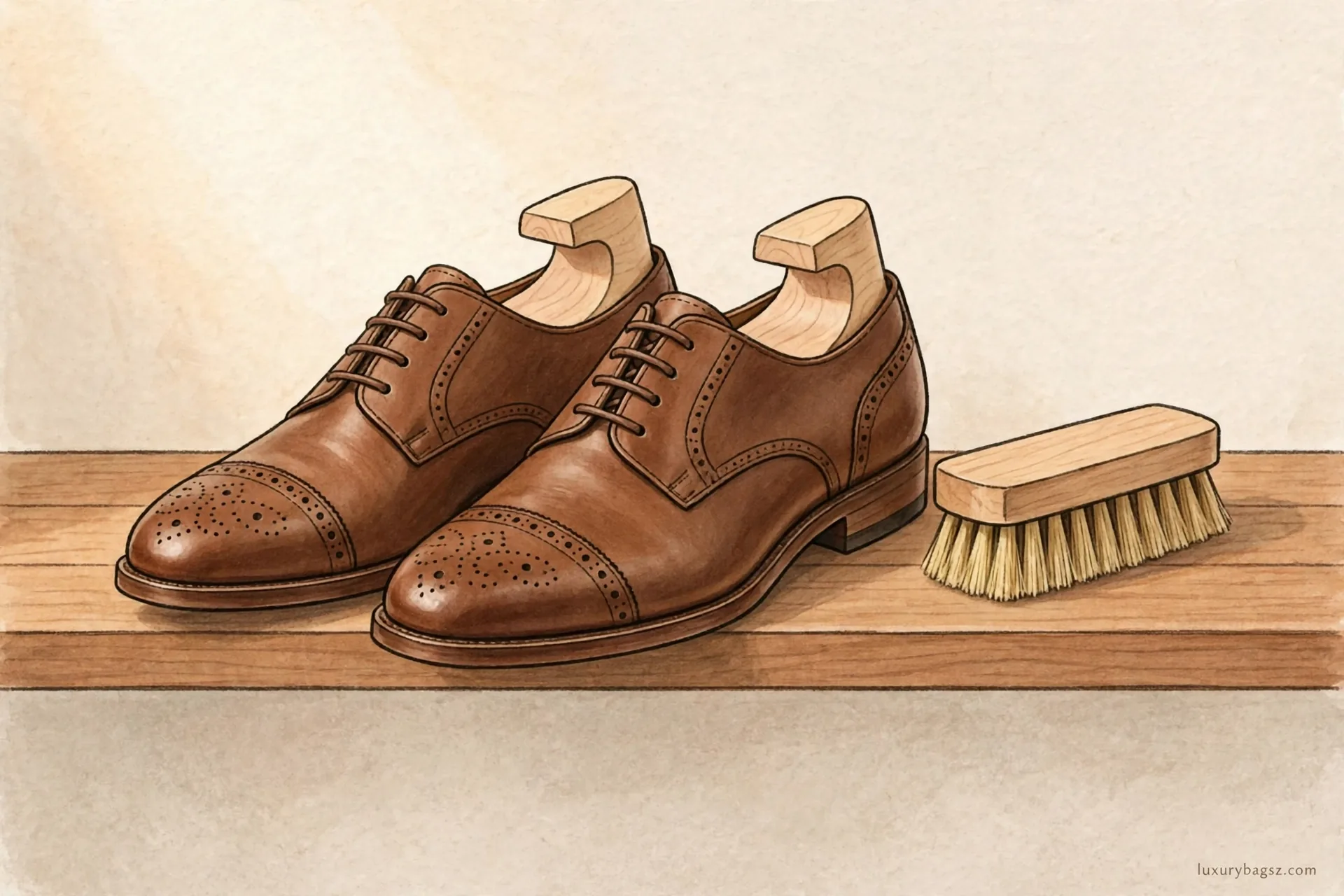
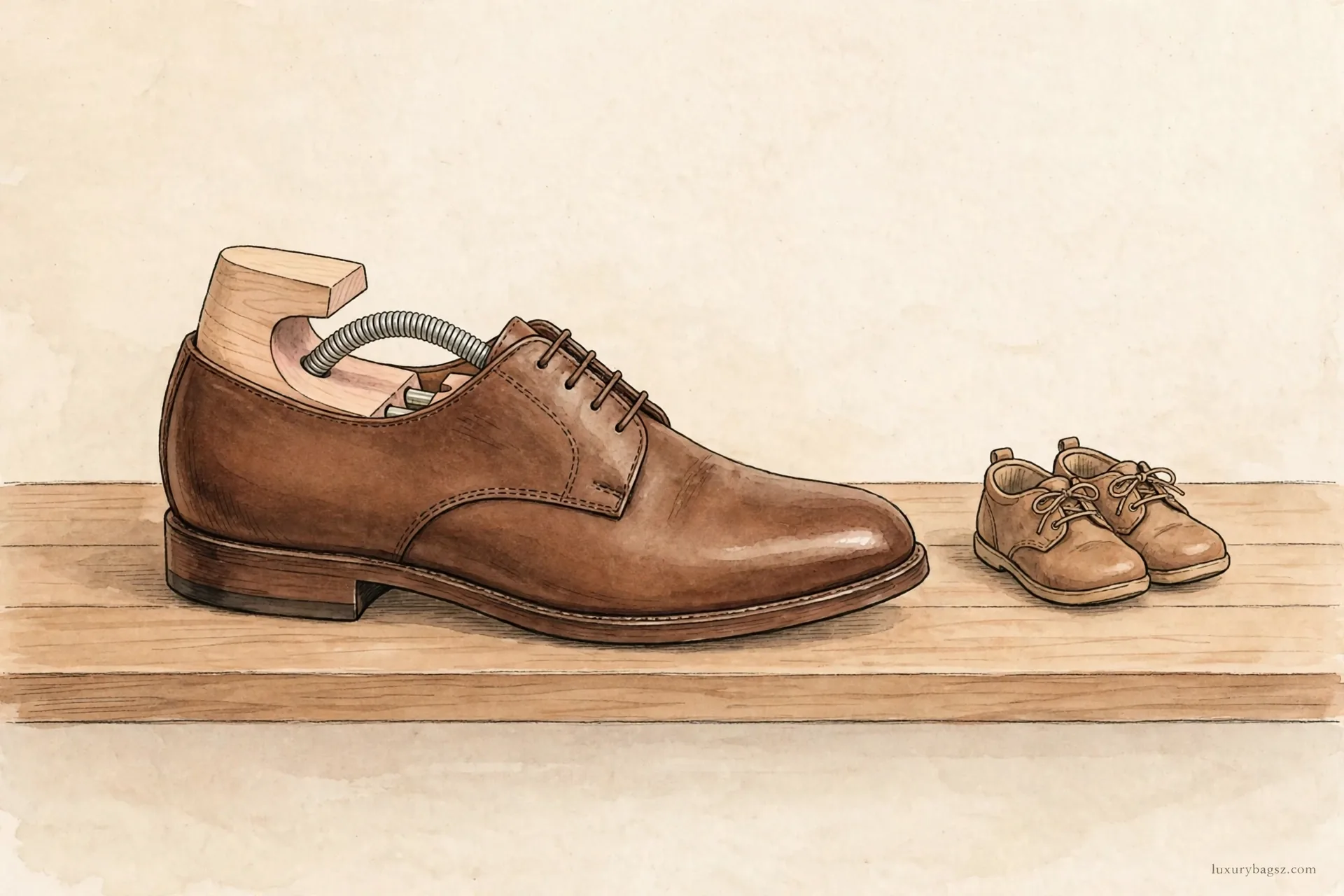
A shoe tree is a foot-shaped insert that goes into a shoe when you are not wearing it. It holds the shoe's shape, smooths out creases and, if made of unfinished wood, draws moisture out of the leather.
The best default is an unfinished cedar tree in your exact shoe size, split-toe for versatility. Put it in after every wear, leave it in until you wear the shoes again, and keep a pair of trees per pair of shoes you wear often.
Trees matter most for leather shoes: Oxfords, Derbies, loafers and boots. They help sneakers too, but lightly, and they do nothing for shoes that are already the wrong size. A tree preserves shape; it cannot fix fit.
Key Takeaways
- A shoe tree holds a shoe's shape between wears and smooths creases across the vamp.
- Unfinished cedar is the best everyday material: it absorbs moisture and fights odour naturally.
- Plastic trees hold shape but absorb no moisture, so they suit travel, not daily use.
- Buy your exact shoe size; size down for half sizes, since undertension beats overtension.
- Insert trees after every wear and leave them in until the next wear, including in storage.
- A tree will not stretch a tight shoe into fitting, and a forced, oversized tree can damage leather.
- Sand cedar lightly once a year to refresh its scent and absorption.
- Keep one pair of trees per regularly worn pair of shoes rather than sharing a single pair around.
What Shoe Trees Are and What They Do
A shoe tree is a last-shaped device, usually in two or three pieces, that fills a shoe from toe to heel. The front piece shapes the forefoot and toe box, while the back piece, the heel cup, supports the heel counter. Most designs join the two with a spring that keeps gentle, even tension along the shoe.
Its first job is shape. Leather stretches, compresses and creases with every step, and when shoes come off, they cool and set in whatever rumpled state they are in. A tree holds the leather in its intended shape while it dries, like ironing a shirt while it is still damp.
Its second job is moisture management, but only for wood trees. Feet perspire, and leather linings and insoles absorb that sweat. Unfinished cedar draws moisture out and lets it evaporate, which slows softening, mould and odour. Varnished wood and plastic cannot do this, since their surfaces are sealed or non-absorbent.
Its third job is crease control. Trees smooth the vamp, the front upper over the toes, where walking bends the leather most. They will not erase deep creases that are already set, but they stop small creases from deepening into cracks over time.
Types: Cedar, Other Woods, Plastic, Lasted and Spring-Loaded
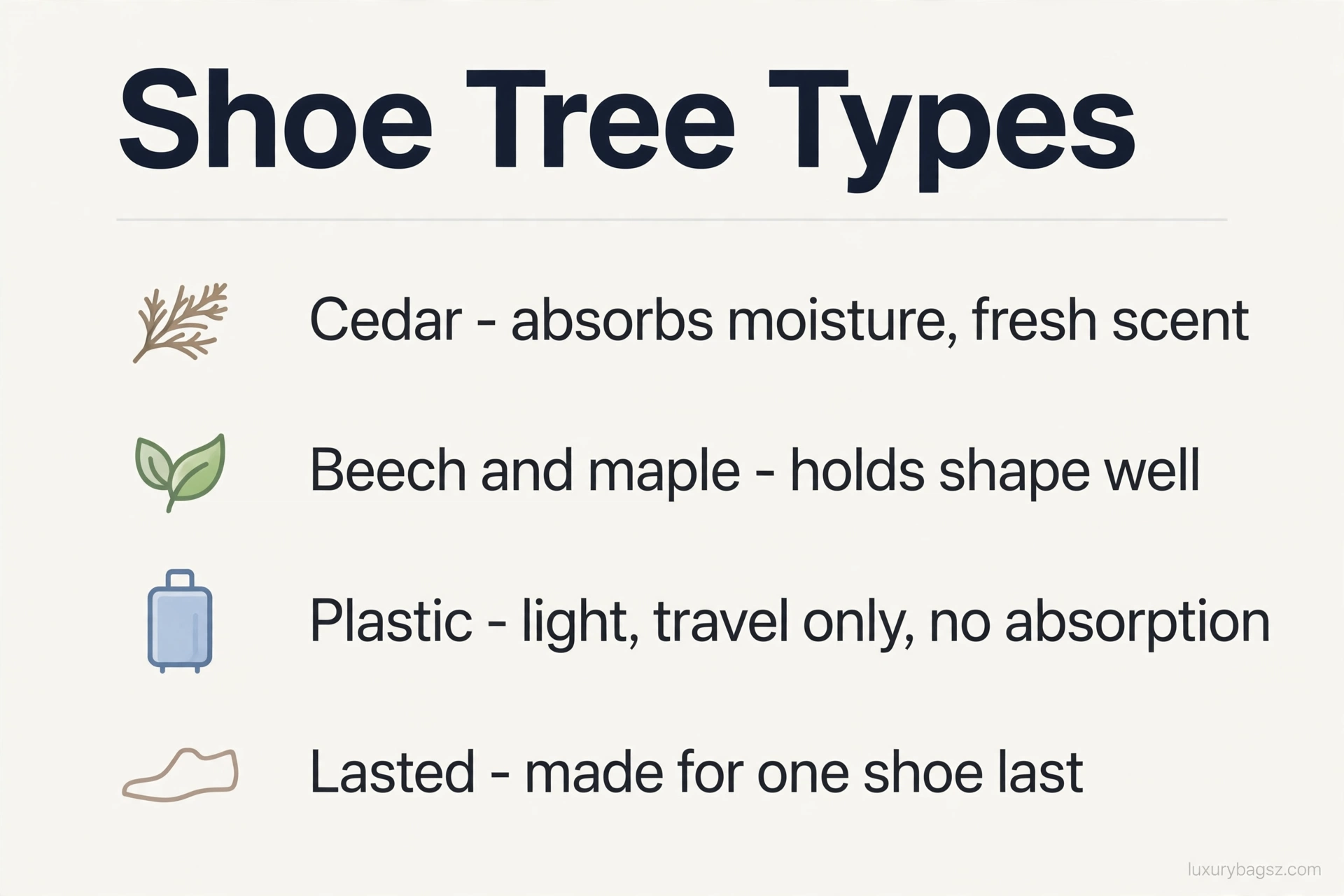
Cedar is the standard recommendation, and for good reason. Aromatic red cedar is porous, absorbs moisture well, and releases natural oils that discourage the bacteria behind odour. It is light, durable and inexpensive enough to buy a pair per pair of shoes.
Plastic trees hold shape and weigh little, which makes them genuinely useful for travel. Their flaw is total: they absorb no moisture and control no odour. Treat them as a travel compromise, never as a replacement for cedar at home.
Design matters as much as material. Spring-loaded trees use a spring and usually a split toe, where the forepart divides into two halves that adjust to width. They suit most ready-to-wear shoes and most buyers. Lasted trees are carved to match one specific shoe last, often supplied by the shoemaker, and they are the premium option for bespoke or made-to-measure pairs.
Sizing: Getting the Fit Right
Shoe tree sizing is where most people go wrong, and both directions cause trouble. A tree that is too small rattles around and tensions nothing. A tree that is too large stresses seams, distorts the last and can stretch leather out of shape.
Start with your exact shoe size. Most spring-loaded trees cover a range of about two sizes, such as 8 to 9.5, so check the maker's range rather than assuming. For half sizes, size down: slight undertension is safer than overtension, and the split toe can usually take up the slack.
Width matters as much as length. A narrow tree in a wide shoe leaves the vamp unsupported at the sides, while a wide tree in a narrow shoe puckers the leather. Split-toe designs help here, since their halves spread to meet the shoe's width.
Check the fit with three quick tests. First, the heel cup should sit fully inside the heel counter with no visible gap. Second, the forepart should fill the toe box without lifting the vamp away from the insole. Third, tension across the upper should feel firm and even, with no puckering or seam strain.
If insertion needs real force, the tree is wrong. A correct tree slides in with a firm push and a squeeze of the spring, not a shove. When in doubt, try the tree in the shop with your own shoes, since brands size slightly differently.
How and When to Use Them
Use trees after every wear, not just for special pairs. The routine takes under a minute: take the shoes off, let them breathe briefly, insert the trees, and leave them until you wear the shoes again.
Sources disagree slightly on timing, so here is the honest picture. Some guides say insert within 20 to 30 minutes of taking shoes off, while the leather is still warm and receptive. Others say let shoes air for 15 to 20 minutes first, and if shoes are soaking wet, wait 20 to 40 minutes before inserting anything.
The practical middle ground is simple. Let warm shoes breathe for a few minutes, then insert the trees while the leather is still pliable. For genuinely wet shoes, let them air longer first, since forcing a saturated upper onto a rigid form can distort the toe box. Never put trees into dripping-wet shoes.
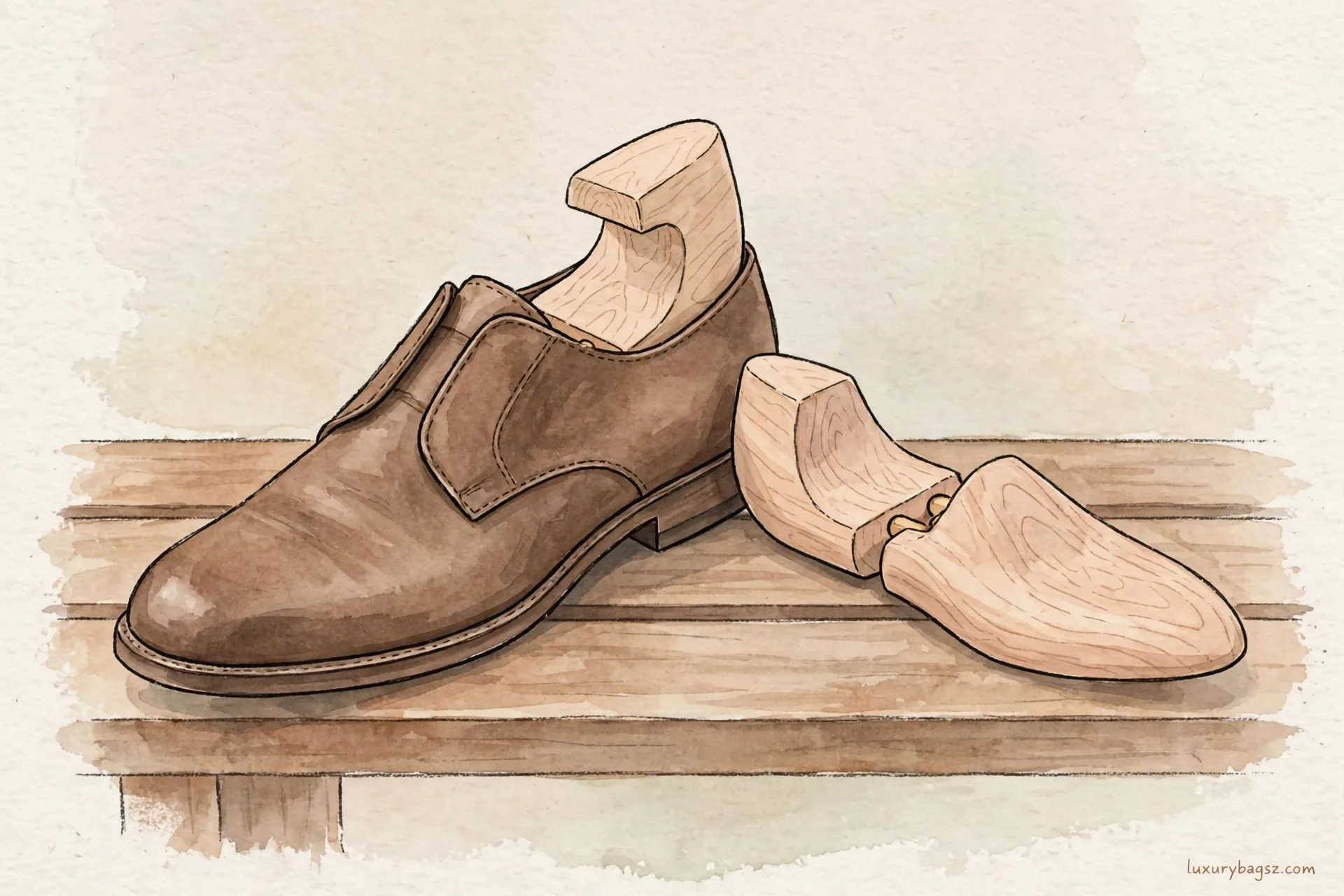
To insert a spring-loaded tree, slide the forepart in first, pushing it as far forward as it goes. If it has a split toe, squeeze the sides together from outside the shoe to help it along. Then compress the spring, seat the heel cup into the heel counter, and release gently.
Leave trees in place between wears, including overnight. Shoes often take about a day to dry fully, and the tree does its work during that drying window. For long-term storage, leave trees in permanently: stored shoes without trees slowly collapse at the toe box and heel.

Which Shoes Benefit Most
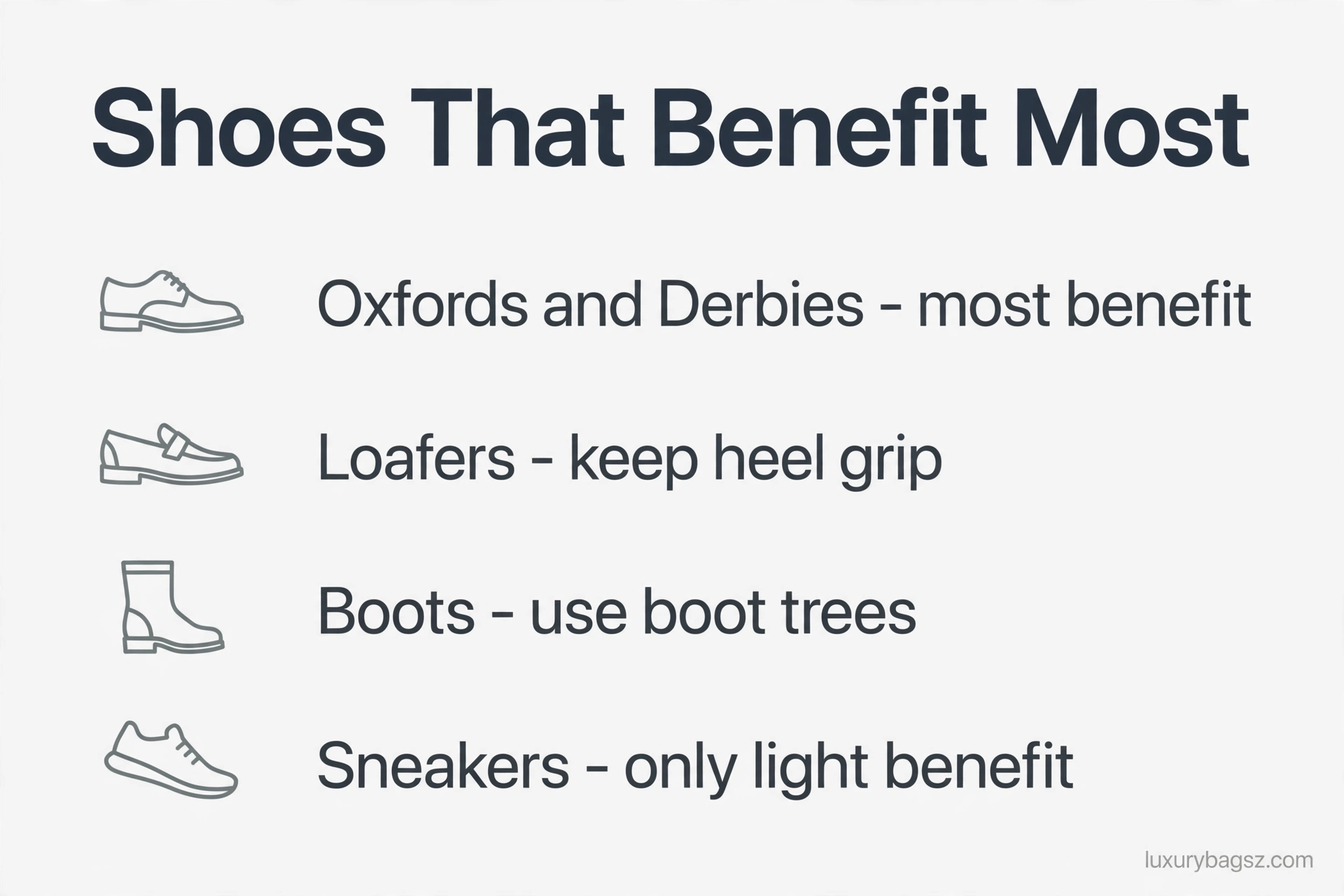
Leather dress shoes benefit most of all. Oxfords, Derbies and monk straps have structured uppers, leather soles and a shape worth preserving, and trees protect exactly those features. If you own one pair of trees, put them in your best dress shoes first.
Loafers benefit nearly as much, with a twist. A loafer has no laces to hold its shape, so its heel grip and vamp depend on structure alone. Trees keep that structure, which is part of why how loafers should fit stays true over time rather than loosening into slippers.
Boots benefit too, but with boot trees rather than shoe trees. The foot needs support and the shaft needs it as well, especially for taller boots that flop and crease at the ankle.
While you break in boots, trees between wears help new leather settle into shape instead of setting into wrinkles. They pair with proper cleaning, including saddle soap.
Trees support resoling value too: a well-kept upper is worth resoled boots, while a collapsed one often is not. The same logic applies when buying used: learn to grade designer shoe condition before paying for a pair.
Looking After Your Shoe Trees
Cedar trees are low-maintenance, not no-maintenance. A little annual attention keeps them absorbing moisture and smelling fresh for years, and well-kept trees can outlast several pairs of shoes.
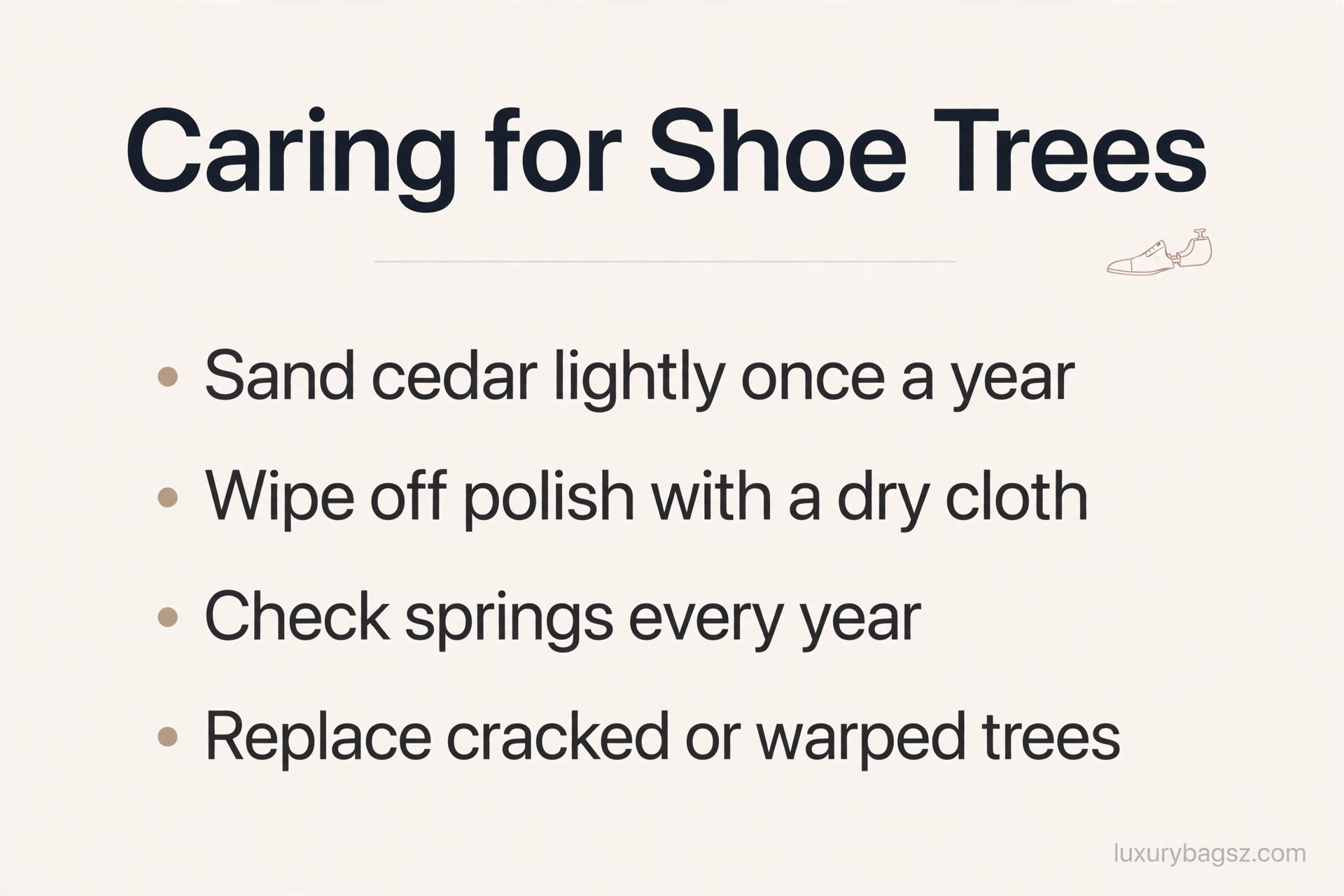
Sand lightly once a year, or every 12 to 18 months, with fine sandpaper. Sources vary between 220-grit and 300-grit or finer; either fine grade works, since the aim is just to open the grain and refresh the aromatic oils. Sand the surfaces that touch the shoe, then wipe away dust before use.
Wipe trees with a dry cloth if polish or cream transfers onto the wood. Do not soak them or use harsh cleaners, which can seal the grain or leave residues that transfer back into shoes. If a tree picks up a stain, light sanding usually removes it.
Check springs and joints once a year on adjustable trees. A weakened spring tensions nothing, and a cracked heel cup or warped forepart should retire the tree at once. A distorted tree causes the very damage it exists to prevent, so replace rather than persist with it.
Common Mistakes to Avoid
The biggest mistake is owning trees and not using them. Trees in a cupboard protect nothing, and irregular use misses the drying window after each wear, when leather is most receptive to reshaping. Make insertion part of taking shoes off, not a weekend chore.
The second mistake is buying the wrong size and forcing it. If insertion needs force, if seams pull, or if the vamp puckers, stop and resize. An oversized tree stretches leather and stresses stitching, and the damage can be permanent.
The third mistake is sharing one pair of trees across many shoes. Rotation misses the critical window after wear, and a tree sized for one last rarely fits another properly. Buy trees for the pairs you wear most, and add pairs as your rotation grows.
The fourth mistake is expecting trees to fix fit. Trees cannot stretch a tight shoe into comfort, cannot shrink a loose shoe, and cannot repair a collapsed heel counter. They preserve good shoes; they do not rescue wrong ones. If shoes hurt, that is a sizing problem, not a tree problem.
Frequently Asked Questions
What are shoe trees for?
Shoe trees hold a shoe's shape between wears, smooth creases across the vamp, and, in unfinished wood, absorb moisture from the leather. They keep shoes looking and fitting as intended for far longer.
Are cedar shoe trees better than plastic?
For daily use, yes. Cedar absorbs moisture and fights odour, while plastic only holds shape. Plastic trees are fine for travel, where weight matters, but they should not replace cedar at home.
What size shoe tree should I buy?
Buy your exact shoe size, checking the maker's size range for spring-loaded trees. For half sizes, size down, since slight undertension is safer than overtension. If insertion needs force, the tree is too big.
Should shoe trees stay in all the time?
Yes, leave them in whenever you are not wearing the shoes, including overnight and in long-term storage. The tree works while leather dries, and stored shoes without trees slowly lose their shape.
How soon after wearing shoes should I insert trees?
Let shoes breathe for a few minutes, then insert trees while the leather is still pliable. For soaking-wet shoes, air them for 20 to 40 minutes first.
Can shoe trees stretch tight shoes?
No, not reliably, and they should not be used that way. Trees maintain shape with gentle tension; forcing an oversized tree into a tight shoe risks stretching seams and distorting the last. Use a proper shoe stretcher for stretching.
Do shoe trees work for sneakers?
They can hold a sneaker's shape in storage, but the benefit is smaller than for leather shoes, since foam and mesh do not crease like leather. Plastic trees or simple shapers are usually enough for sneakers.
How do I care for cedar shoe trees?
Sand lightly once a year with fine sandpaper, wipe with a dry cloth if polish transfers, and check springs annually. Replace cracked or warped trees.
Should I use shoe trees for boots?
Yes, but use boot trees for tall boots, since shoe trees support only the foot and leave the shaft unsupported. For ankle boots, a sturdy shoe tree with a full heel cup is usually sufficient.
How long do shoe trees last?
Good cedar trees last for years, often outliving several pairs of shoes, with only light annual sanding. Replace them when springs weaken, wood cracks or warps, or the tree no longer fits the shoe it serves.
Summary
Shoe trees are the cheapest serious investment in shoe care: unfinished cedar, correct size, inserted after every wear and left in until the next. They will not fix bad fit or rescue ruined shoes, but they will keep good shoes shaped, dry and fresh for years longer than neglect allows.
Start with your most-worn leather pair, size the tree properly, and make insertion a habit the moment shoes come off. The rest of shoe care builds on that one routine.