Break in boots gradually, indoors first, in short sessions that grow a little each day. Start with 30 minutes at home, add 15 to 30 minutes daily, and move outside only when indoor sessions feel comfortable. Most leather boots need one to three weeks of regular wear to feel truly broken in.
Blisters come from friction and moisture, not from leather being stubborn. Cut both with cushioned, moisture-wicking socks, moleskin on hotspots before you walk, and a rule to stop before pain turns into a blister. Never power through pain on day one.
Skip the shortcuts that damage boots: no soaking, no ovens, no radiators, and no hair dryer on full heat. Conditioner helps, sparingly, and a boot stretcher fixes tight spots, but time and gradual wear do most of the work, and they do it safely.
Key Takeaways
Check fit first: about a thumb’s width of toe room and no more than a quarter inch of heel slip.
Snug is normal for new boots, sharp pain is not. Sharp pain means wrong size or wrong shape, not break-in.
Wear new boots indoors for 30 to 60 minutes on day one, adding 15 to 30 minutes each day.
Wear cushioned, moisture-wicking socks, never thin cotton socks, which hold sweat and increase friction.
Tape or moleskin known hotspots before walking, especially heels, ankles and toe tops.
Condition leather sparingly, once, before or early in break-in, and let it absorb overnight.
Use a boot stretcher or a cobbler for a specific tight spot that survives three to four weeks of wear.
Never soak boots, use ovens or radiators, or wear new boots for a full day on day one.
Fit First: Break-In Cannot Fix the Wrong Size
Before any break-in plan, confirm the boots actually fit. Stand in them and check for about a thumb’s width between your longest toe and the boot end, with toes free to wiggle. Heel slip should be small, no more than about a quarter inch, and it should lessen as the boots mould to your feet.
Snugness across the ball of the foot is normal and will ease, but sharp pain, numb toes, or a heel that lifts a full inch are not break-in problems. They are fit problems, and no amount of wearing will fix a boot that is a full size wrong or the wrong width for your foot.
Try boots on later in the day, when feet are slightly swollen, and with the socks you plan to wear. Morning fittings often feel roomier than the boots will feel after a day on your feet. If you are between sizes, a cobbler or the maker’s sizing guide is worth consulting before you commit.
Keep the box and receipt until break-in is underway. Boots that hurt sharply in the first indoor session should go back, not into a heroic break-in attempt. Returning a pair is cheap, while blisters, creased leather and a stretched-out wrong pair are not.
The Gradual Plan: Short Sessions That Grow
Day one is indoor only, for 30 to 60 minutes, on carpet or soft floors. Walk around the house, climb stairs a few times, and flex the boots by bending at the ankle and ball. If a hotspot appears, stop, note where it is, and try again tomorrow with moleskin there.
Add 15 to 30 minutes each day, still indoors, until you reach two to three hours comfortably, usually by the end of week one. Do not jump from one hour to a full day, because the jump is where blisters form. Slow growth lets leather soften without punishing your feet.
In week two, graduate to short trips outside: a grocery run, a coffee walk, a short errand. Bring a backup pair of shoes in case discomfort grows, and change out of the boots before pain becomes a blister. Changing early is smart, not weak, and it keeps break-in on track.
By week three, most leather boots handle a full day, though heavy work boots and thick full-grain pairs may need four weeks. If a specific spot still pinches after three to four weeks of steady wear, that spot needs stretching or a cobbler, not more of the same walking.
Socks, Lacing and Hotspot Protection
Sock choice matters as much as the boots. Wear medium-weight, cushioned, moisture-wicking socks, such as merino wool blends, during break-in. They cushion friction points and move sweat away from skin, cutting the two causes of blisters at once.
Avoid thin dress socks and plain cotton socks during break-in. Thin socks leave feet unprotected against stiff leather, while cotton holds sweat against skin, softening it and increasing friction. The double-sock trick, two thin pairs, can help for a day or two, because the socks rub each other instead of your skin.
Lace to control heel slip and pressure. For heel slip, use a heel-lock lacing pattern or add a heel grip. For a tight instep, skip an eyelet pair over the pressure point. Small lacing changes often fix discomfort that wearers blame on the leather itself.
Protect hotspots before they blister. Apply moleskin, blister tape or a blister bandage to heels, ankle bones and toe tops before walking, not after pain starts. If a blister does form, keep it clean, covered and protected, and rest that foot from the boots until it heals.
Conditioner, Flexing and Gentle Softening
A light conditioner coat before or early in break-in softens leather and speeds the process. Apply a thin, even coat to smooth leather, let it absorb overnight, and buff off excess. One coat is enough; over-conditioning makes leather too soft, weakens structure and darkens colour.
Flex the boots by hand every day. Knead stiff spots, such as the heel counter and the toe box, with your thumbs for two to three minutes. Bend the boots at the ball, roll the ankle, and work the shaft by hand. Hand flexing targets stiffness without putting your feet through it.
Walk stairs deliberately during indoor sessions. Stairs flex boots at the ankle and ball more than flat walking, so they break in the exact bends that matter. A few stair climbs per session do more than an extra hour of flat pacing around the house.
For suede and nubuck boots, skip conditioner entirely and rely on wear and gentle brushing. Cream and oil flatten the nap and stain suede, so suede break-in is slower by nature, and patience plus good socks matter even more. A suede protector spray after break-in helps against rain.
Stretching a Specific Tight Spot
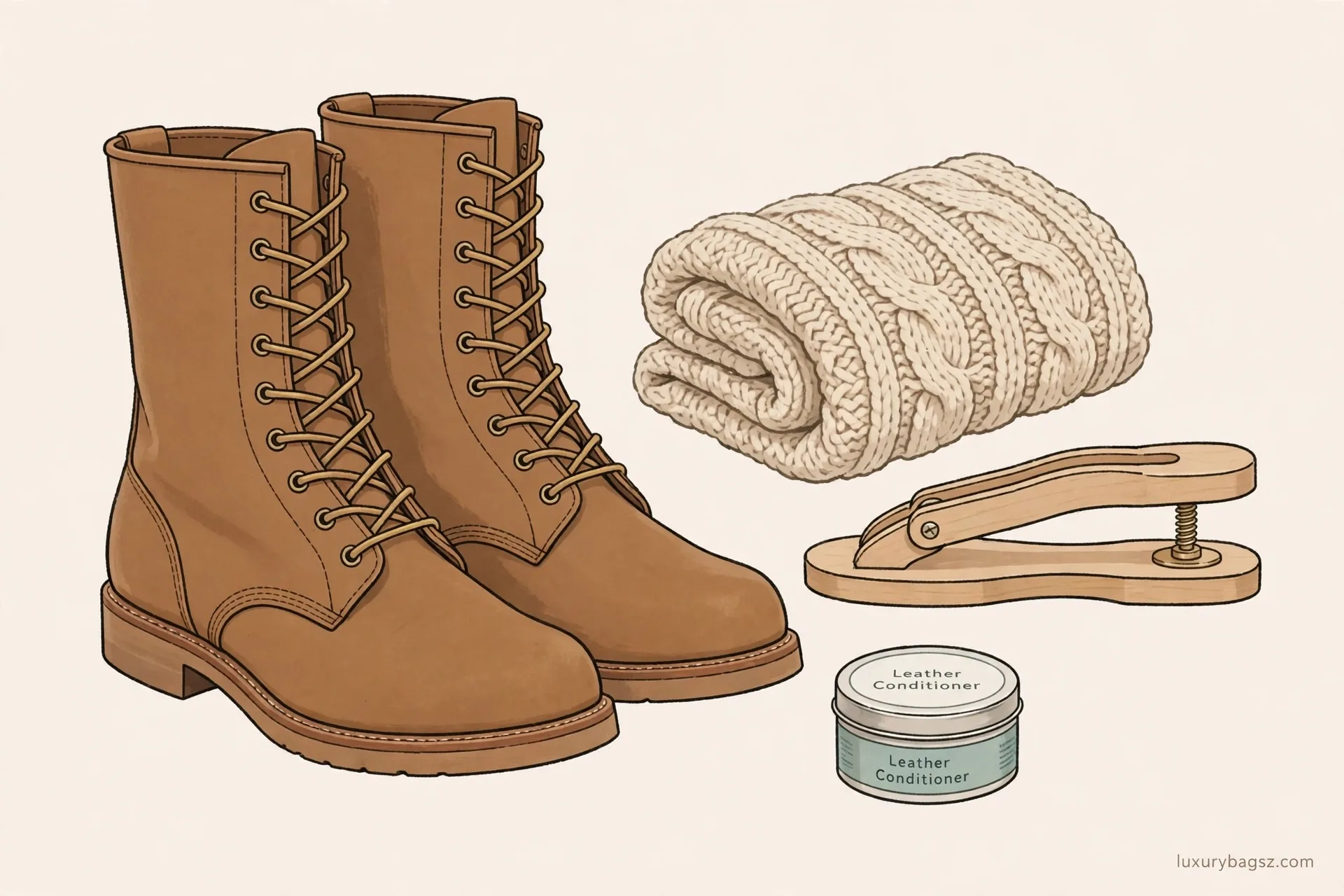
When one spot pinches while the rest of the boot feels fine, target that spot instead of wearing the boots longer. A two-way boot stretcher, left in overnight, stretches width, while a spot-stretching attachment pushes out a bunion or toe area. Use stretching spray on the spot first, as the label directs.
Apply the stretcher gradually, a little more each night, and check fit each morning. Over-stretching in one night can distort the boot permanently, especially around the toe box. Slow, repeated stretching gives a shaped fit without a baggy boot.
Gentle, controlled warmth can help a tight spot, but keep it modest. Warm the spot with a hair dryer on low, from at least six inches away, while wearing thick socks, then walk until the leather cools. Never use high heat, ovens or radiators, which dry and crack leather and loosen adhesives.
If a spot still pinches after three to four weeks, or after a week of stretcher use, see a cobbler. A cobbler can spot-stretch professionally, adjust the fit, or tell you honestly when the boot shape simply does not suit your foot. That advice is worth more than another month of pain.
Break-In by Material and Boot Type
Full-grain leather takes longest, usually two to three weeks, because it is dense and stiff when new. It also moulds best, shaping to your foot over months into a custom fit. Patience with full-grain pays off in a boot that feels made for you.
Softer leathers, such as calfskin and oiled nubuck, often break in within a week. They need less conditioner and less stretching, and they show creases sooner. Treat soft leather gently during break-in, because aggressive stretching marks it more easily.
Synthetic and waterproof boots break in differently. They flex sooner but mould less, so fit at purchase matters more. Heat and moisture techniques work less well on synthetics, and some waterproof membranes are damaged by soaking or high heat, so stick to gradual wear.
Steel-toe and heavy work boots need the longest break-in, sometimes four to six weeks, because the toe cap does not flex and the leather is thick. Wear them in short sessions, use cushioned socks and insoles, and never judge a work boot’s fit on day one alone.
Mistakes That Hurt Feet and Ruin Boots
Wearing new boots for a full workday on day one is the classic mistake, and it guarantees blisters for most people. Enthusiasm is understandable, but a full day in stiff boots creates hotspots that take days to heal and set break-in back, not forward.
Soaking boots in water to soften them is another bad shortcut. Soaking swells leather, weakens adhesives, warps shafts and can rot stitching as boots dry. A lightly damp interior, worn with thick socks, is sometimes advised for leather, but full soaking is never worth it.
Extreme heat is equally damaging. Ovens, radiators and high hair dryer settings dry leather fast, causing cracks, stiffness and loosened soles. Warmth should be gentle and brief, or skipped entirely, because gradual wear achieves the same softening without the risk.
Skipping conditioner on very dry leather is a quieter mistake. Unconditioned leather stays stiff longer and may crack at flex points during break-in. One thin coat early on prevents that, while over-conditioning causes its own problems, so thin and once is the rule.
When to Stop Breaking In and Get Help
Stop and reassess when pain is sharp, localised and unchanging after two weeks, or when blisters keep forming in the same spot despite socks, moleskin and gradual wear. These signs point to a fit or shape problem, not a break-in timeline problem.
See a cobbler for persistent pinching, a heel that will not stop slipping, or a boot that creases painfully at one bend. Cobblers can stretch, pad, adjust insoles and modify fit in ways home methods cannot, and a single visit often solves a problem that weeks of walking did not.
Consider returning or exchanging boots that hurt sharply from the first indoor session, or that numb your toes. Shops accept returns for unworn indoor-tried boots far more readily than for boots worn outside for days, which is another reason to start break-in indoors.
Once boots are broken in, care keeps them that way. Brush after wear, condition smooth leather when dry, use shoe trees between wears, and rotate pairs when you can. Broken-in boots that are cared for stay comfortable for years, while neglected pairs stiffen again between seasons.
Frequently Asked Questions
How long does it take to break in boots?
Most leather boots take one to three weeks of regular, gradual wear. Full-grain and heavy work boots may need four to six weeks, while soft leathers often break in within a week.
Should new boots hurt when breaking them in?
Snugness is normal, sharp pain is not. Mild pressure that eases over days is break-in, while sharp pain, numbness or repeated blisters in one spot signal a fit problem.
How do I break in boots without blisters?
Wear them indoors in short sessions, use cushioned moisture-wicking socks, tape hotspots with moleskin before walking, and stop before pain becomes a blister. Never start with a full day.
Can I use a hair dryer to break in boots?
Only gently, on low, from six inches away, while wearing thick socks. High heat, ovens and radiators dry and crack leather and loosen adhesives, so avoid them entirely.
Does conditioner help break in boots?
Yes, one thin coat early in break-in softens leather and speeds softening. Over-conditioning weakens structure and darkens colour, so thin and once is the rule.
Should I wear thick socks to break in boots?
Yes, medium-weight cushioned socks, ideally merino wool blends, protect against friction and wick sweat. Avoid thin dress socks and plain cotton socks during break-in.
How do I stretch boots that are too tight?
Use a boot stretcher overnight with stretching spray, increasing gradually, or see a cobbler for spot stretching. A specific tight spot needs targeting, not just more walking.
Can I break in boots by soaking them in water?
No. Soaking swells leather, weakens adhesives, warps shafts and can rot stitching. Gradual wear, conditioner and a stretcher soften boots safely without soaking.
Why do my heels slip in new boots?
Some heel slip is normal before leather moulds to your foot, but more than a quarter inch suggests a fit issue. Try heel-lock lacing, heel grips, or thicker socks, and reassess after a week.
When should I give up breaking in boots?
When sharp pain or same-spot blisters persist after two to three weeks of gradual wear, or when a cobbler says the shape does not suit your foot. Return or exchange before wearing them outside for days.
Conclusion
Breaking in boots well is unglamorous work: short indoor sessions, good socks, moleskin on hotspots, a little conditioner, and patience. It takes one to three weeks, and it beats every shortcut that promises comfort in a day.
Skip the soaking, the ovens and the full-day first wear. Check fit first, grow wear time slowly, stretch only the spots that need it, and let a cobbler help when pain persists. Your feet, and your boots, will thank you for the slow route.
Jessica is the founder of Luxury Bagsz and a handbag specialist with more than 10 years in the bag industry. She owns and collects preloved designer bags, has examined over 500 bags by hand, and checks authenticity using the Entrupy app alongside stitching, hardware, engravings and date codes.
New York and London A/W 2014 in Brief: The Season of the Wrap Autumn/winter 2014 in New York and London belonged to the coat you could live in. Blanket coats, robe coats and personalised ponchos led both cities, in a season of texture, warmth and practical glamour. New York brought polish and sport; London brought…
Milan and Paris A/W 2014 in Brief: Two Debuts and a Supermarket Autumn/winter 2014 in Milan and Paris is remembered for spectacle with substance. Chanel turned the Grand Palais into a supermarket, and Nicolas Ghesquière showed his first Louis Vuitton collection on the final morning. Around those headlines sat a wearable season: quilted coats, capes,…
Under $500 in Brief: Where the Value Sits Yes, you can buy a genuine designer handbag under $500: Coach, Longchamp, Kate Spade, Tory Burch and Marc Jacobs all sell leather or signature styles within budget, especially crossbody bags, small satchels and totes. The smart buy at this level is a well-made everyday bag in pebbled…
Cleaning by Material, Starting With a Dry Cloth For routine care, use a clean, dry, white microfibre cloth and nothing stronger until you know the material — that is the safest starting point for every Chanel bag. Empty the bag, shake out dust and crumbs, then wipe the outside lightly in one direction. Caviar tolerates…
Styling a Denim Shirt, in Brief A denim shirt works when you treat it like a sturdy casual shirt, not a novelty. Pair it with contrasting bottoms, keep the fit close but comfortable, and let one wash of denim lead the outfit. The golden rule is contrast. A dark denim shirt needs light or black…
Cleaning an Oran Without Ruining It There is no single way to clean an Oran — the safe method is set by the material in front of you. With smooth leather, begin by brushing away dust and grit, then go over one small patch at a time with a cloth that is barely moist and…