

What Is Saddle Soap and How to Use It on Boots Without Damage
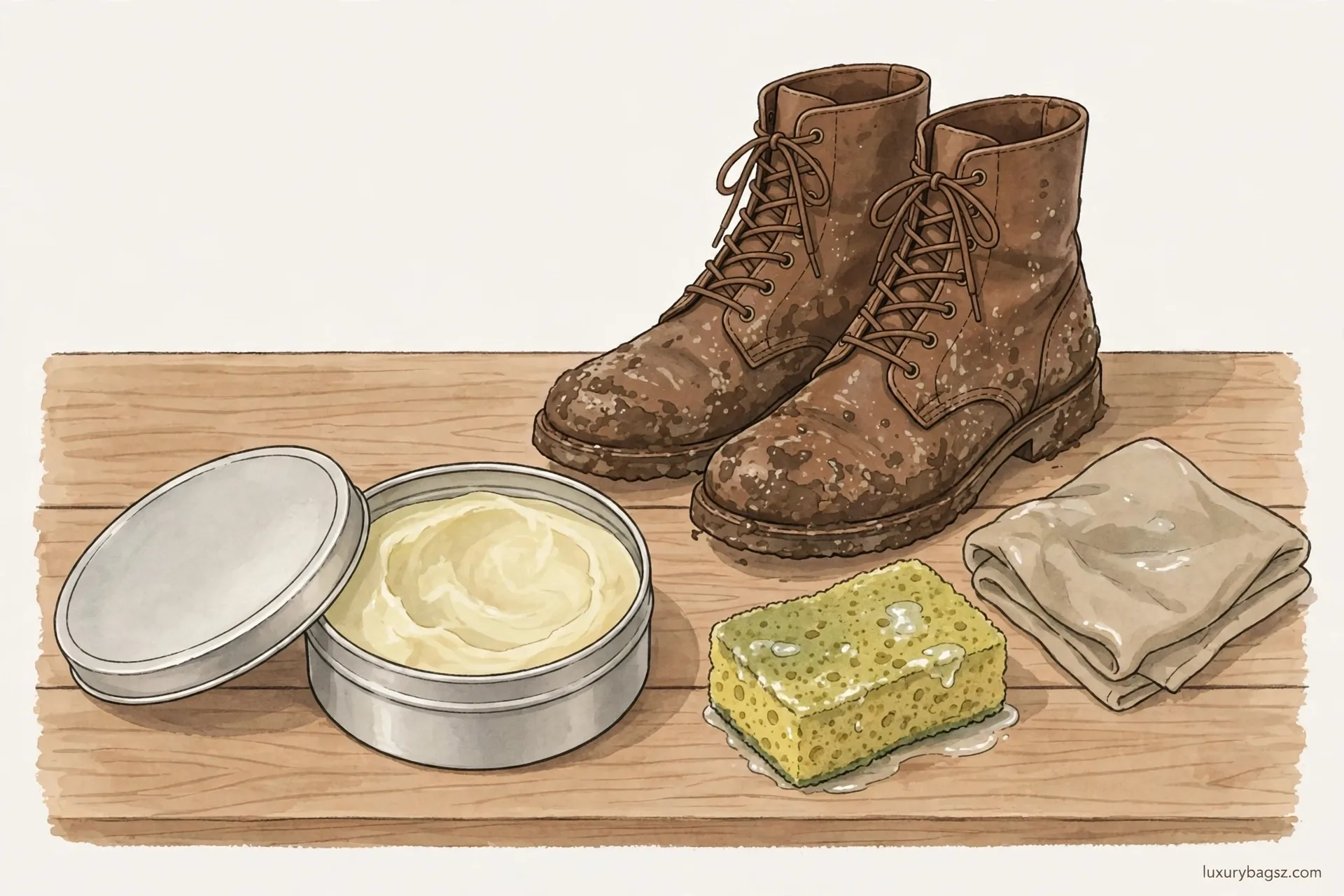
Saddle Soap, Explained in Brief
Saddle soap is a strong, traditional leather cleaner, made for thick, hard-working leather such as horse saddles. It cleans by pulling dirt, wax, oil and stains out of leather, which is why it rescues muddy, salty and stained boots that a damp cloth cannot.
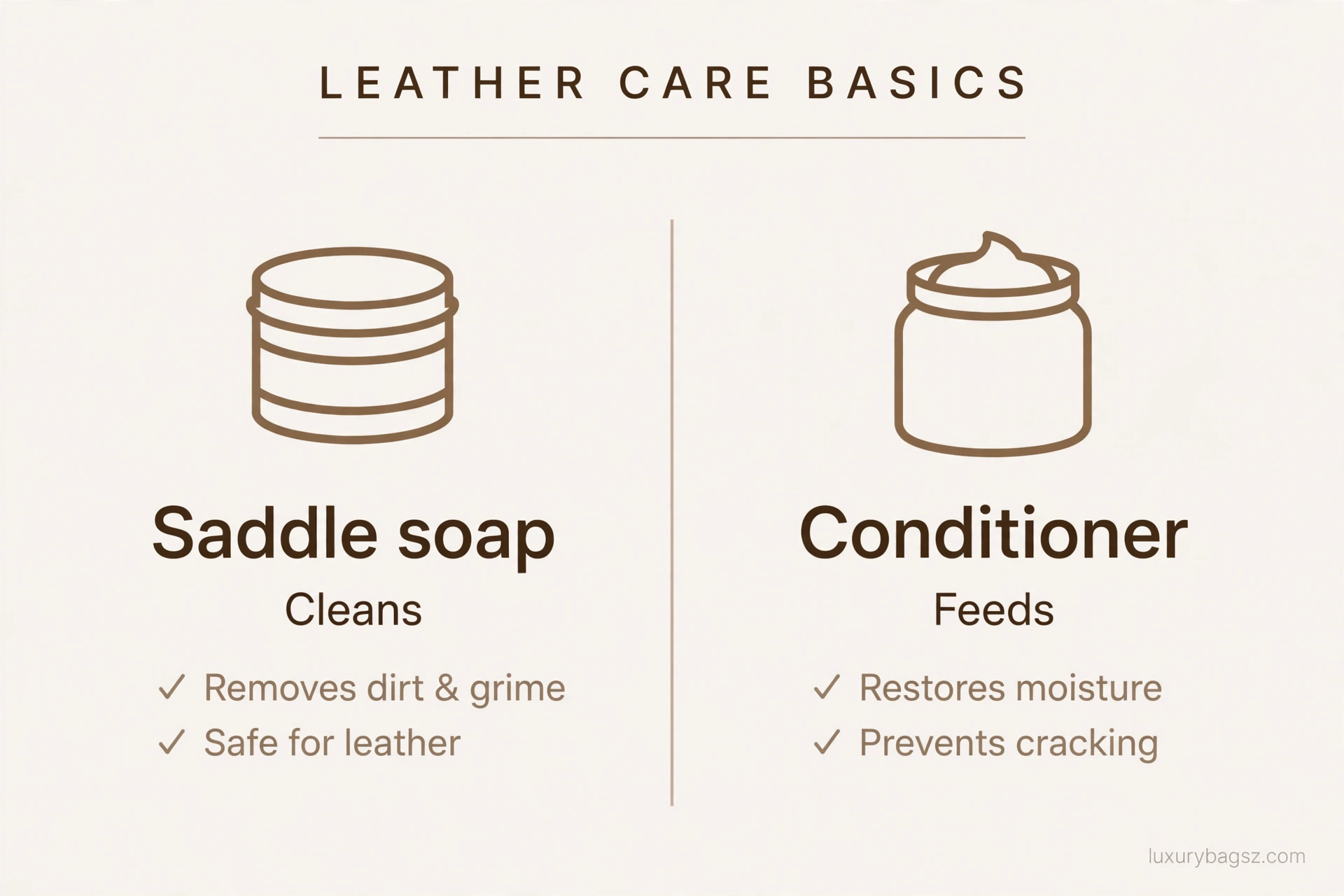
It is not a conditioner, even though most tins claim some softening effect. As a soap, it removes oils as well as dirt, so boots cleaned with saddle soap must be conditioned afterwards, or they will dry out and crack over time.
Use it sparingly, only when boots are genuinely dirty, and never on suede, rough-out, patent or exotic skins. Used that way, saddle soap is one of the most useful products in a boot kit. Used weekly on clean boots, it does more harm than good.
Key Takeaways
- Saddle soap is a deep cleaner for smooth leather, not a daily cleaner and not a conditioner.
- It works by lifting dirt, wax and oil out of leather, which is why it also strips useful oils.
- Use it only when boots are very dirty: heavy mud, salt, sticky spills or ground-in grime.
- Most boots need saddle soap no more than once or twice a year, and many need it even less.
- Always rinse all soap away, dry boots slowly, and condition smooth leather afterwards.
- Never use saddle soap on suede, rough-out, nubuck, patent leather, fabric or exotic skins.
- Test on a hidden spot first, especially on light colours, aniline leather and vintage boots.
- If boots are only dusty, a brush and a damp cloth are enough. Save saddle soap for real dirt.
What Saddle Soap Actually Is
Saddle soap was made for horse saddles, which are thick, well-oiled, heavily waxed pieces of leather that get filthy in daily riding. Saddles needed a cleaner strong enough to lift that grime, and saddle soap was the answer. Boot makers and owners adopted it for the same reason.
Traditional saddle soap is a paste or bar containing soap, water, tallow or similar fats, and softening agents such as lanolin or beeswax. Modern versions vary, and some are glycerine-based and gentler, but the core idea is the same: a soap that cleans leather deeply rather than just wiping its surface.
It is an astringent cleaner, meaning it tightens and draws matter out of the leather fibres. That pulling action is what lifts stains, salt and old wax so well. It is also why saddle soap can lighten leather colour slightly, by removing some of the oils and waxes that darken it.
Most saddle soap comes in a round tin, often in a yellow or neutral paste, and it is applied with a damp sponge or dauber brush. A tin lasts for years, because a little goes a long way, and because proper use is occasional, not weekly. Price is usually modest, around $10 to $20 for a well-known tin.
What Saddle Soap Does, and What It Does Not Do
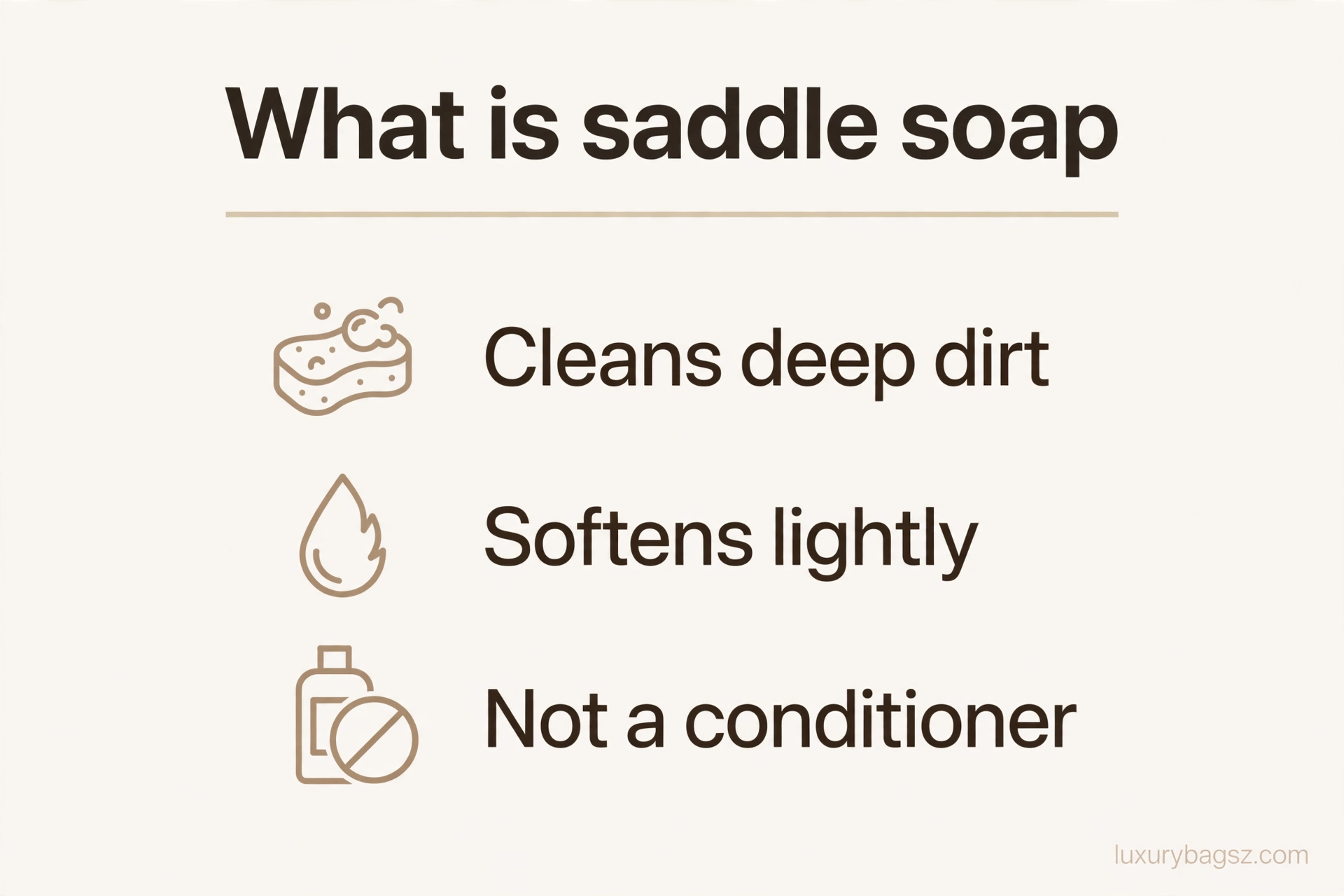
Saddle soap cleans deeply, and that is its whole job. It removes mud, road salt, sweat grime, food and drink spills, and built-up old polish and wax. For boots that have been through a muddy season, it restores a uniform look that surface wiping cannot.
It softens leather lightly, because most formulas include some conditioning fats. But that softening is partial and incidental, and it does not replace the oils the soap itself removes. Think of it as shampoo with a little conditioner in it: helpful, but not a conditioning treatment.
It does not waterproof boots, restore lost colour, or repair damage. Colour lost to sun or wear stays lost after saddle soap, and may even look lighter once old wax is removed. Waterproofing needs a separate protector applied after cleaning and conditioning.
It does not work on every leather. Suede and rough-out absorb soap into the nap and stain. Patent coatings can dull or crack. Exotic skins react unpredictably. For these leathers, saddle soap is not a stronger option, it is simply the wrong product.
When to Use It, and When to Leave It Alone
Use saddle soap when boots are extremely dirty: caked mud, heavy salt lines, sticky spills, or grime that a damp cloth leaves behind. These are the jobs it was made for, and a single careful wash here does more good than months of light wiping.
Use it when old polish and wax have built up into a dull, clogged surface. A saddle soap wash strips that build-up back to clean leather, giving conditioner and fresh polish a proper surface to work on. Cobblers use it for exactly this reset.
Do not use it on clean or lightly dusty boots. A brush and a damp cloth handle routine dirt without stripping oils, and saddle soap on clean boots removes oils for no benefit. Overuse is the most common saddle soap mistake, and it shows as dry, pale, stiff leather.
Never use it on suede, rough-out or nubuck. These leathers need a dry-first routine with a brush and eraser, and our guide to using a suede brush covers the stroke direction and pressure that keep the nap safe. Soap, water and cream all damage the nap.
Also skip saddle soap on shell cordovan, which is so rich in waxes and oils that it needs only brushing and light conditioning. Skip it on patent leather, on fabric panels, and on any boot the maker specifically warns against soap cleaning. When the maker says no, believe them.
How to Use Saddle Soap, Step by Step
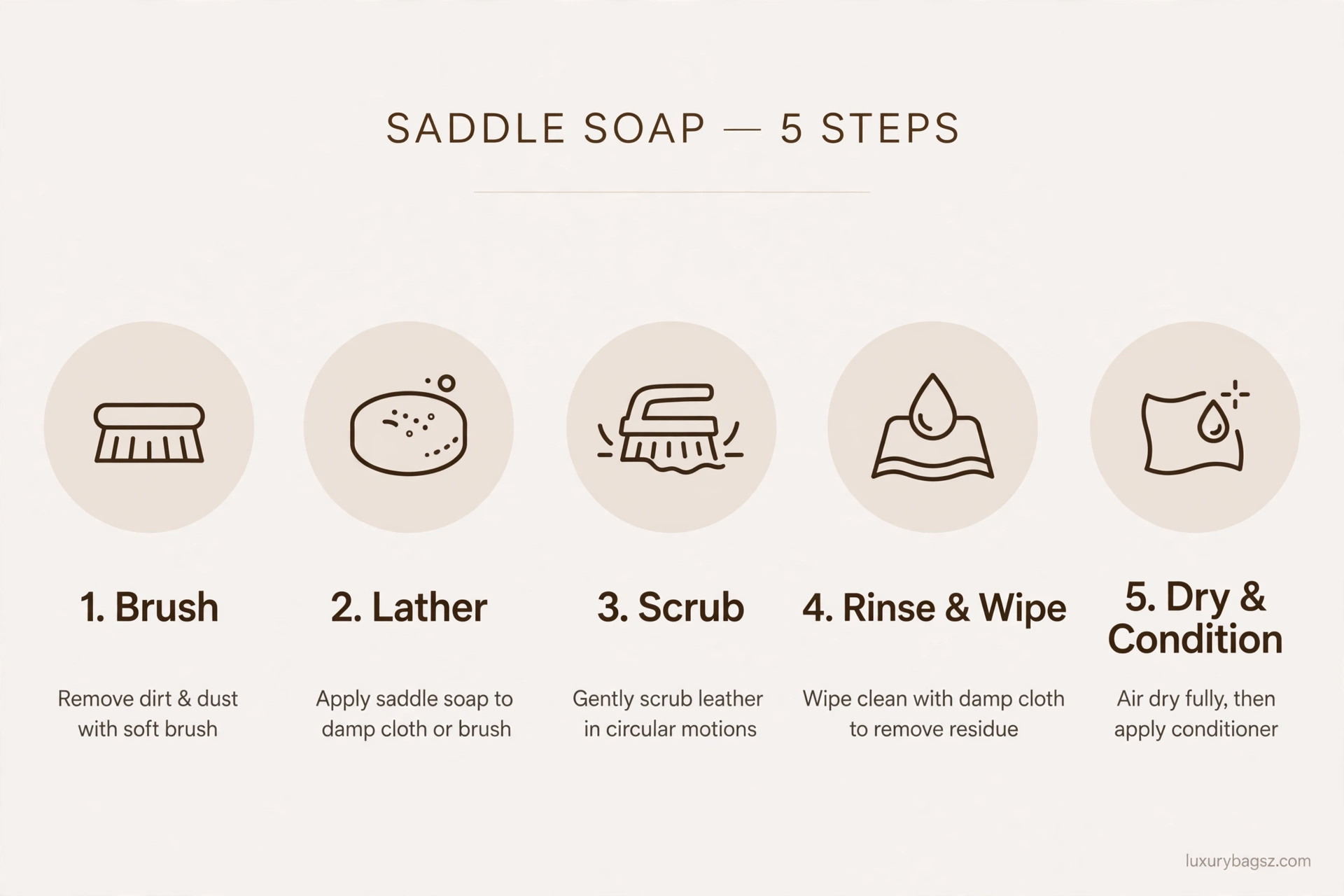
Gather a clean horsehair brush, lukewarm water, a damp sponge or dauber brush, a clean cloth, and your saddle soap. Work in a ventilated spot, and remove laces so you can clean the tongue folds and eyelet areas properly.
Brush the boots first, dry, to remove loose dirt and mud. Check the brush is clean of old polish or dye, by running a finger over the bristles, so you do not transfer colour onto the boots. Pay attention to the welt groove and ankle folds, where dirt packs in.
Dampen the sponge, wring it until it is damp rather than dripping, and rub it over the saddle soap in circles to build a light lather. Work the lather over one boot at a time in small circles, covering the whole upper evenly. For stubborn stains, work the soap in more firmly with a fingertip or the sponge edge.
Rinsing is just as important as cleaning. Rinse the sponge in clean water, wring it out, and wipe the boot repeatedly until no foam or soap residue remains. Rinse the sponge often, and keep wiping until the cloth comes away clean. Soap left on leather dries into a dull film.
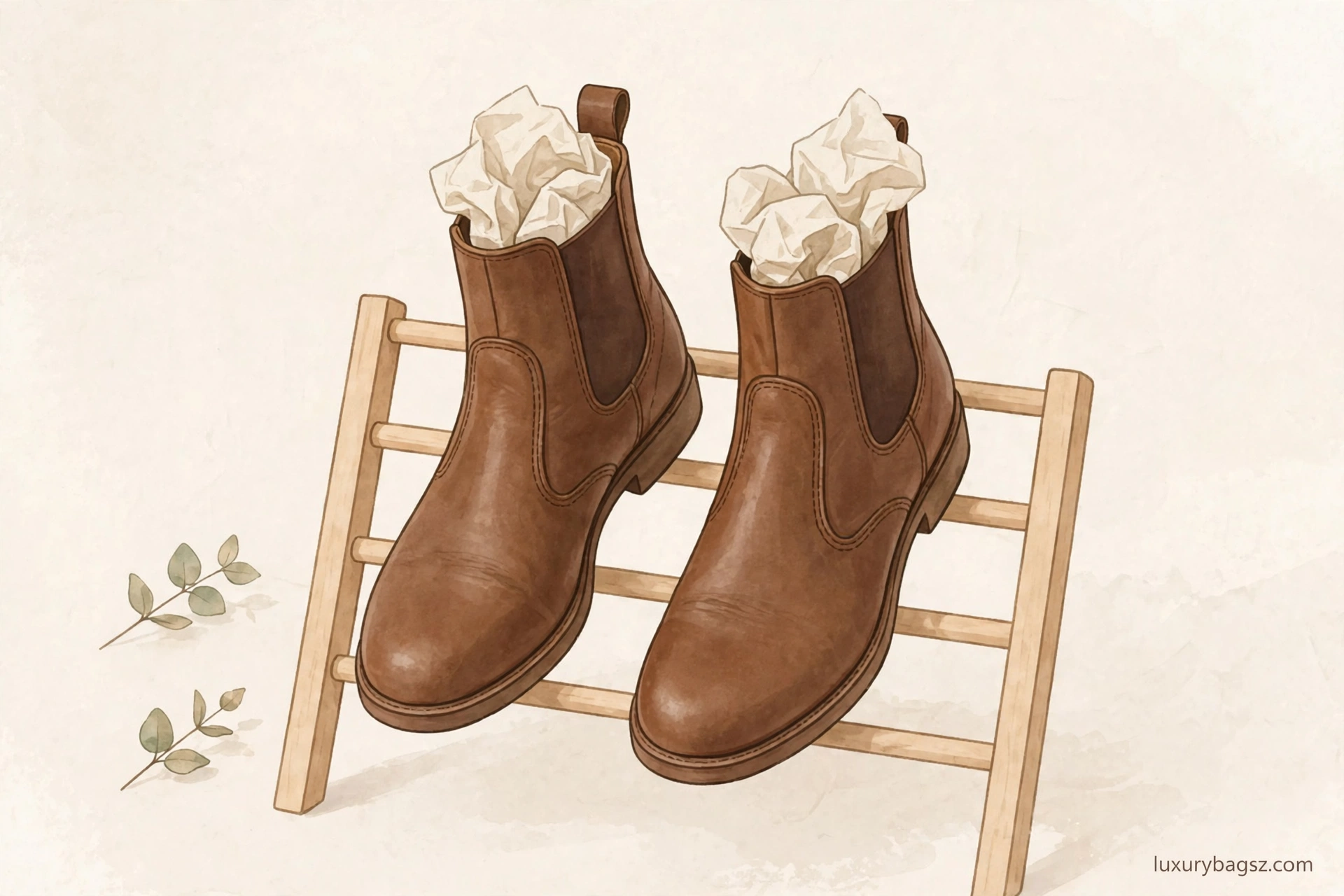
Let the boots dry fully at room temperature, stuffed with paper, for at least eight hours and ideally a full day. Do not rush drying with heat or sun, which cracks freshly cleaned leather. The boots should feel fully dry and room-temperature before any conditioner touches them.

Aftercare: Conditioning Is Not Optional
Once boots are fully dry, condition smooth leather. Saddle soap has removed oils and waxes along with the dirt, and conditioner replaces them, restoring suppleness and preventing cracks. Skipping this step turns a good clean into slow damage.
Apply a thin coat of a neutral leather conditioner with a soft cloth, in small circles, and let it absorb for at least 20 minutes. Buff with a clean cloth to remove excess. If the leather still looks dry, add a second thin coat rather than one heavy coat.
Polish and waterproofing come after conditioning, not instead of it. A cream polish revives colour and shine, and a protector spray adds water resistance. Both work better on clean, conditioned leather than on leather still carrying old wax or soap residue.
Watch the colour after the first saddle soap wash. Boots often look slightly lighter, because old oils and waxes are gone. Conditioning usually restores much of the depth, and a matching cream polish restores the rest. A permanent, large colour change after one wash is a sign to test more carefully next time.
Choosing a Saddle Soap
Well-known tins such as Fiebing's and Kiwi are widely available, affordable, and proven for boot work. Either is a sound default choice for sturdy smooth leather boots. Specialist glycerine-based soaps, such as Saphir's saddle soap, are gentler and suit finer smooth leathers better.
For most boot owners, the differences between reputable tins matter less than the method. A cheap tin used correctly beats an expensive tin used too often, left to dry on the leather, or followed by no conditioner. Buy a trusted brand, then focus on technique.
Avoid homemade lye-heavy recipes unless you know leather chemistry well. Traditional recipes using flake lye and turpentine can clean aggressively, but they are caustic, flammable to make, and easy to get wrong. A commercial tin is safer, consistent and cheap enough to make DIY soap unnecessary.
Store the tin with its lid on, in a cool, dry place. Saddle soap keeps for years when sealed, but it dries and cracks if left open. A dried tin can still be used with more water, but it lathers unevenly, so replace it when it no longer forms a smooth paste.
Mistakes That Damage Boots
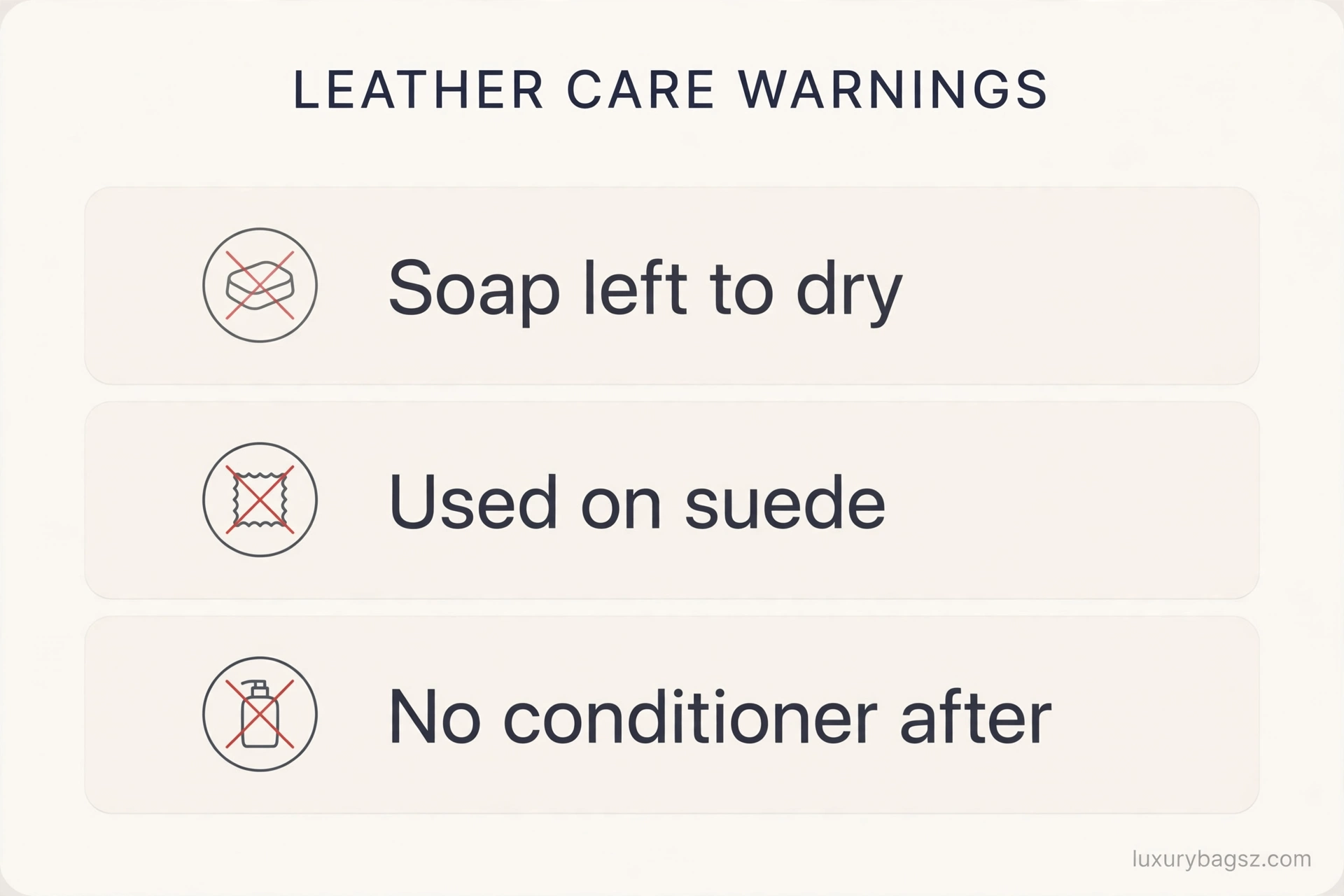
The biggest mistake is leaving soap to dry on the leather. Dried soap leaves a dull film, pulls out extra oils, and can lighten colour unevenly. Always rinse-wipe until no suds remain, and check in good light before you call the wash done.
The second mistake is using saddle soap too often. Weekly or monthly deep washing strips leather faster than wear does, leaving it dry, pale and prone to cracking. Reserve saddle soap for genuine dirt, and use a brush and damp cloth for everything else.
The third mistake is skipping conditioner afterwards. Boots cleaned with saddle soap and left unconditioned feel dry within days and crack over months. Conditioner is part of the saddle soap job, not an optional extra, and it should happen after every saddle soap wash.
Other mistakes include scrubbing with a stiff brush, which scuffs leather and frays stitching, and soaking boots in water to rinse them. Rinsing means wiping with a rinsed sponge, never dunking. Soaked boots swell, warp and loosen adhesives as they dry.
Saddle Soap Versus Other Cleaners
Compared with a damp cloth, saddle soap cleans far deeper, but it also strips far more. The cloth is the daily tool, and saddle soap is the rescue tool. Using the rescue tool daily is like shampooing twice a day: clean, but stripped.
Compared with a gentle leather cleaner, saddle soap is stronger and more astringent. Gentle cleaners suit routine cleaning and finer leathers, while saddle soap suits heavy dirt and sturdy boots. For fine calfskin, start with the gentler cleaner and step up only if dirt remains.
Compared with mink oil, saddle soap is the opposite job. Saddle soap removes, mink oil adds. The two can be used in sequence, soap first to clean, oil or conditioner second to feed, but never confuse them: oil will not clean a stain, it seals it in.
Compared with household soaps, saddle soap is safer for leather, because it is made with leather-compatible fats and a milder action. Dish soap and hand soap strip leather harshly and leave residues that are hard to rinse. Keep household soaps away from boots entirely.
Frequently Asked Questions
What is saddle soap made of?
Traditional saddle soap contains soap, water, tallow or similar fats, and softening agents such as lanolin or beeswax. Glycerine-based versions are gentler, but all saddle soaps are deep cleaners first.
Is saddle soap a conditioner?
No, not really. It contains some softening agents, but as a soap it removes oils as well as dirt. Always follow a saddle soap wash with a proper leather conditioner once boots are fully dry.
How often should I use saddle soap on boots?
Only when boots are very dirty, usually once or twice a year at most. Routine dust needs only a brush and a damp cloth, and overusing saddle soap dries leather out.
Can I use saddle soap on suede boots?
No. Saddle soap, cream, oil and polish all damage suede and rough-out. Brush suede dry, use a suede eraser for marks, and protect it with a suede-only spray.
Does saddle soap darken or lighten leather?
It usually lightens leather slightly, by removing old oils and waxes. Conditioning afterwards restores much of the depth, and a matching cream polish restores the rest.
Do I need to rinse saddle soap off?
Yes, thoroughly. Wipe repeatedly with a rinsed, damp sponge until no foam remains. Soap left to dry on leather leaves a dull film and pulls out extra oils.
Can saddle soap remove salt stains from boots?
Yes, it is one of the best products for salt stains. Brush off dry salt first, wash with saddle soap, rinse well, dry slowly, and condition once fully dry.
What is the best saddle soap brand?
Fiebing's and Kiwi are proven, affordable defaults for sturdy boots, while glycerine-based soaps suit finer leathers. Method matters more than brand: rinse fully and condition afterwards.
Can I use saddle soap on coloured or light leather?
Yes, but test on a hidden spot first. Saddle soap can lift some dye along with dirt, especially on light colours, aniline leather and vintage boots, so check before washing the whole boot.
Should I condition boots after saddle soap?
Always. Saddle soap strips oils as it cleans, and conditioner replaces them. Apply a thin coat once boots are fully dry, buff well, and add polish or protector only after conditioning.
Final Verdict
Saddle soap earns its place in a boot kit by doing one job very well: deep cleaning smooth leather that is genuinely dirty. It lifts mud, salt and old wax that lighter cleaners leave behind, and it gives conditioner a clean surface to work on.
Respect its strength, though. Use it rarely, rinse it fully, dry boots slowly, and condition afterwards, every time. Keep it away from suede and delicate leathers, and it will rescue boots for years instead of wearing them out.






